Browsed by
Category: Vintage Treasures

The Ballantine Adult Fantasy Series: The Silver Stallion by James Branch Cabell

The Ballantine Adult Fantasy Series: The Silver Stallion by James Branch Cabell

The Silver StallionThe Silver Stallion
James Branch Cabell
Ballantine, 1969, $0.95
Cover art by Bob Pepper
Internal illustrations by Frank C. Pape

So now we come to one of the better known (some would say infamous) authors in the Ballantine Adult Fantasy line. James Branch Cabell is, to the best of my knowledge, the only author in the lineup who had a book (Jurgen) as the centerpiece of an obscenity trial.

James Branch Cabell was born in Virginia on April 14, 1879. His family was wealthy enough that he could devote his time with genealogical research and writing a complex series of fantasy novels.

These novels are called the Biography of Manuel. They concern Dom Manuel, who rose from being a pig farmer to ruler of the fictional French province of Poictesme. A total scoundrel, after his death, Manuel’s widow Niafer and the saint Horvendile engage in a PR campaign of impressive proportions, recasting him as a faultless savior who will come back to restore Poictesme to holy glory.

But the series doesn’t stop there. Some books deal with Manuel’s descendants. There are 25 books total, written over a period of 23 years. They weren’t written in order of internal chronology and contain a number of references to other works in the series, some subtle and some fairly prominent.

The Silver Stallion opens following the alleged death of Manuel. Jurgen, the son of Coth of the Rocks, claims he saw Manuel taken up into the heavens while riding with Father Death. The Fellowship of the Silver Stallion is the group of Manuel’s closest companions and advisers. They react to news of Manuel’s death in a variety of ways.

Read More Read More

Come Into Callahan’s, Said the Spider

Come Into Callahan’s, Said the Spider

CallahansI first met Jake (the narrator), Fast Eddie (the piano player), Doc Webster, Long Drink McGonnigle, and Mike Callahan himself in the pages of Analog. All of Spider Robinson’s stories were eventually collected in three anthologies: Callahan’s Crosstime Saloon, Time Travelers Strictly Cash, and Callahan’s Secret.

Callahan’s is a place where the day after Monday is Punday, Wednesday is Tall Tales Night, there’s a Fireside Fillmore night, and a Riddles Night. And in the grand tradition of the bar story, we get told these tall tales, we’re given the lyrics of the songs, and we can even participate in the guessing of the riddles.

But unlike the traditional bar story, these are just window-dressing, Robinson’s homage to the conventions. The real stories are what happens around, during and after all this traditional bar story action. And these are anything but traditional – they are, after all, science fiction stories, and the characters who come into Callahan’s for help are time-travelers, aliens, humans suffering from strange mutations . . . and a talking dog.

Though the prefaces, intros, and afterwords establish the pretense that Callahan’s actually exists, it’s clearly in either an alternate universe or an alternate timeline. The second story in CCS, for example, “The Time Traveler,” was written, or at least appeared, in 1973 or ’74. Not too long after that, in “The Law of Conservation of Pain,” a time traveler appears from the year 1995, using the first time machine.

Read More Read More

Blogging Sapper’s Bulldog Drummond, Part One

Blogging Sapper’s Bulldog Drummond, Part One

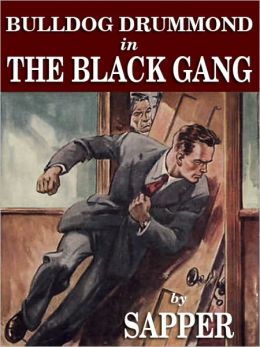
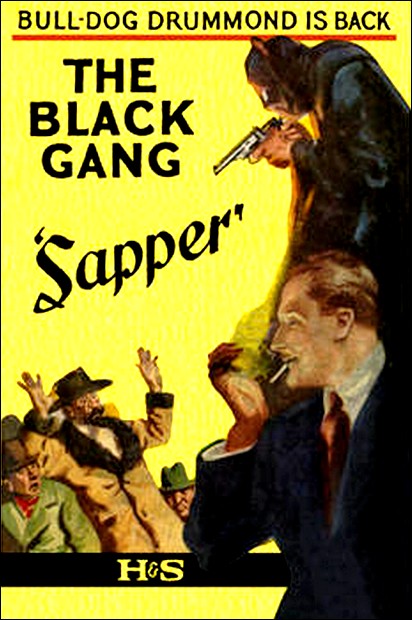
170px-Bulldog_Drummond_Poster2566515-bulldogdrummond2Bulldog Drummond is a peculiar case. The reputation of the original novels is more maligned than even Sax Rohmer’s Yellow Peril thrillers. To be sure, “Sapper” (the pseudonym of author H. C. McNeile) expressed views that stand out as offensive even among the common colonial prejudices of Edwardian England. The reason for this is easily understood. The author’s nationalistic fervor was predicated on the belief that the only good nation was Britain and every other nationality was inferior to varying degrees.

McNeile was a “True Blue” Brit in every way. A decorated veteran of the Great War, Sapper and his characters adore England and are intolerant of everyone else. Americans are castigated for their crudeness, the French are pompous, and Germans are a vile and irredeemable people. More bigoted views will follow, but that is the extent in the first quarter of the first book in the series.

Having covered the bad, what is it that makes the books still worth reading nearly a century later? Are they simply a document of more repressive times or do they offer value that makes one willing to overlook the reliance upon stereotypes and casual slurs? I would argue that anyone interested in the development of the thriller and pulp fiction should be exposed to at least the first four books in the long-running series. There is much that is light and entertaining in Sapper’s fiction, to the extent that they often read like drawing room comedies until thriller aspects interrupt the humor.

Read More Read More

John D. MacDonald: A Writer’s Writer

John D. MacDonald: A Writer’s Writer

MacDonald_Typewriter
That thing he’s using is called a ‘typewriter’

“With sufficient funds to cover four months’ living expenses, he set out and wrote at an incredible pace, providing eight hundred thousand words. Writing for a wide variety of magazines, he kept more than thirty stories in the mail constantly, not giving up on a story until it had been rejected by at least ten markets

In the process he accumulated almost a thousand rejection slips after five months of effort. During this period, MacDonald worked fourteen hours a day, seven days a week, literally learning his craft and gaining the experience of a decade as he went along, which was important for a man who made no serious attempt to write until he was thirty.”

– Martin H. Greenberg, in the introduction to Other Times, Other Worlds.

That is how John D. MacDonald, thirty years old, fresh out of the military in 1946 and with one published short story (which he actually sent to his wife in a letter: she submitted it to a magazine) learned the craft of fiction writing.

One of America’s finest writers (note: I didn’t qualify that with the word ‘fiction’) set himself upon a course that no sane person would have undertaken in that situation.

Read More Read More

Vintage Treasures: Feather Stroke by Sydney J. Van Scyoc

Vintage Treasures: Feather Stroke by Sydney J. Van Scyoc

Feather Stroke Sydney Van Scyoc-smallMy sister-in-law Mary Dechene passed away unexpectedly two weeks ago. She was 52, never married, and lived alone in a small apartment in Madison, Wisconsin. She was also a Black Gate reader and I’ll miss the letters she used to send me after she read each issue cover to cover.

Her funeral was Saturday. Afterwards came the sad duty of parceling out her belongings to various siblings, nieces, and nephews as the family packed up and cleaned out her apartment. Mary was a dedicated fantasy fan — really, it was all she read — and she left behind thousands of fantasy paperbacks dating from the late 80s and on, packed in dozens of boxes. I think many folks assumed I would want them, but I’m already pretty well stocked in fantasy paperbacks from that era and thought it made more sense for them to go to her sister Marty, so I gallantly waved away any claim to them.

At least until I casually peeked in the first box. I discovered that Mary was surprisingly widely read, and in addition to a virtually complete collection of Terry Brooks, David Eddings, Mercedes Lackey, Robin Hobb, and other bestselling fantasy, she had several surprises. In fact, she had dozens of books I never even knew existed. And trust me when I tell you, that doesn’t happen to me very often.

In a matter of minutes, I was secluded in the garage, digging through box after box. While the rest of the family divided Mary’s jewelry and appliances, I was stacking hundreds of paperbacks in neat rows. In addition to being a completest, Mary was also a very careful reader — the books were in great shape. It really was a treasure trove, far more fantasy novels than I’d seen virtually anywhere. And I’ve been in some of the best book stores on the planet.

In the end, I made it through less than half the boxes. I felt a little guilty about pillaging Mary’s collection anyway, especially after her sister had already laid claim to it, but Marty didn’t seem to mind. I didn’t find anything really valuable, but I did fill a great many holes in my collection, and brought home one very nearly full box of Mary’s delightful collection. I settled back with the first one tonight —  Sydney J. Van Scyoc’s Feather Stroke, a standalone 1989 fantasy from Avon with a terrific Keith Parkinson cover.

Written on the first page, in her famously cramped script, are the words Mary Dechene. A reminder of where they came from. Thank you, Mary. We shared a passion for fantasy, and I’m glad fate brought us together for a short time. I’ll treasure these books, and they will always remind me of you. Rest in peace.

One of the Best Serials Ever Made: The Adventures of Captain Marvel, Chapter Two: The Guillotine

One of the Best Serials Ever Made: The Adventures of Captain Marvel, Chapter Two: The Guillotine

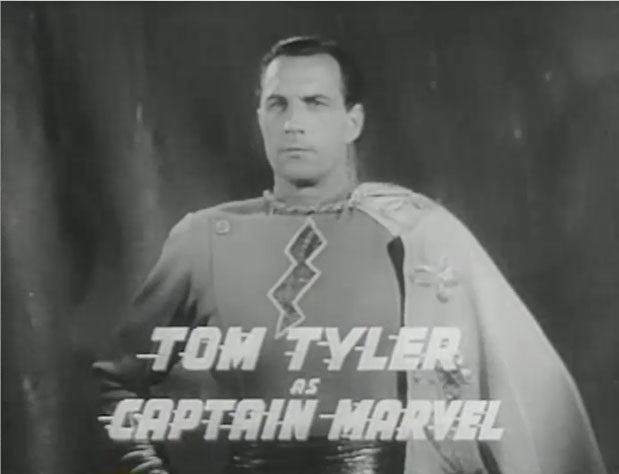
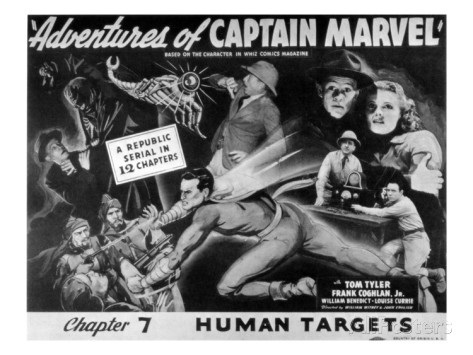
Captain Marvel Episode 2  Lobby card-smallHave you found your seats? Are you sufficiently equipped with licorice whips, popcorn, and Nehi Soda? Then let the lights dim and settle in for Republic Pictures’ 1941 serial, The Adventures of Captain Marvel. We opened last week with Curse of the Scorpion. Today, Chapter Two: “The Guillotine.”

Our chapter  opens with helpful title cards summarizing events for those who couldn’t scare up a dime last Saturday. “Rahman Bar – Attacks the camp of the Malcom Expedition in reprisal for the theft of the Golden Scorpion.” “Billy Batson – Radios for troops from Fort Mooltan.” “Malcolm – And the rest of the party try to escape with the lenses.” “Captain Marvel – Tries to warn them that the bridge across the gorge is mined.” There – all caught up. Now say the mystic word and be transformed!

We now get a quick two minutes from last week’s cliffhanger ending. We see Whitey and Betty stuck on the bridge as the dynamite explodes and the bridge collapses. The car tumbles into the river, taking the helpless occupants with it. Observing from a boulder where he has just landed, Captain Marvel executes a very nice high dive and, swimming to the not-quite-yet submerged station wagon, pulls the unconscious Whitey and Betty to the safety of the river bank.

By the way, as cliffhanger resolutions go, this is quite honest. All serials did some cheating in their cliffhangers (the looney Undersea Kingdom with Ray “Crash” Corrigan might be the worst offender in this regard), but The Adventures of Captain Marvel usually plays it fairly straight.

Read More Read More

The Shout of a Young Man Who Finds the World a Complicated Place: The Eternal Champion by Michael Moorcock

The Shout of a Young Man Who Finds the World a Complicated Place: The Eternal Champion by Michael Moorcock

oie_272267fTHTh1HnWhen I was a kid, all my friends read Michael Moorcock’s sprawling Eternal Champion series. Endlessly resurrected and reincarnated, the Eternal Champion exists to right the balance between Law and Chaos. According to Moorcock in the introduction to the 1994 edition of the novel, The Eternal Champion:

I use the ideas of Law and Chaos precisely because I am suspicious of simplistic notions of good and evil. In my multiverse, Law and Chaos are both legitimate ways of interpreting and defining experience. Ideally, the Cosmic Balance keeps both sides in equilibrium. By playing “the Game of Time”… the various participants maintain that equilibrium. When the scales tip too far toward Law we move toward rigid orthodoxy and social sterility, a form of decadence. When Chaos is uppermost we move too far towards undisciplined and destructive creativity.

Seemingly deep stuff for teenagers to be reading, but I think it was part of the series’ appeal. Teenagers are constantly pushing boundaries and trying to get a grip on right and wrong. I think many of them are as suspicious of supposedly “simplistic notions of good and evil” as Moorcock was. It appeared to be presenting a more nuanced way of looking at the world.

Most of the guys (and it was all guys) I knew who read swords & sorcery back in the 1970s and early ’80s were SF/F geeks, potheads, or metalheads and there was a lot of overlap amongst those groups. In my experience, gaming had a lot to do with bringing those tribes together and we all loved Moorcock’s stories and heroes.

Most preferred the morose albino, Elric, of doomed Melniboné. Dressed in black armor, wielding the evil soul-drinking sword Stormbringer, and riding a dragon — I totally get it. A few liked Dorian Hawkmoon von Koln and his adventures across post-apocalyptic Europe and America better. Personally, I did and still do enjoy the two trilogies about Corum Jhaelen Irsei, last of the Vadhagh. Steeped in Irish myth and a gloomy Celtic miasma, I think they’re the most intense and beautiful books in the series.

Read More Read More

Everything’s Coming up Aces: All the Covers of Galactic Derelict

Everything’s Coming up Aces: All the Covers of Galactic Derelict

Galactic Derelict 1961-big Galactic Derelict 1971-small Galactic Derelict 1978-small

Click any of the images to see the complete wrap-around covers.

Last week I wrote a brief Vintage Treasures article about Andre Norton’s classic SF adventure novel Galactic Derelict. Here’s what I said about the book’s printing history:

Galactic Derelict was published in 1959 by the World Publishing Company and has been reprinted in eight different editions over the last half-century. It first appeared in paperback from Ace Books in 1961. It is 192 pages in paperback, priced at 35 cents. The cover is by Ed Emshwiller. If I have a few moments this weekend, I may assemble some of the other covers to display them here.

Well, on this leisurely Memorial Day weekend, I finally have a few minutes to pull together half a dozen covers from the book’s five decades in print, and here they are.

Read More Read More

The Public Life of Sherlock Holmes: The Hammer Hound

The Public Life of Sherlock Holmes: The Hammer Hound

CushingHoundPoster1
There are several good posters for this film.

Last week, we looked at Tom Baker’s relatively unknown Hound of the Baskervilles. As this post is being published on May 26, which is the birthday of a classic Holmes, we’ll look his version of The Hound. For on this date in 1913, Peter Cushing was born in Surrey.

Basil Rathbone’s contract expired in 1946 and, feeling imprisoned in the role of Sherlock Holmes, he refused to renew it. So great was his shadow that it would be thirteen years before another studio even attempted to make a Sherlock Holmes movie. Hammer Films is legendary in England for their run of horror films, starting in the fifties.

Those old Universal classics from America had never caught on across the pond. Hammer, however, made a series of successful horror films, frequently co-starring Peter Cushing and Christopher Lee.

In 1959, Hammer broke new ground with the first colorized version of The Hound. Not surprisingly, they turned to Cushing and Lee to carry the movie.

Read More Read More

Vintage Treasures: The Year’s Best Horror Stories: Series XIII edited by Karl Edward Wagner

Vintage Treasures: The Year’s Best Horror Stories: Series XIII edited by Karl Edward Wagner

Year's Best Horror Stories 13-smallI’m still working my way through the fabulous collection of pulps, digest magazines, and paperbacks I brought back from the Windy City Pulp & Paperback show in April.

I found the artifact at left mixed in with a delightful assortment of 80s horror paperbacks near the back of the Dealer’s Room. It’s the 13th volume of The Year’s Best Horror Stories, which Karl Edward Wagner took over from editor Gerald W. Page in 1980 with the eighth volume.

The Year’s Best Horror was a long-running paperback horror anthology published by DAW. Like Donald Wollheim’s World’s Best SF and Lin Carter and Arthur Saha’s Year’s Best Fantasy, both also from DAW, it was a staple on bookstore shelves through the late 70s and early 80s, and served as a terrific introduction to a wide range of new and established writers every year.

For young readers new to science fiction, fantasy, and horror, DAW’s annual Best collections were a terrific way to explore the field. They were ubiquitous, extremely well edited, and — best of all — marvelously inexpensive.

Wagner edited fifteen installments in the series, until he drank himself to death in 1994. The last one was volume XXII, and the series died with him.

If you want to collect DAW’s World’s Best SF and Year’s Best Fantasy, you’re on your own, relegated to tracking down tattered paperbacks in the collector’s market — and paying a pretty penny when you found them. Karl Edward Wagner Year’s Best Horror volumes, however, established an early and enviable reputation as a treasure trove of high-quality horror… so much so that Underwood Miller made the unprecedented decision in the early 90s to collect them  in hardcover omnibus editions, three per volume, under the title Horrorstory — and what gorgeously packed volumes they were.

Read More Read More