Browsed by
Category: Vintage Treasures

In the Mail

In the Mail

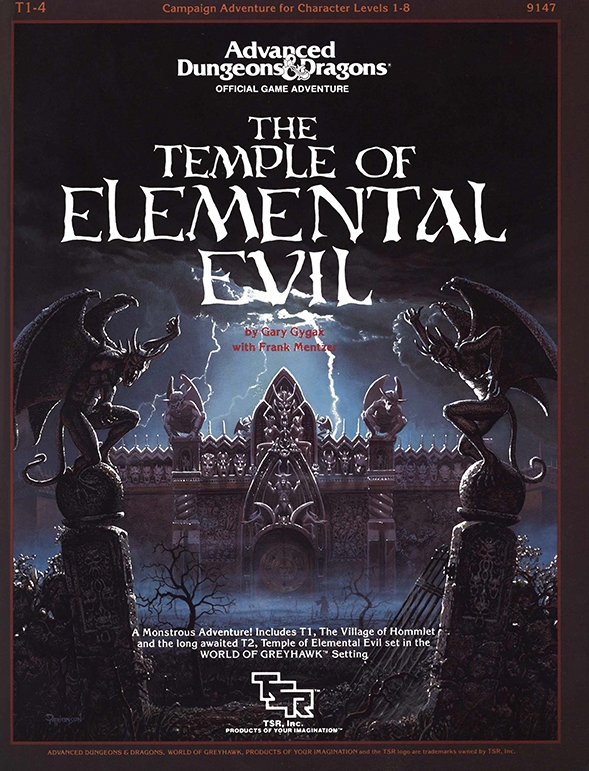
AE08Despite what my post last week may have implied, I too have been culling my RPG collection. This isn’t driven so much by a concern about space – that’s what garages are for, after all – but utility. In the thirty-five years I’ve been involved in this hobby, I’ve accumulated a lot of games, but how many of them do I actually play with any regularity? Heck, how many of them do I play at all?

The answers to those questions are surprisingly short, as I’ve discussed before. Of course, I’m not so stonyhearted that I’d consign to the flames (or at least eBay) any RPG I hadn’t played in the last year or two. I’m a hopelessly sentimental guy who revels in nostalgia and youthful memories. That’s why I keep around Gamma World and Gangbusters, neither of which I’ve played in decades. I used to play these games with great regularity and I hold out hope that I will get to do so again (plans are afoot for a new Gamma World campaign later this month!). But Blue Planet or Spycraft or even D&D settings like Planescape or Dark Sun? Nah.

Overall, then, my RPG collection is growing smaller, though I prefer to think of it as growing more “focused.” That said, its size isn’t wholly on a downward trend. That’s because, while I’m buying very few new games, I’m continuing – even increasing – my purchase of RPG fanzines.

When I was a kid, gaming fanzines weren’t on my radar. I read Dragon and, later, White Dwarf, and was vaguely aware of Different Worlds, but all three of those were professional magazines produced by game companies rather than photocopied (or “Xeroxed,” as we said back in the day) pages lovingly stapled together in someone’s basement and then sent through the mail. I dimly recall hearing about Alarums & Excursions, probably from one of the older guys who hung around the hobby shop, though, as they would have been quick to point out, A&E is an amateur press association, not a ‘zine, a distinction that’s still somewhat obscure to me even today.

Regardless, fanzines played a vital role in the early days of the hobby, disseminating not only news and reviews, but also ideas derived from what players and referees were actually doing with RPGs at the time. Reading them, one could see the myriad ways that roleplaying games were being interpreted and expanded upon, which in turn sometimes gave birth to whole new games and approaches to gaming, something that, even now, sets them apart from the slicker, better produced “pro ‘zines” that followed in their wake.

Read More Read More

Hell to Pay: The Devil and Daniel Webster in Print and on Film

Hell to Pay: The Devil and Daniel Webster in Print and on Film

The Devil and Daniel Webster Criterion DVD-smallIs there any place more melancholy than the graveyard of forgotten writers? While the reputations of even major literary figures can wax and wane, for genuinely innovative or influential authors, critical rebounds, if not assured, are at least possible. (Hemingway, anyone?)

But permanent eclipse seems to be the fate of the facile, ambitious middlebrow who was highly popular and overpraised during his or her prime. Once this kind of writer is no longer around to hold the stage with new work, a spell seems to be broken and often a speedy and ruthless (if not embarrassed) re-evaluation occurs, resulting in a quick trip to oblivion and a complete disappearance from the public consciousness. John O’Hara, Dorothy Parker, Irwin Shaw — where are you now? Often it’s not even a matter of an “official” verdict by the critical establishment  — it’s simply that a few years pass and no one reads the writer anymore.

One victim of this kind of reaction was Stephen Vincent Benét. A prolific producer of poetry and fiction from the 1920’s up until his death from a heart attack in 1943, Benét was both highly regarded by critics and popular with the wider public. His epic narrative poem of the American Civil War, John Brown’s Body, won the Pulitzer Prize in 1929, and there was a time when countless readers were familiar with his widely-anthologized story “The Devil and Daniel Webster,” a bit of nostalgic, patriotic Americana that blends history, the tall tale, and the supernatural into a fluent and beguiling concoction.

Published in 1936, “The Devil and Daniel Webster” tells the story of one Jabez Stone, a hard-working but struggling New Hampshire farmer. “He wasn’t a bad man to start with, but he was an unlucky man. If he planted corn, he got borers; if he planted potatoes, he got blight. He had good-enough land, but it didn’t prosper him; he had a decent wife and children, but the more children he had, the less there was to feed them.”

Read More Read More

Vintage Treasures: The Beast Master and Lord of Thunder by Andre Norton

Vintage Treasures: The Beast Master and Lord of Thunder by Andre Norton

Andre Norton Beast Master hardcover-small The Beast Maser Ace Double-small The Beast Master Ace-small

Andre Norton’s The Beast Master is one of the most famous Ace Doubles ever published.

It was also one of her most popular books. It was originally published in 1959, and it’s still in print today, 55 years later. To give you some understanding of how amazing that is, try and find a paperback from, oh, 2010 at your local Barnes & Noble. (It’s not easy — 98% of fiction paperbacks four years old are out of print already.) Ladies and gentlemen, that’s literary staying power.

The Beast Master has been reprinted in a number of handsome editions over the last five decades, with covers by Richard Powers, Ed Valigursky, John Schoenherr, Ken Barr, Julie Bell, and many other talented folks. If you’re a struggling midlist writer, that’s one more reason to be jealous of Andre Norton. She was covered by the best.

Read More Read More

Galaxy Science Fiction, February 1952: A Retro-Review

Galaxy Science Fiction, February 1952: A Retro-Review

Galaxy Science Fiction February 1952-smallThe February, 1952 issue of Galaxy included a pair of articles along with its fiction offering. I covered Robert A. Heinlein’s predictions from an article titled “Where To?” in a previous post. The other, by L. Sprague de Camp, reflects on science fiction from the late nineteenth and early twentieth centuries, assessing the failed predictions within older stories.

It seems odd to showcase an article about how science fiction authors failed to predict the future and then follow it up with a science fiction author predicting the future. But I digress…

“Double Standard” by Alfred Coppel — The protagonist is bent on space travel, even if he isn’t suitable for colonial breeding. With forged documents and the illegal work by a plasti-cosmetician, he’s ready to board a ship to anywhere.

This is a quirky tale with a predictable ending. But it’s short enough that it works.

“Conditionally Human” by Walter M. Miller, Jr. — Norris and his wife run a district pound, not for average dogs and cats, but for genetically modified creatures. Some are intelligent versions of dogs and cats while yet another breed, called neutroids, closely resemble humans. The neutroids only grow to specific, chosen ages between one and ten and remain at that level of development. They are suitable pets for C-class couples — people who have been deemed as having a defective heredity and thus are forbidden from having children of their own.

Read More Read More

Future Treasures: The Baen Big Book of Monsters, edited by Hank Davis

Future Treasures: The Baen Big Book of Monsters, edited by Hank Davis

The Baen Big Book of Monsters-smallMonsters!! And lots of ’em.

That’s all you need to know. Big monster book comin’. A Halloween-themed monster anthology, with a tantalizing a mix of classic reprints and original stories, all featuring REALLY BIG MONSTERS. Contributors include names that will be very familiar to Black Gate readers, such as Robert E. Howard, Henry Kuttner, William Hope Hodgson, Murray Leinster, James H. Schmitz, Arthur C. Clarke, H.P. Lovecraft, Robert Bloch, David Drake, and many more.

It even includes the pulp classic “The Monster-God of Mamurth” by Edmond Hamilton. And Harlan Ellison told us that story sucked when we wanted to reprint it. What does he know?

I approve of this Hank Davis fellow. His last anthology for Baen was the awesome In Space No One Can Hear You Scream, released last Halloween. This man is doing God’s work. Next time you run into him tell him he is blessed, and we’ll be rubbing elbows with the saints in the line to buy his book.

Here’s the book description, and the complete Table of Contents.

SIZE MATTERS

From the dragons of legend to Jack the Giant Killer’s colleague to King Kong and Godzilla, people have found the idea of giant creatures both scary and fascinating. Why so many should find accounts of a critter big enough to gulp down a puny human like an insignificantly small hor d’oeuvre or step on said human and leave a grease spot might be explained by the psychologists, but such yarns are undeniable fun.

Read More Read More

Blogging Sax Rohmer… In the Beginning, Part Three

Blogging Sax Rohmer… In the Beginning, Part Three

illo-Sax Rohmerrohmer2“The M’Villin” was first published in Pearson’s Magazine in December 1906. Rohmer was still writing stories under the modified version of his real name, A. Sarsfield Ward. The story represented a quantum leap forward in the quality of Rohmer’s fiction and shows the influence of Alexandre Dumas’s swashbucklers.

Dumas remained a surprising influence on the author who still turned out the odd swashbuckler as late as the 1950s. It should also be noted that the character of Lola Dumas in President Fu Manchu (1936) is said to be a descendant of the famous author, while The Crime Magnet stories Rohmer penned in the 1930s and 1940s feature Major de Treville, a character whose surname suggests he is a descendant of the commander of the Musketeers from Dumas’s D’artagnan Romances.

Colonel Fergus M’Villin may be oddly named, but he makes for a fascinating character. An expert swordsman and fencing master, he is also a bit of a cad. The story of how he comes to avenge the honor of the man he previously slew in an earlier duel maintains the breezy good humor and spirit of adventure that colors The Three Musketeers in its earlier chapters. Rohmer thought well enough of the character to have penned a sequel, “The Ebony Casket,” but it was never published. The manuscript survived up until the year 2000, when it was junked in Tokyo by a family who did not imagine its worth to collectors.

Read More Read More

Vintage Treasures: The Best of Murray Leinster, edited by Brian Davis

Vintage Treasures: The Best of Murray Leinster, edited by Brian Davis

The Best of Murray Leinster UK-smallHere’s a vintage curiosity for you.

Last June, I wrote a blog article on The Best of Murray Leinster, volume 14 in Lester Del Rey’s famous Classics of Science Fiction line. It’s one of my favorite titles in a series filled with great books.

Then earlier this year, I stumbled across the UK version of The Best of Murray Leinster for sale on eBay, with a gloriously pulpy cover by Peter A. Jones. I mean, just look at that thing (at left, click for bigger version.) Any time a guy with a 6-inch knife takes on a monster bigger than a Winnebago, you’ve got my attention. Especially when it involves that much purple.

Of course I wanted it. But it was expensive — $16.99, including shipping — and I couldn’t really justify it. (But believe me, I was sooooo close.) Besides, there seemed to be errors in the listing. The book was edited by J.J. Pierce, not Brian Davis. Also, it was first published in 1978, not 1976 as the listing claimed. Unless there were two books with the title The Best of Murray Leinster which, ha ha, would pretty ridiculous.

Turns out publishing is a pretty funny industry. According to the Internet Speculative Fiction Database, there are two books titled The Best of Murray Leinster. The first, subtitled A Memorial Anthology Selected by Brian Davis, was published in paperback in the UK by Corgi in 1976, the year after Leinster’s death. The US edition, from Del Rey, didn’t arrive until two years later.

Well, that’s all the excuse I needed to order the UK version. It arrived a few weeks later, and I was delighted to discover that it’s a completely different book, with only three stories in common with its American cousin: “The Ethical Equations,” “Symbiosis,” and “Pipeline to Pluto.” The remaining seven include some of Leinster’s more entertaining short stories, which were somehow left out of the US edition — such as “Sam, This Is You” and “If You Was a Moklin.”

Read More Read More

Art of the Genre: The Art of Selling your Past

Art of the Genre: The Art of Selling your Past

photoConsidering the fact that James ‘Grognardia’ Maliszewski is one of my office mates here in Black Gate L.A., I’m often inspired by what he has to say on the subject of gaming.  Now sure, James comes at the hobby from a more mechanics angle, while I take on the artistic side, but nonetheless, we are still cut from the same cloth and overlap on many details [he’s two years older than me, so MUCH wiser].

After reading his The Golden Age article this week, I couldn’t help but find an odd pleasure in the fact that I too was revisiting my gaming past, only once again from a different angle.

So, when he posted his image of the ‘treasure’ found at his ancestral home, I couldn’t help but smile because I’d just taken a picture similar to it myself the day before.  You see, James, according to the article, was enjoying the nostalgia of his TSR collection in his visual framing, but for me, I was working toward the reality of parting ways with mine.

Over the past three weeks, I’ve been selling off parts of my RPG collection.  It began as a quest to raise capital for other projects, but as it continued, it turned into a kind of cathartic shedding of unneeded pounds.  Last year, I wrote an article for Black Gate entitled The Weight of Print, and over the past weeks I’ve toted at least a hundred pounds of books to the USPS from my RPG shelves.

Read More Read More

The Golden Age

The Golden Age

Optimized-IMG_5384There’s a famous epigram mistakenly attributed to a number of different people – as famous epigrams so often are – that states that “the golden age of science fiction is twelve.” Some quick research into the matter reveals that its actual author was Peter Graham, an editor of fanzines in the late 1950s and early ’60s. My research also revealed that the original quote stated the golden age of science to be thirteen.

I turned thirteen in the Fall of 1982, three years after I first discovered Dungeons & Dragons. By that time, I was hopelessly in the thrall not just of D&D, but of a wide variety of roleplaying games. RPGs played a very important role in my young life, complementing many of my earlier interests and hobbies (like mythology, science fiction, and fantasy) and fostering many news ones (such as history, foreign languages, and philosophy). It is no exaggeration to say that I’d be a completely different man today if it weren’t for these games.

Consequently, I tend to look back on that time as a golden age, a time when the hobby of roleplaying was just right for a kid like me. I was reminded of this recently when I returned to visit my mother at my childhood home. Though I haven’t lived in that house on a permanent basis since I first went away to college in 1987, it still holds a great many things belonging to me that I simply hadn’t had the time to take with me as I traveled up and down the East Coast of North America. This year, I vowed that, during my visit, I’d do a proper inventory of what I’d left behind so that I could get rid of the stuff I didn’t want and once again take possession of at least some of the rest.

What I found was a time capsule of the inner life of my thirteen year-old self.

Read More Read More

The Public Life of Sherlock Holmes: The “Lost” Holmes Story

The Public Life of Sherlock Holmes: The “Lost” Holmes Story

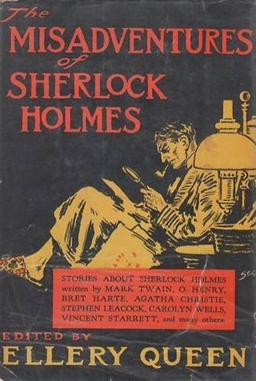
Wanted_CosmoThere are 60 original Sherlock Holmes stories written by Sir Arthur Conan Doyle: 56 short stories and 4 novels (novellas, really). He also wrote two very short Holmes “bits” that are not included in the official Canon, though all acknowledge they are his works.

In August of 1948, the Doyle Estate added a 61st story to the official list when Cosmopolitan proclaimed  “FOUND! The Last Adventure of SHERLOCK HOMES, a hitherto unpublished story by Sir Arthur Conan Doyle.”

Included in that issue was “The Man Who Was Wanted,” a long lost Holmes tale from the pen of Doyle himself. Five months later, London’s Sunday Dispatch serialized it in three installments during January of 1949.

Rumors of the story’s discovery had started in 1942 and Hesketh Pearson, the man who found it while working on an authorized biography of Conan Doyle, had printed the beginning of the story and commented on it in Conan Doyle: His Life and Art.

Notable Baker Street Irregulars such as Edgar Smith, Vincent Starrett, and Anthony Boucher raised a hue and cry for the story to be published. For Sherlockians, this was on a par with the discovery of a Homeric account of the first nine years of the Trojan War!

Read More Read More