Browsed by
Category: Series Fantasy

Dwarves, Dragons, Wizards and Elves: Thinking About the Standard Fantasy Setting

Dwarves, Dragons, Wizards and Elves: Thinking About the Standard Fantasy Setting

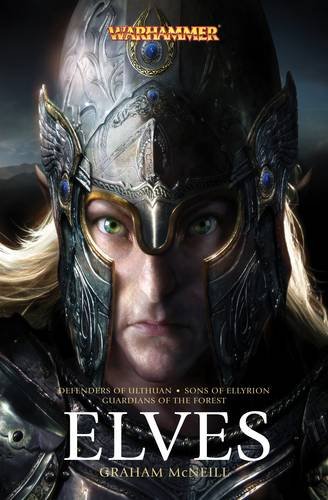
Warhammer Elves-smallYou know, for a genre that should be based entirely around the thing, Fantasy really is lacking in that lovely little commodity everyone calls imagination.

I’m serious; there are three-book series kicking around called Elves, Dwarves, and Orcs respectively. That’s pretty much the holy trinity of fantasy clichés right there. And all the book covers I’ve seen lately feature these grizzled, Batman-ish, waylander types, which is fine, because Batman kicks butt, when he starts cropping up everywhere he just gets annoying, with all his gritty, gravelly-voiced sadness.

Despite the fact that fantasy is a genre in which the writer can do literally anything, put their characters in whatever situation they damn well please, everyone seems way too content with dwarves, dragons, wizards, and elves. We could have quadruple amputees with tentacles for eyes who fight off the slavering hordes of hell by playing rock guitar solos with their earlobes, but nope, we’re happy with elves.

My point is that fantasy, and all the genres like it, give writers a medium through which they can explore every facet of the human imagination, test the very limits of what we, as human beings, can envision and relate to, what’s within our power to articulate. Fantasy challenges writers to make social commentary and philosophical statements within the most fantastic and diverse circumstances possible. Fantasy has the potential to take its readers to places they could never conceive of, on adventures that transcend comprehension; with this tool, fantasy could become the most beautiful, poetic, and diverse form of escapism we have.

It could be, if we didn’t focus so much on the elves, the dwarves, and the dragons, but we do, because we’re idiots.

Read More Read More

Vintage Treasures: The White Bird of Kinship Trilogy by Richard Cowper

Vintage Treasures: The White Bird of Kinship Trilogy by Richard Cowper

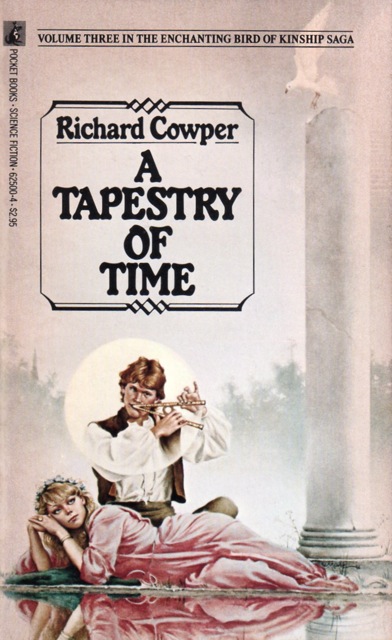
The Road to Corlay-small A Dream of Kinship-small A Tapestry of Time-small

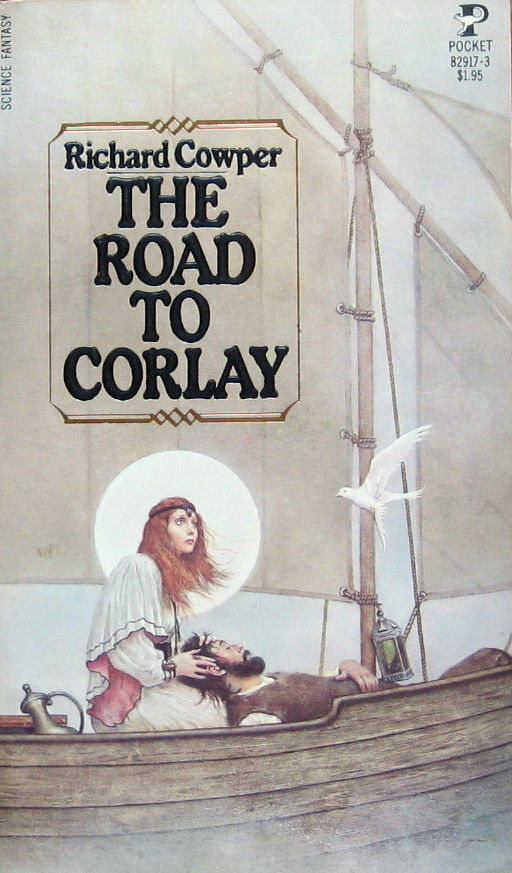
A lot of people were talking about Richard Cowper’s The Road to Corlay just as I was discovering fantasy in the late 70s. It appeared in the UK in 1978, and was published in paperback in the US by Pocket Books in 1979, with a striking cover by Don Maitz (above left). It was nominated for the British Fantasy Award in 1979, and both the Nebula and Balrog awards in the US a year later. It also placed 7th on Locus’s annual lists for Best SF novel.

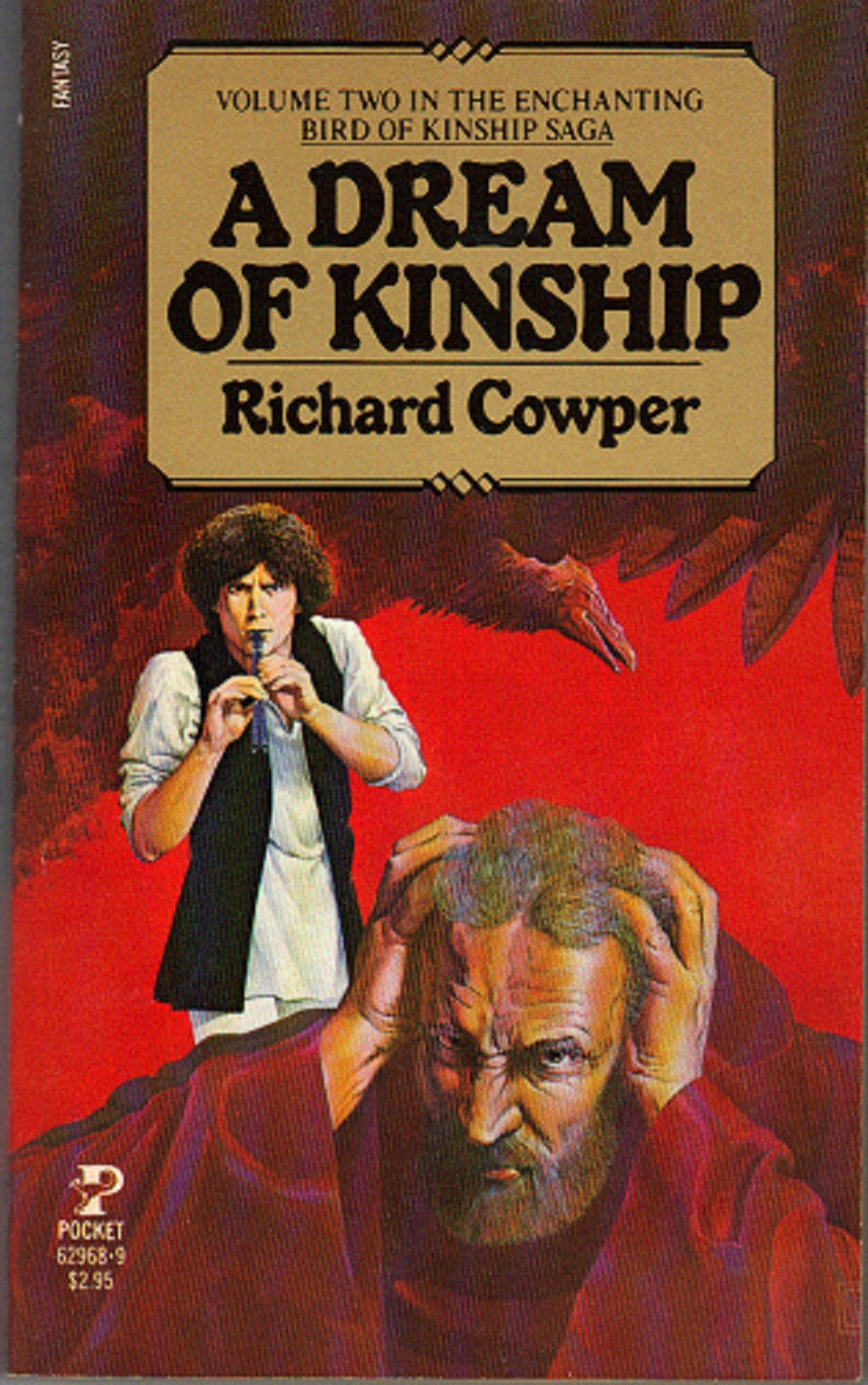
I wasn’t even aware it was a series until many years later, as I gradually stumbled on the sequels. Volume two, A Dream of Kinship, was published in 1981, and A Tapestry of Time followed in 1982. The cover artist of the second volume is unknown, but Don Maitz returned for the third book (above right). Click on any of the images for bigger versions.

Richard Cowper was a pen name for John Middleton Murry, Jr, a UK author who died in 2002 — of a broken heart, according to his friend Christopher Priest, following the death of his wife Ruth four weeks earlier. He wrote several other SF and fantasy novels, the most famous of which was probably The Twilight of Briareus (1974); his other titles included Clone (1972), Time Out of Mind (1973), Worlds Apart (1974), and Profundis (1979) (see our coverage of his other US releases here). I found the complete trilogy in the estate of my sister-in-law Mary, who passed away in May, and brought it home with me to read for the first time. We shared an interest in SF and fantasy, and these books remind me of her.

New Treasures: The Shotgun Arcana by R. S. Belcher

New Treasures: The Shotgun Arcana by R. S. Belcher

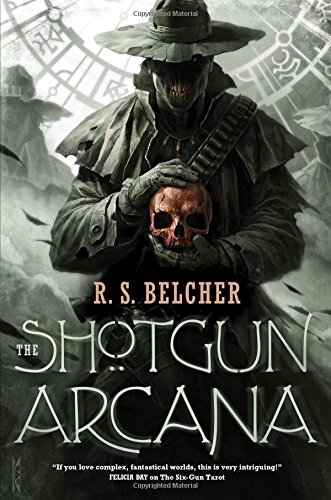
The Shotgun Arcana-smallWe covered R.S. Belcher’s first Golgotha novel, The Six-Gun Tarot, in April, as part of my review of the current crop of Weird Westerns. Now Belcher returns to the bustling frontier town of Golgotha, Nevada, a place that hides more than its fair share of unnatural secrets, in The Shotgun Arcana.

Don’t know much about this R. S. Belcher fellow. He doesn’t have a website, and his only other publications are two short stories that appeared in Star Trek: Strange New Worlds 9 and Deep Cuts.  A background check on the Black Gate supercomputer reveals that he runs Cosmic Castle, a comic book shop in Roanoke, Virginia, and that Tor.com interviewed him in October. That’s enough to make him alright in our book.

1870. A haven for the blessed and the damned, including a fallen angel, a mad scientist, a pirate queen, and a deputy who is kin to coyotes, Golgotha has come through many nightmarish trials, but now an army of thirty-two outlaws, lunatics, serial killers, and cannibals are converging on the town, drawn by a grisly relic that dates back to the Donner Party… and the dawn of humanity.

Sheriff Jon Highfather and his deputies already have their hands full dealing with train robbers, a mysterious series of brutal murders, and the usual outbreaks of weirdness. But with thirty-two of the most vicious killers on Earth riding into Golgotha in just a few day’s time, the town and its people will be tested as never before — and some of them will never be the same.

The Shotgun Arcana was published by Tor Books on October 7, 2014. It is 400 pages, priced at $25.99 in hardcover and $12.99 for the digital version. The deliciously creepy cover is by Raymond Swanland.

Amazon Announces its Top-Selling Books of 2014

Amazon Announces its Top-Selling Books of 2014

The Blood of Olympus-smallAmazon.com has announced its top-selling books of 2014, and the list includes half a dozen fantasy novels.

This isn’t a truly definitive breakdown of top sellers for the year, since it’s just from one bookseller (as powerful as Amazon may be). Also, 2014 isn’t even over yet, fer cryin’ out loud.

Still, it’s an interesting list, with plenty on it for fantasy fans — including several popular series (The Heroes of Olympus, The Mortal Instruments, and two Outlander books, just to name a few), and a standalone novel from Stephen King. The most surprising thing about the list, however, is that Amazon claims that Jeff Kinney’s Diary of a Wimpy Kid is the only title on the list to sell more copies in print than for the Kindle.

Here’s the complete list.

  1. The Invention of Wings by Sue Monk Kidd
  2. Gray Mountain by John Grisham
  3. All The Light We Cannot See by Anthony Doerr
  4. Twenty Seconds Ago by Lee Child (Jack Reacher No. 19)
  5. Big Little Lies by Liane Moriarty
  6. The Target by David Baldacci (Will Robie series)
  7. The Fixed Trilogy by Laurelin Paige
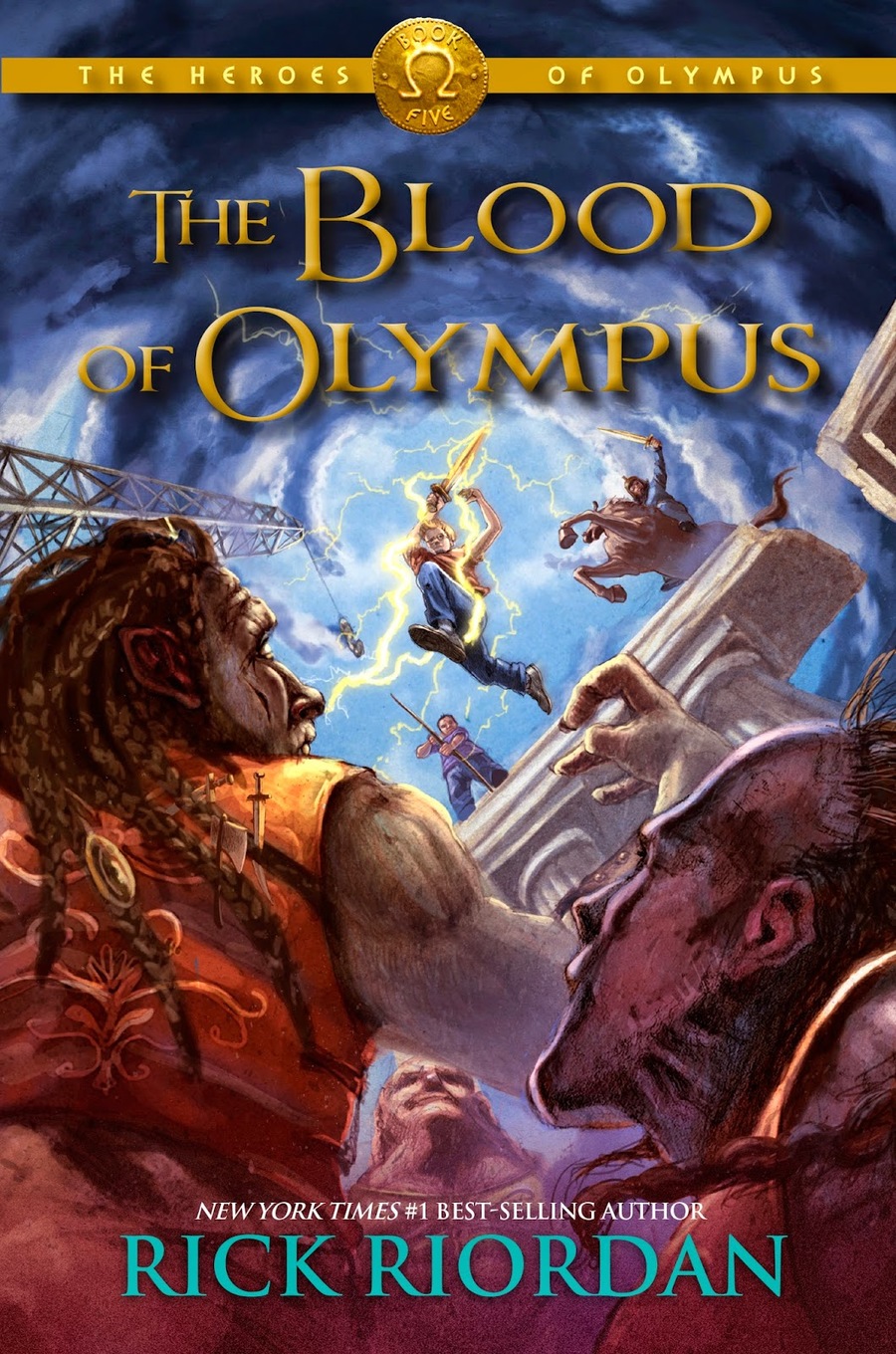
  8. The Blood of Olympus by Rick Riordan (The Heroes of Olympus, Book Five)

    Read More Read More

The Series Series: Clariel by Garth Nix

The Series Series: Clariel by Garth Nix

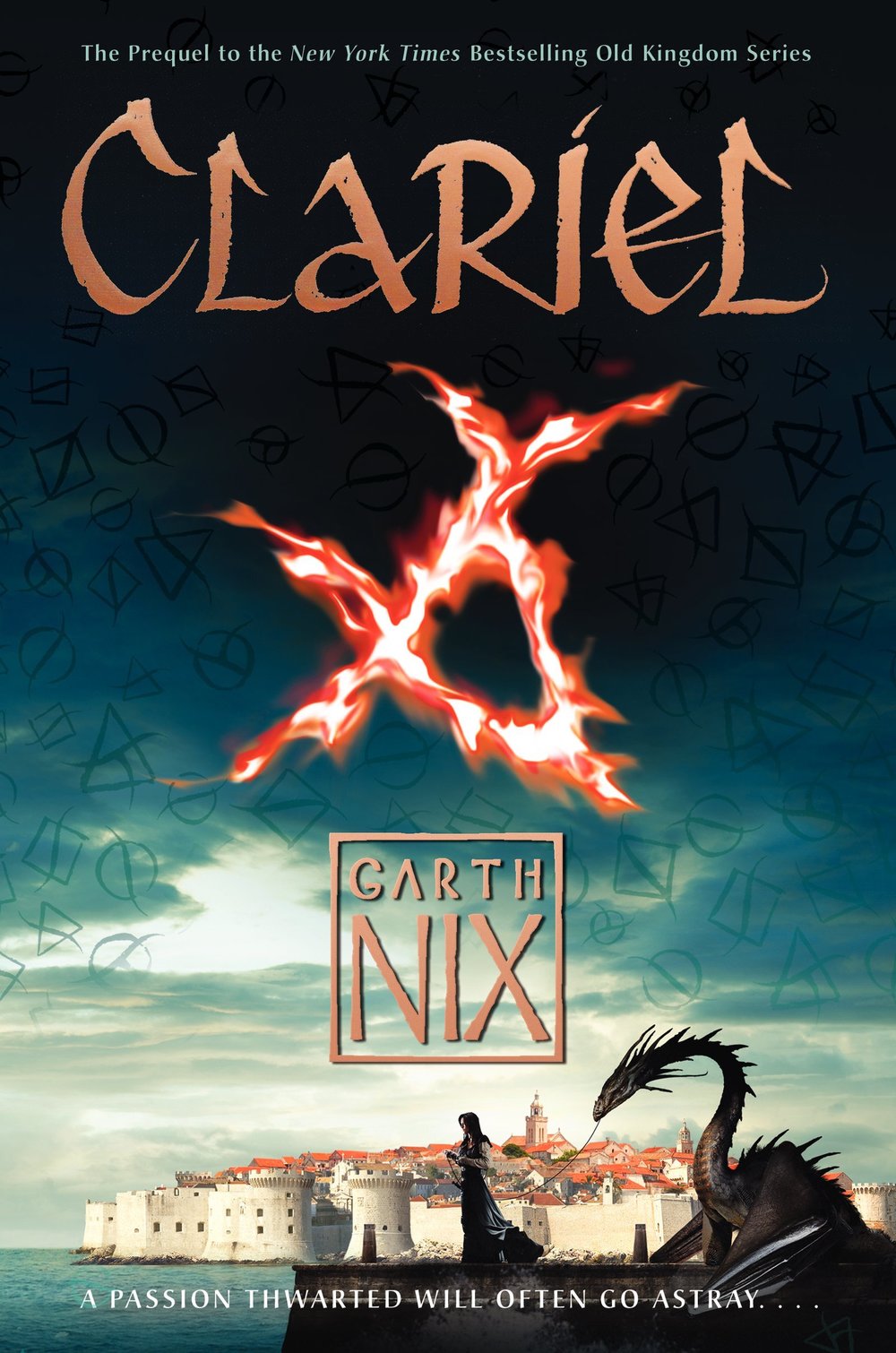
Clariel Garth Nix-smallClariel is a surprise, not quite like anything we’ve seen from the Garth Nix’s Old Kingdom series. For a longtime fan of the Old Kingdom, Clariel stands alone well — its plot arc is complete and satisfying in one volume — but for a newcomer to the Old Kingdom, it’s still best to start at the beginning. Fortunately for any of you who are newcomers, the beginning is awesome and absolutely worth backtracking for.

Like its predecessors, Clariel offers exceptionally disturbing monsters, the tragic undead, gorgeous worldbuilding, and coming-of-age anxiety that uses its powers for good. Well, in Clariel, the good is more complicated than ever before, because the title character has no talent for the Charter Magic that could connect her to the natural laws and relationships that make her world possible. Clariel’s knack is for Free Magic. While the Free part sounds good at first, Free Magic tends to corrode all relationships based on compassion, protection, and kinship, instead dragging its human practitioners into the thrall of monstrous beings older than the world. How can a girl with such a knack come into her power without destroying everything she holds dear?

Garth Nix’s novels of the Old Kingdom are among my favorite YA books. The first volume, Sabriel, is a consistent favorite of my students, too. A family of benevolent necromancers keep the dead down in a nation that barely holds together against a deviously masterminded invasion from the afterworld. Sabriel comes of age as she struggles to save what’s left of a basically failed state. The title character in Lirael discovers her connection with the Abhorsen family a generation later, when the Old Kingdom’s fragile new peace is threatened by an even more ancient foe, and in Abhorsen the whole family gathers for some very deep magic that opens new questions about the underpinnings of their whole world.

Read More Read More

Thongor of Lemuria – Part One by Lin Carter

Thongor of Lemuria – Part One by Lin Carter

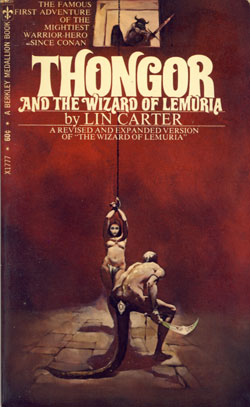
BerkleyX1777If I didn’t know better, I’d swear Lin Carter’s Thongor of Lemuria novels were a deliberate exercise in camp. The first two novels in the seven book series, Thongor And The Wizard of Lemuria (1965) and Thongor And The Dragon City (1966), are so frenetic and exaggerated there are times it’s difficult to believe they were intended to be taken seriously. I struggle to believe that Carter hadn’t meant for me to laugh when I read that Thongor distrusted magic because of his “clean healthy, Northlander blood.”

But I do know better. Much has been written (some of it by me) about Lin Carter’s love for heroic fantasy and his efforts to emulate his favorite writers in his own books. The Thongor stories read like he took Robert E. Howard’s Conan stories, smooshed them together with Edgar Rice Burroughs’ John Carter novels, then cranked everything up to eleven. But, and this is true of his Lovecraft Mythos fiction too, he mimics the style of his literary heroes without ever conveying the substance that gives power to their work to this day.

To give Lin Carter his due, Wizard of Lemuria is his first published novel and Dragon City his third in only two years. In those ancient times, there was little new swords & sorcery of the mighty barbarian type being written. Michael Moorcock and Fritz Leiber were tweaking (and tweaking the nose of) the genre and Karl Edward Wagner and Charles Saunders were still kids. The big boom was right around the corner, but it hadn’t happened yet. He took the chance and stepped up to create the sort of stories he wanted to see and that’s something I will always respect.

One of the earliest reviews at my site, Swords & Sorcery: A Blog, was of Thongor And The Wizard of Lemuria (so, yes, for those of you who’ve read it, I have indeed read it a second time). It was harsh and a little intemperate. I’ve since decided that reviews of that sort don’t serve any real purpose. I also don’t want to pick on someone who can’t fight back. I want my reviews to promote the good books and understand why the weak ones fail and encourage better writing.

Like August Derleth and Sprague de Camp, Lin Carter’s too readily bad-mouthed these days (except when the stupendously important Ballantine Adult Fantasy Series is mentioned). I don’t think his fiction is read that much anymore and I feel I owe him at least the courtesy of that. So I’m going to plow through the series and report back to you, Black Gate‘s faithful readers.

Read More Read More

The Hardy Boys Meet M.R. James: The Supernatural Mysteries of John Bellairs

The Hardy Boys Meet M.R. James: The Supernatural Mysteries of John Bellairs

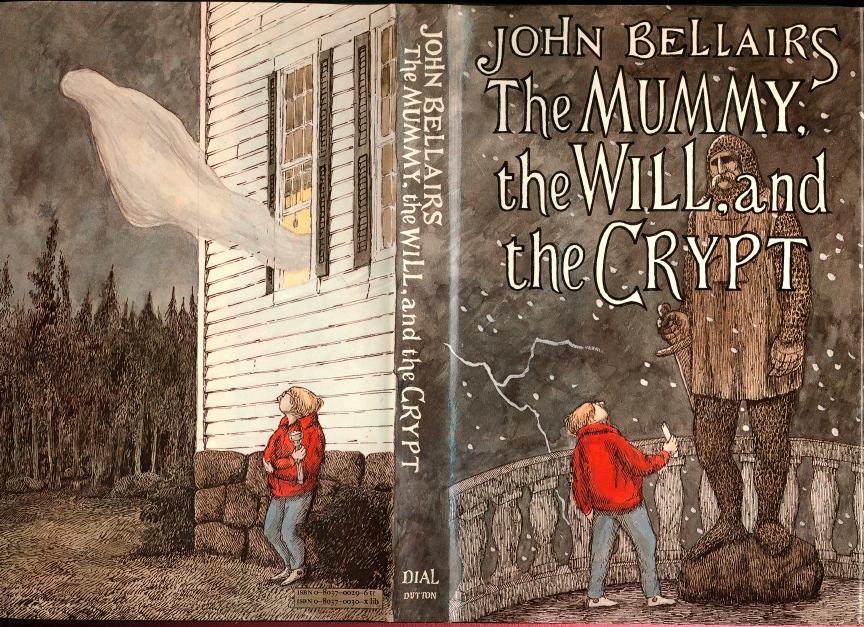
The Mummy, the Will, and the Crypt-smallIn the world of publishing today, books written for children and young adults are the tails that are increasingly wagging the dog, especially when those books also fall into the horror, fantasy, or science fiction categories. Many mainstream or “literary” authors would probably sell their souls to Voldemort for the kind of success that J.K. Rowling achieved with her Harry Potter books, though Thomas Pynchon or Phillip Roth pushing Harry from his place atop the bestseller lists would be rather like a Marxist literary critic becoming a judge on Dancing With the Stars. (That’s something I’d like to see, actually.)

One relatively new aspect in this ascendance of what is called YA (or young adult) fiction is its popularity with older readers. Where in previous years some might be embarassed to be seen reading books written for younger readers, now there is nothing unusual in seeing people with jobs, mortgages, and children of their own eagerly perusing The Hunger Games or Twilight.

And why not? (Well, I could give you a big why not for Twilight, but that’s another matter.) Good writing comes in all sorts of packages, and there are plenty of legitimate pleasures to be had in reading the best YA books.

However, in sorting through the many worthwhile reads available in this era of new-found YA respectability, it is easy to overlook work that was written before the current boom; some fine authors of only twenty or thirty years ago are now unjustly neglected, their reputations eclipsed by those who are fortunate enough to still be alive and producing new work in this YA golden age (a golden age of cultural visibility and publishing advances, if nothing else.)

One such writer who perhaps came just a little too early was the once highly popular writer of children’s supernatural mysteries, John Bellairs, who died in 1991.

If Bellairs is remembered by fantastic fiction readers at all, it is for his single adult novel, the superb and eccentric fantasy The Face in the Frost, which was published to little notice in 1969. (Though in his 1973 history of the genre, Imaginary Worlds, the ever-perceptive Lin Carter hailed it as “one of the best fantasy novels to appear since The Lord of the Rings.”)

Read More Read More

New Treasures: Elisha Barber by E.C. Ambrose

New Treasures: Elisha Barber by E.C. Ambrose

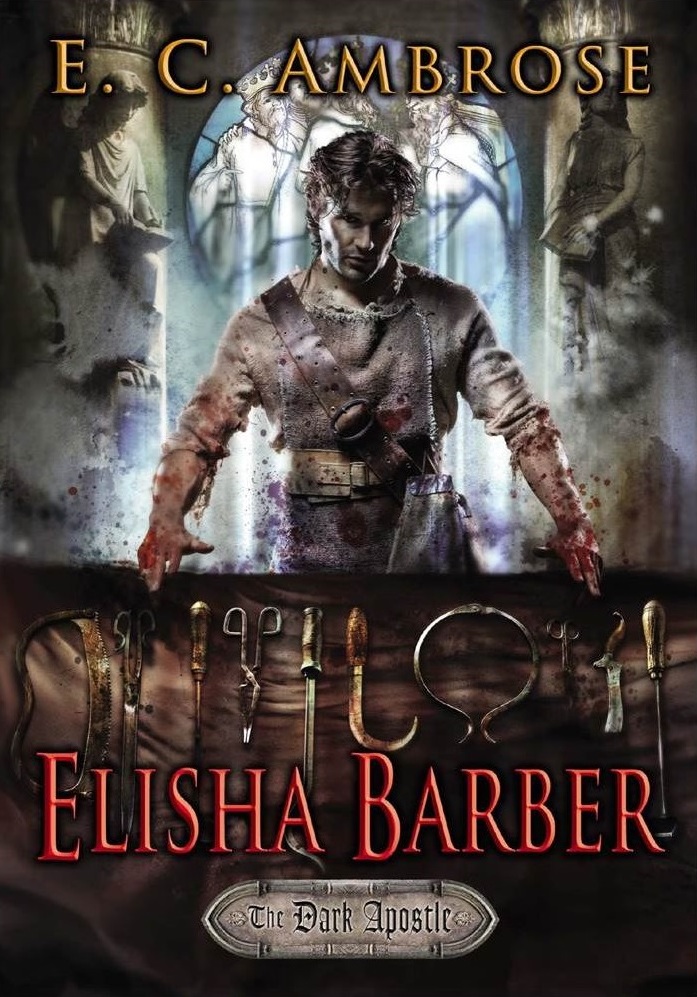
Elisha Barber E C Ambrose-smallI missed E.C. Ambrose’s Elisha Barber when it was released over the summer. But I met the author, and found a copy in my freebee bag, at the World Fantasy Convention, and it seemed like I was missing out on a promising new voice in fantasy. I started reading it today; so far it’s a fast moving and well written dark fantasy of an alternative fourteenth century of brutal war, necromancy… and stranger things.

England in the fourteenth century: a land of poverty and opulence, prayer and plague… witchcraft and necromancy.

As a child, Elisha witnessed the burning of a witch outside of London, and saw her transformed into an angel at the moment of her death, though all around him denied this vision. He swore that the next time he might have the chance to bind an angel’s wounds, he would be ready. And so he became a barber surgeon, at the lowest ranks of the medical profession, following the only healer’s path available to a peasant’s son.

Elisha Barber is good at his work, but skill alone cannot protect him. In a single catastrophic day, Elisha’s attempt to deliver his brother’s child leaves his family ruined, and Elisha himself accused of murder. Then a haughty physician offers him a way out: come serve as a battle surgeon in an unjust war. Between tending to the wounded soldiers and protecting them from the physicians’ experiments, Elisha works night and day. Even so, he soon discovers that he has an affinity for magic, drawn into the world of sorcery by Brigit, a beautiful young witch… who reminds him uncannily of the angel he saw burn.

In the crucible of combat, utterly at the mercy of his capricious superiors, Elisha must attempt to unravel conspiracies both magical and mundane, as well as come to terms with his own disturbing new abilities. But the only things more dangerous than the questions he’s asking are the answers he may reveal.

Elisha Barber is the first novel in The Dark Apostle series; the second volume, Elisha Magus, was released on July 1, 2014. Elisha Barber was published on June 3, 2014 by DAW Books. It is 386 pages, priced at $24.95 in hardcover, $7.99 in paperback, and $6.99 for the digital edition. The cover is by Cliff Nielsen. Download the first three chapters at E.C. Ambrose’s website

Some Things Need to Be Broken: Seeker’s Mask by P.C. Hodgell

Some Things Need to Be Broken: Seeker’s Mask by P.C. Hodgell

oie_2451036wNYLnR2P
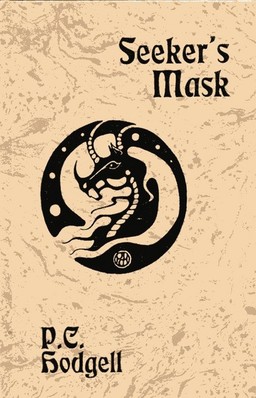
Cover by P.C. Hodgell

A friend once told me of his desire to see a movie with even more action than Die Hard. He envisioned a film with action from first frame to last. I bring this up because the third book of P.C. Hodgell’s Kencyrath series, Seeker’s Mask (1995) is one of the most fast moving, packed-to-the-gills-with-thrills books I have ever read. It may not be the all-action nirvana my friend hoped for, but it’s about as close as I’ve ever found.

It starts in the rules-smothered confines of the Women’s Halls, and then whips Hodgell’s heroine Jame up and down the world before ending in the middle of a barbarian tribe’s fiery ceremony. Invisible assassins, gods, malign magics, and trips into people’s minds smash up against one another for the reader’s attention. If all I did was list the events in Seeker’s Mask, this article would be twice as long as I want it to be.

Jame is a Highborn of the Kencyrath, one of three species molded into one race by their god to fight against Perimal Darkling. The Highborn are the rulers and priests and the fewest in number. The most numerous species, the Kendar, are the soldiers and craftsmen. Finally there are the leonine Arrin-Ken, who served as the race’s judges until frustration led them to leave Kencyrath society in order to decide what needed to be done next in the war against Perimal.

Thousands of years ago, the High Lord Gerridon betrayed his people to Perimal Darkling in exchange for immortality. Two-thirds of the Kencyrath were killed and the survivors fled to the world of Rathilien.

In the previous book, Dark of the Moon (1985), Jame had reunited, after a decade of separation, with her twin brother, Torisen, Lord of the House of Knorth, and High Lord of all the Kencyrath. He and the Kencyrath armies had just emerged victorious from a great battle against the Waster Horde (read the review here). As the only other known member of the House of Knorth, Jame’s sudden appearance throws political calculations out of whack.

Read More Read More

Notes On Writing Spec Fic, Late 2014

Notes On Writing Spec Fic, Late 2014

A Book CoverIt’s such a predictable trap. In or near an elevator, I tell some newly met, well-intentioned stranger that I’m a writer, and they immediately ask, as if they’ve waited all their lives for this very opportunity to arise, “What sort of books do you write?”

And that’s the end, you see, or at least the end of any potential new friendship, because if I answer “I write fantasy,” which is true, they start sniggering and feel superior, or if I answer, “I write horror,” they run off, laughing hysterically at my bad taste –– and of course then they feel even more superior.

Worst answer of all: “I write literary fiction.” Then they assume I’m a genius and their eyes glaze over, because they feel they absolutely must pay attention to every single word I say, in hopes of gleaning a pearl. I become the social equivalent of bubonic CliffsNotes.

Thus Renner & Quist, and Check-Out Time, because I want to craft stories that employ elements of multiple genres and literary currents. The danger, I suppose, is that I wind up with tossed salad, but I don’t believe that’s been the result. What reviews there’ve been suggest that I’m correct to think I’ve avoided the splatter-punk of, say, Jackson Pollock.

Read More Read More