Browsed by
Category: Rich Horton

Retro Reviews: Amazing Science Fiction, June 1960 and July 1960

Retro Reviews: Amazing Science Fiction, June 1960 and July 1960

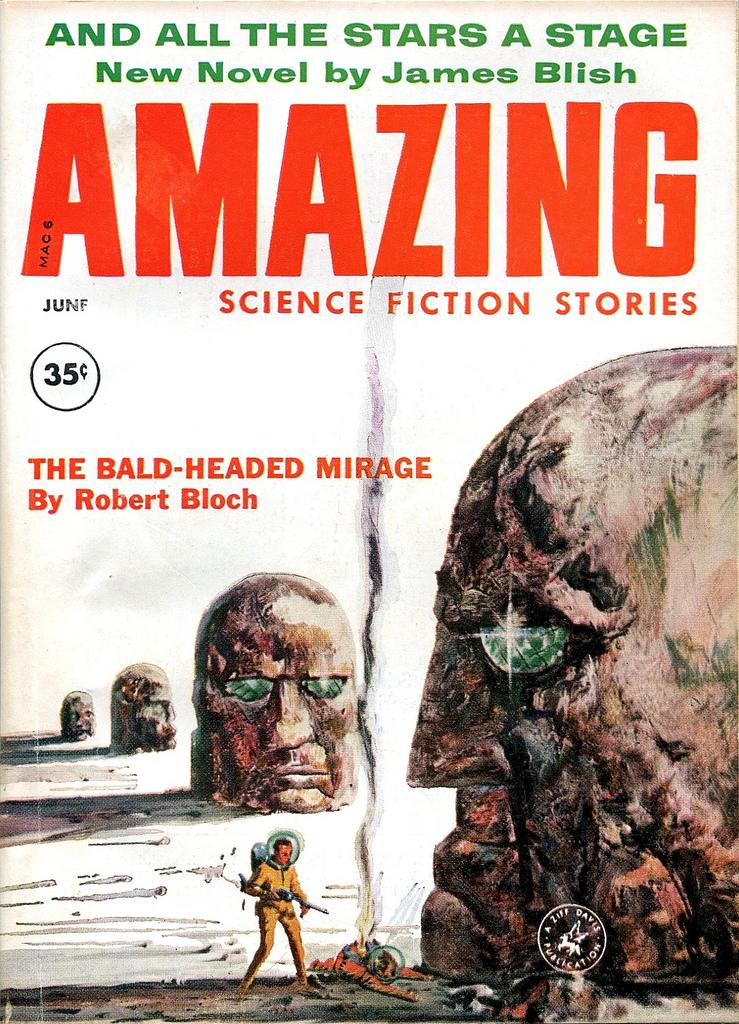
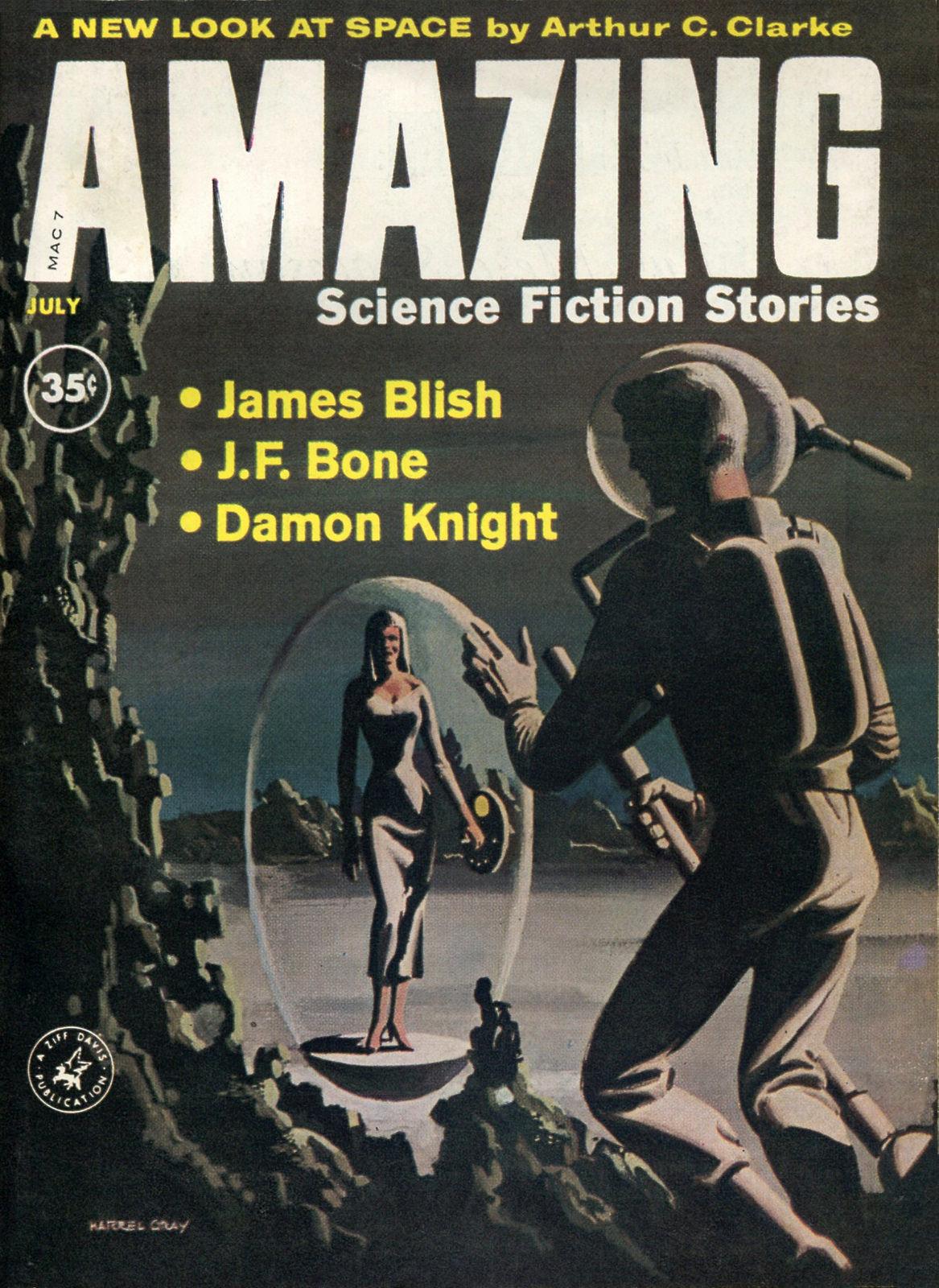
Amazing Science Fiction June 1960-small Amazing Science Fiction July 1960-small

Two more issues from 1960, which more and more seems to me to be the year Cele Goldsmith really began to hit her stride. I’m covering these two because they contain both parts of a serial, James Blish’s …And All the Stars a Stage.

The June cover is by Leo Summers, illustrating Robert Bloch’s “The Bald-Headed Mirage.” Interiors are by Finlay and Varga. For July the cover is by Harrel Gray, not illustrating any story. Interiors are by Finlay, Varga, and Grayam.

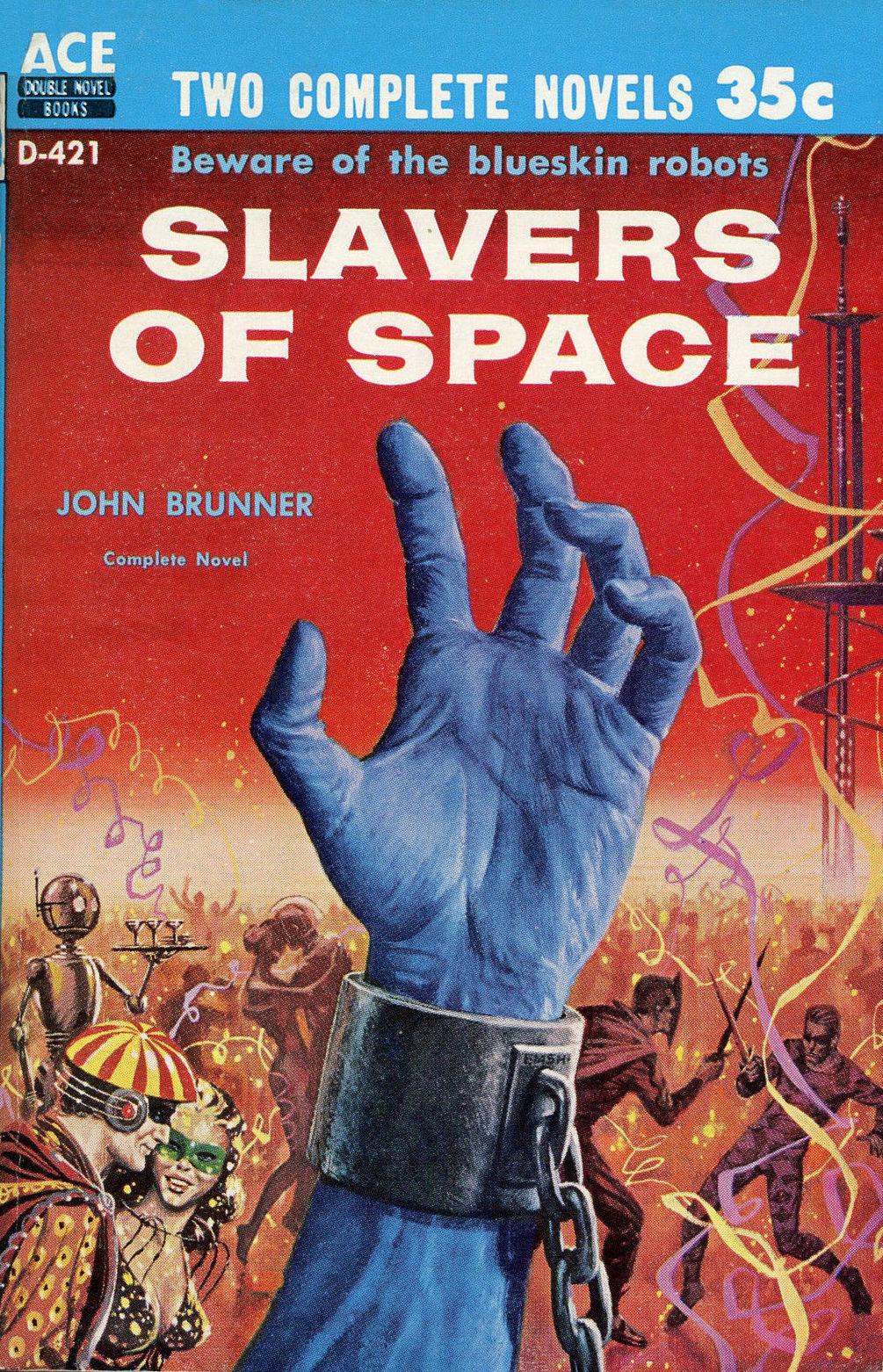
Norman Lobsenz’ June editorial is about death rays, and sterilization schemes. The book review column, The Spectroscope, by S. E. Cotts, covers Chad Oliver’s Unearthly Neighbors and John Brunner’s Slavers of Space, both favorably. The letter column features Mike Deckinger; B. Joseph Fekete, Jr.; Paul Shingleton, Jr.; Paul Zimmer, Scott Neilson; Bob Adolfsen, N. C., Lenny Kaye; and A. D. Scofield. The only names I recognized were Zimmer (Marion Zimmer Bradley’s brother) and Kaye, whose letter is his first, wherein he calls himself “the loneliest fan in the state of New Jersey.” Kaye’s second letter appeared the next issue … I’ll discuss him in the next paragraph. Mike Deckinger was also a pretty prominent fan, and folks who were around back them remembered Fekete and Shingleton as well.

Read More Read More

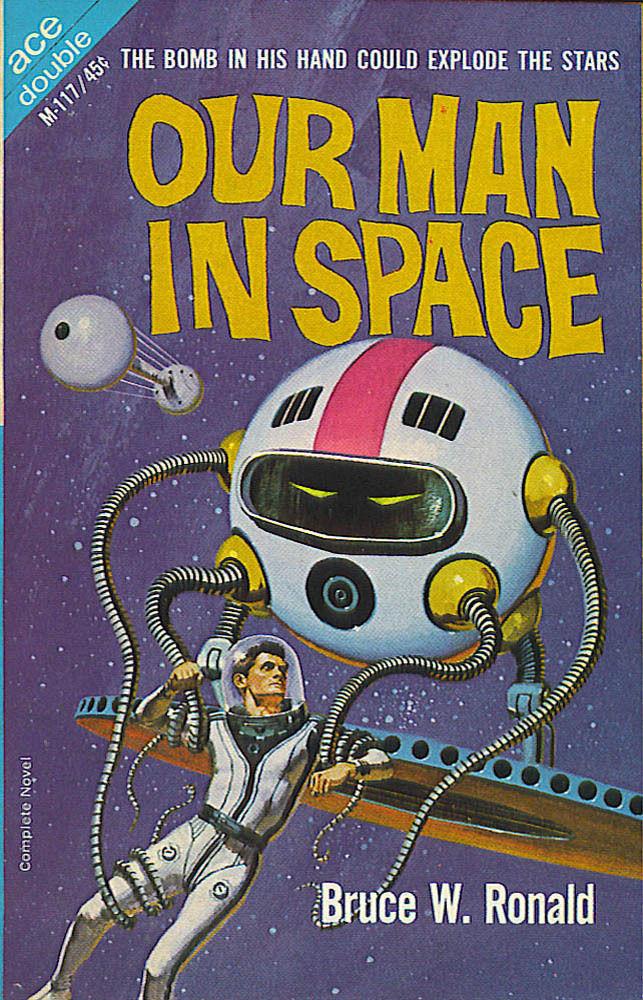
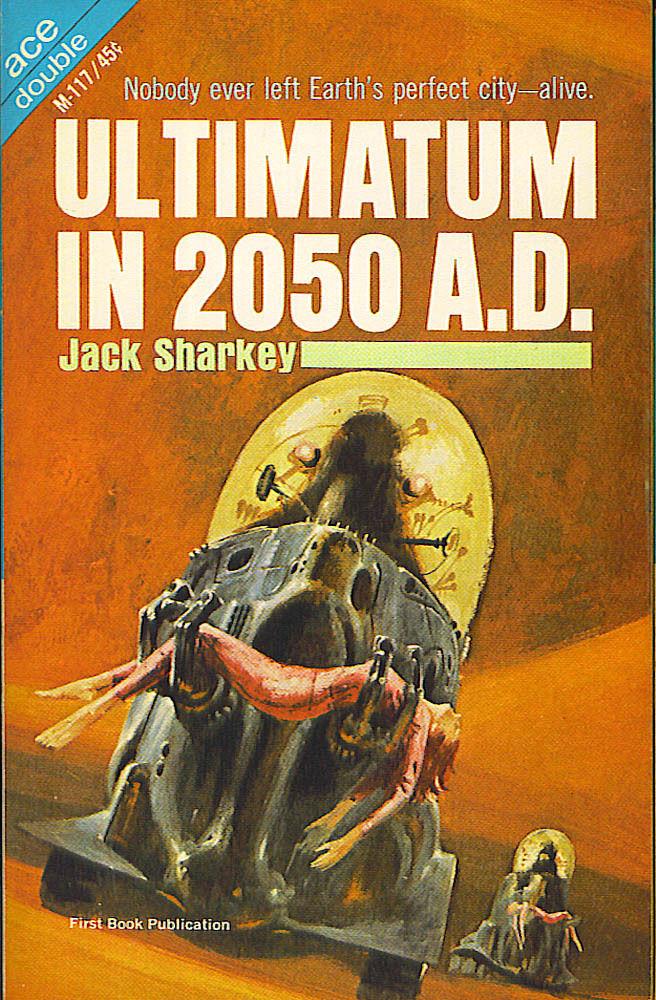
Beautiful Galactic Women, Hive Dwellings, and Robot Goons: Rich Horton on Our Man in Space/Ultimatum in 2050 A.D.

Beautiful Galactic Women, Hive Dwellings, and Robot Goons: Rich Horton on Our Man in Space/Ultimatum in 2050 A.D.

Our Man in Space-small Ultimatum in 2050 AD-small

Rich Horton continues his exploration of the Ace Double line at his website Strange at Ecbatan. His recently reviewed a pair of largely forgotten novels, Our Man in Space by Bruce Ronald, and Ultimatum in 2050 A.D. by Jack Sharkey, originally published in 1965 as Ace Double #M-117. In his opening comments, Rich highlights one of the more appealing aspects of later Ace Doubles — they remain inexpensive and easy to find.

Most of the previous Ace Double reviews I’ve done feature books I’ve chosen because I had at least some interest in one of the writers. This one was a lot more random — basically, it was inexpensive and it was available at a dealer’s table at a recent convention… I had never heard of Bruce Ronald, and while I know Jack Sharkey’s name well, from any number of stories in early 60s magazines, he’s never been a particular favorite of mine… Sharkey wrote four short novels, three of them (including Ultimatum in 2050 A. D.) serialized in Cele Goldsmith’s magazines, Amazing/Fantastic.

Our Man in Space is a very minor work of SF, but for much of its length it’s amusing enough… It’s about an actor, Bill Brown, who is hired as a spy for Earth, because of his acting skill and his resemblance to an Earth diplomat, Harry Gordon, who has been killed. Brown’s job is to impersonate Gordon, and to travel to Troll, where Harry Gordon has been hired by the officials of Troll to find out when overpopulation pressures will cause Earth to explode…

Read More Read More

Gypsies, Paupers, Demons and Swans: Rich Horton’s Hugo Recs

Gypsies, Paupers, Demons and Swans: Rich Horton’s Hugo Recs

The Two Paupers CSE Cooney-smallI cover a lot of short fiction magazines and novels, but I never feel adequately prepared for the Hugo ballot. But that’s okay, because I know people who read every single short story published in English, and can point me in the right direction.

Well, one person. Rich Horton. Seriously, he reads them all. No, really. All of them. When he modestly claims he doesn’t, he’s lying. He’s read some of ’em twice.

And he has great taste, too. So when he compiles lists of the best fiction published last year, we lesser mortals should pay attention. For example, here’s his rundown on the best novellas published in 2015:

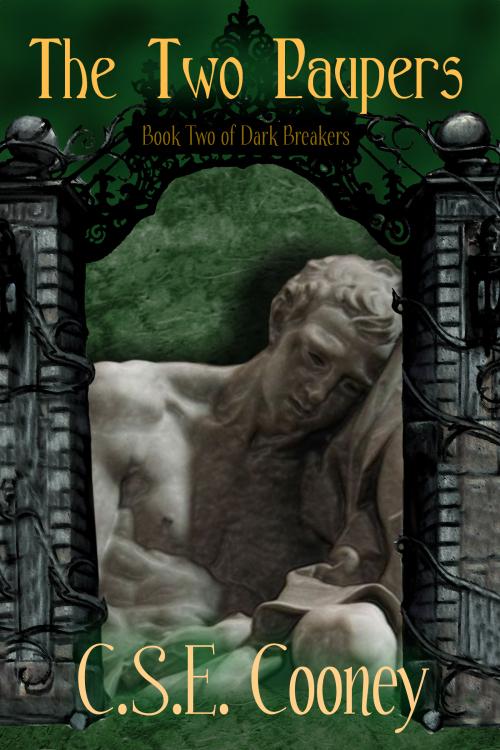
The Two Paupers, by C. S. E. Cooney (Fairchild Press)
“Gypsy,” by Carter Scholz (Gypsy plus …,  F&SF)
“The Four Thousand, the Eight Hundred,” by Greg Egan (Asimov’s SF, December 2015)
“The Bone Swans of Amandale,” by C. S. E. Cooney (Bone Swans)
“The Boatman’s Cure,” by Sonya Taaffe (Ghost Signs)
Wylding Hall, by Elizabeth Hand (Open Road/PS Publishing)
Penric’s Demon, by Lois McMaster Bujold (Penric’s Demon)
Teaching the Dog to Read, by Jonathan Carroll (Subterranean)
Sunset Mantle, by Alter S. Reiss (Tor)

Congratulations to Black Gate website editor emeritus C.S.E. Cooney for placing two novellas in Rich’s list!

Read More Read More

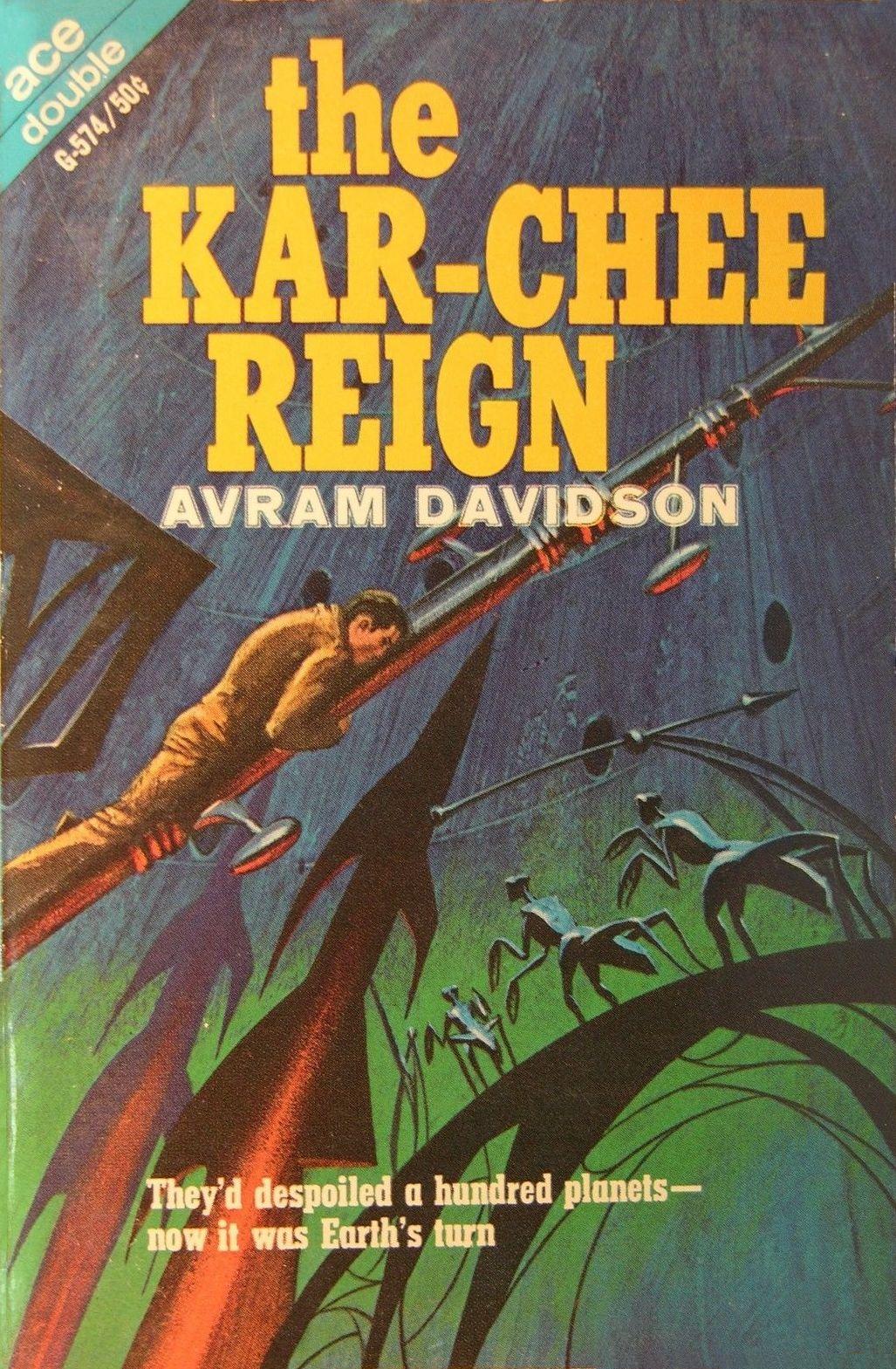
Marooned Spacemen, Forgotten Planets, and Alien Dragons: Rich Horton on Rocannon’s World/The Kar-Chee Reign

Marooned Spacemen, Forgotten Planets, and Alien Dragons: Rich Horton on Rocannon’s World/The Kar-Chee Reign

Rocannon's World-small The Kar-Chee Reign-small

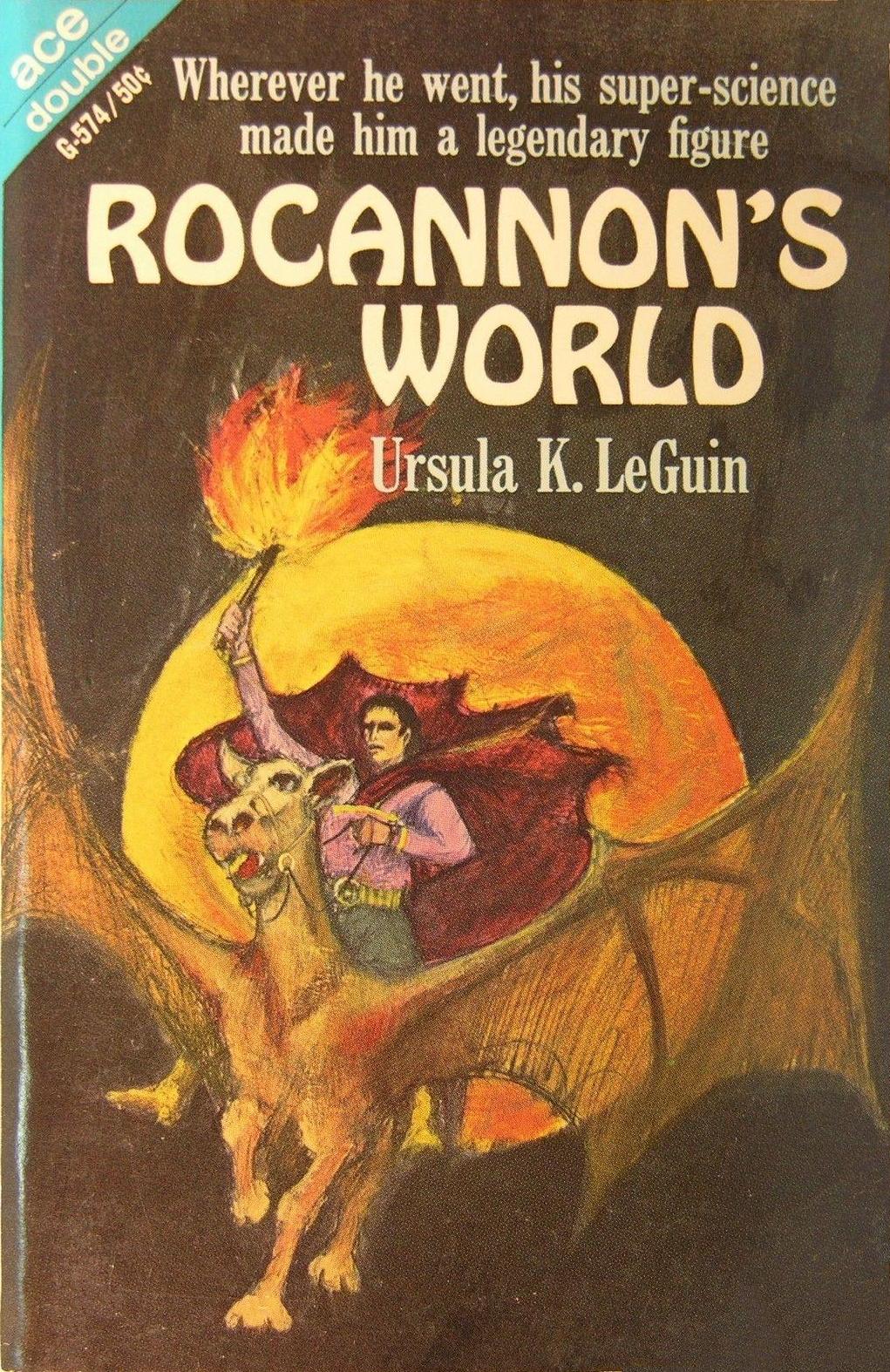
The Ace Doubles were a fairly low-paying market by most measures, and they didn’t always attract top authors. But they did publish early books by many writers who would go on to become top authors. Such is the case with the pairing of Rocannon’s World, the first novel by the great Ursula K. LeGuin, and The Kar-Chee Reign, an early novel by SF master Avram Davidson.

Rich Horton examined both novels as part of his ongoing series of Ace Double reviews at his blog Strange at Ecbatan. Here’s what he said, in part:

Seeing that Ursula K. Le Guin’s first novel was an Ace Double came as a mild surprise to me, some time back when I encountered this pairing. Since then I’ve realized that that wasn’t really that rare, for example, Samuel R. Delany also had early novels published as Ace Doubles, as did many other great writers…

Rocannon’s World is a curious novel. It is a “Hainish” novel, thus fitting into Le Guin’s main “future history,” but it doesn’t seem wholly consistent with novels like The Left Hand of Darkness and The Dispossessed. What it mainly is is a fantasy novel with SF trappings. Except for the prose, which is excellent as one might expect from Le Guin, it feels strikingly pulpish. The plot and feel would not have been out of place in an early 50s issue of Planet Stories

Read More Read More

Amazing Science Fiction Stories, March 1960: A Retro-Review

Amazing Science Fiction Stories, March 1960: A Retro-Review

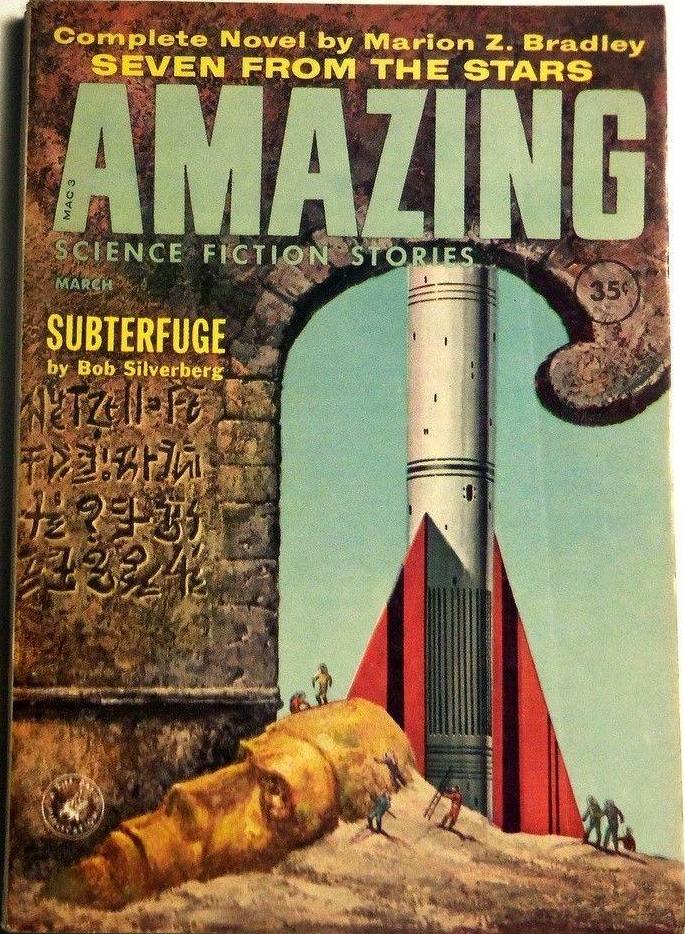
Amazing Science Fiction Stories March 1960-smallThe cover of this issue gives Robert Silverberg’s byline as “Bob Silverberg,” though the Table of Contents shows “Robert Silverberg.” Bob Silverberg seems to have been given as his byline on a few stories (including his first publication), as well as some letters.

The cover is by Albert Nuetzell, showing a spaceship and some people investigating an archaeological site, presumably on another planet, complete with strange writing and an enormous stone humanoid head (click on the image at left for a bigger version). It doesn’t go with any of the stories in the magazine. Interior illustrations are by Mel Varga and by Virgil Finlay.

Norman Lobsenz’ very brief editorial is about Project Ozma, Frank Drake’s pioneering attempt to detect signals from intelligent extraterrestrials using radio. S. E. Cotts’ brief book review column, The Spectroscope, covers Benjamin Appel’s The Funhouse, Murray Leinster’s The Pirates of Zan, and Adam Lukens’ The Sea People.

The letters in “Or So You Say …” come from Jacqueline Brice, Jess Nash, Bob Adolfsen, Paul H. Taylor, Frank H. Terrell, and Dr. Raymond Wallace, none of those names familiar to me. The biggest common theme is praise for Alan Nourse’s novel Star Surgeon.

The stories are:

Novel:

Seven from the Stars, by Marion Zimmer Bradley (42,800 words)

Read More Read More

Galaxy, October 1967: A Retro-Review

Galaxy, October 1967: A Retro-Review

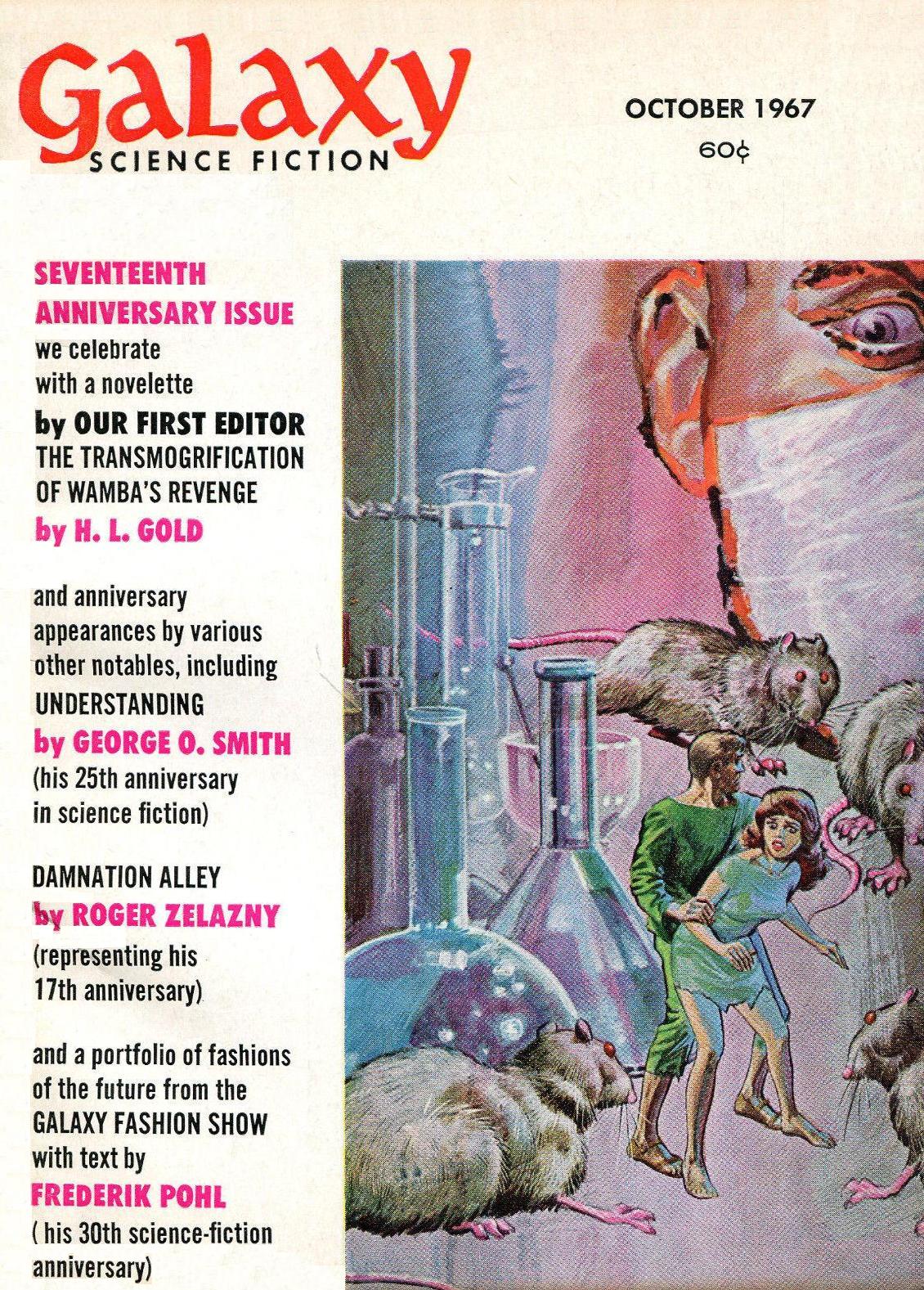
Galaxy October 1967-smallA bit of a change of pace here, a late ’60s issue of Galaxy. Frederik Pohl was the editor. It is billed as the “Seventeenth Anniversary Issue, and the conceit is that the contributors are all celebrating an anniversary in the field. For example, Pohl himself published a poem in an SF magazine in 1937, making this his 30th anniversary. George O. Smith’s first story was published in 1942, so his 25th anniversary. H. L. Gold is here as the founding editor. Fair enough. The contributor that puzzles me is Roger Zelazny. The cover says “representing his 17th anniversary, but never explains that. This was the fifth anniversary of his first published story. Does it mean he started reading SF in 1950? I don’t know – it’s not explained at all.

The cover is by Gray Morrow, illustrating Gold’s story accurately enough. Interiors are by Gaughan, Morrow, and R. Dorfman (his or her only appearance, according to the ISFDB, in SF). Willy Ley contributes a science essay in his “For Your Information” series, which ran from 1952 through 1969. This one, “The Worst of all the Comets,” is about the great comet of 1680, which has a 574 year period, and which one writer speculated was the comet that caused the Biblical Flood (by raining water on the Earth when it passed very close). Pohl’s brief editorial is about the changes since his poem was published, in 1937.

Algis Budrys’ Galaxy Bookshelf covers Damon Knight’s anthology Worlds to Come (he objects that too many of the stories aren’t really SF), a reissue of Fritz Leiber’s The Big Time (which, Budrys reminds us, is really a play), Robert A. Heinlein’s landmark collection The Past Through Tomorrow (his big Future History collection, which Budrys praises highly), and, most significantly, Samuel R. Delany’s The Einstein Intersection. In the Thomas Disch piece just reprinted in Stories for Chip Disch writes of Delany telling him happily that Budrys had declared him (Delany) the best SF writer in the world. I don’t know if this is the review that prompted Delany’s happiness (apparently it was his review of Nova), but it would certainly make one happy. One quote: “The man simply operates on a plane that Robert Heinlein never dreamed of.”

Read More Read More

Hypnojewels, Smugglers, and Ancient Alien Races: Rich Horton on The Plot Against Earth/Recruit for Andromeda

Hypnojewels, Smugglers, and Ancient Alien Races: Rich Horton on The Plot Against Earth/Recruit for Andromeda

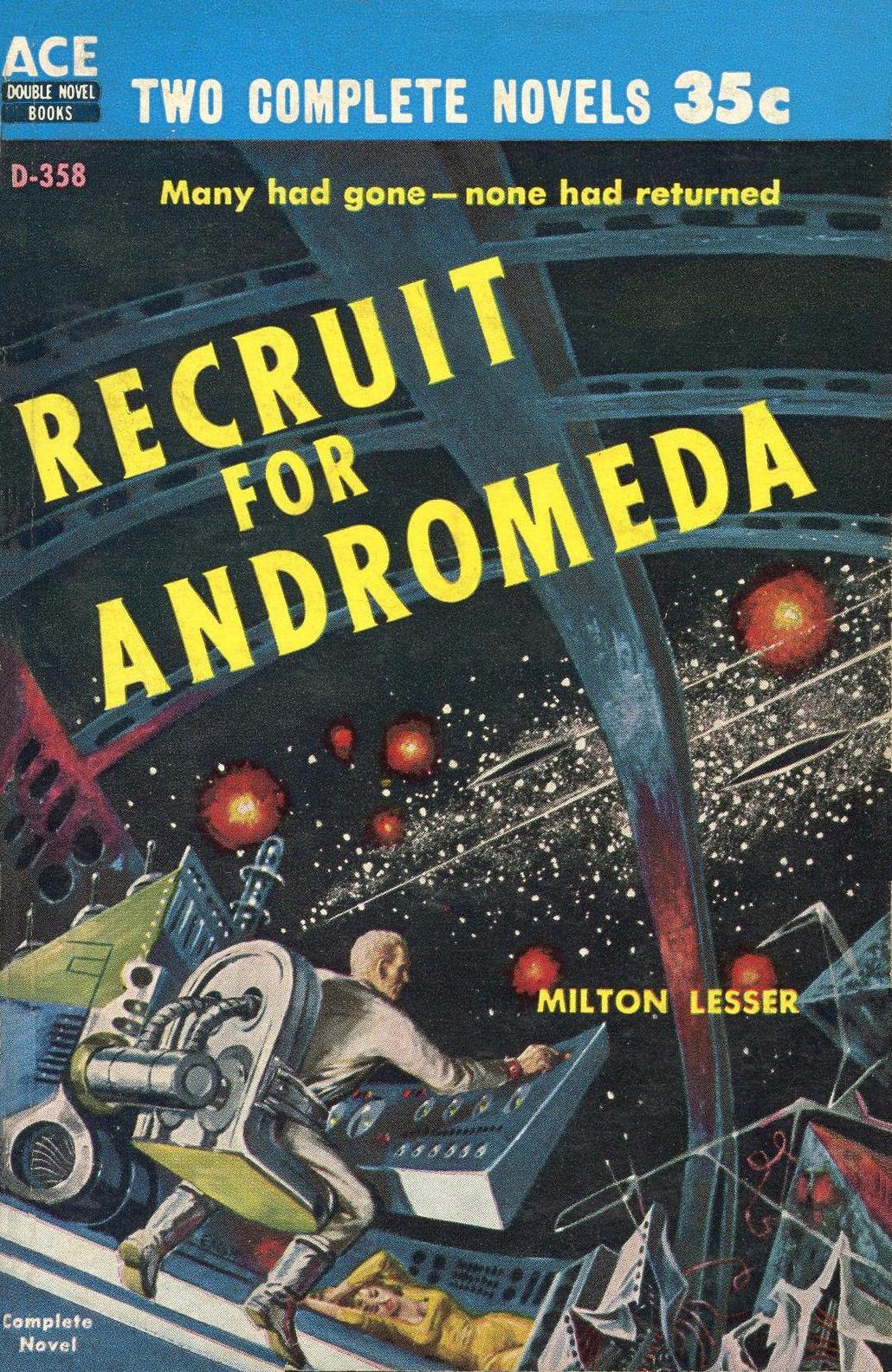
The Plot Against Earth-small Recruit for Andromeda-small

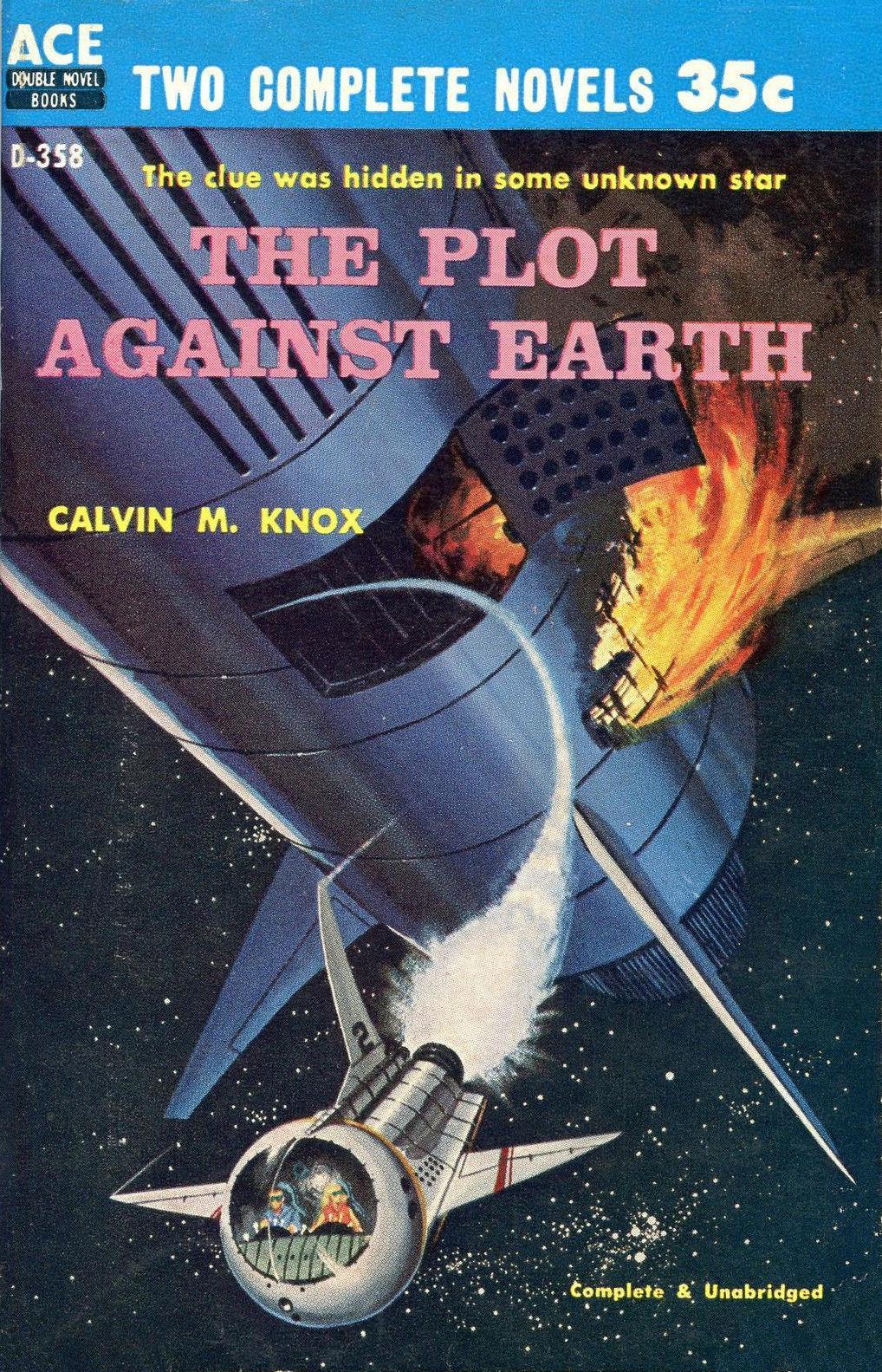
“Calvin M. Knox” is one of Robert Silverberg’s most well-known pseudonyms. He used it extensively to write reviews, over two dozen short stories (frequently in magazines where he also had a story under his own name), and three novels: Lest We Forget Thee, Earth (1958), The Plot Against Earth (1959), and One of Our Asteroids is Missing (1964), all Ace Doubles.

Milton Lesser was born in Brooklyn in 1928, and changed his name to Stephen Marlowe in 1956. Under that name he wrote 40 crime novels and fictional autobiographies. He began publishing SF under his original name while still a teenager, and he continued to to do so through the 50s and 60s, producing seven novels and nearly 100 short stories between 1950 and 1965.

Silverberg and Lesser were published back-to-back in Ace Double D-358 in 1959, with the novels The Plot Against Earth and Recruit for Andromeda. The latter has never been reprinted, and has now been out of print for over 55 years.

Read More Read More

The Cover and TOC for Rich Horton’s The Year’s Best Science Fiction and Fantasy 2016

The Cover and TOC for Rich Horton’s The Year’s Best Science Fiction and Fantasy 2016

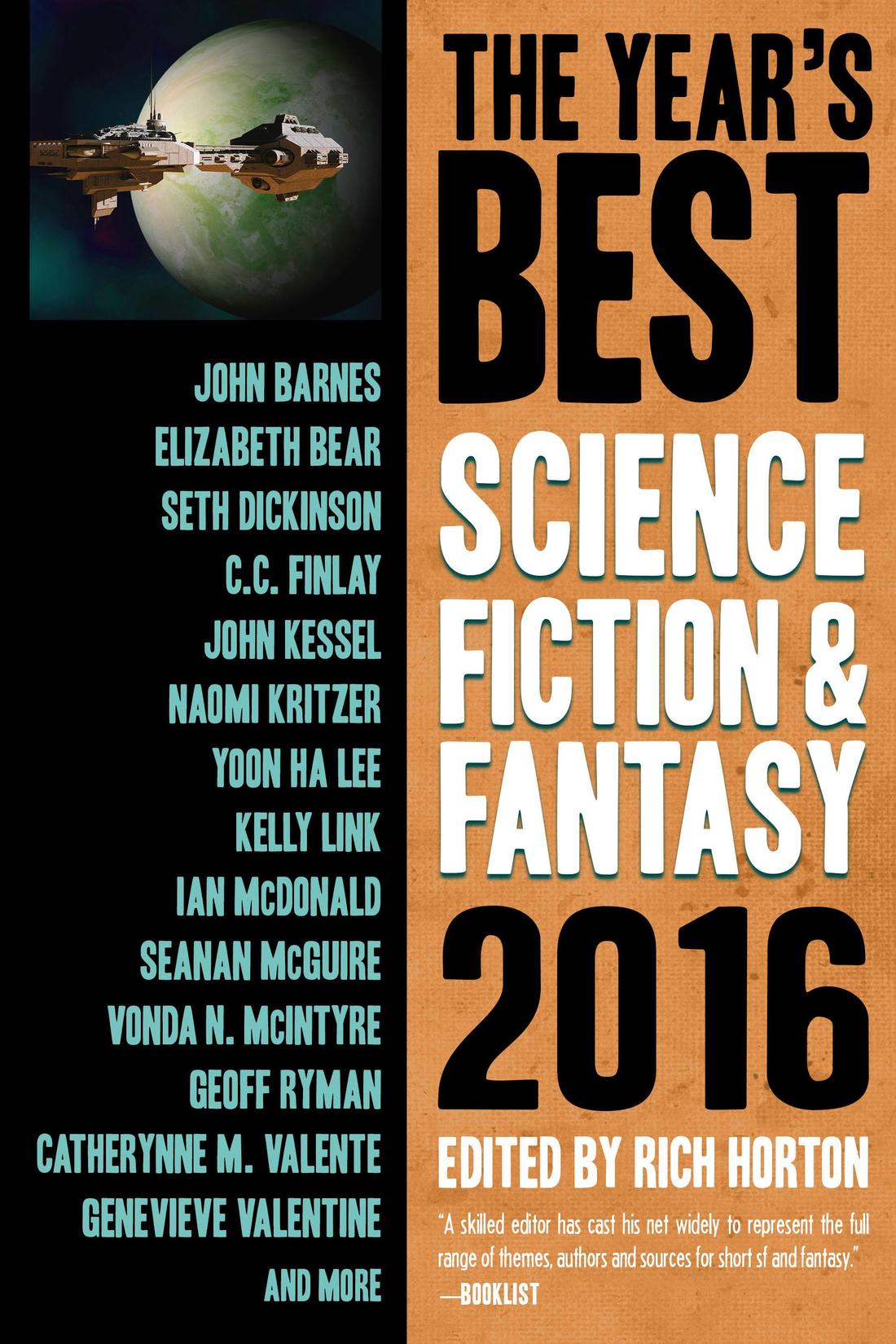
The Years Best Science Fiction and Fantasy 2016Ten years ago Rich Horton, who’d already published several highly detailed survey articles in the print edition of Black Gate (including “Building the Fantasy Canon: the Classic Anthologies of Genre Fantasy” and “The Big Little SF Magazines of the 1970s”) wrote the first installment of what was to become a highly ambitious series: Rich Horton’s Virtual Best of the Year.

Rich surveyed virtually every piece of short fiction published in the genre in 2005 (an astounding 9.5+ million words), and compiled a list of the best, and we published it here at Black Gate. He repeated that feat in 2006 and 2007, and his reports on the field became more in-depth and insightful each year.

In 2006, Rich also began publishing two anthologies with Prime Books: Fantasy: The Best of the Year and Science Fiction: The Best of the Year. In 2009 those books merged into one massive volume, The Year’s Best Science Fiction & Fantasy, which quickly became one of the most respected and acclaimed anthology series in our industry. It has been published every year since.

Last week Prime Books released the cover of the 2016 edition (at right, click for bigger version), the eighth volume in the series, alongside the Table of Contents. This one contains fiction from C.S.E. Cooney, Kelly Link, Vonda M. McIntyre, Catherynne M. Valente, Naomi Kritzer, Seanan McGuire, Chaz Brenchley, Elizabeth Bear, Ian McDonald, Geoff Ryman, Genevieve Valentine, and many others.

Here’s the complete TOC.

Read More Read More

Amazing Science Fiction Stories, October 1959: A Retro-Review

Amazing Science Fiction Stories, October 1959: A Retro-Review

Amazing Science Fiction Stories October 1959-smallHere’s an issue from the first year of Cele Goldsmith’s tenure, and a significant month for me – I was born October 5, 1959. It has an interesting mix of authors – the first (and arguably only) SF novel by a Grand Master, a fine early story by one of my personal favorite writers in the field, and four stories by obscure names (though one of those at least is a pseudonym for a fairly well-known writer).

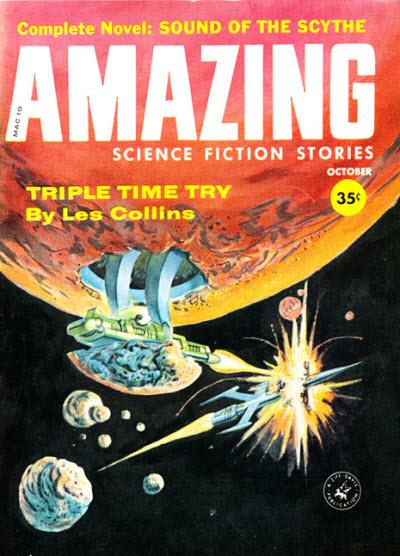
The cover is by Leo Summers, and depicts some sort of anti-spaceship installation hidden in a small asteroid, firing on a spaceship. Interiors are by Summers and Finlay (with one uncredited). There is a cartoon by “Frosty.”

Norman Lobsenz contributes his usual brief editorial, this one referring to Eric Frank Russell’s attack on astronomy as an “inexact science.” S. E. Cotts’ book review column, The Spectroscope, was at this time only allotted two pages. The reviews are of George O. Smith’s The Fourth R (fairly positive), Brian Aldiss’ collection No Time Like Tomorrow (very positive), and Jeff Sutton’s Bombs in Orbit (mistitled, amusingly, Bombos in Orbit in the review), not too positively.

The letter column, “… Or So You Say”, has mostly short letters, with only one name I recognized (Paul Zimmer, Marion Zimmer Bradley’s brother). The other letter writers are Edward J. Lynch (liked Silverberg’s “Collision Course”), Paul Shingleton (hated “Collision Course”, even though Bob S. is his favorite author), W. C. Brandt (loved “Collision Course”), Zimmer (seemed snarky about Doc Smith though it’s hard to say), Dave Boyer (loved stories by Sheckley and Douglas), David Locke (hated Doc Smith), Clark Peterson (is in favor of book length novels in the magazine), and Harry Thomas (defending Doc Smith from his detractors). Those who know fandom better than I remember David Locke particularly, as an active fan and letter writer, and also Shingleton and Brandt.

Read More Read More

Decadent Alien Races and Electricity Creatures: Rich Horton on Warlord of Kor/The Star Wasps

Decadent Alien Races and Electricity Creatures: Rich Horton on Warlord of Kor/The Star Wasps

Warlord of Kor-small The Star Wasps-small

Terry Carr made his reputation in the field as an extremely talented editor. He edited 16 volumes of the Best SF of the Year, from 1972-1987, five volumes of Fantasy Annual (1978-1982), 17 volumes of Universe, and over a dozen standalone anthologies. But early in his career he also wrote a small number of novels, starting with Warlord of Kor, an Ace Double paired with Robert Moore Williams’ The Star Wasps (1963). Over at Strange at Ecbatan, Rich Horton took a look at the book as part of his ongoing series of Ace Double reviews.

This one qualifies as pretty forgotten, and mostly for good reasons… But it does feature a major major SF figure, Terry Carr. Carr is not widely known as a writer, but he was a hugely significant editor… while he didn’t write a whole lot of fiction, some of it was very good, including an admired novel (Cirque (1977))…

In all honesty, Warlord of Kor isn’t all that bad, though it’s not all that great either… The protagonist is Lee Rynarson, something of an archaeologist who is studying the only intelligent race humans have ever found in their expansion through the Galaxy (or perhaps multiple galaxies). These are the Hirlagi, sort of a horse/dinosaur mix on Hirlaj. There are only 26 Hirlaji surviving — they seem a tired [and] decadent race. They have a long racial memory, and Rynarson, in talking with one of them, hears stories of a warlord in the distant past, who united much of the planet, only to decide, after “communing” with the mysterious god Kor, that the Hirlaji must abandon not just war but science… a reasonable first effort.

Read More Read More