Browsed by
Category: Pulp

Meeting Your Heroes: David Kyle

Meeting Your Heroes: David Kyle

a-pictorial-history-of-science-fictionThere are a handful of people whom I credit with introducing me to science fiction.

The first was my classmate John MacMaster, who brought me two science fiction novels when I was bedridden for a few days in the seventh grade. The second was Jacques Sadoul, whose 2000 A.D.: Illustrations From the Golden Age of Science Fiction Pulps turned my early curiosity into a full-fledged obsession with early SF and fantasy magazines. The third was Isaac Asimov, whose pulp anthology Before the Golden Age and Foundation Trilogy thoroughly captured my young imagination.

The man who cemented that early interest, and who brought all my young obsessions together — monster movies, pulps, magazines, comics, Star Wars, and even Isaac Asimov — and showed me that they were all aspects of the rich branch of art and literature known as Science Fiction, was David Kyle.

He did this through two magnificent books that I read over and over again as I lay in bed much too late on school nights: A Pictorial History of Science Fiction (Hamlyn Publishing Group, 1977) and The Illustrated Book of Science Fiction Ideas & Dreams (Hamlyn, 1977).

Both books were very popular in the 70s, especially following the release of Star Wars and the surge of interest in all things science fiction. Deluxe oversize hardcovers copiously illustrated with pictures of early SF writers, pulp art, and numerous books cover and movie stills, they were immaculately designed and gorgeous to look at. But it was Kyle’s text that really drew me in. Here was a man who had been a part of science fiction since its earliest days — a Futurian who attended the first Worldcon in 1939 and a founder of Gnome Press in 1948 with Martin Greenberg — and who still spoke of it with wonder and deep appreciation.

It’s through Gnome Press that David made perhaps his most significant contribution to science fiction, publishing nearly a hundred of the most important books in the genre — including first editions of Robert A. Heinlein’s Sixth Column and Methuselah’s Children, The Coming of Conan and Conan the Conqueror by Robert E. Howard, I, Robot and Foundation by Isaac Asimov, Clifford D. Simak’s City, C.L. Moore’s Judgment Night and Shambleau and Others, Two Sought Adventure by Fritz Leiber, plus Arthur C. Clarke, Edward E. Smith, L. Ron Hubbard, Leigh Brackett, Murray Leinster, A. E. van Vogt, and many others. He kept the most important writers in the field in print at a time when they appeared only in magazines, and is directly responsible for introducing them to a whole new generation.

I first met David Kyle at the World Fantasy convention in 1984, in my home town of Ottawa, where I was able to shake his hand and say a few words of appreciation. But it was at Worldcon three weeks ago that I had a chance to talk with him at length, and really get to know one of the most important early writers and publishers in the industry. It was one of the highlights of the con for me.

Read More Read More

Vintage Treasures: From Off This World, edited by Leo Margulies and Oscar J. Friend

Vintage Treasures: From Off This World, edited by Leo Margulies and Oscar J. Friend

from-off-this-worldBack in May, at the Windy City Pulp & Paper show here in Chicago, I purchased four boxes of books from the vast collection of Martin H. Greenberg. I’ve been slowly unpacking them ever since. They’ve been a treasure trove of vintage paperbacks and fantastic old anthologies, occasionally with scribbled notes from (presumably) Greenberg in the margins.

I’ve written about a few finds already, including a fabulous anthology edited by Leo Margulies and Oscar J. Friend, The Giant Anthology of Science Fiction, first published in 1954. This week, I want to talk about another Margulies and Friend title, a collection of science fiction culled from Wonder Stories/Thrilling Wonder Stories and published in 1949: From Off This World: Gems of Science Fiction Chosen From “Hall of Fame Classics.”

The first thing to note is the gorgeous cover illustration, by none other than Virgil Finlay (click the image at left for a bigger version).

But equally impressive is the Table of Contents, which includes some of the best pulp SF stories ever published, including “The Man Who Evolved” by Edmond Hamilton; “The City of the Singing Flame” and “Beyond the Singing Flame” by Clark Ashton Smith; “A Martian Odyssey” by Stanley G. Weinbaum; and others by Jack Williamson, Henry Kuttner, Eando Binder, P. Schuyler Miller, and many more.

Editor Leo Margulies, who as editorial chief of Standard Magazines was also editor of pulp magazines Startling Stories and Thrilling Wonder Stories, featured “Hall of Fame Classic” SF reprints in Startling. The 18 stories here are taken from those selections, all originally published between 1929 and 1937, as Margulies and Friend explain in their introduction:

Compiled as they are from ten years of HALL OF FAME reprint selections in Startling Stories magazine, they are in effect, the pick of science fiction stories that have survived both the years and today’s amazingly swift scientific progress. In themselves they compose a history of the growth of science fiction over the vital decades just passed.

Actually science fiction — or scientifiction if you will — is the newest development in contemporary literature. It is far and away the most imaginative.

Their comments become even more interesting when the editors turn to the rapid (and frequently horrifying) advance of science during World War II, ended just a scant four years before these words were written.

Read More Read More

Redrum Horror Unleashes The Thing in the Mist

Redrum Horror Unleashes The Thing in the Mist

the-thing-in-the-mistI’m a fan of dark fantasy and horror, and pay attention to most of the major writers — especially those of the pulp era (1930 to about 1960). But I’m woefully ignorant of British horror, especially of the same period.

Fortunately, there are publishers working hard to correct that. And it’s always a delight to discover a major retrospective of a British pulp horror writer I’m not familiar with. That’s the case with John S. Glasby, who wrote around 25 SF and fantasy novels for Badger Books, most under pseudonyms such as “A. J Merak” and the Badger house names “Karl Zeigfreid,” “John E. Muller,” and “Victor LaSalle.”

Now Redrum Horror has published The Thing in the Mist: Selected Stories by John S. Glasby, a tantalizing collection of some of his best short fiction from the heyday of British pulp horror:

Between 1954 and 1967, British publisher Badger Books released over one hundred issues of the horror pulp digest Supernatural Stories, nearly half of which were written by one of the most prolific genre writers of his time, John S. Glasby.

Here, collected for the first time, are eleven of Glasby’s finest contributions to Supernatural Stories, tales of otherworldly terror and ancient evil in the Lovecraftian tradition. Guaranteed to chill and delight, The Thing in the Mist is a must-read for any fan of classic pulp horror.

This edition also includes an introduction by the late Glasby’s son, Edmund Glasby, and an informative afterword by longtime colleague, Philip Harbottle.

The Thing in the Mist: Selected Stories by John S. Glasby is Redrum Horror #6, and was published on September 15. It is 380 pages in trade paperback for $13.99, or just $3.99 in digital format. Get more details at the Redrum Horror website.

Abney Park’s Airship Pirates: A Music-inspired Steampunk Extravaganza

Abney Park’s Airship Pirates: A Music-inspired Steampunk Extravaganza

airship-pirates-smallLast month, Peter Cakebread of Cakebread & Walton told you about our alternate English Civil War fantasy RPG, Clockwork & Chivalry. This month, it’s Ken Walton here, and I’ll be taking a look at our music-inspired steampunk extravaganza, Abney Park’s Airship Pirates RPG.

“Abney Park?” I hear some of you say. “Isn’t that a cemetery in London?” While the rest of you are saying, “No, Abney Park is a really cool steampunk band from Seattle who play music like this.”

Most of their songs, written by lead singer “Captain” Robert Brown, tell of the fictional exploits of the band in their time-travelling steampunk airship Cordelia. On discovering their music, we quickly realised there was a really cool background here that would make a kick-ass role-playing game.

We contacted the band, thinking, “This is mad, they’ll never go for it, no-one’s ever written a RPG based on a band’s songs!” But Captain Robert thought the idea was awesome.

When we emailed our publisher, Cubicle 7, Angus Abranson (who worked at Cubicle 7 at the time) was on the phone in five minutes. “Why didn’t I think of that?” Turned out he was an Abney Park fan too. Who knew? And so, a new game was born!

Of course, then we had to sit down and design it. Cubicle 7 offered us use of the game mechanics from their Victoriana RPG, which we tweaked and simplified for a more swashbuckling feel.

Captain Robert, it turned out, was a graphic artist as well as a rock star, and he designed the look of the game, as well as recruiting a host of amazing artists to contribute the full-colour artwork for the rulebook. And we took the song lyrics and Robert’s (then unfinished) novel, The Wrath of Fate, and set about expanding them into a game world with a particular feel.

Read More Read More

Galaxy Science Fiction, May 1952: A Retro-Review

Galaxy Science Fiction, May 1952: A Retro-Review

galaxy-may-1952I’ve been blogging about my experiences collecting and reading Galaxy magazine (originally titled Galaxy Science Fiction). Within my initial collection I had the May, 1952 issue (Volume 4, Number 2 for those who want to get that detailed). The issue included a novella, two novelets, and three short stories from Boyd Ellanby, Peter Phillips, Charles De Vet, Richard Matheson, Franklin Abel, and Poul Anderson.

“Category Phoenix” by Boyd Ellanby – In a Big Brother society ruled by Leader Marley, Dr. David Wong works in Research, tasked with finding a cure for White Martian Fever. But for the past ten years, Dr. Wong has been researching immortality, something he inadvertently discovered while creating a cure for Blue Martian Fever. Dr. Wong hopes to share his findings with those closest to him without alerting Leader Marley – a challenging task, considering how closely they’re monitored.

“Lost Memory” by Peter Phillips – Palil and his associates examine a new arrival from outer space. It seems like them – inorganic and metallic – yet without normal modes of communication and shaped as a cylinder. When they’re finally able to communicate with it, they cannot understand all of its words, like mann, blud, and deth. Their only hope of saving the poor, blind creature is to perform an operation, but the visitor is so confused that it keeps asking for corrosive oxygen.

“Wheels Within” by Charles De Vet – Mr. Bennett suffers from headaches so severe that not even a neurologist can help. The headaches even escalate into hallucinations of a beautiful woman named Lima. One day, he discovers a show in town called “Lima, Mystic of the Mind,” and he is shocked to find that the woman exactly resembles the one from his hallucinations. For a price, she offers to cure him of his headaches, though the cure will involve pain and anxiety through false experiences, leading him into a cyclical dream sequence that seems unending and hopeless.

Read More Read More

Sax Rohmer’s The Adventures of Nayland Smith

Sax Rohmer’s The Adventures of Nayland Smith

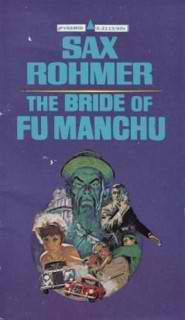
rohmer-the-green-spider-231x350the-haunting-of-low-fennel21Sir Denis Nayland Smith is the largely unsung protagonist of all of Sax Rohmer’s novels and stories featuring the notorious Dr. Fu Manchu. The brilliant Chinese criminal genius constantly overshadowed the stalwart British subject who did his best to route his megalomaniacal schemes over the course of thirteen novels and four shorter works published between 1912 and 1959. The legendary villain overshadowed Sir Denis to such a degree that many readers were unaware that the author showcased Smith without his customary nemesis in three short stories published between 1920 and 1932.

When Rohmer created the character a century ago, Smith was depicted as a colonial administrator, stationed in Burma and granted a roving commission by the Home Office to bring Dr. Fu Manchu to justice. His childhood friend, Dr. Petrie, played Watson to Smith’s Holmes, chronicling his adventures for posterity and ably assisting him wherever possible. Petrie’s job was made easy in as much as Smith rarely did any actual detecting. The duo generally reacted to Fu Manchu’s latest atrocity and then spent the rest of the book trying to anticipate his next move, check him, be captured, escape, and inevitably lead a daring raid that would end in something less than a complete success. Despite it all, Smith and Petrie persevered and when Rohmer ended the initial run of the series in 1917, readers likely expected they had heard the last of Nayland Smith’s exploits. Rohmer, however, was too fond of the character to let him retire peacefully.

Read More Read More

Singularity & Co. use Successful Kickstarter to Rescue Out-of-Print SF & Fantasy

Singularity & Co. use Successful Kickstarter to Rescue Out-of-Print SF & Fantasy

the-torch-jack-bechdoltThe ever-vigilant Jason Waltz has called our attention to this article on Singularity & Co., who are rescuing extremely rare SF and fantasy titles and bringing them back into print as e-books.

It began with a Kickstarter campaign by Ash Kalb, Cici James, Jamil V Moen, and Kaila Hale-Stern, which raised $52,276 (350 percent of their $15,000 goal). The campaign ended on April 2 and the team wasted no time setting their dream in motion. Each month they have carefully selected one out-of-print science fiction novel, tracked down the copyright holders, and re-packaged it in DRM-free PDF, Epub, and Mobi format for subscribers.

So far they have reprinted A Plunge Into Space by Robert Cromie (first published in 1890) and Jack Bechdolt’s 1948 novel The Torch. They have also opened a Brooklyn bookshop where vintage science fiction and fantasy paperbacks are filed chronologically by publication date, which I find weirdly compelling.

Tracking down old books — both rights and physical copies to scan — has proven more challenging than they expected. Their planned third book is Mr. Stranger’s Sealed Packet by Hugh MacColl, first published in 1889. But according to a Wired article about the group, locating a copy took some effort:

The team tracked down the lone copy [of Mr. Stranger’s Sealed Packet] out of university archives, and went on a thousand-mile drive just to scan it. Despite being out of copyright, none of the universities who owned a copy of [the book] permitted scanning.

Singularity & Co. currently don’t offer individual e-books for sale; titles are available only to subscribers. Subscription plans start at $29.99 for a year, or $129.99 for a lifetime subscription. Learn more at their website, savethescifi.com.

You’ll Never See it in Galaxy

You’ll Never See it in Galaxy

youll-never-see-it-in-galaxyIn my last post, Discovering Galaxy Science Fiction, I shared my excitement in discovering Galaxy magazine and getting my hands on some issues. While I was still admiring my recent collection, my wife surprised me with the first twelve issues of Galaxy Science Fiction!

Galaxy’s first issue was October, 1950. Upon the back cover are the words, “You’ll Never See it in Galaxy.” Below that header, two short narratives appear about Bat Durston – one set in space, one set in the old west. Other than the setting and descriptions, the paragraphs are nearly identical. Following that is this great statement: “If this is your idea of science fiction, you’re welcome to it!” [Click on the image at right for the complete text].

Editor H.L. Gold writes in the opening letter that science fiction is finally coming of age and that media sources are treating science fiction intelligently. Gold writes that Galaxy “proposes to carry the maturity of this type of literature into the science fiction magazine field, where it is now, unfortunately, somewhat hard to find.” With stories akin to Bat Durston in heavy supply, that’s no surprise.

In addition to Galaxy’s content, Gold writes that even their cover art

is proof of [Galaxy’s] break with the amateur and/or shoddy tradition… We never were convinced, in any case, of the actual commercial appeal of naked maidens, prognathous youths in winter underwear… and monsters that can exist only on the nutrients found in India ink and Bristol board.

He describes cover artist David Stone as “weary of tearing covers off magazines to avoid embarrassment.”

Clearly, Galaxy’s founders found a dearth in excellent science fiction, presented in a professional format. I admire them for their boldness, to proclaim what’s needed and to publish it. I look back on the golden age of science fiction with renewed interest; editors like Gold forged that age through their publishing and promotional endeavors.

As to what lies within the pages of these magazines, I can only grin, for I’ve just finished reading one of the issues. In a future article, I’ll reveal what I’ve read and perhaps entice some of you to join me. Here’s a spoiler: you won’t find any tales about Bat Durston.

Vintage Treasures: A Box of 1950s SF and Fantasy Magazines, and the End of the First Era of Space Exploration

Vintage Treasures: A Box of 1950s SF and Fantasy Magazines, and the End of the First Era of Space Exploration

july-ebay-lot2

I bought a box of 1950s SF and fantasy digests in an online auction at the end of July, an assortment of chiefly lesser-known magazines such as Imagination, Worlds of Tomorrow, Fantastic Universe, and Imaginative Tales. The box has been sitting in my library for three weeks while I puttered around it, like an unopened Christmas present. I finally unpacked it this morning. Just as I’d hoped, it was filled with wonders.

Holding these the day after the death of Neil Armstrong gives me the powerful sense of the passage of history. Every one of these magazines was published before Armstrong walked on the moon — in most cases at least a decade before. The era of space exploration, with all its incredible promise and danger, was firmly in mankind’s future. Looking at them now, as the first era of space exploration draws to a close with the death of its most famous hero at age 82, I feel like I’m looking back through not one but two eras, to a time when landing on the moon was something that many still scoffed at. When the future was a place where robots carried guns, aliens were green-skinned and wore khakis, and housewives walked alien dogs who didn’t know what to do with a fire hydrant.

Even setting aside all the musings on history, there’s still a lot of wonder packed into these yellowing pages. Marvelous artwork, and even more marvelous stories, from some of the brightest lights in the genre. This box of 20 magazines, which I purchased for 48 bucks, is a splendid sampling of some of the best work of the decade.

Read More Read More

Vintage Treasures: The Startling Worlds of Henry Kuttner

Vintage Treasures: The Startling Worlds of Henry Kuttner

the-startling-worlds-of-henry-kuttner2I have fun with these Vintage Treasure pieces. For one thing, they’re a great excuse to shine some light on interesting items that cross my path.

Take Henry Kuttner’s paperback collection, The Startling Worlds of Henry Kuttner. Published in 1987, nearly 20 years after his death, it’s unusual in several respects. For one thing, it includes only novellas. And all originated from a single source: the long-dead pulp magazine Startling Stories.

I think this is a neat idea. The best writers of the pulp era — and Kuttner certainly qualifies — have seen most of their short fiction studiously reprinted. In fact, we’ve covered four generous collections of Kuttner’s pulp fiction just in the last few years: the weird-menace collection Terror in the House, the first volume in The Early Kuttner series; Thunder in the Void, gathering his early space operas; Detour to Otherness, the massive retrospective of his collaborative work with C.L. Moore; and none other than the distinguished James Enge reviewed his Gallagher stories for us, collected in Robots Have No Tails.

But short novels, 40,000-word epics printed in a single pulp issue, rarely (if ever) get reprinted. They’re too long for most collections, and generally too short for a standalone novel, so most of them have slipped through the pages of history. The Startling Worlds of Henry Kuttner rescues three such wonders and puts them under one cover.

But that’s not even the most interesting thing about The Startling Worlds of Henry Kuttner. Since all three novels appeared in a single source, this isn’t just a collection of Kuttner’s work. It’s an anthology that celebrates Startling Stories. Just as most collections give us insight into the recurring themes in an author’s work, this book offers us a  generous sampling of the kind of fiction that appeared in that grand old pulp.

The Startling Worlds of Henry Kuttner collects The Portal in the Picture (originally published in 1949), Valley of the Flame (1946), and The Dark World (1946). It’s one of the most intriguing collections I’ve come across in the past year. At press time, there are 23 used copies available on Amazon.com, ranging in price from $2.25 to $9.99.