Browsed by
Category: Pulp

Vintage Treasures: The Best of Murray Leinster

Vintage Treasures: The Best of Murray Leinster

The Best of Murray LeinsterI first encountered Murray Leinster… wow, I don’t even know when. Probably in The Hugo Winners, Isaac Asimov’s 1962 anthology collecting the first short stories to win science fiction’s coveted prize.

It featured Leinster’s 1956 novelette, “Exploration Team,” about a desperate rescue attempt on a distant planet — involving an illegal settler blackmailed into helping a lost colony, and his team of Kodiak bears. Lost colonies, deadly aliens, and even more deadly bears… that’s the kind of story that sticks in your mind when you’re twelve, believe me.

Leinster died in 1975; he published his last book, a novelization of the Land of the Giants TV series, in 1969. But he was a steady presence on bookstore shelves during my formative reading years for well over a decade after his death, with reprint titles like The Med Series (Ace, 1983) and The Forgotten Planet (Carroll & Graf, 1990).

The mass market reprints have tapered off over the last few years. The last were all from Baen, a trio of excellent collections all edited by Eric Flint and Guy Gordon: Med Ship (2002), Planets of Adventure (2003), and A Logic Named Joe (2005).

Since then, the wheels of publishing have ground on, as they do, abandoning Leinster by the side of the road. We did our part to keep his memory alive, of course. I reprinted one of Leinster’s earliest pulp tales, “The Fifth-Dimension Catapult,” from the January 1931 Astounding Stories of Super-Science, in Black Gate 9.

There have also been low-budget digital editions of his out-of-copyright pulp fiction, sure, but by and large the genre — as living genres should — has focused instead on new and emerging authors.

I used to think that was inevitable. Readers have long memories, but publishing industries don’t, and when an author has been out of print for over a decade, she’s likely to remain that way.

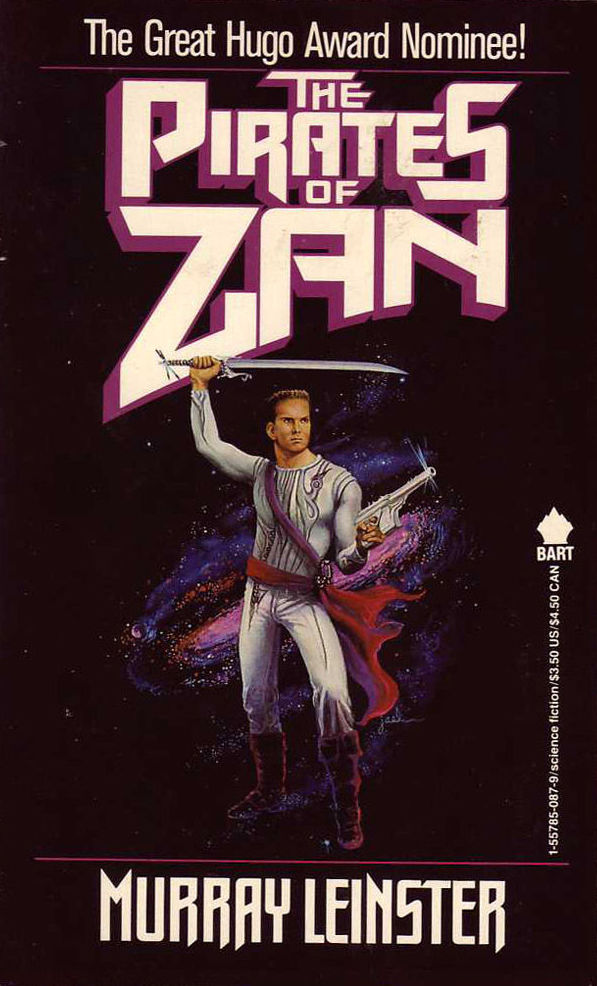
But the brilliant Lester del Rey, publisher of Del Rey Books, proved me wrong. In fact, he proved me wrong nearly four decades ago, with a fabulous line of top-selling paperbacks collecting the best short science fiction and fantasy from the writers of the Golden Age of SF — including The Best of Murray Leinster, a collection of some of the best short SF and fantasy of the 20th Century.

Read More Read More

Kirkus Looks at Galaxy Science Fiction

Kirkus Looks at Galaxy Science Fiction

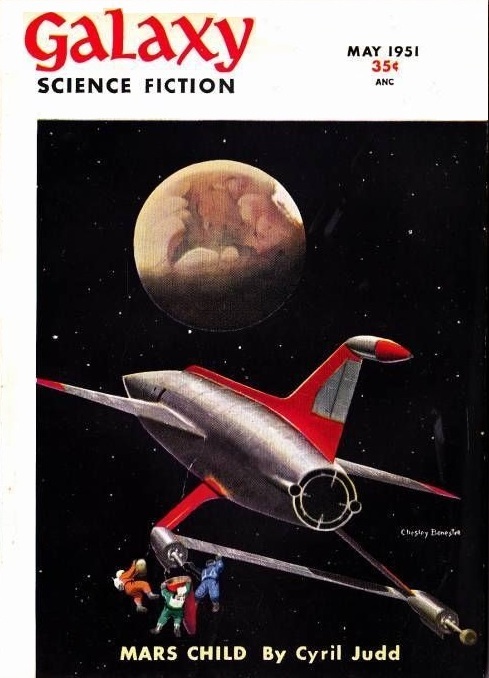
Galaxy February 1951Over the last few months, Matthew Wuertz and Rich Horton have been tag-teaming a series of Retro Reviews here at Black Gate, looking at science fiction digests from the 1950s and 60s — especially H.L. Gold’s Galaxy, which Matthew has been covering issue by issue since the very first, cover-dated October 1950.

Meanwhile, Andrew Liptak at Kirkus Reviews has done his own retrospective, “Changing the Playing Field: H.L. Gold & Galaxy Science Fiction,” a detailed and affectionate look at Gold and the superb magazine he created:

Galaxy appeared in October 1950 as a monthly publication. It paid far better than its competitors, and Gold proved to be a far better editor than his counterpart at Astounding… With Gold at the helm, Galaxy Science Fiction began to change the tone of the genre. Astounding had taken advantage of the scientific rush that followed the development of the atomic bomb, and the resulting doomsday stories that followed. Gold went in another direction, explaining in an editorial that “The shape humanity is in is cause for worry, I believe, but not the kind of paralyzing terror that clutches science fiction writers in particular… Look, fellers, the end isn’t here yet.”

Strong, socially aware and satirical fiction became the mainstay with Galaxy, and 1951 proved to be an excellent year for the publication: “The Fireman,” by Ray Bradbury, appeared in the February issue, set in a dystopian world where literature was burned by government agents, and was later expanded into his landmark novel Fahrenheit 451. April brought Cyril Kornsbluth’s story “The Marching Morons,” and September saw Gold bring Robert Heinlein away from Astounding with his three-part story The Puppet Masters

Read More Read More

New Treasures: The Simon & Kirby Library: Science Fiction

New Treasures: The Simon & Kirby Library: Science Fiction

The-Simon-and-Kirby-Library-Science-FictionJoe Simon and Jack Kirby were perhaps the most important and successful comic team of the 1940s and 50s. Together they created Captain America (among many other popular creations) and produced an incredible body of work spanning numerous genres. Joe Simon was the first editor of Marvel Comics and the legendary Jack Kirby later partnered with Stan Lee to create some of the most enduring characters of the 20th Century, including Iron Man, The Fantastic Four, The Hulk, The Silver Surfer, Daredevil, Thor, the X-Men, and countless others.

The Simon & Kirby Library: Science Fiction is packed with dozens of stories, many of them photographed from the original artwork. This is essential pulp science fiction, with tales of brave spacemen, intrepid jungle explorers encountering lost civilizations, living shadows, crash landings on bizarre alien worlds, sinister robots, giant monsters battling desperate armies, beautiful barbarian princesses, impossible inventions, and much more.

The Simon and Kirby Library: Science Fiction spans more than 20 years, beginning with the first stories Joe Simon and Jack Kirby ever produced together (beginning in June 1940) — their ten-issue run of Blue Bolt adventures. Then the Cold War years will be represented by Race For the Moon, featuring pencils by Kirby and inked artwork by comic book legends Reed Crandall, Angelo Torres, and Al Williamson.

Other rarities from both decades are included, and as a bonus for readers, the volume features stories illustrated by Crandall, Torres, and Williamson — without Kirby.

The book also includes an introduction by Watchmen co-creator Dave Gibbons. This is the fourth volume in The Simon & Kirby Library, following SuperheroesCrime and the best-selling Horror.

The book is in full-color throughout, and most of the art has been restored and vibrantly re-colored by Harry Mendryk. My only complaint about this volume is that only a handful of covers are included, in a sparse 3-page cover gallery in the back.

The Simon & Kirby Library: Science Fiction was published by Titan Books on June 4. It is 352 pages in hardcover, priced at $49.95. There is no digital edition.

Robert E. Howard and Appendix N: Advanced Readings in D&D

Robert E. Howard and Appendix N: Advanced Readings in D&D

Weird Tales July 1936 Red NailsGary Gygax’s famous Appendix N, the list of titles he considered essential reading for Dungeon Masters hoping to create authentic adventures for their players, is perhaps the purest distillation of the literary recipe at the heart of modern adventure gaming.

Gygax put Appendix N in the back of his Dungeon Master’s Guide in 1979. Read all the writers on that list and you’ll understand the creative gestalt underlying 20th Century fantasy that eventually exploded into Dungeons & Dragons in 1974.

That’s the theory, anyway. Plenty of people have tried it. It’s sort of the gamer’s version of going walkabout. Immerse yourself in Appendix N and spiritual understanding will be yours. Plus, as a bonus, you end up with a rockin’ library.

Tim Callahan and Mordicai Knode are attempting this spiritual journey together, and they’re chronicling it at Tor.com. They begin with a look at Robert E. Howard’s Conan story “Red Nails,” originally published in the July 1936 issue of Weird Tales:

There is a giant mega-dungeon; it hardly gets more D&D than that. The two elements that really strike home here in terms of inspiration are the populated dungeons as its own character of rivalry and strife, and black magic. The city as one massive labyrinth is great, as is the characterization of its architecture & embellishment — gleaming corridors of jade set with luminescent jewels, friezes of Babylonianesque or Aztecish builders — but it is the logic of the city that shines brightest to me. “Why don’t the people leave?” There are dragons in the forest. “What do the people eat?” They have fruit that grows just off the air. “Where do all these monsters come from?” There are crypts of forgotten wizard-kings. There is a meaningful cohesion to the place; Howard manages to stitch dinosaurs, radioactive skulls, Hatfields and McCoys, and ageless princesses into something cogent.

Read More Read More

Vintage Treasures: The Radio Planet by Ralph Milne Farley

Vintage Treasures: The Radio Planet by Ralph Milne Farley

The Radio Planet AceAnd so we come to the third volume of Ralph Milne Farley’s Radio Men series, The Radio Planet.

Like the first two, The Radio Man (aka An Earth Man on Venus, which I discussed here) and The Radio Beasts (here), The Radio Planet was originally published in Argosy All-Story Weekly, in six installments starting in June 26, 1926, following the previous novel by some fifteen months.

Farley wrote several more Radio novels, including The Radio Menace, The Radio War, The Radio Pirates, and The Radio Flyers, between 1930 and 1955. Only a few were even loosely connected to the first three; most of them were futuristic pulp adventures set on Earth, and Ace didn’t bother to reprint them.

Yes, that’s right. After three popular Radio Men novels, Ralph Milne Farley continued to merrily put Radio in every one of his titles, even though most had nothing to do with Myles Cabot, Venus, or Mars. Apparently, the man had only a rudimentary concept of brand marketing. And liked radio.

In any event, The Radio Planet was the last novel to feature Myles Cabot. Two other short adventures followed: “The Radio Man Returns,” a short story from Amazing Stories (June 1939), and “The Radio Minds of Mars,” originally published in the January 1955 issue of Spaceway magazine.

Fortunately for young teenage fans in the 1970s, such as yours truly, there were two inexpensive paperback editions of The Radio Planet, which kept it in print for roughly a decade. Both were from Ace Books.

Read More Read More

Vintage Treasures: The Radio Beasts by Ralph Milne Farley

Vintage Treasures: The Radio Beasts by Ralph Milne Farley

The Radio Beasts brightLast month I wrote a brief piece on Ralph Milne Farley’s pulp novel An Earth Man on Venus, originally published as The Radio Man in Argosy magazine in 1924.

As part of the research I dug a little into Farley, and discovered his real identity was Roger Sherman Hoar, state senator and assistant Attorney General for the state of Massachusetts.

I also discovered he produced seven (!) sequels over the next three decades: The Radio Beasts (1925), The Radio Planet (1926), The Radio Flyers (1929), The Radio Menace (1930), The Radio Gun-Runners (1930), The Radio War (1932) and The Radio Minds of Mars (1955).

That’s a lot of radio action.

A lot of things have changed since the 1920s. But one aspect of pop culture remains consistent: when a property has seven sequels, someone somewhere made a lot of money.

We can safely assume that by the time The Radio Minds of Mars (great title) appeared in 1955, America had had its fill of radio adventure. But in the intervening years, the Radio novels were a hot property.

The Radio Beasts affirms that. It had multiple editions, beginning with its 1925 four-part serialization in Argosy All-Story Weekly. It was reprinted (in one installment) in Fantastic Novels Magazine in January 1941 — with a Frank R. Paul cover, no less.

Read More Read More

New Treasures: Brother Grim by Ron Fortier

New Treasures: Brother Grim by Ron Fortier

Brother GrimI’ve been hearing a lot about Ron Fortier and his publishing house Airship 27 over the last 12 months.

We’ve reported on a few of his titles here, including Barry Baskerville Solves a Case (which William Patrick Maynard calls “equal parts Encyclopedia Brown, Nate the Great, and Sherlock Holmes”), Joe Bonadonna’s space opera Three Against The Stars, David C. Smith’s occult thriller Call of Shadows, the TV-inspired anthology Tales from the Hanging Monkey, Jim Beard’s occult detective Sgt. Janus, Spirit-Breaker, pulp adventurer Ravenwood: Stepson of Mystery, The Moon Man — whom David C Smith describes as “a Robin Hood-type vigilante who fights crime while disguising himself by wearing a fish bowl over his head. (Yes! A fishbowl!)” — and many others.

I met Ron for the first time at the Windy City Pulp and Paper show here in Chicago in April, and I was astounded at the vast array of terrific pulp adventure titles he had spread out at his table. I purchased a tiny sample to take home and enjoy, including Charles R. Saunders 1930s Harlem boxing and Nazis saga Damballa, the SF anthology Mars McCoy, Space Ranger, and Ron Fortier and Gary Kato’s comic Days of the Dragon.

But I also picked up Ron’s Brother Grim, a collection of six pulp adventure stories featuring an undead avenger. Brother Grim first appeared on the Supernatural Crime website, and was popular enough to branch out into print. It looks like a lot of fun.

Risen from the grave in the aftermath of a brutal murder, former underworld hitman Tony Grimaldi finds himself transformed. Now, with his ebon trenchcoat, gleaming silver automatics and ivory skull mask, Tony stalked the benighted streets and back alleys of Port Nocturne, bringing justice to the downtrodden, and judgement to the wicked!

Brother Grim was published in 2004 by Wildcat Books. It is 156 pages in trade paperback, priced at $15. It is illustrated by Rob Davis, with a cover by Thomas Floyd.

See all of our recent New Treasures articles here.

Fantastic Stories, October 1964: A Retro-Review

Fantastic Stories, October 1964: A Retro-Review

Fantastic Stories October 1964I continue my peregrinations through the Cele Goldsmith Lalli years at Amazing/Fantastic.

This issue features a George Schelling cover. I don’t know if there are Schelling fans out here – but I have to say I found it quite poor, with absurdly stiff human characters, a particularly strange looking female character, a quite inaccurate representation (as to size) of the Tharn antagonist, and also not representing the scene it apparently depicts very well. Other than that… it’s kind of colorful.

(Click on the image at left to get a full-size version).

Curiously, the cover features no author’s name – only the title of the serial, “Seed of Eloraspon,” and the description: “Magnanthropus returns in a new novel.”

The interiors are by Arndt, Schelling (rather better than the cover), Finlay, and Andragna.

The ads are mostly Ziff-Davis house ads, with one full page ad for the Rosicrucians. The editorial, as usual by editorial director Norman M. Lobsenz, is about progress towards a real life version of Donovan’s Brain (and many other stories). The only other feature is a single column on what’s “Coming Next Month.”

The fiction:

Novelet:

“Beyond the Ebon Wall,” by C. C. MacApp (18,700 words)

Read More Read More

The Nightmare Men: “The Phantom Fighter”

The Nightmare Men: “The Phantom Fighter”

adventuresdegrandin‘He was…rather under medium height, but with military erectness of carriage that made him seem several inches taller than he actually was. His light blue eyes were small and exceedingly deep set and would have been humorous had it not been for the curiously cold directness of their gaze. With his blonde moustache waxed at the ends in two perfectly horizontal points and those twinkling, stock taking eyes, he reminded me of an alert tom-cat.’

Such is the stout Dr. Trowbridge’s description of Jules de Grandin, late of Paris, the Surete, and the Sorbonne, upon first meeting the irascible little French physician in the 1925 story, “Terror on the Links”.  Cat-eyed and ebullient, de Grandin is the epitome of the phrase ‘it’s not the size of the dog in the fight, but the size of the fight in the dog.’ He defends Harrisonville, New Jersey, and by extension, all of mankind, against the spawn of Satan, using forbidden knowledge and firearms alike.

Jules de Grandin and his ever-present companion, Dr. Trowbridge, were created in 1925 by Seabury Quinn for Weird Tales and went on to feature in close to a hundred stories, with the last, “The Ring of Bastet”, appearing in 1951. Quinn, in the introduction to the 1976 Popular Library collection, The Adventures of Jules de Grandin, says that de Grandin is ‘…a sort of literary combination of Topsy and Minerva, that is, he just growed.’

It’s hard to imagine it being otherwise, given the sheer vibrancy of de Grandin from the start. De Grandin, like his more passive predecessor Dr. Hesselius, is a physician, and approaches the supernatural as an illness to be confronted. Unlike the kindly Hesselius, however, de Grandin is no amiable general practitioner, but a surgeon — flamboyant, precise, and ruthless.

Read More Read More

Fantasy Face-Off: Henry Kuttner’s Elak of Atlantis vs. Robert E Howard’s Conan the Cimmerian

Fantasy Face-Off: Henry Kuttner’s Elak of Atlantis vs. Robert E Howard’s Conan the Cimmerian

Weird Tales, July 1938, featuring Elak of Atlantis in "Spawn of Dagon"
Weird Tales, July 1938, featuring Elak of Atlantis in “Spawn of Dagon”

Now, before I start actually looking at these two heroes, I should probably explain why I’m doing what I’m doing.

You see, when Robert E Howard — creator of the sword and sorcery sub-genre, bare-fisted boxer, and all-round amazing writer — killed himself at the age of thirty, he left a pretty substantial gap in the pulp fiction market, one that was very hard to fill, but one that had to be filled. So Henry Kuttner, a fellow writer more famous for his science fiction than his fantasy, was called in to take up the sword and sorcery mantle — and stumbled in doing so.

The blurb describes the Elak stories as “exciting tales that helped establish a genre,” and “a major step in the evolution of the genre.” (I read Gateways kindle collection.)

Yeah that’s… an overstatement, not much more than a writer’s hyperbole. To be frank, the Elak tales are most easily comparable to a Saturday morning cartoon or a SyFy B-movie, what with all the hackneyed prose and clichéd characters.

Kuttner makes no attempt to advance the formula that Howard established, no attempt to evolve the genre as the over-enthusiastic blurb suggests. What you get instead is a readable adventure, entertaining, but not much more; it’s plot and prose, its action and characters merging with all the other yarns you’ve read and books you’ve consumed.

But then perhaps that’s the point. Pulp is meant to entertain; it’s not The Lord of the Rings or The Game of Thrones, it’s not supposed to make you think or take sides, not intended to evolve anything. Just to entertain.

Read More Read More