Browsed by
Category: Magazines

Short Fiction Roundup: This Just In
Short Fiction Roundup: This Just In

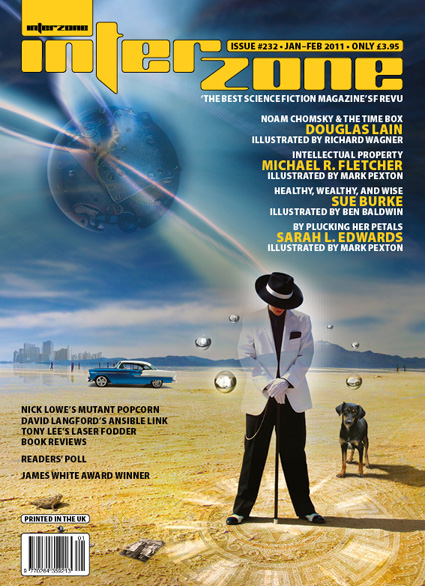
interzone-286a1The new Interzone has a refreshing look after last year’s garish series of yellow and redish installments. Haven’t had a chance to more than glance at the contents, but any story called “Noam Chomsky and the Time Box” sounds like my sort of fare.  Here’s a synopsis:

If anyone needed more proof that the gadget driven marketing scam that was the American Empire is now completely dead, the utter failure to adequately create demand for the world’s first personal time machine should suffice as proof. Nintendo, Time Warner, and Apple computers have all backed off their various offers to buy out Time Box incorporated, and while last year it seemed impossible that the product might suffer the same fate as Betamax and electric cars, a year later it’s becoming obvious that people without a history or a future are uninterested in the kind of time travel the Box offers. The public seems content to leave history to the necrophiliacs and Civil War Buffs.
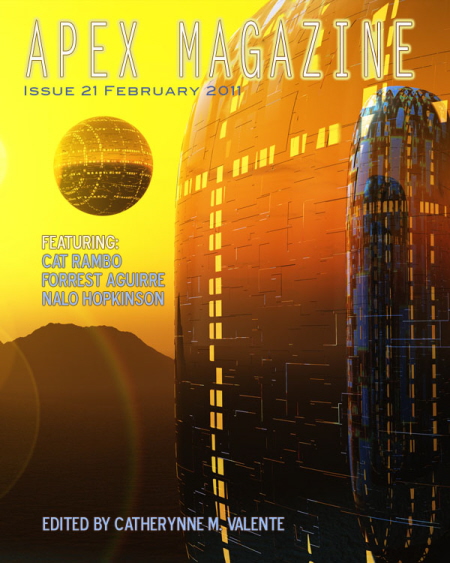
apex-21a1In addition to this Douglas Lain penned tale, there are stories by Michael R. Fletcher, Sue Burke and Sarah L. Edwards, as well as the 2010 James White Award winning “Flock, Shoal, Herd” by James Bloomer.

The latest issue of Apex Magazine features fiction from Cat Rambo, Forrest Aguirre and Nalo Hopkinson.  According to the publisher,

“This issue marks the second issue following our new distribution model. In short, we wanted to give a premium to those who subscribe digitally and/or purchase each issue by making the content available to them one month prior to its release on our website. This means that full text of the stories and poetry will be available the first Monday of March right here, along with sneak peeks of this issue’s contents.”
Changes at Weird Tales

Changes at Weird Tales

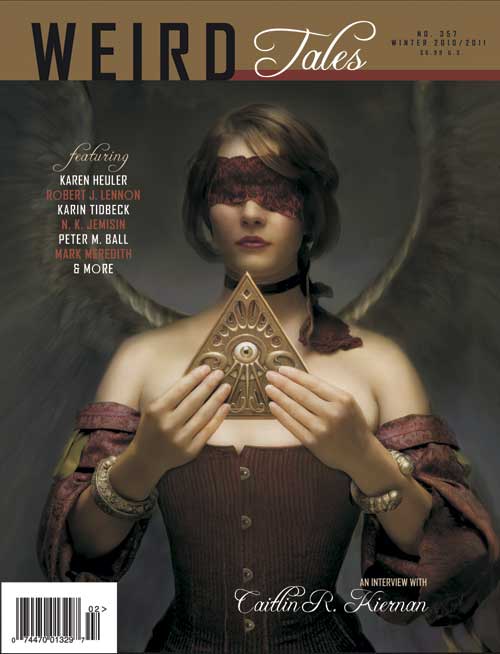
weird-tales-357Weird Tales editor Ann VanderMeer announces a re-vamped website, higher pay rates, a nifty new submissions portal, a new schedule, and a blog:

In addition to launching this new website, editor-in-chief Ann VanderMeer and publisher John Betancourt have raised the pay rate to 5 cents per word and implemented a new submissions portal for potential contributors… The new site also features a blog, through which VanderMeer and the rest of the Weird Tales team will discuss fiction and topics related to the revamped magazine…

Weird Tales will return to its normal quarterly schedule this year, with future issues slated for May, August, and November.

The submissions portal is based on the one designed by Neil Clarke for Clarkesworld magazine, and he implemented this one for Weird Tales.  Matt Kressel designed the new website.

The upcoming issue of the magazine, number 357 (!) includes fiction from N.K. Jemisin, author of Hundred Thousand Kingdoms, Karin Tidbeck, and J. Robert Lennon, plus an interview with Caitlin R. Kiernan.

The Weird Tales team includes Paula Guran, nonfiction editor, and art director Mary Robinette Kowal. Dominik Parisien and Alan Swirsky have joined Tessa Kum as editorial assistants.

The new website is here.

Wizard and ToyFare Magazines Cease Publication

Wizard and ToyFare Magazines Cease Publication

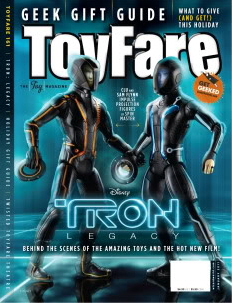
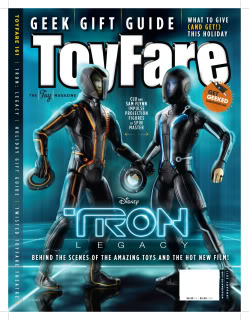
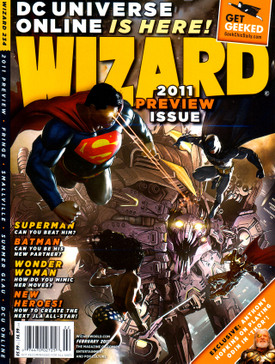
wizard-issue-234Longtime comic magazine Wizard, once one of the most popular publications in the industry, has folded. Its sister magazine ToyFare, dedicated to pop-culture toys and action figures, has also ceased publication. Both magazines were owned by Wizard Entertainment.

Wizard was launched in 1991, near the height of the “speculator boom,” fueled by the arrival of Image Comics and the rise of superstar artists such as Todd McFarlane and Jim Lee. Dedicated to covering news, pricing trends, and personalities in the field, Wizard quickly captured a large readership and brought real production values — including glossy paper, full-color interiors, and rock-star journalism — to comic fandom for the first time.

With its regular Wizard Top 10 and Market Watch columns, which reported on the “hottest back issues” of the month and predicted future price trends, Wizard catered to a new generation of fans and buyers who purchased comics chiefly for their collectability and perceived future value.

It also shared much of the blame when the comic marketplace collapsed as those speculators, burned by numerous bad investments, fled the market in the late 90s.

toyfare-16111Two-thirds of comic book stores across the country closed between 1993 and 1997,  many major publishers were driven out of business, and even Marvel Comics declared bankruptcy in 1997.

For most of its life every issue of Wizard also had a price index, allowing collectors to track the price of their latest hot comics month-to-month (but I only read it for the articles).

At the peak of its popularity Wizard sold over 110,000 copies/month through Diamond alone.  With its final issue, that number had dropped to 17,000.

Publisher Wizard Entertainment made this announcement yesterday:

Wizard Entertainment is ceasing publication of the print magazines Wizard and ToyFare. Wizard World, Inc. will begin production of the online publication ‘Wizard World’ beginning in February. We feel this will allow us to reach an even wider audience in a format that is increasingly popular and more readily accessible.”

Wizard Entertainment continues with its other ventures, including the Chicago Comic Con and many other conventions. Their website is here.

Rogue Blades Entertainment Announces eSsassins Electronic Anthologies

Rogue Blades Entertainment Announces eSsassins Electronic Anthologies

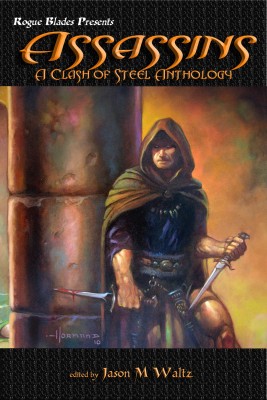
assassins1Jason M. Waltz at Rogue Blades Entertainment tells us the distinguished heroic fantasy publishing house has added a series of electronic anthologies to its already-crammed slate of planned publications for the year:

RBE is proud to introduce not only four additional titles under the Clash of Steel series, but its first four e-only anthologies as well! Better yet, these four e-anthologies deliver even more of the eagerly desired Assassins: A Clash of Steel print anthology to be released later in 2011! These 4 eSsassins titles carry over the same steel-bearing protagonists in dangerous, powerful prose, and the same eye-catching cover art from Didier Normand that the print anthology pledges.

Each volume in the eSsassins line will contain four stories, totalling 15,000 – 18,000 words in length.  They will be sold in multiple electronic formats for $3.00 each.

The volumes will be released monthly, starting in February.  The RBE website lists the complete contents of each upcoming volume, including stories from Laura J. Underwood, Yeoryios Pantazis, Amy Sanderson, Charles Kyffhausen, and G.K. Hayes.

RBE’s previous Clash of Steel anthology was last summer’s Demons, which I’m currently reading and quite enjoying. Cover art for each of the upcoming volumes will be unveiled soon, so keep your eye on their website for updates.

Goblin Fruit: Winter 2011

Goblin Fruit: Winter 2011

"Come buy, come buy!"

Do you remember Amal El-Mohtar? Poet, writer, Black Gate blogger?

Well! As I may have mentioned once or twice, she and Jessica P. Wick (who turns back into a mermaid when you spray her with a hose) co-edit a ‘zine called Goblin Fruit, which publishes “poetry of the fantastical.”

And… THE WINTER ISSUE IS LIVE!!! It’s ALIVE, I tell you! With (O my leaping lords of the great down under), soul-salivating art by Melbourne’s Omi Fam!

If we go by the art alone, this issue would be like a wolf pelt stuffed with sentient diamonds, or a lantern carved from a human skull. But I know the names of some of the poets (Rose Lemberg of Stone Telling, Leah Bobet of Ideomancer, Mari Ness of the Oz Blog at Tor.com, Loreen Heneghan, Christopher W. Clark, Jeannine Hall Gailey, Michelle Muenzler, and Neile Graham), therefore the possibilities for this issue are as endless as a winter’s night.

Go check it out! If you dare.

We last covered Goblin Fruit in our three-part review of the magazine.

Short Fiction Review #33: Oxford American Future Issue

Short Fiction Review #33: Oxford American Future Issue

oxford-americanOxford American Issue 70 contemplates life in 2050 with 11 stories that share a pessimistic view of America’s future beset by natural and man-made disaster, human folly and avarice.  In other words, just like it is today, only worse.

While dystopia has always been a fundamental science fictional trope (indeed, the one that has historically been most likely to gain literary credence, e.g., Brave New World and 1984), there was a time, particularly during the Golden Age of the 1930s to 1950s but still continuing on in counterpoint to the New Wave movement during the 1960s/1970s, when writers portrayed a future improved by technology, not devastated by it. Even the cyberpunks, despite their bleak industrial noir settings, arguably depicted technology as a “force for good” when their renegade heroes turn the technological tables to upend the corporate masters.

Part of the bleakness here might be because Oxford American terms itself  “The Southern Magazine of Good Writing,” and the American South certainly has a collective consciousness of disasters dating back to the Civil War, but most recently with Katrina and the BP oil spill in the Gulf.  “The Vicinity of the Sick” by M.O. Walsh depicts a Louisiana where people have to wear bio-hazard suits to go in the water; a woman dying of cancer is driven by her reluctant husband to a restricted biohazard in hope of escaping the soul-sapping hazards of technological illusions that pervade “normal” existence in Connie May Fowler’s “Do Not Enter the Memory”; and a strange pair from opposite socio-economic backgrounds try to survive (and discover some basic bond of humanity) in the Bayou following ecological and technological collapse in “Maroon” by Susan Straight.  Along the same lines, in a non-fction piece, Kevin Brockmeier lists his “Ten Great Novels of the Apocolypse.”

In addition to ecological disaster, the stories share to varying degrees the usual suspects for end-of-the-world scenarios: the amoral corporate focus on the bottom-line and self-interest, the numbness of media and advertising that leads to unhealthful lifestyles, medical advances that keep people biologically alive in bodies long past expected mileage.

Read More Read More

New Year Short Fiction Roundup

New Year Short Fiction Roundup

2011-snI’ve contributed book reviews to the SF Site since 1998 (wow, that’s a long time); in fact, it was the first on-line “publication” I wrote for (and, yes, you can end a sentence with a proposition, though, technically, I haven’t).  That’s where I “met” John O’Neill, which explains how I wound up here (for those of you wondering how that could possibly have happened).  You can see a list of all my SF Site reviews here.

My latest review in the January 2010 issue is about a short story collection entitled “She Nailed a Stake Through His Head: Tales of Biblical Terror. ” Worth checking out for the title alone.

Jan/Feb Fantasy & Science Fiction Magazine Now on Sale

Jan/Feb Fantasy & Science Fiction Magazine Now on Sale

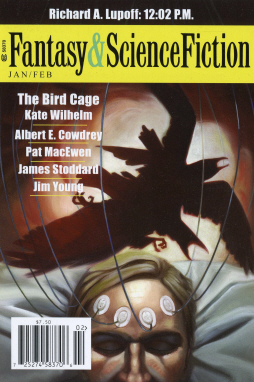
fsf033The big January/February double issue of The Magazine of Fantasy & Science Fiction goes on sale today.

The issue features four novelettes by Matthew Corradi, Albert E. Cowdrey, Pat MacEwan, and “The Bird Cage,” by Kate Wilhelm. There are short stories from Alan Dean Foster, Rick Norwood, Chris Lawson, James Stoddard, Jim Young, Bill Pronzini and Barry N. Malzberg, and Richard A. Lupoff.

Asked about the issue, Editor Gordon van Gelder had this comment:

I hope the presence of a Ghost Wind and a Whirlwind in the issue won’t lead anyone to conclude the issue is long-winded.

F&SF is published six times a year; issues are 258 pages.  It is the longest-running professional fantasy magazine in the country, and has been published continuously since 1949.

The new cover price is $7.50; cover artist this issue is Kristin Kest. The magazine’s website, where you can order subscriptions and browse their blog, is at www.sfsite.com/fsf/.

We covered the Nov/Dec issue of F&SF here.

Just in time for Xmas (or whatever you celebrate this time of year)…

Just in time for Xmas (or whatever you celebrate this time of year)…

interzone-2010Just arrived in the mail is Interzone‘s concluding issue of 2010 featuring the cover artwork of Warwick 2651Fraser-Coombe; the combined pieces of the six issues this past year form a complete work called “Playground (Hide and Seek).”  

A signed and individually numbered limited edition print can be ordered from the artist’s website.

In terms of fiction, this issue features the work of Jason Sanford with three stories and introductions by the author.  Additional stories are by Matthew Cook and Aliette de Bodard.

Goth Chick News: A Very Bradbury Christmas

Goth Chick News: A Very Bradbury Christmas

womans-day2Last week’s post, about how ghosts and Yuletide have as close an association as brandy and eggnog, prompted a quantity of mail from you lot. Not surprisingly, the readers of Black Gate know all about the creepier part of the holidays. But you’re also sort of warm and gooey on the inside as well, going all sentimental on me about your own Christmas traditions.

And your emails reminded me about something I had forgotten for a very long time involving Christmas, Ray Bradbury and a ghost story.

Many years ago in the early fall, my beloved Grandfather passed away very peacefully in his sleep. Being nine, I was convinced that no one in the whole world could be more heartbroken than me; I had been my Papa’s only grandchild for most of my young life and he had made me the center of his whole world. However, though I remember my own first experience with grief, what I recall most vividly is seeing my own Dad cry over the loss of his Father. To this day it is the only time I’ve ever seen my stoic Dad shed a tear.

Back then, and until this day, Mom was an avid fan of Woman’s Day magazine. So much so that she kept and cataloged her back issues primarily for recipes but for other interesting tidbits as well. Some weeks after my Grandfather’s funeral, Mom went into her library of Woman’s Day and pulled out an issue from December, 1973. I remember her using a scrap of paper to mark a place in the magazine and leaving it on Dad’s desk for him to find.

Read More Read More