Browsed by
Category: Books

Vintage Treasures: The Bantam Giant Novels of Lawrence Schoonover

Vintage Treasures: The Bantam Giant Novels of Lawrence Schoonover

golden-exile3Who the heck is Lawrence Schoonover?

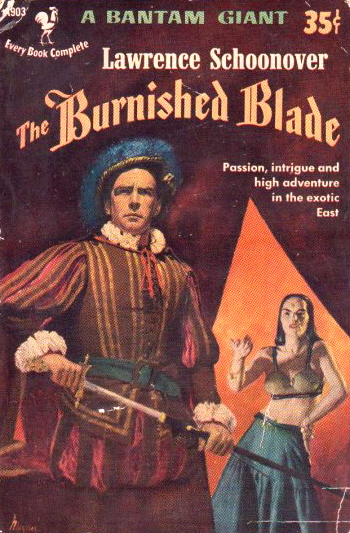
I had no idea. At least until I found myself in an unexpected bidding war for a beautiful collection of Bantam Giant paperbacks on eBay, including two by Mr Schoonover: The Golden Exile and The Burnished Blade (cover here).

Don’t know much more about him. I’m sure a trip to Wikipedia would tell me lots about Schoonover but, really, his covers tell me pretty much everything I need. Apparently he wrote big fat adventure novels featuring dudes with swords, exotic settings, and women who had little use for clothing. I’m a fan.

And it certainly doesn’t hurt that his novels were published as Bantam Giants.

There’s just something about the Bantam Giants that really brings out the collector in me. If you’re any kind of paperback aficionado, you know what I’m talking about.

The first Bantam Giants appeared in 1951, during the tenure of the legendary Ian Ballantine. I don’t believe they were numbered separately from Bantam’s usual sequencing, which makes cataloging them somewhat problematic, but their ranks included James Michener, Emile Zola, Harold Robbins, Sinclair Lewis, Robert Wilder, C. S. Forester and many, many more.

Some of the best literature of the 20th Century appeared in paperback as Bantam Giants, such as Robert Penn Warren’s All The King’s Men and Ernest Hemingway’s For Whom the Bell Tolls.

They also included a superb assortment of classic adventure novels from Rafael Sabatini, Thomas R. Costain, John Masters, John Dickson Carr, and even some dude named Lawrence Schoonover.
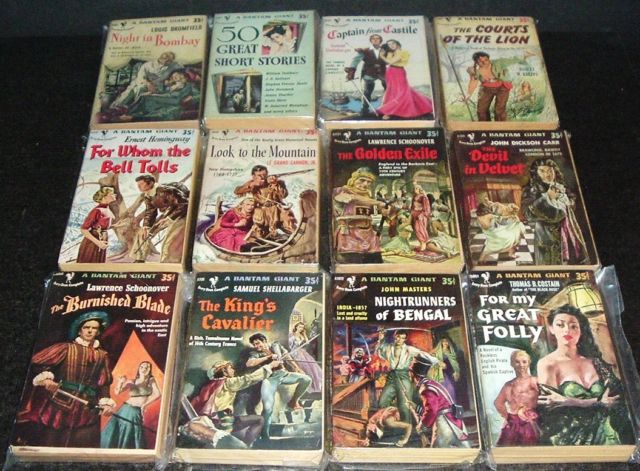
If you're the one who outbid me for this eBay lot, you should be ashamed of yourself.

There was also a smattering of science fiction and fantasy, such as Aldous Huxley’s Brave New World, Ray Bradbury’s classic anthology The Circus of Dr. Lao and Other Improbable Stories, John Collier’s Fancies and Goodnights, and novels by Bradbury and Jerry Sohl.

I think a large part of the appeal of Bantam Giants is their sheer size. They promise a lot of reading for your 35 cents. And dang, they look good don’t they? Just check out that beautiful eBay lot at left (click for bigger version.)

‘Course, I’d know a lot more about Schoonover if I’d just managed to win that damn auction. Since I didn’t, I was forced to hunt down virtually every single title in the set individually on eBay. I finally managed to complete that daunting task late last week. It’s okay, I’m sure the kids didn’t really need that college fund.

And before you ask which I’m going to read first, I think that should be fairly obvious. I’m curious about all of them, but before anything else I have to find out just what the Great Folly of that young lady in the bottom right is.

Even though I think I have a pretty good idea.
This Week’s Bargain SF & Fantasy Games at Amazon.com

This Week’s Bargain SF & Fantasy Games at Amazon.com

underdarkI keep sitting down at my computer to write Black Gate blog posts, and then spending all my time browsing Amazon.com.

I used to think Amazon would never replace brick and mortar bookstores, “because you can’t browse books online, you know.” Shows you what I know. Amazon has turned online browsing into an art. These days I browse in my jammies with my iPad, both feet on the back of the couch.

I need to reclaim some of these lost hours by pretending I’m doing something useful. Get your feet off the couch and mow the lawn!, my wife says. Can’t, working on a blog post, I tell her. And pass me that blanket, my toes are cold.

Which brings us nicely to this week’s list of discount SF and fantasy titles at Amazon.com, compiled through countless hours of diligent research by your faithful scout. Don’t thank me, glad to do it. At least until the damn lawn stops growing.

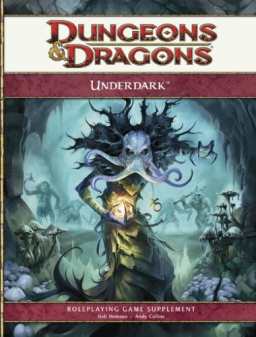
In the spirit of the excellent recent gaming posts, this week I’ve been shopping for discount game titles. I’ve found more than a few — including the splendid D&D supplements Underdark, Death’s Reach, and Demon Queen’s Enclave from Wizards of the Coast, and the excellent computer RPG Mount & Blade.

As long as we’re talking about computer games, I slipped in some of my recent favorites: the popular RPG Neverwinter Nights 2 Gold, the complete Dawn of War collection, the space empire sim Sword of the Stars Ultimate Collection, the new-generation platform game Trine, space fighting sim X3: Terran Conflict 2.0, and the criminally overlooked action RPG Titan Quest Gold.

All these titles are eligible for free shipping on orders over $25.

Many of the discounts we told you about last week are still available; you can see that list here.

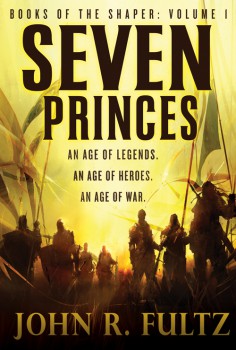
Seven Princes by John R. Fultz, a Review

Seven Princes by John R. Fultz, a Review

seven-princesSeven Princes
John R. Fultz
Orbit (526 pp., $15.99, trade paperback January 2012)
Reviewed by Brian Murphy

What do you want out of your fantasy? Mythmaking in the mold of JRR Tolkien’s The Silmarillion? Freebooting adventure, decaying civilizations, and heroic swordplay a-la Robert E. Howard? Weird, extraplanar demonic horrors like those encountered in the fiction of HP Lovecraft or Clark Ashton Smith? You get all of this stuff in John Fultz’ gonzo debut novel Seven Princes, both to our benefit and occasionally our detriment.

Seven Princes is bold, brash, and big. This is a novel written with bright strokes of character and setting, bursting with world-shaking adventure, intrigue, and conflict. It reads big, and feels big, and it’s unrepentantly so. In a “Meet the Author” Q&A at the back of the book Fultz describes the influences and raw materials that underlie Seven Princes. These are legion—Lord Dunsany, Howard, Lovecraft, Smith, Tolkien, Tanith Lee, Darrell Schweitzer, and others—so it’s no surprise Seven Princes contains multitudes. But underneath it all is a strong epic fantasy undercurrent, shot through with swords and sorcery. Says Fultz:

A writer’s sensibility is, I think, determined largely by his or her influences… what you’ve read most and where your passions lie. You write what you love. That said, writers like to stretch themselves too. For me, the whole epic/heroic fantasy realm is where I’ve been heading since I began reading fantasy as a kid in the late 1970s. Some have also called my work “sword and sorcery” but nobody can give a solid definition of what that actually is. For me, the bottom line is that I just Do My Thing and let my passion for storytelling lead me where I need to go.

Read More Read More

Goth Chick News: You’re Going to Hell Jack Nightingale

Goth Chick News: You’re Going to Hell Jack Nightingale

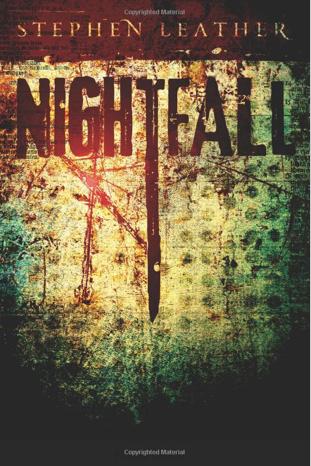
nightfallNormally a crime drama, or anything that smells like one, wouldn’t get much of my attention.

It’s nothing personal you understand.  It’s just my concern that any tale of violence and blood-letting that’s too close to real CNN headlines serves more as sociopathic training material than relaxing escapism.

That, and the fact I’m skeeved out rather than entertained by realistic stories depicting man’s inhumanity to man.  Ghosts being mean to man is perfectly fine.

So when our friends over at Wunderkind PR contacted me about Nightfall promising it was “right up my alley,” I wondered if my alley had suddenly detoured from behind a haunted mansion to behind the city crime lab when I wasn’t looking.  I determined to give it no more than a cursory look.

Nightfall’s English author Stephen Leather is the creator of over 20 thrillers which frequently include themes of crime, imprisonment and military service, and lately terrorism: manly pursuits all, but nary a ghost or zombie in sight.

Well to be fair, there was that one from last year, Once Bitten, which had vampires in it… sort of.  But I’m not sure even Leather himself counts it since no mention is made of the book even on the author’s own website.

But because in the past Wunderkind has been the source of new material that I have loved much more often than not, I decided to dig a bit deeper when it arrived.  After all, Nightfall premiered in the US last week, but in the UK it’s only the first in a series of three novels published there in 2009.

Once again, Wunderkind knew exactly what they were doing.

Read More Read More

Gill Alderman and The Memory Palace

Gill Alderman and The Memory Palace

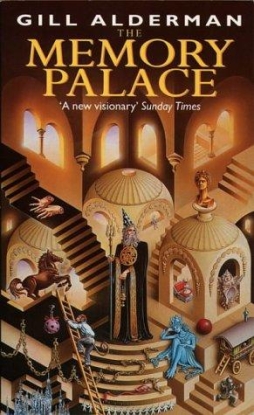
The Memory PalaceSometimes, you need to grow as a reader to be able to appreciate a certain book. In 1996, I bought a paperback fantasy novel called The Memory Palace, by Gill Alderman. It was a whim, I suppose; maybe something about the cover appealed to me, or more likely something in the synopsis on the back, promising a story about a fantasy writer who gets lost in his fictions and confronts an archmage of his own making. Whatever the reason, I started in on it, swiftly lost interest, set it aside, and only came back to it sixteen years later.
I was 22 or 23 when I first tried to read The Memory Palace. I can see now why I didn’t respond to it — to start with, the main character’s middle-aged, with a middle-aged man’s fears and desires, and I suspect that was difficult for me as a younger man to parse, never mind relate to. The novel has a low-key opening, as well, which may not have helped; but the tone and emotional terrain I think has to do with a certain maturity, a certain perspective that comes with age. By no means do I think it’s impossible for younger readers to enjoy or appreciate the book, but I have to admit I’m not surprised it didn’t make an impact on me personally at 22. At any rate, the other week I came across it again and decided to give it another try. I’m very glad I did.

This book isn’t just good, it’s brilliant. I genuinely wonder why it didn’t win major awards in and out of the fantasy field. (I note that it was nominated for the 1996 BSFA Award for Best Novel, and made the long list for the 1996 James Tiptree, Jr. Award.)

Read More Read More

Time Travel and YA Lit: A Talk with Delia Sherman

Time Travel and YA Lit: A Talk with Delia Sherman

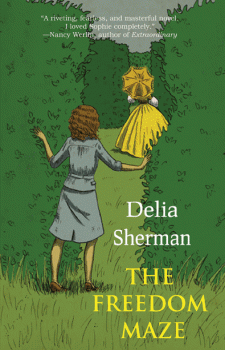
The Freedom MazeDelia Sherman is a phenomenal writer. It doesn’t matter if it’s a short story or a novel – she’ll getchya, getchya, getchya. If Delia Sherman were a city she’d be called Awesometown. If she were a drink special she’d be a Red-Headed Bookgasm. If she were a bare knuckle boxer in a space western her name would be Elly Gant McWinFists. But thankfully she is a writer and, Eris on fire, where have you been if you’re not reading her books?

Her freshest fiction has appeared in Steampunk!, Naked City and Teeth: Vampire Tales. Her most recent novel, The Freedom Maze, is a young adult time travel tale set in antebellum Louisiana.

In one of her few spare moments, Delia Sherman spoke with Black Gate about The Freedom Maze, YA lit and the challenges of writing a novel over 18 years.

Read More Read More

Read an excerpt from Bradley P. Beaulieu’s The Straits of Galahesh

Read an excerpt from Bradley P. Beaulieu’s The Straits of Galahesh

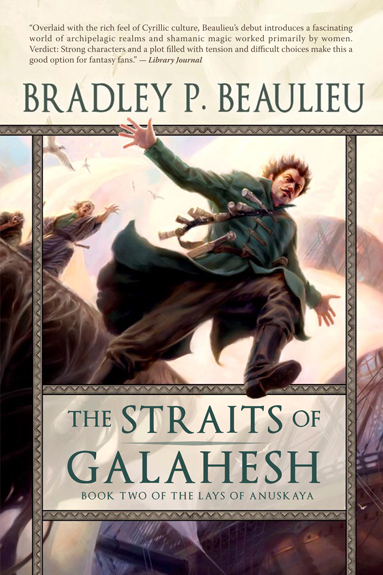
galahesh-cover-v2-medWith the release of The Straits of Galahesh imminent (it hits shelves April 3rd), I’m grateful to John O’Neil and Howard Andrew Jones for having me by to share an excerpt. The Straits of Galahesh is the second book in my epic fantasy trilogy, The Lays of Anuskaya. The story picks up five years after the close of the first book, The Winds of Khalakovo. (And by the way, if you don’t already have a copy of WINDS, it’s available for FREE in the US from the Amazon Kindle Store until the end of the month.)

Here’s the cover blurb for STRAITS:

West of the Grand Duchy of Anuskaya lies the Empire of Yrstanla, the Motherland. The Empire has lived at peace with Anuskaya for generations, but with political turmoil brewing and the wasting disease still rampant, opportunists from the mainland have begun to set their sights on the Grand Duchy, seeking to expand their empire.

Five years have passed since Prince Nikandr, heir to the scepter of Khalakovo, was tasked with finding Nasim, the child prodigy behind a deadly summoning that led to a grand clash between the armies of man and elder elemental spirits. Today, that boy has grown into a young man driven to understand his past – and the darkness from which Nikandr awakened him. Nikandr’s lover, Atiana, has become a Matra, casting her spirit forth to explore, influence, and protect the Grand Duchy. But when the Al-Aqim, long thought lost to the past, return to the islands and threaten to bring about indaraqiram – a change that means certain destruction for both the Landed and the Landless – bitter enemies must become allies and stand against their horrific plans.

Can the Grand Duchy be saved? The answer lies hidden within the Straits of Galahesh…

I also wanted to let the readers of Black Gate know that I’m holding a giveaway to help promote The Straits of Galahesh. Everyone is welcome to come by and enter. I’m giving away a Kindle Fire or Nook Tablet (winner’s choice), a Kindle Touch or Nook Simple Touch (winner’s choice), a rare ARC of The Straits of Galahesh, and ten SETS of the first two books in both physical and electronic form. The details, including how to enter, can be found here.

One last item of note, if you enjoy the excerpt below, you can download the first eleven chapters from my website.

So, without further ado, here’s the prologue from The Straits of Galahesh.

Read More Read More

Range of Ghosts

Range of Ghosts

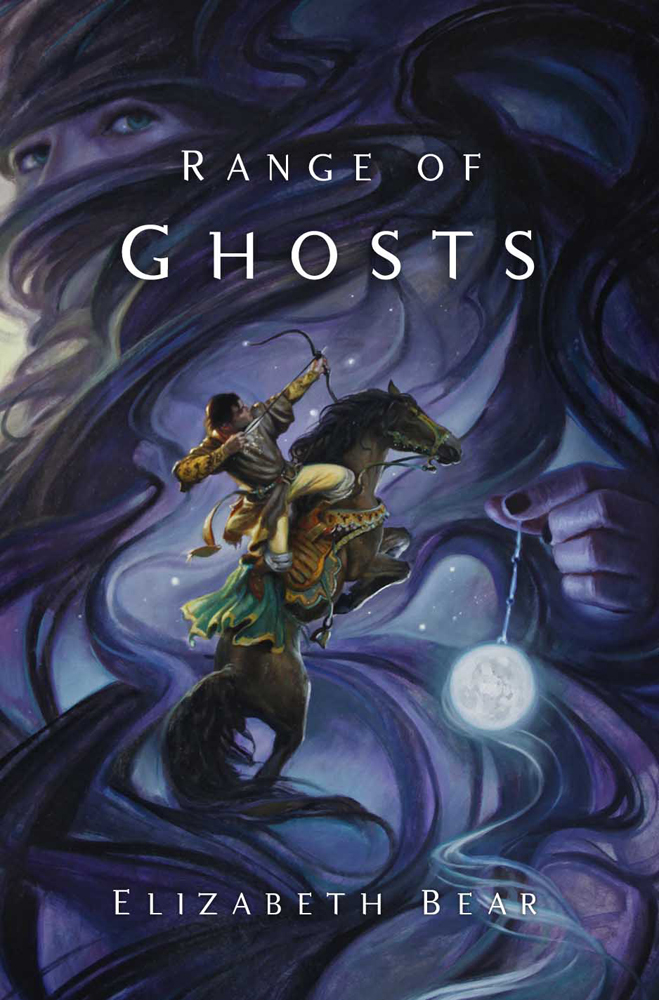
range-of-ghostsI’ve always wanted to write an epic fantasy.

A real epic fantasy, something with sweep and scope, tumbling empires, wizards and warlocks, monstrous fantastical beasts and horses of supernatural speed and stamina and crooked old gods vying for power. Something in the sword-and-sorcery mode, but not exactly a Leiberesque low fantasy… or a Tolkienesque high fantasy either. Rather, a book–a series of books, really, because what I had in mind wouldn’t fit in a hundred and fifty thousand words or so–in which the fate of kingdoms hung in the balance, but which wasn’t uncritical of the role of kings.

I wanted to write a book that had the sense of scope and sense of wonder of the books I loved as a young adult… but I kept running into the same problem.

There’s so much epic fantasy out there. And so much of it looks strangely similar. Not identical, of course… but like different chefs’ versions of the same recipe. The ingredients are all the same.

I’m a fan of Guy Gavriel Kay’s Fionavar books, for all their slightly string-pulling manipulativeness. I love the way he takes every possible overplayed trope of fantasy and dumps them all into the same pot–and then pokes them with sticks and makes them fight. But I knew I didn’t want to do that. I wanted a narrative with elements of quest in it, but not simply a quest to reclaim or destroy the magic widget that makes the story go. I wanted a book that would shift scenes from city to city, from culture to culture — and I knew I wanted a world that wasn’t inhabited by nothing but Europeans.

In fact, I was pretty sure I wanted to dispense with the Europeans all together.

In the meantime, I was researching Central Asia and North Africa and their border cultures, and trying to come up with my own world inspired by those settings but not too derivative of them. I didn’t want to write a historical fantasy — or even an ahistorical fantasy, like Conan, which purports to take place in the antediluvian history of our own earth. I very much wanted a fantasy world, it’s own place, with a few thousand years of history as backdrop.

Read More Read More

New Treasures: The Wesleyan Anthology of Science Fiction

New Treasures: The Wesleyan Anthology of Science Fiction

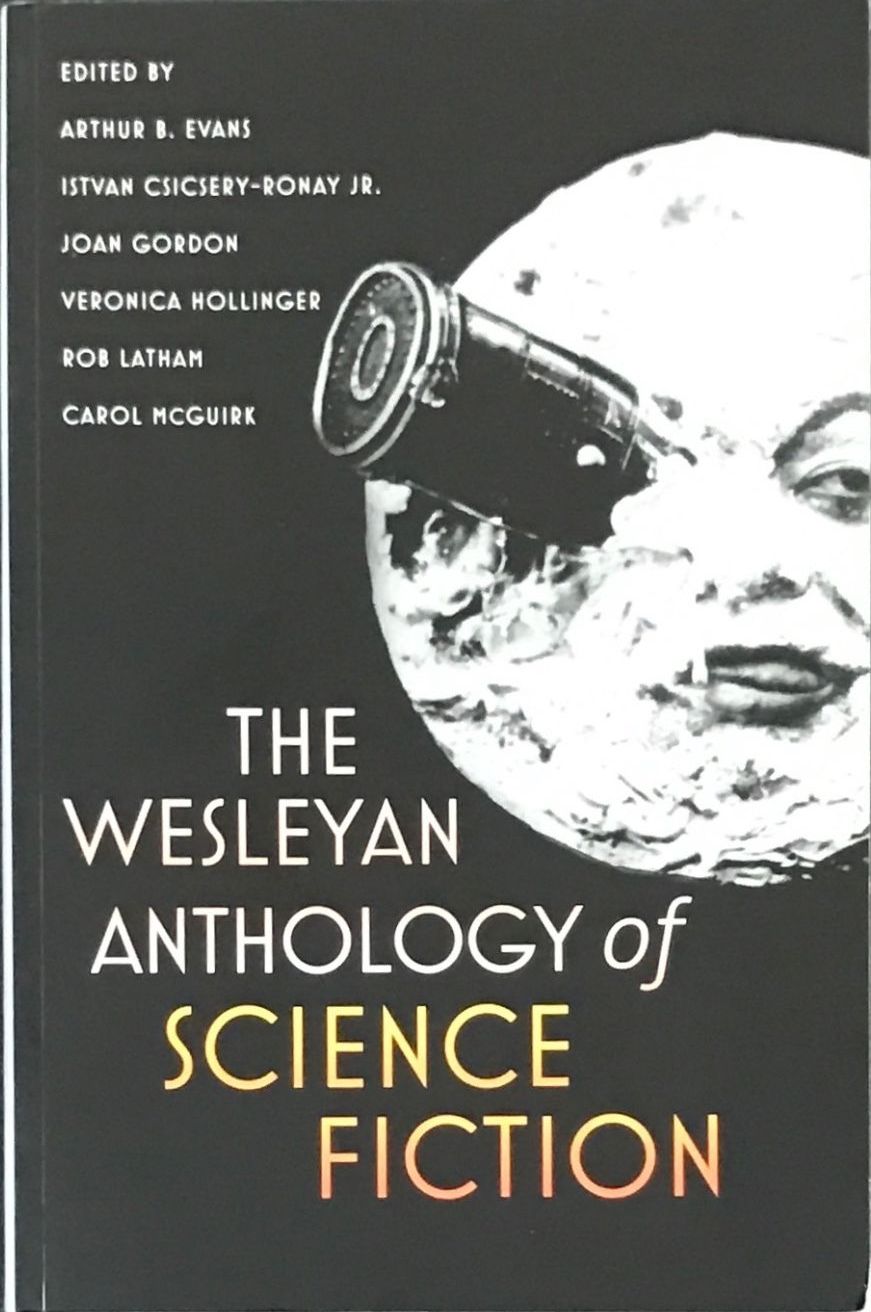
wesleyan-anthologyWow. This may be the finest SF anthology I’ve ever seen. It’s certainly the best I’ve come across in many years.

Editing an anthology — especially a reprint anthology — is a delicate balancing act. You want to include the very finest stories you can, of course. But you’d prefer not to fill your book with tales your readers have seen a dozen times over.

I’m not sure I’ve seen a book that manages this as well as The Wesleyan Anthology of Science Fiction. Starting with Nathaniel Hawthorne’s “Rappaccini’s Daughter” (published 1844) and ending with Ted Chiang’s “Exhalation” (2008) it spans 164 years of science fiction publishing, including some of the finest SF stories ever written — Edmond Hamilton’s “The Man Who Evolved” (1931), James Patrick Kelly’s “Think Like a Dinosaur” (1995) — alongside dozens I’ve never read. Virtually every major SF and fantasy short fiction writer of the last 164 years is represented, from H. G. Wells, C.L. Moore and Stanley Weinbaum to Samuel R. Delany, Philip K. Dick, Gene Wolfe and Charles Stross.

The Wesleyan Anthology has a grand total of six editors, which tells you right off the bat it’s an academic endeavor targeted at libraries and school curriculum. All six are editors for Science Fiction Studies, DePauw University’s long-running critical journal, and they do a fine job of introducing the tales. Now, academic anthologies like this usually don’t appeal to me. They typically devote a considerable page count to proto-SF of the late 1800s or early 1900s, and that stuff puts my feet to sleep.

Not this time.  By the fifth tale we’re already into the 1930s, and the editors pay proper respect to both the Golden Age of SF — the Campbell authors of the 1940s like Asimov and Simak — and the earlier pulp writers of the mid-30s such as Hamilton and Leslie F. Stone. They’ve even plucked some tales from the pulps that I’ve never heard of, and that takes some effort.

I first laid eyes on The Wesleyan Anthology at Wiscon last year when SF author Richard Chwedyk showed me his copy with some wonder and amazement. Alice bought me my copy for Christmas, and I’ve been slowly (very slowly) making my way through it. The Wesleyan Anthology is $39.95 for 787 pages in trade paperback, and is published by Wesleyan University Press. Do yourself a favor and check it out.

INVADING FANTASY

INVADING FANTASY

CONQUER THIS

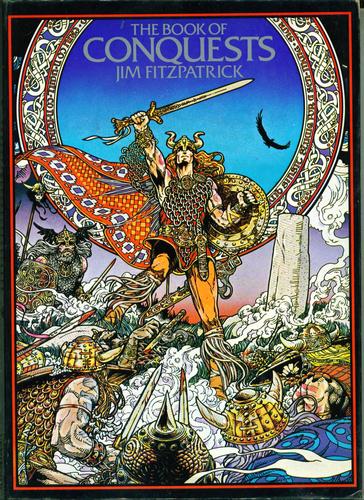
Lebor Gabála Érenn — it just rolls off the tongue, doesn’t it? Literally: “The Book of the Taking of Ireland” or, as it’s usually rendered in English: “The Book of Invasions”, or even, “The Book of Conquests”. It’s a medieval history in case you hadn’t guessed. A full and not very frank account of every event that ever happened on the island of my birth.

Jim Fitzpatrick did some amazing illustrations for his version of the story.

People love to visit Ireland, apparently, and it’s even more fun when you bring an army with you. They’ve all done it, every horde and its crazy gods: Patholonians, Fomorians, Nemedians, Belly Men, The People of the Goddess Danú (who later fled underground to become the Sidhe) and *finally* — drum roll — The Gaels.

I say “finally”, because that’s where The Book of Invasions ends, but just as WWI didn’t quite live up to “the War to end all wars”, and the unification of Germany failed utterly to “end history”… well, Ireland’s attraction for blood-thirsty tourists only got stronger after that.

Read More Read More