Browsed by
Category: Books

Teaching and Fantasy Literature: Escape as Homecoming
Teaching and Fantasy Literature: Escape as Homecoming

the-way-back-homeHurricane Sandy roared and wailed outside our door, shook down trees across the street, pounded our roof so hard my two little sons couldn’t even recognize the sound as rain. “Drum!” insisted my two-year-old. The kids coped fine until the lights went out. Then they panicked.

Of all the things to fear about a hurricane, darkness is one of the least dangerous. Try telling that to a five-year-old. He can’t wrap his head around why 70 mph winds are worse than wind he’s allowed to play in. He probably could have understood why storm surge is scary if we’d been close to any — fortunately, we’re on high ground and nowhere within sight of a body of water. All the anxiety the boys had detected in the adults around them, all their own anxiety from watching the storm through the windows that day, rushed instantly to compound their longstanding fear of the dark.

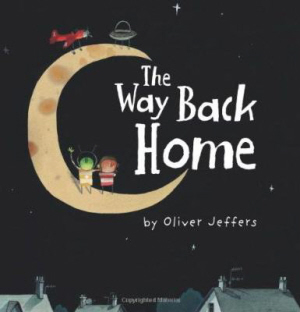
As soon as we had flashlights ready to read by, the kids knew exactly which book they wanted. The Way Back Home is the story of a boy and a Martian who get stranded on the Moon and work together to get themselves and their flying machines back where they belong. Before the boy and the Martian find one another, they huddle in the dark, hearing strange noises, fearing the worst. The boy’s flashlight goes out! My sons wanted that page again and again, because that night the idea of losing the flashlight’s comfort was utterly terrifying.
Read More Read More

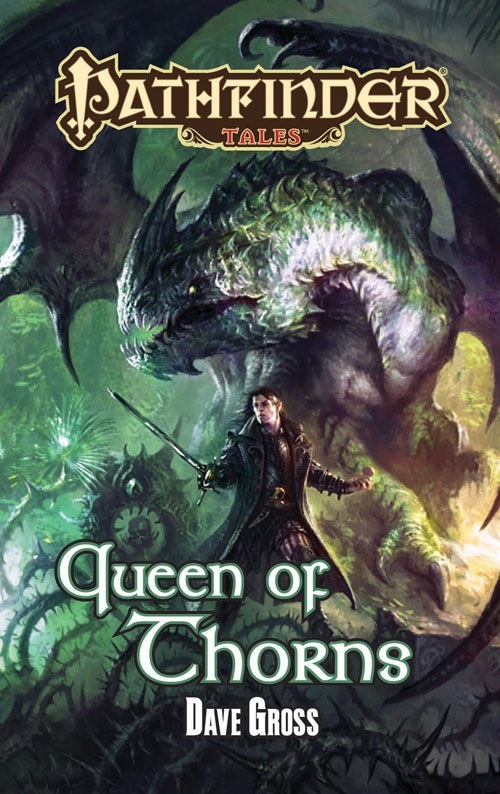
Black Gate Online Fiction: Pathfinder Tales: Queen of Thorns by Dave Gross

Black Gate Online Fiction: Pathfinder Tales: Queen of Thorns by Dave Gross

pathfinder-tales-queen-of-thorns-smallBlack Gate is very pleased to offer our readers an exclusive first look at the latest Pathfinder Tales novel by Dave Gross, the acclaimed author of Prince of Wolves and Master of Devils.

In the deep forests of Kyonin, elves live among their own kind, far from the prying eyes of other races. Few of impure blood are allowed beyond the nation’s borders, and thus it’s a great honor for the half-elven Count Varian Jeggare and his hellspawn bodyguard Radovan to be allowed inside. Yet all is not well in the elven kingdom: demons stir in its depths, and an intricate web of politics seems destined to catch the two travelers in its snares. In the course of tracking down a missing druid, Varian and a team of eccentric elven adventurers will be forced to delve into dark secrets lost for generations — including the mystery of Varian’s own past.

Dave Gross is the former editor of Dragon, Star Wars Insider, and Amazing Stories. His adventures of Radovan and Count Jeggare include the Pathfinder Tales novels Prince of Wolves and Master of Devils, as well as many novellas and short stories available at Paizo.com. His other novels include Winter Witch with Elaine Cunningham, and the Forgotten Realms novels Black Wolf and Lord of Stormweather.

We previously reviewed the Pathfinder Tales novels Death’s Heretic by James L. Sutter, Master of Devils by Dave Gross, and Howard Andrew Jones’s Plague of Shadows, and introduced you to BG Contributing Editor Bill Ward’s Pathfinder Tales story “The Box, and “The Walkers from the Crypt” by Howard Andrew Jones.

Pathfinder Tales: Queen of Thorns is published by Paizo Publishing and is part of their Pathfinder Tales Subscription. It is a 432-page mass market paperback available for $9.99 ($6.99 ePub and PDF). The digital versions are available today; the print version is officially on sale November 13, 2012. Learn more at Paizo.com.

“The Midsummer Masquerade,” the complete first chapter of Queen of Thorns, is presented exclusively here at Black Gate; Chapters Two and Three are available at Flames Rising and SF Signal.

Read Chapter One of Queen of Thorns here.

New Treasures: The Hand of Fu Manchu, by Sax Rohmer

New Treasures: The Hand of Fu Manchu, by Sax Rohmer

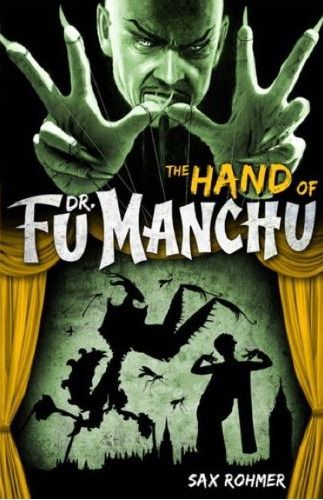
the-hand-of-fu-manchu-smallWilliam Patrick Maynard, Black Gate‘s resident Sax Rohmer expert, wrote an excellent 9-part series on The Hand of Fu Manchu, starting last November. It piqued my curiosity towards Rohmer, and The Hand of Fu Manchu in particular, and I vowed I would spend some quality time with both.

You’ll note it’s now October. Maybe I don’t always do it quickly, but I do keep my promises. This one was made even easier by the arrival of the gorgeous reprint edition of Rohmer’s third Fu-Manchu novel from Titan Books.

London, 1913. The era of Sherlock Holmes, Dracula, and the Invisible Man. A time of shadows, secret societies, and dens filled with opium addicts. Into this world comes the most fantastic emissary of evil society has ever known… Fu-Manchu.

A sealed box and murder most foul call Nayland Smith and Dr Petrie back from distant Egypt to the fog-enshrouded streets of London. There they discover that Dr. Fu-Manchu is an agent of a vast and deadly organization — one which will stop at nothing to achieve its ruthless goals.

The Hand of Fu Manchu was originally published in 1917 (the UK title was The Si-Fan Mysteries). There have been numerous paperback reprints over the last century, but few of this level of quality. These Titan editions are handsome and very affordable, in oversize trade paperback format; this one includes an afterword by Leslie S. Klinger, an abbreviated version of his essay from The Mystery of Fu-Manchu.

The Hand of Fu Manchu was published by Titan Books in May 2012. It is 266 pages, and priced at $9.95 for the print version and $7.99 for the digital edition. Read more at the Titan Books website.

Adventure on Film: The Thief of Baghdad

Adventure on Film: The Thief of Baghdad

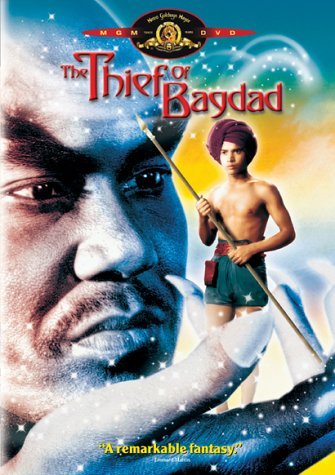
the-thief-of-baghdad-smallOn a recent Friday night, I sat down with my wife to watch The Thief of Baghdad (the definitive Korda/Powell version, from 1940). Thirty minutes later, my wife was fast asleep. When she woke up, she said, knowing I planned to mention the film to Black Gate’s readership, “What are you going to write about this?” Her notable lack of enthusiasm could, of course, be due to any number of factors, but only three reasonable alternatives present themselves: A) my wife is entirely lacking in taste; B) my wife has been replaced by a cantankerous alien entirely lacking in taste; C) this particular movie might well cause many a discerning viewer to harbor similar sentiments.

Let’s be clear: The Thief of Baghdad is one of the most universally acclaimed fantasy films ever made. Even my old (well-loved) copy of The Movie Guide gushes. “Perhaps the most splendid fantasy film ever made,” writes James Monaco and his various contributors, ending the review with “Film fantasy just doesn’t get much better than this.” Halliwell’s is equally enthusiastic, and they don’t like anything. Time Out raves. Coppola and Lucas cite it as a significant influence.

The story is crackerjack from start to finish. (Spoilers here: if you don’t want the plot, skip to the next paragraph.) Ahmed, the king deposed by Jaffar, his own Grand Vizier, falls in love with a princess whom no man can see, and of course vows to see her repeatedly. Ahmed is aided by Abu the thief, but of course Jaffar has designs on the very same princess. When Jaffar kidnaps her, Ahmed and Abu follow, but Jaffar conjures up a storm that separates our two heroes. In order to find Ahmed again, Abu must gain the reluctant help of a fifty-foot genie (the exceptional Rex Ingram), then steal the Eye of the World from a temple guarded by, among other things, a giant spider and giant octopi. Finally, with Ahmed captured and about to be beheaded, Abu swoops in on a flying carpet to save the day.

Given all this, how on earth did my wife (or some random alien) pass out?

The Thief of Baghdad has not aged gracefully. It’s essential viewing, yes, but only for buffs of either fantasy films or Old Guard Hollywood. The inconsistent special effects are the least of its problems; worse by far is what one might call presentational acting, but is in fact mostly just plain bad. Even Sabu, the Indian star who first made it big with Elephant Boy, is revealed to be a truly wooden performer. Conrad Veidt, as the cruel-as-an-adder Jaffar, comes off as a well-oiled villain, but he’s horribly miscast; he’s German through and through.

Read More Read More

Popular Marketing Mistakes: Cannibalism

Popular Marketing Mistakes: Cannibalism

the-inferior-small

1. The Sadness — It is too Much!

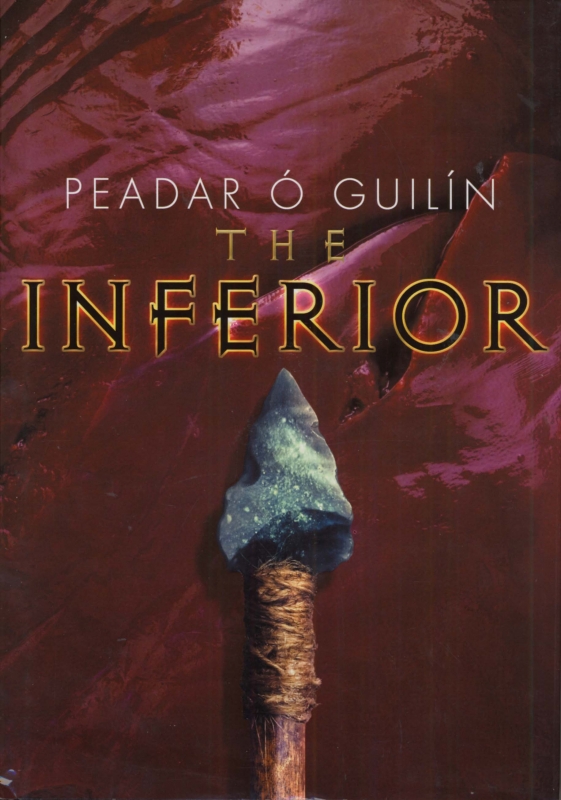
When my first book, The Inferior, came squalling into the light back in 2007 it received absolutely wonderful reviews.

Read this and remember why Science Fiction lit your fire in the first place!

An exhilarating read, highly recommended and an incredible first novel in what is going to end up an incredible career.

It made several “Best of the Year” lists. Foreign editors snapped up the rights. An agent in Hollywood got excited about the idea of a movie. What could possibly go wrong?

Well, for a start, nobody bought it.

By nobody, I don’t just mean sweaty little nerds like myself with fistfuls of notes or book vouchers. No, the shops didn’t want to buy it either. They failed to stock it, or did so in small quantities. They were right too, because the few copies that made it into stores gathered dust or wept quietly in the back of warehouses.

After “Best of the Year” lists, The Inferior began turning up in other places, such as “most underrated book” lists and — now that I have two novels in print — “most underrated series.” That’s a gentle way of saying “loserville.”

Yes, this depressed me and I whined to whoever would listen until I bored my friends to sleep with it. I didn’t understand back then that both myself and my publishers had made some interesting mistakes in our marketing of the book.

Read More Read More

Vintage Treasures: Solomon Kane: The Hills of the Dead, by Robert E. Howard

Vintage Treasures: Solomon Kane: The Hills of the Dead, by Robert E. Howard

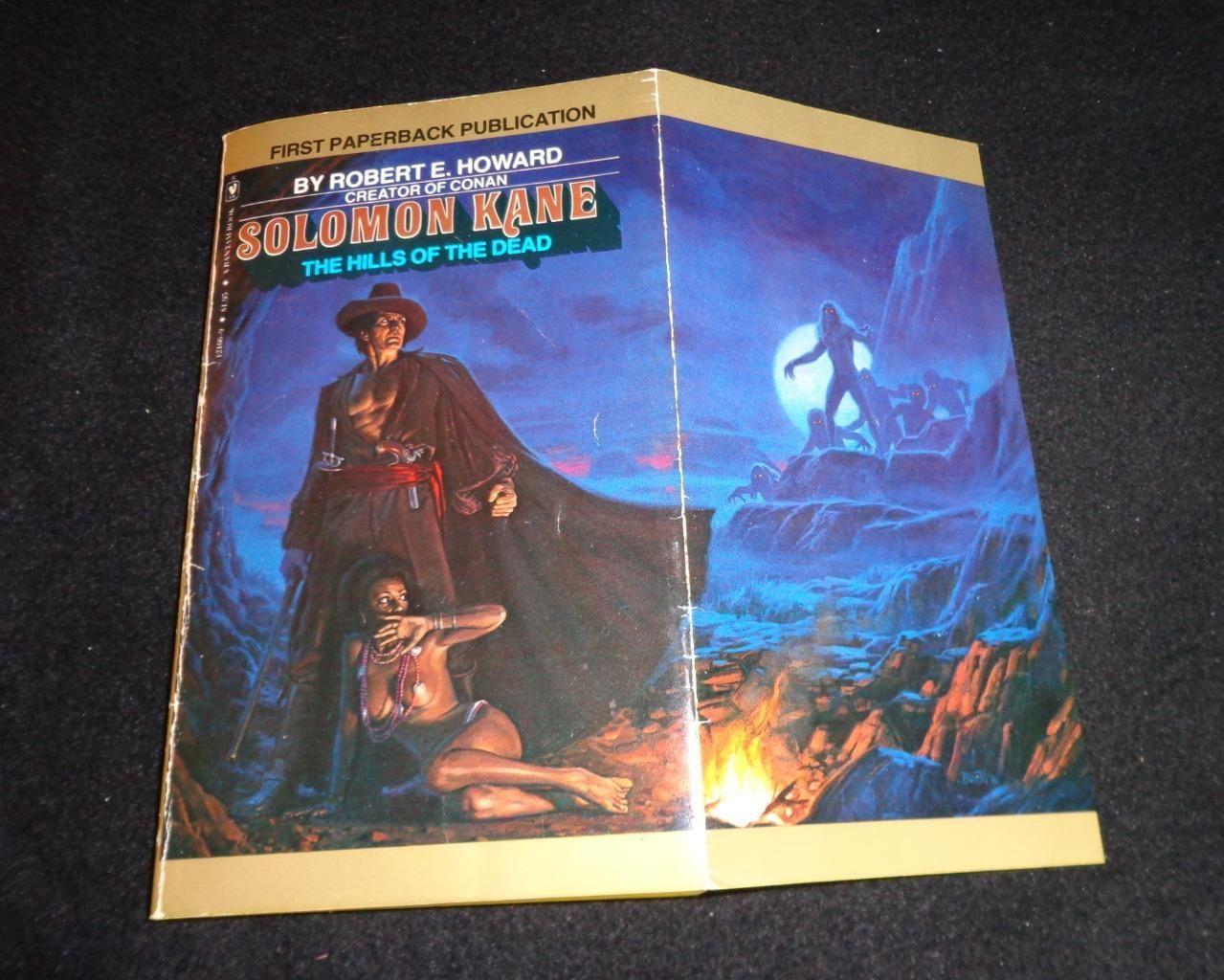
solomon-kane-the-hills-of-the-deadWith all the recent discussion around these parts about Conan and Robert E. Howard, I figured the best use of my time this week would be to sit back and enjoy some genuine Robert E. Howard.

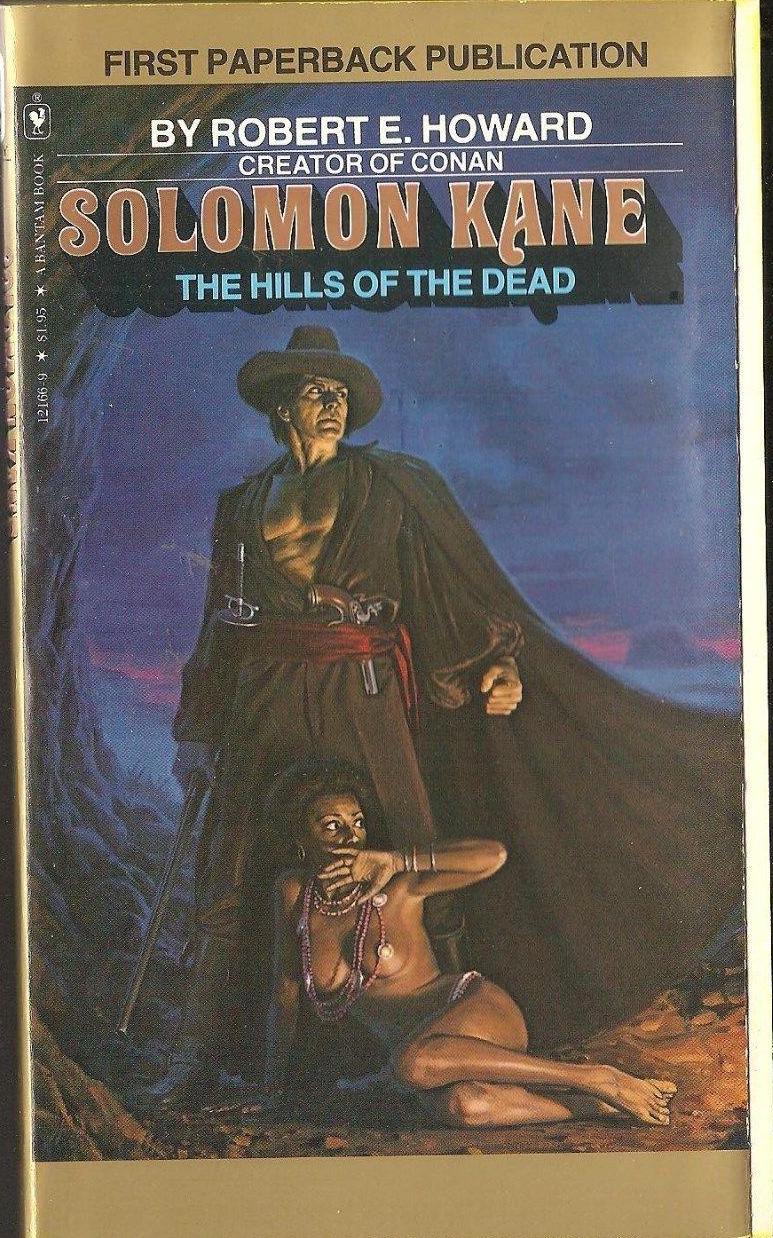
With output as vast as Howard’s, the biggest challenge was choosing what to read. One of my favorite Howard pieces is “Skulls in the Stars,” a genuinely creepy tale in which Solomon Kane investigates a moonlit moor trail haunted by a vindictive spirit, so I decided on Solomon Kane: The Hills of the Dead. It was the second Kane paperback published by Bantam Books (the first was Solomon Kane: Skulls in the Stars, in December, 1978). The striking cover is part of a fold-out poster by Bob Larkin.

In a world ruled by piracy, stalked by vampires, peopled by cities of the inhuman, he stood tall amid the terrors of the Dark Continent. Kane, a man of savage and unconquerable courage, strode deep into the jungles, forever slashing his diamond-edged rapier as evil guided the creatures of the night toward him. Wicked whispers of death touched him. Haunted horrors of the world beyond life reached for him. But Kane never halted his march, for he would never rest until the final, epic duel between light and dark was waged… and won.

Disappointingly, I discovered the contents are not pure Howard — in fact, two of the five stories within were completed by Ramsey Campbell, who also provides the introduction.

Introduction: The Mystery of Solomon Kane, by Ramsey Campbell
“The Hills of the Dead”
“Hawk of Basti” (completed by Ramsey Campbell)
“The Return of Sir Richard Grenville” (poem)
“Wings in the Night”
“The Footfalls Within”
“The Children of Asshur” (completed by Ramsey Campbell)
“Solomon Kane’s Homecoming” (poem)

Still, these’s lots here to enjoy. I’m especially pleased to see the poetry, and Campbell’s introduction, which as far as I know is unique to this volume.

Solomon Kane: The Hills of the Dead was published in paperback by Bantam Books in March, 1979. It is 141 pages, with a cover price of $1.95.

New Treasures: Stories, edited by Neil Gaiman and Al Sarrantonio

New Treasures: Stories, edited by Neil Gaiman and Al Sarrantonio

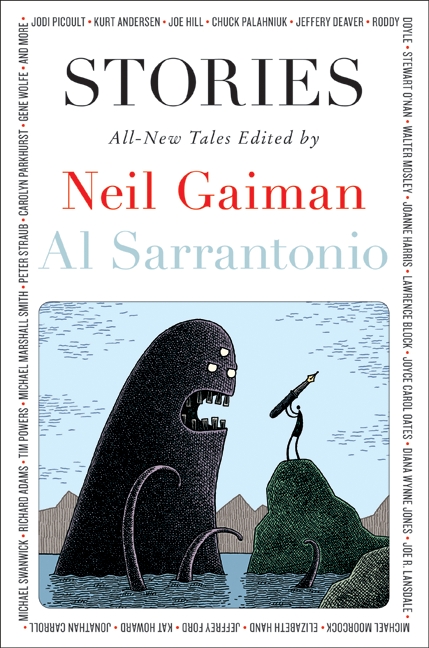
stories-neil-gaiman-smallYeah, I know I’m late to the party with this one. Stories, the high-profile original anthology edited by Neil Gaiman and Al Sarrantonio, was released over two years ago — back in June of 2010.

But I have a good excuse. Despite the incredibly awesome cover by Tom Gauld, after my first glace at the table of contents, I dismissed Stories as a mainstream anthology.

I mean, come on. Walter Mosley, Jodi Picolut, Joyce Carol Oates, Joanne Harris, Lawrence Block, Roddy Doyle, and Chuck Palahniuk? You’d have made the same mistake.

Eventually, I picked up enough on the buzz around this book to realize that its claim to being a “groundbreaking anthology that reinvigorates, expands, and redefines the limits of imaginative fiction” wasn’t just hyperbole. Many of the stories, including Neil Gaiman’s “The Truth is a Cave in the Black Mountains” and Elizabeth Hand’s “The Maiden Flight of McCauley’s Bellerophon,” began showing up on genre best-of-the-year lists.

I finally decided it was time to take another look. It didn’t hurt that by then the hardcover was being offered at a bargain price at Amazon.com for 60% off (still in stock if you act fast).

Stories is by no means a straight-up fantasy anthology. But it includes some terrific fantasy fiction by some of the genre’s biggest names, including Richard Adams, Michael Swanwick, Michael Moorcock, Peter Straub, Gene Wolfe, Tim Powers, Joe Hill, Michael Marshall Smith, and Joe R. Lansdale.

And I think you’ll be surprised by the contributions of the writers I mentioned above — who aren’t known for writing fantasy — as well.

Read More Read More

Try Out the Best in Modern Epic Fantasy in John Joseph Adams’ Latest Anthology

Try Out the Best in Modern Epic Fantasy in John Joseph Adams’ Latest Anthology

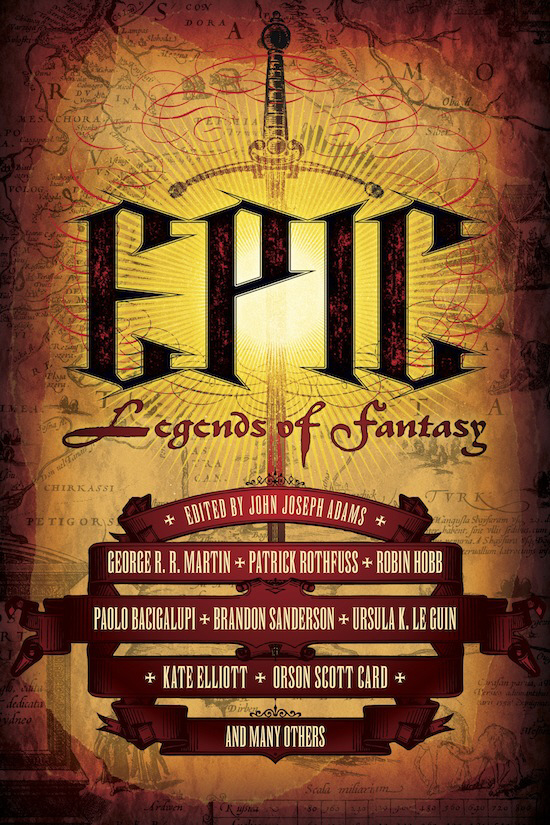
John Joseph Adams EpicThe true value of anthologies, of course, is you get to sample a variety of authors under a single cover. And the true value of great anthologies is that you get to sample a variety of great authors under a single cover.

Epic: Legends of Fantasy looks like a great anthology. It’s a fantasy buffet featuring some of the most acclaimed writers working in the field today, including Patrick Rothfuss, George R. R. Martin, Tad Williams, Michael Moorcock, Mary Robinette Kowal, and N. K. Jemisin, to name just a few. Here’s the complete TOC:

“Homecoming” by Robin Hobb
“The Word of Unbinding” by Ursula K. Le Guin
“The Burning Man” by Tad Williams
“As the Wheel Turns” by Aliette de Bodard
“The Alchemist” by Paolo Bacigalupi
“Sandmagic” by Orson Scott Card
“The Road to Levinshir” by Patrick Rothfuss
“Rysn” by Brandon Sanderson
“While the Gods Laugh” by Michael Moorcock
“Mother of All Russiya” by Melanie Rawn
“Riding the Shore of the River of Death” by Kate Elliott
“The Bound Man” by Mary Robinette Kowal
“The Narcomancer” by N. K. Jemisin
“Strife Lingers in Memory” by Carrie Vaughn
“The Mad Apprentice” by Trudi Canavan
“Otherling” by Juliet Marillier
“The Mystery Knight” by George R. R. Martin

This is a reprint anthology, but don’t let that dissuade you. Adams has done a marvelous job assembling epic fantasy from the last five decades, and tracking down even a fraction of these stories would cost you far more than this anthology. Paolo Bacigalupi’s novella, “The Alchemist,” for example, was previously available only as a limited-edition hardcover from Subterranean Press. “The Road to Levinshir” by Patrick Rothfuss is from Volume 18 of the Writers of the Future anthology, long out of print. Michael Moorcock’s Elric tale, “While the Gods Laugh,” originally published in Science Fantasy #49 (October 1961), is probably the most-reprinted tale of the lot, but trust me — you’ll be glad it’s here.

Epic: Legends of Fantasy was published on October 5th by Tachyon Publications. It is 624 pages in trade paperback for $17.95 ($9.99 for the digital version). Complete details at the Tachyon website.

Goth Chick News: While You’re Waiting for Ridley Scott…

Goth Chick News: While You’re Waiting for Ridley Scott…

image0023It’s been nearly a year since we told you Ridley Scott had leapt from his lounge chair to dive head-first into a fit of creativity; at the end of which we’d be gifted with extensions of two of his most lucrative and beloved films.

Prometheus, a pseudo-prequel to the Alien franchise hit theaters on June 8th and just became available on DVD, Blu-ray, and Blu-ray 3D. Among the many special extras included is Scott’s own feature-length audio commentary, wherein he provides a brief update about the status of his upcoming Blade Runner sequel.

“I’m going through Blade Runner now,” Scott says, likening the process to his work on Prometheus. “You start off with a blank sheet and you start to evolve. Sometimes you walk into this wilderness of mirrors that don’t make any sense at all. Then, suddenly, two and two do make four and you think, ‘Oh, that’s good,’ and you put that up there. It’s a series of paving stones.”

What that “wilderness of mirrors” says to us is that as of October, Scott was still working on what is likely the early stages of a script. And though we can confirm a Blade Runner sequel has been green-lighted, it appears very unlikely that we’ll be sitting down with popcorn to find out if Harrison Ford makes an appearance or not any sooner than early 2014.

That’s quite all right Mr. Scott. Take your time. You are fiddling with a cinematic icon there.

But, my replicant covetors, fear not – we have a little something to hold you over…

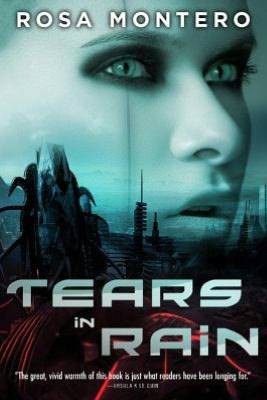
From Madrid, Spain, award-winning author Rosa Montero spins a futuristic tale also set in Rick Deckard’s replicant-populated world, but told from the replicant’s point of view.

Read More Read More

New Treasures: Harbor by John Ajvide Lindqvist

New Treasures: Harbor by John Ajvide Lindqvist

harborI’m a big fan of Let the Right One In, the Swedish vampire film based on the John Ajvide Lindqvist novel. Creepy, creepy stuff, and any film that can have you cheering for the vampire while simultaneously being 100% faithful to traditional vampire lore gets my vote.

Let the Right One In was re-made for English audiences as Let Me In in 2010, staring Chloe Moretz (Kick-Ass). Lindqvist’s original novel was given the same title for its English trade paperback release the same year. His latest is Harbor, and it sounds very intriguing indeed.

With Harbor, a stunning and chilling masterpiece, Lindqvist firmly cements his place as the heir apparent to Stephen King.

One ordinary winter afternoon on a snowy island, Anders and Cecilia take their six-year-old daughter Maja across the ice to visit the lighthouse in the middle of the frozen channel. While they are exploring the lighthouse, Maja disappears – either into thin air or under thin ice — leaving not even a footprint in the snow.

Two years later, Anders, a broken man, moves back to his family’s abandoned home on the island. He soon realizes that Maja’s disappearance is only one of many strange occurrences, and that his fellow islanders, including his own grandmother, know a lot more than they’re telling. As he digs deeper, Anders begins to unearth a dark and deadly secret at the heart of this small, seemingly placid town.

As he did with Let the Right One In and Handling the Undead, John Ajvide Lindqvist serves up a blockbuster cocktail of high-tension suspense in a narrative that barely pauses for breath.

I don’t cover a lot of horror with my New Treasures column, mostly because I don’t get the chance to read as much as I used to. But I plan to make an exception for this one.

Harbor was released by St. Martin’s Griffin in September; it is 528 pages. It is $15.99 in trade paperback, and $9.99 for the digital edition.

You can see all of our recent New Treasures articles here.