Browsed by
Category: Books

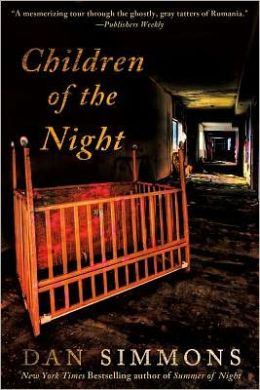
New Treasures: Children of the Night by Dan Simmons
New Treasures: Children of the Night by Dan Simmons

Children of the NightDan Simmons wrote two of my favorite horror novels, Carrion Comfort and Summer of Night, and the audio version of his novel, The Terror, kept me riveted for many weeks during the long winter commute between Champaign and St. Charles last year. When Simmons talks horror, I listen.

Children of the Night was originally published in 1992, when Communist states were collapsing all across Europe and the airwaves were filled with stories of the desperate last days of Communist dictators. Romania, home to the classic fears of Transylvania, became synonymous with horror of a very different kind when western film crews entered bleak Romanian orphanages to expose the cruelty and neglect there. In Children of the Night, Simmons married modern horror and a far more ancient terror:

In a desolate orphanage in post-Communist Romania, a desperately ill infant is given the wrong blood transfusion — and flourishes rather than dies. For immunologist Kate Neuman, the infant’s immune system may hold the key to cure cancer and AIDS. Kate adopts the baby and takes him home to the States. But baby Joshua holds a link to an ancient clan and their legendary leader — Vlad Tşepeş, the original Dracula – whose agents kidnap the child. Against impossible odds and vicious enemies– both human and vampire – Kate and her ally, Father Mike O’Rourke, steal into Romania to get her baby back.

Children of the Night was published on December 11, 2012 by St. Martin’s Griffin. It is 464 pages in trade paperback, priced at $15.99 ($9.99 for the digital edition), and this edition features a brand new introduction by the author.

You can see all of our recent New Treasures articles here.
Rue Morgue Magazine’s 200 Alternative Horror Films You Need to See

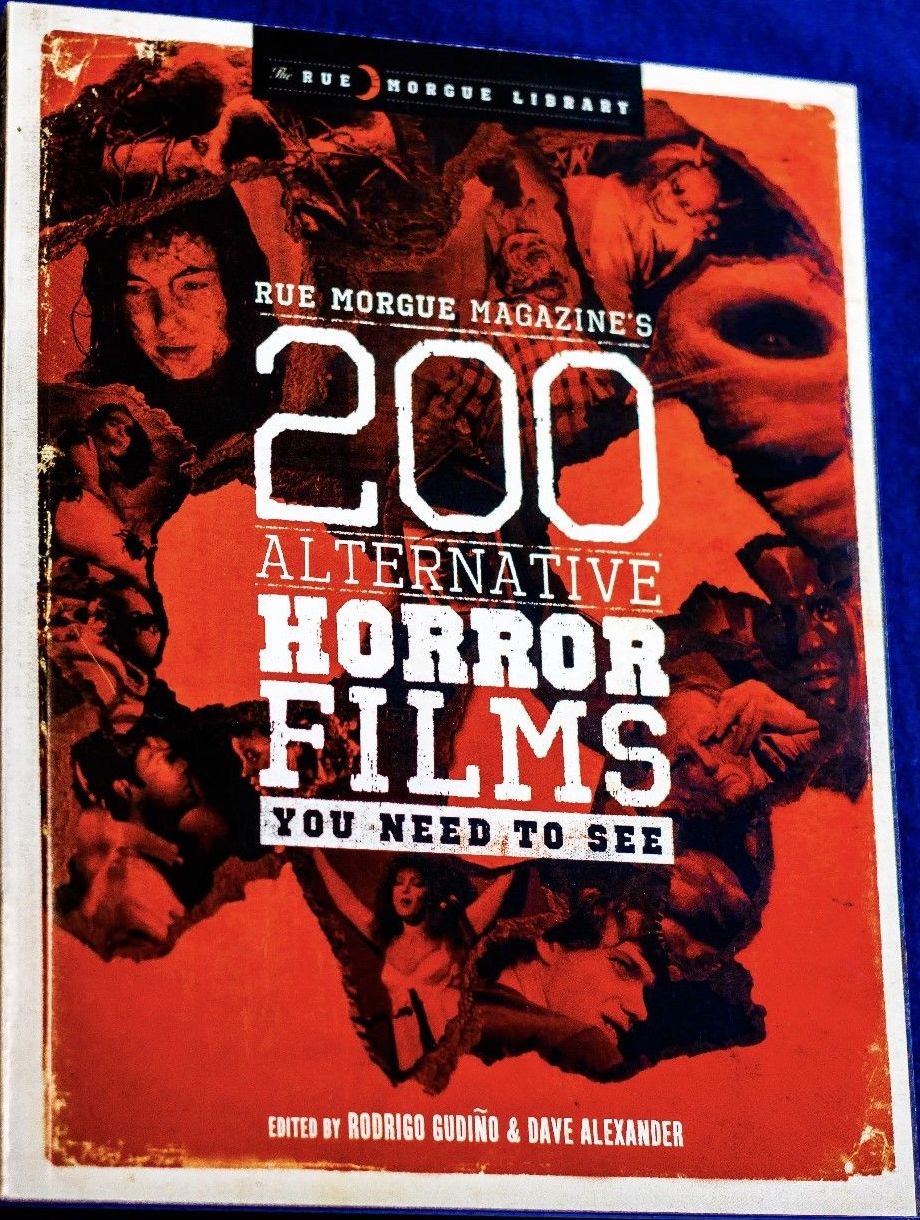
Rue Morgue Magazine’s 200 Alternative Horror Films You Need to See

Rue morgues magazine's 200 alternative horror filmsI had a clever title in mind for this post, something about a book you need to see, but the name of the book was so long nothing else would fit. Rue Morgue Magazine’s 200 Alternative Horror Films You Need to See. See what I mean? Damn near had to start a new paragraph just to say it again.

200 Flicks (which we’ll be calling it going forward) is a marvelous little treasure I found on the B&N magazine rack while digging around for the latest issue of Fantasy & Science Fiction. I’m vaguely aware of Rue Morgue magazine (and should probably be moreso, granted), but that wasn’t what caught my eye. No, it was the title, and the fact that this perfect bound “magazine” is an impressive 162 pages.

I flipped through it, and was sold instantly. This is the kind of invaluable reference work I’ll be drawing on for years. It’s packed to the brim with text, with plenty of color stills and crisp reproductions of 200 movie posters and DVD covers. The heart of the book is the carefully-selected collection of well written and informative reviews of overlooked horror films.

A quick check showed many of my favorites are here, including a guilty pleasure or two: Session 9, Let the Right One In, Psycho II, Something Wicked This Way Comes — and plenty more that I’m not familiar with. And isn’t the joy of discovery the true reason you lay your money down for this kind of thing?

The entries are organized alpahbetically, but it’s really something you browse rather than read cover-to-cover. It has numerous lists: 10 Made for TV Terrors You Need to See, 10 Foreign Zombie Films You Need to See, plus lists covering vampire flicks, foreign zombie movies, family fright fests, gore films, slashers, and many more. There are also interviews with directors and film personalities like Guillermo del Toro, Tobe Hooper, Roger Corman, Fred Dekker, Larry Cohen, Stuart Gordon, and others.

The book is so inexpensive (a criminally low $9.99, or $4.99 for the digital version) and so packed with content that the only way it can possibly be a money-making venture is if it’s primarily recycled material from Rue Morgue magazine. Which is fine by me — if the magazine is a fraction as interesting and entertaining, I’ll be getting a subscription.

Read More Read More

Vintage Treasures: The Fuzzy Papers by H. Beam Piper

Vintage Treasures: The Fuzzy Papers by H. Beam Piper

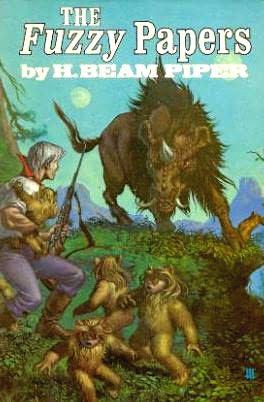
the fuzzy papersThe Fuzzy Papers was one of the first science fiction books I ever read, and it’s one of the small handful of books that made me an SF reader for life.

The Fuzzy Papers contains two novels by H. Beam Piper, Little Fuzzy (1962) and Fuzzy Sapiens (1964, also known as The Other Human Race), and was published by the Science Fiction Book Club  in 1980. I joined the SFBC at the age of 12 at the urging of my friend John MacMaster, who turned me on to science fiction by loaning me book club editions from many of its finest writers, including Frank Herbert and Clifford D. Simak. The club specialized in low-cost reprints of popular SF and fantasy, ideal for a teen with little disposable income, and best of all, it occasionally produced magnificent omnibus editions of genre classics.

The Fuzzy Papers was a perfect example. Available exclusively through the club, it collects two long out-of-print paperbacks in a durable hardcover with a beautiful Michael Whelan cover, all for under 7 bucks. Not the kind of thing an impressionable teen could resist, and I didn’t even bother to try. I checked off my order form and put it back in the mail pronto, and impatiently waited for it to arrive.

I was not disappointed. Piper’s novels follow the adventures of down-on-his-luck space prospector Jack Holloway, who’s been exploring the planet Zarathrustra — a Class III uninhabited world run for profit by mining magnate Victor Grego. But everything changes when Holloway discovers the Fuzzies, curious little humanoids that almost seem to have the power to reason.

In fact, the more he interacts with them, the more Holloway is convinced they can reason — and if the Fuzzies are intelligent, that makes Zarathrustra a Class IV inhabited world, and Grego’s mining privileges would be gone for good. His company isn’t going to let that happen, no matter what the cost.

Read More Read More

New Treasures: Dead Things by Stephen Blackmoore

New Treasures: Dead Things by Stephen Blackmoore

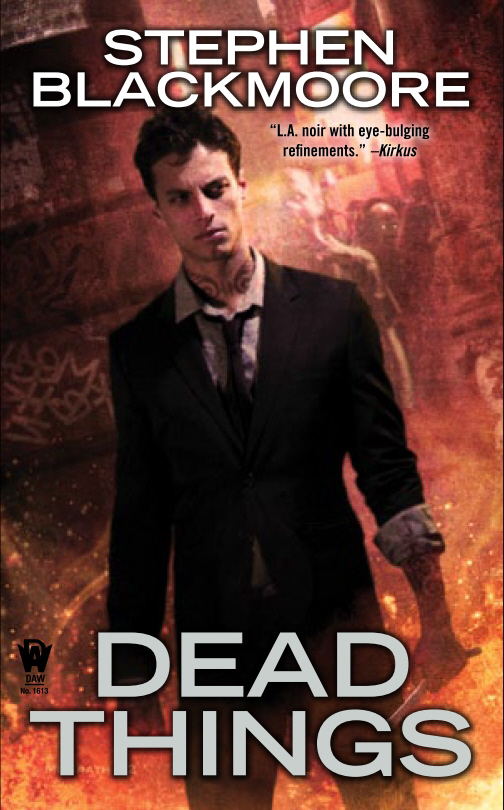
Dead Things-smallI talked about genre mash-ups Monday in my post on The Last Policeman. There’s an obvious one I forgot: hard-boiled detective zombie novels.

Not sure how I spaced on that one. Three titles I’ve covered as New Treasures in the last few months alone have been undead crime novels: Stefan Petrucha’s Dead Mann Running, Tim Waggoner’s The Nekropolis Archives, and Chris F. Holm’s Dead Harvest. As trends go, this one is a little more welcome than most, at least for me. Necromancers and tough-talking private eyes… what can I say, they go together.

The latest entrant into this crowded sub-sub-genre, Stephen Blackmoore’s Dead Things, sounds like it will fit in nicely:

Necromancer is such an ugly word, but it’s a title Eric Carter is stuck with.

He sees ghosts, talks to the dead. He’s turned it into a lucrative career putting troublesome spirits to rest, sometimes taking on even more dangerous things. For a fee, of course. When he left LA fifteen years ago, he thought he’d never go back. Too many bad memories. Too many people trying to kill him.

But now his sister’s been brutally murdered and Carter wants to find out why. Was it the gangster looking to settle a score? The ghost of a mage he killed the night he left town? Maybe it’s the patron saint of violent death herself, Santa Muerte, who’s taken an unusually keen interest in him. Carter’s going to find out who did it, and he’s going to make them pay.

As long as they don’t kill him first.

Dead Things will be published by DAW Books on Feb 5, 2013. It is 295 pages, and priced at $7.99 for both the paperback and digital editions.

Swords & Dark Magic: The New Sword and Sorcery Only $6.40 at Amazon.com

Swords & Dark Magic: The New Sword and Sorcery Only $6.40 at Amazon.com

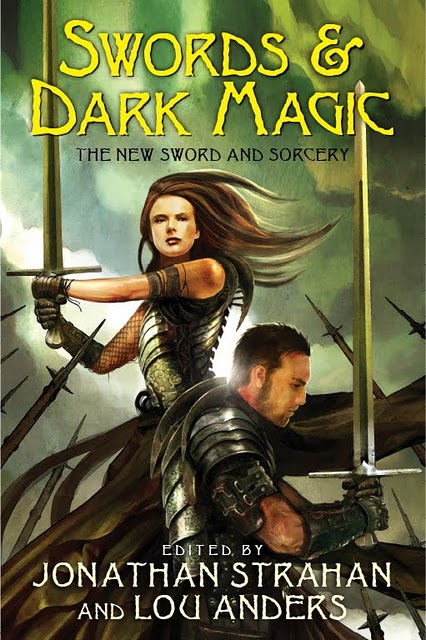
swords-dark-magic-256One of the best swords & sorcery anthologies of the last ten years is available at a deep discount on Amazon.com.

Swords & Dark Magic, edited by Jonathan Strahan and Lou Anders, contains 17 original stories — including a new Elric novella by Michael Moorcock, a Majipoor tale by Robert Silverberg, a Cugel the Clever tale by Michael Shea, a Black Company story by Glen Cook, and a brand new Morlock tale by James Enge. Contributors include Steven Erikson, C. J. Cherryh, Scott Lynch, Bill Willingham, Joe Abercrombie, Tanith Lee, Garth Nix, Greg Keyes, Gene Wolfe, Tim Lebbon, Caitlín R. Kiernan, and many others.

Our man Jason Waltz examined it in one of the longest and most detailed reviews we’ve ever published.

At Worldcon, I had the pleasure of hearing James Enge read his fabulous story “The Singing Spear” — which includes the classic line “You killed my bartender!” James is one of our most gifted practitioners of modern S&S, and “The Singing Spear” is one of his finest stories. It’s worth far more than $6.40 all on its own — and if you get the chance, hearing James read it live is worth far more than that.

Our most recent round-up of discount fantasy titles at Amazon is here.

Swords & Dark Magic was published by Avon Eos in June 2010. It is 519 pages, and was originally priced at $15.99. While copies last, it is being sold online for $6.40 at Amazon.com.

Self-published Books: Review of Noggle Stones: The Goblin’s Apprentice by Wil Radcliffe

Self-published Books: Review of Noggle Stones: The Goblin’s Apprentice by Wil Radcliffe

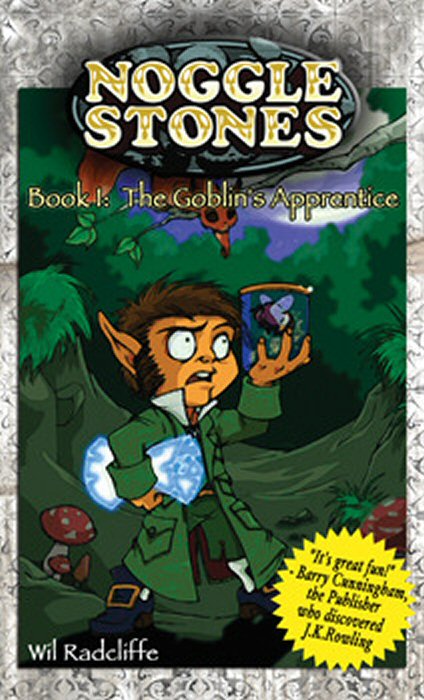
noggle stones-smallWhen I first started this series of reviews on self-published books, I had two criteria for reviewing a book.

First, it had to be a self-published fantasy novel. Second, based on the blurb and the excerpt, it had to be a book that I wanted to read. At the time, I didn’t realize that the first criterion would be the more difficult one to figure out.

I discuss some of the difficulties in deciding whether to review a book on my personal blog, but the bottom line is that I almost didn’t review Noggle Stones: The Goblin’s Apprentice. It was originally published by a small press, and only later self-published by the author. I might have still decided that it didn’t quite qualify, since it wasn’t originally self-published, but it certainly met my second criterion: . I really wanted to read this book.

If there’s one word to describe The Goblin’s Apprentice, it’s charming. From the author’s own illustrations, to the poetry, to the language. At times, it’s a bit too charming, but in the end I forgave it. The book seems to be aimed at the Middle Grade level, and it has the same sense of whimsy found in the best books of that type.

The Goblin’s Apprentice is the first book of the series Noggle Stones. The central character is Martin Manchester, an aspiring stage magician in 1899 America. His career plans are interrupted by the fact that our world has merged with a fantasy world populated by elves, dwarves, ogres, and yes, goblins. Martin soon finds himself a student of the goblin Bugbear, a scholar of Non-Logical Thought, which forms the basis of the magic system in the novel. Accompanying them is Bugbear’s scoundrel of a cousin, Tudmire. Their wandering takes them to the kingdom of Willow Prairie, which is really a small town that’s been awaiting the arrival of a king for centuries. After rescuing the dragon bride Maga from a show trial, the heroes quickly get caught up in the war against the Shadow Smith and his army of patchworks.

Read More Read More

Genre 2013: The John Pierce Experiment

Genre 2013: The John Pierce Experiment

Unknown-1You remember John Pierce: his Bell Labs team invented the transistor, and he coined the term. But, like the rest of us, he had his little gaps. When in his eighties, he met up with author Dan Levitin, who was busy writing that complicated puzzler of a book, This Is Your Brain On Music. Much to Levitin’s dismay, Pierce revealed that he had never knowingly heard any rock music. Now, as to how one can live in a developed nation and achieve this, I don’t know, but once Levitin discovered this curious deficit, the two had a little heart-to-heart, and Pierce asked Levitin to provide six –– count ‘em, six –– prime examples of rock and roll from which he might form an opinion and make appropriate generalizations about the whole.

What does this have to do with Black Gate and fantasy literature? Trust me. Read on.

Levitin’s six tunes were as follows:

  • “Long Tall Sally” by Little Richard
  • “Roll Over Beethoven” by the Beatles
  • “All Along the Watchtower,” by Jimi Hendrix
  • “Wonderful Tonight,” by Eric Clapton
  • “Little Red Corvette,” by Prince
  • “Anarchy in the U.K.,” by the Sex Pistols

Scary choices, methinks, especially those last two. But regardless of my opinion (or yours), Pierce’s request poses two dilemmas.

First, if faced with this same conundrum, which songs would you choose?

Second, what if this situation were applied to fiction? Or better yet, to the ongoing divide in genre vs. literary fiction?

Read More Read More

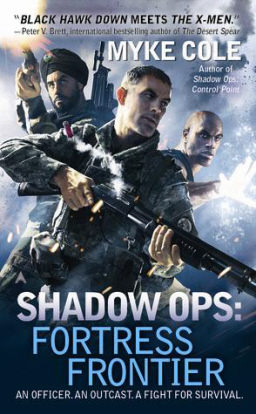
Myke Cole’s Shadow Ops: Fortress Frontier On Sale This Week

Myke Cole’s Shadow Ops: Fortress Frontier On Sale This Week

Shadow Ops Fortress FrontierMyke Cole is a class act. Before he launched a career as an internationally celebrated novelist, he did the decent thing: he apprenticed at Black Gate first.

His story “Naktong Flow” appeared in BG 13, and Dave Truesdale at Tangent Online called it “Thoroughly professional… Think Martin Sheen in Apocalypse Now and you’re on the right track.” We attempted to lure him back to our pages with insanely generous offers — his own dressing room, and fresh flowers delivered daily — and even sent the lovely Patty Templeton to interview him, but it was all to no avail. Life as a novelist offered him the one thing Black Gate couldn’t: real money. And respect. And fame. And accolades. And a ton of other stuff, but let’s not dwell on that.

In his essay “Selling Shadow Point,” Myke talks about what it took to submit and sell his first novel, saying “You have to have guts… you have to bite the bullet and take it out to market.” In his case it certainly paid off — his first novel was Shadow Ops: Control Point, which Peter V. Brett called “Black Hawk Down meets the X-Men… military fantasy like you’ve never seen it before.” It was an immediate hit, and the reading public clamored for more. Now Cole has delivered and the second volume of Shadow Ops arrives in book stores this week.

The Great Reawakening did not come quietly. Across the country and in every nation, people began to develop terrifying powers — summoning storms, raising the dead, and setting everything they touch ablaze. Overnight the rules changed… but not for everyone.

Colonel Alan Bookbinder is an army bureaucrat whose worst war wound is a paper-cut. But after he develops magical powers, he is torn from everything he knows and thrown onto the front-lines. Drafted into the Supernatural Operations Corps in a new and dangerous world, Bookbinder finds himself in command of Forward Operating Base Frontier — cut off, surrounded by monsters, and on the brink of being overrun.

Now, he must find the will to lead the people of FOB Frontier out of hell, even if the one hope of salvation lies in teaming up with the man whose own magical powers put the base in such grave danger in the first place — Oscar Britton, public enemy number one…

Shadow Ops: Fortress Frontier was published by Ace Books on January 29, 2013. It is 368 pages and priced at $7.99 for both the paperback and digital versions.

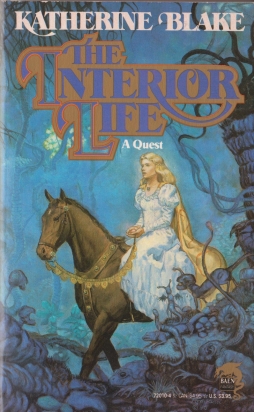
Katherine Blake (or Dorothy Heydt) and The Interior Life

Katherine Blake (or Dorothy Heydt) and The Interior Life

The Interior LifeI’ve mentioned a few times before that I have a fascination with 80s fantasy, and suspect a number of now-overlooked genre books from those years are worth closer examination. I want to put forward another example of what I mean: The Interior Life, written by Dorothy Heydt under the name Katherine Blake. Published in 1990, it’s a novel that does interesting things in mixing a fantasy world with the experiences of a modern-day housewife.

The book starts with Sue, whose three kids have just started the school year. Sue’s doing some daily chores and remembers how she told herself fairy tales when she was a child, creating and inhabiting fictional characters: “all the people I used to be.” After which, she starts seeing the lives of people in the quasi-medieval world of Demoura. More precisely, she sees things from the perspective of Lady Amalia, a noblewoman with magical gifts, Marianella, her maid, and occasionally others such as Kieran, an innkeeper’s son who joins Amalia’s service. Demoura’s menaced by a Darkness creeping westward across the land, blighting all in its path; the characters of the Demouran story live a fairly conventional high fantasy tale of an evil wounding the land, of the struggle to overthrow the dark and bring healing. But those characters also, as the story goes on, provide inspiration for Sue.

You could in theory read the book as moving back and forth between two separate worlds. Heydt, in the comments to this perceptive review of the book by Jo Walton, has said that she thinks of the fantasy aspects as entirely Sue’s creation; in fact, without being explicit, a number of things about the set-up imply this. It’s subtly done. Notably, the life-and-death drama of the fantasy becomes the venue for Sue’s development as a person. She wants nothing more than to tend her family — raise her kids and cook and keep house and help her husband advance in his career. However old-fashioned this sounds, the novel makes it clear she’s happy with this life, and the point of the book is not that she finds new goals, but that she becomes better at what she does and happier in the course of doing so. Two or three interesting points come out of this. First, the blending of the ‘real’ and ‘fantasy’ worlds is worth considering, well-done and unusual. Second, the book points out a generic similarity in fantasy stories about a protagonist developing skills and learning to master their world. Three, and this is perhaps more marked from a twenty-first century perspective than a 1990 perspective, it raises some interesting questions about what is contemporary and what is archaic. Sue’s life and aspirations feel dated in ways that the fantasy of Demoura does not.

Read More Read More

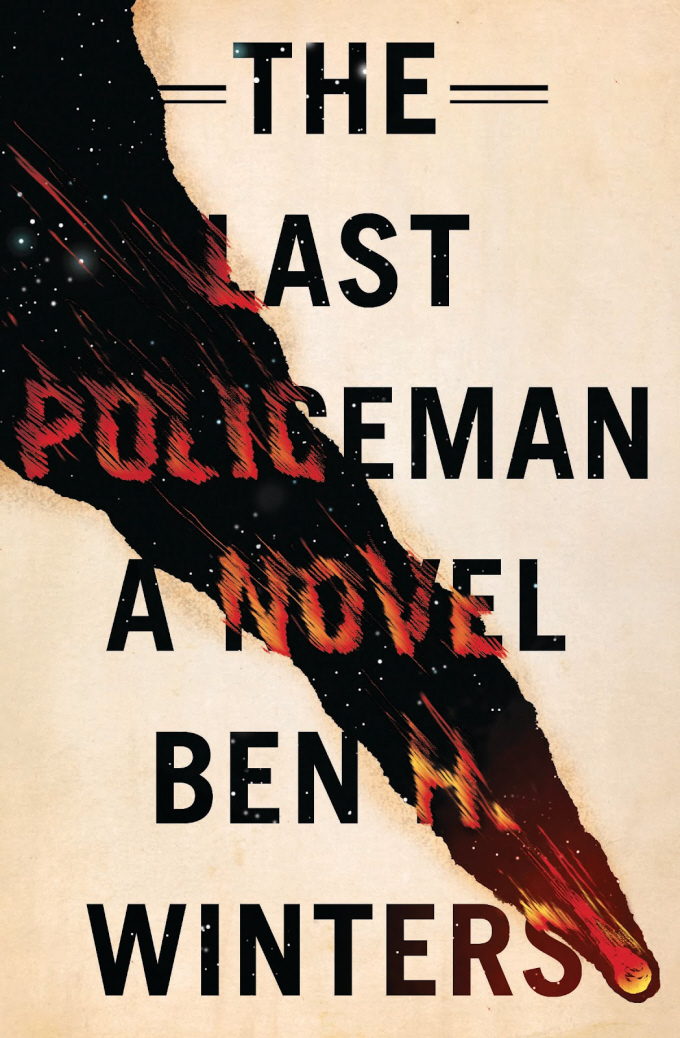
New Treasures: The Last Policeman, by Ben H. Winters

New Treasures: The Last Policeman, by Ben H. Winters

The-Last-PolicemanI enjoy genre mash-ups.  When done right, they highlight the strengths of both genres, and that’s a hard thing to pull off. Think horror-comedies like Ghostbusters or Zombieland, or science fiction mysteries like Asimov’s I, Robot stories. Or zombie westerns like the Bloodlands novels, or Dead Reckoning.

Not every mash-up succeeds, of course. (Did anyone see Seeking A Friend For the End of the World, Steve Carell’s romantic comedy cum apocalypse movie from 2012? No? That’s what I thought.)

But sometimes a mash-up is so brilliant I have to buy it immediately  That’s what happened with The Last Policeman, a police procedural set in Earth’s last days.

What’s the point in solving murders if we’re all going to die soon, anyway?

Detective Hank Palace has faced this question ever since asteroid 2011GV1 hovered into view. There’s no chance left. No hope. Just six precious months until impact.

The Last Policeman presents a fascinating portrait of a pre-apocalyptic United States. The economy spirals downward while crops rot in the fields. Churches and synagogues are packed. People all over the world are walking off the job — but not Hank Palace. He’s investigating a death by hanging in a city that sees a dozen suicides every week — except this one feels suspicious, and Palace is the only cop who cares.

The first in a trilogy, The Last Policeman offers a mystery set on the brink of an apocalypse. As Palace’s investigation plays out under the shadow of 2011GV1, we’re confronted by hard questions way beyond “whodunit.” What basis does civilization rest upon? What is life worth? What would any of us do, what would we really do, if our days were numbered?

Now there’s an original use for an apocalyptic setting. Give me a impending extinction-level event and a relentless investigator too stubborn to give up, and you have my attention. I bought this book after reading the first two paragraphs of the plot summary, and for a jaded book purchaser like me, that’s saying something.

Ben H. Winters is a New York Times best-selling author and an Edgar Award nominee. His last novel was BedbugsThe Last Policeman was published by Quirk Books in trade paperback July 2012. It is 316 pages and priced at $14.95 ($14.95 for the digital edition).