Peter Ackroyd’s Foundation
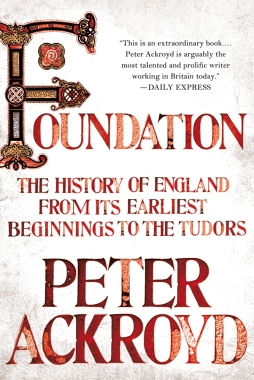 I’ve been reading Peter Ackroyd’s writing for almost twenty years now, and I’m frankly beginning to fall behind. It’s hard to keep up with the man: he’s produced poetry, fiction, biographies, creative nonfiction, and, most recently, narrative history. One of his nonfiction books, Albion, was subtitled ‘the English Imagination,’ and was an essay or set of essays investigating exactly that; in fact, much of Ackroyd’s work can be seen as an investigation of, or a struggle with, the nature of English literary, historical, and imaginative traditions — especially as manifested in the history of London. And so his current project (or one of them) is an ambitious six-book history of England. Two have been published so far; as I say, I’m behind, and have only just completed the first, Foundation, examining the past of England from prehistory to the end of the Wars of the Roses.
I think it’s worth looking at here not only because it’s a good and fascinating book, but because the ways in which it stands out are perhaps especially relevant to fantasy fiction. Of course, medieval English history has had a significant influence on English fantasy writing. And certainly the style of the book is gripping and narrative. Specifically, you can see that this is a novelist writing popular history, and at times there’s an imaginative feel of the sweep of time, oddly like the history writing of a Harold Lamb — there’s an ability not only to find themes and ideas in the process of history, but to concretise or distill those themes into a specific moment. As a result, the depiction of history becomes an imaginative act, suggesting the habits of thought of past eras, in a way that I think may be especially relevant to fantasy writers and readers.
It is worth noting, though, that Ackroyd here is consciously an Englishman writing to an English audience about England. As a Canadian, I felt at times as though I was eavesdropping on a conversation, or at least a speech within a conversation. That’s not a bad thing — at no point was the book inaccessible — but it does emphasise the self-reflective nature of the enterprise. As I say, Ackroyd’s been fascinated by Englishness for much of his literary career; this book, and this series, is a logical outgrowth of that. In practical terms, it means that the book consciously chooses to look at English history within a strictly English context, with other parts of Britain or Europe mentioned only so far as they’re relevant to English history.

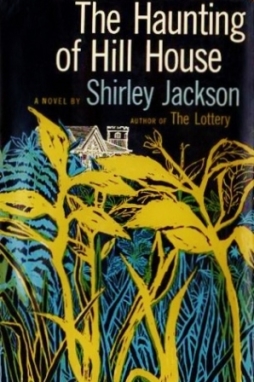 Different people have different explanations for why horror fiction exists, and why it’s worthwhile. It’s always seemed to me that, whatever else it does, good horror writing expresses some kind of fear or terror that is both deep and common. Insofar as the fear’s deep, the horror story touches a profound well of emotion, as good fiction usually does; insofar as it’s common the story links readers together and reminds us that we share the same dreads. So at its best, horror fiction is empathic and profound.