Browsed by
Category: Books

How to Put the Sword in Sword and Sorcery
How to Put the Sword in Sword and Sorcery

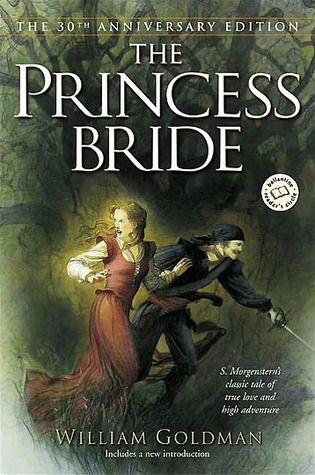
The Princess BrideI love sword fighting. All of my favourite movies involve sword fights, and most of my favourite books. I love the Star Trek TOS episode where Sulu runs around with a sword, so it should come as no surprise that I primarily write sword and sorcery novels.

The sorcery part’s easy – pretty well everyone knows I’m making that up, and so long as I keep things internally consistent, I’m in the clear.

But what about the sword part? I can’t just make that up, can I? Viz. this exchange, which took place on a martial arts panel at Ad Astra back in the 90’s:

Panellist: “You know in the movie when Wesley and Iñigo are fighting? Well, they’re not really using the moves they say they’re using.”

Called out by a wit from the back of the room: “Gee, they are in the book.”

And there’s at least part of your answer. You can write whatever you like, but, like William Goldman in The Princess Bride, it behoves you to do some research.

There are some great books that explain all kinds of things about swords and swordplay. There’s Captain Sir Richard Burton’s The Book of the Sword. There’s By the Sword, Richard Cohen’s excellent book on the history of duelling and fencing from ancient into modern times. And there’s also John Clements’s Renaissance Swordsmanship, which has illustrations showing fighting with different kinds of swords, against different kinds of  weapons. It also describes fighting moves in such a way that you can put together a fight — so long as it’s not too complicated.

But is book learning enough? I don’t think so.
Read More Read More

Nebula Award Nominations Announced

Nebula Award Nominations Announced

Glamour-in-GlassThe Nebula is one of the most prestigious awards our genre has to offer. Indeed, since the winners are chosen by science fiction and fantasy writers rather than a popular vote, many people consider it the most prestigious genre award.

The 2012 Nebula Awards Nominees were announced yesterday by the Science Fiction and Fantasy Writers of America, the voting body that grants the awards. The nominees are:

Novel

Throne of the Crescent Moon, Saladin Ahmed (DAW)
Ironskin, Tina Connolly (Tor)
The Killing Moon, N.K. Jemisin (OrbitUK)
The Drowning Girl, Caitlín R. Kiernan (Roc)
Glamour in Glass, Mary Robinette Kowal (Tor)
2312, Kim Stanley Robinson (Orbit)

Novella

On a Red Station, Drifting, Aliette de Bodard (Immersion Press)
After the Fall, Before the Fall, During the Fall, Nancy Kress (Tachyon)
“The Stars Do Not Lie,” Jay Lake (Asimov’s SF)
“All the Flavors,” Ken Liu (GigaNotoSaurus)
“Katabasis,” Robert Reed (F&SF)
“Barry’s Tale,” Lawrence M. Schoen (Buffalito Buffet)

Read More Read More

Echoes of the Goddess: Schweitzer’s Newest Classic

Echoes of the Goddess: Schweitzer’s Newest Classic

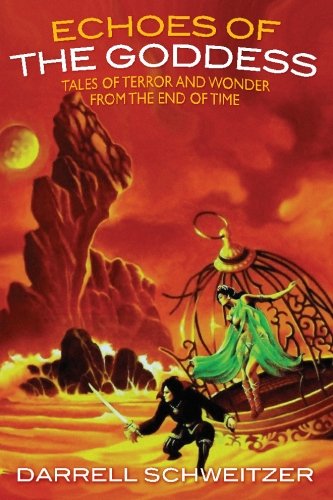
Echoes of the GoddessImagine a golden treasure chest filled to overflowing with rare and sparkling jewels. Now imagine the literary equivalent of that bounty: The jewels are visions of a fantastic world filled with dark magic, dead gods, and exotic cultures.

The latest book from Darrell Schweitzer is a treasury of obscure tales woven into a single, epic tapestry of high fantasy. Echoes of the Goddess collects eleven stories set in the same weird world as Schweitzer’s second novel The Shattered Goddess (1982). However, Echoes is not a sequel to Shattered. Instead it serves as a prequel, and a fine introduction to both the world of Goddess and the superb fantasies of Darrell Schweitzer.

Echoes of the Goddess: Tales of Terror and Wonder From the End of Time was released by Wildside Press in February 2013, but it was literally decades in the making. All of these stories were written between the years 1979 and 1985. Wildside describes the book: “This is an Earth of the far future, when the planet has declined into chaos, and darkness looms at the end of human history. Here you’ll meet… a wizard’s shadow attempting to become a man; two sorcerers grotesquely transformed by their fratricidal hatred; a musician who becomes the lord of death; a boy-priest consumed by divine visions; and a witch who loves a god, and many others. Here’s strangeness, wonder, and terror in the tradition of Clark Ashton Smith’s Zothique or Jack Vance’s The Dying Earth.”

Nobody works in the “story cycle” tradition quite as well as Schweitzer does. While most of today’s writers focus on cranking out novels, he prefers the short story form and is one of the widely acknowledged masters of the form. Some of his previous story cycles have been collected as the books We Are All Legends and The Book of Sekenre. Yet the stories in Echoes of the Goddess represent the author in the formative stages of his career, when his imagination was raw and unbounded. This was years before he would go on to win a World Fantasy Award for co-editing Weird Tales with the late George Scithers, and well in advance of his “To Become a Sorcerer” novella being nominated for that same prestigious award.

Read More Read More

New Treasures: Low Town by Daniel Polansky

New Treasures: Low Town by Daniel Polansky

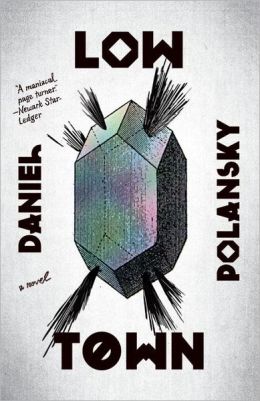
Low TownOne of our most popular articles in 2012 was Matthew David Surridge’s brilliant “The Enjoyment of Fantasy: Open Letters to Adam Gopnik, Mur Lafferty, and John C. Wright,” the latter part of which he spends taking Wright to task for some of his criticisms of Low Town. Matthew’s points are many and varied and I’m not going to summarize them here. I will admit, however, that after reading his article, my first reaction was, “What the heck is Low Town? It sounds kinda cool.”

A little investigation revealed that Low Town is Daniel Polansky’s debut novel. Here’s the description:

Drug dealers, hustlers, brothels, dirty politics, corrupt cops… and sorcery. Welcome to Low Town.

In the forgotten back alleys of Rigus, the finest city of the Thirteen Lands, sits Low Town. Here the Warden —  forgotten war hero and independent drug dealer — protects his turf. However, the Warden’s life of drugged iniquity is shaken by his dis­covery of a murdered child down a dead-end street… set­ting him on a collision course with the life he left behind. As a former agent with Black House — the secret police — he knows better than anyone that murder in Low Town is an everyday thing, the kind of crime that doesn’t get investi­gated. To protect his home, he will take part in a dangerous game of deception between underworld bosses and the psy­chotic head of Black House, but the truth is far darker than he imagines. In Low Town, no one can be trusted.

I’m intrigued. And while both Matthew and Wright seem to argue that Polansky doesn’t necessarily understand fantasy, it seems to me he’s grasped the basics just fine: he’s already written a sequel, Tomorrow the Killing, published in October 2012. Our man Myke Cole posted the following mini-review on Goodreads:

Polansky does it again. As with Mark Lawrence with King of Thorns, he shows progression as a storyteller with an even more twisted plot, more compelling and sympathetic character voice and more engaging setting.

Anybody who plugs Mark Lawrence in a one-sentence review has my immediate confidence. I purchased a copy of Low Town last month, and hope to check it out soon.

Low Town was published by Anchor Books in August, 2012. It is 341 pages in trade paperback, priced at $15 ($11.99 for the digital edition).

Affair of the Bear: The Oakdale Affair by Edgar Rice Burroughs

Affair of the Bear: The Oakdale Affair by Edgar Rice Burroughs

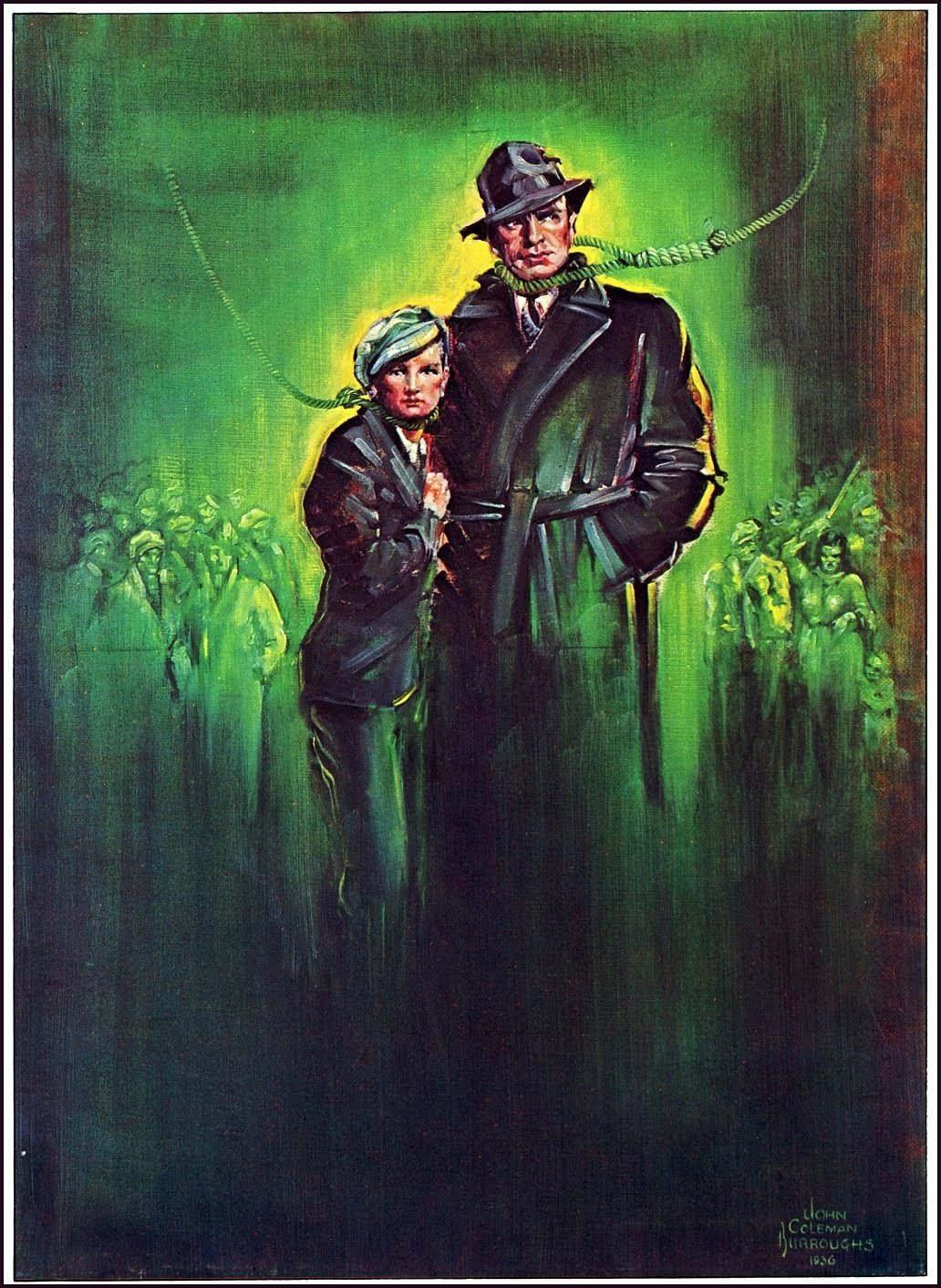
Oakdale Affair frontspiece Jack BurroughsYes, this is the 3,000th post on Black Gate. Discovered after the fact, of course. Never thought I’d be writing about a murder mystery centered on a bear for the occasion, but what the hey.

In the spring of 1917, as he was completing the last of the “New Tarzan Adventures” that would eventually fill the volume Jungle Tales of Tarzan, Edgar Rice Burroughs wrote a short novel (40,000 words) titled “Bridge and the Oskaloosa Kid.” A reader of the previous year’s The Return of the Mucker might recognize the name “Bridge” as belonging to that novel’s itinerant poet and co-hero. Burroughs liked the character so much that he spun him off into his own story: a crime drama/mystery, something different for the author.

Editor Bob Davis at All-Story found little to appreciate about ERB’s new tact when “Bridge and the Oskaloosa Kid” landed on his desk. He argued that its twist ending stretched credulity past what readers would tolerate: “Lord! Edgar, how do you expect people who love and worship you to stand up for anything like that? And the bear stuff, and the clanking of chains!” Davis may also have objected to mentions of one of the villains injecting morphine to feed an addiction. Although Davis remarked that Bridge was a “splendid character” in The Return of the Mucker and “well worth a great story,” the editor didn’t think this was it. He bounced the novel back to ERB.

Burroughs had his own doubts about “Bridge and the Oskaloosa Kid,” criticizing his performance as “rotten” even before he finished. But his name was still good for a sale in a magazine in 1917, and the novel ended up at Blue Book, printed in full in the March 1918 issue under the more economical title The Oakdale Affair. Editor Ray Long paid $600 for it, considerably less than ERB’s standard pay-rate at the time.

A year later, a movie titled The Oakdale Affair starring Evelyn Greeley premiered from World Film Company. It was the fourth film made from ERB’s work, and a rare non-Tarzan one. Somebody must have liked the book, the opinions of the author and his editor be damned!

What to make of this unofficial third novel of the “Mucker Trilogy,” a crime thriller/mystery with a vanished heiress, murderous drifters, gypsies, an enthusiastic child detective, a deadly bear, a lynch mob, a couple of dead bodies, and a chain-clanking ghost in a haunted house? Did ERB stray too far in looking for somewhere else for his poetry-loving Bridge to roam?

Read More Read More

Steampunk Spotlight: Society of Steam Trilogy

Steampunk Spotlight: Society of Steam Trilogy

the society of steam the falling machineImagine the  gilded age… but with superheroes and steampunk technology.

That is the central premise of Andrew P. Mayer’s Society of Steam trilogy, which just published its final volume in January. The books portray a world in which the brilliant inventor Sir Dennis Darby has brought together heroes to form the Paragons, a New York City group of adventurers that fight menaces to decent society. Among the heroes is the Automaton, an intelligent steam-powered construct of Darby’s own invention.

This alone would be enough of a premise for a trilogy of novels, but the first book in the trilogy, The Falling Machine (Amazon, B&N), begins by throwing this fascinating world into turmoil… by killing off Darby himself in the first chapter, leaving his student Sarah Stanton – forbidden by gender to become a hero in society – to take a stand and see that his vision of the future has a possibility to come to pass. The trilogy therefore is not about the Paragons so much as it’s about the Paragons facing their darkest hour… with an outcome that is far from predictable.

To think about the challenge facing Mayer in writing this series, consider that this would sort of be like if the first issue of X-Men began with Professor Xavier dying. The series is trying to depict the status quo changing, but also has to — at the exact same time — depict what the status quo was. It’s a tough balancing act and Mayer does a good job with it, though there are times where it’s a little uneven, particularly in the first book, which ends with several characters dying and the ranks of the Paragons devastated by their greatest challenge: the villain Eschaton.

Read More Read More

Dion Fortune and The Demon Lover

Dion Fortune and The Demon Lover

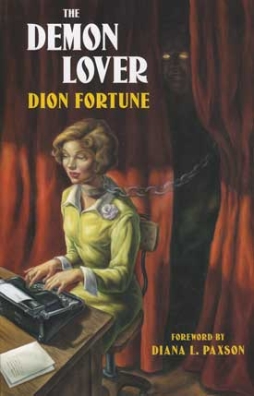
The Demon LoverWhen I took a look at Shirley Jackson’s The Haunting of Hill House the other week, I did not know that February was in fact Women in Horror Recognition Month. The establishment of WiHM, as it’s abbreviated, began in 2010 as “a month-long celebration that would promote and assist underrepresented female artists while educating the public about current and past discrimination.” In 2011, WiHM was backed by the Viscera Organization, a non-profit assisting female genre filmmakers. If you want to know more, here’s the web site for the event, from which I took the foregoing quote, and the Facebook page; here’s a link to the Viscera Organization, with info on the annual film festivals they hold in Los Angeles and Boston. As for me, as a result of learning all this, I stumbled on a couple of lists of works by female horror writers. And on one of those lists, I noticed a book I’d had on my shelf for ages: The Demon Lover, by Dion Fortune.

Fortune is an interesting figure. Born in Wales in or about 1890 (sources vary) as Violet Mary Firth, in her twenties she grew interested in psychotherapy and occultism — possibly a function of visions she claimed to have had since the age of four, which she came to believe were memories of a past life in ancient Atlantis; or of a nervous breakdown she suffered at age twenty, which she believed was the result of a magical attack against her. She became a Theosophist in 1914, and in 1919, while studying magic under a man named Doctor Theodore Moriarty, she took the name ‘Dion Fortune’ and joined the Order of the Golden Dawn. She founded her own magical society in 1922, the Community (later Fraternity, now Society) of the Inner Light, which aimed at bringing Chistian teachings into occultism. In 1926, she published a book of short stories based on her magic experiences: The Secrets of Dr. Taverner. The Demon Lover, her first novel, followed in 1927, with more novels coming in the years after that. She wrote several non-fiction books about occultism — I’ve read The Mystical Qabalah — although it has been argued that her novels ended up being more important for later occultists, especially Gardenerian Wiccans.

Fortune’s work certainly seems to have influenced Marion Zimmer Bradley and Diana Paxson, both as literature and as spiritual inspiration. Alan Moore has spoken highly of Fortune’s magical writing, and more equivocally ranked her with Sax Rohmer as an imaginative writer. For the sake of this piece, it may be worth noting that I’m temperamentally agnostic — I make no claim to wisdom — but naturally skeptical. I want to write about The Demon Lover because I thought it was an interesting book. Not flawless; but interesting. It’s not necessary to know, much less share, Fortune’s history and beliefs in order to enjoy the novel. But Fortune’s biography does suggest some interesting ways to look at what she wrote, and consider the relation between horror (and fantasy) and what is commonly perceived to be real.

Read More Read More

The Weird of Oz Recalls his First Visit to Barsoom

The Weird of Oz Recalls his First Visit to Barsoom

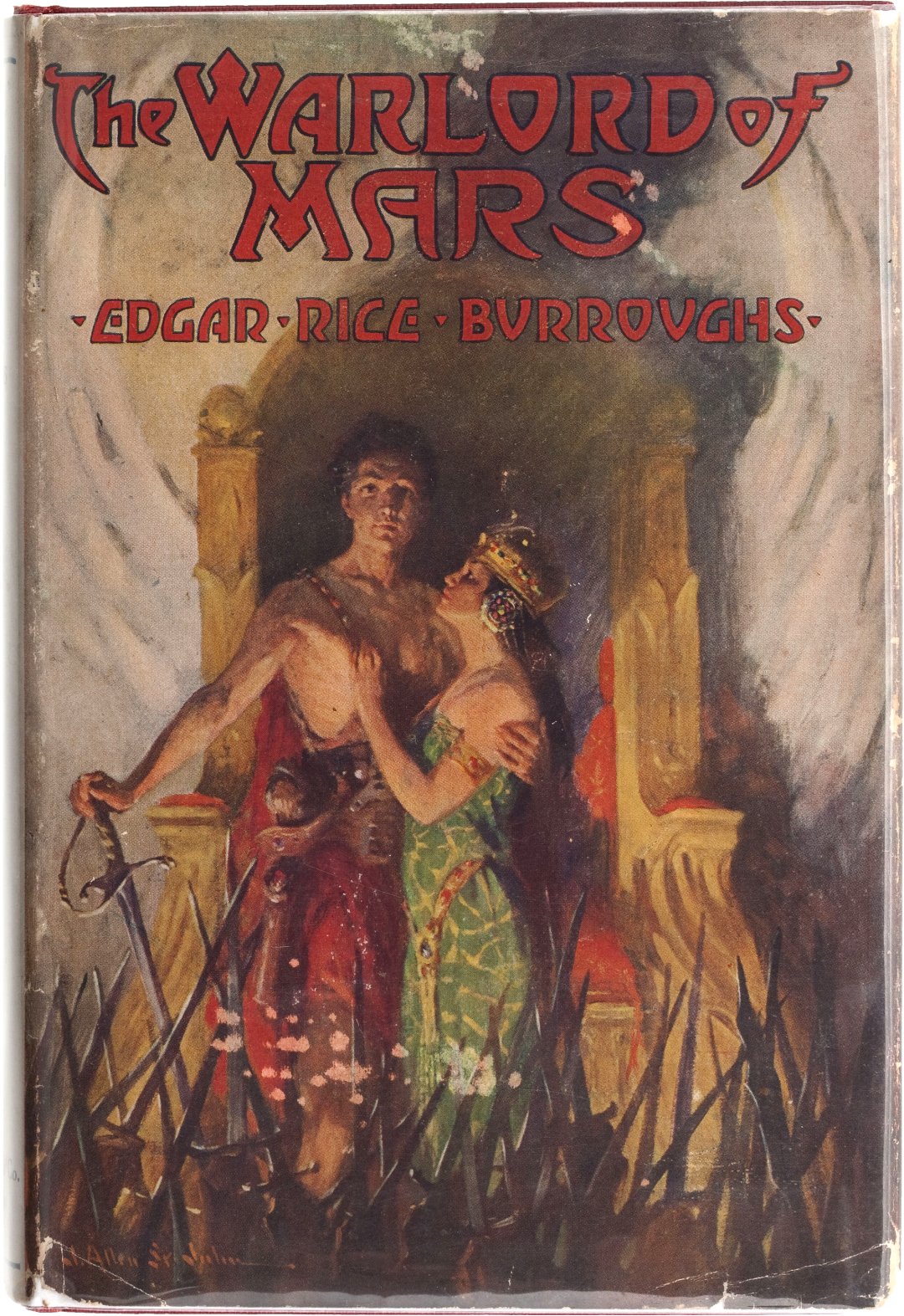
warlord of marsBy the time I was in the third grade, I was reading a little bit of everything (still do). From Zorro to The Hardy Boys to Pippi Longstocking, I gave everything a try. But already I was being drawn more strongly to works of speculative fiction, especially heroic fantasy. The year before, I’d gotten hooked on C.S. Lewis’s Chronicles of Narnia.

I often did my best bouts of reading after I’d been tucked into bed and the lights were out. I’d sneak down by the door, sprawl out on the carpet, and read by the narrow band of light coming in from the bathroom down the hall (my mother would leave it on as a nightlight). On one particular night, I chose an old hardcover that I’d taken off my Granddad’s shelf. Whatever dust jacket had once adorned its fraying red cloth was long since lost, and the pages were becoming yellow and brittle. I gently opened to the first page and read these words:

In the shadows of the forest that flanks the crimson plain by the side of the Lost Sea of Korus in the Valley Dor, beneath the hurtling moons of Mars, speeding their meteoric way close above the bosom of the dying planet, I crept stealthily along the trail of a shadowy form that hugged the darker places with a persistency that proclaimed the sinister nature of its errand.

These are the first words of The Warlord of Mars  (1919) by Edgar Rice Burroughs.

This happens to be the third book in the Barsoom series, so I had no idea what was going on. But “the shadows of the forest that flanks the crimson plain,” the “Lost Sea of Korus,” the “Valley Dor,” and the “dying planet” piqued a part of my brain that wanted to explore, as the voice at the beginning of Star Trek used to announce, “strange new worlds.” And then that sudden telescoping in on the “shadowy form” on a sinister errand…I was hooked.  I was on my way to Mars — or Barsoom, as its inhabitants called it.

Read More Read More

New Treasures: Death Watch, by Ari Berk

New Treasures: Death Watch, by Ari Berk

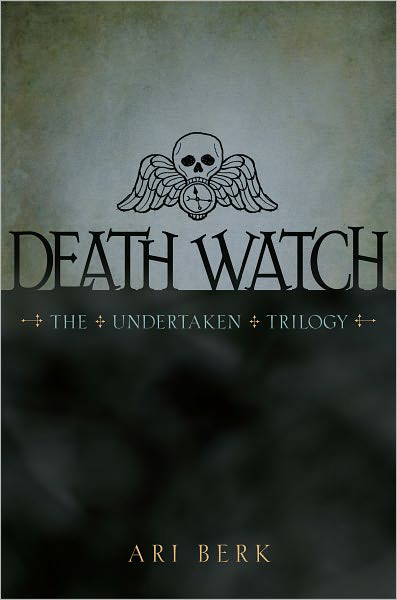
Death WatchI live in a house with three young adults, all fairly active readers. When one discovers an intriguing new fantasy series, it gets passed around excitedly. That happened with Christopher Paolini’s Eragon books, Stephanie Meyer’s Twilight, Suzanne Collins’s Gregor The Overlander and The Hunger Games, and John Flanagan’s Ranger’s Apprentice books.

The latest book to get discussed and passed around is Ari Berk’s Death Watch, the first installment in The Undertaken Trilogy. It’s too early to determine if this will captivate all three the way previous books have, but early indications are good.

They say the dead should rest in peace. Not all the dead agree.

When Silas Umber’s father, Amos, doesn’t come home from work one night, Silas discovers that his father was no mere mortician, but an Undertaker who worked to bring The Peace to lost and wandering souls. With Amos gone, Silas and his mother move back to Lichport, the crumbling seaside town where he was born, and Silas seizes the opportunity to investigate his father’s disappearance.

When his search leads him to his father’s old office, he comes across a powerful artifact: the Death Watch, a tool that allows the owner to see the dead. Death Watch in hand, Silas begins to unearth Lichport’s secret history — and discovers that he has taken on his father’s mantle as Lichport’s Undertaker. Now, Silas must embark on a dangerous path into the Shadowlands to embrace his destiny and discover the truth about his father — even if it kills him.

Death Watch was published November 27, 2012 by Simon & Schuster Books for Young Readers. It is 560 pages in trade paperback, priced at $9.99 ($8.89 for the digital edition). The second volume of The Undertaken Trilogy, Mistle Child, was published Feb 12.

Blogging Sax Rohmer’s The Bride of Fu Manchu, Part Two

Blogging Sax Rohmer’s The Bride of Fu Manchu, Part Two

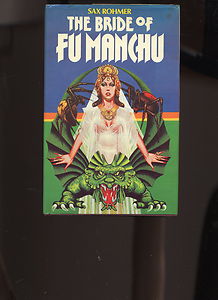
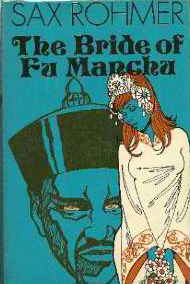
$(KGrHqJ,!p!E9dR9SnnCBPebmY)fDQ~~60_35The Bride of Fu ManchuSax Rohmer’s The Bride of Fu Manchu was originally serialized in Collier’s from May 6 to July 8, 1933 under the variant title, Fu Manchu’s Bride. It was published in book form later that year by Cassell in the UK and Doubleday in the US. The US edition retained the original magazine title until the 1960s, when the UK book title was adopted for the paperback edition published by Pyramid Books.

After Alan Sterling recovers consciousness, Sir Denis insists he dine out that evening in Monte Carlo to take his mind off the terrible situation with Dr. Petrie. Complying with his wishes, Alan drives to Monaco and spends some time at a casino trying to apply Petrie’s (really Rohmer’s) complicated system to break the bank, to no avail. While dining that night, he is startled to spy Fleurette at another table dining with a Russian nobleman and Mahdi Bey.

Observing them in public, Sterling convinces himself that Fleurette must be Mahdi Bey’s mistress. This devastates him as he has idealized her as his virginal dream girl since first glimpsing her on the beach at Ste. Claire. Sterling’s reverie is broken when he spies the Chinese agents of Dr. Fu Manchu in the restaurant. He then hears the mysterious sonic trumpet sound once more. He doesn’t understand the connection, but he is now certain that Mahdi Bey is somehow mixed up in the dangerous business and Fleurette with him.

Read More Read More