Browsed by
Category: Books

New Treasures: The Fall of the First World, Book Two: Sorrowing Vengeance by David C. Smith
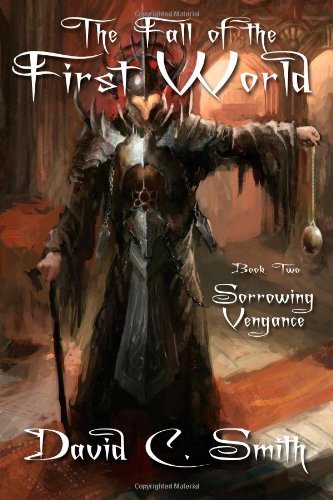
New Treasures: The Fall of the First World, Book Two: Sorrowing Vengeance by David C. Smith

Sorrowing Vengeance The Fall of the First World-smallI’ve seen a lot of exciting news from David C. Smith recently.

If you’ve been following the Black Gate Online Fiction series (see the latest here), you know that his recent collaboration with Joe Bonadonna, Waters of Darkness, has been near the top of our monthly traffic charts since we published an excerpt back in March. And just a few months ago, our website editor, Michael Penkas, reviewed his much-loved Red Sonja novels, co-written with Richard L. Tierney in the early 80s.

That wasn’t even the big news, however. No, that was the re-release of Dave’s seminal fantasy trilogy The Fall of the First World, originally published in paperback by Pinnacle Books in 1983. Unavailable for nearly thirty years, these exciting novels are finally being returned to print by Borgo Press. The first, The West is Dying, appeared in November, and now we’re very pleased to see that volume two, Sorrowing Vengeance, arrived last month.

“I see more in darkness than you can see in the light.” A priest turned sorcerer is reborn as the ultimate creature of Evil. He will topple a throne and begin the destruction of the world, even as the crowns of two empires move inexorably toward launching an impossible war that neither can win. The King of Athadia, fearing a personal curse, tries to maintain peace. But when his Queen is abducted by the barbarian ruler of the East — and she welcomes the affront — armies gather on every border, and ships set sail on oceans of blood. The world is at war, and a great sorrowing vengeance, foretold long ago, comes to life in the darkest of times… The second great fantasy novel in the epic saga of The Fall of the First World!

Sorrowing Vengeance was published by Borgo Press on June 19. It is 452 pages, priced at $18.99 in trade paperback. There is no digital edition. The third and final volume, The Passing of the Gods, is also due this month.
Jack Vance and Appendix N: Advanced Readings in D&D

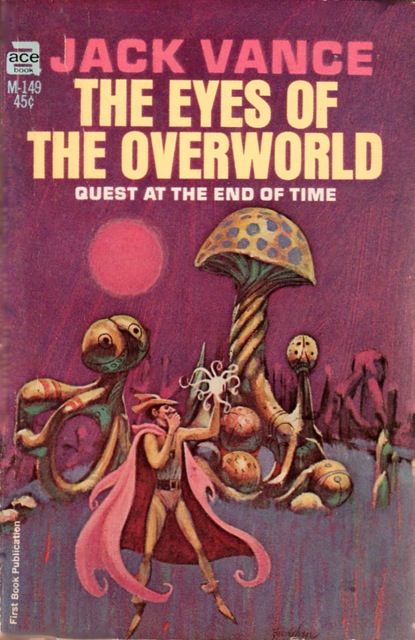
Jack Vance and Appendix N: Advanced Readings in D&D

The Eyes of the Overworld-smallAh, Appendix N, the gift that keeps on giving. In the years before the Internet, it’s how young readers discovered great fantasy.

Over at Tor.com, Tim Callahan and Mordicai Knode continue with their ambitious and well-researched journey through Gary Gygax’s famous Appendix N, the library of fantasy and SF titles in the back of the Dungeon Master’s Guide. They’ve already covered Fritz LeiberEdgar Rice BurroughsSterling E. Lanier and Robert E. Howard. Here they are on Jack Vance:

Mordicai Knode: Also worth noting that everybody’s favorite evil wizard turned lich turned demigod turned major deity, Vecna, is named after a “Vance” anagram. & while we are pointing out bits and pieces — like the prismatic spray, which is such an amazing piece of writing, such a great turn of phrase, that it inspired a whole range of spells — I want to mention the ioun stones. In Dungeons & Dragons they are these little gemstones that float around your head—I always imagined the Bit from Tron — but in The Dying Earth story that inspired them, the IOUN stones are much more sinister and are gleaned from the center of a dwarf star that has been cut in half by the shrinking edges of the universe. Just let that sink in; that is really an incredible idea… And those sorts of ideas are scattered all over the book, like some pirate with holes in his pocket idly scattered gold doubloons all over it.

Tim Callahan: It’s kind of like, for me anyway, when I was a kid, and I’d read the AD&D Player’s Handbook or Dungeon Master’s Guide and just read through some of the spell names or magic item titles (without reading the descriptions below) and imagine what weird and wonderful things these powers and items could do. Vance reminded me of that world of possibilities, almost on every page.

Read the complete article here.

Read More Read More

New Treasures: The Crown of the Blood by Gav Thorpe

New Treasures: The Crown of the Blood by Gav Thorpe

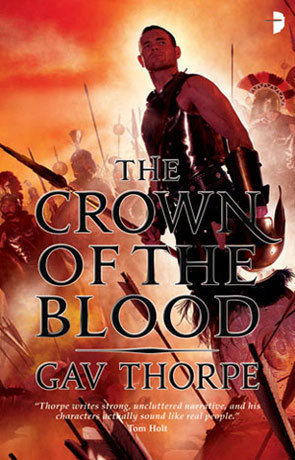
The Crown of the Blood-smallIt’s Friday. Already. Which means I’m a little tardy getting my latest New Treasures selection up.

I usually decide what book to highlight by glancing over the new arrivals for the week and selecting which one I’m going to read on the weekend. Except this weekend, I’ll have my nose in the 358-page rulebook for Black Crusade, the Warhammer 40k role playing game from Fantasy Flight, learning how to play so I can host an adventure for my kids, who’ve been begging me for weeks. (Why don’t kids play softball any more? Or frisbee? What does that take — 45 seconds prep time?)

So instead, I’m staring longingly at the review books that arrived this week, wishing I could read them. Still, all this Warhammer immersion reminds me of the great adventure fiction set in that universe, and as a result I find the book calling loudest for my attention is Gav Thorpe’s The Crown of the Blood, the first novel in his trilogy of the same name.

Ullsaard has conquered the known world. All have fallen before his armies.

Now it’s time to take the long journey home, back to the revered heart of the great Empire he had helped create for his distant masters. But when he returns to the capital, life there is so very different from what he had believed. Could it be that everything he has fought for, has conquered and killed for, has been a lie?

A sweeping fantasy of immense battles, demonic magic and dark politics.

No waiting around for the sequels, either — they’re already here: The Crown of the Conqueror and The Crown of the Usurper. (Great — more books I can’t read this weekend.) Gav Thorpe has written over a dozen novels in the Warhammer universe for Black Library, including Angels of Darkness and the Sundering trilogy.

The Crown of the Blood was published by Angry Robot in September, 2010. It is 528 pages in paperback, priced at $7.99 ($6.99 for the digital edition). More details at the Angry Robot website.

FUNGI #21: The Urbille Appears, Thongor Returns, and more…

FUNGI #21: The Urbille Appears, Thongor Returns, and more…

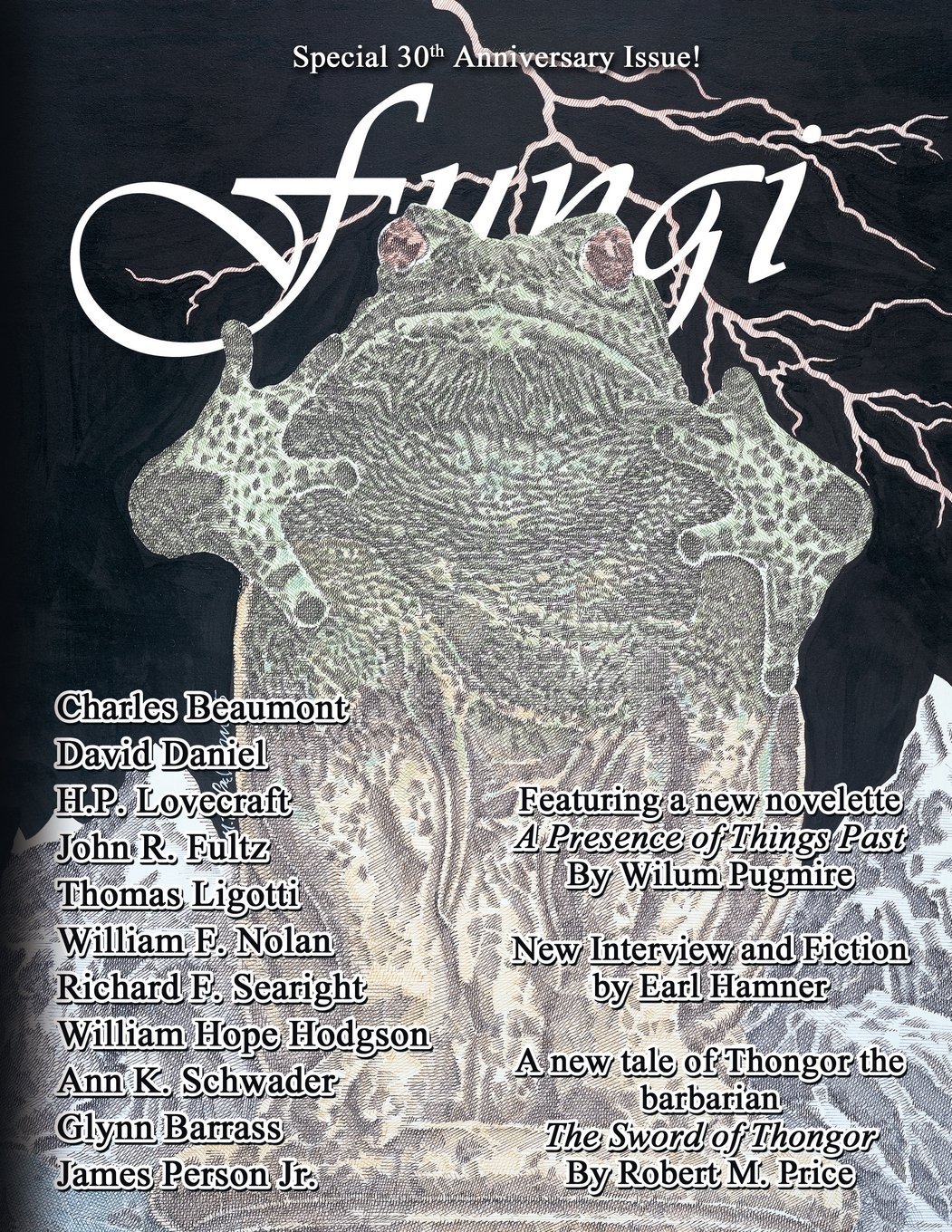
Fungi21-front
Front cover of FUNGI #21.

There’s a place called The Urbille that exists in some distant corner of the space/time continuum. It’s a time/place/city where fractured realities collide, where lost souls amble in prisons of rust or dance in clockwork bodies, and where human flesh is a weakness to be discarded and devoured.

I wrote two stories set in The Urbille. They are positively the WEIRDEST stories I’ve ever written, and now they’re being published together in the jumbo-sized 30th Anniversary Edition of FUNGI. The first Urbille story is called “The Key To Your Heart Is Made of Brass.” The second is “Flesh of the City, Bones of the World.” Both are epic journeys into strangeness, mystery, and horror.

FUNGI #21 is available now and it’s 420 pages of glorious weird fantasy. In addition to my two Urbille tales, which bookend the issue, it includes tons of other stories and articles.

“The Sword of Thongor” is a new tale of Lin Carter’s barbarian hero by Robert M. Price. Weird fiction master Wilum H. Pugmire contributes a new novelette entitled “A Presence of Things Past.”

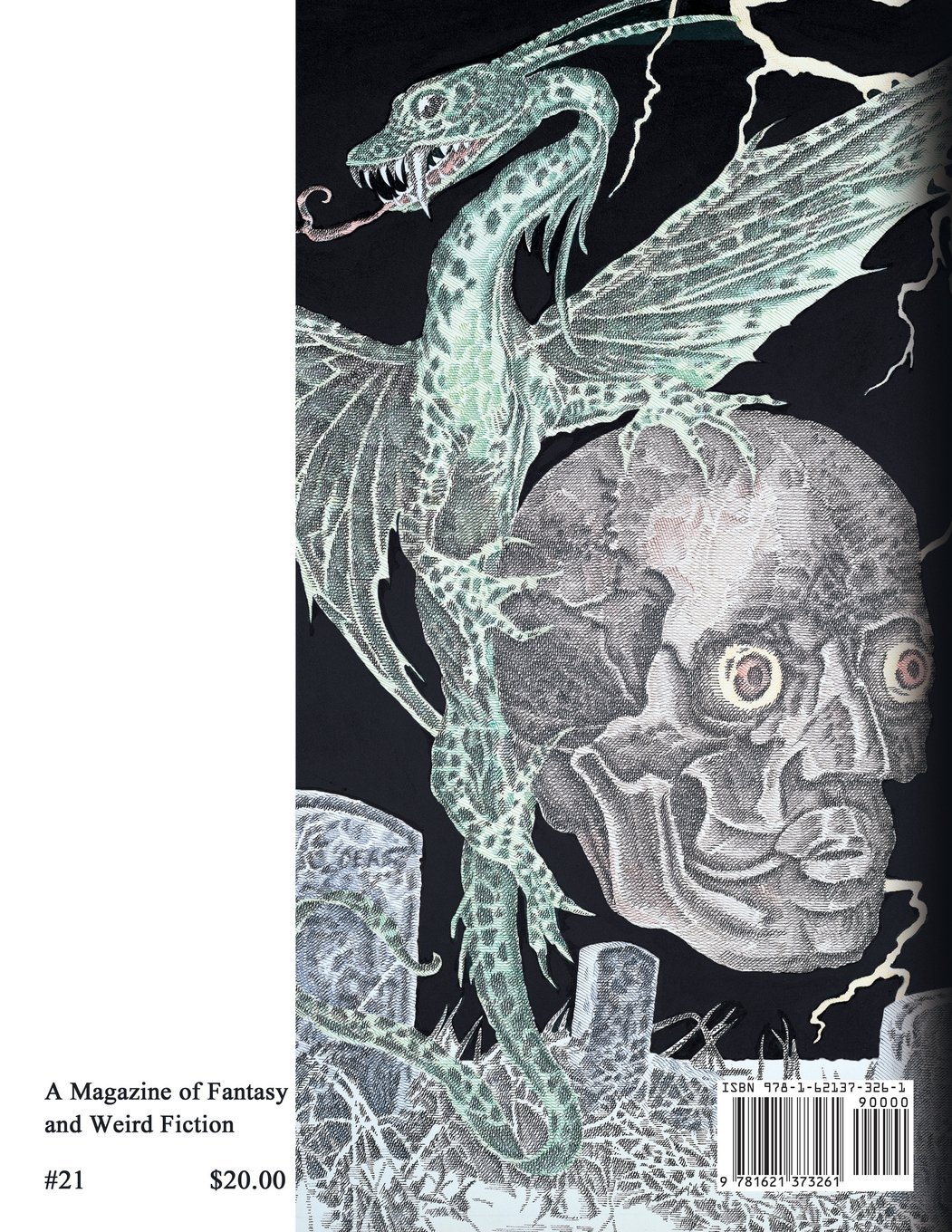
Fungi21-backcover
Back cover of FUNGI #21.

Additional contributors include:

David Daniel
H.P. Lovecraft
Thomas Ligotti
William F. Nolan
Richard F. Searight
William Hope Hodgson
Ann K. Schwader
Glynn Barrass
James Person, Jr.

Publisher/Editor Pierre Comtois says of the fully illustrated issue: “FUNGI #21 features a stellar lineup of the most incredible talent in the weird fiction field from contemporary hit makers to talented newcomers to yesteryear’s classic authors… including special spotlights on Richard F. Searight and West Coast authors Richard Matheson, William F. Nolan, Charles Beaumont and many others. It also features a new interview and fiction from Twilight Zone writer Earl Hamner, Jr.”

The cover painting is a classic piece from Murray Tinkelman, first seen on the cover of Ballantine Books’ edition of H.P. Lovecraft’s THE HORROR IN THE MUSEUM in 1976. Another stellar Tinkelman piece graces the back cover, one Ballantine used as the cover of it’s ’76 edition of Lovecraft’s THE CASE OF CHARLES DEXTER WARD.

To order a copy of FUNGI #21 click here.

When the 21st Century was Far Future: Frank R. Paul: The Dean of Science Fiction Illustration

When the 21st Century was Far Future: Frank R. Paul: The Dean of Science Fiction Illustration

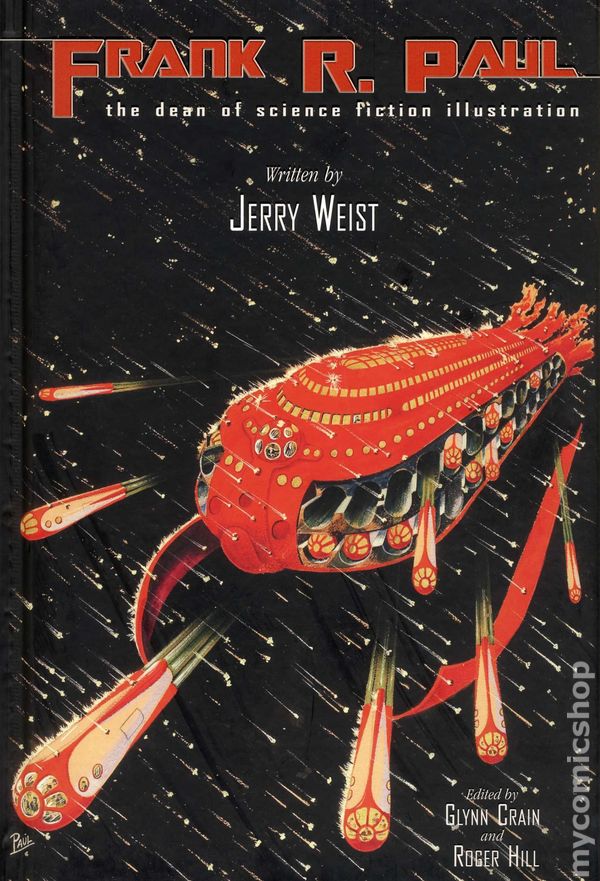
Frank R Paul The Dean of Science Fiction Illustration-smallI consider Frank R. Paul to be one of the most important — if not the most important — artist in the history of science fiction.

It’s odd then that so few readers today are familiar with his work. Jerry Weist set out to correct that with Frank R. Paul: The Dean of Science Fiction Illustration, a dream project of his that was released only after Weist’s death in 2011.

Paul virtually created American Science Fiction, alongside Hugo Gernsback, in the late 1920s. He was the cover artist Gernsback chose for the first science fiction magazine, Amazing Stories — every single issue, for over three years, until Gernsback lost control of it in 1929.

That meant Paul crafted many of the defining images of early science fiction, including his interpretation of Buck Rogers (on the cover of Amazing August 1928), H.G. Wells’s The War of the Worlds (August 1927), and Edgar Rice Burroughs’s John Carter of Mars (Amazing Stories Annual 1927). He made exciting new concepts like space travel, picture-phones, aliens, and robots vivid and real to an America where most people didn’t even own a telephone.

When Gernsback left Amazing behind and founded a new stable of magazines — including Science Wonder Stories and Air Wonder Stories — he took Paul with him. Altogether, Paul painted over 300 magazine covers before his death in 1963, most of them for Gernsback.

Paul had numerous artistic firsts. He was the first to paint a space station, for the cover of the August 1929 Science Wonder. He painted the cover for Marvel Comics #1 in October, 1939, giving the world its first look at the Human Torch.

Paul did countless interior illustrations as well. In addition to his striking cover art, he executed a famous series of original paintings imagining life elsewhere in the solar system for the back covers of many of Gernsback’s magazines.

Read More Read More

Support the Spellbound and Spindles Kickstarter

Support the Spellbound and Spindles Kickstarter

Spellbound and Spindles

“Deeper meaning resides in the fairy tales told me in my childhood than in any truth that is taught in life.”
— Johann Christoph Friederich v. Schiller

There is a tendency, I think, to not take fairy tales seriously. A hundred years of relegating them to the nursery has hidden their power: to educate, to entertain, to challenge and change us. And yet, the magic of “Once upon a time …” remains. Televisions shows and movies borrow from them. Comic books and stories are filled with sleeping princesses, talking animals, spells to be broken and kingdoms to be saved.

Fairy tales endure not in spite of their plasticity, but because of it. The story of Cinderella is found all over the world, in hundreds of different versions. Details vary depending upon the culture that tells the tale. Despite the alterations, though, the story is recognizable time and again.

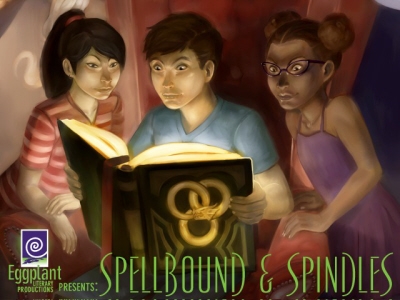
And it is this malleability that I am counting on in my project, Spellbound and Spindles. To give a brief introduction and history, Spellbound is a children’s fantasy magazine published by my company, Eggplant Literary Productions. In each issue we publish fiction, poetry and art, all fantasy related. One of our priorities is putting out a publication that reflects our global readership. We actively solicit submissions that are diverse in their settings and characters.

It is with that goal in mind, coupled with my belief in the power of fairy tales, that I launched the Kickstarter campaign for Spellbound & Spindles. The plan is to publish a special edition of Spellbound, as well as a companion adult anthology, of fairy tales retold to include POC, LGBT, and disabled characters. The anthologies will be produced in both e-book and limited edition hardcover.

We — myself, and the staff at Eggplant — view this as an opportunity to build upon what we’ve already done and to push the field of children’s and fairy tale literature into a more inclusive direction. As the mother of a biracial child, it is a project that is close to my heart. If the idea intrigues you, please check out the campaign and back us.

New Treasures: The Lives of Tao by Wesley Chu

New Treasures: The Lives of Tao by Wesley Chu

Steven Silver, Holly McDowell, and Mary Robinette Kowal in at the Without a Summer launch party
Steven Silver, Holly McDowell, and Mary Robinette Kowal in at the Without a Summer launch party. Click for bigger version

Back in April, I was invited to Mary Robinette Kowal’s Without a Summer launch party here in Chicago, to celebrate the publication of the third volume of her Glamourist Histories fantasy series (which we covered right here at Black Gate on April 6).

It was a great chance to catch up with a lot of local writers, including Steven Silver, Holly McDowell, and Kelly Swails — and to meet Mary’s husband Rob, who is a winemaker (seriously!) at City Winery Chicago.

I’d like to pause here to note that I don’t get to write a sentence like that every day.

And, of course, it was a chance to see Mary, who was modeling one of her trademark empire style dresses. Brilliant writer, killer fashion sense, married to a winemaker… you can see why one just doesn’t turn down an invitation from this woman.

About an hour after I arrived, Mary introduced me to Wesley Chu, another local Chicagoan and recently published author.

Now, this never gets old. I’ve been in publishing a long time now, and I meet aspiring writers, wannabee writers, and Gee-I’ve-got-a-great-idea-for-a-novel writers all the time. But introduce me to someone who’s published an honest-to-God novel, and I turn into an instant fanboy.

I can’t help it. At heart I’m still a reader, and I’m not so jaded by this industry that I can’t appreciate that behind all the marketing spin, crushing deadlines, commercial pressures and compromises, is true magic — the fragile creative spark nurtured and nudged onto the stage by the diligent and the brave. I’m in awe of these people, and when I meet a new author I want to hear all about their creations.

I had a great talk with Wesley, and he was gracious enough to indulge me a little and tell me about his book. And the more I heard, the more fascinated I became.

Read More Read More

The Fantasist Manqué? Robertson Davies and The Deptford Trilogy

The Fantasist Manqué? Robertson Davies and The Deptford Trilogy

The Deptford TrilogyNormally, I write here about fantasy (which to me includes science fiction and horror). But some mimetic novels have a lot to say about the fantastic. Or a lot to say about related themes; wonder, for example, or the numinous. Those books are sometimes worth discussing at Black Gate, I think. Which is why I want to write now about Robertson Davies’s Deptford Trilogy — classics of Canadian literature, novels deeply concerned with wonder — and consider whether they should have been even more open to the fantastic than they in fact are.

For there are moments in these books that at least touch on the fantastic. They’re a set of three interrelated bildungsromans, life stories told in different situations to different audiences. Running through them are themes of magic (both stage magic and actual magic), of dreams, of sainthood and miracles. They’re books concerned with the transfiguration of the mundane by the perception of the numinous. That’s risky terrain, something that can easily come off as banal, but Davies avoids the easy romanticisation of the miraculous in favour of a more complex romanticism — a self-aware examination of the joy that comes with Romance, faced with the claims of the soi-disant Real.

The books are also an in-depth investigation of the subconscious, from a primarily Jungian standpoint; one of the novels, in fact, is essentially the record of a man’s therapy with a Jungian analyst. The trilogy seems to suggest that it’s important to dig a recognition of the magic of the world out of the subconscious. To an extent, it anticipates Urusla Le Guin’s idea in her essay “Why are Americans Afraid of Dragons?” of fantasy as threatening to the North American Puritan mentality, which reacts with censorship and repression. But reading Davies, I found myself wondering, in fact, whether he and his writing had been hindered by that drive to repress the fantastic; whether that repression had been internalised more than Davies and his early critics realised. To explore this, I’ll need to write a bit about Davies and his times and the Canada from whence he came. But it’s best to start with the books themselves.

Read More Read More

Riddles, Intrigue, Occult and Super-Science: A Review of Laird Barron’s The Light is the Darkness

Riddles, Intrigue, Occult and Super-Science: A Review of Laird Barron’s The Light is the Darkness

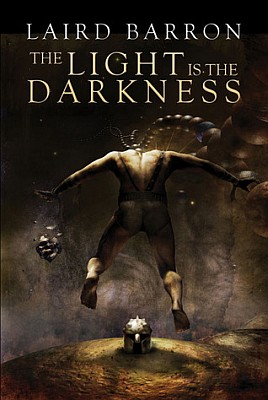
The Light is the DarknessIn just a few short years, Laird Barron has become something of a superstar in horror fiction, especially horror in the tradition of H. P. Lovecraft.

In my last post, I reviewed The Croning, Barron’s keenly awaited debut novel after the success of his award winning short story collections The Imago Sequence and Occultation. And many horror fans are waiting (still!) for the release of his new collection, The Beautiful Thing That Awaits Us All — an unfortunate victim set back by the fallout from Nightshade Books.

But one of Barron’s works that I’m not sure many know about is his 2011 novella, The Light is the Darkness, from Infernal House.

The background premise of The Light is the Darkness might be a bit hard to swallow as part of our own world, at least to the extent portrayed by Barron; but we are presented with a contemporary world where an underground, and presumably illegal, sport of modern and bloody gladiatorial games takes place. These games seemingly extend worldwide and are only attended by the super-wealthy elite.

Conrad, the main character, is an up-and-coming star in these games. But, apart from one “unsanctioned match,” we actually see very little of the gladiatorial violence until the very end. The games seem to mainly operate as backdrop to explain how Conrad has the leisure time and funds to undertake an investigation of his missing sister Imogene. In addition, the gladiatorial games seem to attract all manner of seedy and questionable characters, explaining why Conrad must deal with them.

In summary, The Light is the Darkness focuses upon Conrad’s search for Imogene, which unravels not only riddles concerning what his sister was up to before her disappearance, but also various secrets related to the rest of their eccentric but deceased family. There are various levels of intrigue and mystery involved throughout. However, in good Lovecraftian fashion, Conrad’s discoveries mount with menace laced with macabre.

Read More Read More

Discover the 20th Century’s Great SF & Fantasy Writers with Bud Webster’s Past Masters

Discover the 20th Century’s Great SF & Fantasy Writers with Bud Webster’s Past Masters

Past Masters Bud Webster-smallI’m always proud of the work our contributors do at Black Gate. We’ve explored virtually every aspect of fantasy in our print edition and here on the blog — from Games to Comics to Conan, from Vintage Treasures to Art to Music and even Fashion. We’re hip, it’s true.

Occasionally, of course, I see a brilliant article in some other zine that makes me think, “Dang. I wish I had published that.”

That’s exactly what happened the first time I stumbled upon Bud Webster’s marvelous Past Masters column at Jim Baen’s Universe, in which Bud examined the history and contributions of the most important and creative writers in SF and Fantasy, in his entertaining and highly engaging style.

My usual procedure in such circumstance, naturally, is to sulk for several days, snarling at passersby until my black mood passes. Bud has a jovial disposition however, and is famously approachable, so in this case I postponed my jealous rage and shot him a quick note. Would he ever think of publishing some of these brilliant pieces in my humble magazine, I asked?

And, gentleman that he is, Bud said yes. The first new article, with the new title “Who?” appeared in Black Gate 15, and examined the short but magical career of Tom Reamy, author of San Diego Lightfoot Sue.

Bud wrote nearly 20 Past Masters columns, starting in the online Helix SF magazine; when it ceased publication in Fall 2008 he took the column to Jim Baen’s Universe, and then to Eric Flint’s Grantville Gazette.

He wrote so many, in fact, that demands to collect them in a more permanent format became a constant chorus. The diligent Merry Blacksmith Press, run by the talented John Teehan, saw an opportunity and seized it, and three weeks ago Past Masters: and Other Bookish Natterings finally appeared as a handsome trade paperback.

Read More Read More