Browsed by
Category: Books

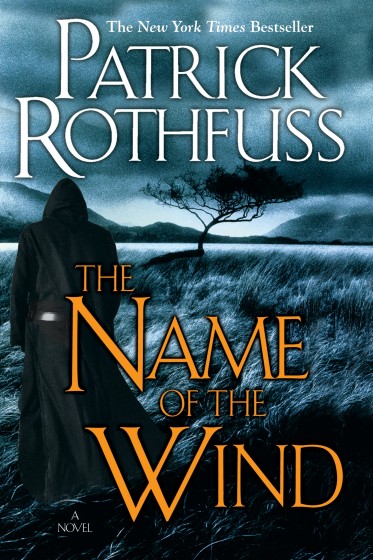
The Name of the Wind Optioned as a TV Drama by Fox
The Name of the Wind Optioned as a TV Drama by Fox

The Name of the Wind-smallThe Internet is abuzz with word that Patrick Rothfuss’s epic fantasy series, The Kingkiller Chronicles, has been optioned as a TV series by 20th Century Fox Television and New Regency Productions.

Dateline first broke the news on Thursday. Details are fairly thin, but it looks like Eric Heisserer (screenwriter for Final Destination 5 and the 2011 The Thing remake, and director of the upcoming Hours) will adapt the series, and serve as executive producer.

The Kingkiller Chronicles is one of the most popular fantasy series of the past decade. The first volume, The Name of the Wind, was published by DAW in April 2007; the sequel The Wise Man’s Fear appeared in March 2011. Both hit No. 1 on The New York Times bestseller list. A third volume, The Doors of Stone, is due next year.

Following the runaway success of HBO’s Game of Thrones — even my Dad watches the show, and he scorned fantasy for decades — it’s not surprising that the bigger networks have started to snap up other popular properties suitable for big-scale small screen adaptation.

A much bigger question is whether or not Fox and New Regency can achieve something approaching the quality and ambition of Game of Thrones. Rothfuss has tens of thousands of dedicated fans who will be watching developments closely.

We’ll report news (not to mention unsubstantiated gossip and innuendo) here as soon as we hear it.

New Treasures: House of Fear, edited by Jonathan Oliver

New Treasures: House of Fear, edited by Jonathan Oliver

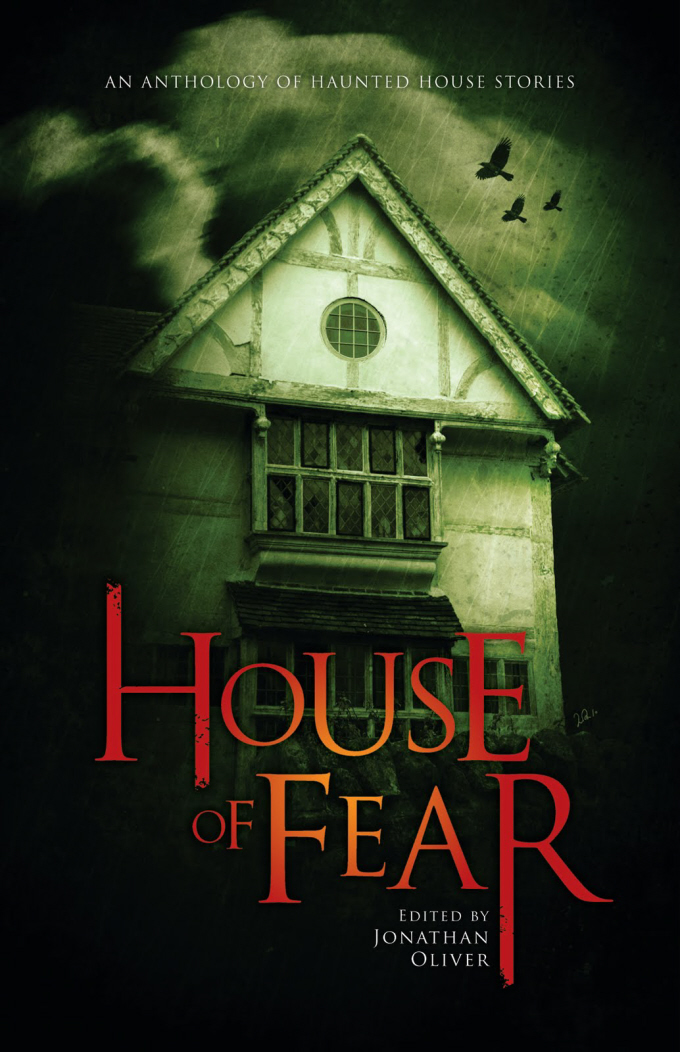
house-of-fear-smallI tip my hat to Solaris Books, the Oxford division of comic publisher Rebellion Developments, who have shown a real commitment to short fiction.

It started with George Mann’s The Solaris Book Of New Science Fiction, which lasted three volumes, only to be reborn as Solaris Rising: The New Solaris Book of Science Fiction under new editor Ian Whates (two volumes so far). In May of this year, they finally showed fantasy some love with Fearsome Journeys: The New Solaris Book of Fantasy.

And you know what? I totally missed their horror volume — an all-original collection of haunted house stories featuring tales from Christopher Priest, Joe R. Lansdale, Eric Brown, Tim Lebbon, Chaz Brenchley, Christopher Fowler, Gary Kilworth, Sarah Pinborough, Lisa Tuttle, Nina Allan, Stephen Volk, and many more. It was released nearly two years ago, but I just got my hands on a copy this week.

The tread on the landing outside the door, when you know you are the only one in the house. The wind whistling through the eves, carrying the voices of the dead. The figure glimpsed briefly through the cracked window of a derelict house. Editor Jonathan Oliver brings horror home with a collection of haunted house stories. The tread on the landing outside the door, when you know you are the only one in the house. The wind whistling through the eves, carrying the voices of the dead. The figure glimpsed briefly through the cracked window of a derelict house.

Editor Jonathan Oliver brings horror home with a collection of haunted house stories by some of the finest writers working in the horror genre.

The book is edited by Solaris Editor-in-Chief Jonathan Oliver, who also directs the Abaddon books line. Where he finds the time to oversee two major publishing houses and edit original fiction anthologies on the side, I have no idea. I was hard-pressed to edit one issue of Black Gate per year, believe me.

House of Fear was edited by Jonathan Oliver and published by Solaris on September 27, 2011. It is 485 pages, priced at $7.99 in paperback and $6.99 for the digital edition. Learn more at the Solaris website.

See all of our recent New Treasures here.

Vintage Treasures: The Best of Robert Bloch

Vintage Treasures: The Best of Robert Bloch

The Best of Robert BlochRobert Bloch — who died in 1994 at the age of 77 — had a lengthy and enviable career as a dark fantasy and horror writer, producing over 30 novels and hundreds of short stories.

Of course, all of that was overshadowed by his greatest success: the 1959 novel, Psycho, adapted by legendary director Alfred Hitchcock as perhaps his most famous film.

But there’s a lot more to Robert Bloch than just Psycho, as most fans know. Bloch was one of the earliest members of the Lovecraft Circle and Lovecraft was his early mentor. Bloch began writing to Lovecraft in 1933, after discovering his stories in Weird Tales, and his first professional sales to the same magazine a year later — when he was only 17 — were heavily influenced by him. Bloch even used Lovecraft as a (doomed) character in his 1935 short story “The Shambler from the Stars.” Lovecraft returned the favor, killing off his character “Robert Blake” in “The Haunter of the Dark” (1936), which he dedicated to Bloch.

Bloch gradually expanded his correspondence to Clark Ashton Smith, August Derleth, and others laying the groundwork for what would eventually be known as the Cthulhu Mythos. Together, they built on Lovecraft’s work, kicking off a tradition that is still very much alive today.

Bloch didn’t just hobnob with the Lovecraft Circle — in 1935, he joined The Milwaukee Fictioneers, a group of pulp fiction writers including Ralph Milne Farley, Raymond A. Palmer, and Stanley Weinbaum. Around the same time, he became friends with C.L. Moore and her husband Henry Kuttner. Man, those pulp writers sure stuck together.

After Lovecraft’s death in 1937, Bloch continued writing for Weird Tales, but also expanded to other markets, including Amazing Stories, Famous Fantastic Mysteries, F&SF, and many others. Real notice came with his early story, “Yours Truly, Jack the Ripper,” which originally appeared in Weird Tales in 1943 and became one of the most reprinted fantasy tales of the 20th Century.

Read More Read More

Mysteriouser, and Mysteriouser

Mysteriouser, and Mysteriouser

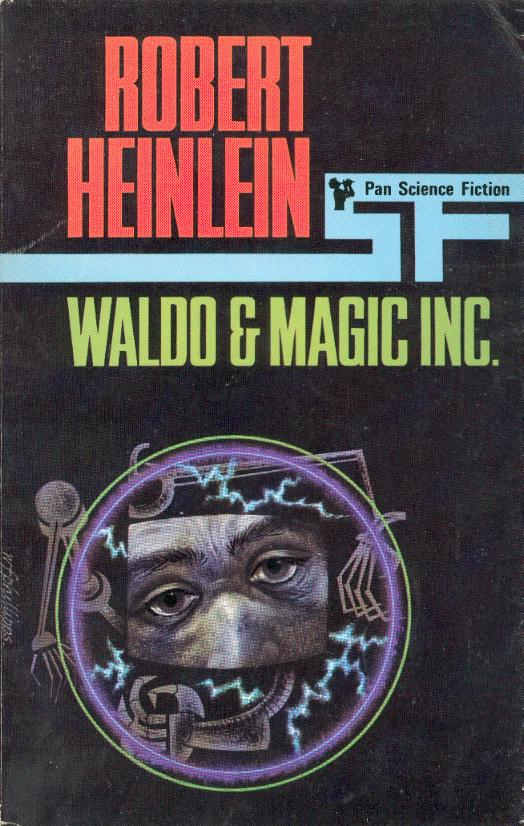
Waldo and Magic Inc-smallThe idea of genre in literature is relatively recent, if you take as your time span the history of the written word. Why, I remember a time when there were only two genres, Poetry and Prose. Or, as we call them nowadays, Fiction and Non-fiction. Things have gotten more complicated since Sir Philip Sydney wrote “A Defense of Poetry,” however, as I’m sure a glance over any of our own bookshelves would tell us.

Last week, in discussing my serial-killer fantasy, Path of the Sun, I started talking about cross-genre writing. I was writing a high fantasy crime novel, but most examples of the crime/fantasy cross are urban fantasies, set in an alternate reality.

The first of these to cross my path was Robert Heinlein’s “Magic Inc” (1940). Technically, it’s an amateur sleuth mystery – the main character isn’t a professional detective of any kind – Archie Fraser lives in a world where magic is a routine service you rent or purchase, like the expertise of a plumber or a musician. When he’s threatened by the equivalent of the mob, asking him to pay “insurance” for his business and threatening him with magical reprisals, he finds an unusual ally in the shape of a very powerful, and very old, witch.

In 1987/88, Glen Cook published the three novels that make up the Garrett Files: Sweet Silver Blues, Bitter Gold Hearts, and Cold Copper Tears. (Fans of John D. MacDonald’s Travis McGee books will recognize MacDonald’s method of keeping his books straight by using a different colour in each title.)

Cook’s Garrett is a human private investigator with supernatural allies, but he sets the stage for the more recent Dresden Files, now in, I think, its fourteenth or fifteen volume. Jim Butcher’s Harry Dresden is himself a magician, part Sam Spade and part Merlin, living in an alternate version of Chicago.

Read More Read More

New Treasures: Cobweb Bride by Vera Nazarian

New Treasures: Cobweb Bride by Vera Nazarian

Cobweb Bride-smallThere’s lots of perks to running the Black Gate global mega-publishing empire. For one thing, I enjoy being part of the “lamestream media,” telling America what to think and do, ignoring today’s critical issues so I can focus on movies about giant robots. That’s satisfaction right there. Plus, those Manhattan press parties are a blast. Seriously, I could tell you stories.

But the best part of publishing is discovering new talent, the emerging short fiction writers of today who will be the towering giants of the field tomorrow. Writers like Vera Nazarian, whose brilliant short story, “Niola’s Last Stand,” we published earlier this year. Strangely, no one seems to have told Vera that she’s expected to toil away in obscurity for years before vaulting to superstardom — she’s already accumulated two Nebula noms, and her just-released novel, Cobweb Bride, looks like a clear contender for one of the most talked-about books of the year. Some people have no respect for due process.

Well, we know how to cash in on a good thing. So we asked Vera for an exclusive quote explaining Cobweb Bride to our readers (“Quick — while she’s still taking our calls.”) Here’s what she told us:

Cobweb Bride is a story of Death and Love and loss and intensity, a strange twist on the Persephone myth set in an alternate Renaissance Europe. Enter the Uncanny Valley of the Shadow of Death. This is a place at the heart of the Brothers Grimm and in the mind of Dante, in the gut of Ouroboros, in the mouth of Hell, and in the eye of a glittering Imperial Court rivaling the splendor of Louis XIV’s Versailles.

It is an epic fantasy of love and eldritch wonder, about death’s ultimatum to the world.

Does that sound awesome, or what? What did we tell you? Pay attention, we won’t steer you wrong.

Cobweb Bride is the first book of the Cobweb Bride Trilogy. It was published by Leda on July 15. It is $14.95 in trade paperback, and just $5.99 for the digital edition.

Giving the Devil His Due: A Review of Dreamers in Hell

Giving the Devil His Due: A Review of Dreamers in Hell

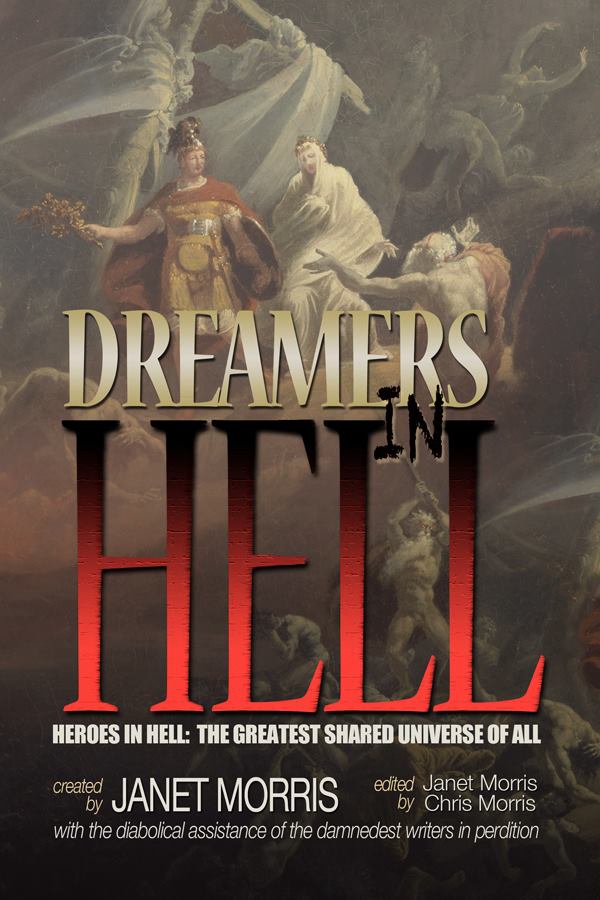
Dreamers in Hell-smallDreamers in Hell (Heroes in Hell, Volume 15)
Created by Janet Morris, edited by Janet and Chris Morris, and written “with the diabolical assistance of their damnedest writers.”
Perseid Press (478 pages, June 13, 2013, $23.95 in trade paperback)

It is a place of swords and spears, revolvers and automatic weapons, sorcery and science, catapults and cannon, bows and arrows, computers and demons. It is a place where there is no Hope for the damned, merely the suggestion of it.

Welcome to Hell, where Perdition rules. Whether a soul believes in Hell or not, Hell believes in damnation of the mortal soul. Anyone can end up in Hell, no matter what religion, no matter what faith. You may not believe in Hell, but Hell believes in you.

In Hell, all things are possible. In Hell, many of the damned believe they have been wrongly sent there, while others accept their fate and try to make the best of a bad situation. In Hell’s Mortuary, the Undertaker giveth and taketh away, revives and reassigns the damned — again and again — so they can continue their dance with the Devil. Yes, welcome to Hell — where rogues and heroes and fools quest for a way out, and Satan plots to storm the Gates of Heaven.

Ah, but wait… the powers that be in Heaven have decided that Hell has become too comfortable. Infernity is in trouble. El Diablo is lying down on the job.

Heaven has sent Erra, Babylonian god of plague and mayhem, and his 7 Sibitti (his Auditors, his Enforcers, his personified weapons), to further punish the innocent as well as the guilty, and they do so with great glee. They are Hell’s judge, jury, and executioners. Satan can’t even run Hell the way he wants to run it. Paradise mocks him. Will Erra replace Satan? Make things worse for everyone in all levels and versions of Hell — past, present and future?

Read More Read More

Fritz Leiber, Edgar Rice Burroughs, and Appendix N: Advanced Readings in D&D

Fritz Leiber, Edgar Rice Burroughs, and Appendix N: Advanced Readings in D&D

Swords and Ice Magic-smallOver at Tor.com, Tim Callahan and Mordicai Knode continue with their thoughtful and entertaining tour through Gary Gygax’s famous Appendix N, the library of fantasy and SF titles referenced in the back of the Dungeon Master’s Guide. In the past few weeks, they’ve covered Fritz Leiber and Edgar Rice Burroughs — proving once again that they can write these columns faster than I can keep up.

So we’ll play catch-up today. Here’s what Mordicai says about Leiber, author of the genre-defining Fafhrd and the Gray Mouser tales.

Guys, Fritz Leiber’s Fafhrd and Gray Mouser are basically the bee’s knees. In fact, I might go so far as to say they are the most Dungeons and Dragons of anything on the Appendix N list… The thing about the Lankhmar stories is that they are actually how people play the game as well… Let me illustrate it thus: Fafhrd straps fireworks to his skis at one point in order to rocket across a jump. That sort of insanity is just so… well, so Dungeons and Dragons; I don’t know how Leiber does it… Leiber’s imagination is so fruitful that, well, it is like he has a chaos theory generator in his head. Billions of flapping butterflies.

So true! And here’s Tim on how Edgar Rice Burroughs’s John Carter novels may have influenced level limits.

Read More Read More

Some of the Best Battles in Recent Memory: A Review of Dawnthief

Some of the Best Battles in Recent Memory: A Review of Dawnthief

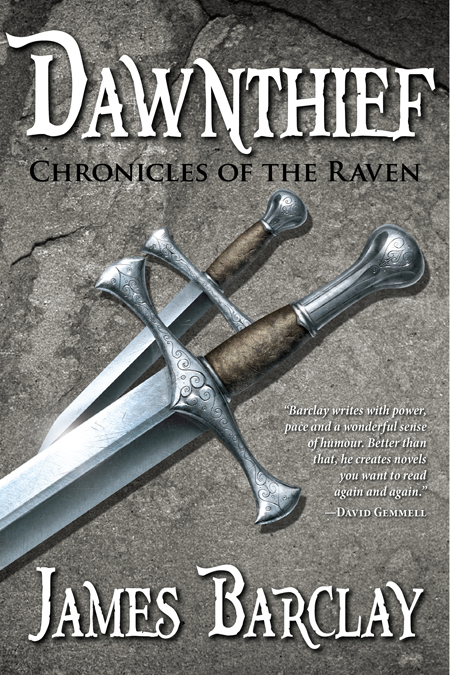
Dawnthief Pyr-smallDawnthief (Chronicles of the Raven 1)
By James Barclay
Pyr (403 pages, $17 September 22, 2009)

Balia, the setting of Dawnthief, isn’t a very nice place, not at all. Rape, murder, betrayal, lust, and just plain old human cruelty, yep it’s all here by the bucket-load. But as interesting as the world is, it can’t even compare to the people who populate it.

Dawnthief follows a group of mercenaries called ‘The Raven’ as they are employed by one of the four magic colleges, Xetesk, to find Dawnthief, a spell apparently designed to end the world and the only thing capable of destroying the ‘wytch lords’: all powerful beings bent on destroying the world, who for no particular reason, have decided to wake up again, and, for no particular reason, destroy the world.

Needless to say, our intrepid adventurers set out to stop them, accompanied all the while by Denser, a mage from Xetesk, sent to oversee the operation, cast Dawnthief and cause a lot of trouble for The Raven. Now in order to do what they want to do, they must find four catalysts, which are basically the things needed to cast a spell. These are located across Balia and must be found if they are to have any chance of success.

The plot is the book’s weakest point; it all feels a bit clichéd, a bit tired and, to be frank, a bit boring. The catalysts serve only to ferry the team from one battle to the next, all they do is give the group an excuse to move from point A to point B and set up the next fight, or puzzle.

It’s not exactly original either, is it? Just another “save the world from the dark lord” story, another Lord of the Rings mimic; tried and true, but contrived and unoriginal. I mean come on, care a little bit.

Read More Read More

Sean McLachlan’s The Quintessence of Absence Now Available as a Free eBook

Sean McLachlan’s The Quintessence of Absence Now Available as a Free eBook

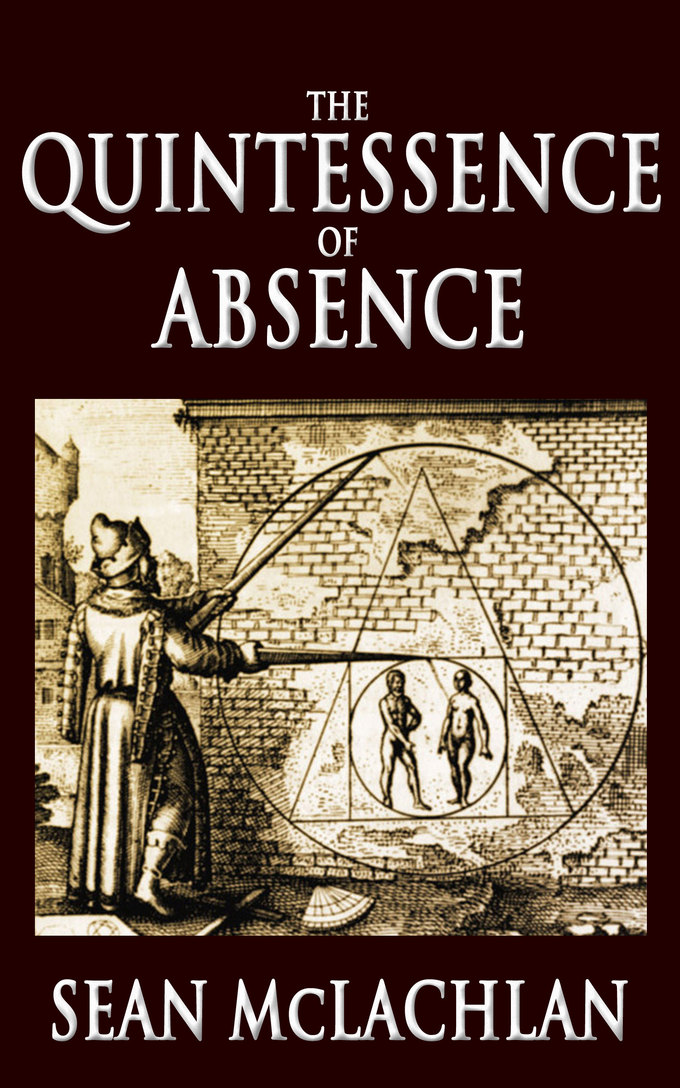
The Quintessence of Absence-smallIt’s been a good day for free fiction.

We’ve heard from BG blogger Sean McLachlan that his original noir fantasy novella, “The Quintessence of Absence,” is now available as a free ebook at Smashwords.

Can a drug-addicted sorcerer sober up long enough to save a kidnapped girl and his own Duchy?

In an alternate 18th century Germany where magic is real and paganism never died, Lothar is in the bonds of nepenthe, a powerful drug that gives him ecstatic visions. It has also taken his job, his friends, and his self-respect. Now his old employer has rehired Lothar to find the man’s daughter, who is in the grip of her own addiction to nepenthe.

As Lothar digs deeper into the girl’s disappearance, he uncovers a plot that threatens the entire Duchy of Anhalt, and finds the only way to stop it is to face his own weakness.

“The Quintessence of Absence” was originally published right here at Black Gate. It’s a terrific dark fantasy novella, in which a young wizard in the grip of addiction discovers his drug of choice is at the center of a sorcerous conspiracy in an alternate 18th century Germany.

Sean McLachlan is the author of the collection The Night the Nazis Came to Dinner, and Other Dark Tales; A Fine Likeness, a horror novel set in Civil War Missouri; and numerous history books on the Middle Ages, the Civil War, and the Wild West. He is an occasional Black Gate blogger; his most recent piece for us was “Spanish Castle Magic.”

“The Quintessence of Absence” is a 25,000-word novella, available in a variety of digital formats. Get it for free at Smashwords.

See the complete catalog of Black Gate Online Fiction here.

Get Five Years of Fiction from Tor.com — For Free!

Get Five Years of Fiction from Tor.com — For Free!

Tor The StoriesTo celebrate their fifth anniversary, Tor.com is releasing an anthology crammed with all the original fiction they’ve published since their launch.

It’s a hugely impressive list — over 150 short stories. Authors include Charles Stross, John Scalzi, Cory Doctorow, Steven Gould, Elizabeth Bear, Terry Bisson, Jay Lake, Brandon Sanderson, Jeff VanderMeer, Jo Walton, Ken Scholes, Rachel Swirsky, Harry Turtledove, Michael Bishop and Steven Utley, and Kij Johnson. And that’s just in the first twelve months!

Short fiction from Tor.com has won virtually every major award in SFF. Want examples? “Ponies” by Kij Johnson (Jan 2010) won the Nebula and Charlie Jane Anders’s novelette “Six Months, Three Days” (June 2011) won the Hugo. There are numerous Nebula nominees among the collected stories as well, including “The Finite Canvas” by Brit Mandelo (Dec 2012), “Swift, Brutal Retaliation” by Meghan McCarron (Jan 2012), and two novelettes by Rachel Swirsky: “Portrait of Lisane da Patagnia” (Aug 2012) and “A Memory of Wind” (Nov 2009).

There’s no shortage of Hugo nominees in this lot either, including John Scalzi’s “Shadow War of the Night Dragons: Book One: The Dead City: Prologue” (April 2011), “Ponies” by Kij Johnson (Nov 2010), “Eros, Philia, Agape” by Rachel Swirsky (Mar 2009), and “Overtime” by Charles Stross (Dec 2009).

In short, this is one of the most impressive and monumental anthologies to come along in years. And Tor.com is giving it away absolutely free. We’re not worthy, but we won’t let that stop us.

You can see the complete list of fiction Tor.com has published in the last five year at their Original Fiction index. And just to prove that they’re not resting on their laurels, they’ve announced five new stories will be published tomorrow, by Carrie Vaughn, Nancy Kress, Lavie Tidhar, Ben Burgis, and Tina Connolly.

Fiction for Tor.com is acquired and edited by Liz Szabla, Ann VanderMeer, Susan Dobinick, Ellen Datlow, Noa Wheeler, George R. R. Martin, Paul Stevens, Calista Brill, Patrick Nielsen Hayden, Brendan Deneen, Janine O’Malley, and a talented community of Tor editors and their pals.

Get the free book here.