Browsed by
Category: Books

Excuse me, Are you Using that Plot Device?
Excuse me, Are you Using that Plot Device?

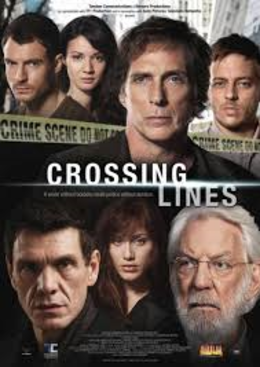
Crossing LinesThe other day, I was watching a new Canadian show that I’m not sure is even airing in the US called Crossing Lines. It stars, among others, William Fichtner and Donald Sutherland, and promises to be a kind of Agents of Shield without the Marvel universe – a group of police officers from different countries come together to solve international crimes as an arm of the International Court. So far so good, except for . . .

In the second episode, a tender moment occurs where two characters bond over similar family issues. They look warmly into each other’s eyes and promise to talk about it later. I call out “Dead man!” And of course I was right. One of them was dead by the end of episode, leaving the other feeling bereft. And leaving me rolling my eyes.

While “Dead man!” can be fun to play (as can “She did it!”) it’s a sad commentary on the state of narrative that these games can be played so often.

Okay, I hear you say, so it’s a plot device, and maybe it’s a bit overused (where “a bit” means I’m understating). Is that really so wrong? Yes, yes it is. The problem with this kind of thing is that because we recognize it, we feel manipulated, and when your viewers, or your readers, feel manipulated, you’ve lost them. You’ve reminded them that not only did you make this bit up, you’ve made all of it up. When your readers start considering the structure of the narrative, they’ve taken a step back from it. And bang, as they say, goes your willing suspension of disbelief.

We could argue that this kind of manipulation doesn’t happen as much in novels or short stories as it does in television and movies. Maybe not. Novels, for one, have time enough to make readers genuinely care about a character before she gets killed. And plot devices are actually useful things; both as readers and writers we love them, except when we hate them.
Read More Read More

Goth Chick News: Doctor Sleep or Back to the Overlook Hotel

Goth Chick News: Doctor Sleep or Back to the Overlook Hotel

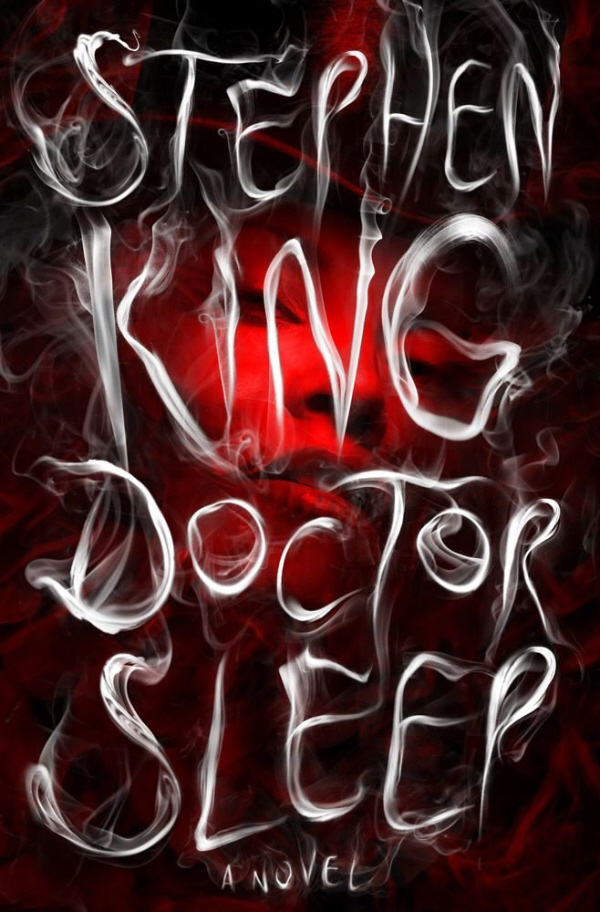
Doctor SleepI honestly never thought I would ever again gush about a Stephen King novel, but here I am.

You see, I’ve been disillusioned for some time – as in ever since The Stand. And before I start seeing dozens of posts about how great the Dark Tower series is, or Under the Dome for that matter, to me King is and always will be the teller of horror tales. And frankly, he hasn’t really scared me since IT.

Or maybe Pet Cemetery.

Honestly, I felt King had lost his horror mojo – or had it forcibly extracted during the conception of his son Joe Hill, who tears up the NYC Best Seller list every time he puts pen to paper.

But back in September 2011, as King was receiving an award at George Mason University in Fairfax, Virginia, he talked a little bit about the latest novel he was working on, Doctor Sleep – a sequel to his 1977 blockbuster hit The Shining.

This is an idea that I’ve had for some time. I wrote a novel in the ’70s called The Shining… I always wondered what happened to that kid, Danny Torrance, when he grew up… and this story started to form. The book isn’t finished yet, it’s called Doctor Sleep. This kinda goes back to: what’s the worst thing you can think of? I knew that there were bad people in this story that were like vampires, only that what they sucked out was not blood, but psychic energy from special people like Danny Torrance. And I came to realize that these people were called The Tribe and that they move around a lot.

I was skeptical then and remained so all the way up until September 24th, when my copy of Doctor Sleep finally arrived.

Read More Read More

New Treasures: Johannes Cabal: The Fear Institute by Jonathan L. Howard

New Treasures: Johannes Cabal: The Fear Institute by Jonathan L. Howard

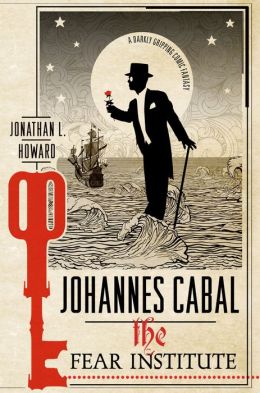
Johannes Cabal The Fear InstituteI still remember the first Jonathan L. Howard story I ever read. It was buried in the slush pile and I’d almost given up reading submissions for the evening, but told myself I’d try one more before heading to bed.

Turned out to be a good decision. The story, about a young thief named Kyth hired to penetrate a deadly tomb, was filled with surprises — not least of which was the amiable lich who congratulated Kyth when she reached the heart of his lair. It was titled “The Beautiful Corridor,” and I was happy to purchase it for Black Gate 13 — and its sequel, “The Shuttered Temple,” for BG 15.

Jonathan’s first novel was the highly regarded Johannes Cabal the Necromancer (2009), followed by Johannes Cabal the Detective (2010). Now at last the third volume has arrived and it promises a fresh serving of twisted comic fantasy, as the intrepid and resourceful Johannes Cabal plans an expedition into the Dreamlands.

Beyond the wall of sleep lie the Dreamlands, a whole world formed by dreams, but not a dream itself. For countless millennia, it has been explored only by those with a certain detachment from the mundane realities of our own world, its strange seas navigated, and its vast mountains climbed by philosophers, and mystics, and poets.

Well, those halcyon days are over, beatniks.

Johannes Cabal is coming.

Cabal, a necromancer of some little infamy, is employed by the mysterious Fear Institute to lead an expedition into the Dreamlands, an expedition whose goal is nothing less than to hunt and destroy the dread Phobic Animus, the font of terrors, the very source of all the world’s fear. They will enter exotic lands where magic is common and monsters abound, see wonders, and suffer dreadful hardships. Cabal will encounter witches, vile abominations, and far too many zebras.

And, when they finally come close to their goal, Cabal will have to face his own nightmares, but for a man who communes easily with devils and the dead, surely there is nothing left to fear.

Jonathan’s most recent novel was Katya’s World, the first book of The Russalka Chronicles. Read Jonathan’s article on writing the Johannes Cabel series and his interview with John Joseph Adams.

Johannes Cabal: The Fear Institute was published by Thomas Dunne Books on October 1st. It is 334 pages, priced at $24.99 in hardcover and $11.99 in digital format.

Where Did Fantasy Come From? A Review of Literary Swordsmen and Sorcerers: The Makers of Heroic Fantasy by L. Sprague de Camp

Where Did Fantasy Come From? A Review of Literary Swordsmen and Sorcerers: The Makers of Heroic Fantasy by L. Sprague de Camp

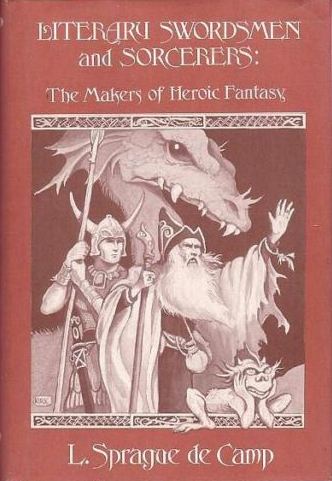
Literary Swordsmen and Sorcerers The Makers of Heroic Fantasy-smallI love fantasy literature. And I’m greatly interested in its history as well. Where did fantasy come from? Is Tolkien solely to blame? How does King Arthur and his round table knights enter in? What about this business with elves and dwarves? Am I the only one who thinks about where this stuff came from?

As far as I can tell, there are very few fantasy histories out there and not much more than cursory stabs at explaining how we have the fantasy literature that we do. (For a couple of very good ones though, see the introductions to David G. Hartwell and Jacob Weisman’s The Sword and Sorcery Anthology and Jonathan Strahan and Lou Anders’s Swords and Dark Magic.) So, when I recently stumbled across a whole book devoted to the history of fantasy, I grabbed it!

The book in question is Literary Swordsmen and Sorcerers: The Makers of Heroic Fantasy by (now deceased) L. Sprague de Camp, originally published by Arkham House Publishers in 1976. Even if you haven’t been an SF&F (science fiction and fantasy) fan very long, you’ve undoubtedly come across de Camp’s name.

De Camp was one of the most prolific SF&F writers of the twentieth century. He wrote both fantasy and science fiction, as well as non-fiction. I first came across de Camp through my interest in Lovecraft. He seems to have been the first person to have written a biography of H. P. Lovecraft — one that unfortunately has not aged well. But it’s clear that de Camp was very interested in the history of SF&F and particularly fantasy.

I’m not enough of an historian to be able to criticize Literary Swordsmen and Sorcerers on a scholarly level; but as far as being engaging and informative, de Camp’s book is superb.  I found it to be incredibly engrossing — one of those books that are hard to put down.

Lin Carter — another prolific twentieth century SF&F writer — gives a fairly long and informative introduction. It simply whets your appetite for what is to follow.

Read More Read More

Inspiration and Emulation, Tolkien and Gygax

Inspiration and Emulation, Tolkien and Gygax

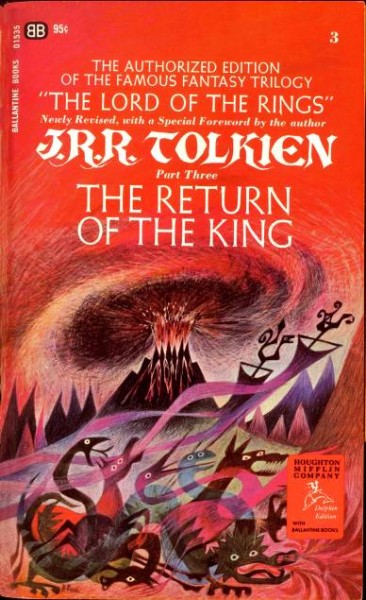
Ballantine The Return of the King-smallTo say that I have an abiding interest in the relationship between tabletop roleplaying games and the literary inspirations of their creators is something of an understatement.

Notice, though, that I said “inspirations” rather than another word that frequently gets bandied about when discussing the relationship between literature and RPGs – emulation. I can’t recall precisely when I first heard the term “emulation” used in the context of roleplaying games, but I’d be surprised if it were before the late 1980s. That’s about a decade after I entered the hobby, so my memory is admittedly fuzzy and I could well be mistaken. On the other hand, I heard the term “inspiration” a great deal, most notably in (you knew this was coming!) Gary Gygax’s 1979 Appendix N and the “Inspirational Source Material” found in the 1981 Tom Moldvay-edited edition of Dungeons & Dragons. Back in those days, game creators often talked about the books whose characters, plots, and ideas had fired their imaginations to such a degree that they decided to create a RPG that drew on them; they still do.

“Emulation” is something different. It’s one thing, I believe, to create a fantasy roleplaying game inspired by, say, Robert E. Howard’s stories of Conan the Cimmerian, but an entirely different thing to create a roleplaying game intended to emulate the adventures of Conan. Emulation implies a degree of fidelity to its literary sources (at least thematically), as well as some means – whether rules or advice – to ensure that experience of playing the game imitates that source material. An example of what I’m talking about that comes immediately to mind is Chaosium’s Call of Cthulhu RPG. While its rules do not explicitly talk about emulation, they do include game mechanics for the loss of sanity that results from encounters with blasphemous tomes and eldritch horrors. The creator of a game that’s merely inspired by some literary source is under no such obligations. After all, inspiration can take many forms, many of which do not include aping one’s sources of inspiration.

I mention all of this as a prologue to a large, more contentious discussion, namely the place of the works of J.R.R. Tolkien in the creation of Dungeons & Dragons.

Read More Read More

The Magic Goes Away by Larry Niven

The Magic Goes Away by Larry Niven

The Magic Goes Away-small

A swordsman battled a sorcerer once upon a time. In that age such battles were frequent. A natural antipathy exists between swordsmen and sorcerers, as between cats and small birds, or between rats and men. Usually the swordsman lost, and humanity’s average intelligence rose some trifling fraction. Sometimes the swordsman won, and again the species was improved; for a sorcerer who cannot kill one miserable swordsman is a poor excuse for a sorcerer.

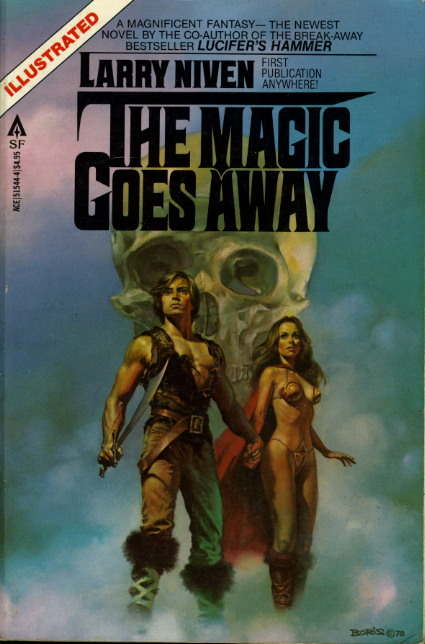
So begins “Not Long Before the End” (1969), the first story in Larry Niven’s The Magic Goes Away series. His approach to swords & sorcery is the same as the one he brought to the hard science fiction he’s best known for: extravagant and colorful yet built on a framework of logic.

As you might infer from the tone of the quote, he also has a bias against the warrior hero typical of the genre and in favor of the sorcerer. In the short story above, its sequel “What Good Is a Glass Dagger?”, and the short novel The Magic Goes Away, he chronicled the adventures of a sorcerer called Warlock in a pre-historic Earth located somewhere to the right of Robert E. Howard’s Hyboria.

Niven’s starting point was to theorize how magic might work in a rational way. In his model, sorcery is powered by mana, a finite source. Instead of telling stories of the glory days when wizards built flying castles, and dragons and gods walked the earth, these tales are set in the magical world’s fading days. It’s a clever setup and one that drew me in enough to read the whole trilogy this past week.

“Not Long Before the End” is an inversion of the too-common S&S story of barbarian swordsman rescues girl from wicked sorcerer. Here Warlock discovers the nature of mana and realizes it’s running out.

Read More Read More

New Treasures: The Harsh Suns by Jason E. Thummel

New Treasures: The Harsh Suns by Jason E. Thummel

The Harsh SunsThere I was, minding my own business, peacefully editing Connor Gormley’s Robert E. Howard tribute “Who Took the Flowers Out of my Prose?” and listening to him grouse about modern prose, when suddenly Conner took an abrupt right turn and started praising Black Gate author Jason E. Thummel.

Unfortunately, modern fantasy seems, for the most part, to neglect prose. And that’s a shame, because it means all those distinct literary personalities — the whimsy of Leiber, the melancholy of Moorcock, and the fury of Howard — are a thing of the past. Everyone seems to have adopted the same bland, middle ground style that isn’t really anything above functional…

Don’t get me wrong — there are a few standouts. I love Jason E. Thummel’s prose…

Well, that was a pleasant surprise. We’ve published three tales from Jason E. Thummel in the past 12 months — including the debut story in the Black Gate online fiction line, ”The Duelist,” which Adventures Fantastic said “Set a high standard,” and two stories of Gunnerman Clap, “The Gunnerman” and “Assault and Battery.”

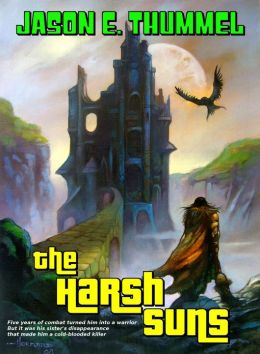
Apparently it takes more than that to stay on top of Jason, however. Looking for an image to accompany Conner’s comments, I stumbled on the cover of Jason’s new book: The Harsh Suns, a handsome collection of three sword & sorcery tales published earlier this year.

I immediately ordered a copy and it arrived just in time to accompany me on my plane ride to San Francisco last Wednesday.

Read More Read More

Vintage Treasures: The Karma Corps by Neal Barrett, Jr.

Vintage Treasures: The Karma Corps by Neal Barrett, Jr.

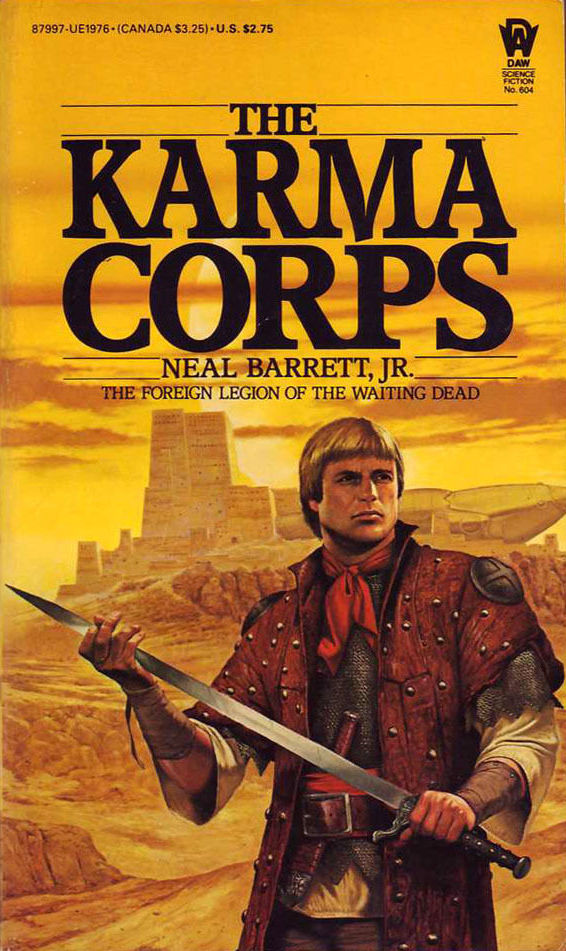
The Karma Corps-smallLast month, I bought a small collection of fantasy novels that included Mark Frost’s The List of 7, a terrific Clark Ashton Smith paperback, some vintage Lovecraft — and four early fantasy novels by Texas author Neal Barrett, Jr. I was especially curious about the Barrett, all four volumes in his Aldair series, published between 1976 and 1982. I first encountered Barrett in the late 80s with his post-apocalyptic novel, Through Darkest America (1987), and then his gonzo magic realist offering from Ziesing Books, The Hereafter Gang (1991). Those were more than enough to win my respect for Barrett’s gifted imagination, but I wasn’t familiar with his earlier work.

The four Aldair books rekindled my interest and I set off in search of what else I might find. The first title I found was The Karma Corps, an unusual science fantasy of demons, holy warriors, and a distant space colony with a very serious problem.

Captain Lars Haggart was a soul waiting to be reborn… but before that blessed event he has been inducted into the Arm of God Regiment fighting for the beleaguered Churchers on a newly colonized planet. Their foe — demons who could pop into existence, slay and pop out of existence the next instant. The demons were winning that war, sending their Unborn opponents back to limbo, driving the living colonists toward extermination.

But this was no fantasy, no business of the religious imagination. The fight was real, blood was blood, and swords cut sharp, for the Unborn were very much alive. Haggart was aware that this was frighteningly contradictory but first he had to fight the demons on their own terms — learn how to appear behind their lines and do to them what they were doing to the humans.

An unusual science fiction novel of a space colony in deepest trouble and of aliens who knew planetary secrets that were never in anyone’s Holy Book.

Given what I know of Neal Barrett, Jr. already, I didn’t really expect to find his name on a novel of space colonization. Throw in a strange religion and demons who defy our notion of reality, however, and now you’re talking.

Read More Read More

The Roots of Early Love Go Deep: Five Stories Which Affected Me Deeply in My Early Teens

The Roots of Early Love Go Deep: Five Stories Which Affected Me Deeply in My Early Teens

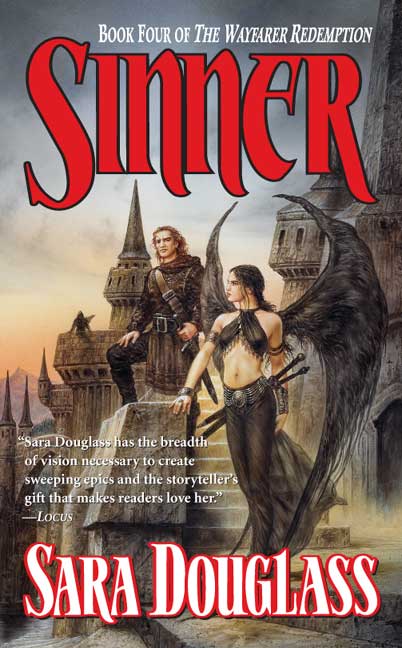
Sinner Sara Douglass-smallOne of the many minor consequences of having a child – in my case, anyway – is the extent to which you suddenly become nostalgic for the stories of your youth.

As such, and even though my shelves are overflowing with new and as-yet unread books, my thoughts keep straying to stories I loved in my early teens. And not just novels, but games, films, and TV shows, too. Revisiting these narratives as an adult, however, can be something of a mixed blessing: for every thrill experienced on finding that a particular story touches me just as deeply now as then, there’s often a corresponding moment of disappointment on identifying a hitherto unnoticed, winceworthy problem.

Even so, there’s an important difference between acknowledging that the things we love – and particularly the things we first loved as teens and children – are flawed, and throwing them out entirely. We cannot wholly excise our passions without removing something vital of ourselves; instead, we must learn to live with them.

What follows here, then, in no particular order, is a slightly different list to the sort of thing I might usually compile: five stories which affected me deeply in my early teens and which continue to influence me now, sometimes without my even consciously realizing it. The roots of our early loves go deep and even though I haven’t explored some of these stories in years, as I go about revisiting them, I’m consistently amazed to find echoes of them, not only in my own work, but in my expectations for the works of others.

Read More Read More

John Bellairs, Fred Saberhagen and Appendix N: Advanced Readings in D&D

John Bellairs, Fred Saberhagen and Appendix N: Advanced Readings in D&D

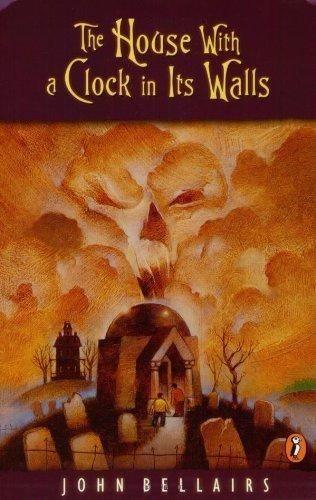
The House With a Clock in its Walls-smallI know John Bellairs mostly as the author of a host of YA fantasy mysteries — rather dark fantasy mysteries, actually, with a twinge of horror. The first one I purchased was The House With a Clock in its Walls, back when my kids were very young, but I imagined they’d thank me as they grew older and started devouring the fantasy library I’d diligently built for them.

Never happened. Instead, they did the exact same thing I did at their age: found their own books and steadfastly ignored the stuff their boring parents kept recommending.

They read Christopher Paolini’s Eragon series, and Suzanne Collins’s Gregor books, John A. Flanagan’s Ranger’s Apprentice, and Suzanne Collins’s Hunger Games. I ended up with stacks of unread John Bellairs titles like The Eyes of the Killer Robot and The Spell of the Sorcerer’s Skull. At least they looked good on the shelves.

John Bellairs also wrote at least one adult fantasy, The Face in the Frost. And that was apparently enough to win him a space in Gary Gygax’s Appendix N in the back of the Dungeon Masters Guide, which is why we’re talking about him today.

Mordicai Knode and Tim Callahan are examining one Appendix N writer per week at Tor.com, in their Advanced Readings in D&D series. They’ve done 15 installments so far, and for number 16 Tim turns to John Bellairs.

But first, he briefly returns to subject #15, Lin Carter, to say a few words about his exceptional treatise on adult fantasy, Imaginary Worlds.

Read More Read More