Browsed by
Category: Books

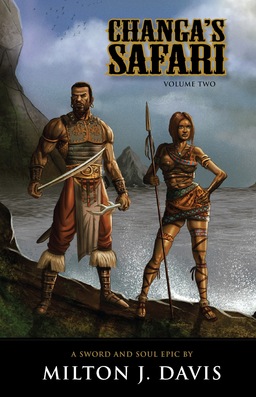
Changa’s Safari: Volume 2 by Milton Davis
Changa’s Safari: Volume 2 by Milton Davis

oie_122213ZGX0sjXjI read fantasy — and swords & sorcery in particular — because it’s fun. Like most middle-class Americans I lead a very safe life, which I’m very happy about, but from which I sometimes like to take a break. Occasionally I need to hear the whoosh of a sword just missing Conan’s head, to peer down into the dark alleys of Tai-tastigon from the rooftops of strange gods’ temples, to smell the fires of Granbretan’s vile sorceries. Sometimes I need to get out of my content, comfortable place and journey to places unknown and fantastic.

Milton Davis, sword & soul maven, delivers exactly that kind of trip in Changa’s Safari: Volume 2 (2012). The story of swashbuckling merchant Changa Diop traveling the 14th century Indian Ocean, it continues the adventures of Changa’s Safari: Volume 1 (2010), which was reviewed by Charles “Imaro” Saunders on Black Gate several years ago.

Once a prince of the Bakongo, Changa was sold into slavery when his father was killed by the sorceror Usenge. He was rescued from the slave-fighting pits of Mogadishu by a kindly merchant. His rescuer, Belay, taught him how to be a trader and eventually made him his heir.

Vol. 1 tells of the arrival of a great Chinese fleet off the East Africa coast and Changa’s journey alongside it back to China with his own fleet. There he confronts — boldly and with plenty of sword flourishing and magic — all manner of things you’d hope to meet in this kind of story: evil demigoddesses, pirates, conniving courtiers, and a Mongol horde. You know, the good stuff.

Volume 2 picks up a short time after Changa and his ships have left China for home. Home is Sofala, once a prosperous port in present-day Mozambique. It’s a long way from the Straits of Malacca (where the book opens with a tremendous multi-ship battle against Sangir pirates) to Sofala, which leaves a lot of room for adventure.
Read More Read More

New Treasures: Shield and Crocus by Michael R. Underwood

New Treasures: Shield and Crocus by Michael R. Underwood

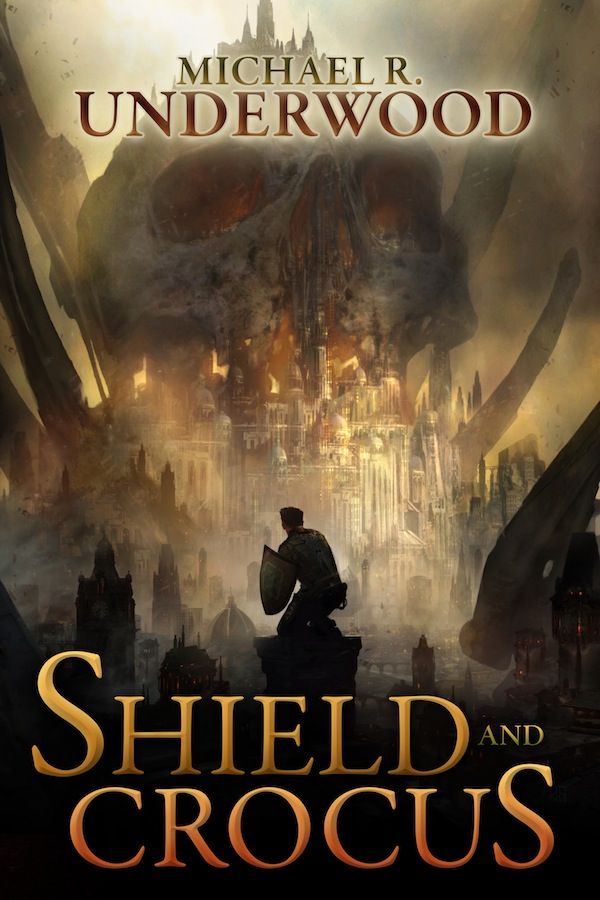
Shield and Crocus-smallI used to tell folks submitting to Black Gate that the easiest way to grab my attention was with a unique setting. Writers — especially beginning writers — make greats efforts to impress with prose and plot, but very few seem to have the ability to imagine some place other than Middle Earth or a tavern in a D&D game.

It’s the same when I’m choosing a new novel. It’s the ones with the most imaginative settings that really win me over. And Michael R. Underwood’s Shield and Crocus — set in a city built on the bones of a fallen giant, ruled by five criminal tyrants — has by far the most intriguing setting I’ve come across this year.

The city of Audec-Hal sits among the bones of a Titan. For decades it has suffered under the dominance of five tyrants, all with their own agendas. Their infighting is nothing, though, compared to the mysterious “Spark-storms” that alternate between razing the land and bestowing the citizens with wild, unpredictable abilities. It was one of these storms that gave First Sentinel, leader of the revolutionaries known as the Shields of Audec-Hal, power to control the emotional connections between people — a power that cost him the love of his life.

Now, with nothing left to lose, First Sentinel and the Shields are the only resistance against the city’s overlords as they strive to free themselves from the clutches of evil. The only thing they have going for them is that the crime lords are fighting each other as well — that is, until the tyrants agree to a summit that will permanently divide the city and cement their rule of Audec-Hal.

It’s one thing to take a stand against oppression, but with the odds stacked against the Shields, it’s another thing to actually triumph.

In this stunning, original tale of magic and revolution, Michael R. Underwood creates a cityscape that rivals Ambergris and New Crobuzon in its depth and populates it with heroes and villains that will stay with you forever.

Michael R. Underwood is the author of Geekomancy and Celebromancy. I was much impressed with his reading at Wiscon 2012. He was also the North American Sales Manager for Angry Robot Books (in which capacity he’s sold me a book or two.)

Shield and Crocus was published by 47North on June 10, 2014. It is 416 pages, priced at $14.95 in trade paperback and just $4.99 for the digital edition.

Medea

Medea

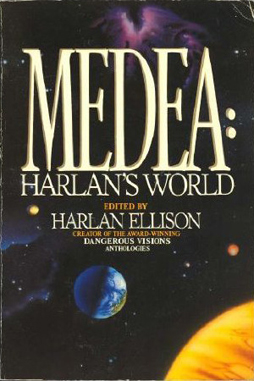
MedeaLately in this space I seem to be writing a lot, one way or another, about worldbuilding. As it happens, I also read a book not long ago which both imagines a detailed science-fictional world and determinedly lifts the curtain on the group act of creation that generated the world. The book is Medea: Harlan’s World, and there are some interesting things to take away from it — not just ideas about worldbuilding, either.
Medea is in the lineage of shared-world books, though Ellison, who has expressed disdain for shared worlds, would likely dispute that; at any rate, it was originally conceived in 1975, but not published as a whole until 1985, so was imagined before Thieves’ World or Wild Cards or Liavek, before the articulation of the ‘shared world’ as a specific kind of endeavour. Perhaps ironically, Medea would spawn a kind of conceptual sequel, Murasaki, edited by Robert Silverberg, one of the participants in the Medea collaboration. Medea‘s an anthology of stories by different writers, all set on what is notionally the same science-fictional planet. Many of the individual stories were highly praised. Ellison’s “With Virgil Oddum at the East Pole” was selected for inclusion in The 1986 Annual World’s Best SF; Larry Niven’s “Flare Time” placed ninth in that year’s Locus poll for best novella; Frederik Pohl’s “Swanilda’s Song” placed fourth in the novelette category; Poul Anderson’s “Hunter’s Moon” won the Hugo Award for Best Novelette. Whether they work well together is in the eye of the beholder.

It doesn’t much read like the typical shared-world anthology. Ellison’s quite specific about that in his introduction, where he describes an editorial process that gladly welcomed individual takes on the basic concepts of the fictional world, even encouraging contradictions between stories: “Not only do I admit to the contradictions in these yarns, I champion them!” It probably does help give the book an idiosyncrasy unlike many shared worlds; the problem, I found, was that the individual stories were of varying quality (as one would expect of an anthology), none were really excellent, and they didn’t seem collectively to create a real unity out of the book. Then again, I also thought Medea as a whole was well worth reading for the extensive look at the creative process behind the making of the fictional world, and indeed for the look it gives us at a specifically science-fictional kind of creativity.

Read More Read More

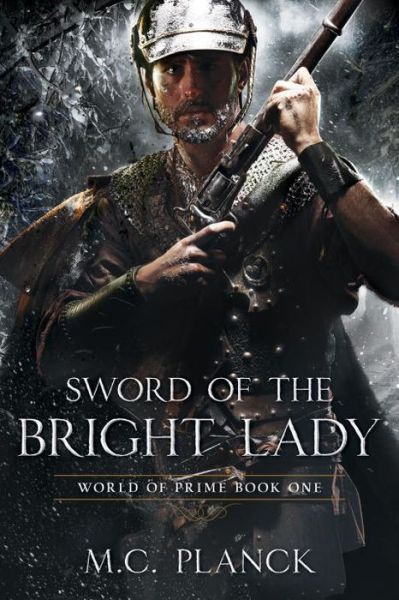
Future Treasures: Sword of the Bright Lady by M.C. Planck

Future Treasures: Sword of the Bright Lady by M.C. Planck

sword-of-the-bright-lady-mc-planck-smallM.C. Planck is the author of The Kassa Gambit, an SF novel released in hardcover by Tor last year. For his second novel, he turns to fantasy, with the tale of a mechanical engineer transported to a world in midst of an eternal war.

Christopher Sinclair goes out for a walk on a mild Arizona evening and never comes back. He stumbles into a freezing winter under an impossible night sky, where magic is real — but bought at a terrible price.

A misplaced act of decency lands him in a brawl with an arrogant nobleman and puts him under a death sentence. In desperation he agrees to be drafted into an eternal war, serving as a priest of the Bright Lady, Goddess of Healing. But when Marcius, god of war, offers the only hope of a way home to his wife, Christopher pledges to him instead, plunging the church into turmoil and setting him on a path of violence and notoriety.

To win enough power to open a path home, this mild-mannered mechanical engineer must survive duelists, assassins, and the never-ending threat of monsters, with only his makeshift technology to compete with swords and magic.

But the gods and demons have other plans. Christopher’s fate will save the world… or destroy it.

Sword of the Bright Lady is the first novel of World of Prime. The conceit of a contemporary hero transported into a fantasy world isn’t used as much as it used to be — obvious examples are John Carter of Mars, The Chronicles of Thomas Covenant, and Joel Rosenberg’s Guardians of the Flame novels — but I still find it an interesting one.

Sword of the Bright Lady will be published by Pyr Books on September 9, 2014. It is 440 pages, priced at $18 in trade paperback and $11.99 for the digital edition.

New Treasures: Tower Lord by Anthony Ryan

New Treasures: Tower Lord by Anthony Ryan

Tower Lord-smallI have a pretty standard routine when I wander the aisles at book stores. It goes like this.

  1. Find a great book I want to read immediately.
  2. Discover it’s the second installment in a series.

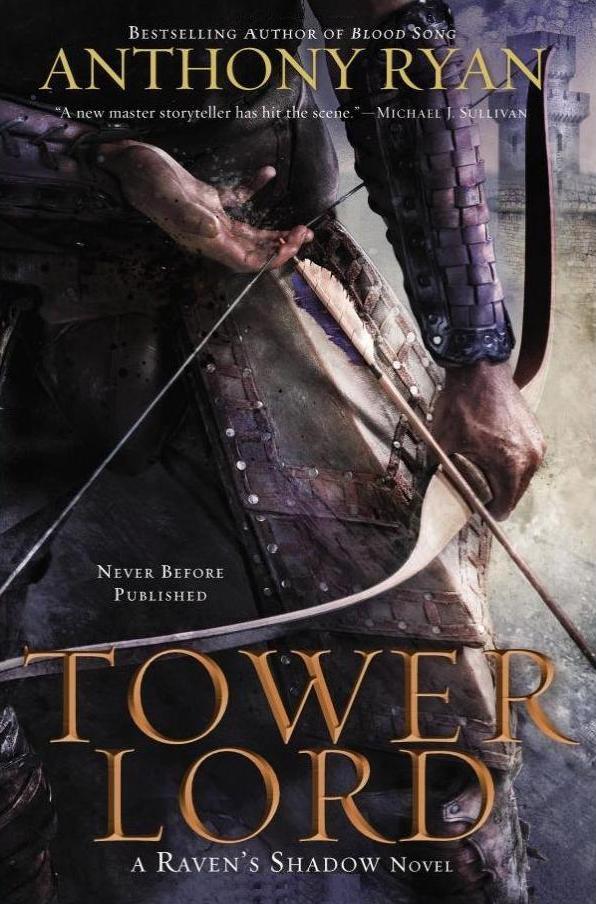
Seriously. Happens every time. Most recently, it happened with Anthony Ryan’s second novel Tower Lord, which drew me in with the title alone (Wait, Tower Lord? Like some guy with no kingdom, just a kick-ass tower? That rocks!) What can I tell you, I’m a man with simple needs.

Vaelin Al Sorna, warrior of the Sixth Order, called Darkblade, called Hope Killer. The greatest warrior of his day, and witness to the greatest defeat of his nation: King Janus’s vision of a Greater Unified Realm drowned in the blood of brave men fighting for a cause Vaelin alone knows was forged from a lie. Sick at heart, he comes home, determined to kill no more. Named Tower Lord of the Northern Reaches by King Janus’s grateful heir, he can perhaps find peace in a colder, more remote land far from the intrigues of a troubled Realm.

But those gifted with the blood-song are never destined to live a quiet life. Many died in King Janus’s wars, but many survived, and Vaelin is a target, not just for those seeking revenge but for those who know what he can do. The Faith has been sundered, and many have no doubt who their leader should be. The new King is weak, but his sister is strong. The blood-song is powerful, rich in warning and guidance in times of trouble, but is only a fraction of the power available to others who understand more of its mysteries. Something moves against the Realm, something that commands mighty forces, and Vaelin will find to his great regret that when faced with annihilation, even the most reluctant hand must eventually draw a sword.

Yup, yup, Darkblades, realms in chaos, weird magic. Whatever. They had me at “Tower Lord of the Northern Reaches.” I’ve been blindly seeking the wrong material possessions my entire life. I don’t even remember what I wanted before I saw this book. All I want now is to be a Tower Lord. I could have my own zip code.

Read More Read More

The Editor As Author: Donald A. Wollheim’s The Secret of the Ninth Planet

The Editor As Author: Donald A. Wollheim’s The Secret of the Ninth Planet

Wollheim2As a publisher and editor, Donald A. Wollheim (1914-1990) is arguably the most important single figure in the 20th-century SF and Fantasy community. SF in paperback? SF anthologies? He started them – including The Pocket Book of Science Fiction, the first book with the words “science fiction” in the title.

Aside: for those who don’t already know, what we now call a “paperback,” used to be called a “pocket book.”

As the editor at Avon (1947-1951), he was responsible for introducing the likes of Lovecraft and Lewis to the mass market. At Ace Books (1952-1971), he created the now legendary Ace Doubles, reintroduced then out-of-print writers such as Edgar Rice Burroughs, and bought the paperback rights to Dune.

He was also responsible for bringing Lord of the Rings to paperback, and thus launching, however controversially, the modern Fantasy publishing world. It’s not my intention to discuss the controversy right now, but you can get a good look at both sides of it here and here.

Considering all this, it’s not surprising that Wollheim isn’t well known as an author – and a fairly prolific one if you remember that he also wrote under seven pseudonyms. So today I’d like to introduce you to The Secret of the Ninth Planet.

Read More Read More

Blogging Sapper’s Bulldog Drummond, Part Three – The Black Gang

Blogging Sapper’s Bulldog Drummond, Part Three – The Black Gang

2940011937965_p0_v1_s260x420BD02-Cover-01The most striking feature of the second Bulldog Drummond thriller by Sapper is the near complete removal of humor from the proceedings compared with the frequent light touch demonstrated with the initial book in the series. There is also precious little mention of the First World War, which was such an important factor in the first book, as the focus here is much more on the reaction against the Russian Revolution and the fear of a similar Communist uprising occurring in Britain during the early 1920s. Once more the influence of Edgar Wallace’s Four Just Men series is strongly felt, particularly in the first half of the book, where the Black Gang are featured anonymously with no mention of their true identities.

Many critics label this second entry in the long-running series as fascist. I suppose that is an understandable reaction to a vigilante storyline in which it is suggested Britain would benefit from modifying freedom of speech to deny protection to political radicals. The Black Gang is very much a Machiavellian work, but one which seeks to restore order at its conclusion by having Hugh Drummond agree to dismantle the Black Gang and let the law sit in judgment over criminals going forward. Of course with such a finale as this, one wonders why Sapper bothered to take the proceedings to such an extreme in the first place.

Read More Read More

Goth Chick News: A Review of The Heavens Rise

Goth Chick News: A Review of The Heavens Rise

Christopher Rice The Heavens Rise-smallIn May, the 2013 Bram Stoker award-winners were announced, creating a nice summer reading list for us genre enthusiasts. The Bram Stoker Awards were instituted in 1987 by the Horror Writers Association and cover eleven literary categories, recognizing “superior achievement” in dark fantasy and horror writing.

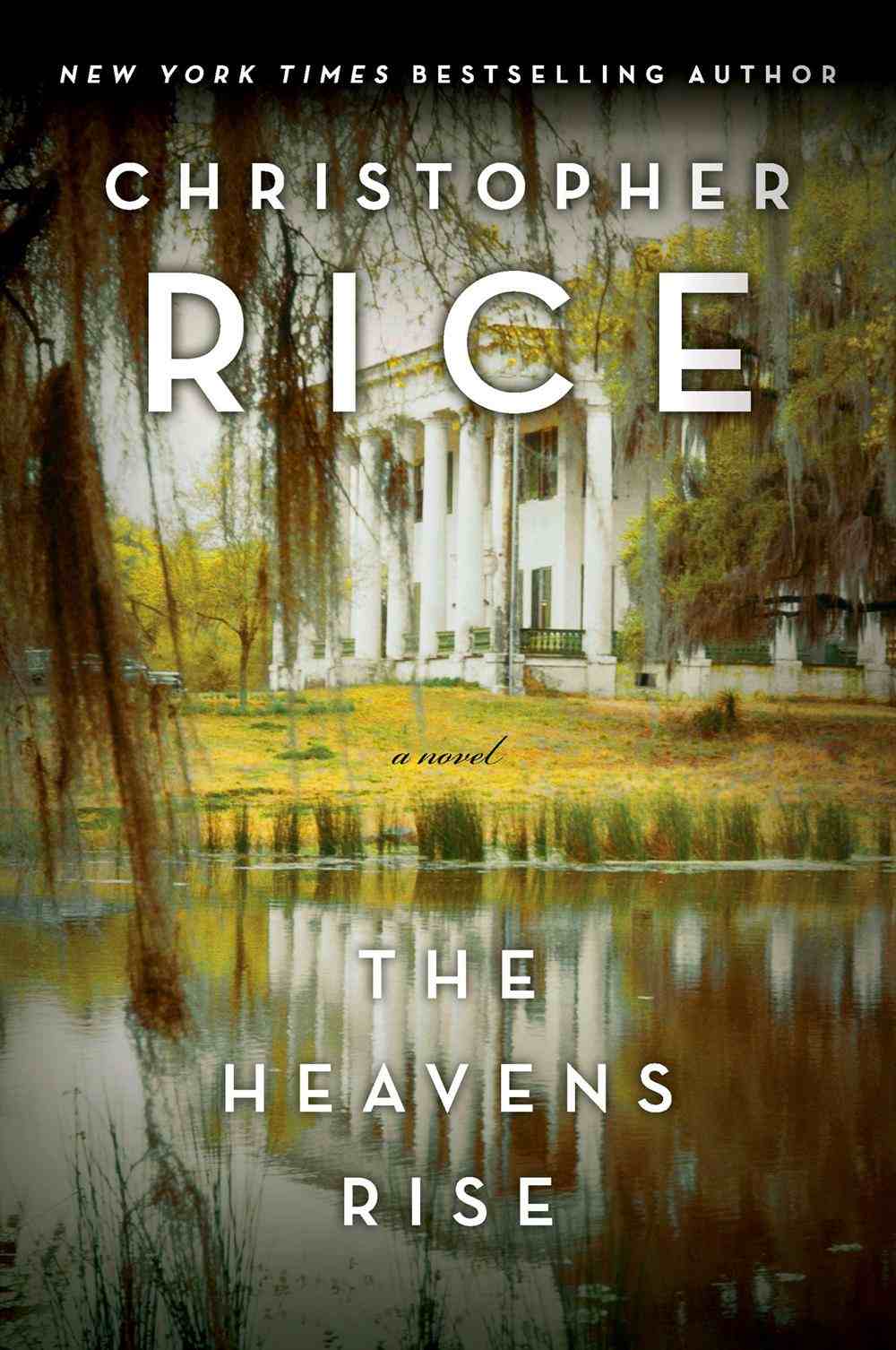
Though he didn’t ultimately win the category “Superior Achievement in a Novel” in which he was a finalist, Christopher Rice’s work The Heavens Rise piqued my interest. I’ve been keeping an eye on Rice since his first novel A Density of Souls appeared back in 2000. He has since published three other New York Times bestselling thrillers, and if his name rings a bell, it’s because he is the son of legendary vampire chronicler Anne Rice.

Honestly, until this year I hadn’t actually read any of Rice’s works end-to-end. I tried because I wanted to like him, probably due to spending so many hours with his mom’s books. But like many new, young authors finding their story-telling voices (Rice first published at 22 years of age), he often went over the top with his characters and plot lines.

He hadn’t yet learned to trust his readers, and allow their imaginations to immerse them in the story and fill in the tiny details. Instead, I found Rice’s self-indulgence, generalizations, and in-your-face descriptions made me feel like I was riding along on a story he was telling himself, rather than pulling me into a tale he was telling me.

The Heavens Rise marks a different direction for Rice. It’s his first foray into supernatural suspense. Perhaps because it is difficult to over-describe something you’ve never witnessed, his writing style has shown a marked evolution, helped along no doubt by interaction with his audience via his blog and weekly radio show. The upshot is that his style has become more confident and more interactive, which means it was time for me to tuck in and read one of his tales cover to cover.

Read More Read More

Vintage Treasures: Stephen E. Fabian’s Ladies & Legends

Vintage Treasures: Stephen E. Fabian’s Ladies & Legends

Stephen Fabian Ladies and Legends-thumbI brought home two boxes of treasures from the 2014 Windy City Pulp & Paper show in April. I’ve been very happy with my various finds, which included a rich assortment of eye-catching pulps, vintage paperbacks, classic anthologies, and hard-to-find fanzines and magazines. I’ve covered some of the more interesting items here in the past few months.

But I’ve saved the best for the last: a luscious collection of black and white artwork from one of my all-time favorite artists, Stephen E. Fabian.

A few years ago, Scott Taylor asked me to provide my list of nominees for his Top 10 Fantasy Artists of the Past 100 Years and I had Fabian right near the top, along with Wally Wood and Al Williamson. (None of those three made the list. Go figure.)

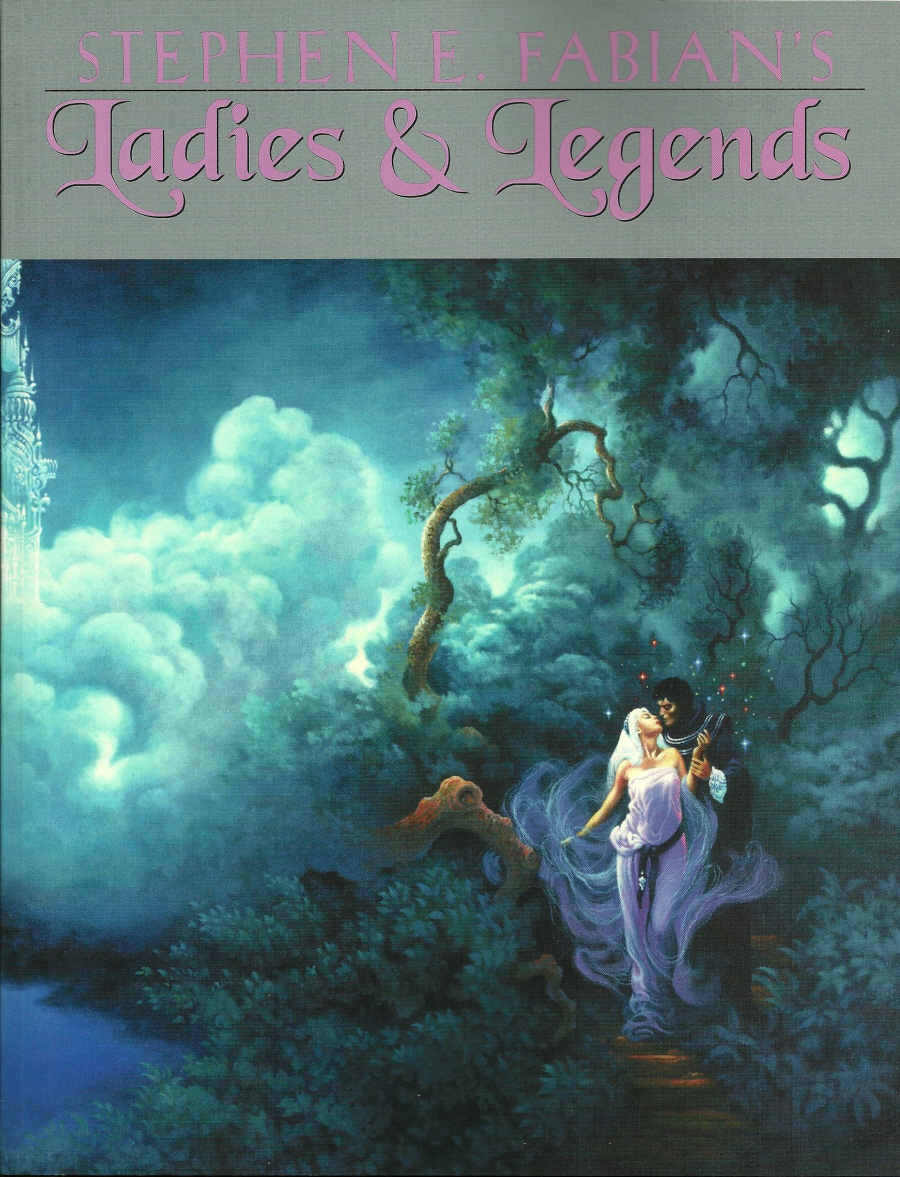
Stephen Fabian is one of the great craftsmen in all of fantasy. It’s not merely his command of the medium and his consummate technical skill… his art is genuinely beautiful (a characteristic I frequently find lacking with some of his contemporaries). Fabian has an unerring eye for composition, perfectly positioning his knights, mermaids, and grave robbers among moonlit ruins, floating fairy castles, and more imaginative settings.

He’s equally at home with humor, action, and horror, and all are on display in Stephen E. Fabian’s Ladies & Legends. He’s frequently at his best with pen and ink drawings, as he is here. This is a gorgeous book and, like the best fantasy artwork, it will set your imagination soaring.

Warning — some adult content ahead.

Read More Read More

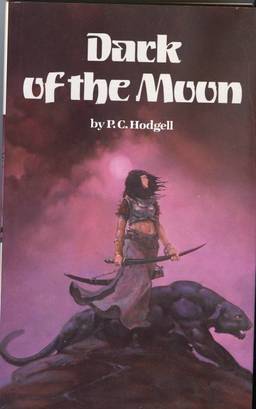
Dark of the Moon by P. C. Hodgell

Dark of the Moon by P. C. Hodgell

“Just once, why can’t we have a simple crisis?”

Jame from Dark of the Moon

oie_21182141KKAZmv94P. C. Hodgell’s Dark of the Moon (1985), a swift-paced dual narrative of twins Jame and Tori Knorth, is the sequel to her awesomely-amazing-why-haven’t-you-read-it-yet first novel, God Stalk (see my Black Gate review here). Jame, heroine of the first book, is racing into the west to find her brother while Tori, High Lord of the Kencyrath, is racing south to bring his army to bear on a threat that could destroy the world.

Hodgell wrote God Stalk as an introduction for her heroine Jame and to be sure she could write a full-length novel. To ease readers into the complex and madly elaborate world of Rathilien, she set it in the deliberately Leiberesque city of Tai-Tastigon. Like Leiber’s S&S, Hodgell’s moves easily from the grim to the funny and back without dissonance in an intimately scaled, fantastical urban playground.

But Hodgell had already planned a story of vaster scope about Jame and the Kencyrath which is only hinted at in God Stalk. The Kencyrath were bound to their god in order to fight Perimal Darkness, the embodiment of evil and chaos, and had been waging that battle for millennia. The war and the consequential flight of the Kencyrath to the world of Rathilien is always lurking beneath the surface of the story, but it’s never the driving force, the focus being on Jame’s adventures and efforts to understand the true nature of the world’s gods.

With Dark of the Moon, Hodgell and Jame leap out of the familiar shallows of Tai-Tastigon and its plethora of cults, sects, and secret societies, into the depths of full-blown epic fantasy. The ages-long struggle against Perimal Darkness moves to center stage and Jame emerges as possibly the most important figure in the war.

I’ve read that some fans of God Stalk were put off by the epic scale of Jame’s new adventure. I admit that in 1985, when I first read DotM, I was a little disappointed when I realized that Tai-tastigon was fading behind her, but within a few pages Hodgell had me hooked. High in a snowy mountain pass, Jame and her companions are confronted by something like a nasty pack of wolverines, a shapechanging enemy out of legend, and wonderfully miscast magic. This book charges into motion and never lets up. This is my fifth or sixth reread of this book and it thrills every time.

Read More Read More