Browsed by
Category: Books

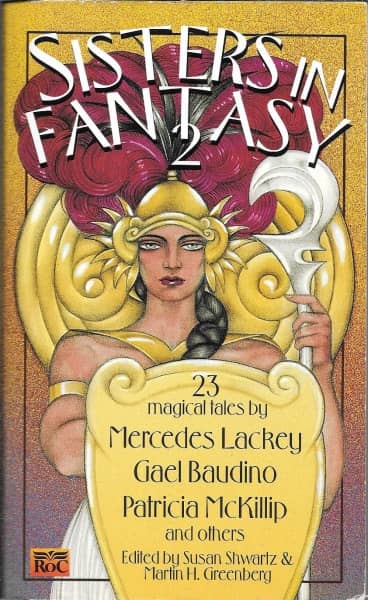
Birthday Reviews: Mercedes Lackey’s “A Different Kind of Courage”

Birthday Reviews: Mercedes Lackey’s “A Different Kind of Courage”

Cover by Richard Hescox

Mercedes Lackey was born on June 24, 1950.

Lackey has been nominated for the Lambda Award three times, winning for her novel Magic’s Price in 1991. Her novel The Ship Who Searched, written in collaboration with Anne McCaffrey, was nominated for the Seiun Award and her novel The Fire Rose was nominated for the Sapphire Award. In addition to her collaborations with McCaffrey, she has also collaborated with Joseph Sherman, Ru Emerson, and Mark Shepherd on the Bard’s Tale series, with Ellen Guon and Rosemary Edghill on the Bedlam Bard series, with husband Larry Dixon, Holly Lisle, Cody Martin, and Roberta Gellis on the SERRAted Edge series. Other collaborators include Dave Freer, Eric Flint, Andre Norton, Marion Zimmer Bradley, James Mallory, C.J. Cherryh, and others.

“A Different Kind of Courage” was Lackey’s first sale and originally appeared in Free Amazons of Darkover, a shared world anthology set in Marion Zimmer Bradley’s world of Darkover and edited by Bradley in 1985. The story was reprinted by Steven H Silver and Martin H. Greenberg in Magical Beginnings, an anthology of the first stories by various fantasy authors. In 1988, “A Different Kind of Courage” was translated for the German publication of Freie Amazonen von Darkover.

Rafi is an outcast, someone who doesn’t fit in anywhere and has failed at everything she has tried to do. After she was ejected from training as a Keeper, her father planned to marry her off to Lord Dougal, who has a reputation for having his wives killed. Rather than marry Dougal, she runs away and joins the Free Amazons, where she quickly discovers she has neither the strength, stamina, nor ability to be successful. Her partial training as a Keeper, however, causes her to be sent on a mission with Caro and Lirella, neither of whom want to be saddled with her. One evening, they sent her out to gather firewood, a task she also fails.

Upon returning to her companions, she finds that they have been attacked and, although they have defeated their attackers, both have horrible wounds. Rafi does what she can for them, overcoming her fear of their pack animals to use them to drag the women inside where she treats their wounds and keeps them warm. She also uses her Keeper training to reach out to seek additional help. She does what she can through the night, but by the time help arrives, Rafi is, herself, on the verge of death.

Read More Read More

The End of an Era: The Year’s Best Science Fiction: Thirty-Fifth Annual Collection, edited by Gardner Dozois

The End of an Era: The Year’s Best Science Fiction: Thirty-Fifth Annual Collection, edited by Gardner Dozois

The Year’s Best Science Fiction Thirty-Fifth Annual Collection-small The Year’s Best Science Fiction Thirty-Fifth Annual Collection-back-small

We lost Gardner Dozois last month. It was a terrible blow to the field. I’ve seen plenty of somber discussion among fans about whether or not Gardner was the finest editor science fiction has ever seen, and there’s no doubt in my mind he’s in the running.

Gardner devoted his entire career to science fiction, and his accomplishments were extraordinary. He won the Hugo Award for Best Professional Editor 15 times during his 19-year tenure at Isaac Asimov’s Science Fiction Magazine. Nineteen years is an amazing run, but it’s barely half the 35 years he spent as editor of The Year’s Best Science Fiction, the de facto SF yearbook. I read the sixth volume in 1989 and I’ve looked forward to every one ever since.

The last volume will be published in less than two week, and its publication is bittersweet. It’s not the final book we’ll have from Gardner. His huge fantasy anthology The Book of Magic — with brand new stories by George R.R. Martin, John Crowley, Tim Powers, Scott Lynch, Eleanor Arnason, Garth Nix, Ysabeau Wilce, Liz Williams, Kate Elliott, and many others — is coming in October, and The Very Best of the Best: 35 Years of The Year’s Best Science Fiction is scheduled to be published in February. But the arrival of the final Dozois Year’s Best is very definitely the end of an era.

There will never be another editor like him. Cherish this book while you can.

Read More Read More

Birthday Reviews: Eileen Gunn’s “Thought Experiment”

Birthday Reviews: Eileen Gunn’s “Thought Experiment”

Cover by Jeremy Geddes

Eileen Gunn was born on June 23, 1945.

Gunn’s story “Stable Strategies for Middle Management” was nominated for a Hugo Award in 1989 and the next year she received a Hugo nomination for “Computer Friendly.” Her collection Stable Strategies and Others, which included original works, was nominated or shortlisted for the Philip K Dick Award, the James Tiptree, Jr. Memorial Award, and the World Fantasy Award. Two original stories from the collection, “Nirvana High,” written with Leslie What, and “Coming to Terms” were nominated for the Nebula Award, with “Coming to Terms” winning the 2005 Nebula Award for Best Short Story.

Gunn published “Thought Experiment” in Jonathan Strahan’s 2011 anthology Eclipse Four: New Science Fiction and Fantasy. She subsequently included it in her collection Questionable Practices and Paula Guran selected the story for the anthology Time Travel: Recent Trips.

Ralph Drumm is an engineer given to performing the sort of “Thought Experiment” the story is named for. While sitting in a dentist’s chair having his teeth whitened, Drumm begins to muse on a way to achieve time travel and after returning home turns his thought experiment into a reality.

The story follows Drumm as he sight-sees through three different periods, a Wessex in the mid-fifteenth century where the inhabitants seem to speak a version of Anglo Saxon, a visit to Bethel, New York to see Woodstock in 1969, and to Washington, D.C. on April 15, 1865 to witness the assassination of Abraham Lincoln. For the most part, Drumm is only a witness to these events, although he senses hostility towards him on his repeated trips to Wessex, each spaced a year apart so he won’t have to worry about running into himself.

Gunn does bring up the idea of Drumm’s interference with history, not only when he tries to warn Lincoln about Booth’s impending assassination attempt, but on a more subtle level, simply by existing in times when he shouldn’t have. Gunn’s early description of Drumm as the first time traveler also foreshadows the possible existence of other, later time travelers.

Read More Read More

Birthday Reviews: Octavia E. Butler’s “The Book of Martha”

Birthday Reviews: Octavia E. Butler’s “The Book of Martha”

Cover by Barry D. Marcus

Octavia E. Butler was born on June 22, 1947 and died February 24, 2006.

Butler earned a Hugo Award in 1984 for her short story “Speech Sounds.”  In 1985 her novelette “Bloodchild” received both the Hugo and the Nebula Award. She received a second Nebula Award in 2000 for the novel Parable of the Talents. In 2010 she was posthumously inducted into the Science Fiction Hall of Fame. She received the SFWA’s Solstice Award in 2012. Kindred: A Graphic Novel Adaptation, based on her 1979 novel Kindred, earned her and Damian Duffy a Bram Stoker Award in 2018. She had several other award nominations as well.

Butler’s sold “The Book of Martha” to Ellen Datlow for publication in SciFiction on May 21, 2003. David G. Hartwell and Kathryn Cramer picked the story up for Year’s Best Fantasy 4 the following year and in 2005, Butler included it in the second edition of her story collection Bloodchild and Other Stories. It was reprinted by Marleen S. Barr in Afro-Future Females: Black Writers Chart Science Fiction’s Newest New Wave Trajectory, published by Ohio State University Press and finally in Peter S. Beagle’s anthology The Secret History of Fantasy.

One of the questions theologians argue with regard to God’s nature is why an omnipotent and benevolent God would permit evil in the world. In “The Book of Martha,” Octavia E. Butler explores that question in a dialogue between Martha, an African-American writer, and God, who has summoned her to allow Martha to make a single change to humanity in an attempt to improve it.

Among the givens of Butler’s world is that God is insistent that humans have free will. Because of this, God’s omniscience doesn’t exist. When Martha asks God to help her model behavior based on her change, he can advise based on experience (and possibly earlier similar experiments), but God claims not to know the consequences for sure.

The discussion not only explores the law of unintended consequences, but also takes on what qualities a leader should have. Martha was chosen for the job not only because of her life experiences, but also because she cares about people and is worried that she might inadvertently cause harm. When Martha raised the question of creating a Utopiean society, the conversation turns to deconstructing what a Utopia would actually entail.

Read More Read More

Goth Chick News Reviews Stephen King’s The Outsider

Goth Chick News Reviews Stephen King’s The Outsider

Stephen King The Outsider-small Stephen King The Outsider UK-small

If it seems like I’ve been talking about Stephen King a lot lately, you’re right. King has experienced a significant renaissance over the last few years, not only cranking out quite a lot of fresh new stories but seeing his work both old and new getting treatments for the large and small screen.

The Book Hub recently tallied up all the King tales about to be part of your entertainment lineup.

Movies

  • It: Part 2
  • Revival
  • Pet Sematary
  • Firestarter
  • Hearts in Atlantis
  • My Pretty Pony
  • Doctor Sleep
  • Drunken Fireworks (based on the short story from The Bazaar of Bad Dreams)
  • The Talisman
  • The Stand

Read More Read More

Traveller Resources Without Dice #1: The Travel Survival Guide by Lloyd Figgins

Traveller Resources Without Dice #1: The Travel Survival Guide by Lloyd Figgins

Travel Survival Guide
How travel works beyond the developed world

“That moment when you realise some of the people you follow on Twitter are Traveller characters…”

We’d been chatting about buying a second hand (deactivated) Bren Gun. (I once nearly impulse bought one, but ended up saving the money to spend on swords and armour like most if the other responsible adults I knew.) This led to a consensus that fair fights are bad. Then @wandering_andy tweeted:

30 years, mostly in the crappier parts of the world has developed what I would like to be my new family motto;
‘If you find yourself in a fair fight, you got your strategy wrong’

Not as catchy as the current one I guess… but more realistic

Intrigued, I clicked through to his profile and found:

Listening – Watching – Advising. Covert Intelligence, Security Adviser to UHNWI & Trainer

Yep, from that and his tweets,  he’s a British veteran turned security contractor. Up until this point I’d mostly been interacting with gamers and writers who only play at this sort of thing. Hence my tweet.

That moment when you realise some of the people you follow on Twitter are Traveller characters…

Guess what Andy tweeted back?

Free Trader Beowulf…

Why didn’t I use that as my twitter name!!!

A tingle went down my spine. Marc Miller’s immortal text:

This is Free Trader Beowulf, calling anyone… Mayday, Mayday… we are under attack… main drive is gone… turret number one not responding… Mayday… losing cabin pressure fast… calling anyone… please help… This is Free Trader Beowulf… Mayday….

Somebody out there who had rolled the dice was now walking the walk.  A very odd feeling.

Read More Read More

Robots! Spies! The Toronto Star on the Best New Science Fiction Books

Robots! Spies! The Toronto Star on the Best New Science Fiction Books

The Robots of Gotham McAulty-small Gate-Crashers-Patrick-S-Tomlinson-medium The Book of M-small

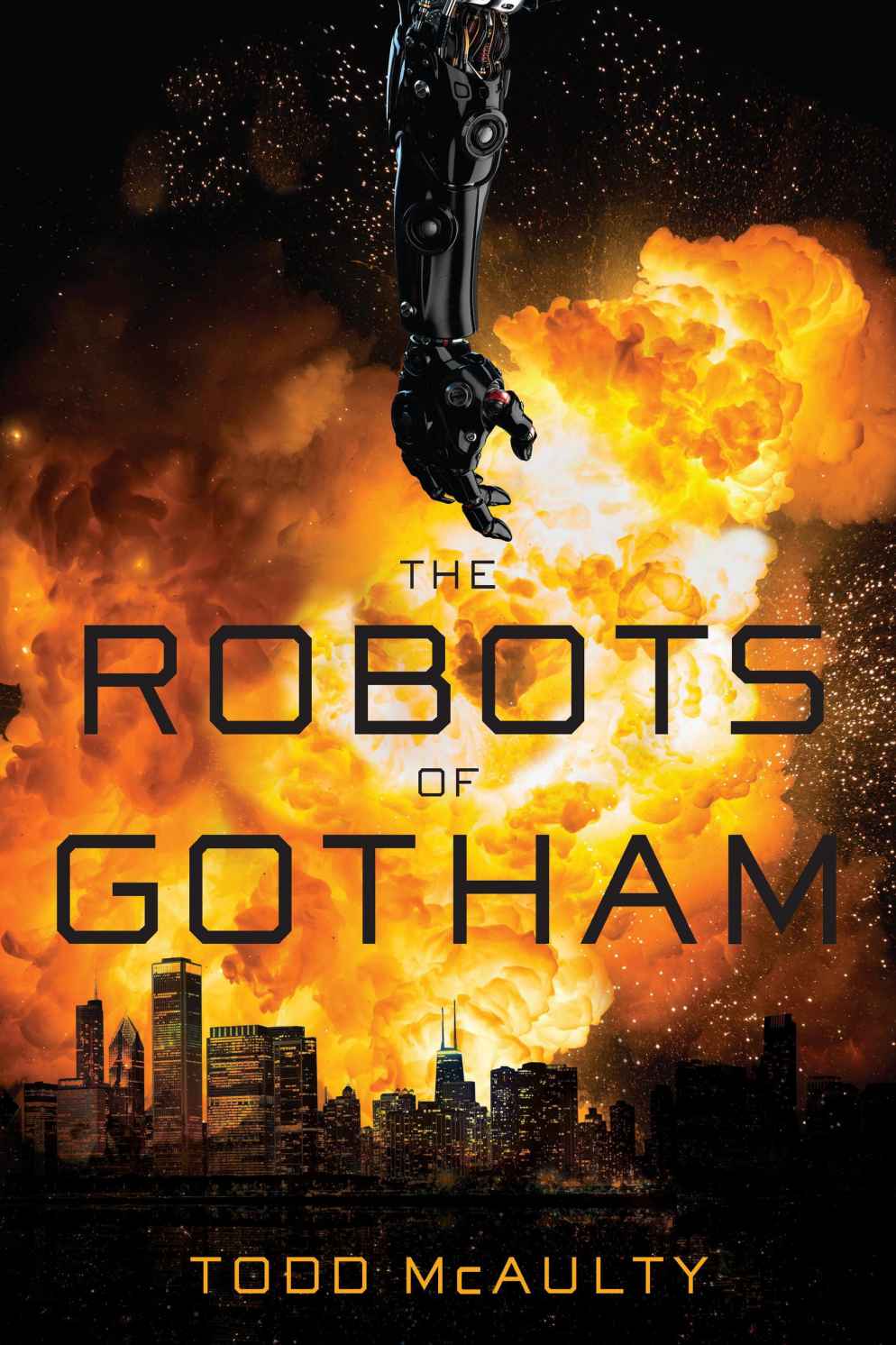
Last Friday the Toronto Star selected the Best New Science Fiction Books of the summer, and it’s an auspicious list: four new novels by Todd McAulty, Patrick S. Tomlinson, Peng Shepherd, and Hannu Rajaniemi. At the top of the list is The Robots of Gotham by Todd McAulty, released Tuesday by Houghton Mifflin Harcourt.

SF fans rejoice! Your summer beach reading has arrived. Todd McAulty’s debut novel is a massive, fast-paced, action-packed epic… with robots!

Lots of robots. In the year 2083 the world’s geopolitical order has been shaken up by the rise of sentient machines, with many countries now being ruled by godlike sovereign AIs, and robots of all different shapes, sizes and functionality rubbing shoulders in the streets with humans.

Canadian tech entrepreneur Barry Simcoe is visiting Chicago, which is now part of an occupied zone governed by a Venezuelan-led consortium of powers, when he gets sucked into a complicated web of plots and counterplots that lead all the way to the top of the global machine hierarchy, with the fate of humanity hanging in the balance.

Even more than the fascinating and fully realized world it presents, what makes The Robots of Gotham such a great ride is its sheer narrative drive. Every page has the fierce readability of early Neal Stephenson, which is as high praise as it gets. Enjoy the summer.

Read the first chapter of The Robots of Gotham at The Portalist, and see the complete list of Best New Science Fiction Books here.

Black Gate Book Club, Downbelow Station, Third Discussion

Black Gate Book Club, Downbelow Station, Third Discussion

Welcome to the second round of discussion on C.J. Cherryh’s classic 1981 novel Downbelow Station. New to the program? Check out the first and second rounds. We lose Chris on this one, perhaps a casualty of a bad Jump from the Beyond. Fletcher and myself carry the standard of the Black Gate Book Club as best we can!

Adrian S.

DBS5

Third round! And it is appropriate that I just started book 3 of DbS.  I’m on page 190, so I have surpassed my previous record of 169.

What can I say at this point? Well, my guess that conspicuously-absent Admiral Mazian was, in fact, behind the destruction of several company/neutral stations has borne out to be true!  I guess the big game is to try to force the Union to take control of these damaged stations and spread themselves too thin?  And to put all their resources at a station called Viking—the only 100% working station in Union space, I guess?  And to attack/destroy/cripple it and thus break the Union.

Of course, Union seems to be playing the same trick — forcing the refugees all to Downbelow Station, which has now become the one 100% working station in Company space.

So that’s what the power-players are doing, and everyone else is just running around between their feet.

I like how Cherryh illuminates parts of the plot, then occludes other parts. The sudden retreat of Mazian’s fleet from the Viking attack — was it due to Ambassador Ayer’s orders, or some other factor?

But again, I have to say that Jon Lukas, who does the right things for the wrong reasons, is still coming off as one of the only active people in the book. Honestly, how hard is it to get on the goddam PA system and say “Yes, the fleet is coming, no we are not all gonna die, keep calm and carry on.” Hard enough that only Jon Lucas can do it and keep Downbelow Station from tearing itself apart in a panic!

Satin, the Downer now working on Downbelow Station, is also active in that she is following her vision-quest thing regardless of what the older Downers and the Lukas-men and everyone else thinks.

Read More Read More

Explore the Vast and Mysterious Universe in The Final Frontier, edited by Neil Clarke

Explore the Vast and Mysterious Universe in The Final Frontier, edited by Neil Clarke

The Final Frontier Neil Clarke-smallNeil Clarke is the editor of the acclaimed Clarkesworld magazine, as well as the Best Science Fiction of the Year series from Night Shade Books, now in its third year. He also dabbles in themed anthologies, and they have been excellent. They include Galactic Empires and a splendid collection of robot stories, More Human Than Human.

His anthologies pretty rigorously exclude any classic SF, and in fact tend to focus almost exclusively on stories published after 2002 (which I assume is when he began reading the magazines regularly). This laser focus on modern writers makes him almost unique among modern genre anthologists and — for me at least — means that his books have been an invaluable tool for discovering great new writers. If, like me, your exposure to science fiction skews pretty heavily towards the 20th Century, Neil’s fine books may be just the antidote you need to bring you up to date on where SF is headed today.

So I was very excited to see Night Shade announce a brand new reprint anthology from Neil. The Final Frontier arrives in three weeks and includes tales from Nancy Kress, Ken Liu, James Patrick Kelly, Carrie Vaughn, Peter Watts, Greg Egan, Vandana Singh, Michael Swanwick, Tobias S. Buckell, and many others. Here’s the description.

The vast and mysterious universe is explored in this reprint anthology from award-winning editor and anthologist Neil Clarke (Clarkesworld magazine, The Best Science Fiction of the Year).

The urge to explore and discover is a natural and universal one, and the edge of the unknown is expanded with each passing year as scientific advancements inch us closer and closer to the outer reaches of our solar system and the galaxies beyond them.

Generations of writers have explored these new frontiers and the endless possibilities they present in great detail. With galaxy-spanning adventures of discovery and adventure, from generations ships to warp drives, exploring new worlds to first contacts, science fiction writers have given readers increasingly new and alien ways to look out into our broad and sprawling universe.

The Final Frontier delivers stories from across this literary spectrum, a reminder that the universe is far large and brimming with possibilities than we could ever imagine, as hard as we may try.

Here’s the complete Table of Contents.

Read More Read More

Future Treasures: Gate Crashers by Patrick S Tomlinson

Future Treasures: Gate Crashers by Patrick S Tomlinson

Gate Crashers Patrick S Tomlinson-smallPatrick S. Tomlinson’s debut novel was The Ark, a murder mystery set on a generation ship just before it arrived at its destination. Publishers Weekly called it “Impressive,” saying “Tomlinson’s pacing is beyond reproach, as he deftly crafts an ever more elaborate web of intrigue within the self-contained setting.” The Ark was published by Angry Robot, and it became the opening book in the Children of a Dead Earth trilogy, which wrapped up last year.

Tomlinson’s newest book arrives next week, and it looks like a standalone novel — an easier bite to chew if your reading time is as precious as mine this month. Joel Cunningham at the Barnes & Noble Sci-Fi & Fantasy Blog says “Gate Crashers is a story of space exploration and humanity’s first contact with aliens, plus a healthy dose of irreverent humor.”

The only thing as infinite and expansive as the universe is humanity’s unquestionable ability to make bad decisions.

Humankind ventures further into the galaxy than ever before… and immediately causes an intergalactic incident. In their infinite wisdom, the crew of the exploration vessel Magellan, or as she prefers “Maggie,” decides to bring the alien structure they just found back to Earth. The only problem? The aliens are awfully fond of that structure.

A planet full of bumbling, highly evolved primates has just put itself on a collision course with a far wider, and more hostile, galaxy that is stranger than anyone can possibly imagine.

Gate Crashers will be published by Tor Books on June 26, 2018. It is 416 pages, priced at $18.99 in trade paperback and $9.99 for the digital edition. The cover art is uncredited. Read Chapter One here.

See all our recent coverage of the best upcoming SF & fantasy here.