Browsed by
Category: Books

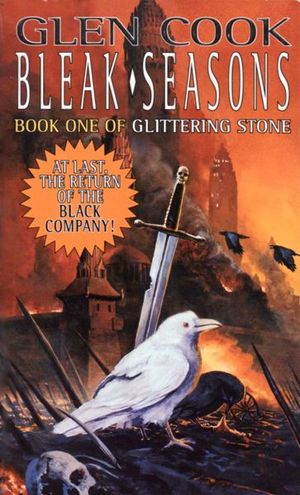
On to Khatovar: Shadow Games by Glen Cook

On to Khatovar: Shadow Games by Glen Cook

oie_193232fSIKM2J0If the previous book, The Silver Spike, told of endings, Shadow Games (1989) is about beginnings.

Picking up at the end of The White Rose (and taking place at the same time as The Silver Spike), Croaker, newly elected captain of the Black Company, decided he and any remaining members would return to Khatovar. With only six soldiers and Lady, it’s the only thing Croaker can think of doing: return the Company to its home. Unfortunately, neither Croaker nor anybody else knows precisely where Khatovar is (other than two continents away to the south) nor what it is. The Company’s annals describe it as one of the Free Companies of Khatovar, but the volumes from the first of the Company’s four centuries of existence were lost somewhere along the way. Trouble magnet that it is, and with a lost history brimming with evil deeds, the Black Company is certain to have a difficult path to Khatovar.

Shadow Games is the fifth of The Black Company books I’ve revisited, and so far my favorite. I suspect some will cry “Heretic!” So be it. Again be warned, there be spoilers below.

Even more than in the earlier books, Croaker is the lead character. As Captain, it’s he who is now responsible for the Company’s actions. Before, he was only an observer of the goings on of great men and women, now he is one of them. Cook presents him as the same snarky romantic from the previous volumes, but now he’s constrained by his position as the face and brains of the Company. The reader also gets to see the various levels of military preparation, only alluded to before, that go on in the Black Company.

As given to introspection as he’s always been, several of Croaker’s ruminations are deeper, and underline his separation from the world beyond the Company.

I ordered a day of rest at the vast caravan camp outside the city wall, along the westward road, while I went into town and indulged myself, walking streets I had run as a kid. Like Otto said about Rebosa, the same and yet dramatically changed. The difference, of course, was inside me.

I stalked through the old neighborhood, past the old tenement. I saw no one I knew — unless a woman glimpsed briefly, who looked like my grandmother, was my sister. I did not confront her, nor ask. To those people I am dead.

A return as imperial legate would not change that.

Something Croaker has mentioned several times over the series is that the Company is constantly changing. At one point in past centuries, the men of the Black Company were actually all black. By the time of the original trilogy, the only such member is One-Eye. As Croaker and friends go south, they slowly enroll new members. The greatest find are the Nar in the city of Gea-Xle. They are the descendants of members of the original Company who put the city’s reigning dynasty in power and stayed on as a hereditary caste of warriors. Croaker describes their leader, Mogaba, as the “the best pure soldier” he ever met. Gradually, Croaker builds on his pitiful remnant and something resembling a real fighting force, able to at least protect itself from the dangers of the road, is reborn.

Read More Read More

Bloody Court Intrigue: Ash Princess by Laura Sebastian

Bloody Court Intrigue: Ash Princess by Laura Sebastian

Ash-Princess-smallTheodosia just wants to survive.

Ten years ago, the Kaiser’s forces invaded and slit her mother the Queen’s throat. Theo’s been the Kaiser’s prisoner ever since. She tries to forget she was once heir to the throne, rather than a princess of nothing but ashes. She tries to forget the magical powers the old gods used to give humans, now that their temples lie in ruins. She tries to forget that her best friend’s father was the one who murdered her mother.

Whatever it takes to survive, Theo does. As long as she doesn’t look at her countrypeople, she won’t have to see their suffering. As long as she censors her speech, her three Shadows won’t guess what she really thinks. As long as she does whatever the Kaiser wants, he’ll keep her alive. Someday, one of the rebels will save her.

But ten years of playing it safe, of hiding and assimilating, come to an abrupt end in the opening chapter of Ash Princess.

It all starts when the Kaiser sends for her. The only time he ever does that is when he’s going to punish her. It doesn’t matter that Theo hasn’t misbehaved. The Kaiser whips her in public whenever he catches a rebel.

This time, he’s caught the head of all the rebels, the one she always dreamed would lead her rescue – her father.

And this time, the Kaiser commands Theo to kill her father in order to prove her loyalty.

Read More Read More

Steampunk Critical Mass: The Signal Airship Novels by Robyn Bennis

Steampunk Critical Mass: The Signal Airship Novels by Robyn Bennis

The Guns Above-small By Fire Above-small

Last year Tor published The Guns Above, the first installment in Robyn Bennis’ Signal Airship military fantasy series, and Ann Aguirre called it “Marvelous, witty and action-packed steampunk… she honest to God made me believe you could build an airship from spare parts.” I’ve gotten pretty jaded towards author blurbs over the years, but I gotta admit that one piqued my interest.

It was hardly the only good press the book received. Liz Bourke at Tor.com labeled it “immensely entertaining, fast-paced adventure,” and Patricia Briggs said it was “full of sass and terrific characters.” That all sounded pretty compelling, but I’m a guy who likes to have a couple of installments at hand before I dive into a new adventure series. So I was pleased to see By Fire Above arrive right on time last month. Here’s the description.

“All’s fair in love and war,” according to airship captain Josette Dupre, until her hometown of Durum becomes occupied by the enemy and her mother a prisoner of war. Then it becomes, “Nothing’s fair except bombing those Vins to high hell.”

Before she can rescue her town, however, Josette must maneuver her way through the nest of overstuffed vipers that make up Garnia’s military and royal leaders in order to drum up support. The foppish and mostly tolerated Mistral crew member Lord Bernat steps in to advise her, along with his very attractive older brother.

Between noble scheming, under-trained recruits, and supply shortages, Josette and the crew of the Mistral figure out a way to return to Durum ― only to discover that when the homefront turns into the frontlines, things are more dangerous than they seem.

Now that the series has reached critical mass (well, two books), it has a lot more appeal, and I’ll clear away some time this summer to give it a try. By Fire Above was published by Tor Books on May 15, 2018. It is 368 pages, priced at $26.99 in hardcover and $13.99 for the digital version. We covered The Guns Above here.

Birthday Reviews: Andrew Weiner’s “Bootlegger”

Birthday Reviews: Andrew Weiner’s “Bootlegger”

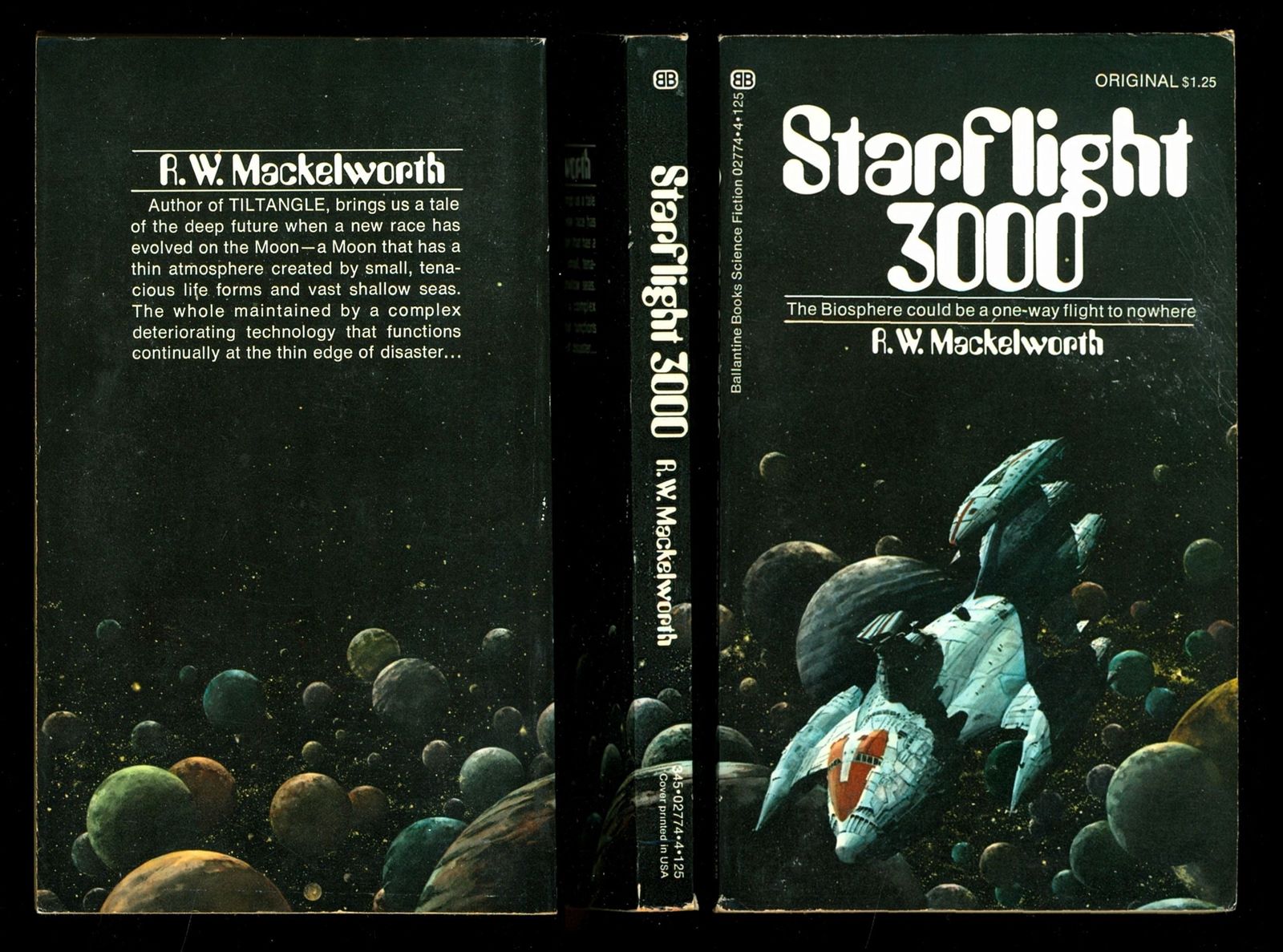
Cover by Joyce Kline

Andrew Weiner was born on June 17, 1949.

Weiner’s story “The Third Test” was nominated for the British SF Association Award. He has also been nominated for the Aurora Award three times, for the original story “Station Gehenna” (which he expanded to a novel), “Eternity, Baby,” and “Seeing.”

“Bootlegger” was published in 1997 by Robert J. Sawyer and Carolyn Clink in the anthology Tesseracts6. The story has not been reprinted.

“Bootlegger” tells the story of Marshall Baron, a washed up musician who discovers that there are CDs being circulated that purport to be bootlegs of some of his early music. The problem is that he knows that he never recorded or wrote the songs that are on the albums, although voice analysis claims they are by him. He has Alderman, one of his agents, try to find the source of the bootlegs so they can figure out what is happening.

Alderman’s investigations lead him to Greenspan, a fan of Baron’s who has written several gossipy books about the singer. Although Baron wants nothing to do with the man, whom he considers a crank, Greenspan will only reveal his source of the bootlegs to Baron, nobody else. Greenspan’s revelation is that he has access to another world where Baron’s career had a different, more successful, trajectory. He feels that Baron could still make a difference in their own world, spark the revolution that his early music promised, although Baron disagrees, feeling that the revolution has passed.

Greenspan is not only a fan of Baron’s work, but also jealous of him and something of a radical. If Baron isn’t going to use his talents to make the world a better place, Greenspan is going to use his ability to access other worlds to create the world that he feels is necessary, even if it means taking Baron away from everything that he has achieved. Greenspan’s plans work within the context of the story, although when fully explored, there were other, less disruptive options he could have chosen.

Read More Read More

Gods and Robots: Booklist‘s Best New Books Include Starless and The Robots of Gotham

Gods and Robots: Booklist‘s Best New Books Include Starless and The Robots of Gotham

Starless Jacqueline Carey-small The Robots of Gotham McAulty-small

The good folks at Booklist, the flagship publication of the American Library Association, regularly select the Best New Books, and this week two genre releases made the cut: Jacqueline Carey’s Starless, which “may well be the epic fantasy of the year,” and Todd McAulty’s debut The Robots of Gotham, which they proclaim is “thrilling, epic SF.”

John Keogh’s starred review of The Robots of Gotham appeared online this week:

Machine intelligences rule most of the world, human governments are rapidly losing their power, a war-ravaged U.S. is on the brink of descending into chaos, and a mysterious new plague is on the loose. In Chicago, one man finds himself at the nexus of a complex web of secrets that threatens to upend the world as we know it. This debut novel beautifully combines a postapocalyptic man-versus-machine conflict and a medical thriller. The world is immersive and detailed, the characters have depth, the writing is assured, the plotting intelligent, and the pacing about perfect. McAulty’s take on how AI might evolve gives the premise a unique twist. The story is action-packed, starting with a boom (literally) and driving you along from one crisis to the next. The action rarely lets up, yet it never becomes tiresome… This is thrilling, epic sf.

And here’s a snippet from Diana Tixier Herald’s review of Starless.

Read More Read More

In 500 Words of Less: Early Review of Rejoice: A Knife to the Heart by Steven Erikson

In 500 Words of Less: Early Review of Rejoice: A Knife to the Heart by Steven Erikson

Rejoice A Knife to the Heart US-smallRejoice: A Knife to the Heart
By Steven Erikson
Promontory Press (460 pages, $26 hardcover, October 2018)

I’ve been a Steven Erikson fan for a long time, ever since a friend handed me the first Malazan novel, Gardens of the Moon, when I was in university. You might have seen on here a few months ago that I had the pleasure of meeting and hanging out with Steven at Can*Con in Ottawa, where he was Author Guest of Honor. That whole experience was cool all on its own, but following that I got the privilege of reading an ARC of his forthcoming novel Rejoice: A Knife to the Heart, which Bennett R. Coles has already called “a stunning work of literature.”

Honestly, the literature side of Rejoice is what surprised me the most. In our interview, Steven and I talked about how his first publications before Malazan were literary, which struck me since it’s rare for authors in our industry to jump genres like that. But what’s particularly interesting with Rejoice is that he takes the large-scale worldbuilding, extensive cast of characters and air of mystery of his fantasy work and applies is to the present day – or a twist on the present day, involving Earth’s first contact with an alien race. The novel’s already been described as “a first contact story without contact”; since this isn’t Independence Day or Close Encounters, the focus is instead on us, and how we’d react if an alien intelligence showed up and gave us a chance to improve ourselves.

That might sound like this is a novel that preaches or proselytizes, but it really doesn’t. Instead what you see is snapshots of people’s lives around the planet, from politicians to scientists to media tycoons to refugees in developing countries, all facing situations beyond their control (and almost their comprehension) and needing to decide what they should do about it. If you’re hoping for flashy energy weapons or epic journeys like in the Malazan books, you won’t find it here – but the debates and conversations between the characters in Rejoice, and the steps they take in response to this alien influence, are often tense and always intriguing. At the end of the day, a lot of our way of life (regardless of political ideology or religious belief) is about having some measure of control over our lives, and when that’s taken away very interesting things can happen.

Read More Read More

Future Treasures: A Big Ship at the Edge of the Universe by Alex White

Future Treasures: A Big Ship at the Edge of the Universe by Alex White

A Big Ship at the Edge of the Universe-smallAlex White is the author of the ghostly mystery Every Mountain Made Low (Solaris, 2016) and Alien: The Cold Forge (Titan, 2018). His latest is a space opera romp that sounds like it might appeal to the role players in the audience. Publishers Weekly called it,

An entertaining throwback with some fun worldbuilding and two great lead characters. In the distant future, well after space has been colonized, almost all humans have magic powers, conveniently divided into RPG-like classes (machinists are great with tech, fatalists are perfect shots, etc.)

Here’s the description.

Furious and fun, the first book in this bold, new science fiction adventure series follows a crew of outcasts as they try to find a legendary ship that just might be the key to saving themselves — and the universe.

Boots Elsworth was a famous treasure hunter in another life, but now she’s washed up. She makes her meager living faking salvage legends and selling them to the highest bidder, but this time she got something real — the story of the Harrow, a famous warship, capable of untold destruction.

Nilah Brio is the top driver in the Pan Galactic Racing Federation and the darling of the racing world — until she witnesses Mother murder a fellow racer. Framed for the murder and on the hunt to clear her name, Nilah has only one lead: the killer also hunts Boots.

On the wrong side of the law, the two women board a smuggler’s ship that will take them on a quest for fame, for riches, and for justice.

A Big Ship at the Edge of the Universe is Book 1 of The Salvagers series. Book 2, A Bad Deal For the Whole Galaxy, has already been announced; it arrives on December 11th, 2018. Book 3 will be titled The Worst of All Possible Worlds.

A Big Ship at the Edge of the Universe will be published by Orbit on June 26, 2018. It is 480 pages, priced at $15.99 in trade paperback and $9.99 for the digital edition. Read Chapter One at Quiet Earth.

Birthday Reviews: Harry Turtledove’s “Half the Battle”

Birthday Reviews: Harry Turtledove’s “Half the Battle”

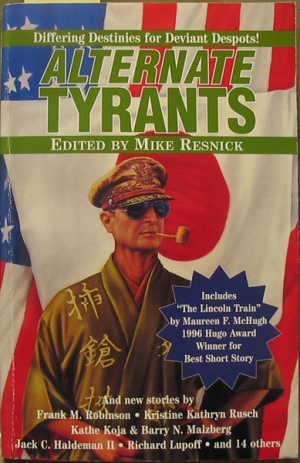
Cover by Tony Roberts

Harry Turtledove was born on June 14, 1949.

Turtledove began publishing using the pseudonym “Eric G. Iverson” and has also published under the names “Mark Gordion,” “H.N. Turteltaub,” and “Dan Chernenko.” Known for his alternate history novels and epics, he has also published numerous science fiction and fantasy works. In 1994 his novella “Down in the Bottomlands” received the Hugo Award. He won the Sidewise Award for Alternate History twice, for his novels How Few Remain and Ruled Britannia. Two of the novels in his Young Adult Crosstime series have won awards. Gunpowder Empire won the 2004 Golden Duck Hal Clement Award given by SuperConDuckTivity and The Gladiator received the 2008 Prometheus Award. His novel WorldWar: In the Balance received the Italia Award in 1996. Turtledove served as Toast Master at Chicon 2000, the Worldcon. In 1995 he received the Forry Award from LASFS.

“Half the Battle” was published by Jerry Pournelle in 1990, in volume 9 of his There Will Be War anthology series, After Armageddon. The story has not been reprinted.

The story opens sometime after an apocalyptic event has destroyed civilization in southern California. A new society has arisen around several small kingdoms, with Turtledove looking at the king of Canoga. When a book is found that describes a machine that the ancients had that can spit bullets, a machine gun, King Byron has his artificers try to replicate the lost device to replace the slow matchlocks his troops are using. The fact that King Byron and his people knew the gun could exist gave them the edge in re-creating it.

The story uses several time jumps to explore where this future will go. In each period, King Byron’s descendants have managed to extend and consolidate the kingdom’s power and in each period, they come across other devices of the ancients that they work to replicate, because knowing it can be done is “half the battle.”

Read More Read More

As Gritty As It Gets: The Ashes of Berlin by Luke McCallin

As Gritty As It Gets: The Ashes of Berlin by Luke McCallin

The Ashes of Berlin-smallBerlin, 1947.

The city is in ruins and divided between American, British, French, and Russian sectors. German war veteran and police detective Gregor Reinhardt is trying to reassemble his life but, like his city, it’s been smashed into too many pieces.

Not only does he have to contend with the loss of his family and his home, but also guilt over the war and the politics of a police department in which everyone has a sponsor among one of the occupying powers and geopolitics gets played out in the office.

And now he has a serial murderer on his hands, one who shoves sand or water down his victim’s throats in order to suffocate or drown them. Throw in some unrepentant Nazis and a frighteningly efficient Soviet officer, and Reinhardt is up for a long case.

I found this book by accident while browsing through my local bookshop and it’s the best mystery novel I’ve read all year. McCallin is a master storyteller who evokes the grim, surreal landscape of postwar Berlin.

As he takes us along on Reinhardt’s case, we get to experience the sights, sounds, and even the smells and tastes of a once-proud city trying to dig itself out from disaster. The author has clearly done his homework and we learn all sorts of fascinating details about life for regular Germans after the war and the politics of the four “Allied” powers ruling Germany.

Read More Read More

Black Gate Book Club, Downbelow Station, Second Discussion

Black Gate Book Club, Downbelow Station, Second Discussion

Downbelow Station UK-smallWelcome to the second round of discussion on C.J. Cherryh’s classic 1981 novel Downbelow Station. New to the program? The first discussion can be found here.

Chris Hocking gets the ball rolling this time around.

Chris Hocking

Hi people,

I had business travel to do and took Downbelow Station on the plane for some serious reading. I came away from it realizing that I had developed an unusual (for me at least) attitude toward the book.

This is an intense SF novel depicting otherworldly conflict in alien environments, but it’s tone is resolutely workaday and normalized. The exotic situations and scenes described are experienced by the characters, and presented to the reader, with matter-of-fact realism. We follow several characters whose histories and position are laid out and fitted into this fictional environment with great skill. This is a story of interplanetary war, of political maneuver and counter-maneuver, of individuals and policy makers struggling to deal with the critical issues and collateral adjustments that inevitably arise in wartime. It is executed by Cherryh with remarkable depth and solidity: the environment meshes completely with the story being told and the overall effect is very convincing. This is a powerful and deep imagination at work.

Yet having said all that, I find the book a half-step out of phase with my own reading tastes. The consistent desperation of most of the characters, the grueling effects of war and displacement are all well done and appropriate to the story being told, but for me the cumulative effect was kind of enervating. I’ve read enough bleak modern fiction and noir that this didn’t bother me much in itself, but it was coupled with the notable absence of an element I tend to seek in Science Fiction.

Read More Read More