Roger Zelazny’s Jack of Shadows: Amber-Lite is Still Awesome
 |
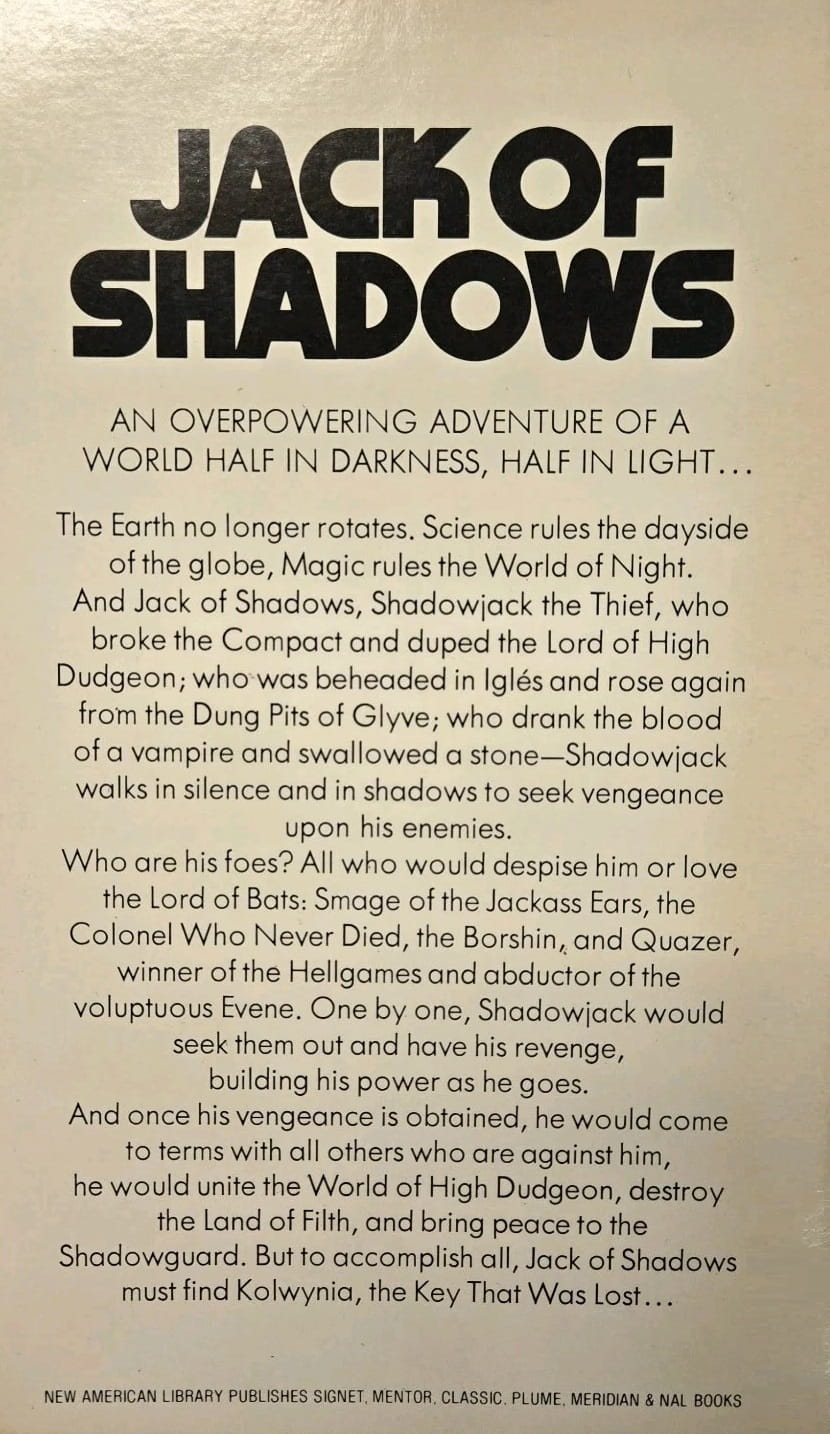 |
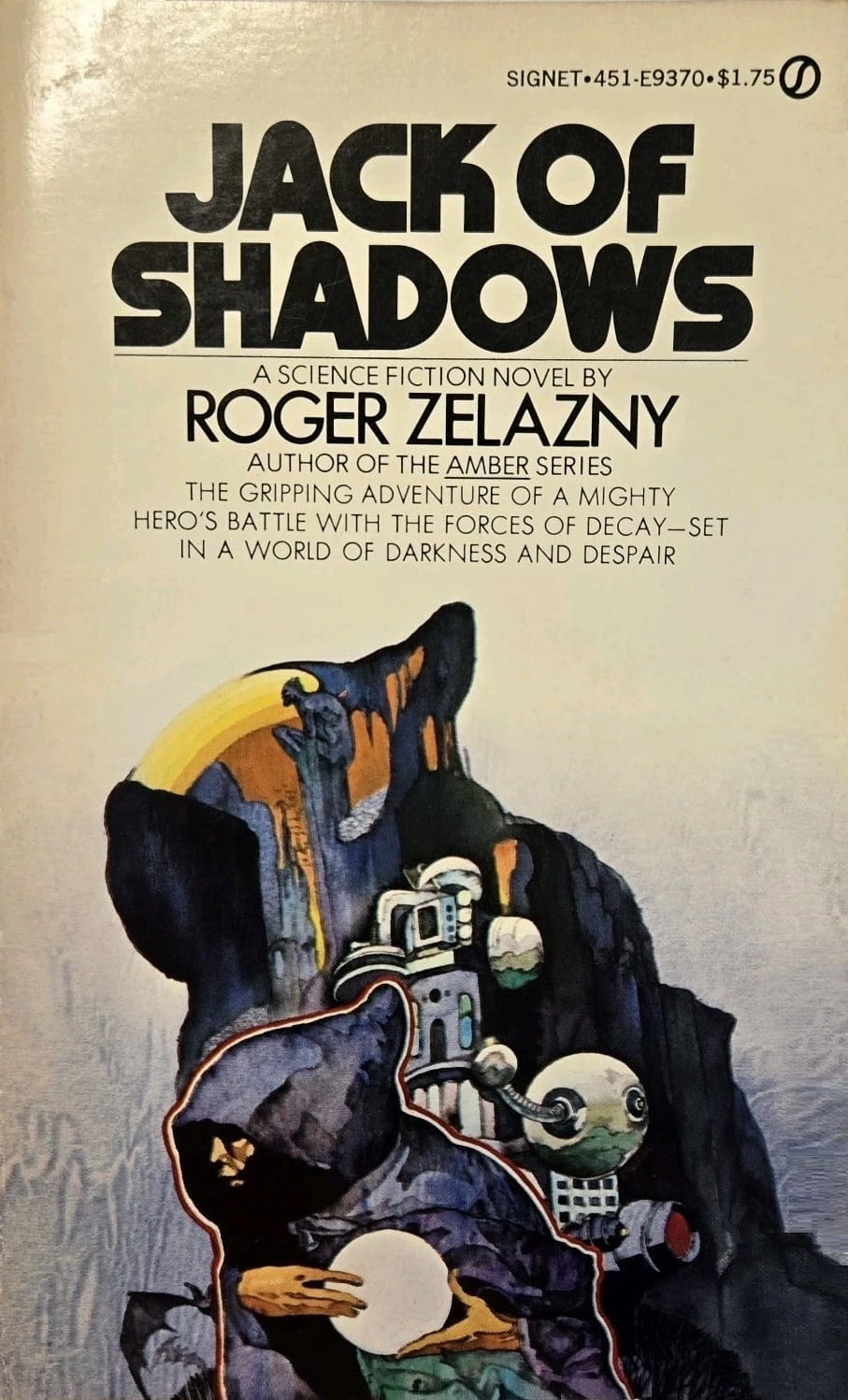
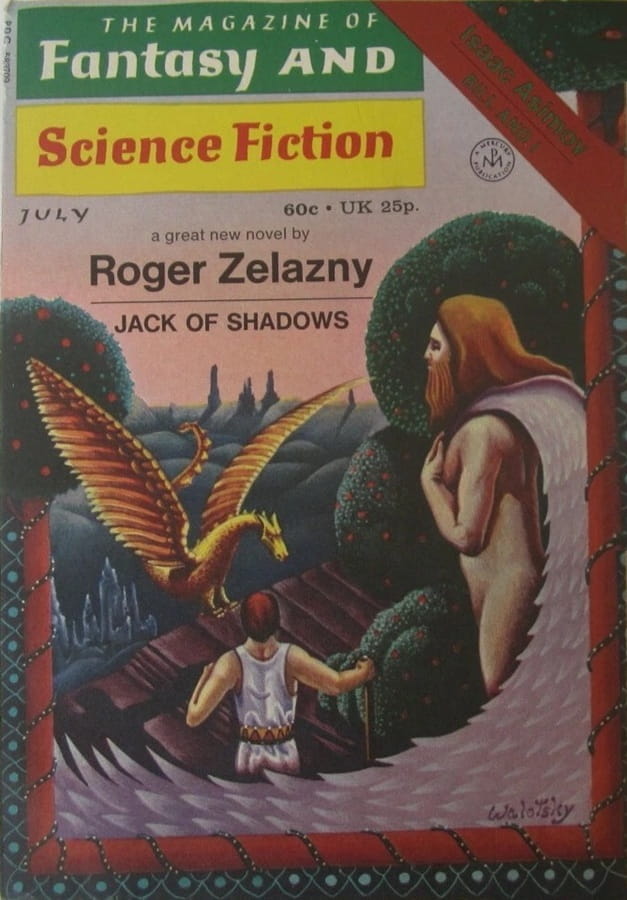
Jack of Shadows (Signet, August 1972). Cover by Bob Pepper
A decade ago this summer, Jack of Shadows by Roger Zelazny was reissued in print, after many years languishing in obscurity even among the author’s most devoted fans. The novel is vintage Zelazny. For many who just read those words, that will be enough. They can stop reading now and go and buy a copy and enjoy — even if, like me, they read it before, quite a while ago, in an earlier release from a different publisher. You guys, go have fun. We’ll chat later. The rest of you, continue on with me to the next paragraph, if you would.
If you’re still with me here, then two things must be true: One, you are intrigued enough to want to know more — and I applaud you for it! — but two, simply saying “a classic Zelazny book is back in print” is not enough to send you racing to the bookstore. You demand more. Very well.
Jack of Shadows was a Hugo and Locus Awards finalist that originally saw publication in 1971, right about the time Zelazny was also beginning what would become the series he is best known for: the Amber Chronicles. This is important; before we get into why, though, let’s talk a bit about the book, and about our eponymous protagonist.
Jack himself is never fully defined or explained. We learn over time that he is a renowned thief, amoral and immortal; a supernatural creature more at home in darkness than in the light. Oddly enough, his story largely begins with his death, as he is captured and executed while preparing to steal an object of great value.
Upon resurrection, Jack vows revenge upon all of those even peripherally involved in his demise. This sets events in motion that ultimately change the very world around him and lead to his moment of hubris. It is then that he confronts himself (quite literally) and faces hard realities about what sort of being he is, and hard choices about what sort he truly wishes to be.
 |
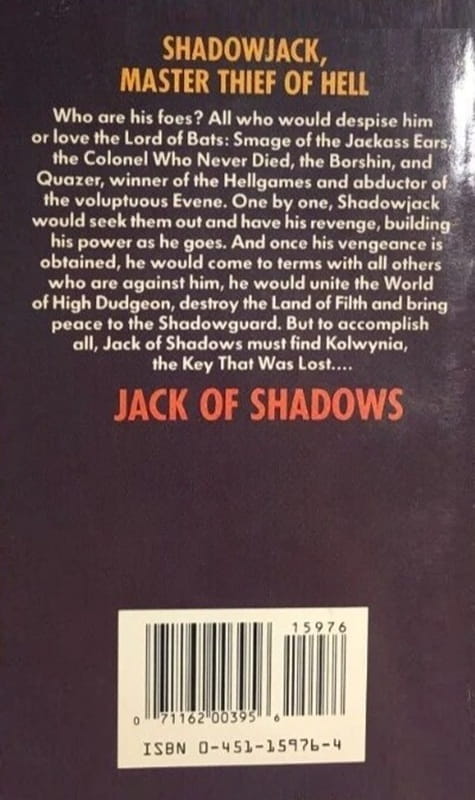 |
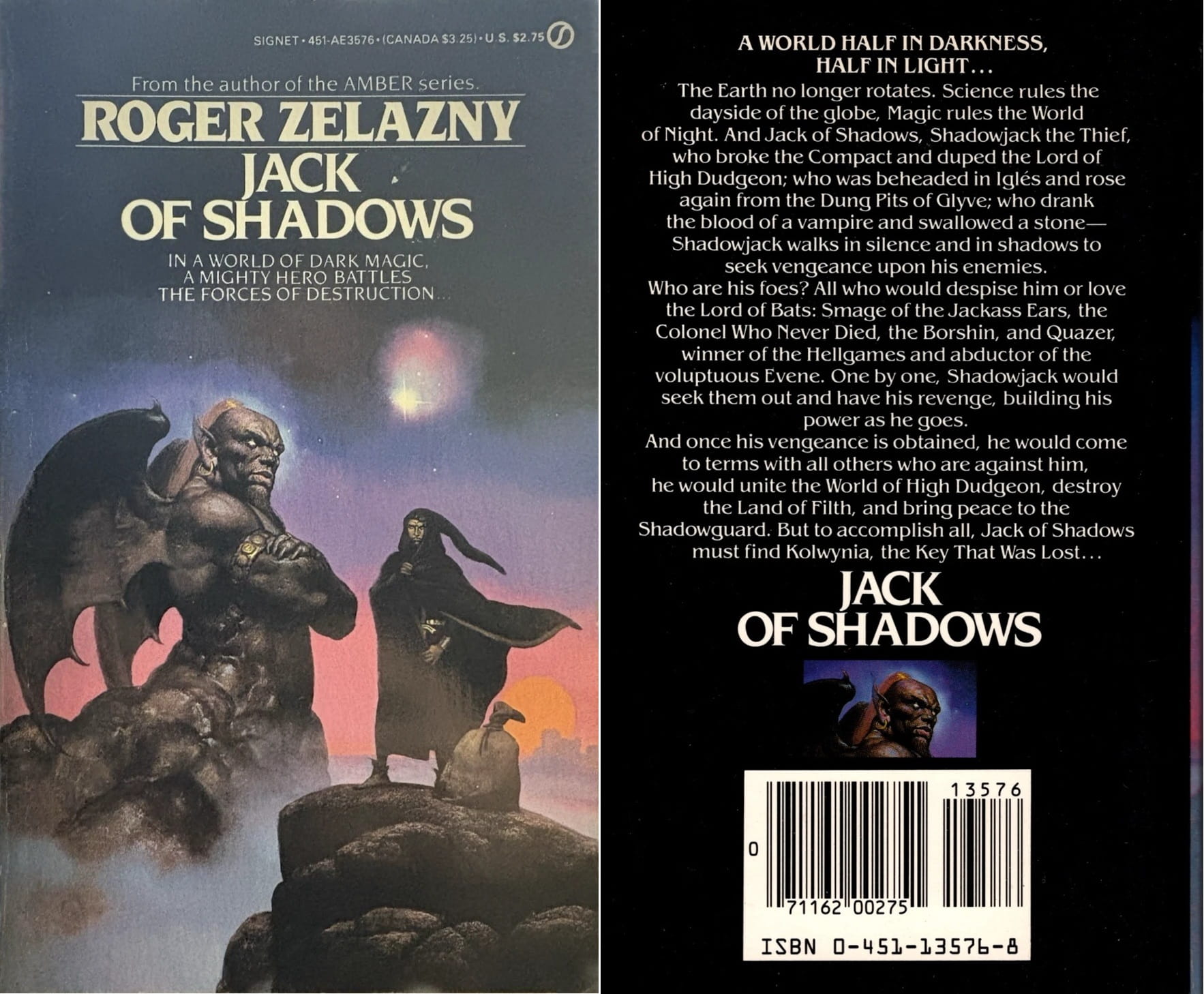
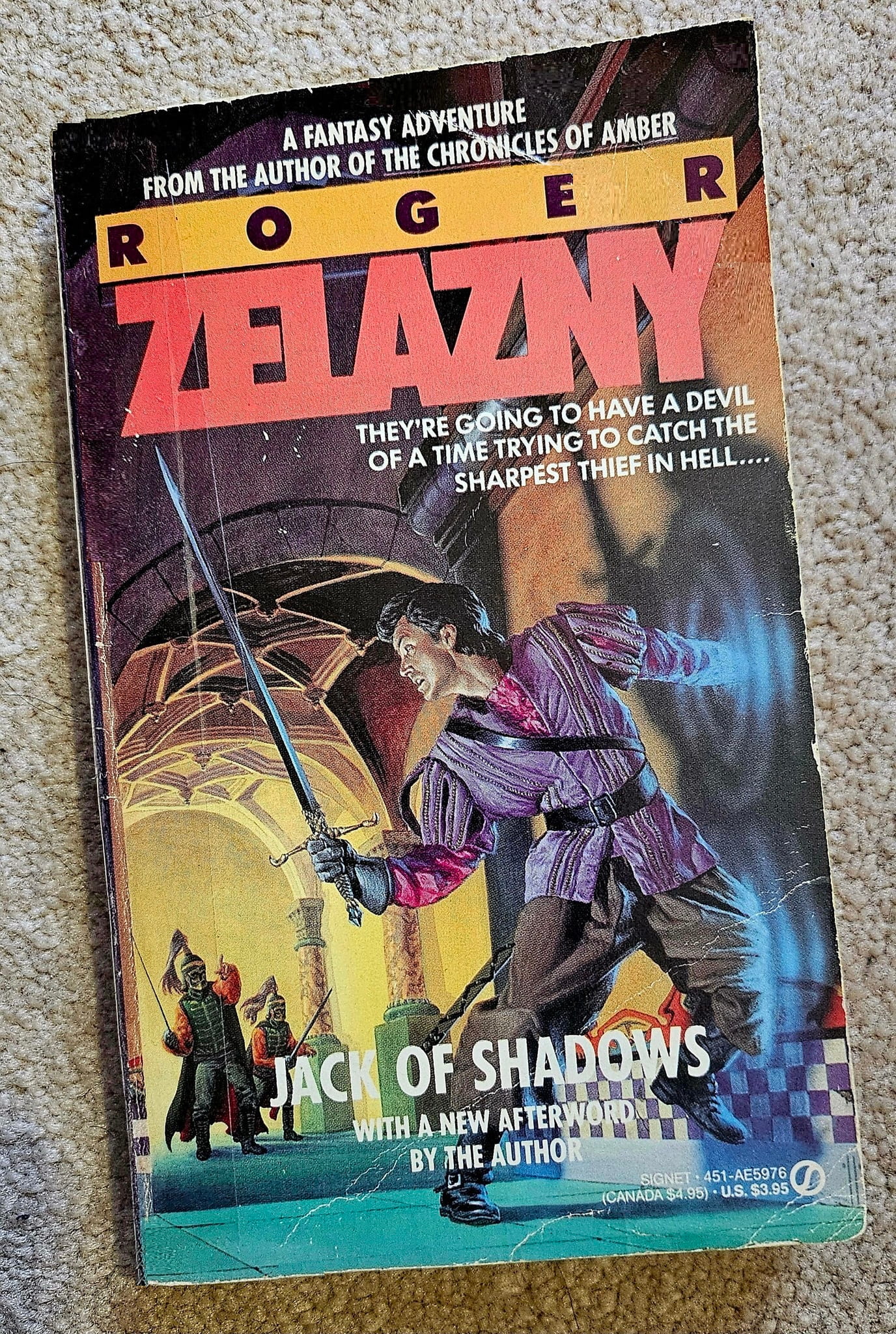
Jack of Shadows (Signet, May 1989). Cover by Richard Hescox
As Jack proceeds on his journey of vengeance (and unintentional self-discovery), we learn about him on the fly, largely through his snappy conversations with those he encounters. We also learn a little — just enough, really — of the strange half-fantasy, half-science fiction world through which he moves. Along with Jack, we encounter strange creatures, arrogant lords, wronged women and bizarre settings, all lushly described in Zelazny’s inimitable style that combines poetic influences and irreverent humor. (No one has ever carried this sort of thing off quite the way he did.)
In this way, the book takes the form of a travelogue, a form at which Zelazny excelled. He was also first and foremost a short story writer, and as such he was a master at including just enough of the information the reader needs to understand a story and be intrigued by it, but not so much as to become distracting or burdensome.
Jack’s amoral, selfish nature is revealed through his dialogue, which is often at odds with his actions. In other words, he talks grandly of the wrongs done to him and of his own altruistic motives, even as he behaves in a consistently and entirely selfish manner. This construction — a main character we are meant to be both sympathetic to and repulsed by, who feels deeply wronged by the actions of people around him who are merely fending off his unwelcome advances of various sorts — represents a clear tie to Jack Vance’s Dying Earth cycle.
This connection to Vance is something the author himself acknowledged in his introduction to the earlier editions of the book. Even the protagonist himself is named for that legendary writer.
Also in that original introduction, Zelazny goes to great lengths to argue that Jack of Shadows has little if any connection to the Amber series, either on the surface or in its production. But this is clearly untrue. While many (most?) of Zelazny’s works feature similar themes of immortal beings coping with challenges posed by their contemporaries, the parallels between this book and the early Amber novels run much deeper and broader, and are clearly visible.
There are the larger themes, such as the plot turning on just how much the immortal main character changes over the course of his adventures; how the pursuit of power changes a person; the eventual discovery by said character that he doesn’t really desire the thing he began the story thinking he desired most.
There are also the more specific echoes of Amber, such as the use of “shadow” as a means of travel; the hero masquerading as a normal contemporary man on Earth (or a version of it); the hero being imprisoned by his arch-foe (in crystal, no less — something that happens to Merlin in the second Amber series), then cleverly escaping and being driven by desire for revenge. If Jack is not a prince of Amber, he certainly would not seem out of place at the family reunion.
 |
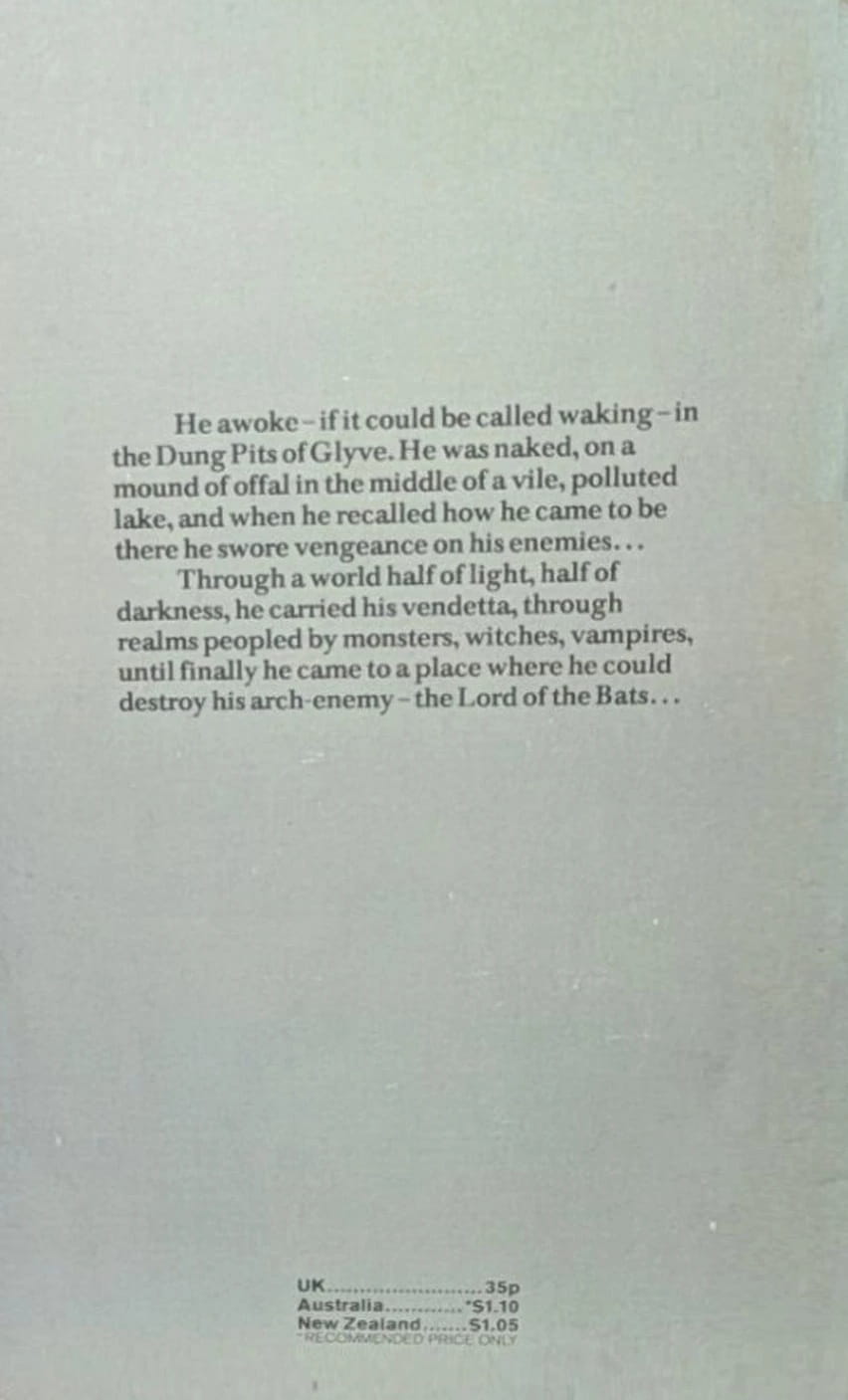 |
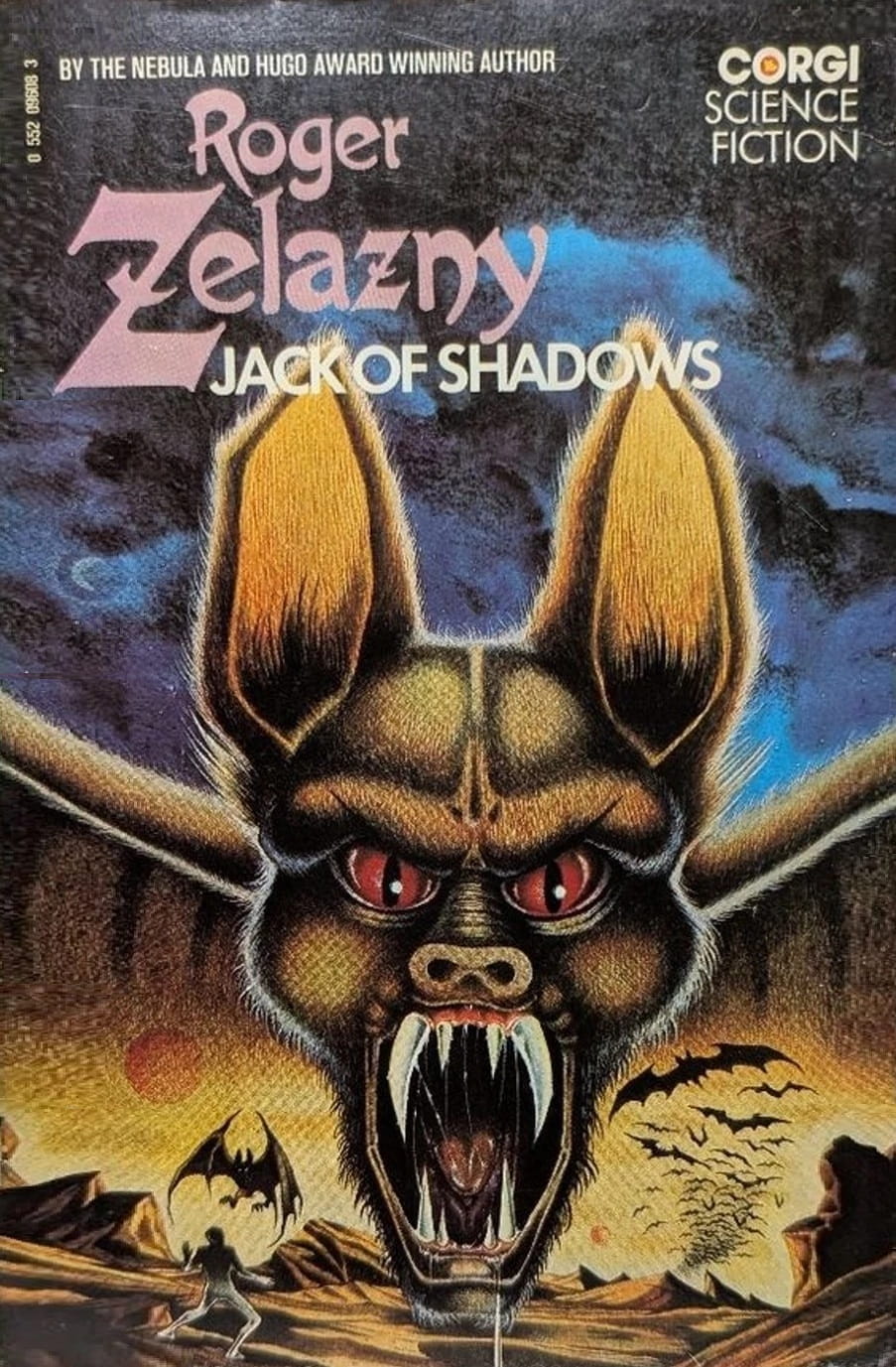
Jack of Shadows (Corgi, 1974). Cover artist unknown
That said, Jack himself is fundamentally different from Prince Corwin and his siblings in key ways, and his journey takes a different route and reaches a different destination. Those facts are more than enough to let this book stand on its own, echoes of Amber be damned. (Meanwhile, fans of Corwin and Merlin can be grateful that Zelazny worked out these darker impulses here, upon poor Jack, allowing our two princes to follow somewhat brighter paths.)
Speaking of the book’s introduction: In their 2016 reissue, Chicago Review Press opted to remove Zelazny’s old intro — a justifiable move, given that much of what he discusses in it will be of little interest to a reader coming to his work for the first time — and instead procured a new and more retrospective one from SF legend Joe Haldeman. This was an appropriate choice for more than one reason. Haldeman and Zelazny were friends, so the one is ably suited to tell us about the work of the other.
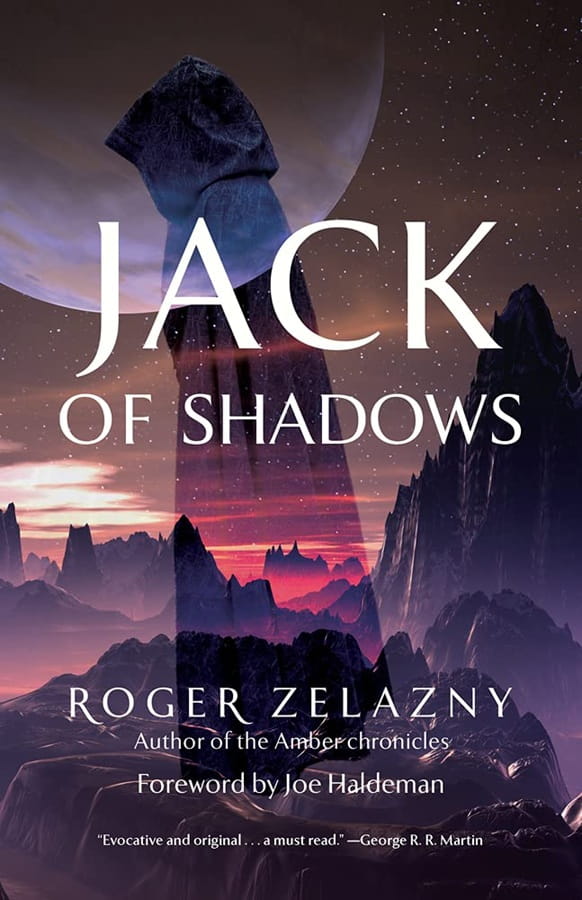
Also, Haldeman, like Zelazny, excels at shorter works. He never pads out his books with needless fluff, but instead hones in on the core of the story. (I once asked him on a panel we shared at a convention if his publishers, in this day and age of the giant doorstop novels, ever pressured him to write longer books, and he answered in the affirmative — but he resists.) His introduction is as relatively brief as one of his books, but it has warmth and charm and evokes happy memories of the Roger we all lost.
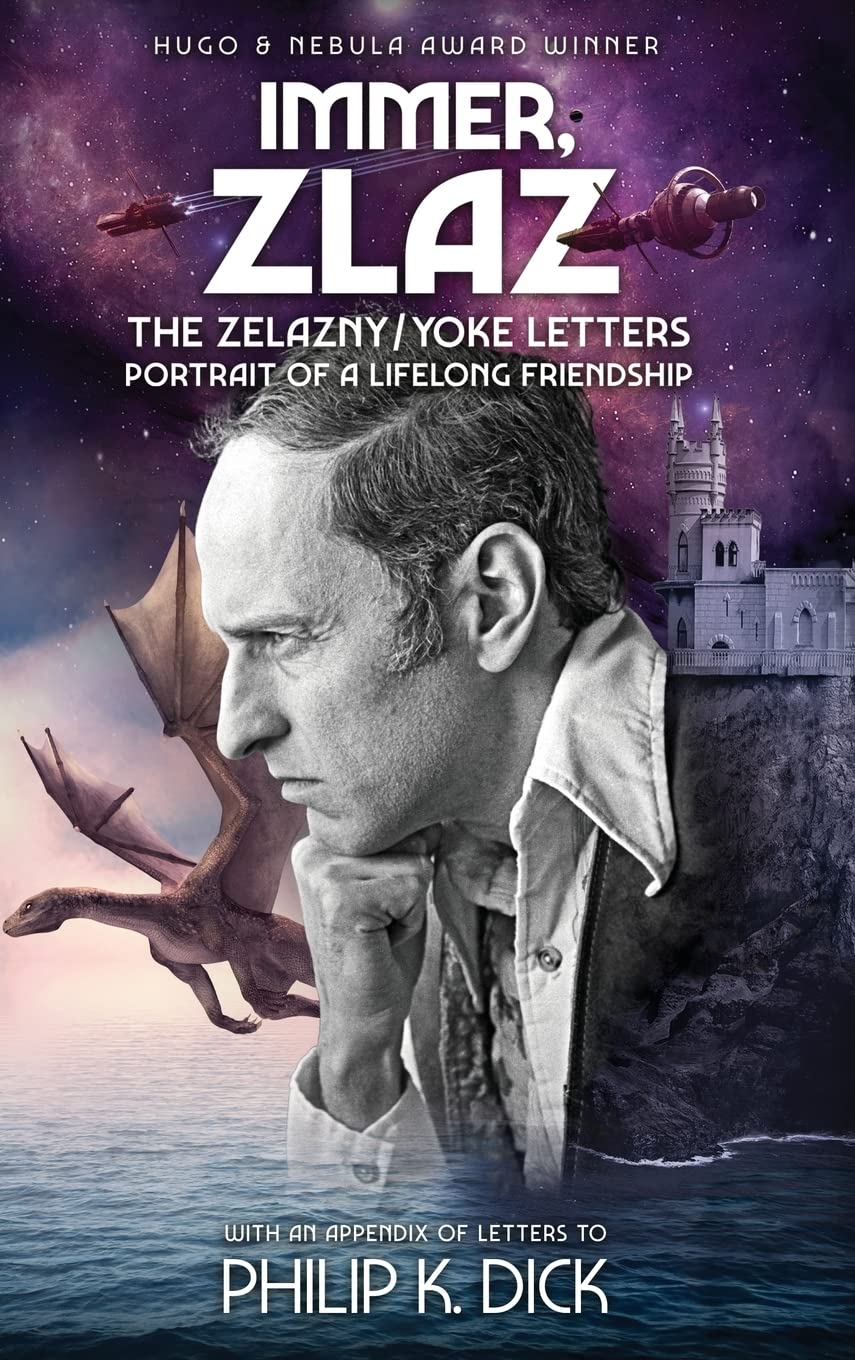
Zelazny’s short stories and novels were brought into print by quite a variety of publishers over the years, and the legal rights to them are quite complex. Fortunately, a number of print and online publishers have been able to reissue portions of Roger’s back catalog for a while now. Editor Warren Lapine in 2023 even published a massive and fascinating collection of Zelazny’s lifetime correspondence with his childhood friend, Carl Yoke (complete with a comprehensive topical index!) in a work called Immer/Zlaz: The Zelazny-Yoke Letters. And new audio editions of his books pop up on Audible with some regularity — most recently Bridge of Ashes and Dilvish the Damned.
 |
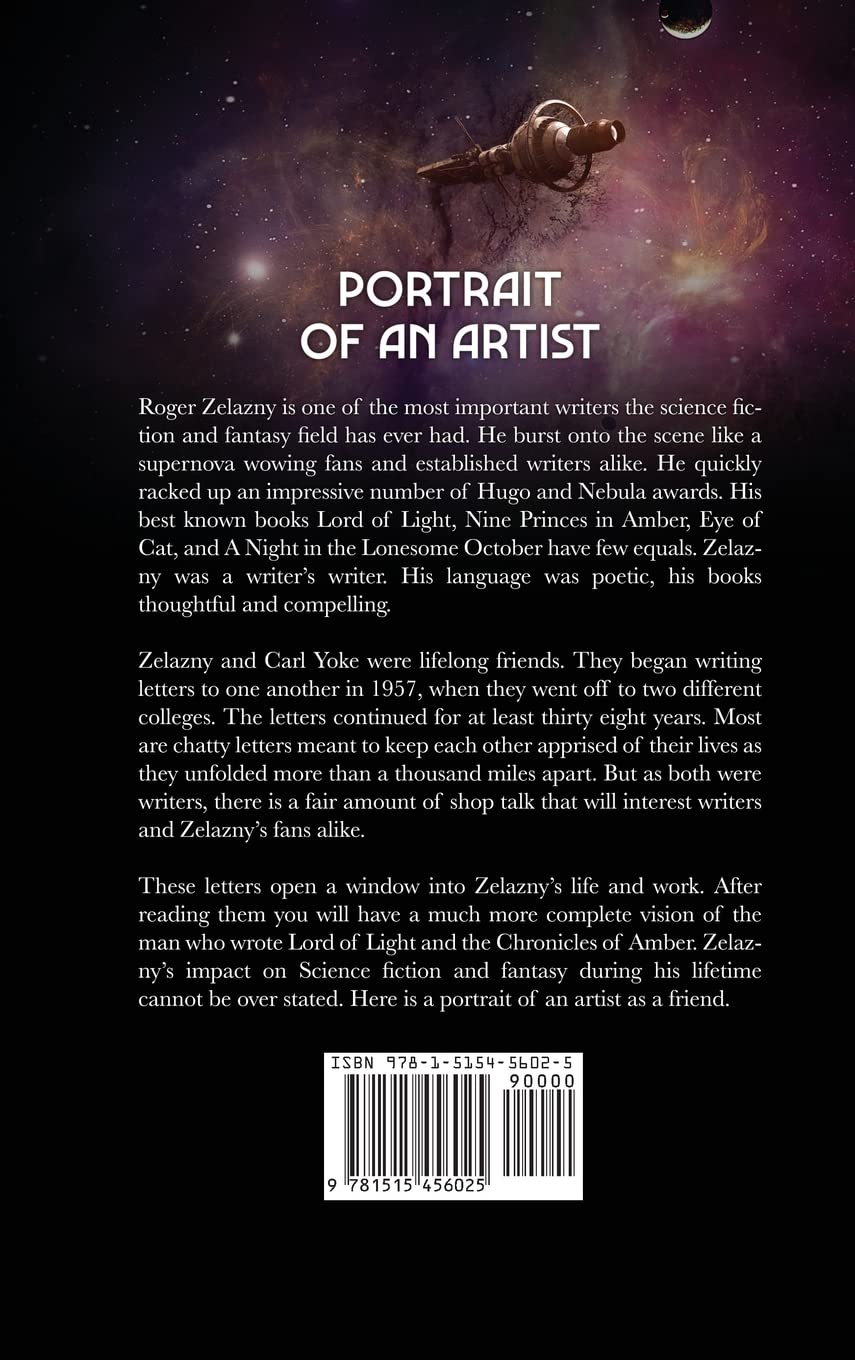 |
Immer, Zlaz: The Zelazny/Yoke Letters (Positronic Publishing, October 27, 2022). Cover artist unknown
And thank Oberon for it. The thought that whole generations of science fiction and fantasy readers could come of age never experiencing Zelazny’s work is a fate worse than anything that befalls even poor ShadowJack himself.
(Also of note: This coming weekend, Zelazny will posthumously receive the Infinity Award from the SFWA, at their 2026 Nebula Awards Conference in Chicago. It is a sort of “Grand Master” award for authors who have passed away. Previous honorees include Frank Herbert, Tanith Lee and Octavia Butler. As such, it is very well-deserved indeed.)
Van Allen Plexico once wrote an entire trilogy inspired by Roger Zelazny’s work, collectively called The Above, beginning with Lucian: Dark God’s Homecoming. He is a member of the Science Fiction and Fantasy Writers of America (SFWA), a Grand Master of Pulp Literature (2025 class) and a multiple-award-winning author of more than two dozen novels and anthologies, ranging from space opera to Kaiju to crime fiction to superheroes to military SF. Find his works on Amazon and at www dot Plexico dot net.
Van,
I hadn’t noticed the connection to the Dying Earth novels. But I applaud your astute observations in this paragraph:
I read Jack of Shadows in the 80s and thrilled to the adventures of a cunning, resourceful, and witty protagonist. I re-read the book 15 years later and was deeply troubled to find that Jack is clearly the villain, something I completely missed the first time.
Jack redeems himself at the very end, in a wholly satisfying way, but I was astonished to find that Zelazny had been skilled enough to pull off that impressive bit of literary magic. To wit, he completely wins you over to the narrator’s POV, even though on closer examination that narrator is deeply repulsive.
In other words, I gobbled it all up in my teens, and didn’t even notice the deeper context right there in front of me. It made the re-read richly rewarding, even if I was more than a little chagrined that I missed it the first time.
John— A very similar thing happened to me with the Amber series. I was so sympathetic to Corwin‘s plight the first couple of times through, that it never occurred to me that the bad things everybody was saying about his earlier years could’ve been true.
But that’s Zelazny’s thing, showing us how immortal beings change, too—they just maybe take centuries or more to get there.
One of my favorite Zelaznys ever since I first checked it out from the library (in that original Walker hardcover edition, I believe). It’s amazing how much stuff he could fit into something that by modern standards is barely more than a novella.
For those of a certain age, everything about Signet paperbacks from this era fills you with nostalgia. The watercolor cover art, the “futuristic” title font, even the tiny Signet logo.
Thanks for this! JACK OF SHADOWS is possibly my single favorite Zelazny novel (though it has some stiff competition there). I first read it in back-issues of F&SF—and was bemused to read a very negative review of it in a later issue of the same magazine by the usually insightful James Blish. He didn’t like the fact that Jack wasn’t a nice person (this from the guy who wrote BLACK EASTER!) and he didn’t understand why Jack had to destroy the World Machine (which suggests a hasty and careless reading on JB’s part).
The trip to the sunlit world is very satisfying, mingling fantasy and science fiction as only Zelazny could. The descriptions of the dark side’s first dawn have haunted me throughout my insomniac life. I wish Zelazny had written a sequel or companion piece about what it must have been like for the light-dwellers to experience night for the first time. We have a pessimist’s view of something like this (in Asimov’s classic story “Nightfall”), but I’d’ve liked Zelazny’s take on it. There would have been a loss of safety, clarity, warmth, but maybe a return of wonder and magic.
Anyone else watch the Dr Who series “The Caves of Androzani” and say, “Hey, Sharaz Jek is modeled on Jack of Shadows”?
I’ve only read two Zelazny novels. I read Roadmarks because as a youth I spent a lot of time wandering the stacks of the public library, and Roadmarks had a dragon on the cover.
But Jack of Shadows I actually sought out (probably because it was in AD&D’s appendix N.) Poor Jack, in need of sustenance, killed a vampire, and I was hooked.
I’m with James – Jack of Shadows is my favorite Zelazny (well, tied with The Dream Master.) It’s also nice that it’s a singleton. I like a good series, but there’s a lot to be said for a book that does a smashing job and then lets you get on with your life.
I have to admit, I picked up Jack of Shadows after failing to get into Amber and I read it shortly after reading the Dying Earth, and even with that background of what he was in conversation with I was very unimpressed. I do like that Vincente Segrelles cover at least.