Forgotten Authors: Chauncey Thomas
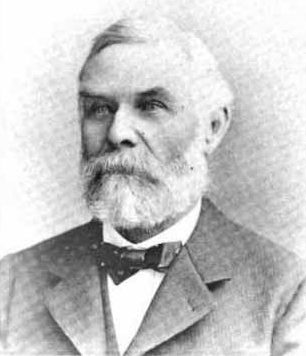
Chauncey Thomas was born in Maxfield, Maine to Prince and Mary (Née Webb) Thomas on May 1, 1822. Both of his parents claimed descent from the early Plymouth Colony settlers. Spending his early life helping out on his father’s farm, he only attended school intermittently and, when he was 15 years old was apprenticed to Whiton & Badger, a chaise carriage maker in Bangor, Maine. The terms of his apprenticeship meant he had to work 12 hours a day, in return for board and clothing and the occasional payment of a dollar. He also received one term at the Apprentices’ School in Bangor.
In 1844, Whiton and Badger procured a position for Thomas at the Boston firm of Slade & Whiton, a firm which dated back to 1813. Thomas was given the task of working on drawings for woodwork and blacksmithing departments, as well as creating renderings of finished products for clients.
Eventually, he was placed in charge of the construction of carriage bodies, but around that time he suffered a knee injury that required him to recuperate at home for nearly two years, during which time he studied astronomy, various types of mathematics, and surveying. When he was able to return to work in 1851, he moved to West Newbury, Massachusetts and entered a partnership with Daniel P. Nichols to form Nichols & Thomas. He stayed with the Nichols family and fell in love with Nichols’ younger sister, Mary Jane.
Thomas married Mary Jane Pilsbury Nichols in 1854. They had three children, Mary Evelyn Thomas, Helen Nichols Thomas, and Chauncey Cussing Thomas, who died when he was 22.
Nichols and Thomas were known for making quality carriages and won several awards. On April 27, 1858, Thomas was awarded patent 20102 for a mill for grinding paint and was featured on the cover of Scientific American in October of that year. Nichols and Thomas earned other patents relating to carriage manufacturing over the years, but by 1862, they went their own separate ways.
Chauncey Thomas & Co., carriage makers was founded in 1862 and made quality carriages for more than fifty years, eventually making chassis for automobiles.
In 1872, he was one of the founders of the Carriage Builder’s National Association, which would establish the Technical School for Carriage Draughtsman and Mechanics in Manhattan.
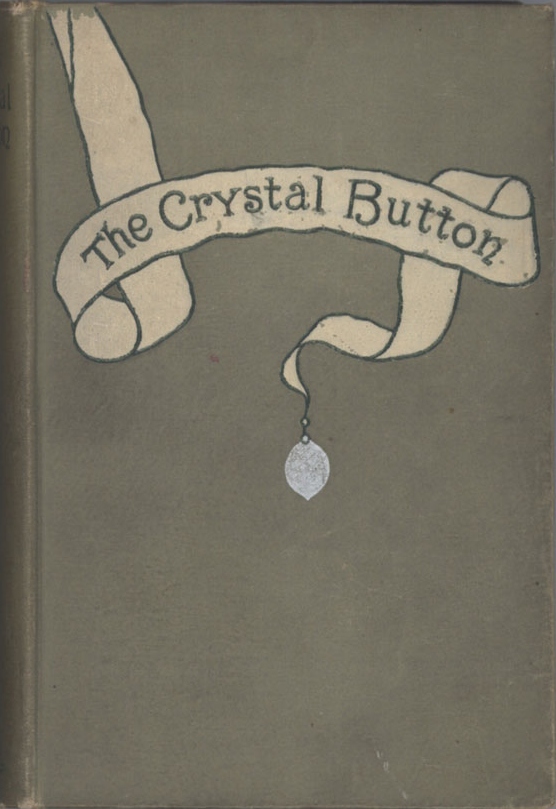
Thomas’s only foray into genre fiction appears to be the novel The Crystal Button; or, Adventures of Paul Prognosis in the Forty-Ninth Century, which appears to have been written around 1871, but not published by Houghton Mifflin until 1891.
Thomas died on November 8, 1898 from angina pectoris in Roxbury, Massachusetts and is buried in Forest Hills Cemetery and Crematory in Jamaica Plain, Massachusetts. He held 24 patents, awarded between 1857 and 1899.
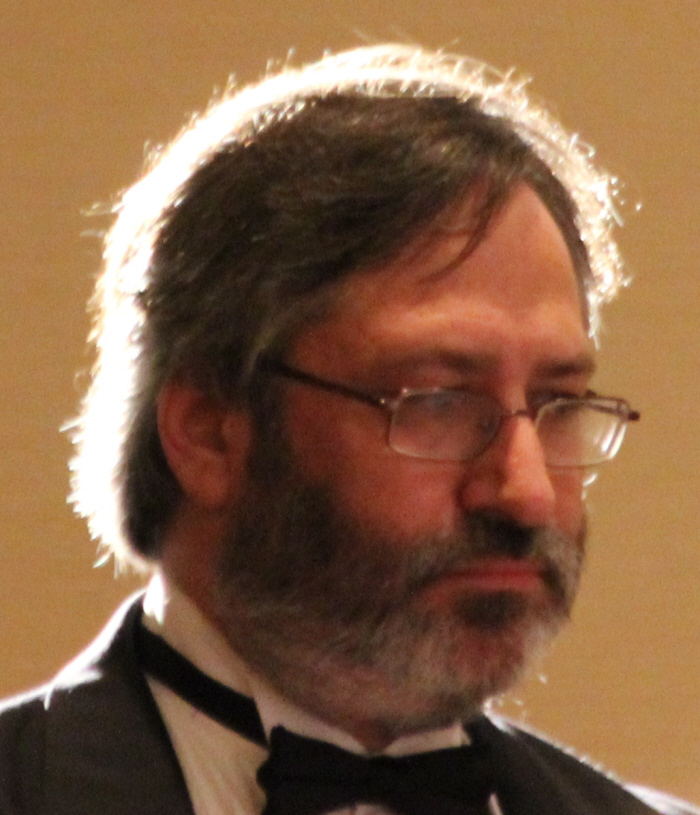 Steven H Silver is a twenty-two-time Hugo Award nominee and was the publisher of the Hugo-nominated fanzine Argentus as well as the editor and publisher of ISFiC Press for eight years. He has also edited books for DAW, NESFA Press, and ZNB. His most recent anthology is Alternate Peace and his novel After Hastings was published in 2020. Steven has chaired the first Midwest Construction, Windycon three times, and the SFWA Nebula Conference numerous times. He was programming chair for Chicon 2000 and Vice Chair of Chicon 7.
Your posts always send me searching for the authors you feature! I find it interesting that the book editor compares Thomas’ novel favorably to Bellamy’s Looking Backward which I really enjoyed. And, a bonus, The Crystal Button is readily available online.