Browsed by
Tag: Forgotten Authors

Forgotten Authors: Austin Hall

Forgotten Authors: Austin Hall

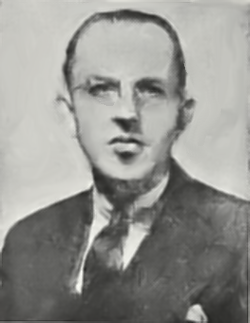
Austin Hall

Austin Hall was born on July 27, 1880.

While working as a cowboy, Hall was asked to write a story. This led to his career as an author, writing westerns, science fiction and fantasy stories, with westerns forming the majority of his published work. A one time, Hall may have worked as a sports editor for a newspaper in San Francisco.

Following the death of Hall’s father, his mother remarried and the family appears to have moved to Ohio, in an interview published by Forrest J Ackerman in 1933, Hall claims to have attended college in Ohio and California, but no details of his academic life can be confirmed. By the time he was thirty, Hall (as well as his mother and step-father) were living back in California and Hall had married Clara Mae Stowe and they had two children, Javen and Bessie.

Read More Read More

Forgotten Authors: Neil R. Jones

Forgotten Authors: Neil R. Jones

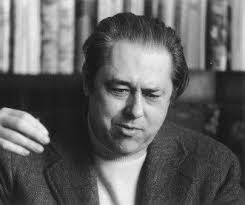
Neil R. Jones

Neil R. Jones was born on May 29, 1909 in Fulton, New York, the youngest for four children. He has stated that the first science fiction novel he read, in 1918. Was Will N. Harben’s The Land of the Changing Sun, a lost world novel, which led him to the writings of Edgar Rice Burroughs.

His first published story, “Vengeance of the Ages” was published in his high school yearbook in 1926, with a second story, “The Meteor of Fate” appearing the following year.

“The Death Head Meteor,” was his first professional publication, published in the January 1930 issue of Air Wonder Stories and is believed to contain the first appearance of the word “astronaut.” He had previously sold the story “The Electrical Man,” but it didn’t appear until May of that year in Scientific Detective Monthly, earning him his first cover.

Read More Read More

Forgotten Authors: P. Schuyler Miller

Forgotten Authors: P. Schuyler Miller

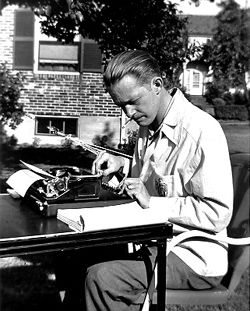
P. Schuyler Miller

Peter Schuyler Miller was born on February 21, 1912 in Troy, New York. He earned a Master of Science from Union College and worked as a technical writer for General Electric and the Fisher Scientific Company.

Miller had a lifelong interest in archaeology and was a member of the New York State Archaeological Association.

His first published short story “The Red Plague,” appeared in the July 1930 issue of Wonder Stories. Based on the cover of the magazine’s January issue, it was the first winner of a contest Wonder Stories ran, earning Miller publication and $150. Sam Moskowitz described the story as “more of a well-written plot synopsis for a novel than a short story.”

Miller participated in multiple collaborations. In the early 1930s, he wrote two stories with Walter Dennis and Paul McDemott: “The Red Spot of Jupiter” and “The Duel on the Asteroid.” These two stories were the only fiction Dennis and Dermott published, but Dennis was the co-editor, with Raymond A. Palmer, of The Comet, often cited as the first fanzine.

Read More Read More

Forgotten Authors: F. Anstey

Forgotten Authors: F. Anstey

F. Anstey

Thomas Anstey Guthrie was born in London on August 8, 1856. He attended King’s College School and studied at Trinity Hall in Cambridge. Over the course of his career, he used multiple pseudonyms, including Hope Bandoff, William Monarch Jones, and the one most associated with his genre work, F. Anstey. He had meant to publish under his first initial and middle name, but a typo rendered the initial F and he elected to keep it.

Anstey studied law and briefly practiced beginning in 1880, but gave it up to write, with numerous short humorous pieces appearing in Punch. He was also known for writing humorous novels, the most famous of which, Vice Versa, originally published in 1882, was adapted into a play by Anstey in 1883. He similarly adapted several other of his novels and short stories into plays, as well as adapting multiple of Molière’s works into English.

Read More Read More

Forgotten Authors: Arthur Leo Zagat

Forgotten Authors: Arthur Leo Zagat

Arthur Leo Zagat

Last week, I mentioned Arthur Leo Zagat, who was born in New York on February 15, 1896. He collaborated with Nat Schachner on their first eleven short stories, before they both launched solo careers. Like Schachner, Zagat attended City College, where he earned a Bachelor of Arts degree. After college, he served in World War I and studied at Bordeaux University before returning home to earn a law degree from Fordham University. He went on to found the Writers Workshop at New York University. In 1922, he married a woman Ruth Knopf and they had one daughter, Hermine.

Like Schachner, Zagat also practiced law until he decided he could make a living writing full time. In 1941, he was elected to the national executive committee of the Authors League’s pulp writers’ section.

1930 saw the start of his career as an author with the publication of “The Tower of Evil,” which he co-wrote with Nat Schachner. The two men collaborated on eleven stories published in 1931 before both turning to their solo careers as authors. Of the two, Zagat would prove to be the more  prolific, although he wrote in a wide range of genres, with his science fiction forming only a small part of his output.


Read More Read More

Forgotten Authors: Nat Schachner

Forgotten Authors: Nat Schachner

Nat Schachner

Nat Schachner was born on January 16, 1895 in New York. He earned a Bachelor of Science in chemistry from City College in 1915. He served in the U.S. Army during World War I in the chemical warfare service from 1917 to 1918 and, when he returned to New York he earned a Doctor of Jurisprudence from New York University in 1919, the same year he married Helen Lichtenstein. The couple would have a daughter.  He worked as an attorney until 1933 when he became a freelance writer.

On April 4, 1930, Schachner, along with G. Edward Pendray, David Lasser, and Laurence Manning, founded the American Interplanetary Society, which would be renamed the American Rocket Society four years later. The organization designed and launched liquid fueled rockets and in 1936 the organization was awarded the Prix a’Astronautique by the Société astronomique de France.

1930 also saw the start of his career as an author with the publication of “The Tower of Evil,” which he co-wrote with Arthur Leo Zagat. The two men collaborated on eleven stories published in 1931 before both turning to their solo careers as authors.

Read More Read More

Forgotten Authors: Theodora Du Bois

Forgotten Authors: Theodora Du Bois

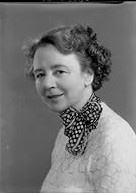
Theodora Du Bois

Theodora McCormick was born on September 14, 1890 in Brooklyn, New York. Her father died when she was a year old and she was raised by her mother and stepfather. She attended the Barnard School for Girls in Manhattan and the Halsted School in Yonkers. Although she wanted to attend Vassar College and was accepted in 1909, her parents did not support her attending the school. Her plans to go anyway were dashed when she was diagnosed with tuberculosis and she found herself in a TB sanitarium instead. Eventually, in 1916, she enrolled in the Dartmouth Summer School for Drama.

While in the sanitarium, McCormick began writing poetry, although most of her poetry was written during this time and after she was healthy she focused on various forms of prose writing. In 1918, she married Delafield Du Bois and took the name Theodora Du Bois. Theodora gave birth to a daughter, also named Theodora, in 1919 and in 1922 had a son, Eliot.

Read More Read More

Forgotten Authors: S.P. Meek

Forgotten Authors: S.P. Meek

S.P. Meek

Sterner St. Paul Meek was born in Chicago, Illinois on April 8, 1894. He earned as associate of science degree from the University of Chicago in 1914 and continued his education at the University of Alabama, becoming a member of Phi Beta Kappa and earned a bachelor of science in metallurgical engineering. In 1916, he transferred to the University of Wisconsin, but joined the army in 1917. Although he attended the Massachusetts Institute of Technology between 1921 and 1923, he remained in the army for his entire career.

While attending college, he also served as a football coach at Kirkley Junior College in Texas, as a chemist for the Western Electric Company, and at Deuvitt Laboratories, all of which went by the wayside when he joined the military. Originally stationed in the Philippines, he would go on the direct small arms ammunition research from 1923 to 1926, serve as the chief publications officer for the Ordnance Department from 1941-1944. He retired from the military in 1947 due to disability. He holds patents for tracer ammunition.

Meek married Edna Burnadge Nobel in 1927 and the couple had one son.

Read More Read More

Forgotten Authors: Rosel George Brown

Forgotten Authors: Rosel George Brown

Rosel George Brown

Rosel George was born in New Orleans, Louisiana on March 15, 1926. She attended Sophie Newcomb College and earned a Master of Arts degree in Greek at the University of Minnesota. In 1947, she married W. Burlie Brown, a lawyer who would go back to school in 1949 to earn a Ph.D. in history before joining the Tulane University faculty in 1951. Aside from the period when she was attending graduate school in Minnesota and Burlie was attending graduate school in North Carolina, Rosel George Brown lived in New Orleans. The Browns had two children. For about three years, Rosel worked as a welfare visitor.

Brown began publishing science fiction in 1958 when her story “From an Unseen Censor” appeared in the September issue of Galaxy Science Fiction alongside established authors Isaac Asimov, Damon Knight, Arthur C. Clarke, and Willy Ley. The following year, she published seven additional stories in If, Fantastic Universe, Star Science Fiction, F&SF, Galaxy, and Amazing, demonstrating the ability to sell to multiple editors. In 1959, she was also nominated for the Hugo Award for Best New Writer, alongside Kit Reed, Louis Charbonneau, Pauline Ashwell, and Brian W. Aldiss.

Read More Read More

Forgotten Authors: John Taine

Forgotten Authors: John Taine

John Taine/Eric Temple Bell

Eric Temple Bell was born in Aberdeen, Scotland on February 7, 1883, but when he was fifteen months old, his family moved to San Jose, California. After his father’s death in January 1896, the family moved back to the United Kingdom, settling in Bedford, England.

Bell was educated at Bedford Modern School, where his was inspired to study mathematics by Edward Mann Langley. He attended college at the University of London for a year before transferring to Stanford University, from which he graduated in 1904. He earned a Master of Arts degree from the University of Washington in 1908 and a Doctorate from Columbia University in 1912.

After graduating, Bell taught at the University of Washington and the California Institute of Technology, focusing on number theory and developed Bell series, which is a formal series used to study properties of arithmetical functions. He also gave his name to Bell numbers, which count the possible partitions of a set.

Read More Read More