Forgotten Authors: Austin Hall
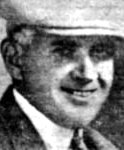
Austin Hall was born on July 27, 1880.
While working as a cowboy, Hall was asked to write a story. This led to his career as an author, writing westerns, science fiction and fantasy stories, with westerns forming the majority of his published work. A one time, Hall may have worked as a sports editor for a newspaper in San Francisco.
Following the death of Hall’s father, his mother remarried and the family appears to have moved to Ohio, in an interview published by Forrest J Ackerman in 1933, Hall claims to have attended college in Ohio and California, but no details of his academic life can be confirmed. By the time he was thirty, Hall (as well as his mother and step-father) were living back in California and Hall had married Clara Mae Stowe and they had two children, Javen and Bessie.
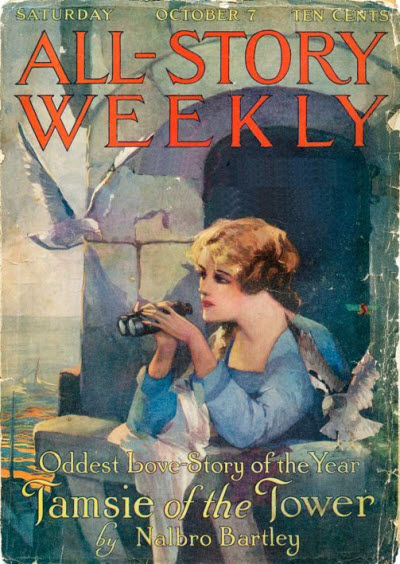
His first science fiction story was “Almost Immortal,” which appeared in the October 7, 1916 issue of All-Story Weekly.
His 1919 story “The Man Who Saved the Earth” was reprinted in the first issue of Amazing Stories. Everett Bleiler describes this story as Hall’s second worst, which given Damon Knight’s opinion of Bleiler’s writing says quite a bit.
He collaborated with Homer Eon Flint on the novel The Blind Spot, which Damon Knight described in In Search of Wonder as “an acknowledged classic of fantasy…much praised…several times reprinted, venerated by connoisseurs—all despite the fact that the book has no recognizable vestige of merit. Knight enumerates his problems, not just with the novel, but with Hall’s writing, stating that hall is bereft of, among other things, style, grammar, vocabulary, observation, scientific knowledge, or ability to plot. Knight’s criticism of Hall is almost enough to make someone want to pick up one of his works to see how it could be as bad as Knight describes it.
Bleiler does not believe the story was an actual collaboration. Although Ackerman claims Hall pitched the idea to Flint and the two planned out how to work on it, Bleiler believes that Hall couldn’t come up with the middle of the novel and had Flint take over to get him over the hump.
Eventually, in 1932, eight years after Flint’s death, Hall would published a sequel to The Blind Spot, the serial The Spot of Life, in Argosy. Hall’s other science fiction, “The Rebel Soul” and “Into the Infinite” focus on the life and adventures of George Witherspoon. His The People of the Comet has Alvar, the king of the Sansars, describe his journey to a comet, which had a hollow interior in which they could live.
Although the majority of Hall’s writing appears to have been westerns, they appear to be harder to identify, although he wrote Where the West Begins and stories that appeared in Western Story Magazine.
He died on July 29, 1933 and is buried in Madronia Cemetery in Saratoga, California.
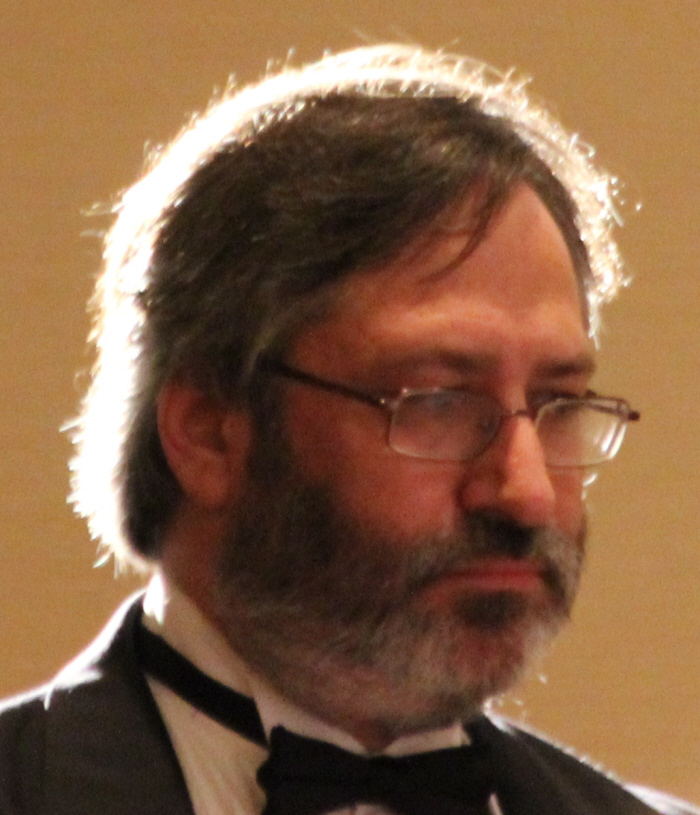 Steven H Silver is a twenty-one-time Hugo Award nominee and was the publisher of the Hugo-nominated fanzine Argentus as well as the editor and publisher of ISFiC Press for eight years. He has also edited books for DAW, NESFA Press, and ZNB. His most recent anthology is Alternate Peace and his novel After Hastings was published in 2020. Steven has chaired the first Midwest Construction, Windycon three times, and the SFWA Nebula Conference numerous times. He was programming chair for Chicon 2000 and Vice Chair of Chicon 7.