The “Saw-the-Story-in-Half” Trick
 (I passed the 50,000-word mark in National Novel Writing Month yesterday, at Day 14. Last year I achieved this at Day 13—I must be getting slow.)
I have started to view Frederick Faust as something of my writing mentor. He wasn’t a public figure, instead disguised behind “Max Brand” and his many other pseudonyms, but his excellent storytelling skill is a good teacher all on its own. However, in his letters he left behind some excellent advice about how he developed his ideas. Considering his productivity, which shames about every author in history through its sheer volume, he must have got his ideas fast.
It is easy to call Frederick Faust and other writers with enormous bibliographies to their credit (Andre Norton comes to mind immediately within speculative fiction) as “natural storytellers.” But I wonder how much that takes away from their efforts. Faust’s own notes about his writing indicate a man always on the search for “story,” and not simply plunking down in front of the typewriter and trusting to luck. Early in his career, Faust was constantly worried that each idea he had would be the last one he would ever find—and I think most writers would admit to a similar fear. But Faust discovered, “You spot stories in the air, flying out of conversations, out of books.”
Here’s a remarkable piece of advice I discovered in one of Faust’s letters, which offers an interesting writing exercise: “When you read a story, pause halfway through; finish the story in detail in your imagination; write it down in brief notes. Then read the story through to the end. Often you find that you have a totally new final half of a story. Fit in a new beginning and there you are.”
That so simple it’s beautiful. I’ve tried it a number of times, usually on modern works, and always come up with a sketch of something completely new. So far, I’ve never used one of these outlines to complete a full story, but a few other ideas have come out of this brainstorming.
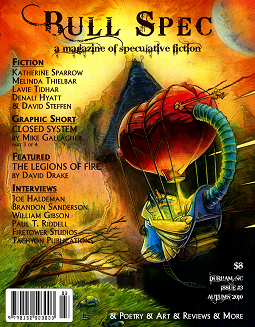 While other magazines are dying (and then, a la
 I believe everyone has something that unnerves them, which is not in your typical things-that-are-scary category. We’ve already agreed that clowns and little kids with blank stares rank high on the creepy index, but there are other more benign items that cause the hair on the back of our necks to stand up, mainly because they exist on the outside of the everyday.