Peter Jackon Proves that The Hobbit Is Actually Shooting
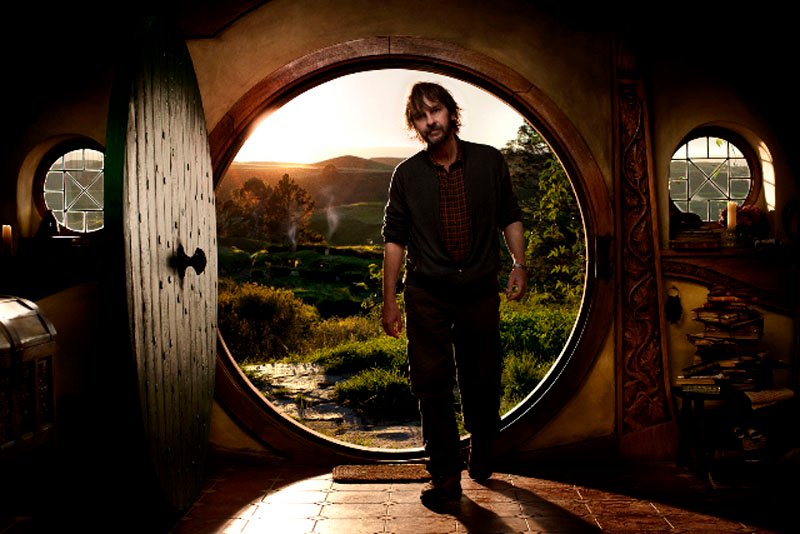 Only a short post today, following up on John Fultz’s report on the final progress toward the two-part film adaptation of The Hobbit:
Principal photography is officially underway! Footage is occurring. Right now, in New Zealand, a crew is shooting the much delayed and hazard-prone project, under The Lord of the Rings director Peter Jackson.
The public announcement from the studios involved was made yesterday, March 21, on the official Hobbit movie blog.
Better yet, we have proof that it is occurring: these two photos (second beneath the cut), initially posted to Peter Jackson’s Facebook page, of the director on a fully-dressed Bag End set, prepared and lit for the cameras.
It’s strange to think how much time has passed since that thrilling day in October 1999, when Variety and The Hollywood Reporter contained a two-page spread to announce that photography had started on the three Lord of the Rings films in New Zealand. The spread was a gorgeous Alan Howe painting of a Nazgûl perched on a hill over the Shire with the original logo design for the film. (I still have that older design on an edition of the novel I purchased soon after shooting began, just to have my first “merchandize” of the production). I cut out the ad and had it on my wall for ten years.
 It’s a great week for lovers of fantasy fiction!


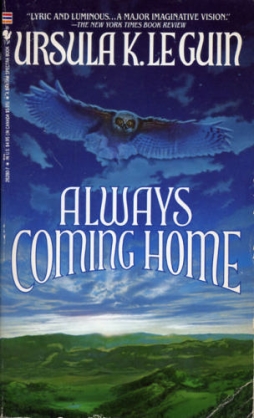 These past two weeks I’ve found myself writing here about science fiction, or speculative fiction, as the literature of ideas. It seems to me that ‘the literature of ideas’ implies something other than what we normally find in sf; I feel that it suggests writing that uses ideas to establish the structure of a work, instead of relying on traditional narrative. I’ve found a couple of early examples in Olaf Stapledon’s Star Maker and Jack London’s The Iron Heel. As a way to wrap up the discussion, I thought this week I’d look at a more recent example of what I mean by the literature of ideas: Ursula Le Guin’s Always Coming Home.

 Here is how this morsel describes himself:


 You can read my