Art of the Genre: Special Critical Hit
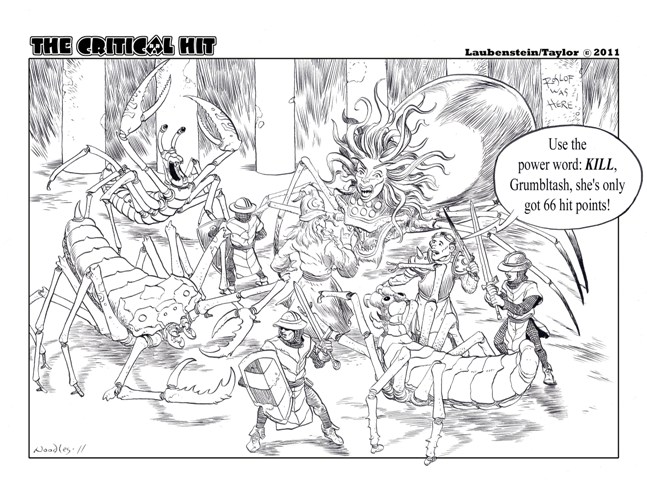
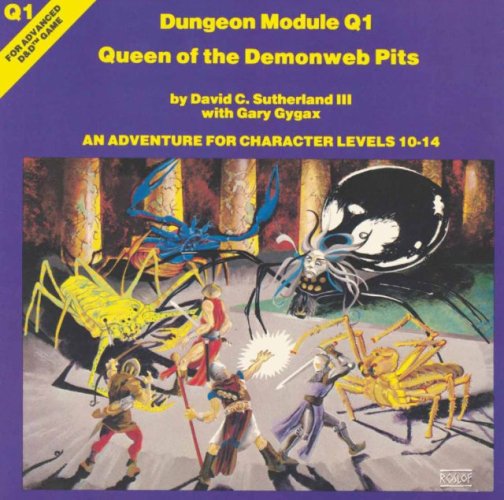
So, this is both my, and Jeff Laubenstein’s, tribute to Jim and his body of work. For all you old folks out there, you need no introduction, but anyone else, I’ll post the original art we’re referencing as well.
This tribute to Roslof can be seen as perhaps a threefold homage, co-authors David C Sutherland III passing away in 2005, and Gary Gygax in 2008. Q1 Queen of the Demonweb Pits debuted in a tournament edition for Origins in 1979. It was scripted by artist/writer Sutherland and completed by Gygax before being turned into the culmination adventure of the G-1-2-3, D 1-2-3 adventure path.
Today, Fleetwood the Fighter and Grumbltash the Wizard, along with three trusty NPCs, have fallen into the same scene as that fateful party in 1980. I’d say wish them luck, but it looks like Fleetwood is familiar with the module and monster stats already…
Anyway, I’d like to say once again to Jim, David, and Gary, thanks for all the fond memories!
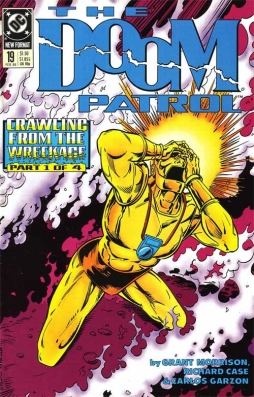 Grant Morrison’s Doom Patrol needs no context to be enjoyed; it is its own strange, powerful creature. But describing the context of the thing helps to throw into relief the accomplishment of the work. And for those who may not know the comic, explaining what it came out of may help to explain what it is itself.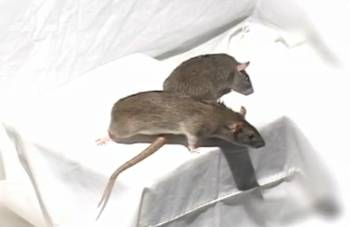
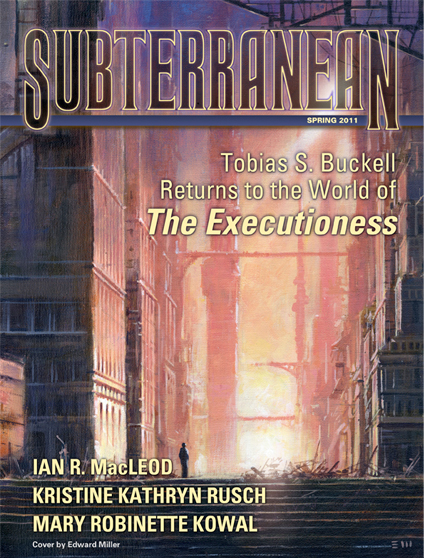
 I’m pleased to interview my great friend and writer buddy, Brad Beaulieu. We’ll be discussing his new novel, The Winds of Khalakovo, Book One of The Lays of Anuskaya, which comes out the first of April 2011 from Nightshade Books as a trade paperback and as an eBook. Winds is a sweeping epic fantasy with a Czarist Russian and Persian feel, a unique combination to be sure. I’m so proud of Brad’s accomplishment with the world building and the story. I’ve been involved with this novel for several years now, and have had a part in the revisions, so I’ve seen it go from an awesome book with an amazing concept to a truly exceptional one with a fully fleshed-out world.
 What do you get when you take