I Still Don’t Understand the Amulet, But I Love The Secret of NIMH
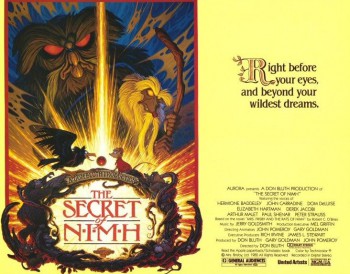 The Secret of NIMH (1982)
Directed by Don Bluth. Featuring the Voices of Elizabeth Hartman, Peter Strauss, Dom DeLuise, Derek Jacobi, Hermione Baddeley, David Carradine, Arthur Malet, Paul Shenar, Wil Wheaton, Shannon Doherty.
Hello, my name is Ryan Harvey, and apparently all I do here at Black Gate is review animated fantasy films.
With 1982’s The Secret of NIMH now out on a fresh new Blu-ray Disc. . . .
Wait a minute. Seriously, MGM Home Video? (Or Fox, or whoever actually handled this disc.) This is the best you can do with your new release of The Secret of NIMH onto hi-def? Normally, I would wait until the end of a movie review to discuss the quality of a DVD/BD, but you require me upfront to take you behind the shed with a very large paddle. This is shameful. The Secret of NIMH is an acknowledged animated masterpiece, the film responsible for starting the uphill climb from years of “limited animation” doldrums toward the new flowering of the 1990s. This movie taught a generation of viewers what was possible in the medium. It has fans of freakish dedication, such as myself, a scads of websites dedicated to its deconstruction and analysis. And all you can do is slap down whatever print you had on hand and stick on 1080 lines of resolution?
No, no, this is unacceptable. Disney pours immense work into restoring their classics for Blu-ray release, using the best prints possible and cleaning them up so the films look as fresh as they did on the animators’ table. But your current version of The Secret of NIMH looks far worse than it did on theater screens in 1982. I should know, since I was there as a wide-eyed youngling, and recall how the movie blew apart my nine-year-old mind with its motion, depth of imagery, beautiful backgrounds, and bizarre fantasy effects animation. And yet you give us a Blu-ray slathered in scratches and noise with dulled colors and a washed-out palette. This is hardly a step up from the 2007 DVD release. You couldn’t even bother with an interesting popup menu font! Are you aware that this is a classic?
Ah, clearly not.
I think I have that out of my system. Breathe. Breathe. Okay, now I think I can talk about one of the greatest fantasy experiences ever put on animation cels.
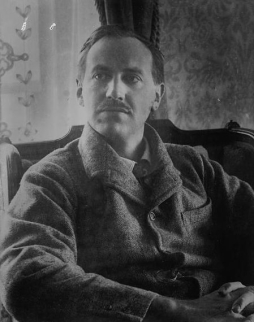 Lord Dunsany’s short story “The Fortress Unvanquishable, Save for Sacnoth” has been called the first sword-and-sorcery story ever written. That attribution has been
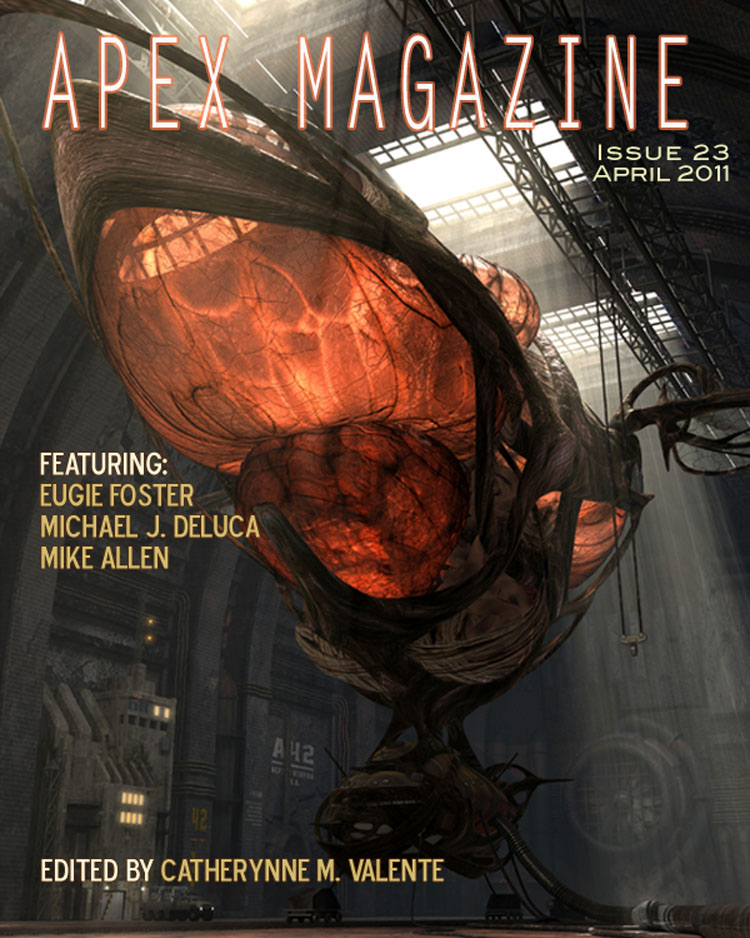 The April edition of
 I can’t help it! I must speak, and I must speak now, for I just found out about it. John O’Neill will probably glare at me, because once he hears, he’ll immediately want to post about it, and then he’ll discovered that I already have!!!
 Traffic is slow today at the bookstore, which meant I got to listen to Delia Sherman’s “
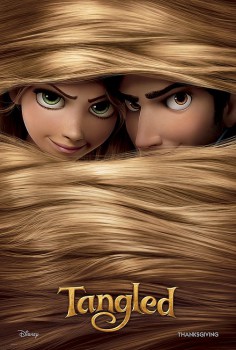 Tangled (2010)