Browsed by
Category: Blog Entry

Zig Zag Claybourne Author Interview: Flipping the Bird and Finding Joy while Writing Afro Puffs are the Antennae of the Universe
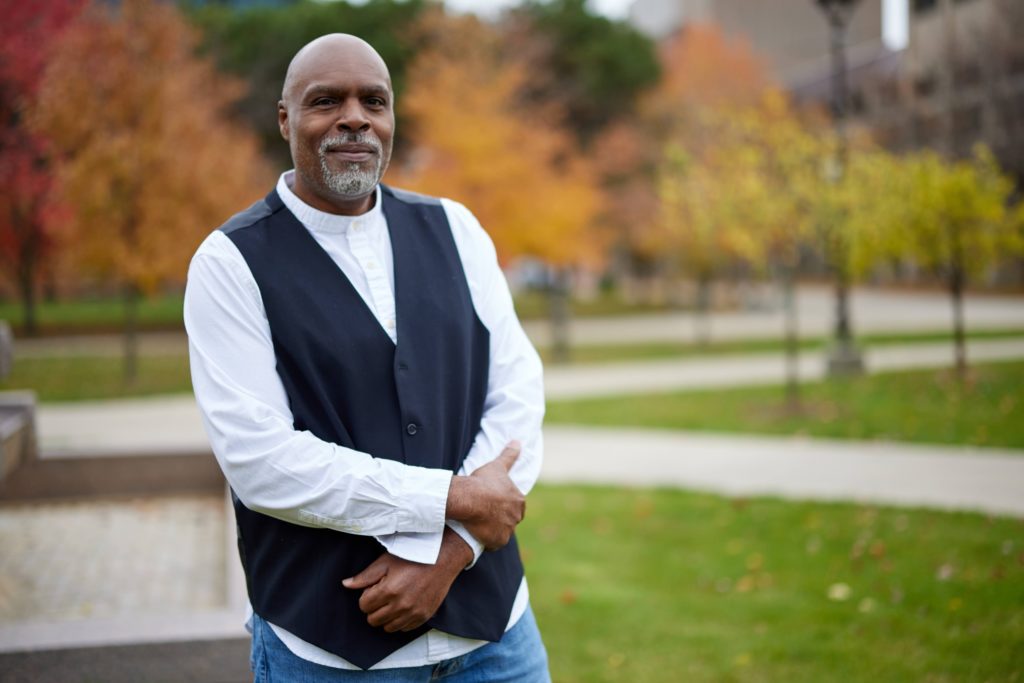
Zig Zag Claybourne Author Interview: Flipping the Bird and Finding Joy while Writing Afro Puffs are the Antennae of the Universe

Zig Zag Claybourne is infectiously joyous on the page and in real life. He’s a comfort to read but not everything he writes is comforting. There’s no seeing the light without being in the dark, but you can trust Claybourne to make you laugh while you’re there. He’s a chill-seeking truth-slinger who’ll shove you into action-packed absurdity then somehow make you feel…cozy.

Afro Puffs are the Antennae of the Universe is the sort of sci-fi that could get Prince’s sexyass ghost to slink outta the celestial void to host a book club. It’s the second, standalone installment in the Brothers Jetstream series. All Captain Desiree Quicho wants is a day off. Maybe a barbeque. But somebody’s got to save the universe. Again. This time from an immoral billionaire and a mega-corporation, each wanting power but neither wanting the responsibilities that come with it.

Here’s the hella fun phone chat Black Gate had with Zig Zag Claybourne about writing Afro Puffs and taking time in 2020 to find joy.

PATTY TEMPLETON:  What kind of feelings do you want to invoke in your readers with Afro Puffs are the Antenna of the Universe?

ZIG ZAG CLAYBOURNE:  Joy, rage, defiance, more joy, and fun. This book is definitely one that comes out of the gate with both middle fingers raised up high. I like that about it.

Who’s it flipping the bird at?

To the fan bois out there who are constantly being asses to everybody else. To the economic systems that treat people like they’re paper assets. This is a book for people saying enough is enough. We’re done with all that.
Read More Read More

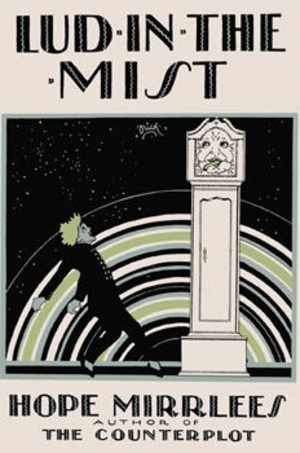
A Potent Draught of Distilled Fairy Fruit: Lud-in-the-Mist by Hope Mirrlees

A Potent Draught of Distilled Fairy Fruit: Lud-in-the-Mist by Hope Mirrlees

I’m back with a new column. Each first Friday of the month I’ll be writing about a work of fantasy I’ve never read (or read only once a long time ago; I insist on room for maneuvering!). Because of Lin Carter’s magnificent taste, it may at times seem I’m simply going through titles from his Ballantine Adult Fantasy series, but my goal is to rummage around in the basement and attic of fantasy, exploring works that preceded, or exist outside of, modern commercial fantasy. My reach will extend at least as far back as the Gothic novels first appearing in the late 18th century, and I hope it will come forward to today. So far, my planned reading includes Gormenghast, The Last Unicorn, Once Upon a Time, The Ship of Ishtar, Melmoth the Wanderer, and Frankenstein. If all goes well, I’ll even go for The Worm Ouroboros and The Manuscript Found in Saragossa, too.

Fantasy has become a successful commodity. Witness the gargantuan force of A Song of Ice and Fire, both in print and on the screen. And what are the leotard-clad protagonists of superhero movies but updated versions of the heroes panegyrized by the skalds and griots? Fantasy, to which I’ve dedicated untold numbers of hours reading and writing about, is more successful than I could ever have imagined forty-odd years ago when I first read The Hobbit, and yet I’ve found my taste for it diminishing with each passing year.

Excellent and original work is being created, but you have to hunt for it. Most new fantasy simply mimics ideas already done to death a long time ago, bringing nothing new or substantial to the field. I love the Ramones, but after four or five albums, you’ve heard everything they have to say. I feel the same way about new fantasy. And yet, I still find myself drawn to fantasy, remembering how it’s allowed me to shrug off the bonds of reality and slip into the world of dreams. I just don’t want another thousand-page story exploring the magically-augmented struggle for the throne of some imaginary kingdom, or a supposedly realistic disquisition on power politics in a “grittier” analogue of the real world, or about how there really isn’t good and evil, only gray morality. Even my beloved sword & sorcery begins to seem a little wan after reading eighty or ninety stories a year. Only in the best of hands do I find new stories that still hold my interest.

I recently reread Mikhail Bulgakov’s The Master and Margarita, a tale of the devil visiting Moscow, a writer and his lover, and a novel about Pilate and Christ. While a serious novel about art, love, and totalitarianism, it’s also fantasy. The form allowed Bulgakov to explore ideas he might not, under Stalin, have attempted otherwise (and still it was censored until decades after his death). Some of the deepest, most affecting scenes are pure fantasy, drawing on myth and nightmare instead of psychology and our five senses, allowing them to find a way to our soul that a realistic version could not. Bulgakov wrote to satisfy himself, not the dictates of the market. And though there’s nothing wrong with the latter, the result will rarely be a Bulgakov. You won’t encounter another book like The Master and Margarita because it wasn’t written to conform to genre considerations. Bulgakov never set out to become a “fantasy” writer, just a writer who would find the best way to tell the stories he wanted to tell.

Read More Read More

Ellsworth’s Cinema of Swords: Louis Hayward, Everyman with a Sword (Part 2 of 2)

Ellsworth’s Cinema of Swords: Louis Hayward, Everyman with a Sword (Part 2 of 2)

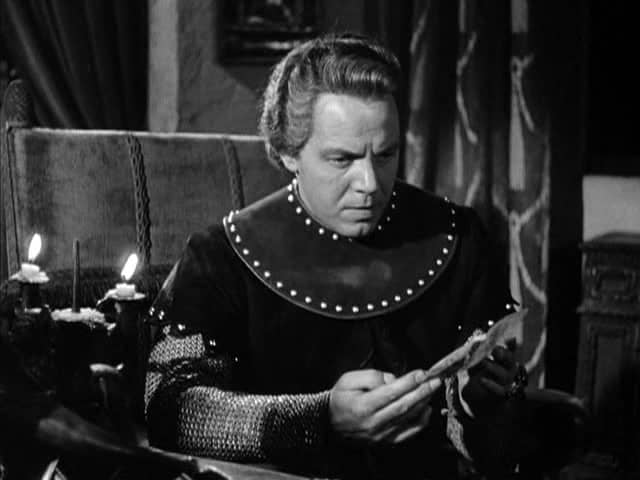
This week we continue our review of the work of British-trained actor Louis Hayward, this time looking at the lesser-known swashbucklers from later in his career (see Part 1 here). The main general point of interest here is how these movies reflect the influence of film noir, then at the height of its postwar popularity. These are low to medium budget films, like the films noir they compare to, but they were made with professionalism and a genuine feel for the genre.

The Black Arrow

Rating: ****
Origin: USA, 1948
Director: Gordon Douglas
Source: Columbia Pictures DVD

Say, this is good. Based, somewhat loosely, on Robert Louis Stevenson’s 1888 novel, it compresses and abridges but gets the essence right. This is another of independent producer Edward Small’s swashbucklers starring Louis Hayward, a story of the War of the Roses in which Hayward plays one of the victorious Yorkists, Sir Richard Shelton, returning home after the defeat of the Lancastrians. He pauses to drink at a stream and a black arrow thuds into a tree next to him — an arrow wrapped with a note in rhyme from a mysterious “John Amend-All,” warning him of treachery ahead. And in fact, Shelton arrives at his home estate to find that his father has been murdered, a crime blamed on a neighboring Lancastrian noble, already executed — but survived by a spirited daughter, Joanna Sedley (Janet Blair).

More black arrows arrive with rhymed warnings, and gradually Richard realizes that there was something fishy about his father’s murder. Interestingly, we know whodunit from the start: Richard’s grasping Uncle Daniel (George Macready), whom we see meeting with his three accomplices to pull the wool over Richard’s eyes. Following the clues of the black arrows leads Richard to a gang of outlaws in nearby Tunstall Forest, a band deliberately evocative in Stevenson’s novel of Robin Hood’s men, and the similarities are emphasized even more here. The rest of the story is about how Richard, with the help of Joanna and “John Amend-All,” learns the truth — and what he does about it.

Read More Read More

An Ignored 1894 Science Fiction Novel

An Ignored 1894 Science Fiction Novel

Thirty years ago (COVID-19 time) on May 1, I posted an article in which I explained why a film many view as a Hollywood musical is really a science fiction film. Today, on November 30, I’ll explain why one of Mark Twain’s novels is also a science fiction novel, and for the same reason.

Mark Twain, the pen name for Samuel Longhorne Clemens, was born in Florida, Missouri on November 30, 1835. Best known for the novels The Adventures of Tom Sawyer and The Adventures of Huckleberry Finn, some of his work, at both novel a short story length, dabbled in the tropes common to speculative fiction. Perhaps most famous of these is A Connecticut Yankee in King Arthur’s Court, a novel that sends the title character back in time and which formed a template for L. Sprague de Camp’s later Lest Darkness Fall. Other Twain works which are clearly part of the genre include the short stories “Mental Telegraphy,” “Shackleford’s Ghost,” and “Extract from Captain Stormfields Visit to Heaven,” all of which, along with several other stories, were collected in The Science Fiction of Mark Twain, edited by David Ketterer and published by Archon Books in 1984.

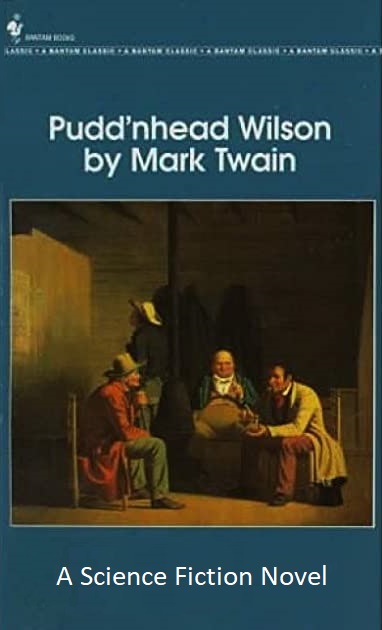
The work that I would like to take a look at through a science fictional lens, however, is Twain’s 1894 novel Pudd’nhead Wilson. Originally serialized in The Century Magazine in 1893, the novel is generally known as a courtroom drama in which the title lawyer realizes that not only is the accused innocent of the crime, but that there is a deeper secret hidden among the residents of Dawson’s Landing, Missouri. The novel is also known for the pithy chapter headings which are purportedly taken from Pudd’nhead Wilson’s calendar, such as “Training is everything. The peach was once a bitter almond, cauliflower is nothing by cabbage with a college education.” Although Wilson is the title character and heavily involved in the novel’s denouement, he disappears for a large swathe of the novel.

Set in the first half of the Nineteenth Century, Twain focuses his attention of Roxy, a woman who is only 1/32 black, but that is enough to condemn her to a life of slavery serving the Driscoll family. It also means her son, Valet de Chambre, who is the result of rape by her master, Percy Driscoll, is also a slave. Very fair skinned, many comment on the similarity of appearance between Chambers, as he is called, and his half-brother, Percy’s legitimate son, Tom Discoll. When Roxy sees some slaves sold down-river, she decides she needs to protect Chambers from that fate and, after briefly contemplating murder/suicide, she decides, instead, to swap Chambers for Tom, raising the white boy as her own and letting the world think her own son is her master.

Read More Read More

The Mandalorian: Fidelity & Innovation

The Mandalorian: Fidelity & Innovation

I’m not a Star Wars fanboy. I’ve seen the movies, and most of the cartoon shows. Though I’m pretty spotty on The Clone Wars, which my son Sean can cite chapter and verse. I read books by Alan Dean Foster and Timothy Zahn way back when, but that’s about it.

But I like Star Wars. And I’m fairly open-minded. I thought that a few of the movies, like The Phantom Menace, weren’t that great. And The Last Jedi just about put me to sleep. But on the other hand, Solo was a fun caper/heist flick, with a Star Wars overlay: I’m in!

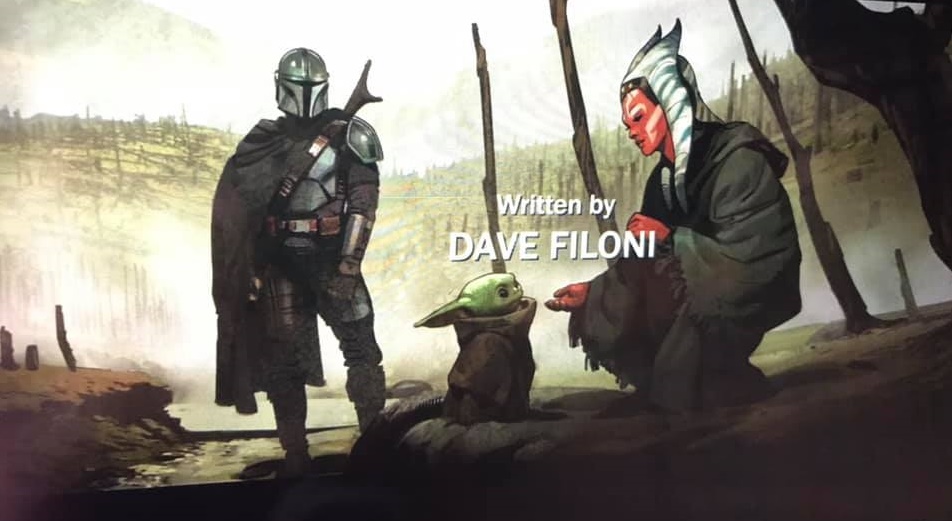
Star Wars Rebels was a much better animated series than The Resistance, for me. I liked all the lore they filled in. Which brings us to Jon Favreau’s terrific project, The Mandalorian. Favreau played a major role in launching the Marvel cinematic universe, and I can’t think of any better hands to be holding Star Wars at the moment.

A year ago, I raved about the first three episodes of season one, which I binge-watched with my son. I loved the rest of the season, and as I type this, we’re through episode five of season two.

SPOILER ALERT – If you’re reading this before watching the show: that’s surprising. Seems like everybody I know is watching every episode on the Friday it drops. Go catch up on Disney+, then read the rest of this. END SPOILER ALERT

Read More Read More

Rogue Blades Author: An Unexpected Gift

Rogue Blades Author: An Unexpected Gift

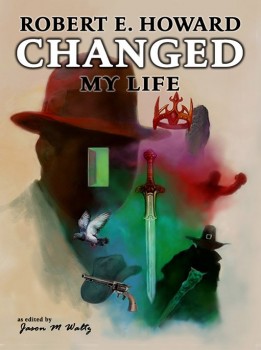
Howard changed my lifeThe following is an excerpt from Barbara Ingram Baum’s essay for Robert E. Howard Changed My Life, an upcoming book from the Rogue Blades Foundation.

May 25, 1995, marked a profound change in my life. Alla Ray Morris, or ‘Pat’ as we called her, passed away unexpectedly. When my husband, Jack, met with her attorneys after her funeral, he was shocked to learn she had bequeathed her rights in Robert E. Howard’s works to him, to his sister Terry, and to their mother, Zora Mae Baum Bryant, whom she had named as executrix of her estate. I could never have imagined the impact this gift would have on my life.

Jack’s father had passed away in 1971, and several years later his mother married Elliott Bryant, a kind, loving widower who embraced his new family as Zora Mae had two adult children, a daughter-in-law, and three young grandchildren. Elliott’s parents and younger brother were deceased, but he maintained a close relationship with his aunt, Alla Ray Kuykendall (‘Auntie K’) and her daughter, Alla Ray Morris (‘Pat’), who lived in the nearby town of Ranger, Texas. Whenever we gathered at the house in Cross Plains for holidays, Auntie K and Pat were always included, and over the years they became family to all of us as well. So even after Elliott died suddenly in 1982, the relationship continued, and every week Jack’s mother drove to Ranger to play bridge with the Kuykendalls and their friends. I believe she and Pat became even closer after Auntie K passed away. Nevertheless, we were stunned when Pat suddenly died and we learned she had included us in her will — it was totally unexpected.

We knew nothing about Robert E. Howard or his works. However, we recalled Zora Mae, Elliott, Auntie K, and Pat had attended the showing of the film Conan the Barbarian, starring Arnold Schwarzenegger, at the Paramount Theatre in Abilene, but Jack and I had never seen the film or read any of Howard’s works or talked about Howard or discussed the Kuykendalls’ ownership at family gatherings. I faintly remembered comments about Howard Days, but we had never discussed those events, nor had we attended. Interestingly, though, Jack’s mother kept a Conan calendar on her kitchen wall — which I know now was a Ken Kelly scene from “People of the Black Circle.” (You would have to know Jack’s mother to appreciate how completely out of character it was for her to have a heroic fantasy calendar on her wall. Zora Mae was very much a traditionalist and was very particular about her home and its accessories.)

Read More Read More

Writing Advice: Get Spiteful

Writing Advice: Get Spiteful

mam-tor-5393685_1920

What a stunning walk this would be. Image by Tim Hill from Pixabay

Good afternoon, Readers!

I have a hot take:

Spite is as good a reason for creating as any.

Wait. Hear me out. Let me explain.

This past week, I was hit with two important rejections. They hit harder than rejections normally do. I’ve been at the writing game a long, long time. I’m used to rejections. Sure, I really wanted to succeed this time, but I always really want to succeed. Normally rejections just make me sad for a little bit. I drink a bit of whiskey – alright, a little bit more than a bit of whiskey – and I pick myself up and try again. This time… this time I went through the whole gamut of stages of grief. Except for denial. I’ve had too many rejections for denial to ever come up. It’s totally believable that it would happen.

Also, bargaining didn’t happen. What was I going to do? Whinge at them until their minds changed? Psht.

Read More Read More

Steamed – Gaming here at Black Gate

Steamed – Gaming here at Black Gate

Hudsucker_RobinsElevatorEDITEDThe pay phone on the wall by the door into the dungeon…cellar…basement…journalist’s suite below Chicago’s permafrost layer rang at the Black Gate World Headquarters. I vaulted over the wood plank that rested on two sawhorses, which served as my desk. The last person who hadn’t answered before the third ring had been sent downstairs. ‘Downstairs’ was rumored to be the lair of a beast that Conan wouldn’t be able to defeat.

Black Gate World Headquarters. Home of the world’s preeminent fantasy magazine.”

“Who is this?” barked the voice of John O’Neill, Founder, editor, publisher, CEO, CFO, and overall Grand Poobah of Black Gate. I could think of a three-letter acronym beginning with ‘S.’ “Is that you, Bryne?”

I took a breath. I had been writing for Black Gate for going on seven years now, and he still got my name wrong. I had given up trying to correct him after the second year. I figured, as long as I remained on the payroll, it didn’t really matter. Not that I actually got paid.

“Yes, sahib.”

“What are you doing down there?”

“Just working on a column, sir.”

“What do you mean, man? You’re in the office on a Sunday, working on a column?”

I caught myself. “Working on three columns, sir. I finished two yesterday.”

“That’s better. Thought I was going to have to reassign some stories from that Ted guy. Can’t have you coasting on past accomplishments.” He paused. “Of course, we’re a team here – no individual egos.”

Yours is certainly big enough for the rest of us, I thought.

“What was that, Bryne?”

“I didn’t say anything, sir.”

Read More Read More

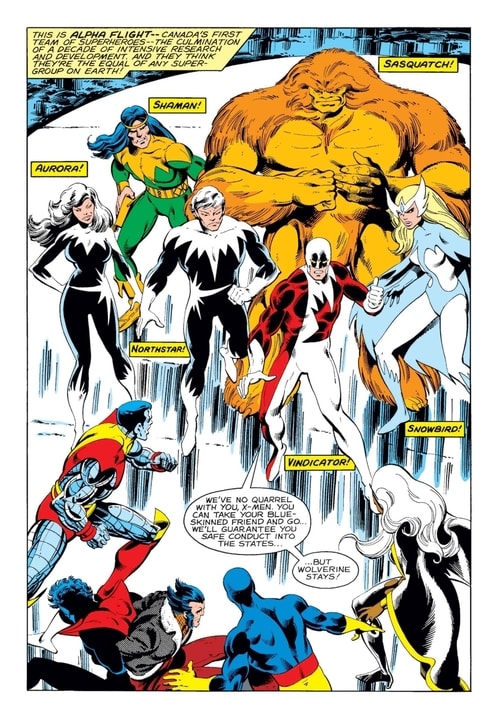
Uncanny X-Men, Part 23: 1979 – Chaos in Canada with Alpha Flight!

Uncanny X-Men, Part 23: 1979 – Chaos in Canada with Alpha Flight!

screenshot_20201111__MeEdQ

Welcome to my 23rd blog post detailing my epic reread of The Uncanny X-Men. I started in 1963 and had reached the classic Claremont-Byrne-Austin period that ran from 1977-1980. From Giant-Size X-Men #1 with thirteen team members, the creative team pared them down to seven by issue #111, peeled off Jean Grey and Professor X by issue #117 and in issue #119 injured Banshee so gravely that essentially these new X-Men are down to five effectives: Cyclops, Colossus, Storm, Nightcrawler and Wolverine.

Read More Read More

Rogue Blades Presents: Sometimes a Good Hero is Hard to Find

Rogue Blades Presents: Sometimes a Good Hero is Hard to Find

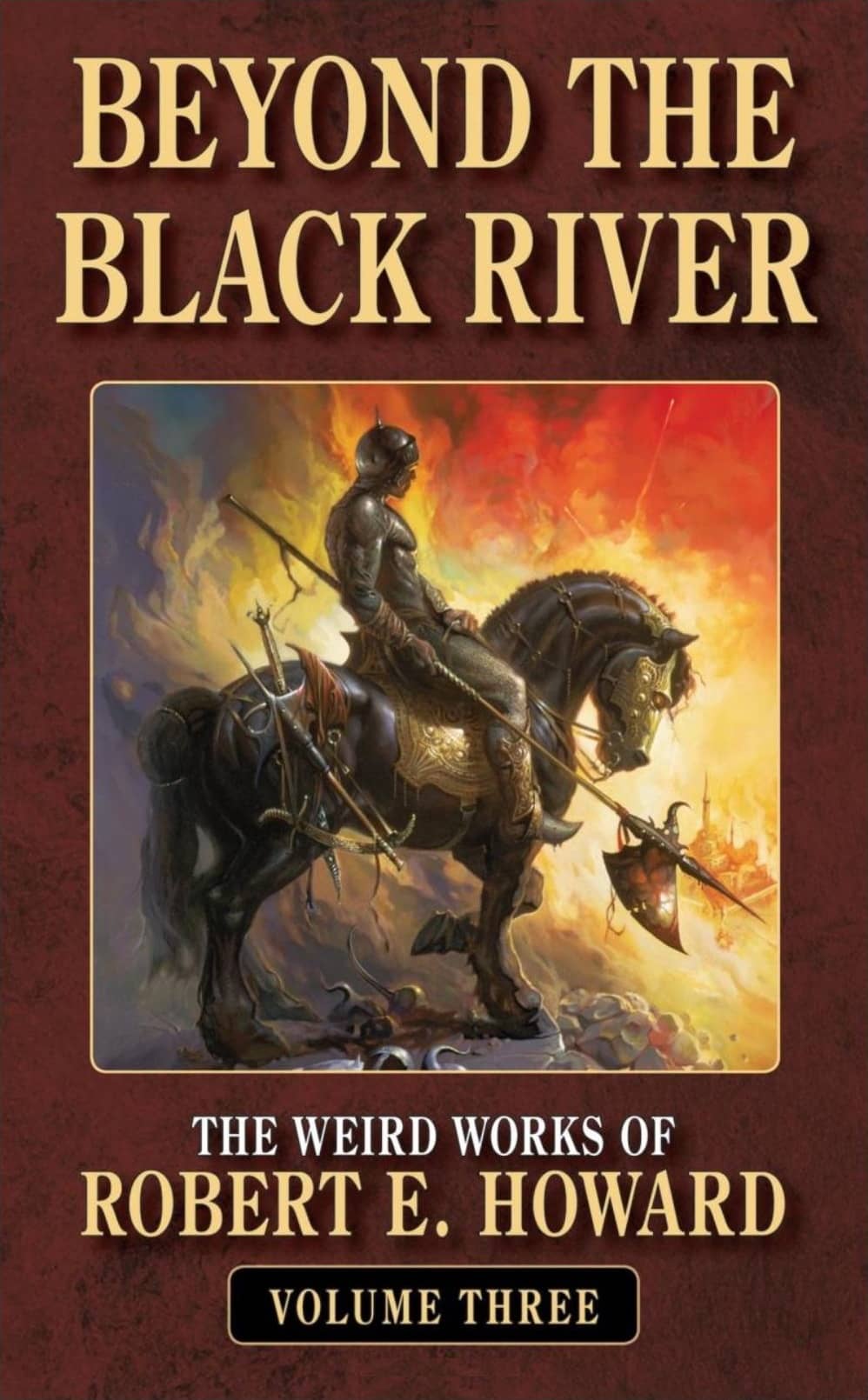
Beyond the Black RiverRecently I’ve been reading Beyond the Black River, a collection of Robert E. Howard tales published by Wildside Press. Within those pages one can find a couple of horror tales but also a handful of Conan the Cimmerian yarns, including the short story which gives this book its title.

When reading Beyond the Black River, the book or the story, it is obvious not only who the protagonist happens to be, but also the hero. The two figures are not always the same individual within a tale. For instance, Conan features large in most of the stories here, and he is the hero in at least four of the tales, but he is not always the protagonist. Sometimes Howard would pen a Conan tale told from another point of view. But whatever the point of view, Howard was mainly a writer of action and adventure, thus he wanted there to be little question about his hero in any given story.

Also of late, like millions stuck at home, I’ve been watching my fair share of television, which is actually unusual for me. One show I’ve watched, again like millions, is The Mandalorian. Here, too, it is obvious who wears the title of hero and protagonist with the ever-helmeted “Mando” performing both roles. I also caught up on the show Justified, a modern Western of sorts featuring Timothy Olyphant as Deputy U.S. Marshall Raylan Givens in my home state of Kentucky (it was kind of fun to watch all the things the show got wrong about the Bluegrass State); once more it was not difficult to pick out the hero and protagonist, here the same individual in Raylan Givens.

However, earlier in the year I read novels and stories and watched shows in which it was not so easy to pick out a hero.

For instance, watching the super hero show The Boys on Amazon Prime, there are a whole lot of bad people but not a lot of real heroes. Even a regular protagonist is difficult to pinpoint as this show has more of an ensemble cast with the focus on characters shifting. Early on in the series, Hughie Campbell (portrayed by Jack Quaid) is the protagonist, but by the end of the first season Hughie has been taken in as part of the broader cast. Also, while Hughie occasionally does something that is heroic, he generally is too reticent to be a regular hero. Still, he usually tries to do what’s right, at least for the moment, and maybe that’s all we can ask for a modern television hero. And I don’t want to leave out other characters, for Starlight (Erin Moriarty) is usually the most heroic of the “supes” and she also tries to do what is right, but she’s not exactly the hero of the show. Karl Urban’s Billy Butcher character plays large on the screen whenever he appears, and he does sometimes do the right thing, even the heroic thing, but I don’t think anyone who has watched the show would consider Butcher a hero, especially as his motives usually come from pain, rage and sometimes even selfishness.

Read More Read More