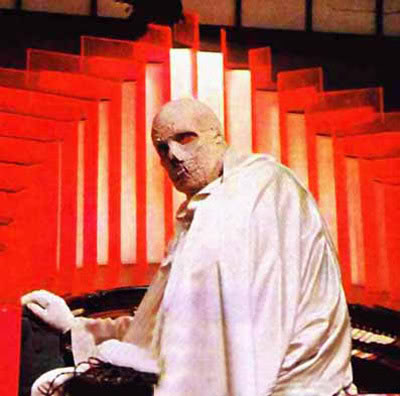
SIR JULIAN THE APOSTATE: Doomed Knight, Tragic Hero
 Swords Against Darkness.
Heroic Fantasy.
The Year’s Best Horror Stories.
Distant Worlds.
Alien Worlds.
Void.
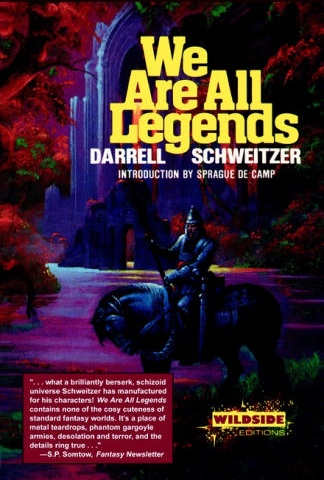
What sword-slinging hero appeared in all of these anthologies and magazines (and more) before his adventures were collected into a single impressive volume? The answer is Sir Julian the Apostate, a knight fallen from grace, and as doomed a hero as you’ll find in the history of sword-and-sorcery fiction. For swashbuckling fantasy as dark and seductive as a vampiric lamia, look no further than the saga of Sir Julian, as chronicled in Darrell Schweitzer’s WE ARE ALL LEGENDS.
The twelve stories comprising the book were first published between 1976 to 1981, definitely a “golden age” for sword-and-sorcery novels, magazines, and comics. Yet unlike much of what was published during the S&S “boom” of the era, Schweitzer’s tales of Sir Julian and his weird fate are all timeless gems.
“It was in an old land that the battle had taken place; a country of empty halls and deserted castles where ruined walls stood protecting nothing from nothing, and roadways faded into the earth and led nowhere. For three days in this place the swords of the two armies sang their terrible song on shields and armor, and when the fighting was done and all was still, a deep fog covered the sodden ground.”
–WE ARE ALL LEGENDS
This cycle of related stories includes witches, demons, vampires, zombies, ghosts, and far stranger things. It blurs and then erases the line between fantasy and horror. The book’s main character enables Schweitzer to twist the whole “knight on a quest” idea into a deep strangeness all its own. …
 I’ve discussed
 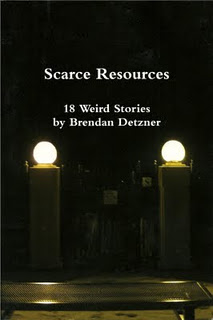 Scarce Resources, by Brendan Detzner
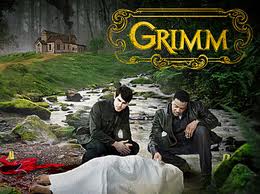 Another week, another set of new television goodness from the non-cable networks. Seriously, after a year where there’s been very little mainstream science fiction and fantasy on television, it’s nice to see it coming back in such full force. I’m still divided on which of the new shows I most like (though I still probably lean, just a touch, toward Once Upon a Time), though, and both seem to have some potential.
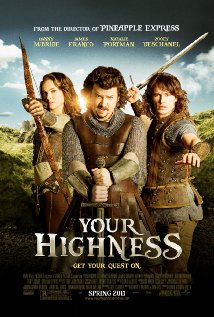 Sometimes a film comes along which redefines a genre. It brings a new, vibrant life to traditional storytelling structures. It makes you look forward to the new tales that will be inspired by it.
 The latest Apex Magazine is now