Browsed by
Category: Blog Entry

Vintage Treasures: The Best of Stanley G. Weinbaum
Vintage Treasures: The Best of Stanley G. Weinbaum

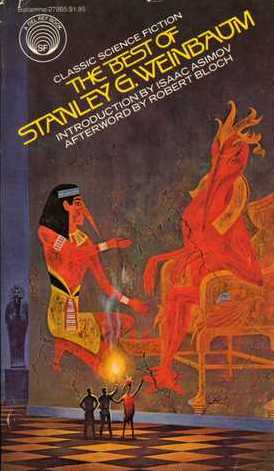
The Best of Stanley G WeinbaumThis is the fifth volume in Lester Del Rey’s Classics of Science Fiction line I’ve discussed here (starting with The Best of Murray Leinster, The Best of Robert Bloch, The Best of Henry Kuttner, and The Best of C M Kornbluth.) I believe it may also have been the first, since it has the earliest publication date of the titles we’ve examined so far — April 1974 — and also because the cover design for the first printing (see below) was slightly different and a little rougher.

And also because, if you’re going to launch a series dedicated to the very best science fiction and fantasy writers of the century, it makes sense to start with Stanley G. Weinbaum.

This isn’t the first time we’ve covered Weinbaum’s career. The distinguished Ryan Harvey wrote a terrific retrospective three years ago, where he said, in part:

In a way, Weinbaum was science fiction’s equivalent of Robert E. Howard: a hugely talented author who died too young. But Weinbaum’s run was even shorter than Howard’s — a mere year and a half, with twelve stories published during that time. Posthumous work followed, but considering the immense talent that Weinbaum shows in his fiction — starting with his first story! — it is frustrating how little of this gold strike ever got to the surface for readers to mine.

We’re hardly the first fans to champion Weinbaum’s pulp science fiction. H.P. Lovecraft praised him highly, calling him ingenious, and stating that he stood miles above the other pulp SF writers in his ability to create genuinely alien worlds, especially in comparison to Edgar Rice Burroughs and his “inane” stories of “egg-laying Princesses.” And series editor Lester del Rey, in the June 1974 issue of IF magazine, said:

Weinbaum, more than any other writer, helped to take our field out of the doldrums of the early thirties and into the beginnings of modern science fiction.

Pretty heavy claims. So exactly who was this writer who won such adoration and devotion, even decades after his death?
Read More Read More

Explanations – I Got a Million of ‘Em

Explanations – I Got a Million of ‘Em

RaksuraI was reading Martha Wells’ excellent The Cloud Roads the other day and I was struck, as I often am when reading something very well written, by how few explanations there were. One of the most difficult things writers of Fantasy or SF face in creating a new world, and alien beings, is to find a way to give their readers necessary information seamlessly, and Wells has done a great job here. There are plenty of things about the world of the Raksura I still don’t know and plenty that I had to figure out for myself. I know there are some readers who don’t want to do any work when they’re reading, but it’s a fact that you value and remember the information you had to work out for yourself a lot more than stuff that was just handed to you.

Yes, I’m talking about that old writing class cliché, “show, don’t tell.” And as important as that advice is when we’re creating sequences involving action and emotion, it’s doubly important when we’re handing out explanations.

Explanations have a bad rep, and justifiably. There’s the ever unpopular info-dump where all forward motion grinds to a halt and the author tells you everything you need to know – ever – about anything – or so it feels like. There’s the equally unpleasant and not-as-rare-as-you-might-hope “As you know Bob,” a dialogue oopsy, more cleverly disguised on TV than on the page. Don’t tell me you’ve never wondered why all those CSI guys tell each other what they’re doing all the time when they must already know. I know you have. But that’s the classic “As you know, Bob.”

There are situations (crime shows being one of them) where readers and audiences are becoming more knowledgeable about certain basics, to the point that explanations are no longer needed. But the unfortunate truth is that some of these back-handed ways of doing things still turn up from time to time, usually in the hands of amateurs in the field. The problem is that there are certain things the readers simply have to know and our jobs as writers is to find a way to tell them, without stopping the forward flow of the narrative and without having characters explain things to each other that they already know perfectly well.

Read More Read More

Blogging Epic Comics’ Tomb of Dracula Limited Series, Part Two

Blogging Epic Comics’ Tomb of Dracula Limited Series, Part Two

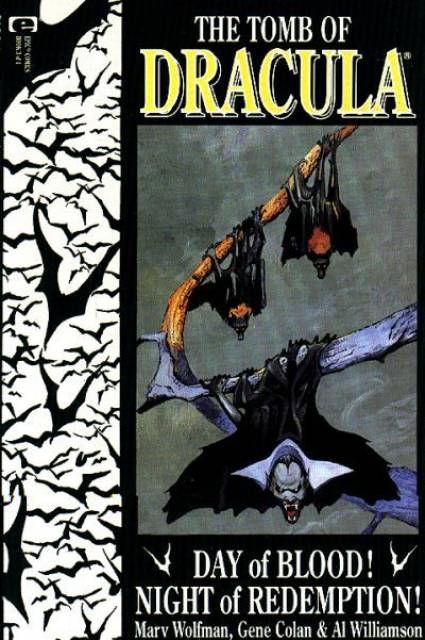
30301-4602-33709-1-tomb-of-draculaMarvel Comics’ mature readers imprint, Epic Comics, published a Tomb of Dracula limited series in 1991 entitled, “Day of Blood, Night of Redemption.” Marv Wolfman and Gene Colan reunited from the original series and teamed with Al Williamson to produce this visually stunning and highly ambitious four-part epic. The script faltered a bit by the end, as it really needed at least two more issues to realize its full potential; but this was an excellent effort and a welcome return to form that is deserving of more attention for its high standard of quality throughout.

The third issue gets underway with a quiet interlude shattered when a street gang makes the mistake of harassing the vampire after discovering him alone on the streets of Washington D.C. There is an unmistakable cathartic glee to the scene where Dracula literally drags the leader of the gang to his death. This is followed by a brief segment that establishes Katinka as having joined Frank Drake and Blade in their hunt for the vampire. Her character proves the necessary bridge to smooth the rough partnership rekindled between these two very different men. She also functions as a Van Helsing substitute, who is seeking a scientific cure for Marlene’s possession.

Marv Wolfman obviously felt the imposing weight of technological change in the ten years since he had last written the character and brings the same weight to bear on the vampire. Dracula pays a visit to Lila in her dorm at Georgetown University, where he succeeds in seducing her. Once under the vampire’s spell, the young woman eagerly steals all of Professor Smirnoff’s notes and introduces the vampire to the burgeoning computer age and the marvel of the CD-Rom in this pre-Internet story. While Dracula absorbs all of this information, he is dismissive of Lila. The sexually confused young woman believes she loves the vampire and willingly enters into an abusive relationship with him.

Read More Read More

Goth Chick News: Music From Where It All Began

Goth Chick News: Music From Where It All Began

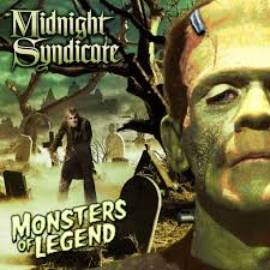
image002It might have been at a sleep-over, huddled around the TV and a local public broadcasting station, or more recently around an older sibling’s laptop.

It could have been in a midnight show at the broken-down theater in the town where you attend college or, heaven-forbid, at the cliché of a drive-in.

Wherever it was, you’ll never forget it – that night (for it certainly was at night) when you discovered the classic movie monsters.

Who was first?

Dracula?

Frankenstein?

It doesn’t matter. The impact was the same. And whether you went on to be a lifelong fan of the genre or just a Lugosi devotee, there will forever be a place in your heart for that first time.

It’s a lot like love, only with more running and screaming.

Read More Read More

New Treasures: Unfettered, edited by Shawn Speakman

New Treasures: Unfettered, edited by Shawn Speakman

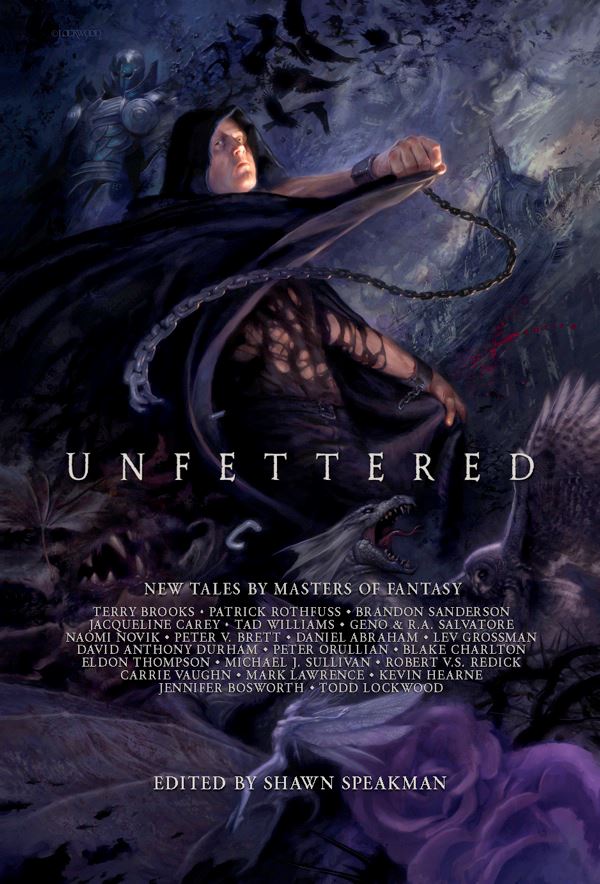
Unfettered-smallUnfettered is a monster anthology with an unusual genesis.

It started with editor Shawn Speakman, who became friends with Terry Brooks a few years back and wrote his own fantasy novel, The Dark Thorn. When Shawn was diagnosed with Hodgkin’s lymphoma in 2011, Brooks donated an original short story to help Shawn pay his mounting medical bills — and suggested that Shawn ask some of his writer friends to do the same.

The result is a massive 518-page tome containing original stories in some of the most popular fantasy series on the market, from some of today’s hottest writers — including Tad Williams, Patrick Rothfuss, R.A. Salvatore, Robert Jordan & Brandon Sanderson, Peter V. Brett, Lev Grossman, Carrie Vaughn, Jacqueline Carey, Mark Lawrence, and many others.

The tales included are set in the worlds of Shannara, the Wheel of Time, the Demon Cyle, Temeraire, Kushiel, Vault of Heaven, the Broken Empire, and many other top-selling series.

As the title suggests, authors were free to contribute whatever they desired.

This book really is a once-in-a-lifetime event and, as the marketing copy states, a testament to the generosity of the science fiction and fantasy community.

Here’s the impressive Table of Contents.

Read More Read More

When Ideas Collide

When Ideas Collide

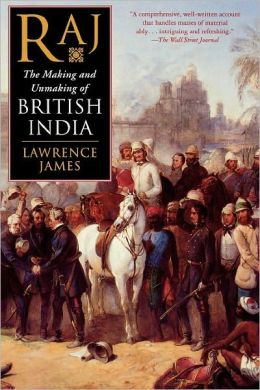
Raj The Making and Unmaking of British IndiaOne of the most common questions I hear from readers and non-writers is Where do you get your ideas? A lot of writers I know have a glib answer like: my cat, my muse (often the same critter), my subconscious (but in other words, we don’t know), or my favorite: a P.O. Box in Spokane.

But sometimes, authors — and I think especially SFF authors — will say a book idea came from two or three separate things considered at once. When they’re brought together, sparks fly and an idea flames up. This happened to me with my latest novel.

It began with serendipity: the discovery of two endlessly fascinating nonfiction books I found on my husband’s book shelf. One was about the British Natural History Museum and the other was a history of the British Raj in India.

I started one, which was a little slow, and while I tried to decide whether to plod on, I began the other book. Then the first book picked up speed and sank its hooks.

I jumped from one to the other so I could keep reading them both. In one, I was reading about the part of natural history museums you don’t realize are there (the research offices and store rooms). There were these eccentric scientists with nicknames like “trilobite man” and “beetle man.” If women had been more welcome in those rarified offices, I might have read about bird woman, or more likely, gopher girl.

In the other book, I found out how the British established an empire in that unlikely place, India, and the stunning arrogance of the Raj. Although colonialism’s stain spread widely on the continent, I was surprised to learn that even as late as the early 20th century, there were people in villages in India who had never heard of the Raj or Queen Victoria. India is a big place.

Read More Read More

‘This is the Real Deal’: Tangent Online on “The Highwater Harbor”

‘This is the Real Deal’: Tangent Online on “The Highwater Harbor”

The Highwater Harbor-smallBob Blough at Tangent Online reports on Aaron Bradford Starr’s new novella of adventure fantasy, published here last month, comparing it to the adventures of Fafhrd and the Gray Mouser:

“The Highwater Harbor” by Aaron Bradford Starr is a superior fantasy about a roguish band of three – Gloren, a Gallery Hunter, Yr Neh, a talking cat of noble birth, and their chronicler Aven Penworthy. This novella contains evil magics, pirates, mysteries, secret keys and a plethora of other fun stuff all written in delicious prose that at times is truly humorous…

Oh, and did I mention volcanoes? This is the fourth story in an ongoing series and is complete in itself. It put me in mind of Fritz Leiber’s Fafhrd and Gray Mouser series of adventures. Each of their tales stood alone but left you wanting to see more. So did “The Highwater Harbor.” And I think that is the highest praise I can give the author. This is the real deal. Please enjoy it.

“The Highwater Harbor” is the fourth story featuring Gallery Hunters Gloren Avericci and Yr Neh. It follows “The Daughter’s Dowry,” in which the two seek a legendary treasure in a sunken tower, “The Tea-Maker’s Task,” which sees them accept a dangerous commission to investigate a deadly island, and “The Sealord’s Successor,” a mystery novella in which the two Gallery Hunters find themselves drawn into a deadly conspiracy involving a powerful kingdom, ancient secrets, and a very peculiar painting.

The complete catalog of Black Gate Online Fiction, including stories by Mark Rigney, Jamie McEwan, Martha Wells, Vera Nazarian, Ryan Harvey, Nina Kiriki Hoffman, E.E. Knight, C.S.E. Cooney, Howard Andrew Jones, Harry Connolly, and many others, is here.

“The Highwater Harbor” is a complete 35,000-word tale of adventure fantasy. It is offered at no cost. Read the complete story here.

Roger Zelazny, August Derleth and Appendix N: Advanced Readings in D&D

Roger Zelazny, August Derleth and Appendix N: Advanced Readings in D&D

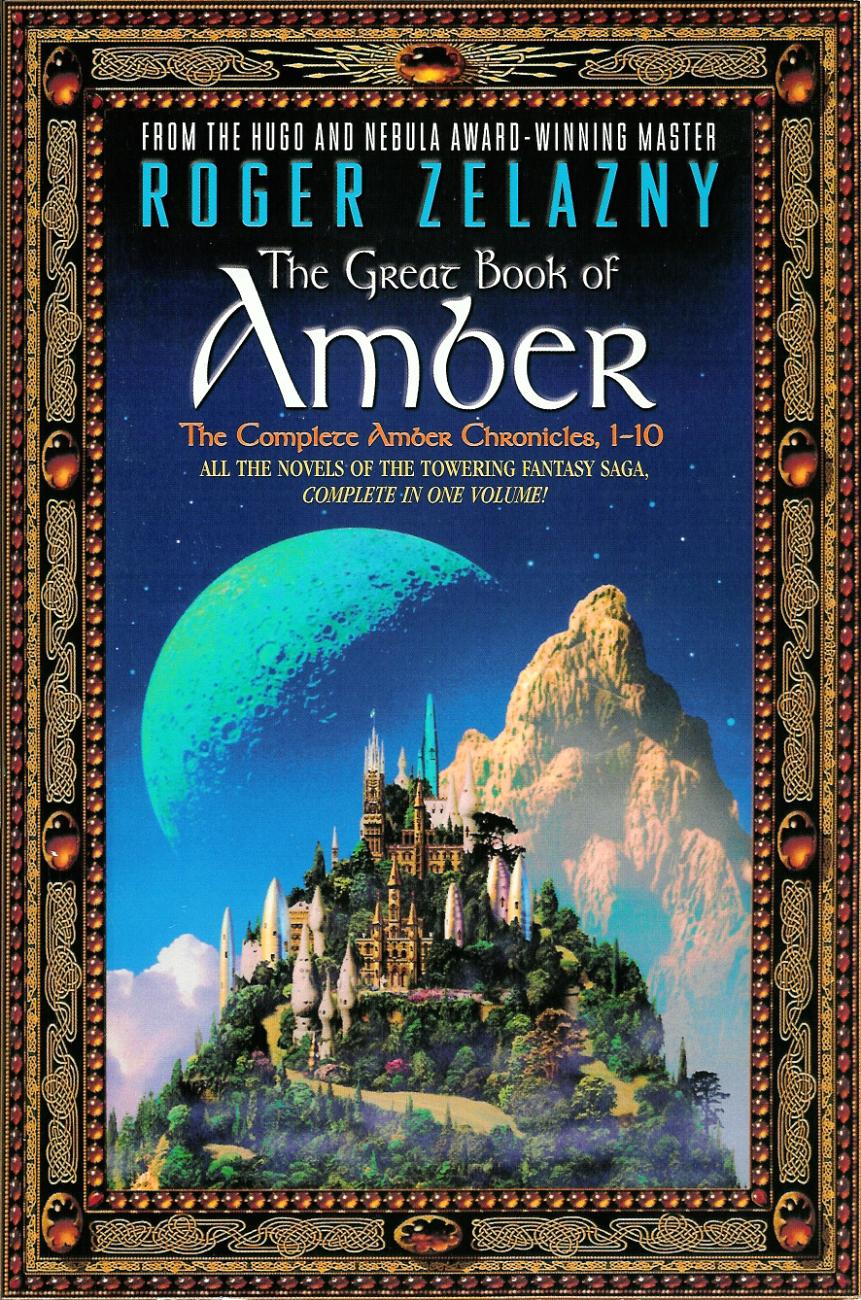
The Great Book of Amber-smallI’ve been spending a lot of time with Gary Gygax’s Dungeon Masters Guide recently, as I guide my young players through a wilderness campaign using Outdoor Survival. The DMG is a treasure trove of handy tables, excellent advice, and fascinating tangents — atrociously organized, of course, but that’s part of its charm. Like the most useful book in all fantasy, the Junior Woodchucks Guidebook (seriously — I’d kill for a copy of that book), you can flip pages at random and never know what indispensable tidbit you’ll find.

Appendix N, which lists the great fantasy writers whose collective contributions laid the groundwork for Dungeons and Dragons, is just one of those finds; but it’s one which has received a great deal of attention. Mordicai Knode and Tim Callahan at Tor.com are sampling the work of every author in Appendix N; so far they’ve covered Robert E. Howard, Poul Anderson, Sterling E. Lanier, Fritz Leiber, Edgar Rice Burroughs, and Jack Vance.

Last week, Tim turned his attention to Roger Zelazny and The Chronicles of Amber. He wasn’t impressed:

I merely sampled the first book in the series, Nine Princes in Amber, originally published in 1970, and that was more than enough… if the first book in Roger Zelazny’s Amber series is considered any kind of classic, then it must be because the novel is graded on a curve. A curve called “pretty good for an opening novel in a series that gets a whole lot better,” or maybe a curve called, “better than a lot of other, trashier fantasy novels released in 1970, when there was nothing on television but episodes of Marcus Welby and the Flip Wilson Show…”

It’s not that I found Nine Princes in Amber uninteresting; it’s just that I found the novel shockingly discordant and unsatisfying to actually read all the way through. It’s a novel that slams together jokey Hamlet references in the narration with pop psychoanalysis and superhuman beings and shadow realms and dungeons and swords and pistols and Mercedes-Benzes.

Actually, that last sentence is almost exactly how I remember Nine Princes in Amber. Shadow realms and dungeons and swords and pistols and Mercedes-Benzes. Yeah, that pretty much covers it.

Read More Read More

The Game is Afoot: Watch the Sherlock Season 3 Trailer

The Game is Afoot: Watch the Sherlock Season 3 Trailer

When I was a young blogger, I swore I wouldn’t write predictable headlines like “The Game is Afoot: Watch the Sherlock Season 3 Trailer!” Now I’m a middle-aged blogger with deadline pressures and nothing is as satisfying and as reassuring as a predictable headline. Thank you for your indulgence.

Do you watch Sherlock? Of course you do. The BBC One crime drama starring Benedict Cumberbatch and Martin Freeman, which places Sir Arthur Conan Doyle’s famous detective and his trusted companion Watson in contemporary London and is one of the best things on television. It’s one of the very few shows on television my entire family watches together (the other was Firefly). Famously conceived by Doctor Who writers Mark Gatiss and Steven Moffat while they were commuting back and forth from Cardiff by train, Sherlock has had only two brief seasons so far, in 2010 and 2012, with one episode each season being written by Gatiss, Moffat, and Stephen Thompson.

The worst thing about Sherlock has been that there’s so very little of it, with only three 90-minute episodes per season, and a long drought between seasons. First time I watched Season One on Blu-ray, in fact, I kept checking the box to make sure I hadn’t missed a disk.

Season Two ended — naturally — on a killer cliffhanger, with Sherlock faking his suicide while Watson looked on. American fans in particular have been waiting impatiently for Season Three, which is slowly wrapping production in the UK. Two of the three episodes have been completed and on August 2 the brief Season Three teaser below was finally released by the BBC. No air date has been given, so for now it’s all we have. Enjoy.

New Treasures: Terminated by Rachel Caine

New Treasures: Terminated by Rachel Caine

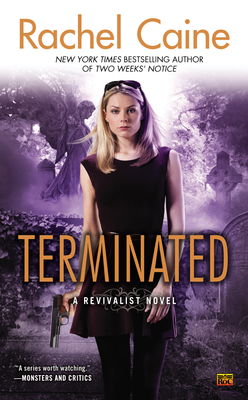
Terminated Rachel CaineI first discovered Rachel Caine a decade ago with her intriguing first novel, Ill Wind, which followed the adventures of Joanne Baldwin, a Weather Warden, part of an international organization that tracked and confronted natural disasters head-on. Kind of an intriguing premise and I was impressed to see it become the first installment in a nine (nine!) volume series, the most recent being 2010’s Total Eclipse.

Now, if I had written nine novels in seven years, first thing I would do is find a soft couch and lie down for, I dunno, maybe the rest of my life. Not so with Rachel Caine, however. No, she elected to start another series, The Morganville Vampires (fifteen volumes in seven years) in 2006. Followed by another one, Outcast Season (four volumes in three years) in 2009, and then another, Revivalist (three volumes in two years) in 2011. For those keeping score at home, that’s 31 novels in the last decade, during most of which she also had a full-time job as a Communications Director (writing, in other words).

I could go on — there are four more novel series, and several standalone books itemized on her Wikipedia page — but, man. I’m exhausted just trying to keep up. How does she do it?

Her most recent release is the third in her Revivalist series. The opening novels, Working Stiff and Two Weeks’ Notice, introduced us to Bryn Davis, killed on the job after she discovered her employers were designing a drug to resurrect the dead. Brought back to life by the same drug, she became a soldier in a nasty corporate war against her previous employer.

Already addicted to the pharmaceutical drug that keeps her body from decomposing, Bryn has to stop a secretive group of rich and powerful investors from eliminating the existing Returné addicts altogether. To ensure their plan to launch a new, military-grade strain of nanotech, the investors’ undead assassin — who just happens to be the ex-wife of Bryn’s lover Patrick — is on the hunt for anyone that stands in their way.

And while Bryn’s allies aren’t about to go down without a fight, the secret she’s been keeping threatens to put those closest to her in even more danger. Poised to become a monster that her own side — and her own lover — will have to trap and kill, Bryn needs to find the cure to have any hope of preserving the lives of her friends, and her own dwindling humanity…

Terminated was published today by Roc Books. It is 320 pages, priced at $7.99 for both the paperback and the digital edition.