Browsed by
Category: Blog Entry

Science Fiction From China

Science Fiction From China

Science Fiction From ChinaThis summer, Tor Books announced that it would release Liu Cixin’s science fiction series, The Three-Body Trilogy, in an English translation by Ken Liu. The series has sold 400,000 copies in Chinese, and helped inspire a renaissance of science fiction in China. As of yet I haven’t seen a publication date for the first volume, The Three-Body Problem, but Tor states that it will be the first genre science fiction novel from mainland China to be published in English.

But having Chinese sf translated into English is not without precedent. In 1989, Dingbo Wu and Patrick D. Murphy edited a book called Science Fiction From China. It presented eight stories, along with a bibliography of Chinese science fiction, an overview by Wu of the history of sf in China, and a foreword by Frederik Pohl. As you might expect, it’s an interesting volume.

It’s a bit of a mixed bag, as anthologies usually are. None of the stories seemed to me to be really bad, though, and the good ones were often quite good. Overall, I found that the pacing and development of both good and bad stories reminded me of pre-Gernsbackian and especially pre-Campbellian scientific romances — of science fiction stories from before the tradition of ‘science fiction’ had been identified, and especially before that tradition had been largely taken over by the pulps.
Read More Read More

Vintage Treasures: The Best of Fredric Brown

Vintage Treasures: The Best of Fredric Brown

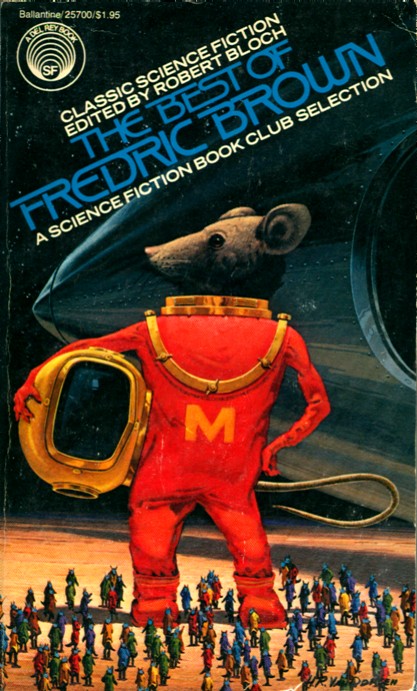
The Best of Fredric Brown-smallWelcome to the 13th installment of my ongoing examination of one of the most influential book series of my youth, Lester Del Rey’s Classics of Science Fiction line. This time, we’re looking at the 1977 release, The Best of Fredric Brown, edited by Robert Bloch (who had his own entry in the series eleven months after this one, which I discussed back in July.)

The Classics of Science Fiction line was my introduction to many of the major SF and fantasy writers of the 20th Century (well, that and The Hugo Winners, which first introduced me to Poul Anderson, Walter C. Miller, Arthur C. Clarke, and others, and of course the various volumes of The Science Fiction Hall of Fame).

All that education didn’t teach me much about Fredric Brown, however. A week ago, I probably could have named only one Fredric Brown short story from memory, “Arena” — which, admittedly, I dearly loved. I first read it in The Science Fiction Hall of Fame, Volume One, where it was selected as one of the finest short stories ever written, but even before that, I knew it as the Star Trek episode of the same name.

You probably think of it as, “Isn’t that the one where Kirk throws styrofoam rocks at the Gorn?”

Yes. Yes it is. And even though it has been much-parodied (including a brilliant video game commercial starring an 80-year old William Shatner and an aged Gorn in a re-match), it’s still one of the finest episodes of the original series.

So before I sat down to assemble my notes for this article, I took my paperback copy of The Best of Fredric Brown with me on a business trip, to a banking show in Las Vegas, and used the opportunity to reacquaint myself with the author. Honestly, I wasn’t expecting all that much. Not every installment in the Classics of Science Fiction could be a winner.

My mistake.

The Best of Fredric Brown is one of the best short story collections I’ve read in years. Brown is frequently compared to O. Henry for his gift for twist endings and the comparison is apt. Even when you’re on the alert, Brown manages to constantly surprise and delight you in a way that very few authors — in the genre or out — can pull off.

Read More Read More

2013 World Fantasy Award Winners Announced

2013 World Fantasy Award Winners Announced

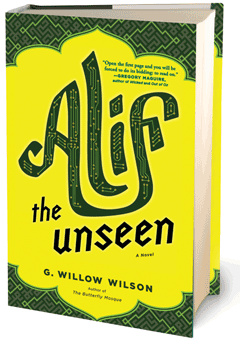
alif-the-unseenYou’d think that, since I’m unable to attend World Fantasy this year, they’d keep the convention low key. I mean, no sense rubbing it in, right?

No such luck. I hear there was just as much excitement, just as many panels, and just as many fabulous parties as always. It’s like they don’t care.

They even gave out just as many awards as usual. Well, even if I couldn’t attend, at least I can read the same award-winning fantasy as everyone else. See, that’s what’s great about awards — they’re fair to everybody.

This year’s winners of the World Fantasy Awards are:

Novel:

Novella:

  • “Let Maps to Others,” K.J. Parker (Subterranean, Summer 2012)

Short Story:

  • “The Telling,” Gregory Norman Bossert (Beneath Ceaseless Skies, Nov 29, 2012)

Read More Read More

A Look Into the Heart of the Great Continent: Milt Davis’ Woman of the Woods

A Look Into the Heart of the Great Continent: Milt Davis’ Woman of the Woods

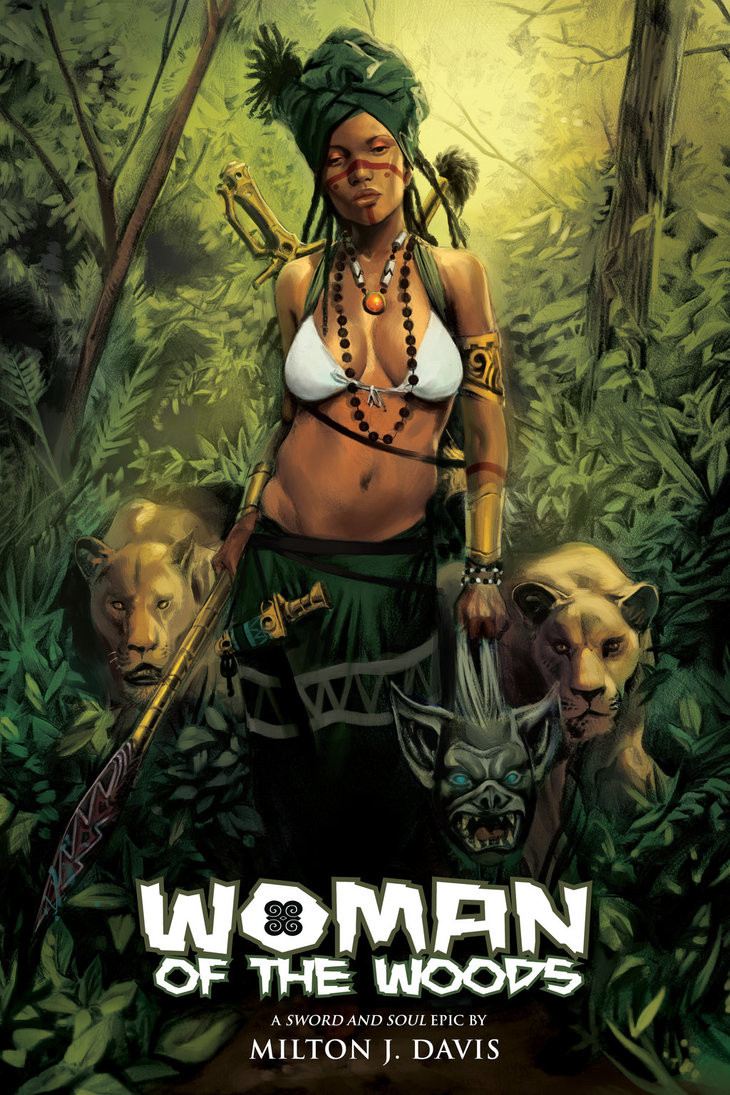
Woman of the Woods - smallSword and Soul is a genre that embraces the pulp-style action and adventure of Sword and Sorcery with the world-building of Heroic and Epic Fantasy.

It was born in the 1970s, when famed author Charles Saunders created Imaro, the first black fantasy hero in Sword and Sorcery fiction. Using the diverse mythologies, religions, histories, and traditions of Africa and its many ancient cultures, Sword and Soul offers us a look into the heart of that great continent and the rich heritage of its people. The setting is often an alternate-world version or a forgotten age of prehistoric Africa, something that is often ignored in fantastic fiction, other than those tales of “the great white hunter in Darkest Africa.”

The beauty of Sword and Soul — what makes it unique and refreshing for me — is that it revolves around a world, its people and cultures and traditions, that are not usually represented in the medieval, European-based worlds of fantasy.

Milton J. Davis (author of Changa’s Safari, Meji, and co-editor, along with Charles Saunders, of the anthologies Griots and the upcoming Griots 2: Sisters of the Spear) is at the forefront of the new Sword and Soul movement, leading a wave of new authors who are building new worlds and expanding on old concepts and traditions.

In Woman of the Woods, Davis returns to the world of Meji and introduces us to a new character, Sadatina. She’s a young Adamu girl on the threshold of womanhood, who finds herself at the center of a war between her people and their old enemy, the Mosele. For all the action, adventure, and magic, this is also a dramatic “coming of age” story, with real flesh and blood characters that have a past and carry the emotional weight and baggage everyone collects over the years.

Read More Read More

Self-published Book Review: The Nameless Dwarf by D. P. Prior

Self-published Book Review: The Nameless Dwarf by D. P. Prior

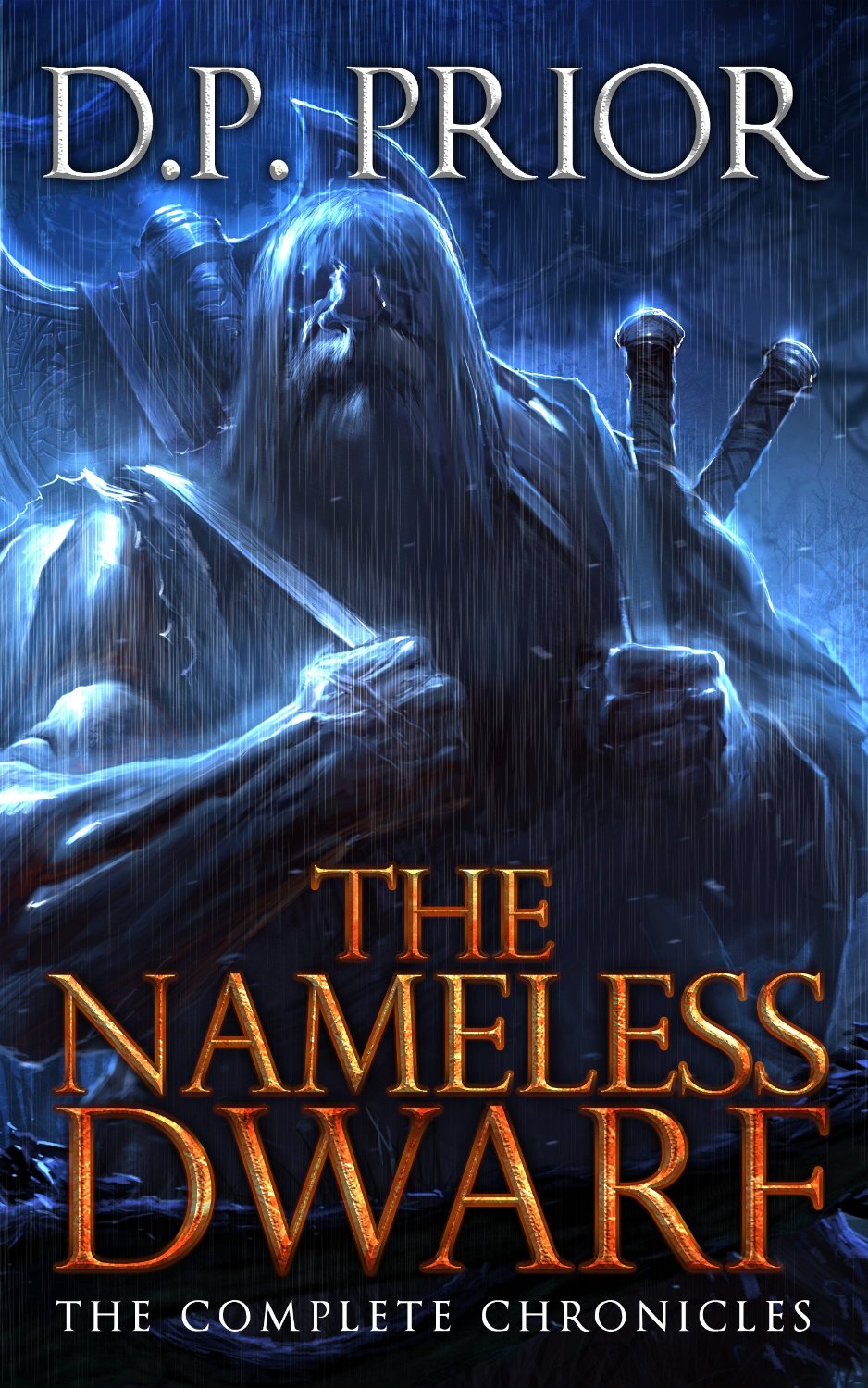
Nameless_chroniclesI have a soft spot for dwarves. I consider elves over-used Mary Sues and I could go another decade or two without reading another story about fairies, but give me short smiths with beards and axes who drink too much and I’ll keep reading. Which brings us to this month’s self-published book: The Nameless Dwarf: The Complete Chronicles. This wasn’t a book that the author submitted to me by my normal process: I’ll get back to those next month. This time, I actually bought the book from Amazon for actual money, because hey, it was about a dwarf.

Nameless (and yes, everybody calls him Nameless) has a bit of a history. Much of it is chronicled in earlier books, only a couple of which seem to be available from Amazon. Because of this, I decided to take a chance on The Nameless Dwarf without reading about Nameless’s previous adventures. The problem is that the backstory is a bit much to take in all at the beginning. The long and short of it is that Nameless came in possession of a cursed axe. Despite this, he engaged in a number of adventures with the well-known hero Shader, but later, the axe overcame him and caused him to do all sorts of unsavory things, including butchering a lot of his fellow dwarves and becoming a tyrannical dictator and driving them to war, until at last his people fled. When Nameless was finally freed of the cursed axe, he decided that he needed to seek his people out, not to ask forgiveness, which was impossible, but to tell them they could go home, before their exile in the nightmare lands of Qlippoth destroy them utterly. And that’s where the novel begins. I can’t help feeling that the backstory would have had more power if I had been able to read the earlier books and there were plenty of references to people and events from the previous stories that I would have liked to know more about. But even so, there was enough explained at the beginning that I wasn’t entirely lost.

Read More Read More

New Treasures: The Justice Trade

New Treasures: The Justice Trade

The Justice Trade-smallIt’s been a good couple of years for science fiction role players, especially if you like your settings dark and gritty.

Last month, Chronicle City released Cold & Dark, a game of horror in the depths of unexplored space, and last year Pelgrane Press’s Ashen Stars won the 2012 ENnie Award for Best Setting.

I have to admit that what usually attracts me to a new game is the setting and especially the adventures. I’m rarely lured in by elegant system design or the promise of new character feats or something similar. But show me a tantalizing mystery on the perimeter of known space, involving derelict spacecraft or the last desperate transmissions from a lonely mining outpost, and I’m ready to suit up.

That’s one reason I’ve been so drawn to Ashen Stars. I was much impressed by the first major campaign for the system, a 140-page book of linked adventures by Gareth Hanrahan, which I raved about in my August review, “Some Mysteries You Don’t Want to Solve: Exploring Dead Rock Seven.” Here’s what I said, in part:

Dead Rock Seven contains four stand-alone adventures that can be used independently to add variety to your campaign. And variety is the keyword here… players will be investigating mysterious deaths on an old asteroid mine, plunging into the underworld of the high-tech planet Andarta in search of a missing shareholder of the shady Loghos Corp, discovering the strange secrets behind a cooking contest on a space station, and more.

Dead Rock Seven left me impatiently waiting for additional adventures for Ashen Stars and Pelgrane Press finally accommodated me with the release of The Justice Trade, a brand new collection of intriguing scenarios written by Leonard Balsera, Robin D. Laws, Bill White, and Kevin Kulp.

Read More Read More

Plot, Plain and Simple

Plot, Plain and Simple

Writing the Novel From Plot to PrintI may have mentioned this before, but now that I’ve started talking about problems associated with plot, I’ll mention it again: There’s a lot of talk out there about plot-driven narratives versus character-driven narratives, where the former is “bad” and the latter is “good.”

Here’s the skinny: these are terms useful to the book reviewer or critic. They’re not useful to the writer and here’s why: There is no plot without character and there is no character without plot. Specifically, there’s no action without a character to perform it, and no characters without actions to define them. Nothing happens unless someone decides to do it, and unless someone does something, there’s no plot. In fact, there’s no story. This is true for every novel, every short story, every film, every TV show, and an awful lot of poetry. Regardless of genre.

There are things like allegories and satires, in which this might be debatable. Of course, the primary purpose of these is not to tell a story, but to get a particular point across, so screwing with the narrative is okay and even expected. But the best of these will at the very least pretend to include character and plot.

Last week, I talked about how badly-used plot devices often arise out of the writer ignoring character and “making” something happen, often to manipulate the reactions of readers and viewers. You can avoid this by asking yourself some simple questions right at the start. Many of us start writing with character in mind, so we ask ourselves, “Given this type of person, what kind of interesting things can happen to her?” Even if you start somewhere else, however, one of the first questions you’ll have to ask yourself is “Whose story is it?”

Read More Read More

Blogging Marvel Comics’ Dracula, Lord of the Undead

Blogging Marvel Comics’ Dracula, Lord of the Undead

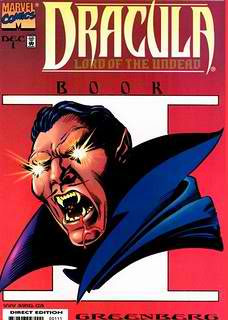
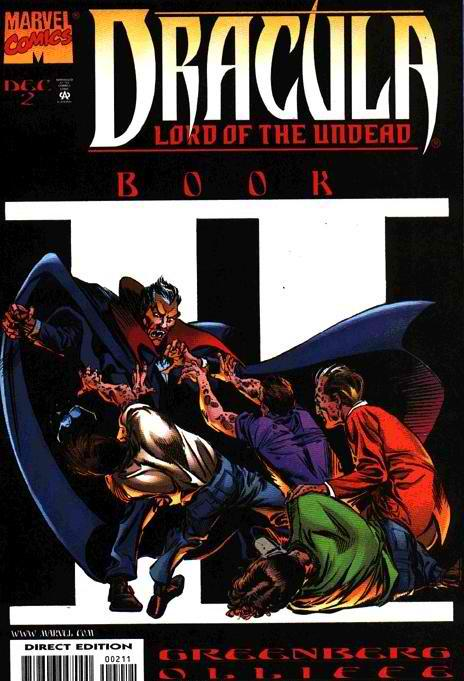
dracula-lord-og-the-undeaduntitledMarvel Comics quickly responded to the news that the creative team behind the legendary Tomb of Dracula series had moved over to Dark Horse to relaunch the property as Curse of Dracula. Marvel put together their own creative team to try to give fans of the original series what they wanted. Glenn Greenberg wrote the script for the three-part Dracula, Lord of the Undead limited series and Pat Olliffe provided artwork that recalled Gene Colan’s work. Colan’s original inker, Tom Palmer, was back on board as well and his contributions cannot be underestimated (and were very much lacking in the Dark Horse series).

The story opens in contemporary Transylvania, where Dracula still terrorizes the locals. The scene quickly shifts to London, where we meet Dr. Charles Seward, great grandson of Dr. John Seward, who fought alongside Abraham Van Helsing to combat Dracula in the late 19th Century. Young Seward is a research scientist whose marriage is falling apart due to his obsessive devotion to his work.

Seward’s mysterious and sinister employer has hired him to develop a cure for vampirism. To this end, his employer has recently ransacked Castle Dracula and successfully captured a vampire to serve as a guinea pig. Seward’s serum makes blood indigestible for vampires, dooming them to starvation, but it also unleashes a highly contagious blood disease that threatens to wipe out the human race. The action moves quickly. Greenberg’s story seems quite uncomplicated compared with Marv Wolfman’s highly complex plotting for the two 1990s Dracula limited series he scripted. Greenberg makes good use of flashbacks and references to earlier issues of Tomb of Dracula.

Read More Read More

Goth Chick News Wishes You a Frighteningly Wonderful Halloween

Goth Chick News Wishes You a Frighteningly Wonderful Halloween

image002From all of us in the underground offices of Black Gate, wishing you a wonderful “holiday” season and thank you for continuing to follow us into the dark.

And now for your reading enjoyment, what would Halloween be without a little Edgar…?

Thy soul shall find itself alone
‘Mid dark thoughts of the grey tomb-stone;
Not one, of all the crowd, to pry
Into thine hour of secrecy.

Be silent in that solitude,
Which is not loneliness — for then
The spirits of the dead, who stood
In life before thee, are again
In death around thee, and their will
Shall overshadow thee; be still.

Read More Read More

Mind Meld: Worthy Media Tie-ins

Mind Meld: Worthy Media Tie-ins

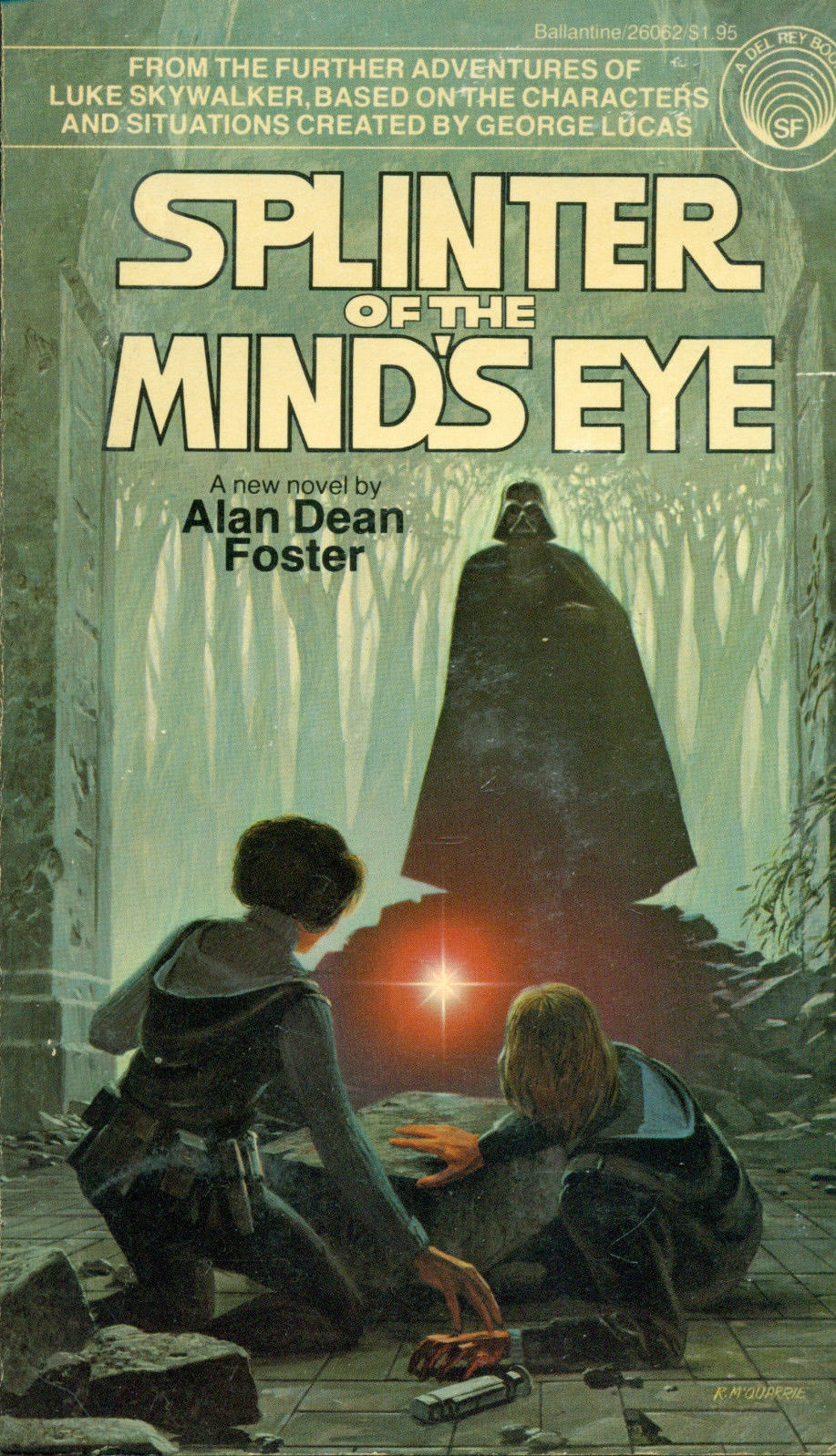
Splinter of the Mind's Eye-smallI was honored to be invited to participate in a Mind Meld article at SF Signal earlier this month. The topic was “Worthy Media Tie-ins,” so of course I took the chance to expand on my love of James Blish’s Star Trek books — particularly Star Trek 2, one of the very first books I ever owned, which I first mentioned a few weeks back in my review of The Best of James Blish.

What made James Blish’s Star Trek tie-in books so great? They were fun, fast-paced, and most of all, familiar. Before I plucked Star Trek 2 off the rack, the adult section of the bookstores was a strange and unfriendly place, filled with covers of stiff, formally attired men and much less stiff, partially-attired women. In short, Blish’s books were a gateway drug to a much wider world. With phasers.

But the book I was really dying to talk about was Alan Dean Foster’s Splinter of the Mind’s Eye, the very first Star Wars tie-in novel and the book that launched an entire publishing empire:

Splinter Of The Mind’s Eye isn’t just a media tie-in novel. It’s sort of an alternate-world, parallel-universe media tie in novel. A tie-in novel for a Star Wars universe in some time-stream that has nothing at all to do with our universe.

This is because Splinter Of The Mind’s Eye was written well before the release of The Empire Strikes Back. Before we knew that Vader was Luke’s father, before Han and Leia started making goo-goo eyes at each other, and before Leia traded in her princess gowns for a blaster with a full clip.

So Luke and Leia get a little more frisky in this book than you would reasonably expect from long-lost siblings, and Leia is a bit more of a helpless princess than you would anticipate after seeing Empire. Also, Darth Vader is a total dick, and has no compunctions at all about carving Luke up with his glowy red light sabre. Clearly, the paternity results had not arrived yet.

It’s not all about me, of course. There are some excellent discussions of other classic media tie-ins. John Mierau — who also has fond memories of Splinter of the Mind’s Eye — talks about Eric Nylund’s much-loved Halo novel The Fall of Reach; Aaron Rosenberg highlights Max Allan Collins’s Dark Angel trilogy, which tied up the dangling storylines after the TV series was canceled; James L. Sutter explores Richard A. Knaak’s classic DragonLance series The Legend of Huma; and Chadwick Ginther celebrates David Annandale’s entry in the Warhammer 40,000 universe, Death of Antagonis — among many others.

Enjoy the entire article here. Thanks to Andrea Johnson at SF Signal for the invite — I had a blast doing this one.