Browsed by
Category: Blog Entry

Renner & Quist at Their Very Best

Renner & Quist at Their Very Best

Check Out Time Mark Rigney-smallSamhain Publishing has just ushered in Check-Out Time, their third Renner and Quist occult mystery from the very talented pen of author Mark Rigney.
Longtime readers of my articles will recall my reviews of Rigney’s earlier work, The Skates and Sleeping Bear, which introduced me to his oddball double act.

Renner is a persnickety Unitarian minister, while Quist is a boorish ex-linebacker. Together, this unlikely duo team to solve occult mysteries. This latest addition to the quirky and delightful series takes our heroes from their usual Michigan stomping grounds to downtown Columbus, Ohio.

It seems a long-demolished hotel is doing its best to return to existence. It currently inhabits its original location in another dimension, complete with guests and staff from past decades somehow co-existing. These guests include such celebrated faces from the past as Amelia Earhart, James Thurber, Charles Dickens, and Marilyn Monroe.

Read More Read More

Goth Chick News New Horror: The Boy Who Drew Monsters

Goth Chick News New Horror: The Boy Who Drew Monsters

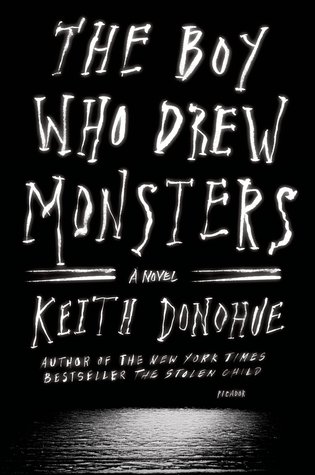
The Boy Who Drew Monsters-smallWhat seems like a million years ago, while digging through stacks of used books at my local library sale, I discovered a tattered copy of Zenna Henderson’s collection of creepy tales, The Anything Box (1977). Within those pages, I found what is today one of my top 10 favorite short stories of all time, “Hush.”

It is the classic literary scare relying on the terror of lurking things that cannot be seen, rather than the in-your-face-violence of things that can. “Hush” tells the story of an ill little boy whose fevered brain gives life to the horrors in his imagination, which in turn, stalk his unwitting babysitter… naturally.

Eerie little kids with large, soulful eyes staring at you from someplace they shouldn’t be – frankly there is almost nothing more frightening, if you ask me.

Flash forward to October, 2014 and a new offering from the New York Times bestselling author of The Stolen Child, Keith Donohue — where once again we have a creepy little kid trapped in his own world, and whose solitary imagination blurs the lines between fantasy and reality.

Ever since he nearly drowned in the ocean three years earlier, ten-year-old Jack Peter (“Kip”) Keenan has been deathly afraid to venture outdoors. When Kip takes up drawing, his parents, Holly and Tim, hope this new creative outlet will help Jip to combat his introversion, agoraphobia and occasionally violent tendencies.

Read More Read More

Four Books on Historical European Martial Arts (HEMA)

Four Books on Historical European Martial Arts (HEMA)

Miles Cameron
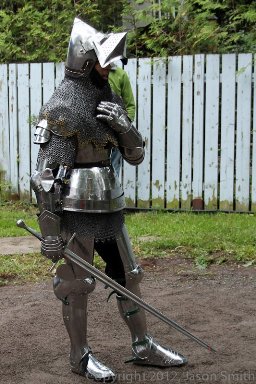
Historical European Martial Arts (HEMA) have already filtered through into Fantasy as authors get sucked into their research — reference Miles Cameron who fights about as much as he writes.

So there are people among us that know how to use historical weapons, that can wield a real sabre, not the bendy car aerial sports variety, have fought in plate armour, jousted, even.

Historical European Martial Arts (HEMA) have already filtered through into Fantasy as authors get sucked into their research — reference Miles Cameron, who fights about as much as he writes. HEMA is also going to pervade Urban Fantasy since… well swords in the city.

And reader expectations are going to raise the barrier.

So, here are some books to help you make sense of it all…

Read More Read More

The Dungeons (and Dragons) of My Life, Part One

The Dungeons (and Dragons) of My Life, Part One

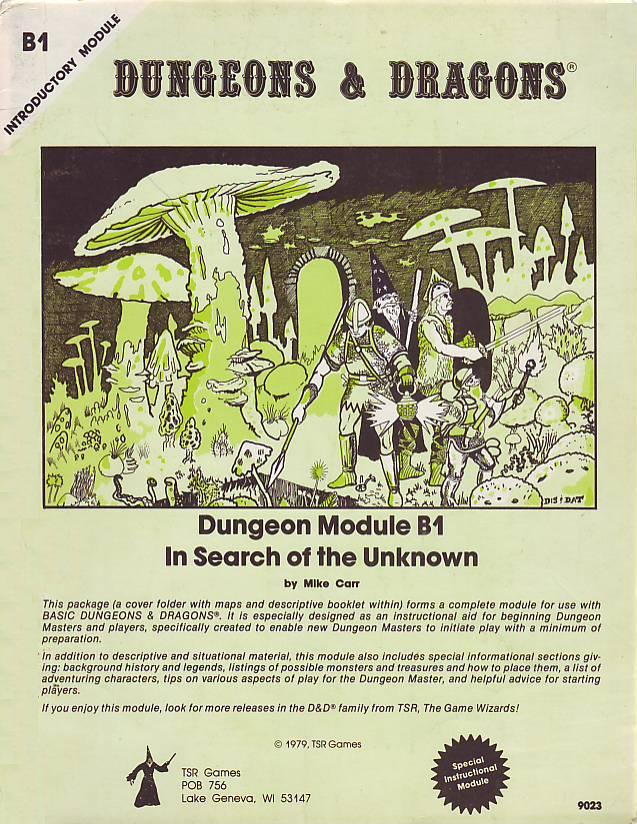
B1 In Search of the Unknown-smallThe Dungeons and Dragons roleplaying game has been a part of my life since I was a wee lad. My first DM was my father, who was patient enough to walk his eight-year-old and five-year-old sons through the a few introductory sessions. After that I was hooked, but I realized I wanted to be the one “behind the curtain,” controlling the game. And so my odyssey began.

Herein I’ll detail some of the D&D campaigns that I’ve run over the years, starting at the very beginning.

1978

I was eight when I ran my first adventure. My players were my younger brother and a friend from school. I took them through B1: In Search of the Unknown, the module included with the basic D&D box set.

Wow, what a rush. I was hooked from the start, controlling this awesome new game that stretched our imaginations. Even though it’s been more than thirty years, I still remember the cool tricks and traps. Especially the chamber of pools, the teleportation rooms, and the young red dragon I placed in one of the dungeon storerooms just for fun.

After that, they explored B2: The Keep on the Borderlands. I believe I did a TPK (Total Party Kill) in the first session when the players allowed a chaotic cultist to accompany them into the caves. It was very sad (for them… I secretly chortled).

Read More Read More

The Siege of Namur 1914: A Wakeup Call to Modern Warfare

The Siege of Namur 1914: A Wakeup Call to Modern Warfare

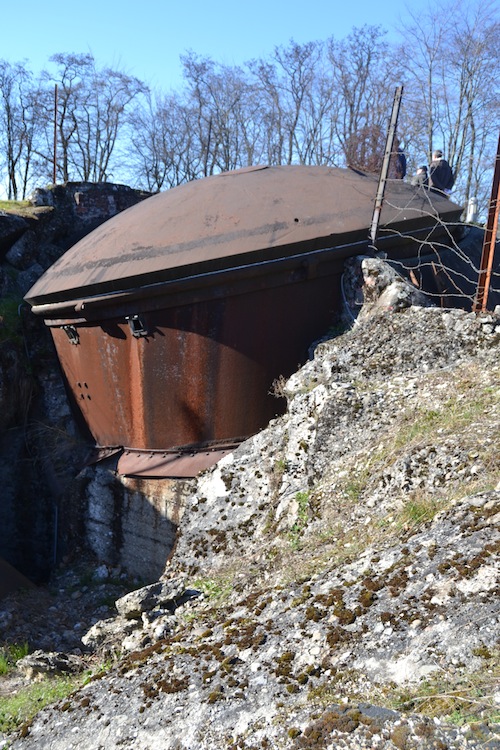
Destroyed gun turret at the fortress of Namur, Belgium.

At the start of World War One, the armies of Europe were still thinking in the terms of the nineteenth century. Many soldiers sported colorful uniforms more suitable for the age of black powder, radio operators broadcast in the clear not thinking anyone would be listening, generals still advocated cavalry and bayonet charges and sneered at newfangled inventions such as the airplane, and forts were considered the best way to defend a country.

Belgium was officially a neutral country. Still, it feared invasion from its more powerful neighbors. It built a string of forts at Liège and Namur to protect against attack from the Germans and French respectively. When the Germans attacked Belgium in their daring sweep to take Paris, they brought heavy siege artillery in order to deal with these forts.

Read More Read More

The Veranthea Kickstarter

The Veranthea Kickstarter

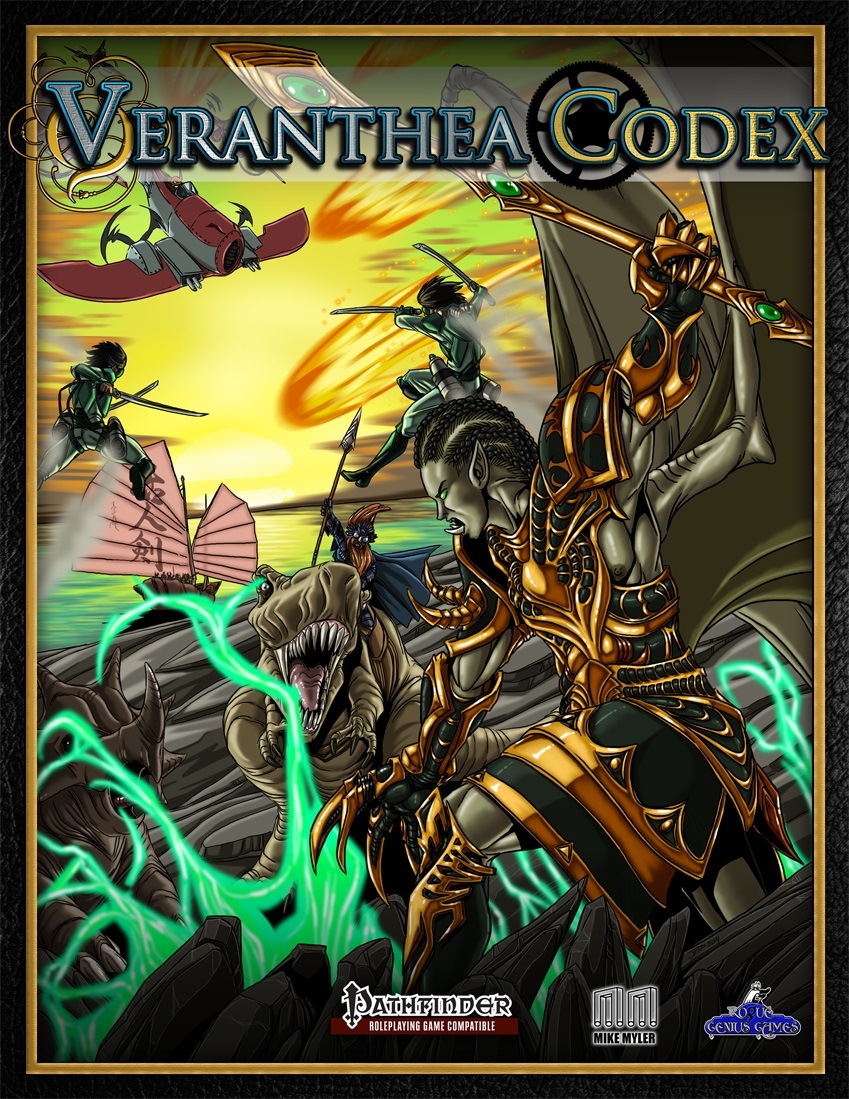
Veranthea Codex-smallToday I invited Ennie award winning Mike Myer to swing by and tell us a little bit about a Kickstarter for his Pathfinder setting, Veranthea, now in its final weeks. Take it away, Mike:

Veranthea is a world that was born the moment I walked into a shabby house in Pittsburgh and played my first game of Pathfinder over seven years ago. It had been a few years since I’d rolled dice with Dungeons & Dragons — a hobby I took to fervently in my youth — and the world we walked into was without a name or real scope. Growing the setting organically, we rotated who was Gamemaster, each of us beginning to draw some color into the world until, after a few months, I was elected to be the permanent GM.

That’s when this crazy ride really started.

I couldn’t stop playing after that and, about a year and a half ago, published my first Pathfinder product. This started an obsession that has culminated in the Veranthea Codex: amazing, distinct worlds — of sword and sorcery, high fantasy, dieselpunk, steampunk, subterranean wild west, and esoteric science fiction — all on one bizarrely beautiful planet.

Read More Read More

Art of the Genre: Roger Dean, Asia, and Finding Myself in ’82

Art of the Genre: Roger Dean, Asia, and Finding Myself in ’82

asia_alphafThere was a time back in my middle-school days when friends of mine were allowed to join those ‘record clubs’ that you could find in magazine ads. You might remember these deals, where you’d pay like a penny and get twelve cassette tapes if you promised to buy six at regular price over the next year. Now for an eleven-year-old, this was a pretty significant addition to a small tape collection, so imagine my chagrin when I’d see friends show up with all this new music and me still with such a modest collection.

It was during one of these bulk purchases that my best friend at the time, Jason, picked up a copy of Asia Alpha. Jason eventually moved away after 7th grade, but years later, we became roommates in college during our freshman and sophomore years in the dorm. During our time together, around 1990, I purchased an Asia collection (Then and Now) on disc and Jason asked what I’d purchased. When I told him, he replied ‘I don’t know that band’, and I was like, ‘What!? You owned Asia Alpha back in middle school!’ and he was like ‘I did?’ I guess the moral of that particular story is that when providing twelve tapes at once to an eleven-year-old, it might be more about the bragging rights and cool factor than the music.

Anyway, the prime reason I’d remembered he had the tape was that the album cover was so incredibly cool. It was far beyond anything I’d seen at the time and to this day I’m still pretty enchanted with it. Many years would pass before I discovered that the artist was Roger Dean, and that he’d been doing funky and incredible alternate fantasy images for more years than I’d been alive.

Read More Read More

The Color Out of Time: Michael Shea Takes a Dip Into Lovecraftian Horror

The Color Out of Time: Michael Shea Takes a Dip Into Lovecraftian Horror

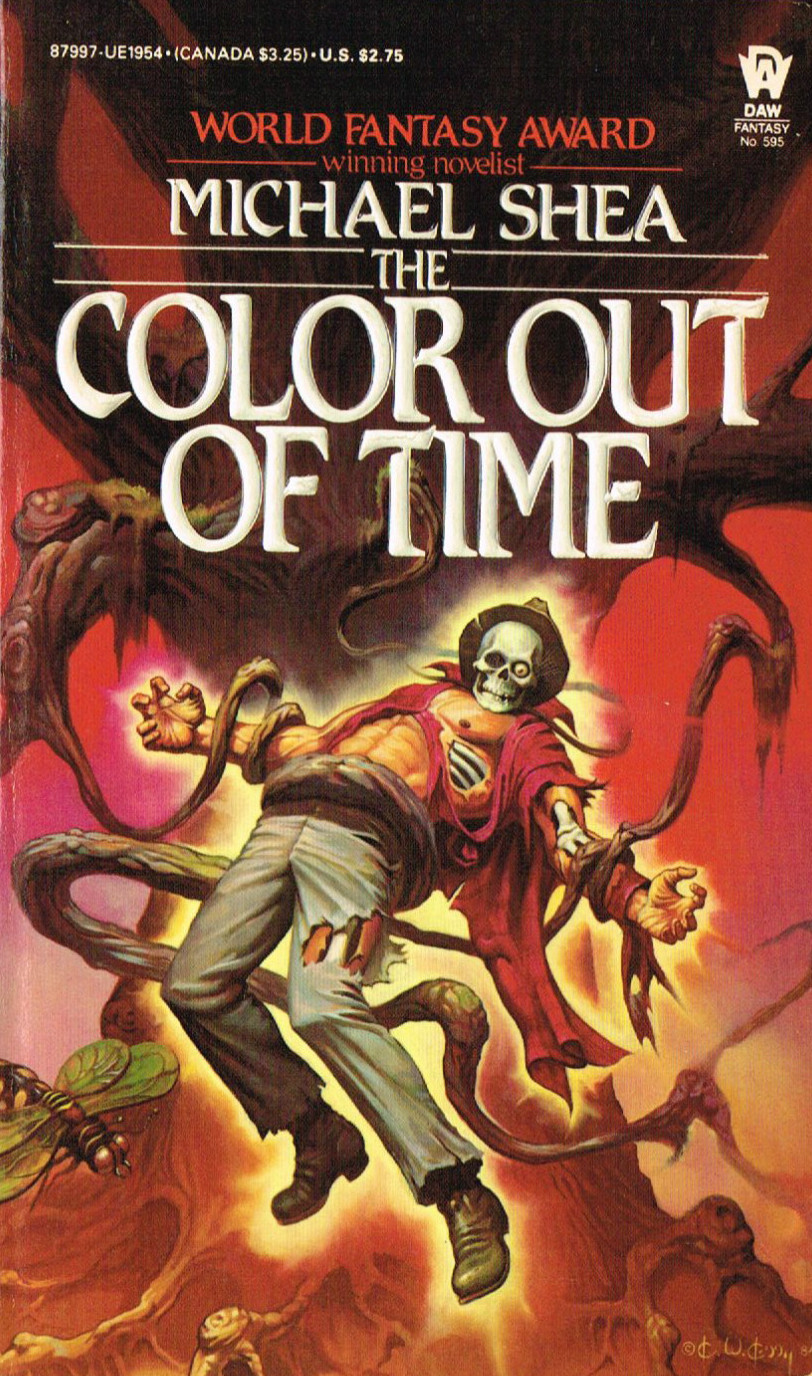
The Color out of TimeI’ll mention this first about Michael Shea’s 1984 novel The Color Out of Time: the protagonists consume copious amounts of Wild Turkey. They fortify their coffee with it; they carry hip flasks full of it. This is a fact the narrator always notes casually in passing. Never are the potentially debilitating effects of alcohol mentioned; it simply occurs to the reader that these people might well be past the point of tipsy into “whiskey-river-take-my-mind” territory through much of the central action of the adventure. Perhaps that’s how they maintain their sanity. And make no mistake: sanity is but one of the possessions at stake for our heroes, because they have waded head-deep into Lovecraft territory. If they do manage to survive with their sanity intact, though, they might want to consider rehab.

The second thing I’ll mention is that because some of my own fictional excursions overlap with Shea’s foray into Lovecraftian horror — we tread similar unhallowed ground, digging up the bones of past masters of weird horror and coating them with fresh slime, if you will — I find myself contemplating the book not just as a critic, but as a writer: appreciating moves he makes while noting missteps and potential pitfalls. Ultimately, Shea’s sequel to H.P. Lovecraft’s 1927 short story “The Colour Out of Space” is entertaining, but slightly off, a tad unsatisfying, and I’ll try to pinpoint why — to isolate the juncture at which it diverges from Lovecraft’s vision and to articulate how this impacts the effectiveness of the tale. (For a different take on the book, check out Douglas Draa’s review for Black Gate last year HERE.)

The premise is straightforward enough. Take the story that is generally regarded as Lovecraft’s first successful amalgam of science fiction and horror, a blend that became his unique trademark (“The Colour Out of Space” is one of Lovecraft’s most highly regarded and was always, according to Wikipedia, the author’s personal favorite. For the sake of full disclosure, it ranks high on my list of best horror stories and is one of my top two or three favorite works by Lovecraft). Start from the central event of that tale and then project its aftermath some sixty odd — very odd — years later.

Read More Read More

Tor.com Salutes Solaris Books

Tor.com Salutes Solaris Books

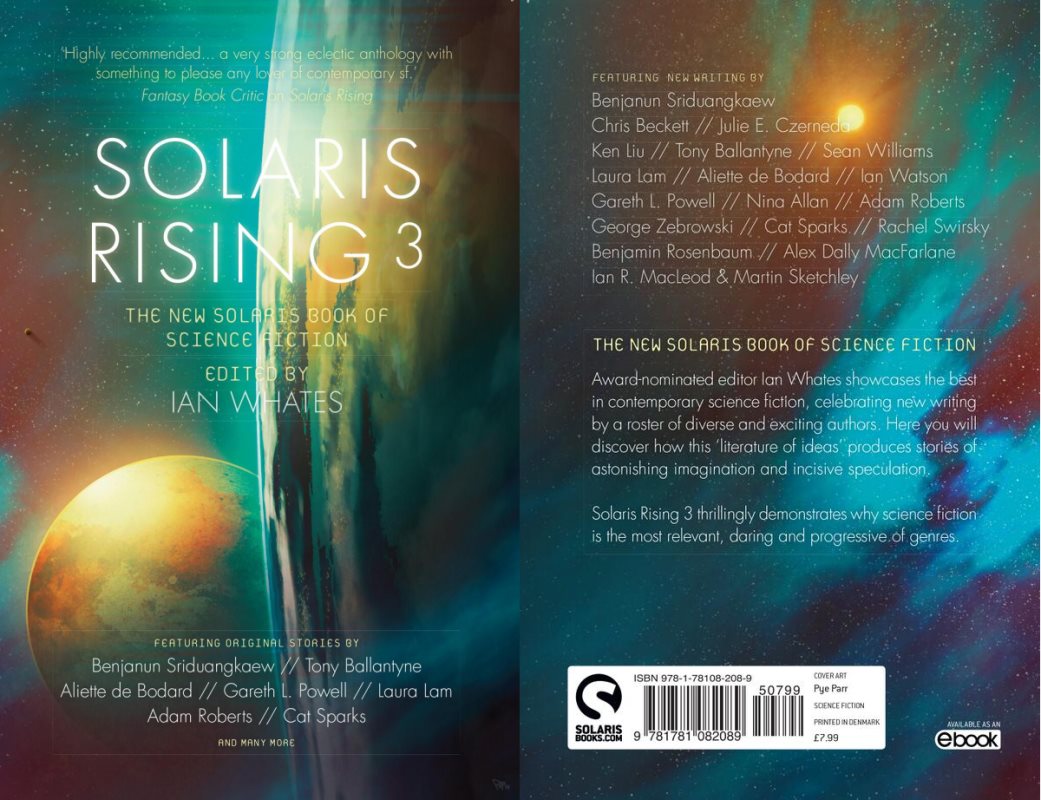
Solaris Rising 3-smallA while back, I praised Solaris Books for their impressive line of top-notch original anthologies, including Ian Whates’s Solaris Rising, and Jonathan Strahan’s Reach for Infinity. And just a few hours ago (see below), I reported on their upcoming fantasy volume, Fearsome Magics.

Looks like I wasn’t the only one to notice. Last week at Tor.com, Niall Alexander called out the publisher for their splendid recent record on original anthologies:

In recent years, no one publisher has done as much for the short form of speculative fiction in Britain as Solaris. Since the summer, they’ve released Reach for Infinity… the latest volume of Jonathan Strahan’s continuing chronicle of the future history of humanity — reviewed right here by yours truly— alongside the eighth edition of The Best Science Fiction and Fantasy of the Year and the third in the superb Solaris Rising series.

And there’s much more to come in the coming months. Fearsome Magics, the follow-up to The New Solaris Book of Fantasy, is out in early October — on the same day, indeed, as Two Hundred and Twenty-One Baker Streets from Solaris’ sister imprint Abaddon, which proposes to showcase the great detective through a decidedly unlikely lens.

Just this week, readers of When Gravity Falls were treated to an early look at another of the plentiful collections Solaris has on the cards. Dangerous Games is due in December, and it looks to meet, or even exceed, the high standards set by Jonathan Oliver’s previous projects.

Solaris 3 was edited by Ian Whates and released on August 26, 2014. I bought a copy last week and it looks like the same great bargain as the other volumes — a thick 448 pages for just $7.99 in paperback — with stories from  Aliette de Bodard, Ken Liu, Julie E. Czerneda, Tony Ballantyne, Sean Williams, Ian Watson, Adam Roberts, George Zebrowski, Benjamin Rosenbaum, Rachel Swirsky, and many others. The cover is by Pye Parr (click the image at right for a high res version of the front and back cover.)

Read More Read More

Ancient Worlds: With a King Like This Who Needs Invading Hordes?

Ancient Worlds: With a King Like This Who Needs Invading Hordes?

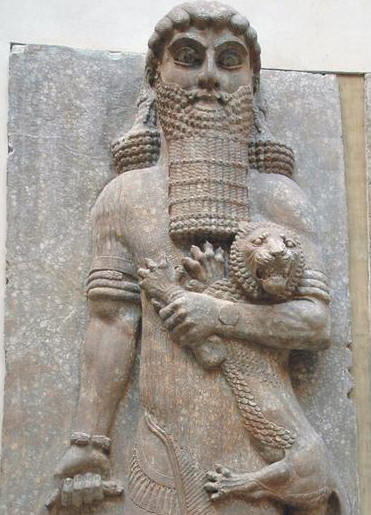
4133583_origAs far as heroes go, Gilgamesh leaves a lot to be desired, at least by modern standards. Gilgamesh is not a good guy. Or a good man. Or a good king.

That is in fact how the story begins. Gilgamesh is an impressive specimen, it’s true.

“Supreme over other kings, lordly in appearance,
he is the hero, born of Uruk, the goring wild bull.
He walks out in front, the leader,
and walks at the rear, trusted by his companions.
Mighty net, protector of his people,
raging flood-wave who destroys even walls of stone!
Offspring of Lugalbanda, Gilgamesh is strong to perfection,
son of the august cow, Rimat-Ninsun;
… Gilgamesh is awesome to perfection.”

(Translation taken from the Ancient Texts library.)

Gilgamesh is two-thirds divine and one-third human. We’re not entirely certain how that math works out: we know his mother is the goddess Ninsun and if I had to guess I would say that they considered the mother’s contribution to a child’s makeup as more weighty than a father’s. (As opposed to the Greeks, who considered the mother to be merely a biological caretaker of an implanted seed.) He’s a powerful leader, he defends his people, so what’s the problem?

He’s also ancient Uruk’s biggest frat boy.

Read More Read More