Browsed by
Category: Blog Entry

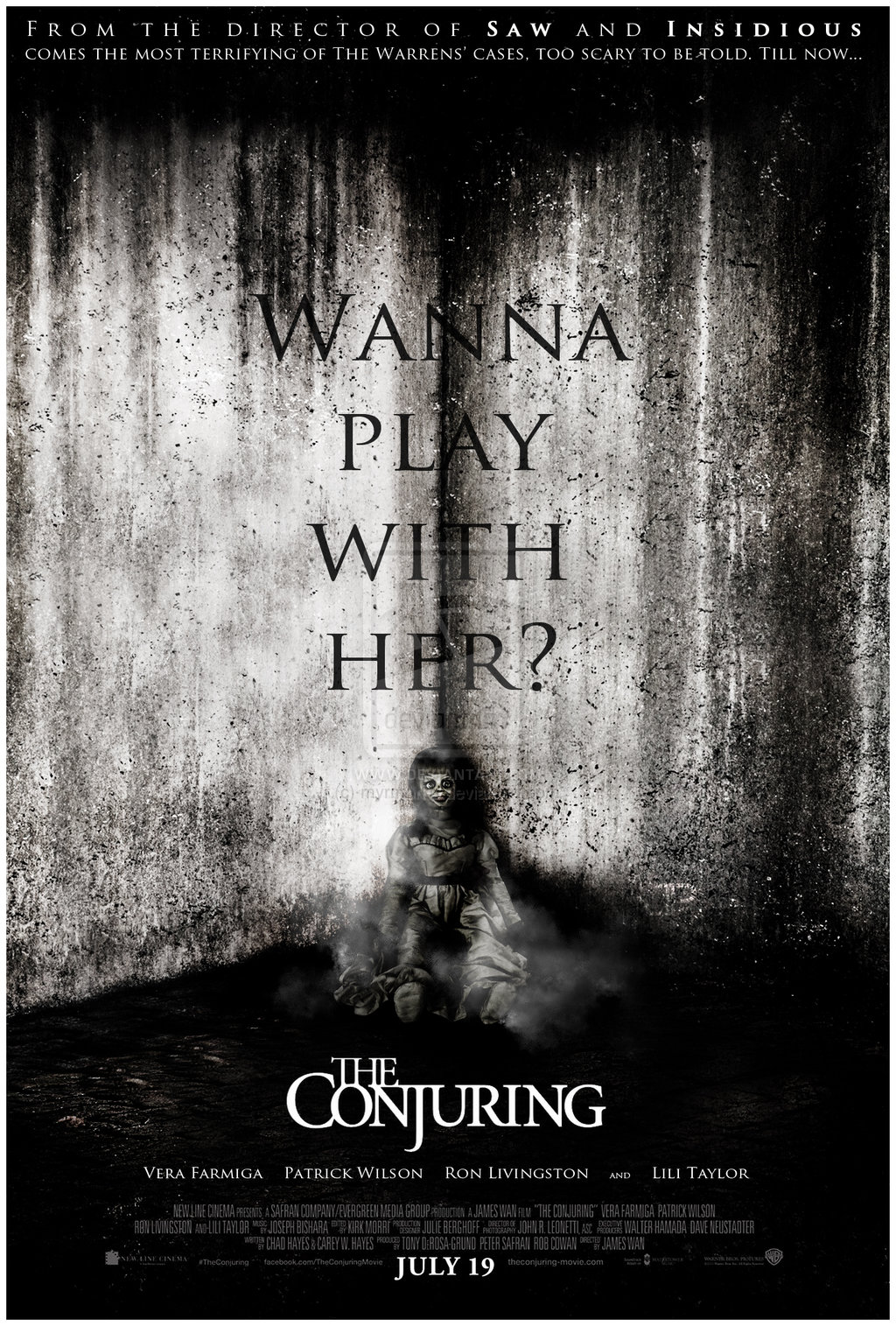
Film Review: The Conjuring (Hallowe’en Post # 1)
Film Review: The Conjuring (Hallowe’en Post # 1)

the conjuring doll“Before there was Amityville, there was Harrisville.”

Whatever you think of the Warrens as real people, they do make mighty fine fictional characters.

Ed and Lorraine Warren — dark-forces-battling demonologists associated with such notoriously famous cases as the Amityville Horror — provide us with supernatural sleuths who fit comfortably in the tradition of such occult detectives as Doctor Abraham Van Helsing, Carnacki the Ghost Finder, and John Thunstone. That the Warrens are real people and the cases they have investigated are allegedly true does add another compelling dimension to the whole enterprise.

But I’m not here to debate whether the Warrens’ adventures were bona fide excursions into paranormal realms or just elaborately staged (and profitable) hoaxes. I’m here to review The Conjuring — the 2013 horror film purportedly based on the Warrens’ 1971 investigation into the Perron family’s troubled Rhode Island farmhouse. I am meeting it on its own terms, not as a docudrama, but as a fright flick.

Still, I’ll make a few observations about the “based on a true story” conceit, which is wrung for full effect in opening and closing montages. Judging from interviews, the scriptwriters — twin brothers Chad and Carey W. Hayes — certainly give the impression that they buy in to the Warrens’ whole shtick, or are at least pretty open-minded to it. However, that clearly did not constrain them only to crafting a straight-ahead historical re-enactment. To the contrary, their prime focus is to use the original case as a springboard for launching wall-to-wall scares at an audience hungry for terror of the supernatural kind. They start out eerie, sprinkling in events that may well be straight out of the case file, and then liberally follow those up with any tried-and-true horror effect that will “get” the audience. It is a film full of “gotchas.”

Read More Read More

Black Gate Interviews C.S.E. Cooney: From Metaphor To Manticore

Black Gate Interviews C.S.E. Cooney: From Metaphor To Manticore

C.S.E. CooneyWriter C.S.E. Cooney has published two stories in the mighty trove of Black Gate‘s online fiction catalog, “Life On the Sun,” and its prequel, “Godmother Lizard.” For the following interview, she and I met in the cavernous vaults of Black Gate‘s Indiana compound, where we lounged on Ottoman divans surrounded by steampunk tapestries and several thousand of John O’Neill’s second favorite sci-fi paperbacks. The results, transcribed by a Silicon Valley drone powered entirely by herbal tea, are as follows:

What do you write? Or, if it’s easier, what do you not write?

Well, I’ve never written a tech manual for aeronautics and robotics. Man, but if I did, then I could write all sorts of cool sci fi with my awesome SCIENCE KNOW-HOW!

I generally say I write Fantasy when people ask. With the understanding that I think “Fantasy” is a great umbrella term that tucks, um, ALL OF FICTION under its shadowy wings. But mostly I mean I write Secondary World Fantasy. With a bit of urbanish fantasy thrown in. And maybe a wee slice of sci fi when I’m feeling daring. And an even weesomer slice of horror, usually in the autumn. Oh, and a dollop of the Weird, when I’m in my Gabriel Garcia Marquez mood. Oh, and that one time I tried to write a Steampunk story but I’m still not entirely sure of the outcome…

Every story I write seems to require a whole different set of tools than the last story. One is constantly reinventing one’s toolbox. Thankfully, the good old standbys like “assonance” and “simile” don’t really change. Only get better. Or subtler. If subtle is better. I don’t do subtle very well, so I naturally think it IS better, mostly because it’s this mysterious thing.

Subtlety. I’m a big fan of it.

Read More Read More

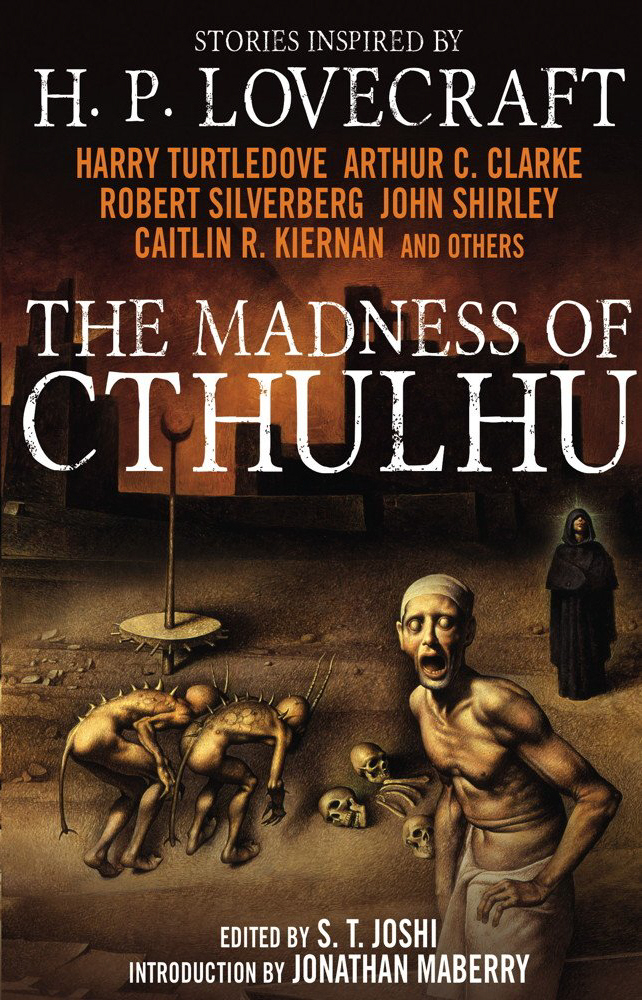
The Best One-Sentence Reviews of H.P. Lovecraft: Announcing the Winners of The Madness of Cthulhu

The Best One-Sentence Reviews of H.P. Lovecraft: Announcing the Winners of The Madness of Cthulhu

The Madness of Cthulhu-smallEarlier this month month, we invited Black Gate readers to send us a one-sentence review of their favorite H.P. Lovecraft tale.

In return, we offered to give out two copies of S.T. Joshi’s major new horror anthology, The Madness of Cthulhu, Volume One, on sale this month from Titan Books. The winners were randomly drawn from a list of all qualified entries.

And what entries they were! This was the most popular contest we’ve run in some time — by a wide margin. Before we announce the winners, let’s have a look at some of the best entries. We can’t reprint them all, but we can share the Top 20 or so with you. (But fret not — all qualifying entries received before October 21 were included in the drawing.)

We left the choice of what story to review up to you, and we weren’t too surprised to find most of Lovecraft’s most famous stories represented — starting with one of the most famous horror stories in the English language. A reader who went simply by “Bob” kicked off the contest with his brilliantly concise entry:

What could possibly be better then rats…..in the walls?

The Rats in the Walls

Rich Miller beautifully sums up the appeal of this classic tale with his entry:

For fans of large rodents, ruined estates, underground caverns, degenerate humanity, and dark family secrets better left undiscovered, you can’t go wrong with this classic Lovecraft tale from 1924.

Read More Read More

The Public Life of Sherlock Holmes: The List of 7 by Mark Frost

The Public Life of Sherlock Holmes: The List of 7 by Mark Frost

List_fullcoverMark Frost made the news not too long ago with the announcement that he and David Lynch will be making a new Twin Peaks series for Showtime. Yay! Twin Peaks came to an abrupt end in 1991: just after its second season. Frost apparently wasn’t one to let grass grow under his feet, as only two years later, The List of 7 hit bookshelves.

John O’Neill wrote about (mostly the cover…) this book last year.

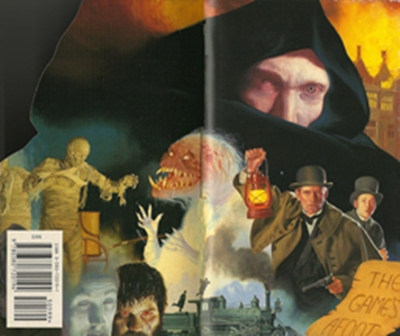
Frost is absolutely a fan of Sherlock Holmes. Not only is the novel’s protagonist none other than Arthur Conan Doyle and bits of his life are scattered throughout, but there are Holmes-isms aplenty. Thus, this book is a type of pastiche, though darker than any straight Holmes tale I’ve read.

Read More Read More

Vintage Treasures: The Horror Horn by E. F. Benson

Vintage Treasures: The Horror Horn by E. F. Benson

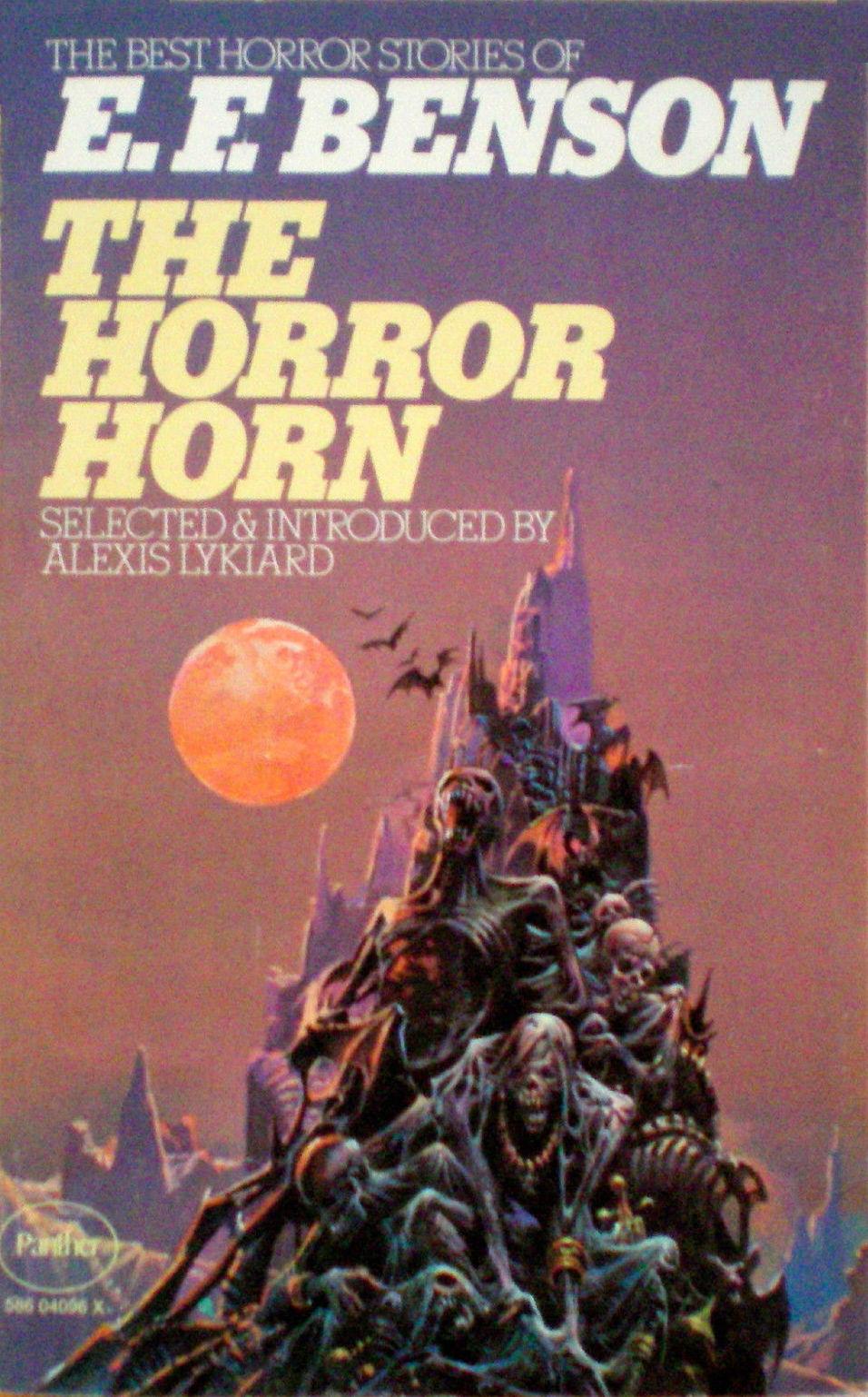
The Horror Horn E.F. Benson-smallIs Bruce Pennington the finest cover artist in publishing history?

Probably. I talked at length about my own interest in his art — and how we licensed two of his paintings as covers for Black Gate — in The Lost Art of Bruce Pennington. Over the years, I’ve collected much of his work and seen a great deal more online and in various art books, but from time to time I’m still surprised to see a previously undiscovered Pennington cover on a hard-to-find book (as I was with the Panther edition of Fritz Leiber’s Night Monsters back in January.)

So you can understand my delight last week when I stumbled upon The Horror Horn on eBay, a 1974 collection by British horror writer E. F. Benson. It had a marvelously macabre cover by Bruce that I’d never laid eyes on before. In fact, I didn’t even know this book existed. The bidding stood at 5 bucks, with less than two days to go.

Well, you know how reluctant I am to pay more than $8 – $10 for a paperback. It’s rare indeed that the patient collector has to pay more than that for anything. But this was an exception, and I submitted my bid for $14 and sat back to see what happened.

In the meantime, I did a little homework on E. F. Benson. We’ve never really mentioned Benson here before (although he’s popped up in horror collections from time to time, including Otto Penzler’s magnificent The Vampire Archives and Henry Mazzeo’s Hauntings: Tales of the Supernatural), and that’s probably an oversight.

Benson, who died in 1940, was an English novelist and short story writer, with 68 novels to his credit and 10 collections published in his lifetime. He was a frequent Weird Tales contributor and he also appeared regularly in British publications like Hutchinson’s Magazine and The Illustrated London News.

Read More Read More

The Solar Pons – Fu Manchu Connection

The Solar Pons – Fu Manchu Connection

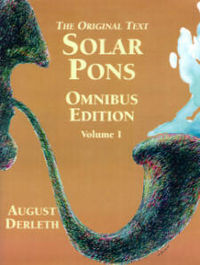
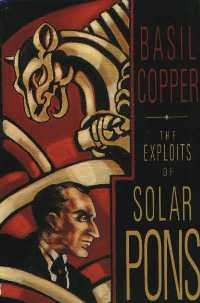
200px-OTSolarPonsOmnibusExpoloits_of_solar_ponsMy colleague Bob Byrne has already introduced many new readers to August Derleth’s wonderfully tongue-in-cheek exploits of the unlikely-named Sherlock Holmes-inspired consulting detective, Solar Pons of Praed Street.

Derleth loved tossing in nods to mystery works outside of Sir Arthur Conan Doyle’s fictional universe. These included three memorable encounters with Sax Rohmer’s insidious Dr. Fu Manchu.

“The Adventure of the Camberwell Beauty” was the first of the appearances to see publication in 1958. The story presents an unnamed Dr. Fu Manchu hiring the celebrated consulting detective to recover Karah, his beautiful young ward, who has been abducted by his archenemy, Baron Corvus. The tale is set in the early 1930s and although the first chronicled, it is not our heroes’ first encounter with the Devil Doctor.

Structured as a tribute to Rohmer’s 1933 novel, The Bride of Fu Manchu, the story reveals Karah (named for Rohmer’s Karamaneh) as the granddaughter of the Devil Doctor. Showing a nice bit of fidelity to Rohmer’s early tales, the unnamed Doctor resides in an underground Thames-side lair in Limehouse.

Read More Read More

The Lost Lands: A New Campaign World for Pathfinder

The Lost Lands: A New Campaign World for Pathfinder

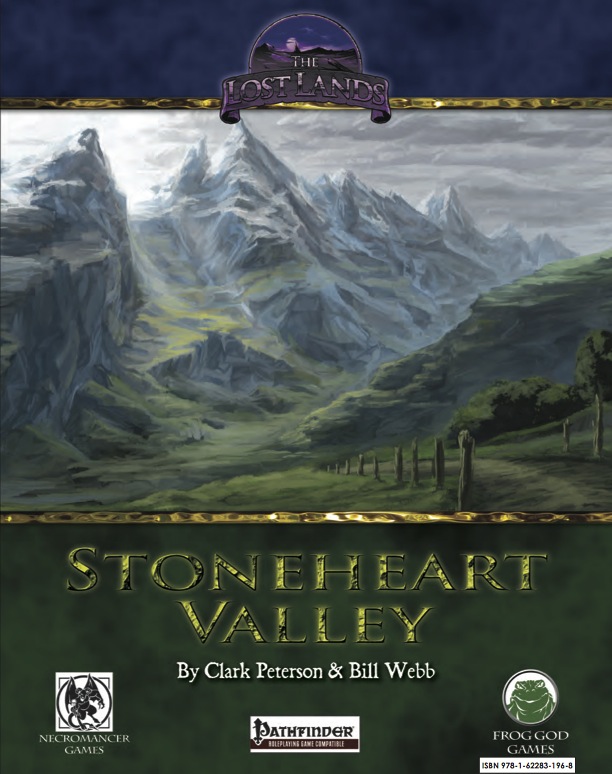
LostLands_StoneheartOn the opening day of Gen Con 2000, Third Edition Dungeons and Dragons was unveiled. That same day, Necromancer Games released The Wizard’s Amulet, more or less the second OGL/D20 adventure (that’s another discussion).

Necromancer, working with other companies such as White Wolf, Judges Guild, and Kenzer and Company, became one of the most successful d20 companies. Their mega dungeon, Rappan Athak, is one of the best known Third Era adventures.

However, the advent of Fourth Edition spelled doom for Necromancer. Co-founder Bill Webb founded Frog God Games, a clear successor to Necromancer, and they published products for Paizo’s Pathfinder. Frog God produced new items and also updated old Necromancer goods as well, Pathfinderizing them.

With the advent of Fifth Edition D&D, Frog God is now publishing for both lines (in addition to retro-clone, Swords & Wizardry). Necromancer and Frog God adventures and supplements had loosely been connected in that they took place in Webb’s personal campaign world.

Frog God is currently putting out that campaign world under the moniker The Lost Lands. It is going to incorporate nearly everything produced by Necromancer and Frog God Games. Some products, such as their Judges Guild updates and the Hex Crawl Chronicles, belong to other folks and won’t be included. But if you look at the long list of products, there’s an awful lot, including Gary Gygax’s under-appreciated Necropolis.

Read More Read More

Miracles, Mystery, and the Ghost of Hank Williams: Steve Earle’s I’ll Never Get Out of This World Alive

Miracles, Mystery, and the Ghost of Hank Williams: Steve Earle’s I’ll Never Get Out of This World Alive

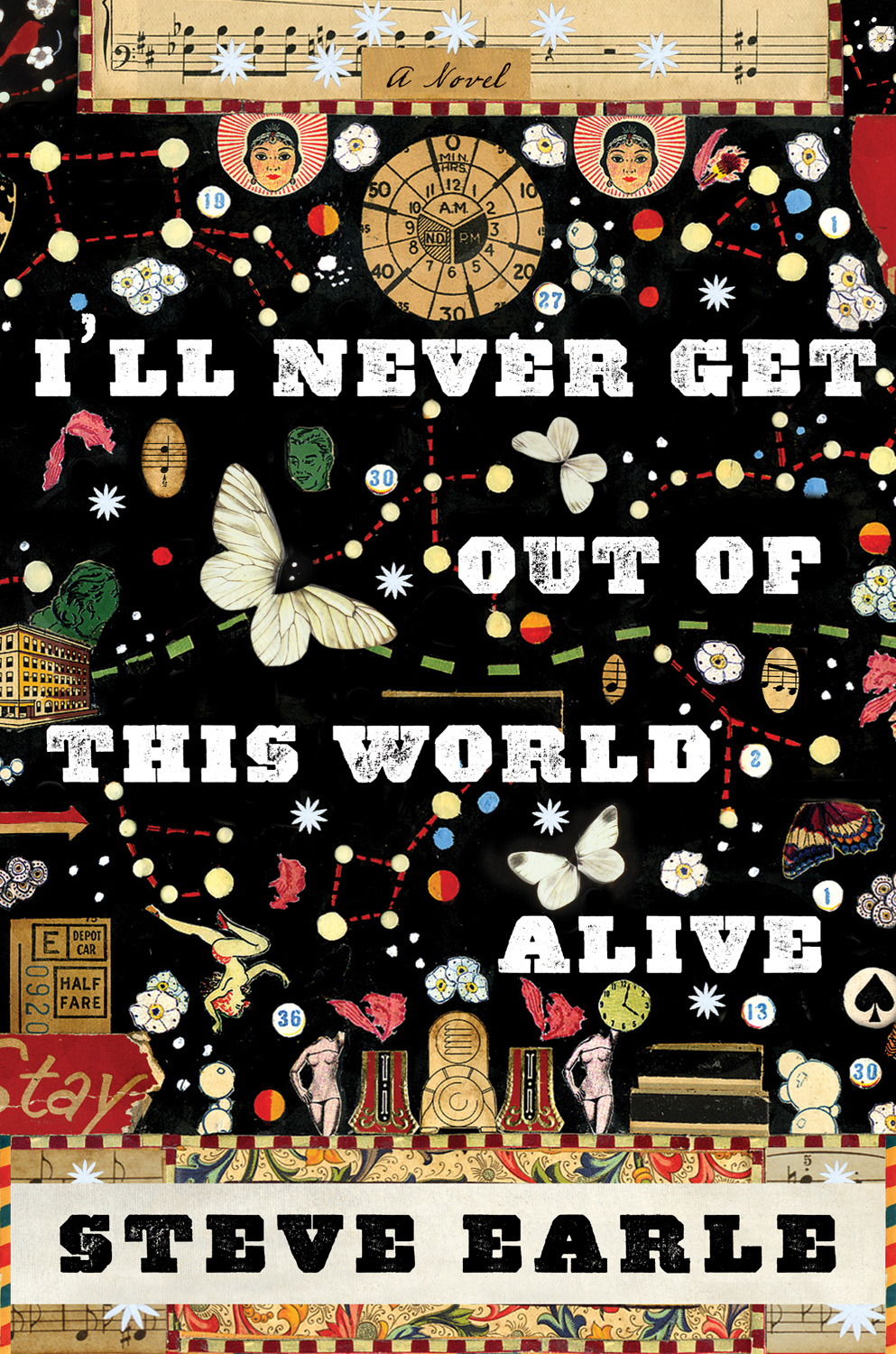
I'll Never Get Out of This World Alive Steve Erle-smallFantasy is an odd genre, filled with surprises.

I was browsing the remainder table at Barnes and Noble earlier this month, when I stumbled on a dark fantasy featuring ghosts, mystery, drug addiction… and miracles. The author was none other than singer Steve Earle (Copperhead Row), who’s had his own battles with heroin addiction. I’ll Never Get Out of This World Alive is Earle’s only novel (he published one collection of short stories, Doghouse Roses, in 2001), and the back cover was plastered with enthusiastic reviews from The New York Times, USA Today, Rolling Stone, and even Patti Smith. But it was the brief book description that won me over.

Doc Ebersole lives with the ghost of Hank Williams. Literally.

In 1963, ten years after he may have given Hank the morphine shot that killed him, Doc has lost his license. Living in the red-light district of San Antonio, he performs abortions and patches up the odd knife wound to feed his addiction. But when Graciela, a young Mexican immigrant, appears in the neighborhood in search of Doc’s services, miraculous things begin to happen. Everyone she meets is transformed for the better, except, maybe, for Hank’s angry ghost — who isn’t at all pleased to see Doc doing well.

Legendary American singer Hank Williams died — at the ripe old age of 29 — in 1953, and on the night he died, a doctor did indeed give him an injection of vitamin B12 mixed with morphine. I think we can safely assume the book departs from reality after that point, however.

Steve Earle is something of a Renaissance man. In addition to being a singer-songwriter, record producer, and author, he’s also an actor. He’s appeared on two HBO series, The Wire and Treme, and briefly appeared on 30 Rock. His fourteenth studio album, also titled I’ll Never Get Out Of This World Alive, arrived in 2011. On September 16, The Wrap reported that Chris Hemsworth (Thor) will star in and produce a film adaption of I’ll Never Get Out of This World Alive. It was published by Mariner on May 22, 2012. It is 256 pages, with a cover price of $13.95 in trade paperback. I bought my copy remaindered for $4.98.

The Perils of Writing a Series, Er, Part Two

The Perils of Writing a Series, Er, Part Two

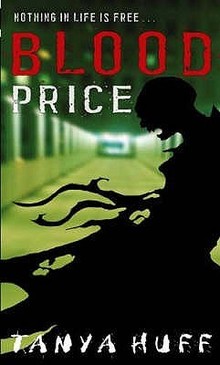
Blood PriceLast time I talked about writing a series and how there can be other things, besides how a character ages – or whether they age at all – that can complicate things for the writer. I mentioned the type of detail that can catch a writer flat-footed in a contradiction or even a simple change, which likely occurred because the writer, unlike the reader, didn’t write all of the books in one sitting.

Even when a writer does write all the books of a series in one sitting (which is to say, one after another) it can still be tricky. Some people keep extensive and detailed charts on the things that they’ve said about each character, for example. For us Fantasy and SF writers, that might also include what we’ve said about magic systems, technological differences from our own society, and basic socio-political infrastructures. And when it comes to the characters themselves, every writer of a series has to keep track of not only details like hair colour, eye colour, and clothing preference, but family relationships, education, and training. You may need to remember that casually mentioned cousin in the military or that aunt in the sorcerer’s guild.

In fact, it can be those “casual mentions,” things that somehow supply the right touch of verisimilitude at the time, that can come back and haunt you two or three books down the line. When you think about it, it’s no wonder so many main characters are orphans.

Read More Read More

Firefly Friday – Firefly: The Game

Firefly Friday – Firefly: The Game

Firefly-The-Game

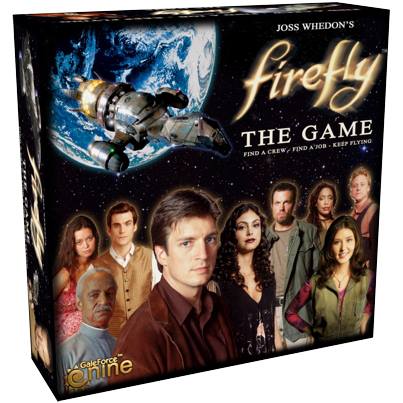
Ever want to just buy a ship and take off into the night sky, making your own rules and living a life that was truly free? Firefly: The Game (Amazon) gives you the chance to do just that, if you think you’re up for it.

On the off chance that you’ve been in a coma for the last decade: Firefly was a tragically short-lived television series created by Joss Whedon. After his success on Buffy: The Vampire Slayer and Angel, he turned to science fiction, creating a series that can best (but simplistically) be described as “cowboys in space.” The series centered around a spaceship crew living on the fringe of society, taking jobs of questionable legality while trying to stay off the radar of the government. It was cancelled before all 13 of the episodes even aired, but fan enthusiasm resulted in a feature film, Serenity, that gave some measure of closure for fans.

But, as so often happens in our little world of fandom, even that was not the end of the story. In a few short episodes, Joss Whedon had created a rich and dynamic universe of rugged heroes who traveled the expanse between worlds just trying to find a job, work the job, get paid, and keep flying. It has continued in a number of forms, from comic books to board games. As I’ve mentioned before, my shelves contain a number of these related materials. (More than I typically care to admit.)

It’s hard to overstate how great this short television series was … And it’s equally hard to overstate how well Firefly: The Game captures the feel of trying to make your way out in the black, even if that means you have to misbehave a bit.

Read More Read More