Browsed by
Category: Blog Entry

The Series Series: Knight’s Shadow by Sebastien de Castell
The Series Series: Knight’s Shadow by Sebastien de Castell

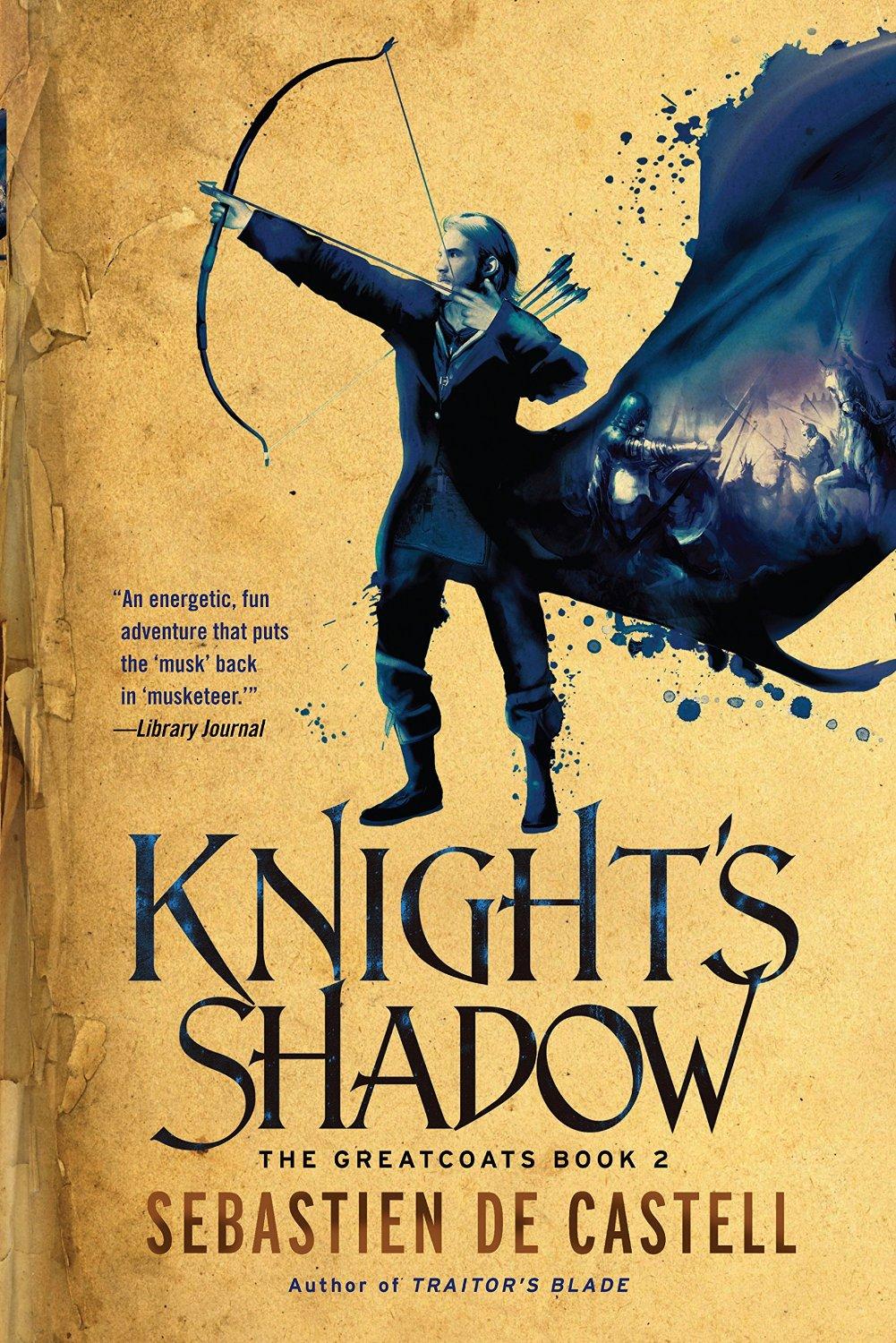
Knight's Shadow-smallWhen I reviewed the first book in the Greatcoats series, this was my conclusion:

Is Traitor’s Blade destined to be a classic? Well, that’s a kind of question I ask myself about books I can get some distance from. I don’t want any distance from this book. What I want, just as soon as I finish writing this review, is to read Traitor’s Blade again, immediately. And maybe once more right after that.

Now that I’ve read the second book in this planned series of four, I’m pretty sure de Castell is carving himself an enduring place in the fantasy canon.

Usually when a new author stumbles after a stellar debut, it’s on the second book. I wondered whether I’d see that play out here… right until I read the first page. Then I forgot I was wondering or worrying or writing a review, because the stalwart, somewhat cracked hero Falcio Val Mond was tugging me back into his story. I’d follow Falcio anywhere. Okay, so he’s an idealist in a world that despaired of those ideals years ago, and he’s slowly dying from a little poisoning incident in the last book, but his berserker episodes are much improved, and he hardly ever froths at the mouth anymore.

And he makes us laugh, raucously, especially in the bleak moments when he and we need it most. Yes, I’d definitely still follow him anywhere. In the spirit of lively and surprising storytelling, though, in this volume, some of Falcio’s friends and allies stop being so sure they can do the same.
Read More Read More

When is Reality Too Real? Or, Still Stuck in the Woods

When is Reality Too Real? Or, Still Stuck in the Woods

Austen PrideLast time I was talking about those real life events and happenings that never seem to occur on TV, or in books. If you have a look, the comments are well worth reading, and not only because most everyone agrees with me (and William Goldman) on the whys and wherefores of this phenomenon. There were also many examples given of fantasy characters pooping, though not necessarily in the woods.

There did seem to be a consensus that we were in agreement with Goldman, that too much reality could slow things down, not only in TV and movies, but in the written narrative as well. If we do include what one commentator called “the earthier things” they’re usually plot or story related. Or, as another put it, “if it doesn’t propel the plot (not the plop!) strike it.” Couldn’t have put it better myself.

The subject also sparked a lengthy comment stream on Facebook, thanks to James Enge sharing a link to my original post. One woman was prompted to point out that female characters in fiction don’t menstruate – in the same sense, that is, that they don’t poop, which is to say, we don’t talk about it. As a woman, it took me a surprisingly long time to become aware of this particular example of the phenomenon (or perhaps not, considering the dearth of female protagonists until fairly recently). It’s particularly odd, when you think about it, since so many of us link the appearance of psychic abilities in our characters with the onset of puberty.

Read More Read More

Art of the Genre: Bill Willingham Loved the Ladies, Even if TSR Wouldn’t Always Let Him Show Them…

Art of the Genre: Bill Willingham Loved the Ladies, Even if TSR Wouldn’t Always Let Him Show Them…

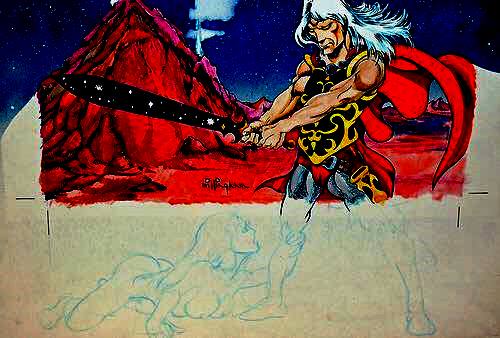
Check out the lady below Elric in this Willingham done for White Plume Mountain.  Bet you didn't realize it was cropped, did you?
Check out the lady below Elric in this Willingham done for White Plume Mountain. Bet you didn’t realize it was cropped, did you?

Former TSR Artist and now comic writer sensation [Fables] Bill Willingham wanted to be Frank Frazetta, or so I surmise. I’ve always been a fan of his work, dating back to those early days in the RPG field when he was a member of ‘The First Four’ at TSR.

Along with Jim Roslof, Jeff Dee, and Erol Otus, Bill managed to produce some absolutely lovely interior illustrations and acrylic covers for the first sets of D&D modules, once the business took off and TSR could afford color. His tenure there, which ended with a blow up concerning the termination of artists that removed both he and Dee from the company, ended up being the best thing for him as he went on to relative fame and fortune in comics, a place that his talent certainly spawned from.

I sat with Bill at a seaside café back on 2009 when ComicCon was still a monster, but not the headache it is today and we discussed his work in the field. Nothing too in-depth, and sadly he was unable to add his art to my Art Evolution project because it had been too many years since he’d done that kind of work. Still, he looked over all the other artists who had donated work and was most pleasantly surprised to see his old friend Jeff Dee in there. Obviously Dee was ‘the kid’ during his time in the burgeoning TSR ‘pit’, and at 19 there was no doubt that was the case, but Bill seemed to have a twinkle in his eye for Dee’s version of Lyssa in the project, and I was at least happy to somehow connect the two again, if even for a just a nostalgic moment.

Read More Read More

Adrian Simmons on Pseudopod

Adrian Simmons on Pseudopod

Pseudopod-smallAdrian Simmons is one of our favorite editors. With his team of cohorts he edits the marvelous Heroic Fantasy Quarterly, which you should be reading.

He’s also a prolific and popular blogger, and his articles for Black Gate — including Fools in the Hotzone and Frodo Baggins, Lady Galadriel, and the Games of the Mighty — are some of the most popular pieces we’ve ever published.

But he’s also a fine fiction writer. This week Pseudopod, the premier horror fiction podcast, has posted his story “A Fan Letter To Joe Landsdale,” alongside the story it’s based on, Joe Landsdale’s “Boys Will Be Boys.”

The reader is Jared Axelrod. Check it out here.

The Dark Island by Henry Treece

The Dark Island by Henry Treece

oie_29192227FHd1h2WO

Britain is a dark island of mists and woods. It lies farther north than any other known land, so that the sun is seldom seen there. The people of this island are brave in battle but fearful of their gods and priests.

Arminius Agricola, Ambassador to Camulodunum, A.D. 25 – A.D. 30

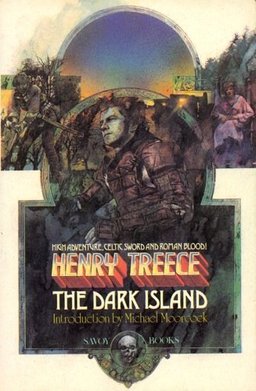
The first written of Henry Treece’s Celtic Tetralogy, the second chronologically, and the third to be reviewed by me, The Dark Island (1952) is a story of 1st century AD Britain. I’ve previously reviewed The Great Captains and Red Queen, White Queen here at Black Gate. The fourth is The Invaders. Together, they present one of the most artistically successful attempts to portray ancient Britain and its people. Treece’s ancient Britons are the inhabitants of a dark and violent world, where signs and portents are seen in every event. For them, the gods and their blessings and curses are real. Fiercely independent as they believe themselves to be, even kings and princes bow down before the blood-soaked hands of the Druids. Under their direction human sacrifices to the gods are a regular occurrence. It is a world alien to us today and Treece presents it without condescension or sentimentality, and as completely believable.

The Dark Island is a story of trying to hold on to ideals in the face of overwhelming forces. Gwyndoc, cousin of Caradoc (better known as Caractacus), is a prince and a warrior. He was raised to be loyal, brave, and to fear the gods. In the wake of the Roman invasion, the shattering of the British army at the Battle of the Medway, and the easy acquiescence of most of the population to Roman rule, holding true to his ideals becomes difficult and self-destructive.

Gwyndoc and Caradoc are as close as brothers when they are young. They come of age during the golden days of the rule of Caradoc’s father, Cunobelin (more commonly known as Cymbeline). While Caesar’s invasions of Britain in 55 and 54 BC failed, Roman commerce and culture have made great inroads there. The merchants of Camulodunum and the tribal kings and princes have become richer than ever before. Their sons are educated by Roman tutors. Times are peaceful and plentiful.

Read More Read More

A Brief Guide to Space Race Movies

A Brief Guide to Space Race Movies

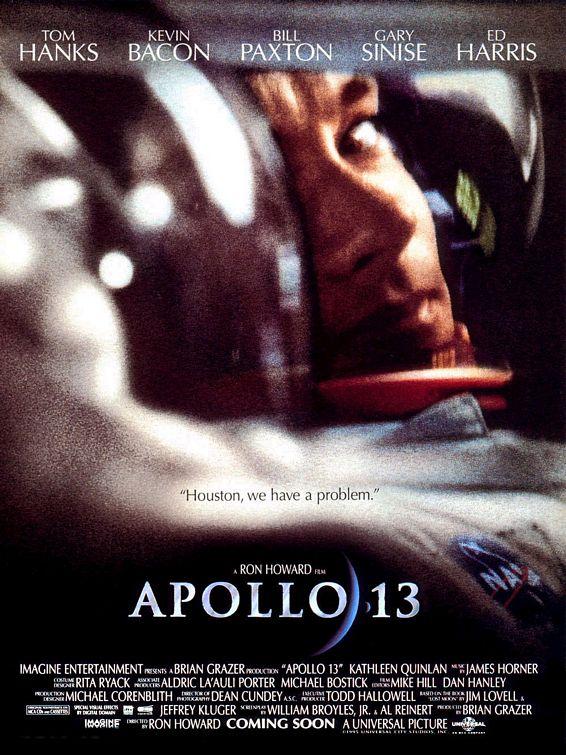
Apollo 13 poster-smallYou could sweat the details, but it’s probably safe to say that the space race between the United States and the Soviet Union lasted nearly 12 years. The Soviets kicked it off on October 4, 1957 with the launch of the little satellite that could, the one known as Sputnik. The Americans fell behind on nearly every front in those early years but then grabbed the brass ring on July 21, 1969, when Neil Armstrong and Buzz Aldrin walked on the moon.

Nowadays, four decades after humans last walked on the moon, space exploration fails to stir the public imagination like it once did. Ticker tape parades for astronauts are a thing of the past, and Canadian Chris Hadfield is arguably the closest thing to a “celebrity” astronaut to come along in decades.

But it was not always thus. If you’d like a fictional perspective on how things were in the pioneering days of space flight, you could do worse than to check out the six movies listed below.

Marooned (1969)

Marooned seems to have slipped into something like obscurity in the nearly half a century since it was made. It’s a movie that concerns an Apollo-like mission which runs into difficulties that prevent them from re-entering the Earth’s atmosphere. Thus, they are marooned in orbit around Earth with a limited supply of oxygen.

Read More Read More

The Public Life of Sherlock Holmes: Carroll John Daly and the Birth of Hard-Boiled

The Public Life of Sherlock Holmes: Carroll John Daly and the Birth of Hard-Boiled

Daly_ManShadowsQuiz time: Who invented the hard-boiled school of fiction? And who was the first hard-boiled private eye? If you answered Carroll John Daly and Race Williams, you’d be like most folks. And you’d only be half right.

In December of 1922, Daly’s “The False Burton Combs” appeared in Black Mask Magazine and the hard-boiled school was born. In April of 1923, “It’s All in the Game” (which I’ve yet to read), with an unnamed protagonist, was printed. And on May 15, 1923, “Three Gun Terry” gave us Three Gun Terry Mack, first of the unnumbered hardboiled private eyes to follow for almost a century now.

In June, 1923, the first Race Williams story, “Knights of the Open Palm,” appeared in Black Mask and it is this story which most folks erroneously point to as the first one to feature a hard boiled private eye. In case you’re wondering, Dashiell Hammett’s Continental Op made his debut in “Arson Plus” in October of that year.

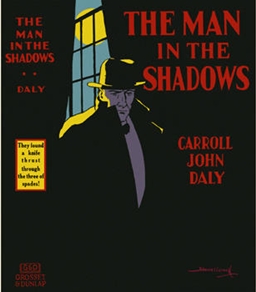
Three Gun Terry Mack only appeared in one more short story, (“Action! Action!” – Black Mask, January, 1924) and in one novel (The Man in the Shadows, 1928). But no matter, as he was really just a prototype for Race Williams, who would appear in some forty-ish stories and six serials/novels for Black Mask, a well as in other publications.

The tone is set from the first sentence on: “My life is my own, and the opinions of others don’t interest me, so don’t form any, or if you do, keep them to yourself. If you want to sneer at my tactics, why go ahead; but do it behind the pages – you’ll find that healthier.”

Read More Read More

Things Your Writing Teacher Never Told You: What Should You Put In a Cover Letter?

Things Your Writing Teacher Never Told You: What Should You Put In a Cover Letter?

Writing a fantasy novelOver on Facebook, where I posted a link to last week’s article, “Ignore the Market Guidelines at Your Peril – How (Not) to Build a Career” – a writer asked in response:

So. What SHOULD I put in my cover letter? Don’t really know. I don’t think I’ve ever included a cover letter with a short story submission, because, well, I don’t know.

That’s an excellent question. Here are the answers I’ve gathered from reading dozens of market guidelines, listening to editors talk at cons, and gauging my response to cover letters I’ve received.

1. What I heard over and over again at the recent Nebula weekend is that any writer who mentions having been nominated for or won any writing awards, ever, immediately bypasses the slush pile. It doesn’t matter how long ago it was, or, in most cases, what award it was. (With the exception of awards made up by a small writers workshop who then hands them out to each other so they can say they’re all award-winners.) The nomination or win for a significant writing award will generally get your manuscript bumped to the top of the To Be Read pile.

Read More Read More

Discovering Robert E Howard: Paul Bishop on The Fists of R.E.H.

Discovering Robert E Howard: Paul Bishop on The Fists of R.E.H.

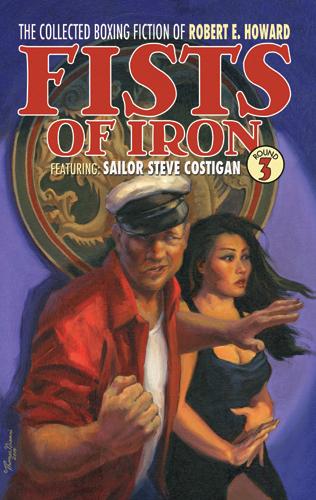
Fists of Iron Robert E Howard-smallNaturally, the works of Robert E. Howard are popular post fodder here at Black Gate. While Conan is far and away his best known character, REH created many other memorable heroes, including Solomon Kane, El Borak and Kull. Earlier this year, I wrote about Howard’s largely forgotten private eye, Steve Harrison.

At the time, I thought that a post on Howard’s boxing stories would be good reading. Also realizing I was completely unqualified to write it, I contacted the current czar of boxing fiction, Paul Bishop of Fight Card Books.

Fight Card is a pulp style series of boxing tales. They’ve included two Holmes boxing novellas in the series, so you know I’m on board! See what Paul has to say about Howard’s boxing works.


The minute I stepped ashore from the Sea Girl, merchantman, I had a hunch that there would be trouble. This hunch was caused by seeing some of the crew of the Dauntless. The men on the Dauntless have disliked the Sea Girl’s crew ever since our skipper took their captain to a cleaning on the wharfs of Zanzibar – them being narrow-minded that way. They claimed that the old man had a knuckle-duster on his right, which is ridiculous and a dirty lie. He had it on his left.
~ Robert E. Howard, “The Pit of the Serpent

Although best known as the creator of Conan the Barbarian, Solomon Kane, and other sword and sorcery characters, Robert E. Howard had a lifelong interest in boxing, attending fights and avidly following the careers of his favorite fighters. Even though as a child he was bookish and intellectual, in his teen years he took up bodybuilding and eventually entered the ring as an amateur boxer.

Read More Read More

Dear Prudentia: Red Sonja is Cooler Than You

Dear Prudentia: Red Sonja is Cooler Than You

Red Sonya cosplay 3

Dear Auntie Prudentia,

I think you’re cool and all, and I like how your gloves match your tea cups, but I think auntie Red is cooler.

Love,

Petunia


My dearest Petunia,

Let me begin by saying that choosing favorites is not becoming. Not even a little bit. Imagine, here I am returning from a perfectly wonderful party with this lovely(?) punch, to find this letter waiting for me, basically telling me that I am *not* in fact the favorite aunt… it hurts, Petunia. Good thing I still have some of this punch to ease the pain of your treachery.

… Do you think you were named Petunia for Red? No, you were not. Be realistic, dear. Let me just finish up my punch and tell you exactly why you are wrong, dear, innocent child.

Read More Read More