Browsed by
Category: Blog Entry

Modular: A First Look at Starfinder 1: “OMG! All Your Trope Are Belong To Us”

Modular: A First Look at Starfinder 1: “OMG! All Your Trope Are Belong To Us”

256 Starfarer Combat Technician Pic
Well-authored and beautifully illustrate
256 Starfinder Core
Does for Science Fantasy what Dungeons and Dragons did for “traditional” Fantasy.

“Dad, we can’t get the Starfinder combat system working…”

“Look, Son, it’s a D20 system, so Armor Class reduces the chance of being hit, rather than absorbs damage.”

“OK. I get it now! You’re the best, Dad!”

(Tousles hair) “That’s what Dad’s are for, Son.”

OK it didn’t quite go like that. For a start, I did not in fact tousle my 13-year-old son’s hair since (a) it’s shoulder length and he gets cross if you tangle it, and (b) he’s 13. Even so, it was a “life’s full circle” Country and Western moment of the same order as when non-geeks teach their kids to throw a rabbit or skin a baseball or whatever.

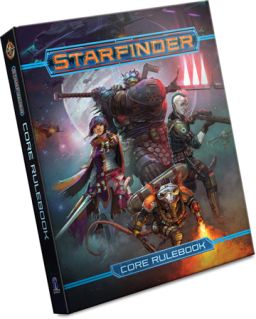
However, Kurtzhau was indeed encountering a D20 system for the first time, the engine at the heart of Starfinder, Paizo’s new Science Fantasy (it uses that term in the text!) system, with which he’s pretty much fallen in love. The blurb says it all.

The Starfinder Roleplaying Game puts you in the role of a bold science-fantasy explorer, investigating the mysteries of a weird and magical universe as part of a starship crew. Will you delve for lost artifacts in the ruins of alien temples? Strap on rune-enhanced armor and a laser rifle to battle undead empires in fleets of bone ships, or defend colonists from a swarm of ravenous monsters? Maybe you’ll hack into the mainframe of a god-run corporation, or search the stars for clues to the secret history of the universe or brand new planets to explore. Whether you’re making first contact with new cultures on uncharted worlds or fighting to survive in the neon-lit back alleys of Absalom Station, you and your team will need all your wits, combat skill, and magic to make it through. But most of all, you’ll need each other.

Inspired by my son’s enthusiasm, I decided to take a look myself…
Read More Read More

The Hammer and the Blade by Paul S. Kemp

The Hammer and the Blade by Paul S. Kemp

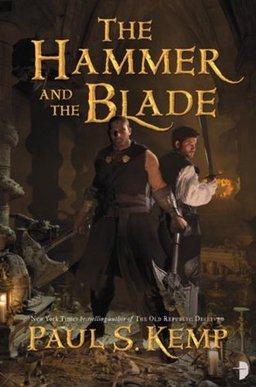
oie_19118350rehVg1zWith the hammer-wielding (sort of) priest Egil and the (not really) rogue Nix, Paul S. Kemp created his entry for the classic swords & sorcery duo contest. They made their debut in The Hammer and the Blade (2012).

We meet them media res as, in search of treasure, they prepare to penetrate the last defenses of an ancient tomb. Like characters in a classic buddy movie, they bicker and banter.

“You may have heard but you didn’t reply, so let me restate. Are you acquainted with a door I couldn’t open? I press the question only to illustrate your softheadedness, as demonstrated by a faulty memory. It’s important you understand your limits.”

Egil tossed the sliver to the ground, tore a strip of cloth from his shirt, and pressed it to his leg wound. “There was that time in the Well of Farrago–”

Nix shook his head emphatically. “That was not a door.”

Egil looked up, thick eyebrows raised. “It had hinges, a handle. It opened and closed. How can you say–”

“It was a hatch.”

“A hatch?”

“Of course it was a hatch, and only a fool priest of the Momentary God would confuse a door with a hatch. A hatch is a different thing from a door. A hatch is troublesome. You see? Does having an eye inked on your head make your other two blind, or otherwise detrimentally affect your cognition?”

“Well enough,” Egil said at last. “It was a hatch.”

“Now you’re mocking me? I hear mockery.”

Read More Read More

Robert E. Howard Wrote a Police Procedural? With Conan?? Crom!!!

Robert E. Howard Wrote a Police Procedural? With Conan?? Crom!!!

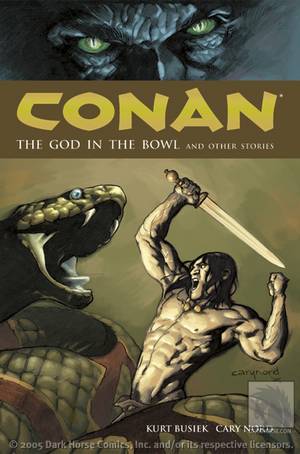
BG_GodBowlComicCoverReportedly, Ernest Hemingway bet Howard Hawks that the director couldn’t make a good movie out of his worst book. Hawks took the bet and we ended up with Humphrey Bogart in To Have and Have Not (it’s not Bogie’s best, but I vote Hawks the winner of the bet). Suppose I told you I could show you that one of what’s commonly considered among the worst Conan stories isn’t really that bad – and that it’s a pre-genre police procedural? Ready to take on the challenge?

In 2015, Black Gate‘s Discovering Robert E. Howard series showcased the breadth and diversity of REH’s writings. Boxing stories, westerns, science fiction, Solomon Kane, El Borak: Howard was an immensely talented author who wrote in a variety of genres. My first entry in the series was about Steve Harrison, Howard’s take on the hardboiled private eye with a weird menace twist. As you can read in that essay, Howard didn’t care for the genre and he abandoned it almost as quickly as he entered it. Today, I’m going to look at his lone police procedural. Yep – Robert E. Howard wrote a police procedural before the term was even in use. And it features Conan!

The general consensus is that Howard hit the mark with his fourth Conan story, “The Tower of the Elephant,” published in March of 1933. His first was “The Phoenix on the Sword,” which appeared in Weird Tales in December of 1932 and was a rewrite of an unpublished Kull story, “By This Axe I Rule.” Farnsworth Wright, editor of Weird Tales, rejected the second, “The Frost Giant’s Daughter,” which to me, reads more like a chapter in a longer work than a self-contained story.

“The God in the Bowl” was probably written in early 1932 and was Howard’s third Conan story. Wright rejected this one as well and it did not see print in any form until an edited version by L. Sprague de Camp was published in 1952’s Space Science Fiction, Volume 1, Number 2 (the story has nothing to do with either space or science fiction…). De Camp did less chopping on this one than most of his Conan edits, but fans could finally read Howard’s original text in Donald Grant’s The Tower of the Elephant in 1975.

Read More Read More

Early Peek at 2000AD Prog #2050: A Jumping-On Issue

Early Peek at 2000AD Prog #2050: A Jumping-On Issue

2000AD is a weekly anthology book, typically with 4 stories running at a time, with some at the middle while others are ending, which makes it hard to find a meaty run to review. Several times a year, 2000AD publishes issues (pronounced progs if you’re speaking with a British accent) for new people to jump on — where every story is beginning.

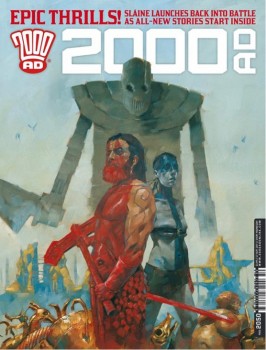
Picture-Device-Independent-Bitmap-1-600x788

Prog #2050 is such an issue and will be hitting newsstand (and the internet as a digital issue) on September 25th, so I thought I’d get into it. This was a large-sized issue (48 pages) and contained 7 new stories that you don’t have to know much at all about the world of 2000AD to start reading.

Read More Read More

Zombies Need Brains Needs You

Zombies Need Brains Needs You

ZNB RazorsThose who know me, or who have read some of my previous posts on the subject, know that I’m a big fan of anthologies, particularly those featuring original stories. For my general remarks on the subject, you can look here. I’ve mentioned that the anthology is a wonderful thing for readers, who can encounter authors new to them, sample the work of people they’re not familiar with, and, in the case of the themed anthology, explore an idea that interests them.
The original anthology can also be a god-send for writers – in part because it’s an easy way for new readers to learn about us, and find out whether they like our style. But it’s also the all-important entry-level step for a lot of new and previously unpublished authors, particularly when the anthology, like the ones Zombies Need Brains publish, is recognized as a qualifying market by SFWA.

But even established writers benefit from anthologies. You get to explore an area or a theme that interests you, but that you don’t have a novel-length idea for. You get to write a short adventure for established characters – again, something cool that just isn’t novel-length. You can re-visit complex imaginary worlds, and sometimes, you can give new characters or worlds a test run before you run the larger version.

Read More Read More

GenCon 2017 Pt. 4 – Catch Up Edition

GenCon 2017 Pt. 4 – Catch Up Edition

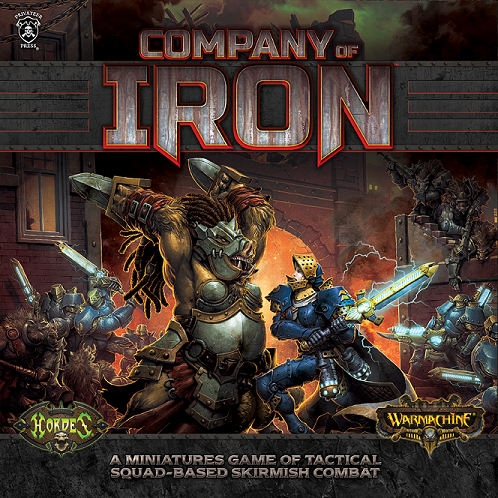
Company of Iron_TOPI’ve covered a number of new games that I saw at Gen Con, including fantasy deck-building games, science fiction games, and youth games. Some games, though, are hard to classify under a large thematic umbrella, defying the tight boxes of genre. Here I’d like to touch on some of those games.

Privateer Press

One of my favorite miniature war games is Warmachine, created by Privateer Press. In fact, my first article with Black Gate was an essay on their Iron Kingdoms RPG line. At that time, the Iron Kingdoms RPG was built on the D20 system, and it’s now a standalone RPG line … but Privateer Press is really known for their miniature line.

In Warmachine, you create an army commanded by a unique warcaster, and comprised of their large, magical, steaming metal constructs called warjacks, supported by units of troops, solo soldiers, and officers. Their companion game, Hordes, is fully compatible, but the warlocks in Hordes use a slightly different magical mechanic to command their feral, rampaging warbeasts. You assemble an army by picking one of the available factions, and then buying, assembling, and (hopefully) painting your miniatures to represent your completed army. The folks over at Penny Arcade have recently begun broadcasting full games of Warmachine for your viewing pleasure, if you want to see what it’s all about. But Privateer Press has major expansions on the horizon for their game lines.

This summer, Privateer Press released Grymkin: The Wicked Harvest, a dark fey-themed faction for Hordes. These are some truly great miniatures, from the child warlock known just as The Child (complete with her companion and protector, Dolly) to the warlock The Dreamer (along with three solos representing fragments of her dream power) to the grotesque porcine Piggybacks and the darkly amusing Neigh Slayers. Words really can’t do these miniatures justice, so check them out on the website.

Read More Read More

Modular: The Traveller Central Supply Catalogue Page by Page: Survival Gear, Electronics and Computers…

Modular: The Traveller Central Supply Catalogue Page by Page: Survival Gear, Electronics and Computers…

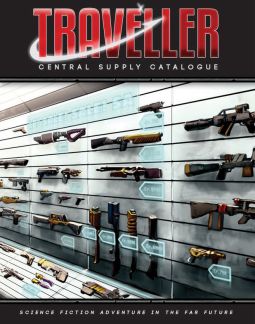
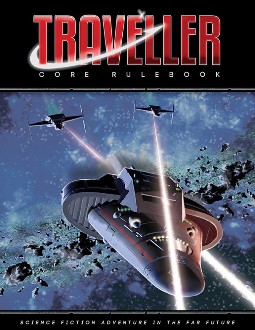
Traveller Central Supply Catalogue
(Click through to first article)
256 Traveller rescue ball
Rescue Ball

I’ve finally started making use of the Mongoose 2 Traveller Central Supply Catalogue. As predicted, it’s been handy to have two sets of armour listings, which is as far as I got last time with my page-by-page.

The players — all 13-14 year old boys — liked the catalogue just to look at. Rules aside, it added coolness to our Traveller sandbox game. One or two of the items proved invaluable, including the Diplomatic Vest, which the rogue character leapt on with unholy glee. (He should, however, have considered something more powerful than the flechette gun.)

So, now we’re onto Survival Gear, Electronics, and Computers, sections that continue the faux catalogue conceit.

2. Survival Gear

As with Armour, this section duplicates and expands on the equipment in the core rules. For example, it tells us more about “Artificial Gills” to make clear that these must be worn with a mask, and includes lots of new items.

Read More Read More

Dilvish, the Damned by Roger Zelazny

Dilvish, the Damned by Roger Zelazny

“Have you given any thought to what you are going to do if — rather, when — you make it to the top?”

“Look for trouble,” Dilvish said. “Defend myself at all times. Strike instantly if I see the enemy.”

Black and Dilvish to each other in “Tower of Ice”

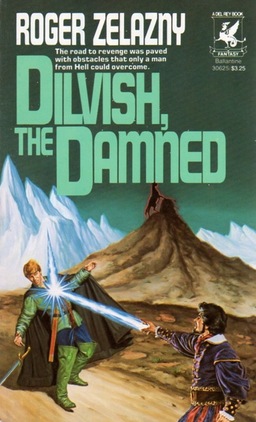
oie_1271358c5k3rMonDilvish, the Damned (1983), by Roger Zelazny, had been on my list of books and stories to avoid because of who recommended them. With this book, it was someone I played D&D with. In fact, he introduced me to the original D&D rules back in 1977 or ’78.

He was, and remains, the most voracious reader I’ve ever known, though he rarely reads outside of sci fi and fantasy. He would always tell me about whatever book he was reading — often read while he walked the mile and half to my house. When he’d describe a book to me, though, it was always about how cool and awesome the most powerful characters were. Big cowls and fancy wizardly skullcaps were symbols of greatness. The more absurdly godlike the protagonists were, the better.

A few years ago, he told me he was disappointed that the Twilight books didn’t end in an epic all out vampires vs. werewolves war. That Stephenie Meyer wouldn’t do that really didn’t make sense to him. It’s that sort of take on books that led me to take for granted that any book he suggested was going to annoy me as much as it excited him. I’ve overcome that block slowly. It took me nearly thirty years and a lot of positive recommendations to read Roger Zelazny’s Amber Chronicles. Even loving those — which I do — it took me another decade to pick up Dilvish, the Damned.

Dilvish is heir to both a Human house and an Elvish house, and a heroic warrior of great prowess. Two centuries ago, he came up against the powerful, evil sorcerer, Jelerak. The wizard, far stronger than Dilvish knew, turned the half-elf to stone and imprisoned his soul in Hell. It is only when Portaroy, a town once saved by Dilvish, comes under a new attack, he is freed to return to the mortal world with a metal horse named Black, and a desire to avenge himself on Jelerak.

Dilvish is part of the rebirth of swords & sorcery in the mid-60s alongside Elric and the Lancer Conan. Several of Zelazny’s stories were reprinted in S&S anthologies from the 1970s. Some of the stories are at least equal to those of Moorcock and Leiber, and way better than most by Lin Carter and John Jakes. Dilvish, the Damned is a 1983 fixup of all eleven Dilvish short stories. The first was originally published in Fantastic in 1965, and the last two first saw light of day in this collection.

Read More Read More

Modular: Picking Pathfinder

Modular: Picking Pathfinder

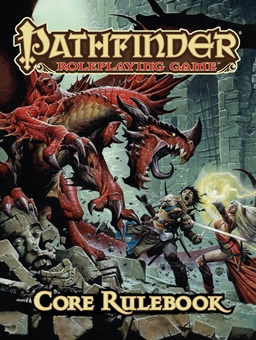
I’m curPatfhinder_Corerently running a Swords & Wizardry (S&W) campaign for a few friends. I wrote here about why I chose S&W instead of my preferred system, Pathfinder. In fact, that post served as the genesis for this Black Gate feature,  Modular. But now, I’m going to look at some of the strengths of Pathfinder and why, when this S&W campaign is done, I’m going to transition the group to a Pathfinder adventure.

So, though I had both played and run Pathfinder, I chose S&W for reasons I talked about in that prior post. I wanted a more story-driven, less mechanics-based system. Also, because two-thirds of the party was new to pen and paper RPGing, I wanted something lighter in the rules department. And there’s no comparison between the two in that regard. The S&W Core Rules comes in at just over 140 pages. The Pathfinder Core Rulebook is almost 600!

Now, I explained in that first post that while I was still reading RPG products, I had stopped playing during 3rd Edition Dungeons & Dragons (D&D): there simply hadn’t been time for it.

But I wanted to get back into playing, and the choice seemed to be between Pathfinder and the newly released 4th Edition. Now, I had only ever played D&D, going back to 1st Edition. I mean, it was synonymous with role playing games and 4th Edition was the natural choice. But as I researched both systems, Pathfinder clearly seemed to be the way to go.

Read More Read More

Modular: The New Mongoose Traveller #3 — Random Adventures, Or How I GM’d With No Prep

Modular: The New Mongoose Traveller #3 — Random Adventures, Or How I GM’d With No Prep

(Read First Article)

Spacers in Ganelon Navy uniforms cram the bar. These guys have a reputation for trashing bars and brawling with strangers. However, this evening, they are beyond well behaved. They keep their hands off the waiting staff, even tip them generously. They are almost painfully polite — “I’m sorry I nearly jostled you! Please accept my apologies, and further apologies on behalf of my ship and indeed my culture…”

This is a problem!

Or at least a problem for the three hard-up traveling companions huddled around a small corner table… let’s call them Travellers... sipping beer from bulbs designed to cope with the 0.15G (these are real!). They have a contract to catch the Ganelon spacers behaving badly so as to compromise that star kingdom’s naval goodwill tour. So far, they are not seeing any bad behaviour.

Somewhat direct in mentality, Charadack, the retired marine sergeant in the group, starts loudly boasting about a battle in which the Imperium forces utterly thrashed those of Ganelon Star Kingdom. Perhaps he can provoke an assault?

After about fifteen minutes, a Ganelon officer carefully navigates the crowded bar and addresses Charadack: “I hear you are talking about your great victory. May I compliment you and the entire Imperium for your chivalry? You are brave and noble fighters, and indeed were exceptionally polite and gracious to the POWs captured as a result of  your glorious success…”

At this point, our Travellers are starting to freak out. What is going on?

Read More Read More