Browsed by
Category: Blog Entry

The Road of Azrael by Robert E. Howard
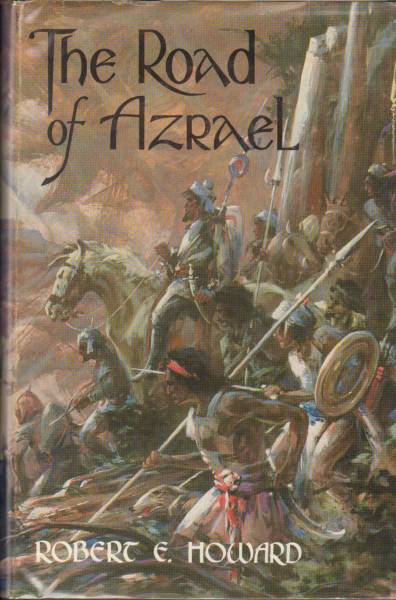
The Road of Azrael by Robert E. Howard

TRDOZRL1979I can remember when my dad brought home The Road of Azrael (1979) and Sowers of the Thunder (1980), collections of Robert E. Howard’s historical adventure tales. My reading tastes were so exclusively fantasy and science fiction then, I couldn’t imagine wasting any time on boring, mundane stories. No wizards, no demons? What the heck was anybody thinking?

I grew out of that attitude a few years later and read both volumes. I remember liking them, but if you asked me for details on either one, I couldn’t have told you a thing. I read them once and never again. In fact, until recently I hadn’t read any other historical adventure even though, theoretically at least, I was a fan. I mean, it’s one of the primary root sources of swords & sorcery. At a very basic level, Robert E. Howard took the historical adventures of writers like Harold Lamb and Talbot Mundy and added magic and monsters.

It wasn’t until I started blogging about swords & sorcery and started getting all sorts of recommendations for the stuff that I looked into the genre again. With my review of Henry Treece’s The Great Captains four years ago, I started including some novels in my writing for Black Gate. I’ve been including a taste every month or so (most recently Purity of Blood by Arturo Pérez-Reverte), and it’s gone over well.

One of the pledges I made to myself at the start of my Black Gate tenure four years ago, was to avoid the big names of swords & sorcery. No one, I felt, needed another article about Michael Moorcock, or Fritz Leiber, or especially Robert E. Howard. Considering I wrote about Karl Edward Wagner’s Night Winds for my very first full review, THAT promise didn’t last very long, but I have tried to keep my focus on lesser-known or forgotten authors in my reviews of older works. Since then, I’ve reviewed a Moorcock book, a new one by Charles Saunders, and several more Wagner books, but until now I’ve steered clear of REH (especially because Bob Byrne has done a terrific job writing about him here at BG in his ongoing Discovering Robert E. Howard columns). It’s too hard to completely avoid the foundational figures of swords & sorcery when writing as often as I do, but I try to keep it to a minimum.

All this is a complicated way to say I’m reviewing The Road of Azrael by Robert E. Howard, and feel fully justified in doing so. It collects five historical tales of varying quality.

The paperback edition I read has execrable cover art, which did nothing to add appeal for me. Fortunately, the first thing in the book is a laudatory introduction by Gordon Dickson, no slouch of a storyteller himself, praising REH’s storytelling talents. Not that I need reminding of just how good Howard could be, but it’s always nice to see him get the praise he deserves. Unfortunately, I did not like the opening story, “Hawks Over Egypt.”
Read More Read More

Wordsmiths: Black Gate Interviews Steven Erikson at Can*Con 2017

Wordsmiths: Black Gate Interviews Steven Erikson at Can*Con 2017

As I’ve mentioned periodically here, I’m part of the planning committee for Can*Con, Ottawa’s annual conference on science fiction, fantasy and horror writing, and specifically help to develop each year’s program. This year I had the amazing opportunity to sit down for a live interview with Canadian fantasy writer Steven Erikson, author of the Malazan Book of the Fallen and Willful Child series and one of our 2017 Guests of Honor. And we even recorded it!

Above is the entirety of my interview with Steven, discussing his previous work, his writing process, the fantasy genre in general, and what’s coming next from this prolific author. The chance to chat with him was a huge privilege and an absolute blast, and I hope you enjoy it as much as we did.

You can check out Steven’s work at www.steven-erikson.com or his new Facebook author page, and see our previous coverage of his work here at Black Gate.

Also check out Can*Con at can-con.org/cc (@CanConSF on Twitter) and keep an eye out for dates and guests for 2018!

Many thanks to Silver Stag Studios for filming this interview. Scope them out here (@SilverStagStdio on Twitter).

A City Eternal, Under Siege: City at the Edge of Time, by Janet & Chris Morris

A City Eternal, Under Siege: City at the Edge of Time, by Janet & Chris Morris

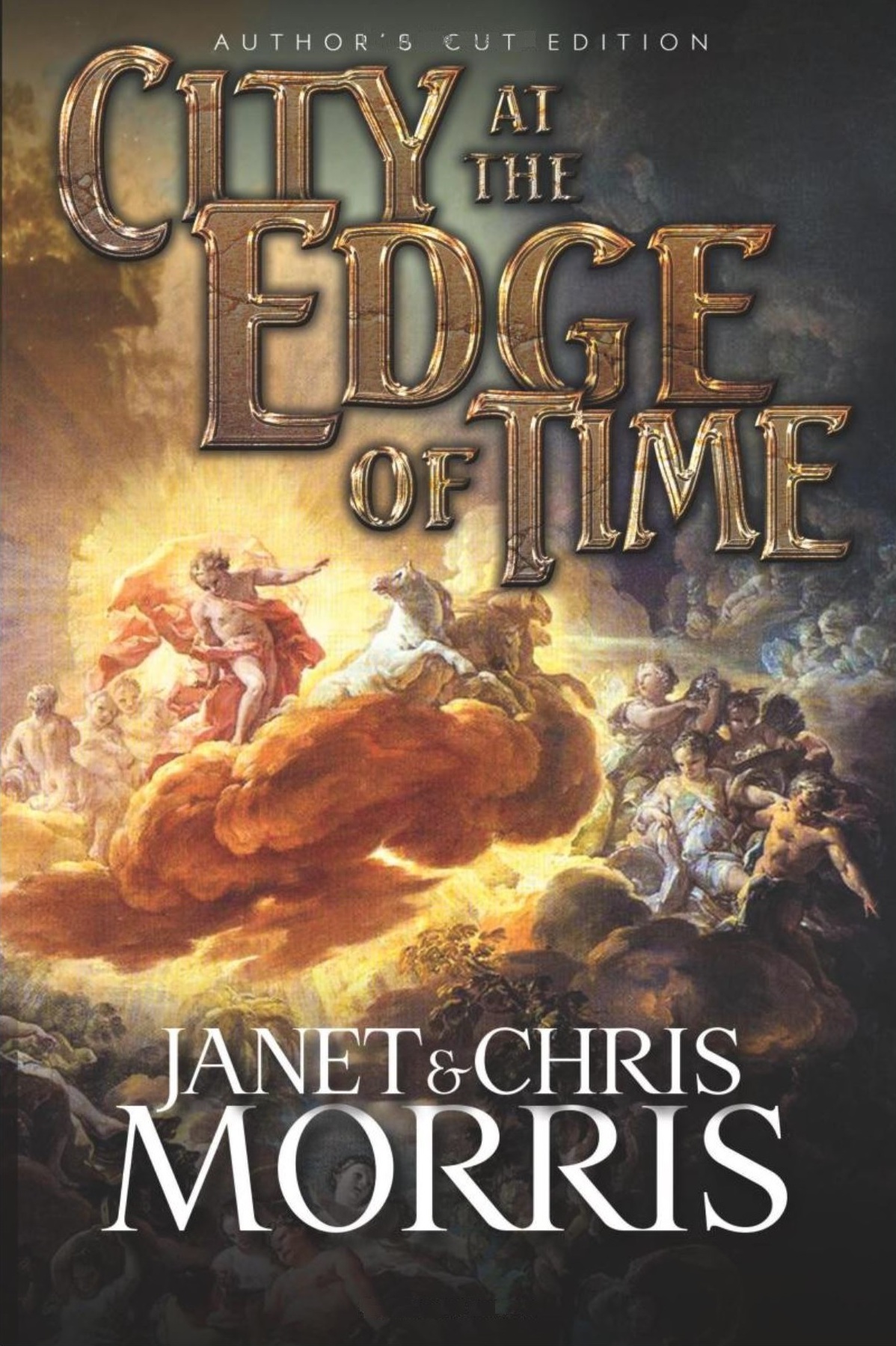
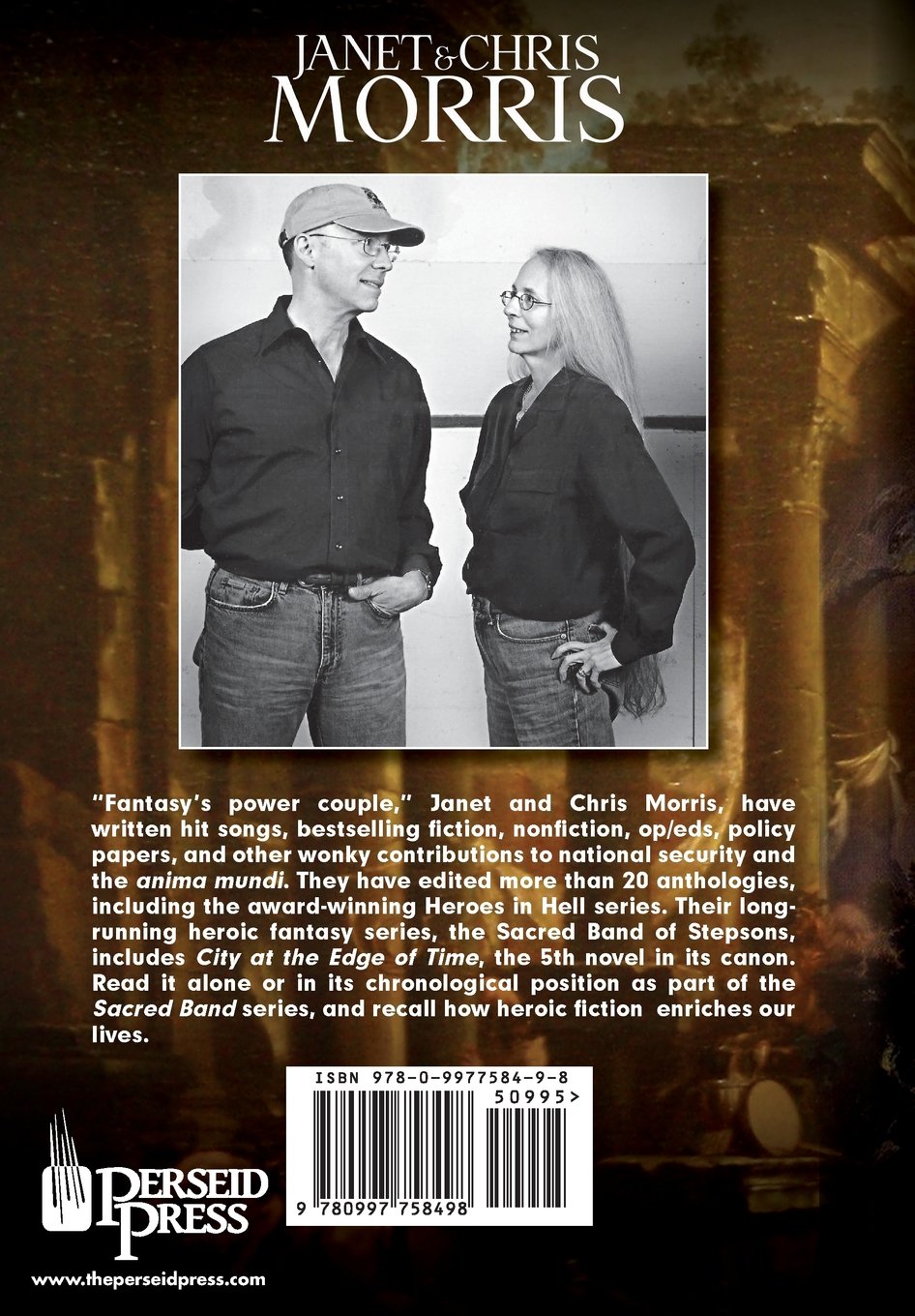
City-at-the-Edge-of-Time-Morris-medium City at the Edge of Time Morris-back-small

City at the Edge of Time
By Janet & Chris Morris
Author’s Cut Edition, published by Perseid Press
Book design: Christopher Morris; cover design, Roy Mauritsen.
Cover art: Corrado Giaquinto (1703-1765), The Birth of the Sun and the Triumph of Bacchus; oil on canvas, 1762; Museo del Prado.

“The city had yearned to live forever and, over the millennia, had learned how. It had not always been even so much as a city; it had not always known the magic of peace. Peace had come from wisdom; wisdom had come from the hearts of its rulers, and then from the hearts of its citizens. Greed had been banished first, then foul Fury had been driven from its gates. Vengeance had followed, with Spite slithering behind, hissing like a beaten cat. Envy and Prevarication went last, hunted from door to door and expelled like a contagion into the outer worlds. It was said that the city had spawned all the ills of humanity and loosed them upon the world as it cleansed itself. It was said that what had been driven out would someday return.”

And so it did, with a dark vengeance. This is a city of immortals, an eternal city now stuck in the muck and mire near the sea at the edge of time, where all things end. This is a city where death is so unfamiliar, so unknown, that animals slaughtered for a feast must be taken outside the city’s walls in order to be slain. Now the city stands poised to meet its own ending, and its immortal inhabitants face a doom they never imagined.

Read More Read More

The Public Life of Sherlock Holmes: Murder on the Orient Express

The Public Life of Sherlock Holmes: Murder on the Orient Express

OrientExpressTrainWhile I have read a lot of mysteries by a lot of different authors, I’d never cared for Agatha Christie. When I began watching David Suchet’s masterful performance as Hercule Poirot (which I’m SURE you read about here at Black Gate), I had never finished a Christie novel. I just didn’t like her stories and there was way too much out there that I’d rather read. However, because Suchet was simply amazing, I became a Poirot fan and I read all of the short stories. By picturing the actors and settings from the television show while I read, it worked for me.

My frame of reference for Poirot is episodes of the Suchet television show, not Christie’s original stories. Unlike Doyle, Stout, James Lee Burke, Tony Hillerman, Frederic Nebel and many others whose work I admire, I still am not interested in Christie’s writings. So, I like Poirot, but not Christie.

I wasn’t sure what to think of the new big screen Murder on the Orient Express, which I saw at 10:50 AM on opening day. On the one hand, I thought that Kenneth Branagh’s moustache was completely ludicrous and a huge strike against the move right out of the gate (I mean, who in the world thought that was a good move? Did Mark Gatiss have a hand in this?). On the other hand, it was Branagh’s amazing Shakespeare films that made me a fan of the Bard. He is a wonderfully talented actor. And this film, which he produced, directed and starred in, was his labor of love.

Read More Read More

Piracy: It’s the Creative Ecosystem that Matters

Piracy: It’s the Creative Ecosystem that Matters

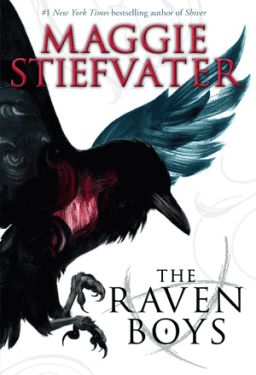
Cover_ravenboys_256
Jack Campbell: “…a few hundred more of less sales can mean the difference between a new contract and being cut loose.”
finntroll
“Oh, you streamed it, did you? Well #### you, sir. #### you.”

“Who has the new album?” asks the lead singer of Finntroll, a rather wonderful Viking Metal band (*).

One of the fans yells out something incomprehensible.

“Oh, you streamed it, did you?” responds the singer. “Well #### you, sir. #### you.”

Which seems fitting, because when you pirate an artist’s work, it feels like you’re saying a big, “#### you!” to the artist.

For that reason alone, can I suggest that you click through to Change.org and sign the petition to ask Google to do something about ebook piracy. If Google can hide results for legal reasons (*), then it can also start hiding the pirate sites.

Of course, my plea opens a can of worms.

Whenever ebook piracy comes up, people leap in to provide (self) justifications ranging from pseudo economic or political victim-blaming through to rhetorical sleight of hand. The same arguments could be used to justify, for example, blatant commercial cultural apparition, big players pirating indy jewelry designs, and the hacking and passing around of the very private pictures of celebs. It’s a pointless debate because really there’s an underlying unspoken, “‘#### you”. (Feel free to discuss this in the comments, but count me out.)

Usually, the pro-piracy advocate then appends, “Besides, anyway, it doesn’t do any harm.” That’s what I want to talk about here, because in all the kerfuffle about ethics, people tend to lose track of the effect on the creative ecosystem.

A post by Joanna Penn spells two arguments:  Serious readers prefer to buy books rather than download stolen copies, and some authors use piracy as a marketing strategy. I’ve also heard on good authority that most pirated books aren’t actually lost sales because they are never read – there’s a culture of… odd people hoarding and sharing.

Read More Read More

Ten Ways You Know Your Evil Empire Is Doomed

Ten Ways You Know Your Evil Empire Is Doomed

German_soldier_Ardennes_1944.jpeg

“I’m in deep doo-doo.”

I just finished reading Antony Beevor’s Berlin: The Downfall 1945 as part of my research for my Volkssturm novel. For sweep, excitement, and fine attention to telling detail, it rivals Lords of the Atlas as my favorite history book.

One of the things that had me shaking my head all the way through Beevor’s book is just how great the level of denial was on all levels of German society, especially at the top. With the Russians rolling across the border and most German cities already in ruins, the Nazi high command was still obsessed with petty power struggles and dinner parties. The common people had a bit more of a clue, but still clung to a desperate hope that somehow everything would turn out OK. In the interest of history not repeating itself, here are ten signs that your evil empire is about to collapse. This may come in handy some day.

Read More Read More

The Romance of Robot

The Romance of Robot

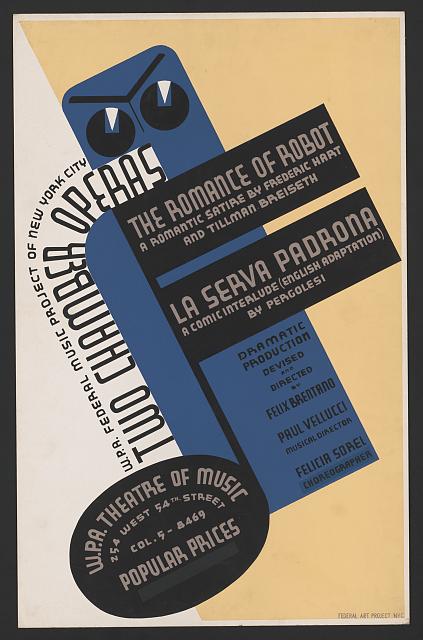
1937 W.P.A. Federal Music Project The romance of robot poster

Franklin Roosevelt had only one true ideology during the Great Depression: try it, maybe it will work. The range of innovative,productive, uplifting, unworkably idealistic, and just plan crazy plans had something for everybody to love and to hate. Federal Project Number One exemplified these extremes.

FPN1 devoted itself to the radical idea that creatives were human beings deserving of dignity and of meaningful work inside their professions. And to the even more radical idea that it would hire qualified minds without discrimination regarding race, creed, color, religion or political affiliation. Over the few years from its start in 1935 until World War II the creatives of FPN1 created lasting monuments of American culture.

Although names mutated rapidly, as Roosevelt’s alphabet agencies were wont to do, most people have probably heard the usual titles of FPN1’s subgroups, The Federal Writers Project, the Federal Art Project, the Federal Theater Project, and the Historical Records Survey. Perhaps least known is the Federal Music Project (FMP), which concentrated on highbrow performances of original music, as guaranteed a portent of ephemerality as can be found in American culture.

Read More Read More

A Tale from the Archonate: A Wizard’s Henchman by Matthew Hughes

A Tale from the Archonate: A Wizard’s Henchman by Matthew Hughes

a-wizard-s-henchman-hardcover-by-matthew-hughes-[3]-3997-pI hate Matthew Hughes’ book, A Wizard’s Henchman (2016). Not for the wonderfully complicated cosmogony of its universe; not for the ease with which it slips between dark humor and nightmarish horror; not for its uber-compentent, sympathetic hero, Kaslo. No, I hate it because, although it’s the first volume in a new series, it turns out it’s also a culmination of sorts for Hughes’ long-running Archonate series, and I didn’t know that going in. I had no idea until well into AWH that it serves as a major hinge point in his fictional universe, where one type of reality is supplanted by an entirely different one. Now, if I limit myself to the expoits of master discriminator Henghis Hapthorn, I have three novels and a collection of short stories to read. If I don’t limit myself, there’s another ten books to add to the list.

Obviously, I don’t hate A Wizard’s Henchman. In fact, I love it — for all the reasons I mention above and more. Many comparisons have been made between Hughes and Jack Vance, even by Hughes himself (where he describes the Archonate’s explicitly Vance-inspired origins). On the surface, it’s easy to see similarities in the two authors’ works: a love of rarely-used words; sly humor; non-stop inventiveness harnessed to creating oddball societies ruled by idiosyncratic rules and rulers; etc. Hughes, though, is no mere mimic. Like Michael Shea and Neal Barrett Jr., Hughes clearly carries a torch for Vance, but it does not outshine his own talent, originality, and powerful instincts as a creator of captivating stories and great originality.

Up until now, most of the Archonate stories have occurred in Earth’s stellar arm among thousands of settled worlds, collectively called the Spray. Apparently, (SOMETHING I WOULD HAVE KNOWN IF I’D READ ANY OF THE OTHER BOOKS FIRST) one of the central conceits in the series is that magic is staging a universal comeback, at which point it will completely replace cause-and-effect empiricism. Hughes created the sci-fi version of the Archonate as the last age before that of Jack Vance’s Dying Earth stories. (As a side note, let me say that if you haven’t read them you should be ashamed. Buy them now and read them tonight). In Vance’s books, old Sol is a fading crimson orb illuminating an Earth that’s a long way down the path toward extinction, and where more magic has been forgotten than is even remembered anymore. A Wizard’s Henchman is about the days following the transition of the Universe to a place where sympathetic magic rules everything and the laws of physics have lost much of their sway.

Like a James Bond movie, AWH opens with a mini-adventure. Erm Kaslo, a licensed confidential operative, has arrived on the world of Cheddle to enforce an arrest warrant for Binnie Varshun for defrauding Diomedo Obron. As soon as he meets the local police chief, Kaslo is knocked out, then wakes up in a prison camp. In the aftermath of his escape, Kaslo starts to learn that certain people, his employer, Obron, among them, believe the Universe was once run by magic and is about to be again.

Read More Read More

Modular: Fox Trot Plays Dungeons & Dragons

Modular: Fox Trot Plays Dungeons & Dragons

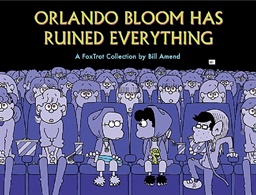
FoxTrot_OrlandoBill Amend’s Fox Trot is a comic strip that ran daily from 1988 into 2006, then switched to a Sunday-only format. Still around today, it tells the story of the Fox family. Dad Roger is a loveable goober who wishes he was better at golf and chess. Mom Andy is the common sense core of the family unit. Sixteen year old Peter is a wannabe athlete, with fourteen year old Paige a typical teenage girl. And ten year old Jason lives to torment Paige and is a school geek. He’s got a pet iguana named Quincy who acts like, well, an iguana, but can really be the center of a strip.

The dynamics and shifting alliances of the three kids are instantly relatable to anyone who grew up with at least one sibling. as Calvin and Hobbes’ creator Bill Watterson wrote in the introduction to the first collection:

Fox Trot particularly captures the Machiavellian nature of adolescents. The balance of power between Peter, 16, Page, 14 and Jason 10, is a constantly bartered commodity, and alliances are fragile and short-lived. No collusion will survive an opportunity to get a sibling in trouble, and hesitant parents are goaded with the cry of, ‘Punish him! Punish him! Ground him! Ground him!’

Meanwhile, the challenges of parenting and marriage are amply represented by Roger and Andy. It’s one of my all-time favorite strips and with my nine year old son going through all my collections, I’m enjoying the Fox family all over again.

Jason is a Black Gate kid. His interests are all over pop culture: Star Wars, Star Trek, Lord of the Rings, horror (he loves Halloween, to his family’s pain), Christmas lists, Indiana Jones (even Young Indiana Jones) and cultural tropes such as westerns and Sherlock Holmes. Naturally, being a brainy geek, he’s into Dungeons and Dragons, usually playing with his best friend, Marcus. One rainy spring break, Paige found herself lured into playing D&D with Jason.

Read More Read More

Thick As Thieves by Ken Lizzi

Thick As Thieves by Ken Lizzi

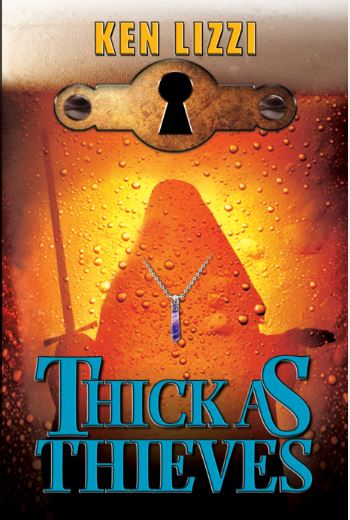
CaptureSwords & sorcery and hard-boiled crime stories share significant crossover in themes, characterization, and worldview. Both tend to have solitary heroes possessed of highly personal codes of behavior, flourish on the margins of civilization (be it the steppes of Turan or Poisonville), and over all, equal parts world-weariness and cynicism is de rigueur. Ken Lizzi’s newest novel, Thick As Thieves, amps up the comparison by being a hard-boiled swords & sorcery heist story.

Thick As Thieves’ opening echoes one of roleplaying’s hoariest tropes, by introducing all its primary characters during a fight, if not in a tavern, just outside one in the frontier city of Kalapo. Brick is a giant slab of a man, a veteran of the Merchant’s War, and given to bouts of berserk fury in battle. In dire need of work, he took up the post of bouncer at The Chipped Mug, a less-than-reputable tavern noted for its vinegary wine and its owner, Shib. Shib is Haptha, a non-human race derisively called Sharks for the dorsal ridge that runs atop their skulls. The Haptha are a race of capitalist empiricists who launched and won the war against the human Clackmat Confederacy and Leyvan Hierocracy to force them to give up their mercantilist ways. Glum Arent, an ever-present fixture in the bar, is by trade a poet, but makes most of his living writing letters for the illiterate, penning panegyrics for priests and politicians, and acting as general informant for those same clients.

A wagon wheel on one of Haptha Trader Vawn’s wagons breaks outside The Chipped Mug. While repairs commence, Vawn and one of his bodyguards, Dahlia, a relatively rare Leyvan swordswoman, enter the tavern. Outside, members of Kalapo’s Cartage and Drayage Guild take offense at the trader’s team fixing the wagon themselves. A fight ensues. When the guildsmen attempt to attack Vawn inside the tavern, Brick makes it clear he will brook no trouble, then proves it when his warning is rejected.

“Get the f–k out of the way, freak.” The leading red tunic reached out and prodded Brick — rather scornfully, Brick thought — in the midsection with the tip of his cudgel.

“Don’t,” said Brick. He felt the advance hints of the Fury, a faint haze of red specks at the edge of his vision. The jab with the club was insulting. And the tavern, and the safety of the people within was his responsibility. His job. He tried to keep the anger at bay, though not in great earnest. He recognized the dangers of surrendering to rage, but he liked the Fury. It was what made him a good soldier. It was what had allowed him to ignore fear — not dismiss it, not conquer it, but ignore it. It was what let him tear gaps in enemy positions, be the tip of a human wedge driving into a shield wall. He recognized the disadvantages in civilian life. Slipping the leash from impulse control could be a problem outside a war zone. So, he kept the Fury tightly reined in. But he missed it. And if this punk ass guildsman jabbed him again…

The punk ass guildsman jabbed him again.

The Fury descended like a curtain of crimson sparks. Pent up frustration spewed from Brick like wine from a punctured goatskin bag. He batted aside the cudgel and grabbed the wrist, yanking the man towards him. Brick squeezed and twisted, hearing tendons pop and little bones grind together. At the same time, his other hand shot forward and gripped the guildsman below the armpit of his red tunic. Brick lifted the man, continuing to twist and pull on the wrist. The guildsman screamed as first elbow then shoulder dislocated.

Read More Read More