Browsed by
Category: Blog Entry

1970s Horror Comics, Old and New: Eerie and Bloke’s Terrible Tomb of Terror

1970s Horror Comics, Old and New: Eerie and Bloke’s Terrible Tomb of Terror

Eerie 52-small

In time for coincidence with Hallowe’en, a friend recently pointed me at Bloke’s Terrible Tomb of Terror, a magazine walking in the path of such 1970s Warren horror magazines as Creepy and Eerie. I picked up a pdf copy just before the etsy store went on a bit of a break while The Bloke (Jason Crawley) moves house and shop. (30 October, 2017: The Bloke’s site is back up and I just bought two more issues at the online shop.)

I was surprised by how much I enjoyed it. I was really only a superhero guy and a light Marvel horror/monster guy (Son-of-Satan (blogged about here), It, Strange Tales) when I was 10-15 years old, so the Warren style wasn’t really my bag back then.

Read More Read More

Nothing To Be Afraid Of

Nothing To Be Afraid Of

Bradburyillustrated_manI often find that the idea of something is more frightening than the thing itself – unless you have a phobia, of course, in which case the reality is much, much worse than you imagined.
There’s a difference between fear and horror, but only because horror is, I think, a bit more existential. You can be afraid of something specific and not lose your grasp on the world, but horror is a feeling that sweeps over you like a wave, that’s bigger than you are, that momentarily stops your existence. In a manner of speaking, horror is a form of the sublime – the feeling you get when you come face-to-face with something that’s too big for your finite mind to grasp.

So for me, all the slashing, blood-spurting, bug-crawling, chain-saw wielding, limb-chopping stuff is just icky. Startling, sure, if it’s well done. It might make me recoil, it might frighten me, but it doesn’t stop my breath. It’s not horror.

Read More Read More

Modular: Tabletop Terror in the Tomb of Annihilation

Modular: Tabletop Terror in the Tomb of Annihilation

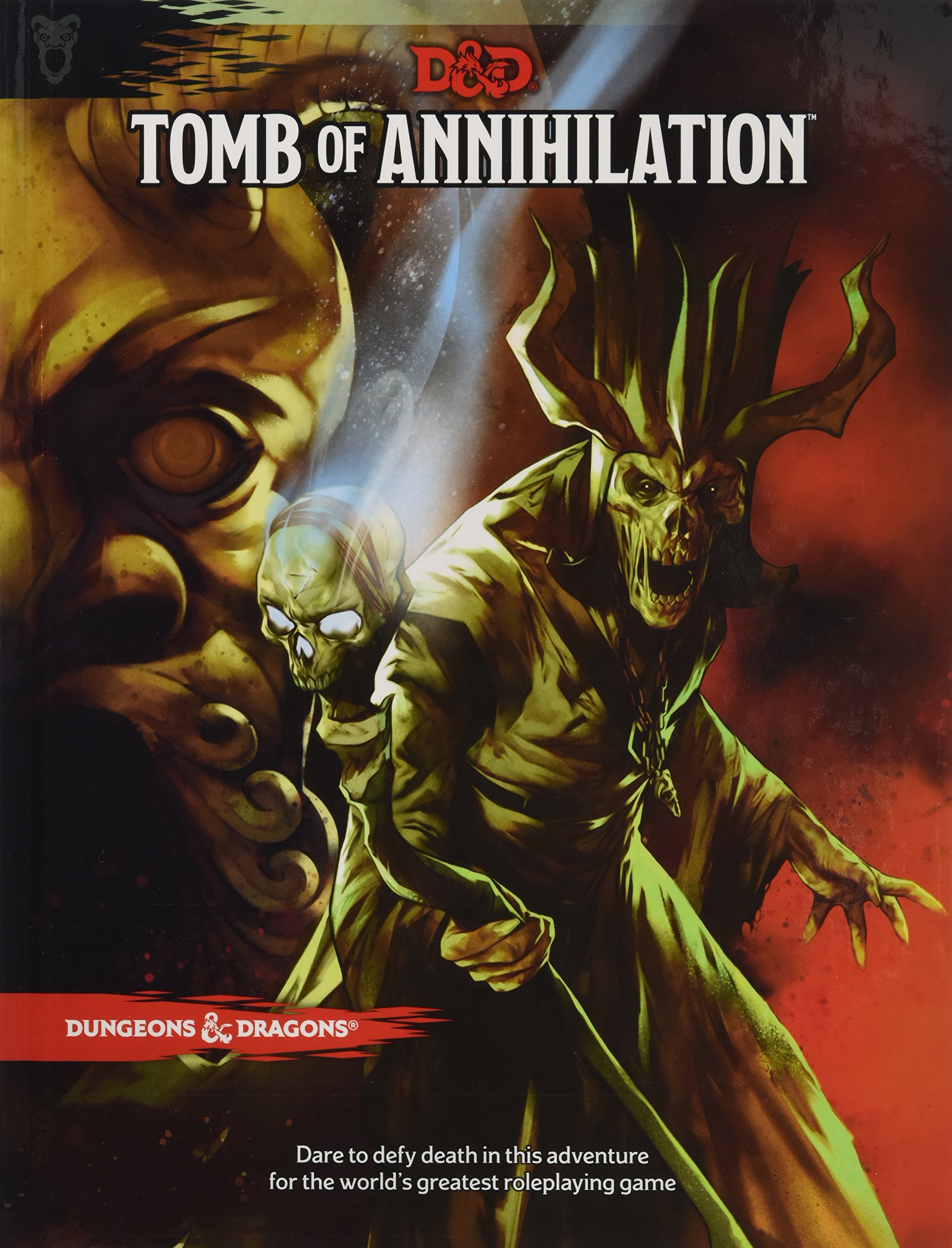
Tomb of Annihilation-smallAs the season of ghosts and ghouls is upon us, it’s a good time to have a terror-filled gaming experience. The most recent Dungeons & Dragons 5th edition adventure book, Tomb of Annihilation (Amazon), provides a good framework for a unleashing undead horrors upon a group of innocent fantasy adventurers.

Tomb of Annihilation is set in the land of Chult, an Africa-inspired continent setting in the Forgotten Realms. The players begin in a thriving metropolis, Port Nyanzaru, in which adventurers can race dinosaurs for fun and profit. As they move deeper into the jungles of Chult, investigating a powerful death curse that affects resurrected people throughout the world, they eventually come upon an ancient temple that is under the sway of a powerful archlich. Along the way, the players will interact with tribal shamans, zombie dinosaurs, and flying monkeys.

This isn’t the first 5th edition adventure that fits well thematically with a horror-based mood. Curse of Strahd (Amazon) re-invents the gothic horror of the Ravenloft setting, while Out of the Abyss (Amazon) explores demonic enemies spreading throughout the Underdark. The collection of deadly dungeons Tales of the Yawning Portal (Amazon) contains the chapters Dead in Thay and Tomb of Horrors.

Read More Read More

October Short Story Roundup

October Short Story Roundup

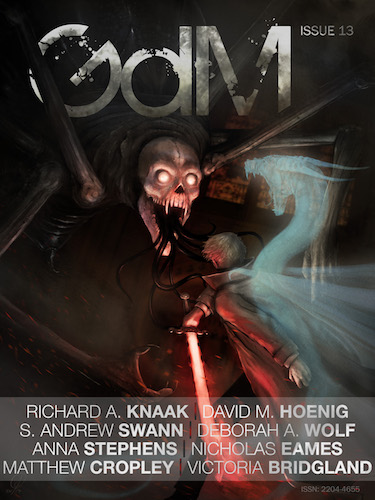
GdM13_500x375Things were a little thin on the ground for swords & sorcery this past month. Only  Grimdark Magazine crossed my radar this month with new tales of adventure, and three out of three in the latter publication weren’t S&S.

Grimdark Magazine #13 is packed with three stories and the usual spate of interviews, reviews, and commentaries on the subject of grimdark. If anyone will ever convince me that grimdark is a real, definable sub-genre and not just a marketing ploy, it will be the magazine’s editor, Adrian Collins. His choice of stories and non-fiction is solid and consistently presents grimdark as something far more than just gory rape and murder. In his magazine, there’s room for much subtlety and nuance.

The non-fiction is the usual magazine mix of good and poor. Though I disagreed with much of what he said, I enjoyed the interview with Nicholas Eames, author of Kings of the Wyld. Deborah A. Wolf has a fun article titled “How to Land a Rockstar Agent in Ten Excruciating Steps.”

Normally, I don’t write much about magazine’s non-fiction, but article in particular needs to be pointed out. In “Barbarians or Philosophers?,” Matthew Cropley and Victoria Bridgland make an argument that grimdark readers are a more discerning group than those who prefer more traditional fantasy. It’s more complex than that, drawing on things said by authors, as well as psychological studies, but that’s its general conclusion.

In the debate between those who love grimdark, and those who hate it, there is, I’ll concede, some evidence for either side. For those who claim that grimdark fans read because they enjoy the thrill that comes with depictions of violence, there’s some research, as noted above, to back this up. However, there seems to be much more recent evidence that supports grimdark fans gaining a deep fulfillment and enhanced personal well-being by engaging with grimdark fantasy. The dark and violent aspects of grimdark help it reflect the human condition in all its complex glory, whereas heroic fantasy is limited to an idealized portrayal of good and evil. Lack of material rewards and the unfairness and violence of grimdark worlds mirror our own, and help us see that the true rewards in life are increased wisdom and understanding of the nature of reality. Grimdark fans like the sub-genre because its anti-heroes share their high regard for justice and righteous vengeance, and that disposition means that the violence common to grimdark doesn’t detract from deep engagement with exploration of humanity, in all its glorious shades of grey.

I could spend an entire post unpacking the various claims made in that statement, but I’ll skip it that today. Suffice it to say, I disagree with most of what they say. Much of what passes for “increased wisdom and understanding of the nature of reality” is no more than easy cynicism and affected world-weariness. The only time I find humanity reduced to “shades of grey” is when I deliberately choose to filter out all the other colors of the spectrum.

Read More Read More

Ghosts, Strange Science, and Trains That Vanish: The Tales of Arthur Conan Doyle

Ghosts, Strange Science, and Trains That Vanish: The Tales of Arthur Conan Doyle

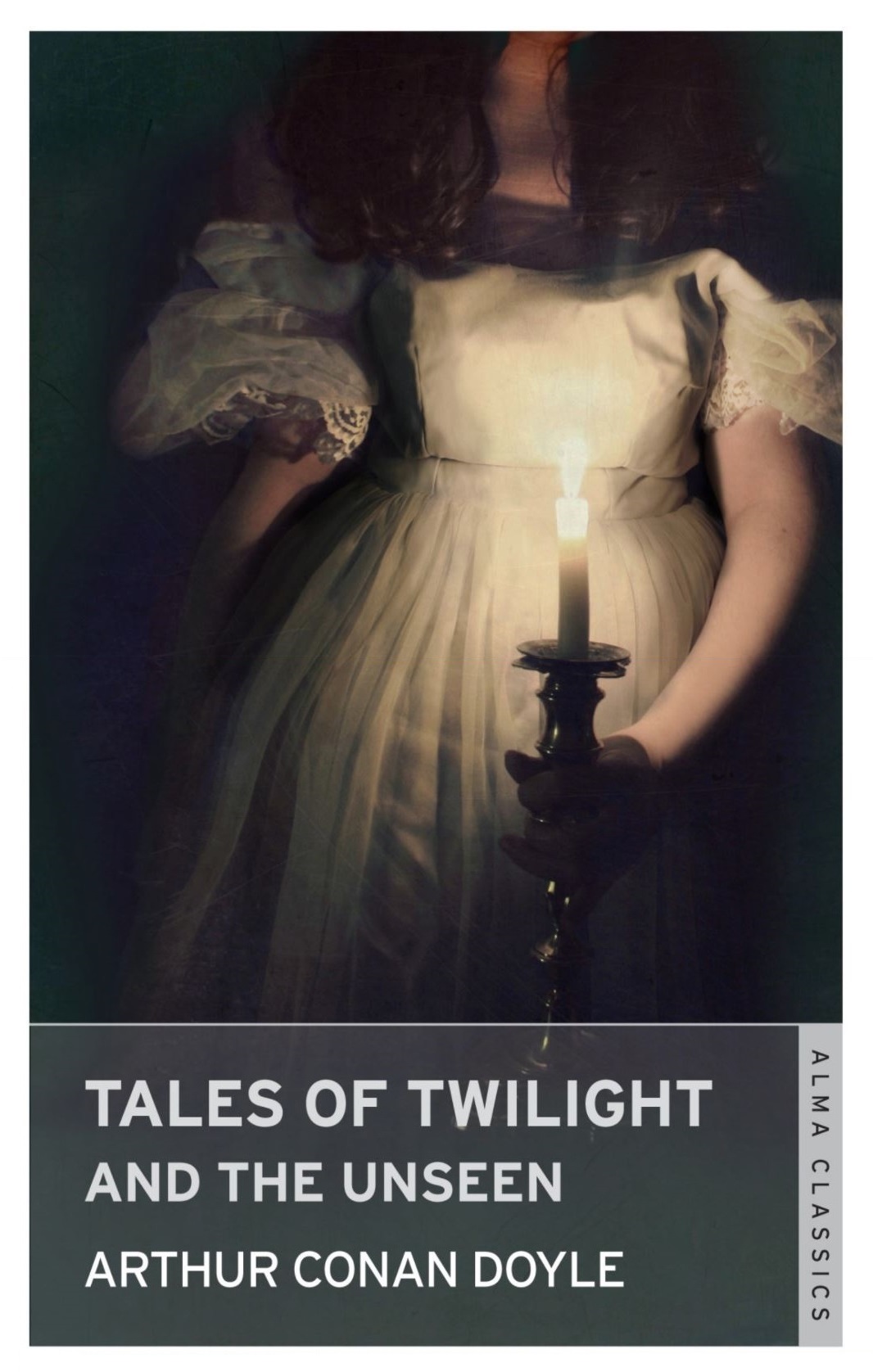
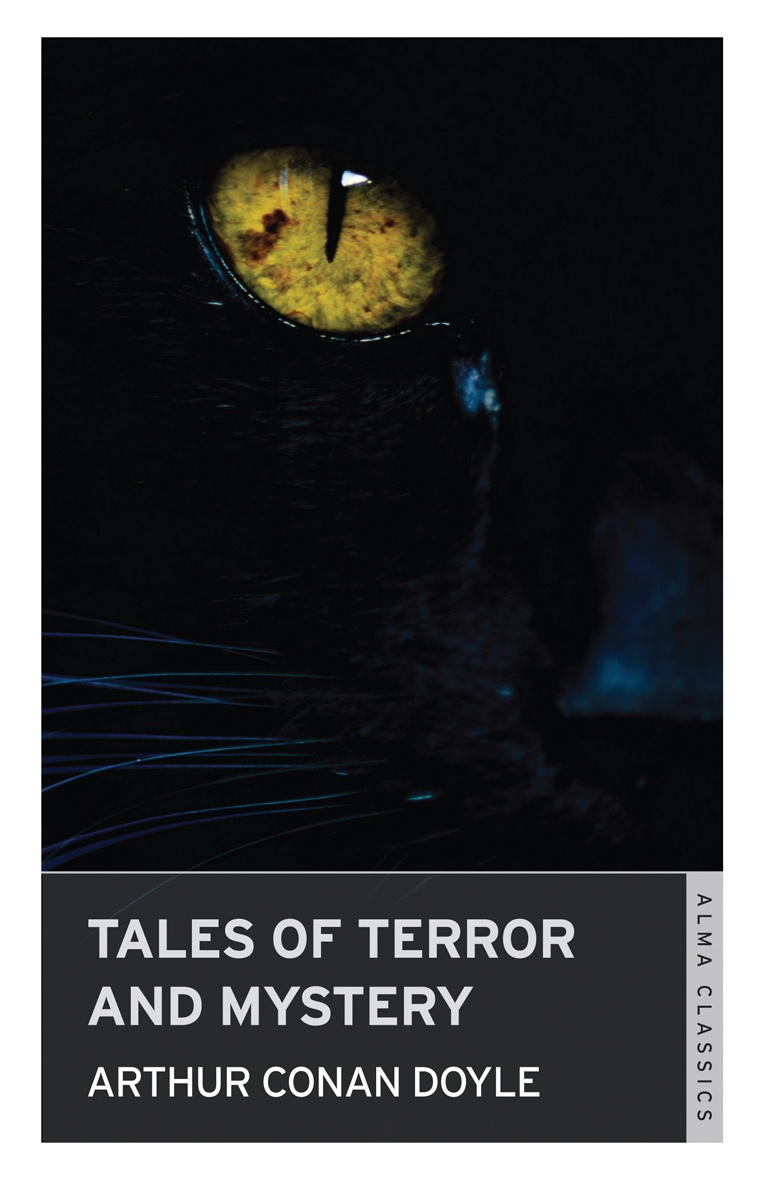
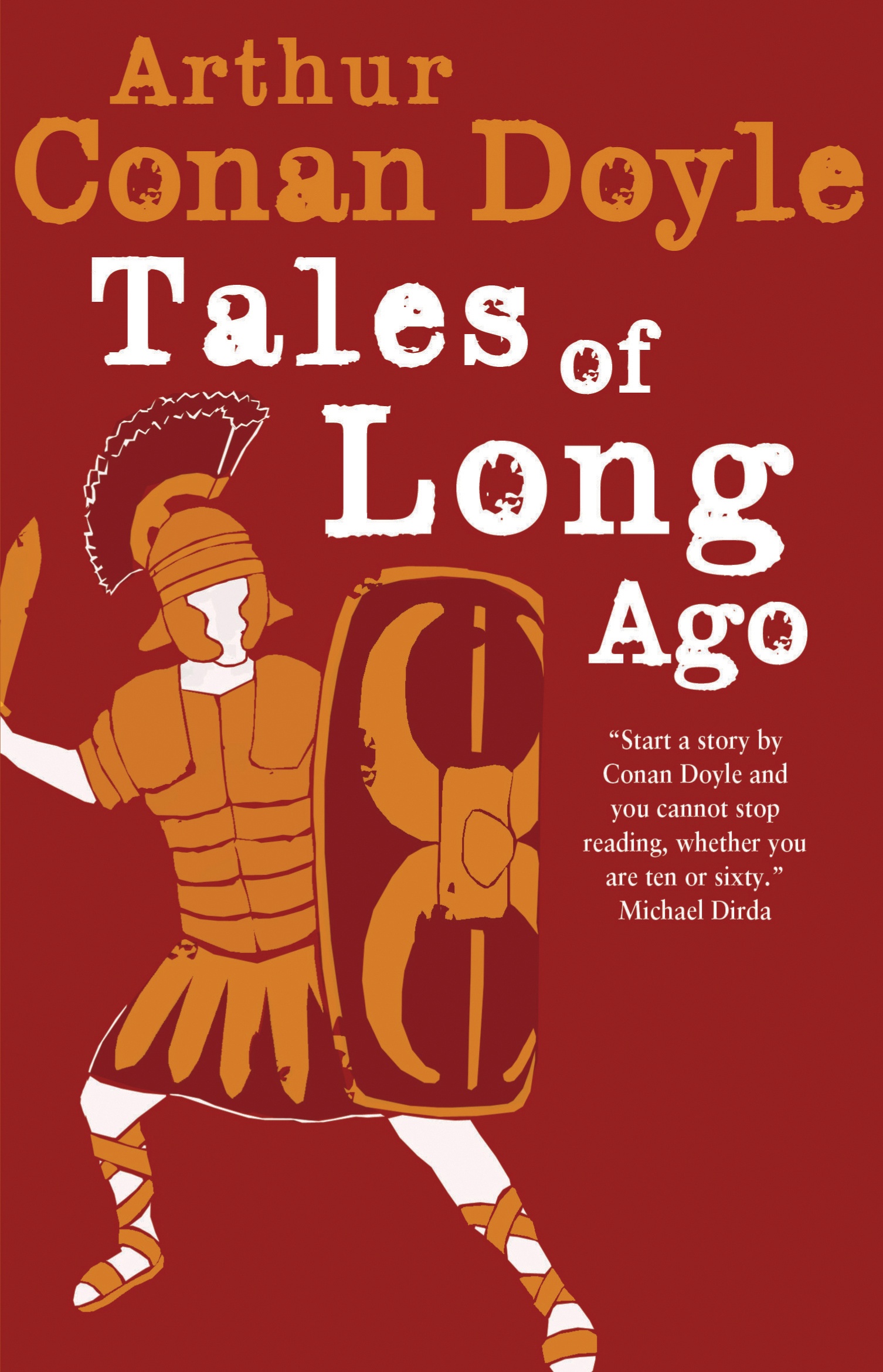
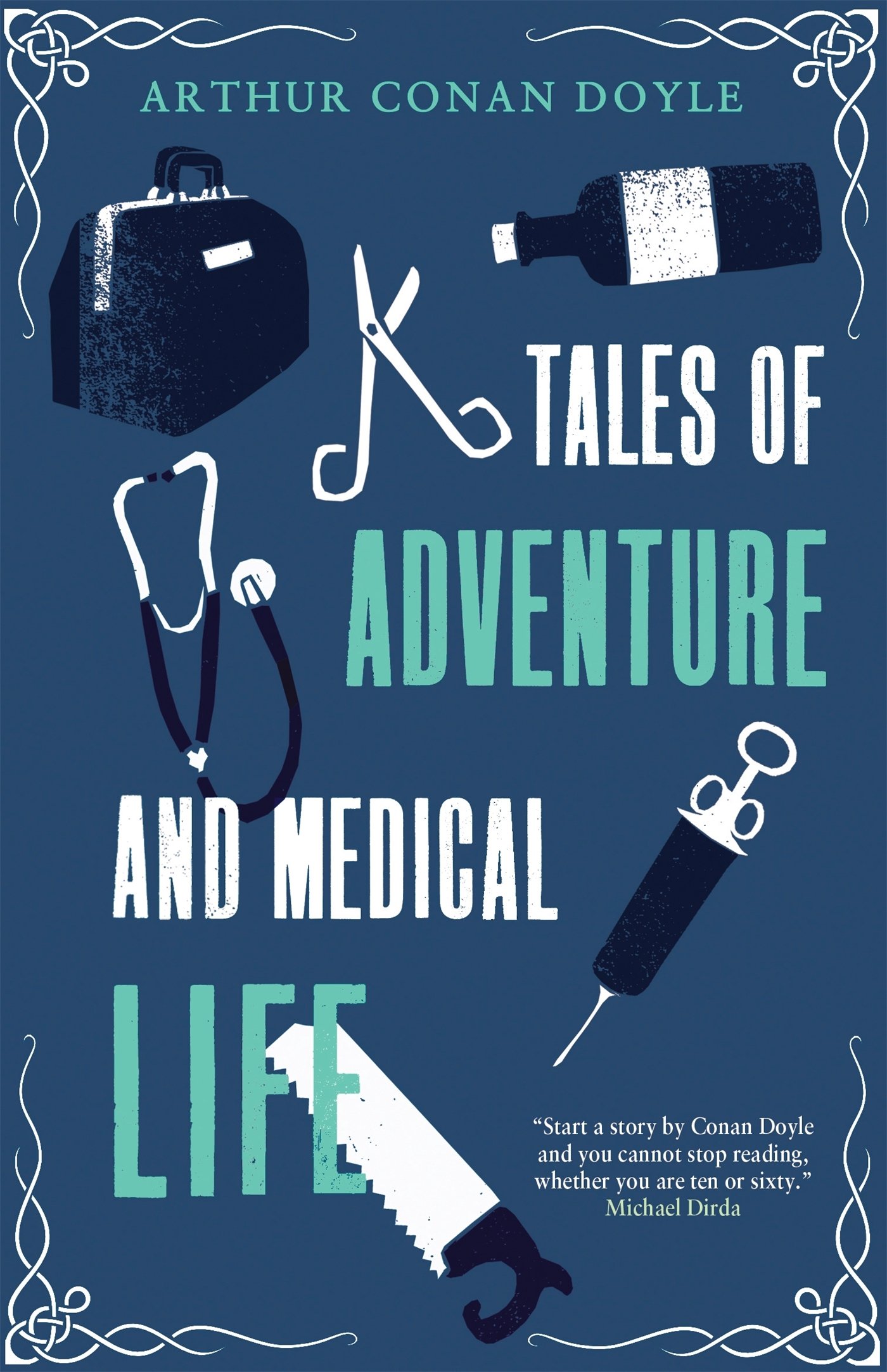
Tales of Twilight and the Unseen Arthur Conan Doyle-small Tales of Terror and Mystery Arthur Conan Doyle-small Tales of Long Ago Arthur Conan Doyle-small Tales of Adventures and Medical Life Arthur Conan Doyle-small

We bow to no one in our appreciation of Arthur Conan Doyle here at Black Gate. Bob Byrne’s long-running Monday column The Public Life of Sherlock Holmes explored all facets of the career of his most famous creation, and over the years William Patrick Maynard, Mark Rigney, Ryan Harvey and other folks have written here about Doyle’s work and its many adaptations.

But Doyle made many contributions to the fantasy, detective and horror genres during his long career, and over the decades his work has been reprinted in numerous anthologies like Horrors in Hiding (1973), Famous Fantastic Mysteries (1991), Ancient Egyptian Supernatural Tales (2016), and many others. From 2014-2015 British publisher Alma Classics gathered dozens of his tales into four collections, all of which are still available, and all of which are worth tracking down.

Read More Read More

A Tale Most Gruesome and Bonkers: Dark Ventures by T.C. Rypel

A Tale Most Gruesome and Bonkers: Dark Ventures by T.C. Rypel

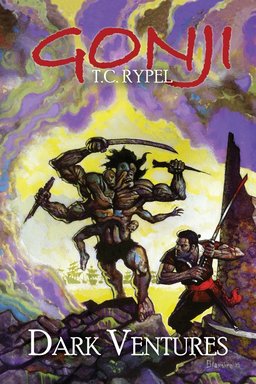
oie_1743327PKGNf2XuAside from his own terrific swords & sorcery tales, the thing I’m most grateful to Joe Bonadonna for is hipping me to the Gonji stories of T.C. Rypel. For those unfamiliar with him, Gonji is a half Viking, half Japanese warrior, cast out of Japan and in search of his destiny across a monster- and sorcery-ravaged Europe. His epic struggle against malign magical powers are told in a series of five novels: Red Blade from the East (2012), The Soul Within the Steel (2013), Deathwind of Vedun (2013), Fortress of Lost Worlds (2014), and A Hungering of Wolves (2014). The novels (reviewed by me at the links) are dense works of remarkable storytelling, filled with deeply memorable characters and complex worldbuilding. Now, appearing for the first time, is a collection of shorter works called Dark Ventures (2017).

Before I start telling you about the book, let me be up front: I consider Ted Rypel a friend, and I was privileged to read a pre-publication version of the new book’s central novella, “Dark Venture.” Ted loved my description of the story so much he used it as a blurb on the back cover:

People will not know what hit them when they read “Dark Venture.” It’s one of the most exciting (and gruesomely bonkers) swords & sorcery stories I’ve had the pleasure of reading.

I meant those words when I first wrote them a couple of years ago, and I stand by them today.

Dark Ventures opens with the short story “Reflections in Ice.” It’s an expanded and revised version of the first chapter of the novel Fortress of Lost Worlds. In it, Gonji and his companions, having survived the events of the first three books, are making their way across the Pyrenees Mountains in response to a summons for their aid. Slowly they are being killed, stalked by unseen and supernatural hunters:

The ghostly army comes again the next night, and the next, pursuing when we flee, retreating when we advance. Two more men are savagely slain by unerring bowshot, despite all caution and hastily fashioned defensive shielding. To wheel and engage them is to encounter mocking laughter from that effulgent bank of nothingness they inhabit. To run or take a stand is to be subjected to more casual slaughter, as if we are mere game; more sudden chilling eruptions of screaming and gouting blood, under the assassins’ uncanny aim.

As his party is whittled down to fewer and fewer members, Gonji is forced higher and higher into the mountains in search of refuge, but finding only more horrors. “Reflections” is a dark tale that is suffused with a sense of impending death, and becomes increasingly despair-filled and claustrophobic with each step forward.

Read More Read More

The Poison Apple: The Lure of the Vampire, an Interview with Author Nancy Kilpatrick

The Poison Apple: The Lure of the Vampire, an Interview with Author Nancy Kilpatrick

Mummified-saint

Nancy Kilpatrick is an award-winning writer and editor. She has published 22 novels, 1 non-fiction book, over 220 short stories and 6 collections of her short fiction, comic books, a graphic novel, and she has edited 15 anthologies. Her work has been translated into 7 languages. Although not all vampire-themed, it’s all focused on the dark realm.

I noticed on your Amazon Author’s Page you did a non-fiction book about the Gothic movement.

I wrote one non-fiction book, The Goth Bible: A Compendium for the Darkly Inclined. At the time I did that I was pretty much smack in the middle of the Goth world. The agent I had at the time approached me and said there was a publisher looking for a book on goth. When I contacted the publisher, he and I had a conversation, but he was looking for something with the slant of discouraging people from getting involved in the goth culture. This wasn’t what I wanted to write so my agent shopped it around, and there was a bit of a bidding war. Finally there was an editor at St. Martin’s Press who used to be into goth when he was younger, so he bought it, but unfortunately just at 9/11, which was a paralyzing time for the publishing industry.

Read More Read More

Questing in New York! New York ComicCon 2017

Questing in New York! New York ComicCon 2017

New York ComicCon-logo-2

You may recall that my first trip to New York *ever* was in April, and I blogged about it in A Babe in the Woods: Derek’s Literary Adventures in New York! Well, the training wheels are off and I went on a full grail quest this time around, at New York Comic Con!

I had two major reasons to go to NYCC. First, I enjoy blogging about comics, and interviewing comic creators. So, as a blogger for Black Gate, there were a lot of people I wanted to meet. Second, my prose writing career (short stories and novels) has been going well, but I’ve also wanted to write comic books since I was 10 years old. I’m working on a comic story for a small press anthology right now, but also I went to see what other opportunities there might be.

Read More Read More

Modular: A First Look at Elite Dangerous Role Playing Game

Modular: A First Look at Elite Dangerous Role Playing Game

256 New COREBOOK Mockup
Clearly a labor of love

Yes, you read that right!

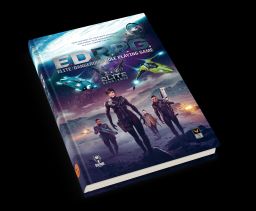
Elite Dangerous, the current incarnation of the granddaddy of all immersive video games, now has its own tabletop roleplaying game, and I’m sitting here with a review copy.

The problem with the video game is that, even with the new ability to land on airless worlds and trundle around in AFVs, it’s essentially space exploration on the radio. You don’t get to land on the worlds with interesting cultures and brawl with gangsters or tread the mean streets, or avoid being the main course at a barbaric religious ceremony. A tabletop roleplaying game has the potential to supply those missing experiences. But does the franchise really need its own game? (As you’ll see, “Yes, actually.”)

EDRPG 256 Book Spread 1
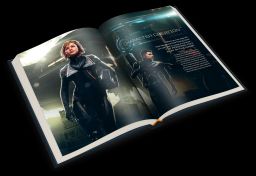
Well written, beautifully illustrated

Frankly, I half-expected Elite Dangerous Role Playing Game (EDRPG) to be a cynically put together I can’t believe it’s not Traveller-lite (please don’t send round lawyers with pulse lasers) with a detailed trade mini-game. Instead I found myself reading what’s clearly a labor of love that emulates a different corner of the Star Punk genre, and does so with an emphasis  — in the core rules — on what you do when you’re not trading. It’s also loaded with material pitched for beginner GM’s, but — again in the core rules — assumes some familiarity with the computer game; not disastrous, but  confusing if you haven’t played Elite seriously in four decades (I’m told there will be free material on the website to help with this).

Given Elite Dangerous has 2-3 million players, and a cult of enthusiasts who enjoy the “shared” part of “shared escapism,” Elite Dangerous Roleplaying Game promises to be an instant modern classic. It’s a good thing, then, that the game mechanics are elegant, but more refined than innovative, which is what you want in something obviously intended as a workhorse to support happy years of sandbox gaming.

Let me unpack some of that.

Read More Read More