Browsed by
Author: Matthew David Surridge

Fantasia 2020, Part VII: The Curse of Audrey Earnshaw

Fantasia 2020, Part VII: The Curse of Audrey Earnshaw

The Curse of Audrey EarnshawDay four of Fantasia was another quiet one for me, with a single movie on my docket. First, though, came a panel discussion with some of the editors of Rue Morgue magazine. Rue Morgue’s been covering horror and related fields since the late 1990s, and it continues to exist as a print publication even while maintaining a strong web presence. A wide-ranging discussion anchored by Executive Editor Andrea Subissati dealt with, among other things, the challenges of keeping the magazine going, how to start writing for Rue Morgue and in general, and the practicalities of publishing. You can find it here.

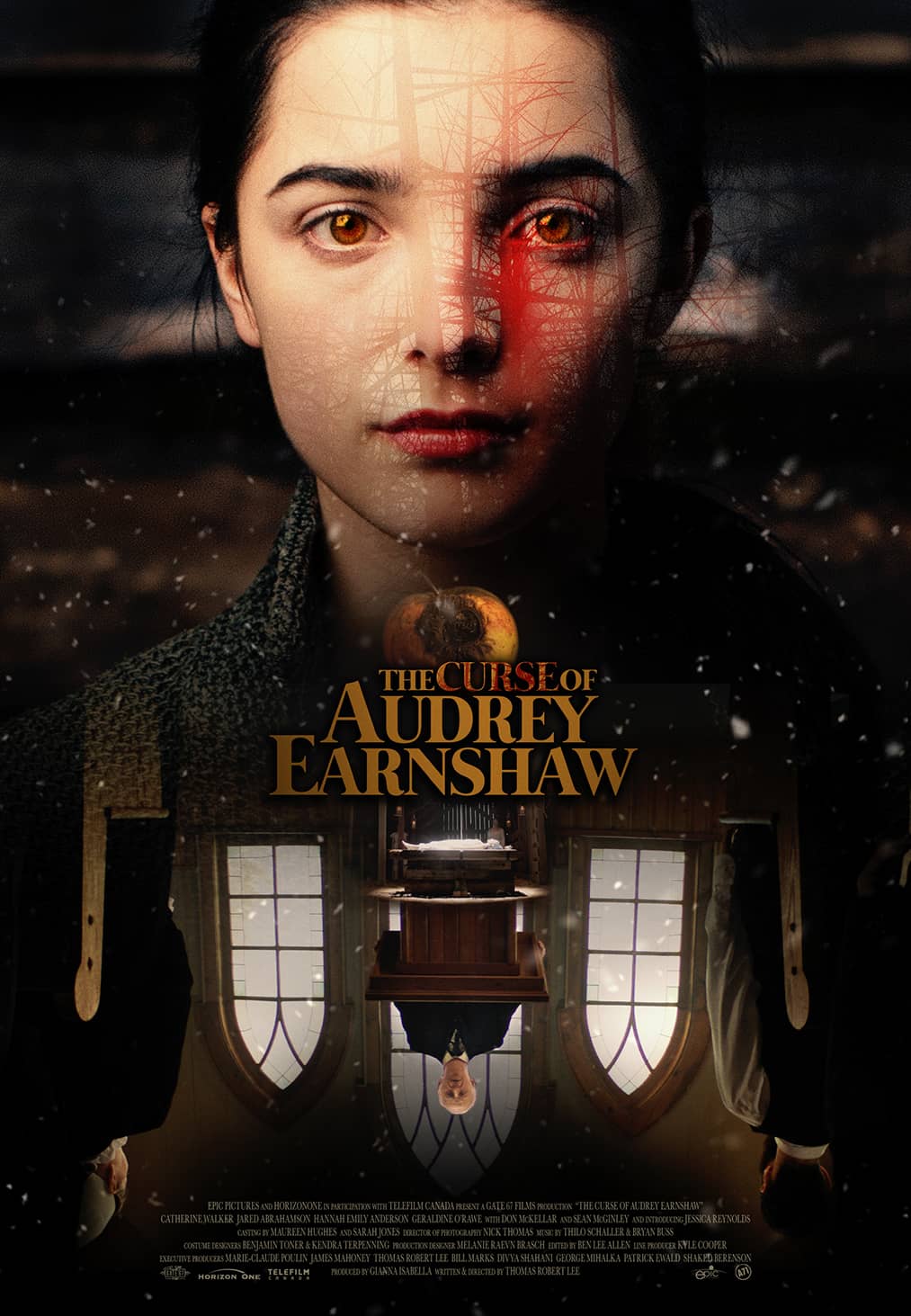
Not too long after that I watched The Curse of Audrey Earnshaw, written and directed by Thomas Robert Lee. It’s a solid occult horror film with an original setting, but I found it frustrating as well. While it’s a good movie, the sort of thing that’d make for fine Halloween viewing, I thought a few things done a little differently could have made it truly outstanding.

It opens with an extensive text crawl explaining backstory. In 1873 a group of immigrants from Ireland settled in North America, and maintained the traditions of their era as the world changed around them. In 1956 a curse settled on their lands, at the same time as a woman named Agatha Earnshaw (Catherine Walker) secretly bore a child she named Audrey. It’s now 1973; Agatha’s kept now-17-year-old Audrey (Jessica Reynolds) hidden from the community all her life, but Audrey’s begun to develop strange powers, while the rest of the people continue to struggle with their barren fields.

The movie opens with Audrey, hidden in a box, watching her mother be accosted by townspeople. A young couple’s just seen their boy die, and the father, Colm (Jared Abrahamson), takes out his grief on Audrey, a figure of suspicion because her farm is the only one in the area consistently producing healthy crops. He threatens her, pushes her, and threatens to take her goods before his father, Seamus, the priest of the village, steps in and calms things down. Audrey decides to seek revenge on Colm, and on everyone else who mistreats her and her mother, a quest that threatens the destruction not only of Colm and his wife Bridget (Hannah Emily Anderson) but of the rest of their community as well.

The first thing to be said about this film is that it looks spectacular. Wide vistas show nature in late autumn, dark and barren. The lighting’s spectacular, using what looks like rich natural light, and the muted muted colour palette builds a strong atmosphere. Costumes and props immerse the viewer in the not-quite-Victorian world of the community.

Read More Read More

Fantasia 2020, Part VI: The Jesters: The Game Changers

Fantasia 2020, Part VI: The Jesters: The Game Changers

The JesterI had a light schedule on the third day of Fantasia, as I tried to finish off some other business. But at 4 PM I sat down to watch the presentation of the festival’s Lifetime Achievement Award to John Carpenter. The ceremony was necessarily less than what it usually was, but the question-and-answer session that followed was rich and generous. I was particularly intrigued when Carpenter was asked about projects he regretted being unable to make, and he said that he’d tried to get Alfred Bester’s The Stars My Destination to screen but had been unable to get the script structure to work — and now suspects the book’s unfilmable. You can find the entire discussion here.

That evening I sat down to watch a Korean movie called Jesters: The Game Changers. Bundled with it was a short, “Yonorang” (작은 뼈), a visually stylish film directed by Kim Sangdong and written by Lee Sohyun. It’s a mostly dialogue-free story told in 8 minutes, incorporating monsters and swordfights and betrayal. The chronology’s fractured, too, and I found the relationship of the various scenes difficult to parse at one viewing. This is too bad, as it looks lovely (a little like Samurai Jack, but more stylised), and moment-by-moment the drama was palpable. I just couldn’t fit the pieces of the story together.

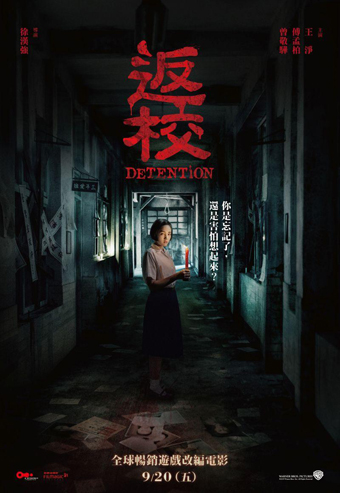
Jesters: The Game Changers (Gwang-dae-deul: Poong-moon-jo-jak-dan, 광대들: 풍문조작단) was directed by Kim Joo-ho from a script by Kim Jin-wook and Shin Jin-wook. It’s a somewhat-comic historical adventure story with fantasy touches set in the fifteenth century. King Sejo has usurped the country from his nephew and as the movie opens, all across the land jesters — wandering actors — are staging a popular play about the usurpation and the execution of six loyal ministers. Sejo orders the execution of the treasonous jesters, while his chief minister, Han Myung-Hee (Son Hyun-Joo) recruits a team of jesters of his own to present alternative facts and make the people believe that Sejo is the true anointed ruler.

The film follows the troupe as they alternatively propagandise for Sejo and then are alienated from the tyrannical monarch. The leader of the troupe, and the central character of the film, is Deok-ho (Cho Jin-woong, from, among other places, Kundo and Assassination), whose group includes an exiled painter (Yoon Park), a failed fortuneteller (Kim Seul-Gi), an acrobat (Kim Min-Suk), and a puppeteer (Ko Chang-Seok). They concoct incredible stage effects to simulate miracles, sometimes on vast scales, and the set-pieces the film gives us are structured around the inventive if improbable use of period technology to create these illusions. It’s not exactly clockpunk, in that the technology’s a step earlier than clockwork, but they do use things like magic lanterns — in devices that look surprisingly like modern movie projectors.

Read More Read More

Fantasia 2020, Part V: PVT Chat

Fantasia 2020, Part V: PVT Chat

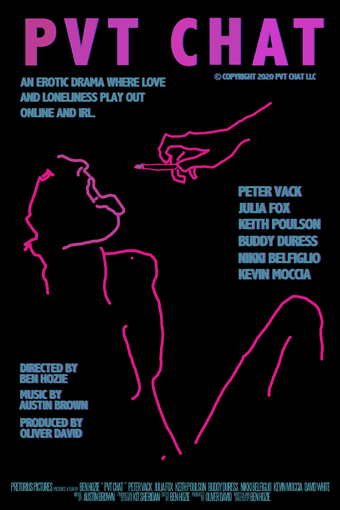
PVT ChatOne of the new wrinkles to Fantasia this year is the existence of a Discord where filmmakers and critics and audiences can chat with each other about the movies playing the festival. It’s already proved quite useful to me, as seeing other people discussing films has helped draw my attention to a few titles I’d originally dismissed as uninteresting or out of step with this web site’s focus. A case in point was the movie I watched late on Fantasia’s second day, writer-director Ben Hozie’s PVT Chat.

It’s got no element of the fantastic. But it’s a kind of crime story, and indeed from a certain angle is one of the damnedest film noirs I’ve ever seen. While also being sexually explicit (and what I am told the kids these days call kink friendly) to a surprising degree.

The film opens with Jack (Peter Vack), a young New Yorker, alone in his apartment masturbating. Jack spends a lot of time watching camgirls, and we hear him describing to them what he wants (“verbal abuse”) and setting up scenarios to play through. He finds a new girl, Scarlet (Juia Fox), who swiftly becomes his favourite. We find out that Jack doesn’t have much else going on in his life. He supports himself, barely, by playing online blackjack. He seems to be spiralling downward, so desperate for actual human contact he makes friends with the guy his landlord hired to paint his apartment. Then he thinks he sees Scarlet in a neighbourhood store. But Scarlet tells him she lives in San Francisco, and swears she’s never been to New York.

This first act of the movie is well-made and thoughtful, but a little slow, and I found it a bit difficult to care about at first viewing. It’s important for establishing Jack and his situation, though, and it does a solid job of making us question his grasp on reality — was he hallucinating? Or, even though he’s had moments of actual connection with Scarlet, is she lying to a john?

We find out as the movie suddenly sharply expands its focus. We follow other characters, and the story takes some new twists, opening up in unexpected ways. Thematically the film’s focus becomes clearer and more intricate. We get different angles on how the characters are telling stories of their lives, scripting and directing what they want and what they see. Jack’s already lied to Scarlet about his job, concocting an imaginary telepathic technology out of whole cloth. Without wanting to give too much away, we later find out how much she has lied and how much she has told the truth to him; we find out more about her art — she’s already shown him paintings she made — and about her job. As in 2018’s Cam, the parallel between film narrative and webcam porn is examined, both visual media involving scripted fictions.

Read More Read More

Fantasia 2020, Part IV: The Undertaker’s Home

Fantasia 2020, Part IV: The Undertaker’s Home

The Undertaker's HomeAs part of the unusual nature of this year’s Fantasia, the festival organisers set up many more non-film special events than usual. Each day boasts a presentation, panel discussion, or other streamed activity, all of them to be archived on the festival’s YouTube page (in fact the organisers have just announced they’ll host a conversation between Jay Baruchel and Finn Wolfhard on August 29). Friday, August 21, began with a presentation by critic and author Carolyn Mauricette of “Afrofuturism: Visions Of the Future From ‘The Other’ Side.” It was a fascinating hour-long talk about Black creators and their work. Rather than focus on themes or analyse individual accomplishments, Mauricette gave a brief introduction about mass media views of Blackness and then positioned Afrofuturism as an alternative reality, listing artists in various fields, and indeed mentioning alternatives to Afrofuturism such as filmmaker Wanuri Kahiu’s Afrobubblegum. You can find the entire presentation here.

After that, I planned to watch the Argentinian horror film The Undertaker’s Home. Bundled with the feature came a short, “Abracitos,” directed by Tony Morales and written by Morales with Fer Zaragoza. The 11-minute Spanish short is a deeply atmospheric tale of two girls (Beatriz and Carmen Salas) alone at night, fearing a monster beyond the walls of the younger girl’s make-believe castle. It’s extremely well shot, evoking nonspecific fears of childhood, effectively setting up a monster without giving us details. It’s a strong minimalist piece that works on the imagination, and builds nicely to a crescendo of terror.

The Undertaker’s Home (La Funeraria) was written and directed by Mauro Iván Ojeda. It begins, appropriately, with a house, through which the camera glides in the middle of the night. That’s an effective way of showing us a bit about the people who live there: Bernardo (Luis Machín), the aging undertaker; Estela (Celeste Gerez), his young wife; and Irina (Camila Vaccarini), Estela’s daughter by a previous marriage. We also start to get a sense of the uncanny tied to the place. And the next morning there’s a more concrete image of strange goings-on: outside the house, everything to one side of a red line drawn along the ground looks as though a storm had hit. On the house’s side of the line, everything’s normal.

We soon learn that the family is under a kind of siege by the spirits of the dead, which might include the spirit of Irina’s dead father — who Estela claims was physically abusive to her. Irina’s not happy about living under siege, and about the rules the family has to follow. Estela’s not happy either, but wants to stay with Bernardo. Who himself seems to be strangely attracted to one of the invisible spirits. Slowly, we come to understand the strange situation, and the stresses the family’s under. And then new complications emerge, and we are shown that not everything is as we thought, both in the world of the dead and the world of the living family.

Read More Read More

Fantasia 2020, Part III: Special Actors

Fantasia 2020, Part III: Special Actors

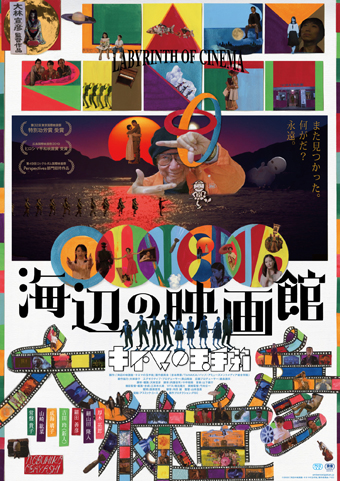
Special ActorsMy first scheduled film at Fantasia 2020 was Special Actors (Supesharu Akutâzu, スペシャルアクターズ), written and directed by Shinichiro Ueda. I loved Ueda’s previous film, 2018’s One Cut of the Dead (Kamera wo tomeruna!, カメラを止めるな!), and this is his first solo feature since; he co-directed 2019’s Aesop’s Game (Isoppu no Omou Tsubo, イソップの思うツボ), and this year posted a special short film follow-up to One Cut on YouTube. Special Actors turned out to be very different from One Cut while still dealing with themes of storytelling and acting and family — and doing something as structurally surprising as One Cut in a completely different way.

Kazuto (Kazuto Osawa) is a failing actor with a medical condition that causes him to faint when nervous; a lucky encounter with his brother Hiroki (Hiroki Kono), who he hasn’t seen for years, leads him to join Hiroki’s acting company, Special Actors. Rather than perform onstage, the Special Actors play roles in real life: they can be hired as extra mourners at a funeral, or to sit in the audience at the premier of a comic movie and laugh wildly. They will also do more elaborate things, like stage a fight with a guy so he can look tough in front of a girl he wants to impress, or pretend to be the new lover of a woman trying to break up with her abusive boyfriend.

In other words, the Special Actors stage scenarios to help people live their lives. They’re a troupe of weirdos complete with acting coach and scriptwriter, and despite his self-doubts Kazuto fits right in. Then a young woman, Miyu (Yumi Ogawa), comes to the Actors with a tricky request: her sister has joined a cult, who are working on getting her to turn over the family inn. Can the Special Actors expose the cult’s lies and save the inn?

The answer to that question of course involves a series of wild schemes, and schemes inside schemes. Yet this movie avoids frantic zaniness in favour of a constant but relaxed pace. There’s some mugging, but nothing extreme. Jokes come quickly, and build to appropriately chaotic scenes; still, as a whole the film’s anything but manic. There’s a kind of humanity to it that counterbalances the contrivances of the plot and its various twists and contortions.

Read More Read More

Fantasia 2020, Part II: Clapboard Jungle

Fantasia 2020, Part II: Clapboard Jungle

Clapboard JungleMost of the movies I want to see at Fantasia 2020 play at a scheduled time, but quite a few are available on demand for the next two weeks. One of those struck me as a good place to start this year’s unusual Fantasia-from-home: Justin McConnell’s documentary Clapboard Jungle. It’s about the process of putting a film together, focussing not so much on the technical details of directing but the much longer struggle to find financing.

McConnell’s previous film Lifechanger is the central case study for Clapboard Jungle. That movie played at Fantasia in 2018 (I thought it was a success, despite a few quibbles about plotting and concept), so I knew going in there’d be at least a glimpse of the familiar Hall and De Sève Theatres. I got that, and the sight of a few familiar festival faces. More important, I also got an intriguing documentary that showed the modern film industry from an unusual angle.

The movie’s structured around a video diary McConnell started in 2014, when he set out to make a new film. The movie he ended up making was not the movie he then expected to make, and Clapboard Jungle does a good job following the twists and turns that led him to Lifechanger. The loose narrative works because it gives McConnell a strong frame into which he fits interview snippets with filmmakers, producers, film festival organisers, and other industry people.

These snippets are well-chosen, illustrating the points McConnell wants to make. And they’re edited tightly, giving the film a fast pace, presenting a lot of information and ideas very quickly. McConnell starts with autobiographical material to set up why and how he got into film, but from there keeps a good balance between his personal story and the interviews that make up the larger part of Clapboard Jungle. He’s able to use the structure of the diary and the interviews to maintain a sense of forward narrative momentum while showing the process of arranging financing for a movie, which the film makes clear is a long, tedious, repetitive slog. As well, beyond documenting the stalls and reversals and occasional leap forward of the development process, he also shows himself slowly learning the ropes — going to film festivals and markets, for example. We have the feeling of learning about the process at the same time he does, which gives the documentary a needed sense of progress.

The heart of the film is this long struggle to set up a project, showing by example how a film comes to be — or, more usually, does not come to be. It’s a reminder that every film I or you watch, at Fantasia or elsewhere, beat the odds just by coming into existence. McConnell shows us what those odds really are. It’s a bracing look at a side of the industry that rarely comes into focus for outsiders.

Read More Read More

Fantasia 2020, Part I: Introduction and Preview

Fantasia 2020, Part I: Introduction and Preview

Fantasia 2020Usually by this point in the year I’ve begun posting reviews of films I saw earlier in the summer at Montreal’s Fantasia International Film Festival. Here as elsewhere, things are different in 2020. When the coronavirus pandemic hit, Fantasia was postponed to the end of August. It looked like this year’s Festival was in danger of not happening at all. But the wonderful and dedicated people behind Fantasia have made it work; the 24th edition of Fantasia begins today and runs through September 2, with no theatrical showings but over 100 feature films streamed online.

That’s a lot of movies, a bit less than the 130 or so features Fantasia usually hosts, but a lot more than you might expect under the circumstances. Last year’s Toronto International Film Festival had 245 feature-length films; this year’s will have 50. So the amount of movies at Fantasia suggests a lot of work by the organisers, as well as a healthy level of activity in genre film production worldwide.

Some of the movies at Fantasia are scheduled to play at specific times, while a number of others are available on demand at any point during the festival. Anyone in Canada can buy a ticket to a movie at this year’s Fantasia for CAN$8. Rights issues mean the films have to be geolocked to Canada — but the festival’s also hosting special events available free worldwide to anyone who wants to watch them, including a masterclass with John Carpenter, a presentation on Afrofuturism, and a panel in resistance in folk horror.

Usually when I write about Fantasia I try to get across the experience of being at a film festival. There’ll be less of that in 2020, though I do want to reflect on how different I find the feel of this year. (Will horror films be less overwhelming on the small screen, or more threatening because they’ve invaded my home?) I don’t really know what it’ll be like. But I’m eager to find out.

Find the rest of my Fantasia coverage from this and previous years here!


Matthew David Surridge is the author of “The Word of Azrael,” from Black Gate 14. You can buy collections of his essays on fantasy novels here and here. His Patreon, hosting a short fiction project based around the lore within a Victorian Book of Days, is here. You can find him on Facebook, or follow his Twitter account, Fell_Gard.

Generational Connections: Ursula Pflug’s Seeds And Other Stories

Generational Connections: Ursula Pflug’s Seeds And Other Stories

Seeds And Other StoriesUrsula Pflug’s fiction demands to be savoured. Her new collection, Seeds And Other Stories, holds 26 short fictions ranging in length from flash fiction to short novelettes, each marked out by precise language and fantastic happenings seen edge-on. They’re not linked by plot but by threads of imagery: portals to other places; hallucinatory new drugs named for colours; gardening, and plants sprouting from the earth or human bodies. Each individual piece on its own carries a powerful emotional weight. Together it becomes difficult to read more than a few in a sitting, and that is no bad thing.

The stories in Seeds all can at least be read as having some element of the fantastic, though often it’s very slight. “Myrtle’s Marina,” for example, follows a man ambling about the run-down marina he owns and thinking back to moments that might have been magic. “A Shower of Fireflies” is an enigmatic two-page story about a mother reflecting on her life and her children. In the final story, “My Mother’s Skeleton,” a woman speaks to her daughter, remembers her mother, and meditates on art.

Most tales push reality further. “Mother Down the Well” opens the collection with a story about a woman in rural Ontario whose well holds a magical portal and her magic-touched mother. “Judy” is a short science-fictional tale with a post-apocalyptic feel, about a woman who loses a friend among a raging plague. “The Lonely Planet Guide to Other Dimensions” follows a writer who finds an alternate world in a mundane setting, and along with it a power to rewrite existence.

All these stories, and all the stories in Seeds, are intensely focused works. When not told in first person, they submerge themselves in a very tight and limited third-person point of view. Details of description are rarely given, only what matters to the character at any given moment. There’s an implied irony in this approach, insisting on the limitations of a character’s perspective, and it works. These are stories about absences, about things that once were and whether they may be regrown.

They’re also stories about emotionally intense subjects: family, lovers, visions (artistic, psychedelic, or both). Pflug illustrates these themes with an approach to the fantastic that borders on the surreal whether the fantastic or science-fictional elements are overt or not. There’s an allusiveness to them, and a willingness not to explain them. These are not comfortable knowable worlds with clearly-elaborated systems of magic or technology. These are worlds bigger and plainer than the characters we follow, who deal plainly with odd events: there’s little awe here, and where it does exist it’s often an awe of the natural world and not of magic.

Read More Read More

As Close as We’ll Get to a Completed Big Numbers: A Glimpse of a Lost Masterwork by Alan Moore and Bill Sienkiewicz

As Close as We’ll Get to a Completed Big Numbers: A Glimpse of a Lost Masterwork by Alan Moore and Bill Sienkiewicz

Big Numbers Alan Moore 1-small Big Numbers Alan Moore 2

Big Numbers issues 1 and 2. Mad Love, April and August 1990. Covers by Bill Sienkiewicz

It’s one of the great might-have-beens of comics history. First announced in 1988, Big Numbers was going to be a 12-issue series written and conceived by Alan Moore with art by Bill Sienkiewicz about a major American shopping mall being built in a small English town. It would be an intricate social-realist story touching on colonialism, gender issues, and more — all tied together by the symbolism of fractal mathematics. Moore felt it would be the logical follow-up to Watchmen in terms of complexity and formal daring, following characters in the town as the mall changed their lives in various ways, and depicting their various interconnections, large and small.

Unfortunately, it never saw completion. Two issues came out in 1990 and a third was completed before Sienkiewicz, feeling overwhelmed by the project, stepped away. The series never resumed publication, and later plans for a TV adaptation came to nothing.

But back in 1988 Moore had created a massive grid-like outline, outlining the related stories of the various main characters. Comics artist James Harvey has now put up a strikingly well-designed web version of that chart, along with annotations from transcripts of an extensive conversation with Moore about the series as preparation for the TV show. Well-placed links help bring out the connections Moore had planned. It’s an excellent, easy-to-use resource for Moore fans — as well as a good read. And likely the most complete version of Big Numbers we’ll ever see.

Fantasia 2019: Final Thoughts

Fantasia 2019: Final Thoughts

BalloonYesterday I posted my last full review of a film from the 2019 Fantasia International Film Festival. Today, then, a post looking back at this year’s Fantasia. First, as always, my profound thanks to everyone who puts the festival together. And thanks as well to the audiences, who give the festival a reason for being. Special thanks to everyone I watched movies with, everyone I waited in line with, and everyone who I talked with and hung out with during Fantasia 2019.

This year was a bit odd for me, in that for the first week or even two I felt that while I was watching a lot of very solid feature films I was nevertheless missing a certain sense of surprise; a feeling I normally have at Fantasia of being blindsided by a movie, or a set of movies one after another. This may have simply been a function of what films I happened to see, or a subjective impression caused by some minor health issue (chronic fatigue takes many forms). Certainly that sense of mild shock did set in before too long. But it came from an unexpected place. What struck me as most impressive about the festival this year were not features but the short films.

It has been observed that the relation of short film to long film is more-or-less that of the short prose story to the novel. The short format is capable of powerful work, condensing narrative into terse, elliptical, allusive flashes. Artists often work at that length before embarking on longer stories, sometimes to hone their craft, sometimes to build a name, sometimes because they love the form. But audiences tend to prefer immersion in a longer story. In any case, while there are a number of outlets for prose short stories, short film rarely gets the same kind of exposure.

There are exceptions. It’s perfectly fair to talk about TV episodes as short film, for example. But one of the strengths of a good short is the way it can build a world very quickly, establishing as much as we need to know about character and telling a story with them in just a few minutes. So I want to write for a moment about a film I saw this year that I haven’t yet covered: “Balloon,” by Shin Hyun-woo.

Every year Fantasia has several blocks of animated shorts for children that play at the McCord Museum of Canadian History, not far from the main Fantasia theatres. I have two young nieces, and saw two blocks of those films this year. Plans for coverage here from age-appropriate reviewers fell through, but I have to say as an adult viewer that I was generally impressed by the craft I saw in these shorts.

Read More Read More