Browsed by
Author: John ONeill

Vintage Treasures: The Best of Jack Williamson

Vintage Treasures: The Best of Jack Williamson

The Best of Jack Williamson-smallJack Williamson is a true legend among science fiction fans.

My favorite story about Jack Williamson concerns his first published story, “The Metal Man,” published in the December 1928 issue of Amazing Stories, when he was just 20 years old. The editor, Hugo Gernsback, was notoriously slow in paying his authors… so slow, in fact, that Williamson discovered he had broken into the magazine when he first laid eyes on the issue in a magazine rack and recognized his hero on the cover.

Williamson was one of the earliest pulp writers and he had an impressive career right through the 30s. He survived the coming of Campbell and continued writing into the 40s, 50s, and much later.

Which brings me to my second favorite Jack Williamson story. In the late 90s, Williamson was still regularly publishing short stories in major magazines, including “The Firefly Tree” (Science Fiction Age, 1997), “The Hole in the World” (F&SF, 1997), and “Miss Million” (Amazing Stories, 1999). A buzz began to go around fandom that if Williamson appeared in the magazines in the year 2000, that would mean he had been published in professional SF magazines for eight straight decades — a feat unequaled and very likely to remain unequaled for a long time.

Fandom held its breath. Jack Williamson turned 92 years old in the year 2000. And he published no less than three short stories that year: “Agents of the Moon” (Science Fiction Age), “Eden Star” (Star Colonies, edited by Martin H. Greenberg), and finally “The Ultimate Earth” (Analog).

“The Ultimate Earth” was nominated — and won — the Hugo Award for best novella of the year. It also won the Nebula.

As for Williamson, he kept publishing stories. Two in 2001, three in 2002, one in 2003, and an incredible seven in 2004 (including a collaboration with Edmond Hamilton – don’t ask how that happened).
Read More Read More

Vintage Bits: Lordlings of Yore

Vintage Bits: Lordlings of Yore

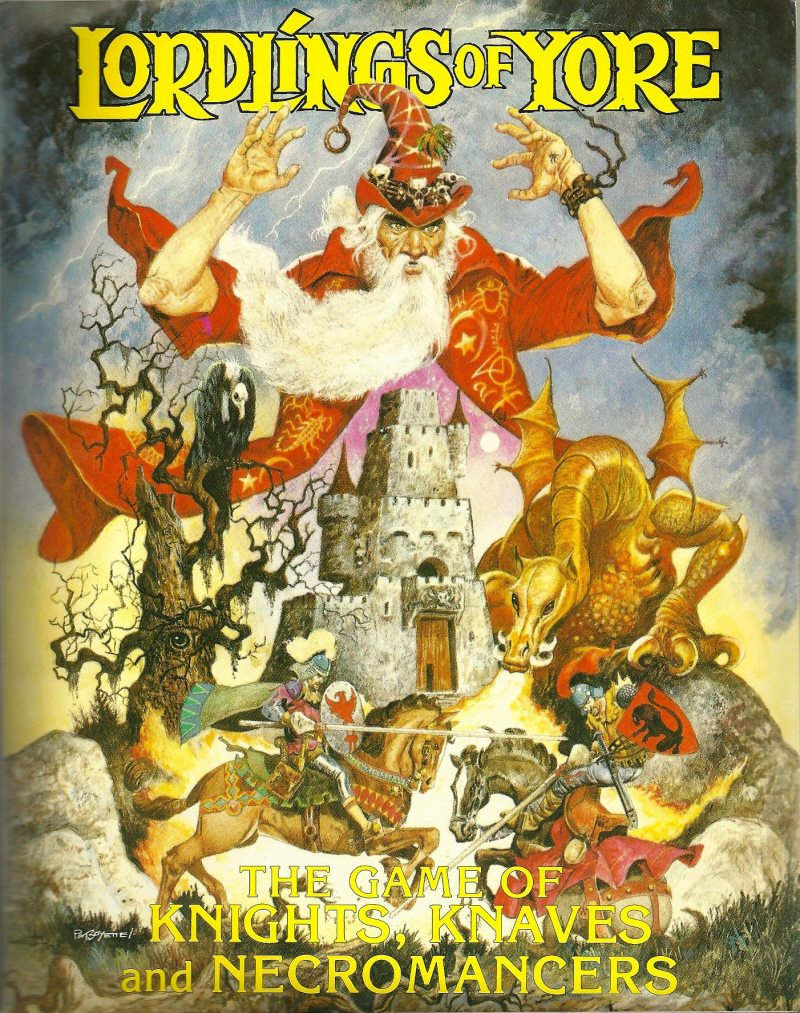
Lordlings of Yore-smallThere’s a lot of interest in retro-gaming today. Seriously, it’s a thing. There are fewer sales of big-budget shooters and a lot more people hunkered over tablets and cell phones, playing games that look like they were first compiled in 1995. I’ve seen my sons jump over more platforms and spill more monster guts in low resolution on their iPad recently than on their Xbox 360, let me tell you.

I appreciate the nod to the early days of the genre, but that ain’t true retro gaming. True retro games aren’t downloaded from the Internet. True retro games don’t even come in a box.

You really want retro gaming? You need to pull open a zip-lock bag, my friend. Respect.

I own a lot of computer games. A lot of them are old. Hell, most of them are old. The bulk of my collection comes from 1989 – 2003, when I still had time to occasionally insert a disk into my desktop machine and play Icewind Dale or Mechcommander a few hours a week.

Amiga games? I got ’em. Commodore 64? Couple hundred, easy. But we’re still talking the era of boxes here. You want real retro gaming, you need to go back even before my time, to when the first computer games were sold in zip-lock bags in small hobby shops, and almost exclusively for the Apple II.

I’ve collected a few of those fascinating relics over the years, but only a very few. I have Cranston Manor, Hi-Res Adventure #3, from an outfit called Sierra On-Line, Inc (1981). I have Odyssey: The Compleat Apventure, from Synergistic Software, from 1980 (purchased on eBay nearly 10 years ago for a ridiculous sum). But the rarest game — and certainly one of the most interesting — I possess is probably Lordlings of Yore, a marvelous fantasy strategy game I found on a used game shelf in a computer store in Champaign, Illinois in 1993.

Read More Read More

Black Gate Online Fiction: An Excerpt from The Black Fire Concerto by Mike Allen

Black Gate Online Fiction: An Excerpt from The Black Fire Concerto by Mike Allen

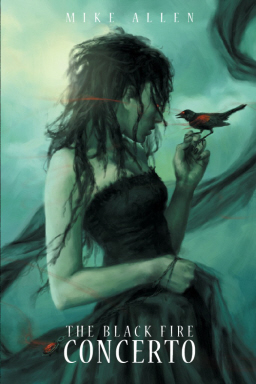
The Black Fire Concerto-smallBlack Gate is very pleased to offer our readers an exclusive first look at The Black Fire Concerto, a dark fantasy novel by Mike Allen, the acclaimed editor and publisher of the anthology series Clockwork Phoenix and the poetry journal Mythic Delirium.

It was one of the twins who warned her just after dark that a man dressed head-to-toe in black had come through the village earlier that day asking after a piper and harpist and left quickly upon getting an affirmative.

Olyssa had seen the cultists coming up the street from the wharf. At least thirty, all armed with rifles. When she returned to their room on the second story she told Erzelle that there might well be more covering the other exits.

After that brief announcement she sat lotus-style on the floor between their cots with her rifle in her lap and began to chant as the rough voice outside taunted.

“Come out and know our mercy. Come out or you’ll wish you had been eaten.”

She held the rifle up with both hands as if presenting it for an offering. Its red runes glowed brighter and brighter, her chant unceasing. Huddled under a cot, Erzelle made out the words, uttered fast and sing-song: “Find my enemies. Find my enemies. Find my enemies.”

Glowing brighter still, the rifle shuddered and lifted into the air.

John R. Fultz tells us “The Black Fire Concerto is Horror. It’s Magic. It’s a post-apocalyptic melody played on strings of Terror and Sorcery.” And Tiffany Trent says “Mike Allen offers readers a gift of the most delicately layered dark fantasy presented carefully on a post-apocalyptic platter.” And Tanith Lee called The Black Fire Concerto, “A prize for the multitude of fans who relish strong Grand Guignol with their sword and sorcery.”

Mike’s short fiction has appeared in Solaris Rising 2Best Horror of the Year, Volume 1, and Cthulhu’s Reign, among other places. He was a Nebula Award finalist in 2009 for his short story, “The Button Bin,” and his first collection of short fiction, The Button Bin And Other Horrors, is forthcoming from Dagan Books.

The Black Fire Concerto was published July 15 by Haunted Stars Publishing. It is a 202-page trade paperback available for $15.95 and $8.95 for the Kindle version. Listen to the first chapter here, and learn more at Haunted Stars.

Read an exclusive chapter from The Black Fire Concerto here.

New Treasures: Monster Island by Pete Nash & Friends

New Treasures: Monster Island by Pete Nash & Friends

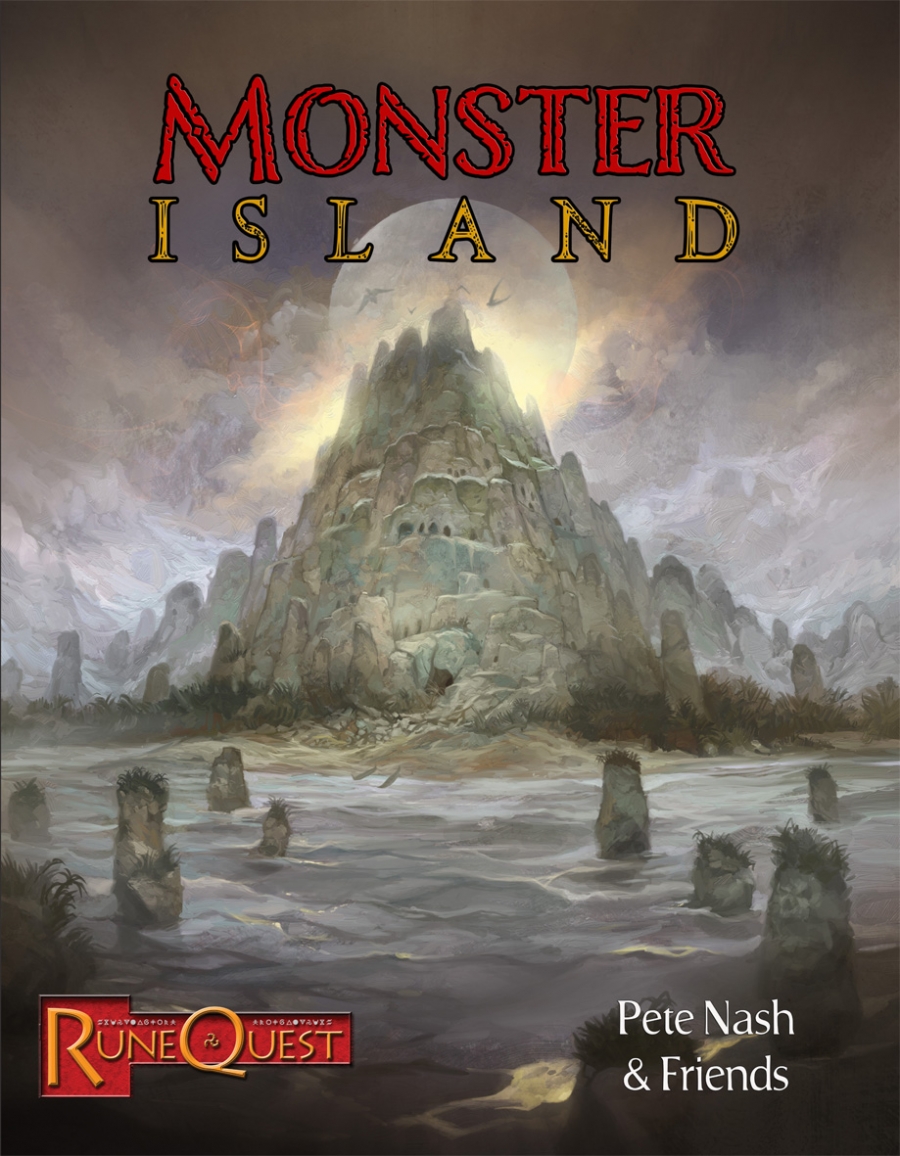
Monster Island Runequest-smallI’ve been on a bit of a RuneQuest kick recently, inspired by my purchase of the incredible Pavis: Gateway to Adventure setting from Moon Design.

I honestly didn’t expect to encounter anything comparable to Pavis any time soon. But I didn’t reckon with The Design Mechanism and their equally ambitious campaign setting Monster Island — a massive and mysterious island which invites gamers to “delve back to a time of classic Sword & Sorcery with priceless jewels, fierce dinosaurs, and dark horror!”

Monster Island is precisely the kind of fully realized and adventure-packed product I wish I’d had when I first tried RuneQuest years ago. It’s a marvelously imaginative sandbox setting, complete with strange monsters, dangerous ruins, giant (and I do mean giant!) beasts, and even greater surprises. Why hasn’t anyone thought of this before?

Author Pete Nash dedicated the book to two people, both of whom we lost this year: legendary Chaosium editor Lynn Willis, “who was my mentor and gave me my start in gaming,” and filmmaker Ray Harryhausen, “whose monsters have never been surpassed. Both of you spurred my imagination and haunted my dreams…. this book is a fruition of your influences.”

Imagining a fusion of the brilliance of Chaosium’s best adventure modules — including Cthulhu By Gaslight, the award-winning Masks of Nyarlathotep, Thieves’ World, and Shadows of Yog-Sothoth — and the unfettered imagination of Ray Harryhausen is as good a way as any to describe Monster Island, a true adventurer’s paradise packed with mystery, danger, and constant surprises.

Read More Read More

Vintage Treasures: Jolly R. Blackburn’s Shadis #15

Vintage Treasures: Jolly R. Blackburn’s Shadis #15

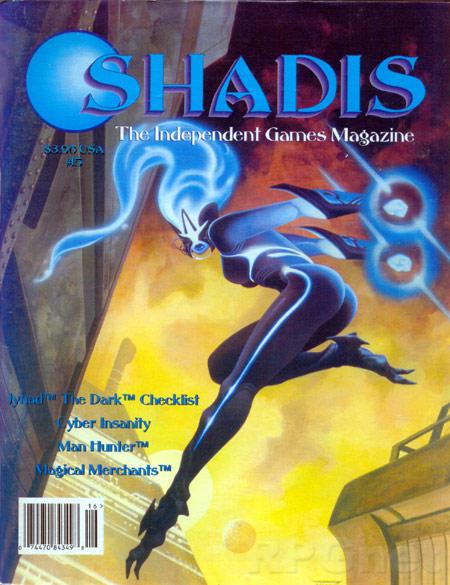
Shadis 15-smallA few weeks ago, I stumbled on an eBay seller unloading a nice collection of vintage gaming merchandise. Quite a bit of it sold at high prices too, especially TSR’s Dragon Dice sets and several classic D&D modules in mint condition.

What wasn’t selling? The seller had haphazardly bundled some old gaming publications, in lots labeled “Magazine/Fanzine.” They included a pretty wide range of titles of various quality, including Game Trade Magazine, Games Quarterly, Game News, Gameplay, Games, Shred, The V.I.P. of Gaming Magazine, Sorcerer’s Apprentice, Games Unplugged, Dungeon, White Dwarf, Arcane, and Shadis. All the lots were priced at a dollar.

There wasn’t much interest in them, to be honest. In some cases, it wasn’t really a surprise. The lots were oddly bundled — one contained eleven magazines, including four copies of Games Quarterly #7 and six copies of Game Trade Magazine #125.

I couldn’t figure out why the seller didn’t split those up into different lots. Who on Earth would want six copies of GTM #125?

I won most of the lots for between one to two bucks each, answering my own question. I now own six copies of GTM #125 — and 52 other vintage gaming magazines published between 1982 and 2012.

There’s a lot of great reading and gaming history in there. I was especially pleased to see Sorcerer’s ApprenticeWhite Dwarf, and Arcane, all of which are highly collectible today.

But the real delight, of course, was the single issue of Jolly R. Blackburn’s marvelous Shadis: issue #15, cover-dated Sept/Oct 1994, one of the most famous issues of the magazine ever published — and indeed, one of the highest selling single issues of any gaming magazine of the 90s.

Read More Read More

Get the First Seven eBook Titles from Strange Chemistry for Just $1.99

Get the First Seven eBook Titles from Strange Chemistry for Just $1.99

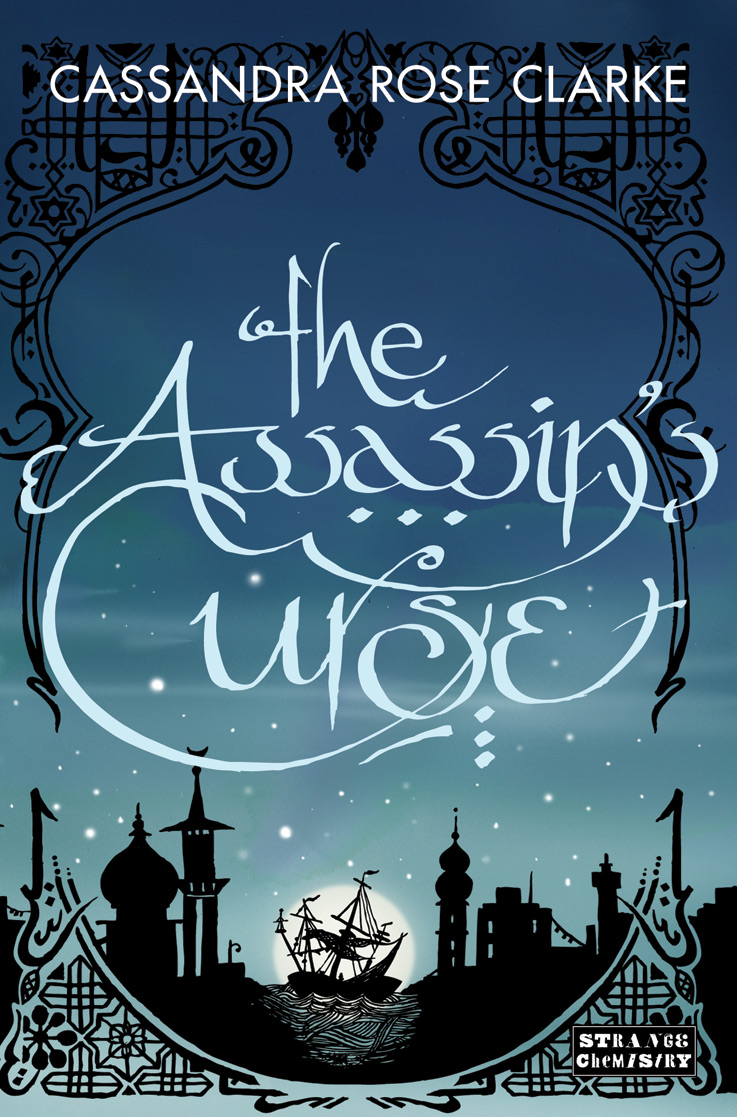
The Assassin's Curse-smallHappy first birthday to Strange Chemistry Books!

Strange Chemistry is the Young Adult imprint of Angry Robot Books, “dedicated to the best in modern young adult science fiction, fantasy and everything in between.” It was launched in September 2012 under the stewardship of editor Amanda Rutter and over the last twelve months it has released no less than seventeen books, signed twenty four authors, and had one novel optioned for a TV show.

And what great books! Back in June, we shared a book cover montage of their first 18 releases, including Katya’s World by Black Gate author Jonathan L. Howard (“The Shuttered Temple” and “The Beautiful Corridor”), and Martha Wells’s Emilie and the Hollow World.

Now, to celebrate their first birthday, Strange Chemistry had reduced the price on the digital versions of each of their first seven releases, including The Assassin’s Curse by Cassandra Rose Clarke and Katya’s World to just $1.99:

Blackwood, by Gwenda Bond
Shift, by Kim Curran
The Assassin’s Curse, by Cassandra Rose Clarke
Poltergeeks, by Sean Cummings
Katya’s World, by Jonathan L. Howard
Broken, by A.E. Rought
Pantomime, by Laura Lam

I took advantage of the offer to buy both The Assassin’s Curse and Katya’s World — and I was sorely tempted by the rest. The offer is available for a limited time, so don’t delay.

The digital books are available Nook and Kindle format, though both Amazon and Amazon UK. Complete details (and links to the special offers) are at the Strange Chemistry website.

New Treasures: Wrath-Bearing Tree by James Enge

New Treasures: Wrath-Bearing Tree by James Enge

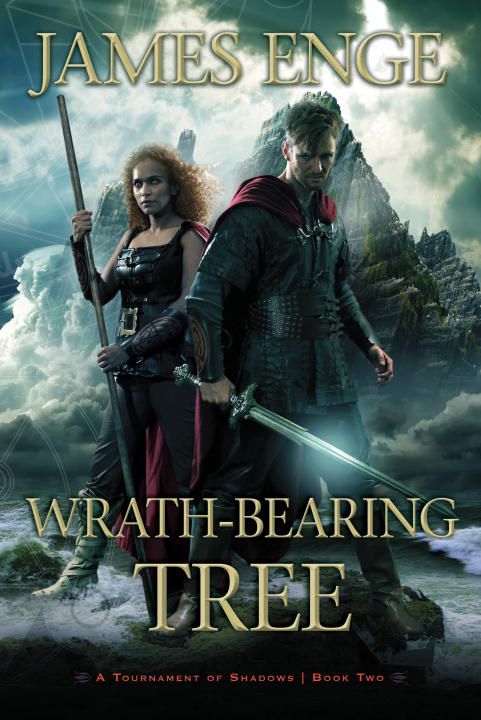
Wrath Bearing TreeAs we reported just last month, James Enge’s latest Morlock novel, Wrath-Bearing Tree, the second volume of A Tournament of Shadows, arrives this week.

I received my copy a few days ago and the final version is gorgeous. A Tournament of Shadows is Morlock’s origin story, and it began in A Guile of Dragons — which Grasping for the Wind described as “What Tolkien might have written, had he lived in this postmodern age.”

The masked powers of Fate and Chaos are killing gods in Kaen. The Graith of Guardians sends the vocates Morlock Ambrosius and Aloe Oaij to determine precisely what is behind the threat. However, Morlock is secretly in love with Aloe, and this complicates their mission in unexpected ways. In his own sneaky way, Enge has described Wrath-Bearing Tree as “a love story with sword and sorcery interruptions.”

Exactly what is a wrath-bearing tree, you ask? It has to do with the tricky and deceptive power of history, as described by poet T.S. Eliot, in his poem “Gerontion” in 1920:

History has many cunning passages, contrived corridors
And issues, deceives with whispering ambitions,
Guides us by vanities…
Neither fear nor courage saves us. Unnatural vices
Are fathered by our heroism. Virtues
Are forced upon us by our impudent crimes.
These tears are shaken from the wrath-bearing tree.

And that’s all the clues we’re going to give you.

Wrath-Bearing Tree was published on August 20 by Pyr. It is 377 pages, priced at $18 for the trade paperback and $11.99 for the digital edition. For a limited time, print copies are only $6.29 at Amazon.com — that’s 65% off one of the most anticipated fantasy novels of the year. Act quickly so you’re not disappointed.

Kirkus Looks at Donald A. Wollheim and the Ace Double

Kirkus Looks at Donald A. Wollheim and the Ace Double

Secret of the Lost Race-smallBack in June, I wrote a short blog entry about one of my favorite Ace Doubles, Tales of Outer Space and Adventures in the Far Future. I took the excuse to talk about one of the field’s true renaissance men, Donald A. Wollheim, who edited both books and launched several of the most enduring SF and fantasy publishing imprints in history.

Wollheim doesn’t get much credit for his amazing accomplishments these days. Which is why I was pleased to see Andrew Liptak at Kirkus dedicate his latest column to Wollheim and one of his greatest creations: the Ace Double. These compact and beautiful treasures occupy a very special place in my library. Here’s a snippet:

In 1952, editor Donald A. Wollheim of Ace Books introduced a format that would prove to be immensely popular, and cemented science-fiction literature’s role in bookstores afterwards…

Ace’s Double Novels were a distinctive part of the science-fiction community throughout the two decades in which they were published. The line helped to launch the novel careers of a number of authors, from Philip K. Dick to Ursula K. Le Guin to Samuel R. Delany, in addition to a number of other popular authors in the field, such as A.E. van Vogt, Margaret St. Clair and Leigh Brackett… the books were an innovative entry in a brand-new publishing world, one that found both considerable staying power and a platform for publishing a high volume of science fiction. The huge number of stories published allowed for something great to happen: Talented authors with interesting stories to tell broke into the field, allowing for their own voices to shape the genre as they continued to find success.

Read the complete article here. We last reported on Liptak when he looked at Astounding Science Fiction in February.

Read More Read More

Vintage Treasures: The Best of Fritz Leiber

Vintage Treasures: The Best of Fritz Leiber

The Best of Fritz Leiber-smallAnd so we come to Fritz Leiber, in our continuing exploration of Lester del Rey’s Classic Library of Science Fiction series.

The Best of Fritz Leiber, published in 1974, was the second in the line, following The Best of Stanley G. Weinbaum. Unlike Weinbaum and many of the authors who would follow him, Leiber was well known — even a star — to contemporary SF readers in 1974, thanks chiefly to his popular Fafhrd and the Gray Mouser books.

Which brings us conveniently to the book’s first problem. Those stories were being published by Ace Books, who had five volumes of Fafhrd and the Gray Mouser in print by 1970, and the Classic Library of Science Fiction line was owned by Ballantine, which meant The Best of Fritz Leiber couldn’t include any of them. This is sort of like assembling a Best of Robert E. Howard collection that ignores Conan (which Del Rey books did in 2007, with considerable success, now that I think about it.)

Poul Anderson acknowledges this painful lack in his introduction, taking a moment to badmouth sword & sorcery while he’s at it:

It’s too bad that we have no tale of Fafhrd and the Gray Mouser here. Not only did that charming pair of rogues… launch the author’s career, they are still going strong, to the joy of everyone who appreciates a rattling good fantasy adventure. But by no means are these stories conventional “sword and sorcery.” The world of Nehwon is made real in wondrously imagined detail… Here Leiber in his way — like the late J.R.R. Tolkien in his, and not vastly different — has done, and is doing, for the heroic fantasy what Robert Louis Stevenson did for the pirate yarn: by originality and sheer writing genius, he revived an ossified genre and started it off on a fresh path.

I could likewise wish that this book held a sample or two of Leiber’s horror stories. In my opinion, which Fritz modestly does not share, Lovecraft and Poe himself never dealt out comparable chills.

In other words, Leiber’s stories (and Tolkien’s) are good, so they can’t really be sword and sorcery… despite the fact that Fritz Leiber is often credited with coining the phrase “sword & sorcery” to describe his most popular work. Poul Anderson. What a doofus.

Read More Read More

L. Sprague de Camp, Fletcher Pratt, Gardner Fox and Appendix N: Advanced Readings in D&D

L. Sprague de Camp, Fletcher Pratt, Gardner Fox and Appendix N: Advanced Readings in D&D

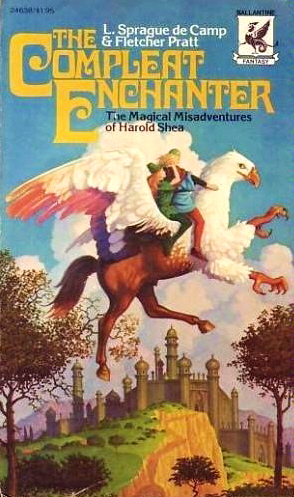
The Compleat Enchanter-smallOver at Tor.com, the intrepid Mordicai Knode and Tim Callahan have been conducting dangerous psychoreality experiments, just like William Hurt in Altered States.

I don’t expect you to get that reference, because Altered States came out, like, a billion years ago. But trust me, it was wild. William Hurt locks himself in a sensory deprivation tank until he turns into some kind of glowing protoplasm. And Blair Brown got naked. A lot. Drew Barrymore played their 4-year old daughter, if that helps you understand how old this movie is.

Anyway, Mordicai and Tim have convinced the brain trust at Tor.com to let them attempt the same thing, in the name of science. Tor doesn’t have the budget for an awesome sensory deprivation tank (or to pay anyone to get naked), but they’ve got the essentials down. For the last month or so, Mordicai and Tim have been refusing all outside stimulus except the work of those authors listed in Appendix N of the Dungeon Masters Guide.

They’re consuming nothing but Mountain Dew and Doritos Locos Tacos from Taco Bell, and electrodes attached to their brains will capture the exact moment they transform into Dave Arneson and Gary Gygax. Hasn’t happened yet but, believe me, the stars are right and the time grows nigh.

In the meantime, teams of diligent scribes have been scribbling down every word Mordicai and Tim speak as they grow closer and closer to ultimate enlightenment. We’re here to share some of the best with you. Take them in small doses, this is potent stuff.

They start with L. Sprague de Camp, author of the early alternate history novel Lest Darkness Fall (1939), The Wheels of If (1948), Rogue Queen (1951), and, with Robert E. Howard, Tales of Conan (1955), one of the very first Conan collections.

Here’s Tim on L. Sprague de Camp, who left him underwhelmed.

Read More Read More