Browsed by
Author: John ONeill

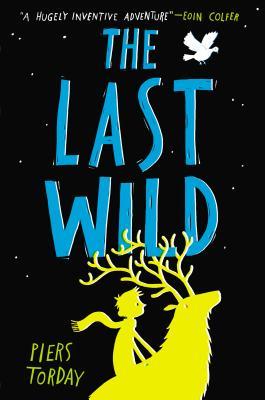
New Treasures: The Last Wild by Piers Torday
New Treasures: The Last Wild by Piers Torday

The Last Wild Piers TordayI don’t know much about this Piers Torday fellow. Not that there’s all that much to know — The Last Wild is his first novel, he lives in London, and is hard at work on additional adventures featuring Kester and Polly. Admit it — that’s all you need to know, too.

The Times has compared The Last Wild to Roald Dahl’s classic James and the Giant Peach – a pretty rousing endorsement. It looks like a quick, exciting, Middle-Grade read, and I think I’ll settle down with it later in the week. That is if my kids don’t steal it first.

In a world where animals no longer exist, twelve-year-old Kester Jaynes sometimes feels like he hardly exists either. Locked away in a home for troubled children, he’s told there’s something wrong with him. So when he meets a flock of talking pigeons and a bossy cockroach, Kester thinks he’s finally gone crazy. But the animals have something to say. And they need him. The pigeons fly Kester to a wild place where the last creatures in the land have survived. A wise stag needs Kester’s help, and together they must embark on a great journey, joined along the way by an overenthusiastic wolf cub, a military-trained cockroach, a mouse with a ritual for everything, and a stubborn girl named Polly. The animals saved Kester Jaynes. But can Kester save the animals?

The Last Wild was published on March 18, 2014 by Viking. It is 322 pages, priced at $16.99 in hardcover and $10.99 for the digital edition.

See all of our recent New Treasures here.

The Top 20 Black Gate Fiction Posts in February

The Top 20 Black Gate Fiction Posts in February

AppleMarkMark Rigney’s “The Find,” part of his perennially popular Tales of Gemen series, maintained  the top spot last month, holding off a stiff challenge from Jon Sprunk’s hit novel Blood and Iron.

“The Find” is actually Part II of the series. It began with “The Trade,” which Tangent Online called a “Marvelous tale.” Read all three tales in their entirety right here.

Jon Sprunk’s Blood and Iron, Book One of The Book of the Black Earth, was released this month by Pyr Books and we offered an exclusive pre-release excerpt of this brand new sword & sorcery epic in February.

Next on the list was Joe Bonadonna’s fast-paced adventure “The Moonstones of Sor Lunarum,” followed by E.E. Knight’s sword & sorcery epic “The Terror of the Vale,” the second in the Blue Pilgrim sequence, and sequel to “That of the Pit.”

Fifth and sixth were our excerpt from Sword Sisters, the new novel from Tara Cardinal and Black Gate blogger Alex Bledsoe, and “The Sealord’s Successor,” by Aaron Bradford Starr, a new tale of Gallery Hunters Gloren Avericci and Yr Neh, last seen in “The Tea-Maker’s Task” and “The Daughter’s Dowry.” Next was Martha Wells’s complete novel, the Nebula nominee The Death of the Necromancer.

Also making the list were exciting stories by Dave Gross, Jamie McEwan, Janet Morris and Chris Morris, Mike Allen, Ryan Harvey, Nina Kiriki Hoffman, C.S.E. Cooney, Vaughn Heppner, Jason E. Thummel, David C. Smith, Michael Shea, and John C. Hocking. If you haven’t sampled the free adventure fantasy stories offered through our Black Gate Online Fiction line, you’re missing out. Here are the Top Twenty most-read stories in February.

Read More Read More

Take Dungeon Delving to the High Seas in Descent: The Sea of Blood

Take Dungeon Delving to the High Seas in Descent: The Sea of Blood

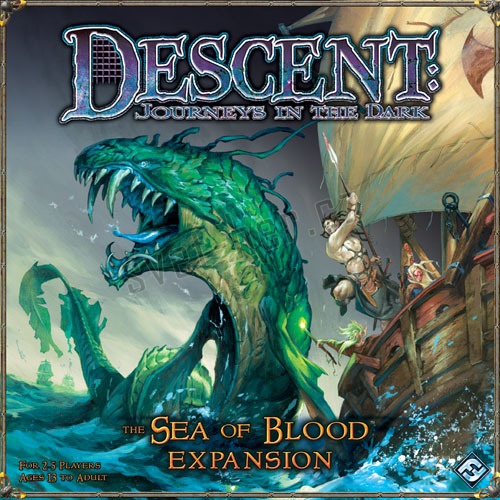
Descent the Sea of Blood-smallOkay, that title doesn’t make any sense. Dungeon delving… on the ocean. You know what that sounds like? Drowning, that’s what it sounds like.

But let’s move on. I’m still processing the four boxes of loot I brought back from the Spring Games Plus Auction and, like a determined CSI agent at a crime scene, putting clues together to determine how I ended up with a copy of Descent: The Sea of Blood.

Let’s say a few words about the basic game, Fantasy Flight’s Descent: Journeys in The Dark, because it came up for auction and … man. Everybody wanted it. Seriously, it was like feeding time at the crazy cat lady house. There were two copies of the long out-of-print first edition and they were way out of my price range. The first, a jumbled box containing the game and all the expansions, sold for $92, and the second, an unpunched set of the first edition only, sold for $130. (If you’re in the market, Amazon still has new copies from a handful of vendors, starting at $289.)

So what’s Descent all about, then? To be honest, I’m a little vague on the specifics, ’cause my copies are still in the shrinkwrap, but I do know it’s one of the most popular of the dungeon-delving board games, which simulate the loot-and-scoot dynamic of Dungeons and Dragons in a more contained setting. (Other examples include Super Dungeon Explore, Castle Ravenloft, Legend of Drizzt, Claustrophobia, Warhammer Quest, DungeonQuest, Tomb, Cutthroat Caverns, and many others. And yes, my copies of those are shrinkwrapped too, so don’t bother asking.)

Descent was originally released in 2007 and designed by Kevin Wilson. It pits an overlord against up to four hero players, who cooperate to complete a range of exciting objectives, like clobbering a sea-monster, or beating down a dragon (going strictly by the box cover art, which is generally a good indicator). For extra collectability — like it needed it — the game shares a setting with Fantasy Flight’s other popular titles, Runewars, Rune Age, and Runebound.

Read More Read More

New Treasures: Cthulhu Britannica: Shadows Over Scotland by Stuart Boon

New Treasures: Cthulhu Britannica: Shadows Over Scotland by Stuart Boon

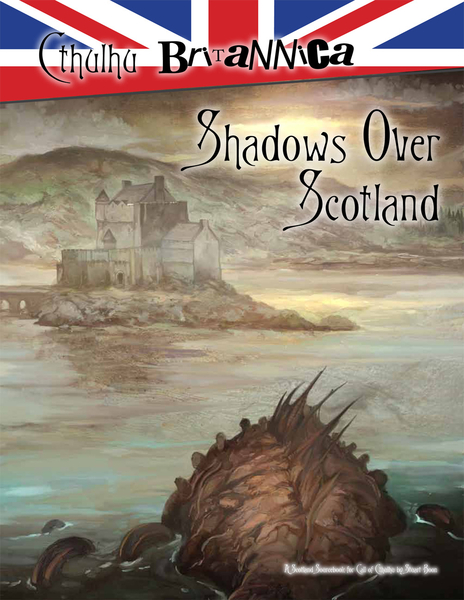
Shadows Over Scotland-smallCall of Cthulhu remains one of my favorite role playing games, despite the fact that I haven’t played it in… woof. Let’s say nearly 25 years.

Part of it, I think, is simple fondness for the source material, H.P. Lovecraft’s marvelously rich and creepy Cthulhu Mythos. But just as much stems from an appreciation for the enormously inventive adventures and supplemental material published for the game over the years, since it first debuted in a handsome box set from Chaosium in 1981.

Sure, I’d love to play CoC again. But until I find the time (and a group to play with), I’m quite content to read the best new releases. Because Call of Cthulhu continues to draw fabulously talented creators and artists and, unlike most RPGs, its adventures are highly readable all on their own.

Take the new Cthulhu Britannica line from Cubicle Seven, for example, which transplants Lovecraft’s horrors to the green and pleasant land of England. So far, there have been four volumes: the Cthulhu Britannica core book by Mike Mason (2009); Avalon: The Somerset Sourcebook by Paul Wade-Williams (2010); Folklore by Stuart Boon, James Desborough, and Gareth Hanrahan (December 2012); and the first hardcover volume, Stuart Boon’s Shadows over Scotland.

(That’s not even including the crazy-ambitious, Kickstarter-funded Cthulhu Britannica: London Boxed Set by Dominic McDowall, which rivals the legendary boxed set Horror on the Orient Express. The London Boxed Set raised £90,412 on a £15,000 goal and will include three books, four large full-color maps, and numerous handouts. The Kickstarter closed on December 12 and the set is scheduled for delivery in August.)

Read More Read More

Vintage Treasures: Rogers’ Rangers by John Silbersack

Vintage Treasures: Rogers’ Rangers by John Silbersack

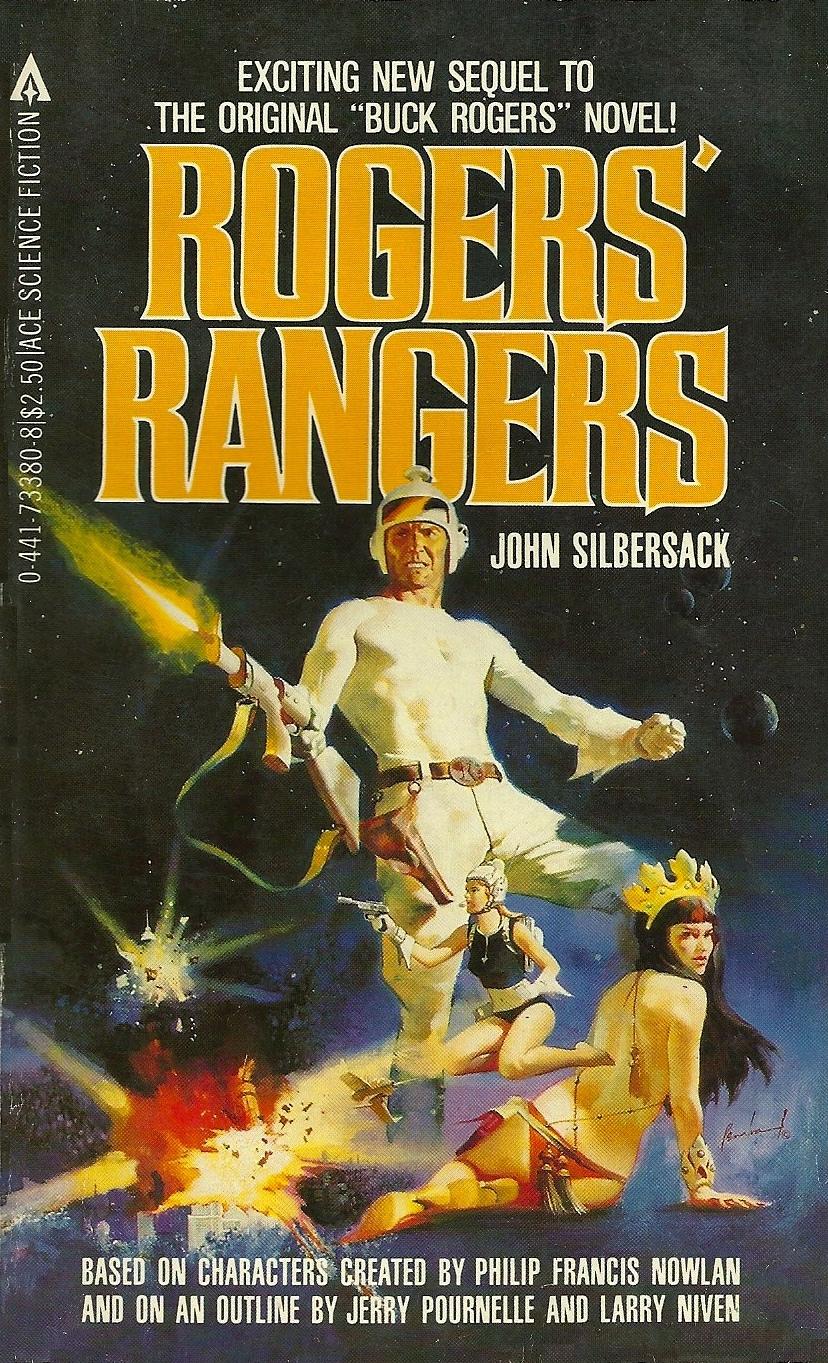
Rogers' Rangers-smallIf you know the name John Silbersack, it’s likely for his many significant accomplishments as a publisher and literary agent.

Silbersack has founded no less than six different imprints, including ROC Books at Penguin, Warner Aspect, and Harper Prism. Over a decade ago, he walked away from publishing and decided to become an agent, partnering with Trident Media Group, where he now reps some of the biggest names in the industry, including Barb & J.C. Hendee, Guy Gavriel Kay, E. E. Knight, William F. Nolan, David Schow, Paul Park, and the Isaac Asimov and Frank Herbert estates.

But back in the early 80s, this publishing Renaissance man also tried his hand at writing and editing. With Victoria Schochet, he edited the first four volumes of The Berkley Showcase (1980 – 1982), an anthology of science fiction and fantasy that presented original work from Berkley authors. It lasted five volumes and published a fabulous range of fiction from Orson Scott Card, R A Lafferty, Pat Cadigan, John Kessel, Howard Waldrop, Connie Willis, Thomas M Disch, Marge Piercy, Eric Van Lustbader, and many others.

All very interesting. But what we want to talk about today is Silbersack’s sole novel: Rogers’ Rangers, a sequel to the original Buck Rogers novel, published by Ace Books in 1983, which I found in a collection of SF books from the 1980s I acquired two months ago.

Back in 1979, Glen A. Larson, the producer behind the original incarnation of Battlestar Galactica, launched a new SF TV show for Universal: Buck Rogers in the 25th Century, starring Gil Gerard and Erin Gray (and the voice of Mel Blanc as Twiki, Buck’s robot companion.) The series was a hit, and I vividly remember seeing the pilot episode in theaters, shortly before the TV version launched.

Read More Read More

Is the Original SF and Fantasy Paperback Anthology Series Dead?

Is the Original SF and Fantasy Paperback Anthology Series Dead?

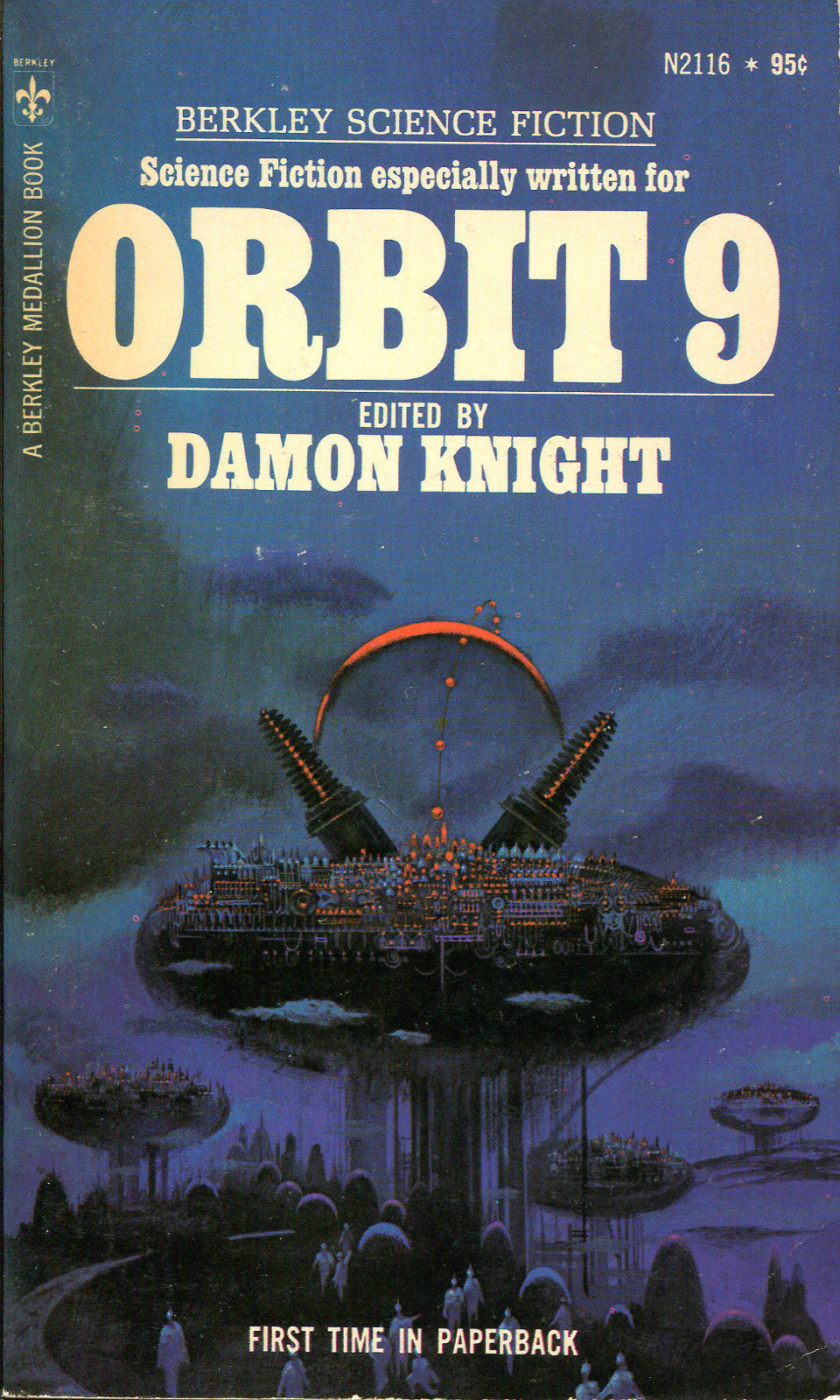
Orbit 9 Damon Knight-smallI miss the era of the original paperback anthologies. It seems to have faded away without anyone really noticing and I’m not sure why.

Well, I guess I do know why, but I’m grumpy about it. Short fiction isn’t really viable in mass market anymore. Ten years of trying — and failing — to publish a fantasy fiction magazine taught me that.

That wasn’t always the case. For decades, SF and fantasy readers supported several prestigious, high-paying paperback markets for short fiction and they attracted the best writers in the field. Damon Knight published 21 Orbit anthologies between 1966 and 1980; Robert Silverberg edited New Dimensions (12 volumes, 1971-81) and star editor Terry Carr helmed 17 volumes of the Universe series (1971-1987), for example.

I’d be hard pressed to tell you which of those three was the best source for original SF and fantasy, and I don’t really feel qualified to anyway, since I didn’t read them all. (Or even most of them — we are talking a combined 50 volumes, just for those three. I read pretty fast, but I’m not Rich Horton.)

In any event, those days are gone. And now that they are, I wonder — was it the sheer editorial talent of Messieurs Knight, Silverberg, and Carr that allowed their respective anthologies to continue for decades?

Or was there simply more of an appetite for short fiction forty years ago? Could an editor with the same talent and drive accomplish what they did today? Or is it futile, like trying to argue football with the Borg?

Read More Read More

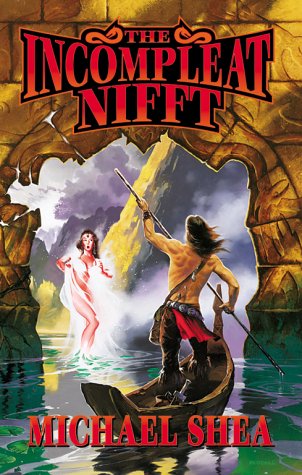
The Novels of Michael Shea: The Incompleat Nifft

The Novels of Michael Shea: The Incompleat Nifft

The Incompleat Nifft-smallUnder editor Eric Flint, Baen Books has led the way in producing inexpensive mass market reprints of some of the most essential classic SF and Fantasy of the 20th Century — including Robert E. Howard, Andre Norton, James H. Schmitz., Murray Leinster, and P. C. Hodgell’s God Stalker Chronicles, among many, many others (They’ve continued in this tradition with fabulous anthologies, including the recent In Space No One Can Hear You Scream and many others.)

In 1997, Baen Books turned to Michael Shea, publishing his second Nifft the Lean novel, The Mines of Behemoth. By 2000, they were preparing to trumpet the arrival of his third, but by that point the original World Fantasy Award-winning volume Nifft the Lean had been out of print for almost two decades.

So five months before the release of The A’rak, Baen bundled both of the first two novels into a single paperback, cleverly titled The Incompleat Nifft, signally the impending arrival of the what would be the final book in the series. At 576 pages it was a terrific bargain, collecting both Nifft the Lean and The Mines of Behemoth under a Gary Ruddell cover, and it has become perhaps the most collectible paperback in Shea’s catalog.

This Time, They Would Make a Killing

Join master thief Nifft the Lean with his companion-at-arms, mighty barbarian Barnar Hammer-Hand, as they trust to their wits and their luck. Once Nifft and Barnar were hired by the ghost of a dead woman to kidnap the man who betrayed her and drag him down to hell to join her. A simple task — or so they thought at first…

Read More Read More

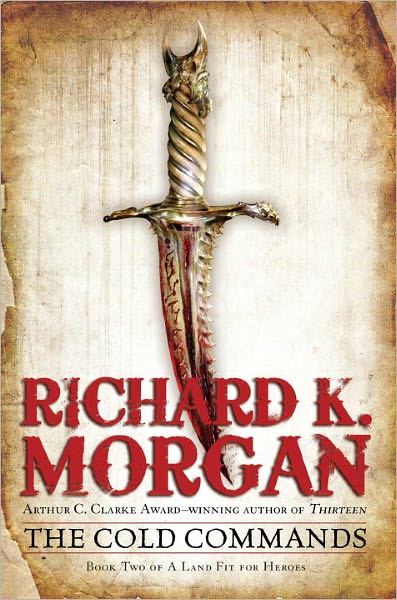
New Treasures: The Cold Commands by Richard K. Morgan

New Treasures: The Cold Commands by Richard K. Morgan

The Cold Commands Richard Morgan-smallWay back in Black Gate 13, the distinguished John C. Hocking contributed a feature review of Richard K. Morgan’s first fantasy novel and it alerted me to the fact that I was missing out on a major new work of sword & sorcery.

Here’s what he said, in part:

Richard K Morgan has made a name for himself with a chain of dark, slickly written science fiction thrillers… one might reasonably expect Morgan to continue in that style… Instead, he has written one of the most unusual, powerful, and daring sword & sorcery novels to see print for decades.

The Steel Remains follows a trio of characters, each of whom played a dramatic part in humanity’s grim battle with the Scaled Folk — reptilian invaders from the sea, defeated several years past…

As the three heroes are slowly drawn back together, a threat older and even more alien than the Scaled Folk moves into the world. Ringil and his friends will meet it with steel.

You can see why I was intrigued. Can that Hocking fellow write a review or what?

I’m a little late to talk about the sequel, The Cold Commands, especially in a column that ostensibly deals exclusively with the latest releases. But I just discovered it, so I’m going to do it anyway (I blame Hocking.)

The Cold Commands was released in in hardcover in 2011. It is subtitled Book Two of A Land For Heroes. You know what that means: now that there are two books, Morgan was forced to come up with a name for his series.

Read More Read More

Lucius Shepard, August 21, 1947 – March 18, 2014

Lucius Shepard, August 21, 1947 – March 18, 2014

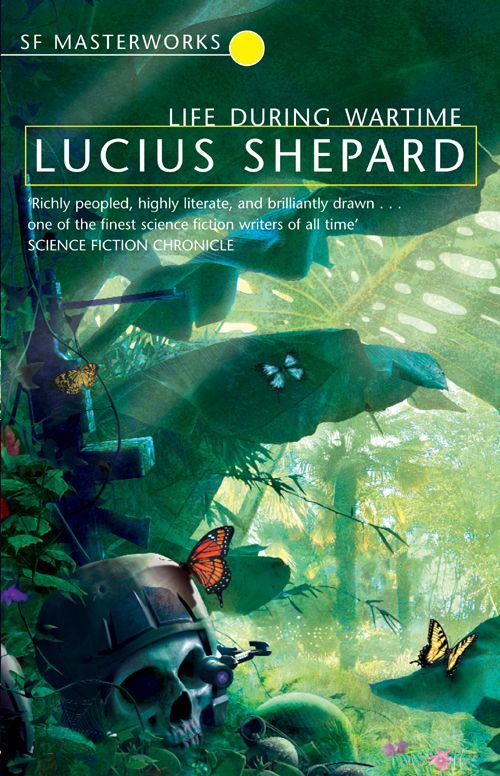
Life During Wartime Lucius Shepard-smallMultiple sources are reporting that Lucius Shepard, one of the most talented writers to emerge from the cyberpunk movement in the mid-80s, has died.

I first encountered him in the pages of Omni magazine in 1988, with his novelette “Life of Buddha.” I remember being astounded with the natural realism of his dialog, which captured the flow of modern speech in a way I’d never seen before. I read his brilliant Nebula Award-winning novella “R&R” — which opens with an artillery specialist in Central America getting a glimpse of a war map and wondering if he’s somehow caught up in a war between primary colors — and the novel it turned into, Life During Wartime (1987). His dark visions of the near future frequently involved inexplicable wars, and he wrote extensively about Central America, where he lived briefly.

Shepard won the John W. Campbell Award for best new writer in 1985. His 1992 novella “Barnacle Bill the Spacer,” which I read in the pages of Isaac Asimov’s Science Fiction Magazine, was a vivid character study of a mentally disabled cleaning man on a troubled space station, and his unexpected actions during an attempted mutiny. It won the Hugo Award in 1993 and was eventually collected in Barnacle Bill the Spacer and Other Stories (1998) and Beast of the Heartland (1999.)

He won many other awards during his lifetime. Two of his early collections, The Jaguar Hunter (1987) and The Ends of the Earth (1991), won the World Fantasy Award; his novella “Vacancy,” from the Winter 2007 issue of Subterranean Online, won a Shirley Jackson Award (read the story here).

Shepard published his first short stories in 1983; his first novel was Green Eyes in 1984. For the first few years of his career, he was considered part of the cyberpunk movement, but quickly broke free of that market label with his horror novel The Golden (1993) and titles like Valentine (2002), Colonel Rutherford’s Colt (2003), Louisiana Breakdown (2003), and A Handbook of American Prayer (2004). His final novel, Softspoken, was published by Night Shade in 2007. His acclaimed Dragon Griaule stories, including “The Man Who Painted the Dragon Griaule” and “The Scalehunter’s Beautiful Daughter,” were collected in The Dragon Griaule by Subterranean Press in 2012.

Shepard was still very active in the field at the time of his death. He published Five Autobiographies and a Fiction in April of last year and he wrote a regular film review column (which I regularly enjoyed, although I seldom agreed with him) for Gordon van Gelder’s Magazine of Fantasy and Science Fiction. He died on March 18, 2014 at the age of 66.

Reenact Clash of the Titans on Your Kitchen Table With Mythic Battles

Reenact Clash of the Titans on Your Kitchen Table With Mythic Battles

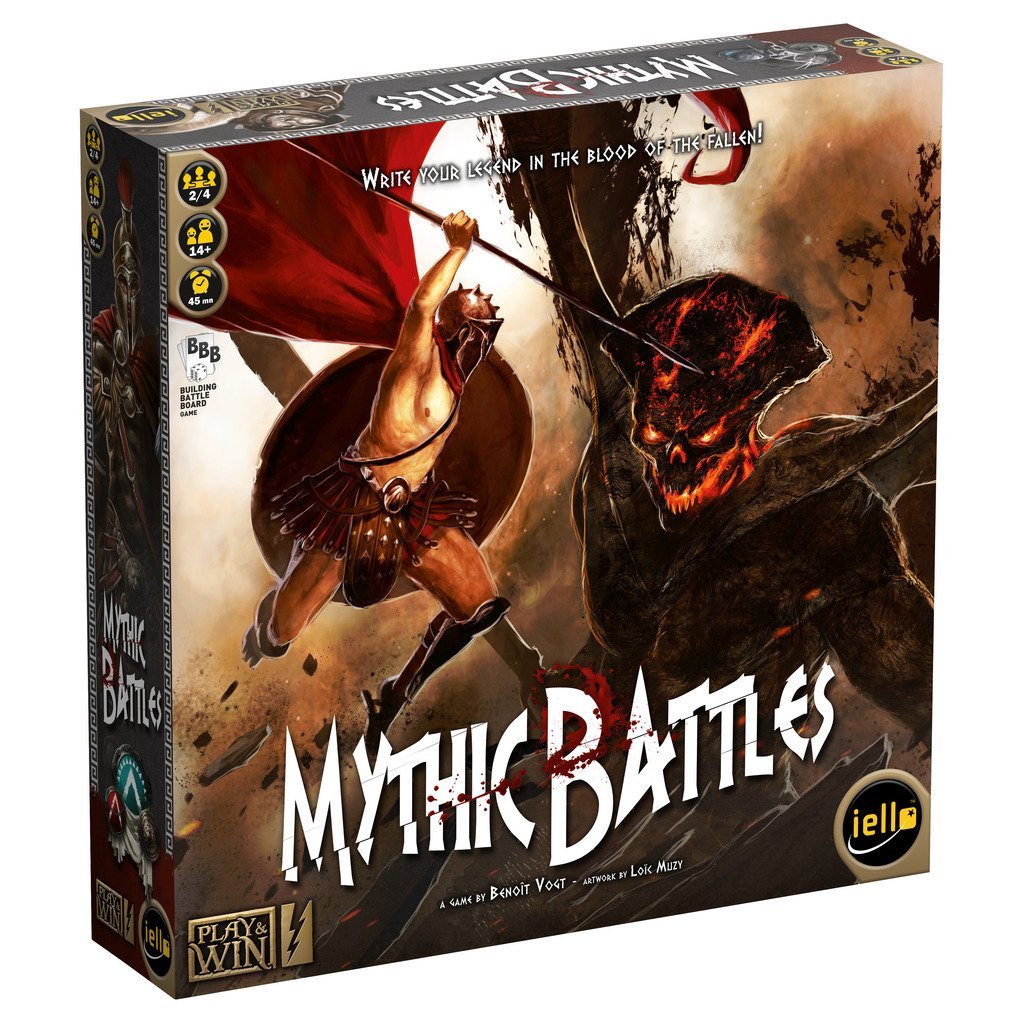
Mythic Battles-smallWhen you’re a collector, your enemy is the impulse purchase. Unless you’re independently wealthy — or you collect caterpillars or something — you need to budget carefully, and make every purchases count. Your goals are ambitious, and one or two impulse buys can leave a carefully thought-out acquisition plan in ruins.

All this goes out the window at an auction. Auctions are all about the impulse buy. A tantalizing treasure is on the auction block for a scant 15 seconds — just long enough to think, “What the heck is that? Is that the guy from 300, or some kind of Spartan paratrooper? Man, I bet Drew would play this with me. Wonder if you can play the guy with the glowing forehead? Is there a Kraken miniature? It’d be worth the 10 buck opening bid just to get a Kraken miniature. OMG it-must-be-mine” — and then bang, the auction is over, you’re the proud owner something called Mythic Battles, and you’re out seventeen bucks.

Mythic Greece is in chaos: Athena and Hades are at war and have sent their greatest heroes to battle. Take on the role of these generals out of legend, leading fantastic armies and lead your troops to victory!

Mythic Battles is a game which simulates epic confrontations and battles that will take your breath away. Thanks to its innovative system – the Building Battle Board (BBB), which combines game mechanisms from miniature games, board games and card games – Mythic Battles offers you an experience the likes of which you have never seen. Recruit your army, play your cards to activate your units, roll your dice to resolve combat – reinvent your way of playing!

This box contains two complete armies to play with two or four players, an initiation campaign, as well as all that’s required to play as you wish. Other armies and units will periodically be released to flesh out your campaigns.

I bought my copy of Mythic Battles at the Games Plus Spring Auction and so far I’ve been very pleased with it. It was designed by Benoit Vogt and was published by Lello/Play & Win in 2012, with a retail price of $49.99. There have been two expansions: The Bloody Dawn of Legends (2013) and Tribute of Blood (2014). And no — there is no Kraken miniature (I know. What were they thinking?)