Browsed by
Author: John ONeill

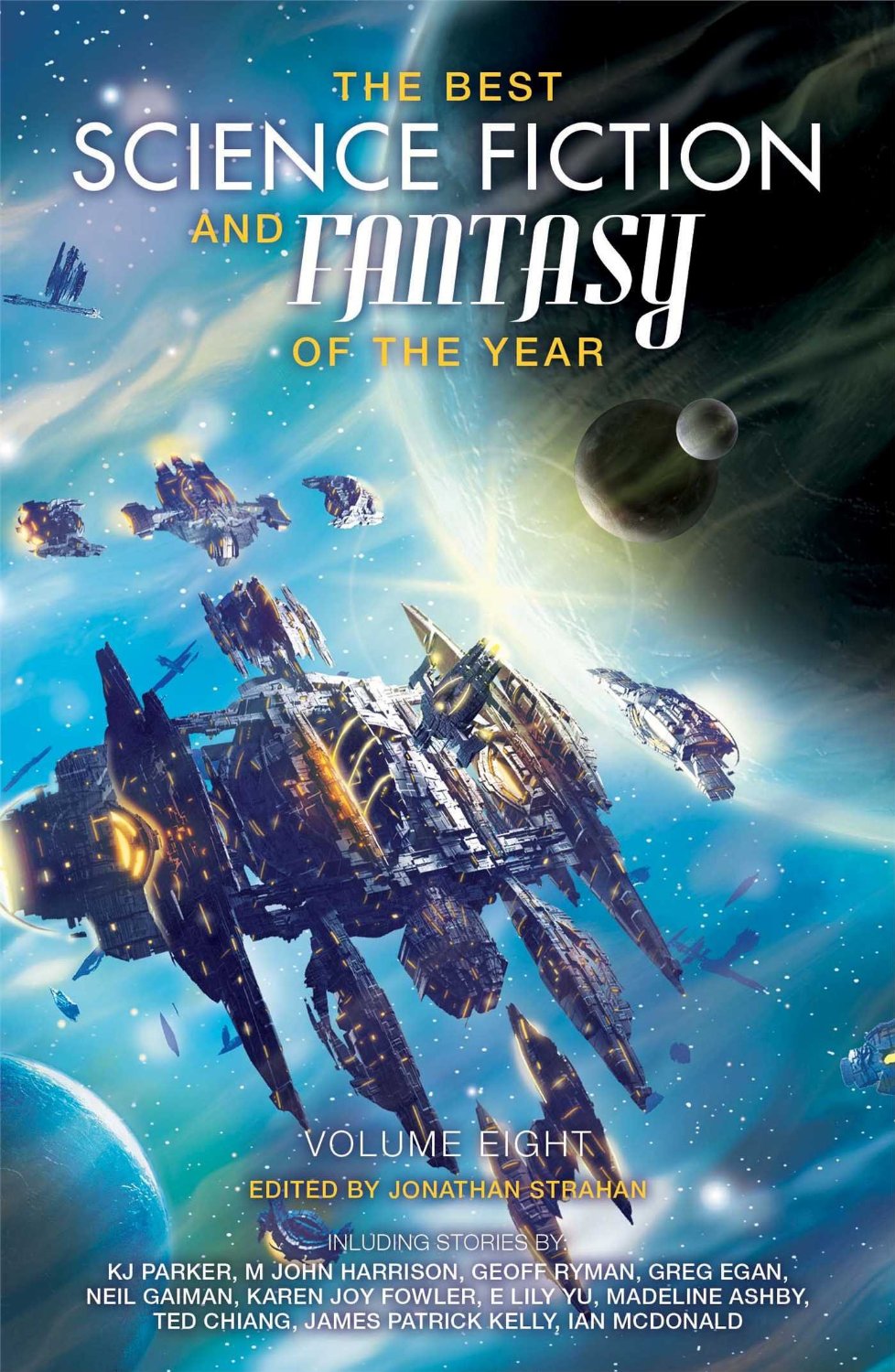
New Treasures: The Best Science Fiction and Fantasy of the Year Volume 8, edited by Jonathan Strahan
New Treasures: The Best Science Fiction and Fantasy of the Year Volume 8, edited by Jonathan Strahan

The Best Science Fiction and Fantasy of the Year Volume 8-smallHurrah!  The Best Science Fiction and Fantasy of the Year Volume 8 is in the house.

You’d think that after seven outstanding previous volumes, one more would be a slam dunk. But no. There was drama. The original publisher was in peril and no one knew if there would be an eighth. Well, maybe somebody knew, but it wasn’t me. And I’m the one with 9 column inches to fill every day.

At length, cooler heads prevailed and Volume 8 reappeared on the schedule from a new publisher, Solaris Books. It’s been redesigned so it looks slightly funky standing next to the uniform previous volumes, like a red-headed stepchild at a family reunion. But looks aren’t important to us here at Black Gatewhich explains our love for Paul Giamatti and five dollar haircuts.

Well, enough superficiality. What’s in the book?

28 stories by some of the best writers at work in the field today, including multiple Hugo and Nebula award nominees — such as “Selkie Stories are for Losers” by Sofia Samatar (Hugo and Nebula nominee), “The Truth of Fact, the Truth of Feeling,” by Ted Chiang (Hugo), and “The Ink Readers of Doi Saket,” by Thomas Olde Heuvelt (Hugo). See the complete table of contents in our previous article.

(And while we’re on the topic of Hugos, editor Strahan is on the ballot this year for Best Professional Editor, Short Form. You go, Jonathan! We’ve got ten bucks on you, buddy.)

Strahan’s Best of the Year volumes include both SF and fantasy, and year after year are some of the best values in the industry. If you’re not reading them, you’re missing out on some of the finest new writing in the field.

The Best Science Fiction and Fantasy of the Year Volume 8 was edited by Jonathan Strahan and published by Solaris on May 13, 2014. It is 614 pages, priced at $19.99 in paperback and $7.99 for the digital edition. We last covered Strahan’s The Best Science Fiction and Fantasy of the Year with Volume 7.
Everything’s Coming up Aces: All the Covers of Galactic Derelict

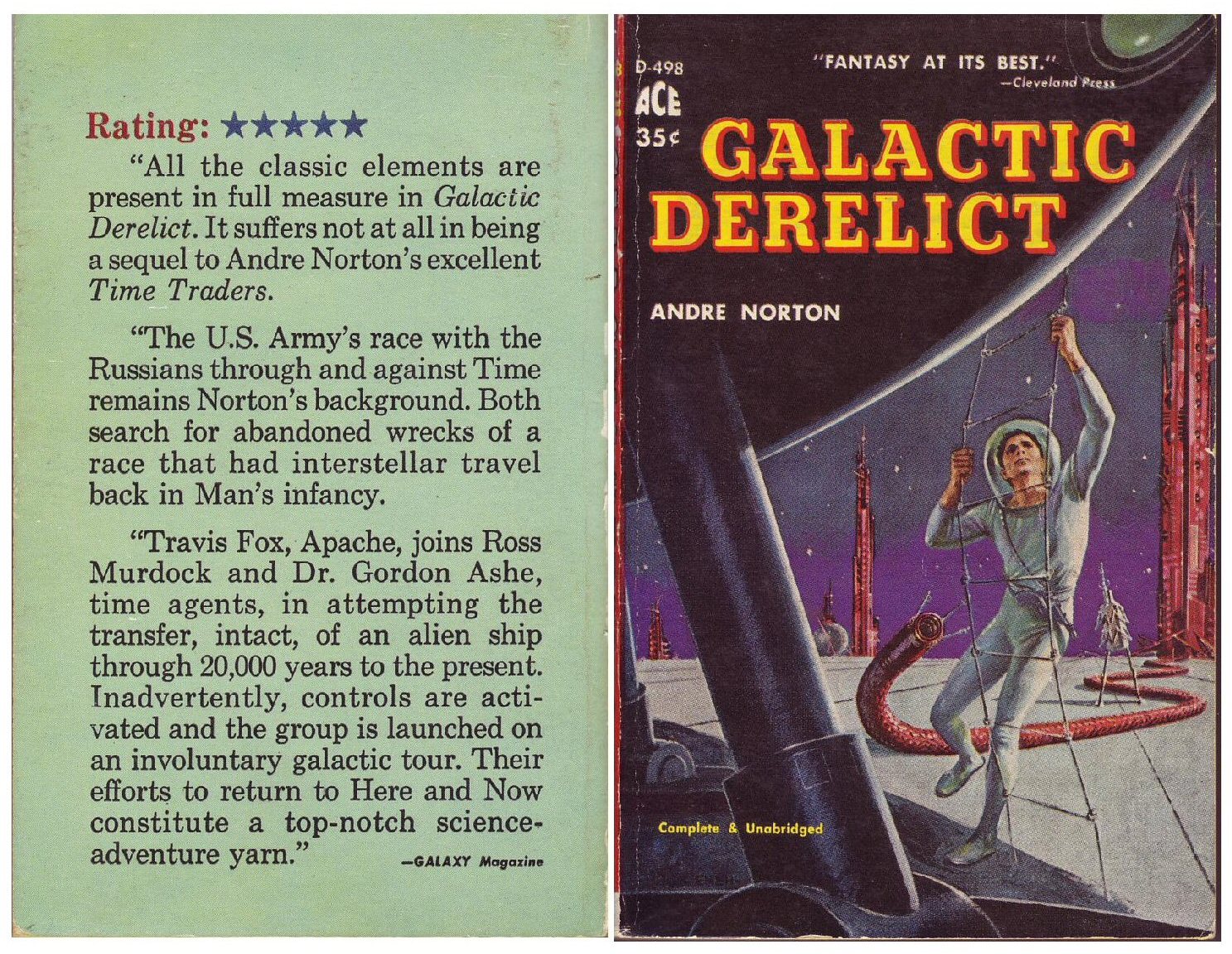
Everything’s Coming up Aces: All the Covers of Galactic Derelict

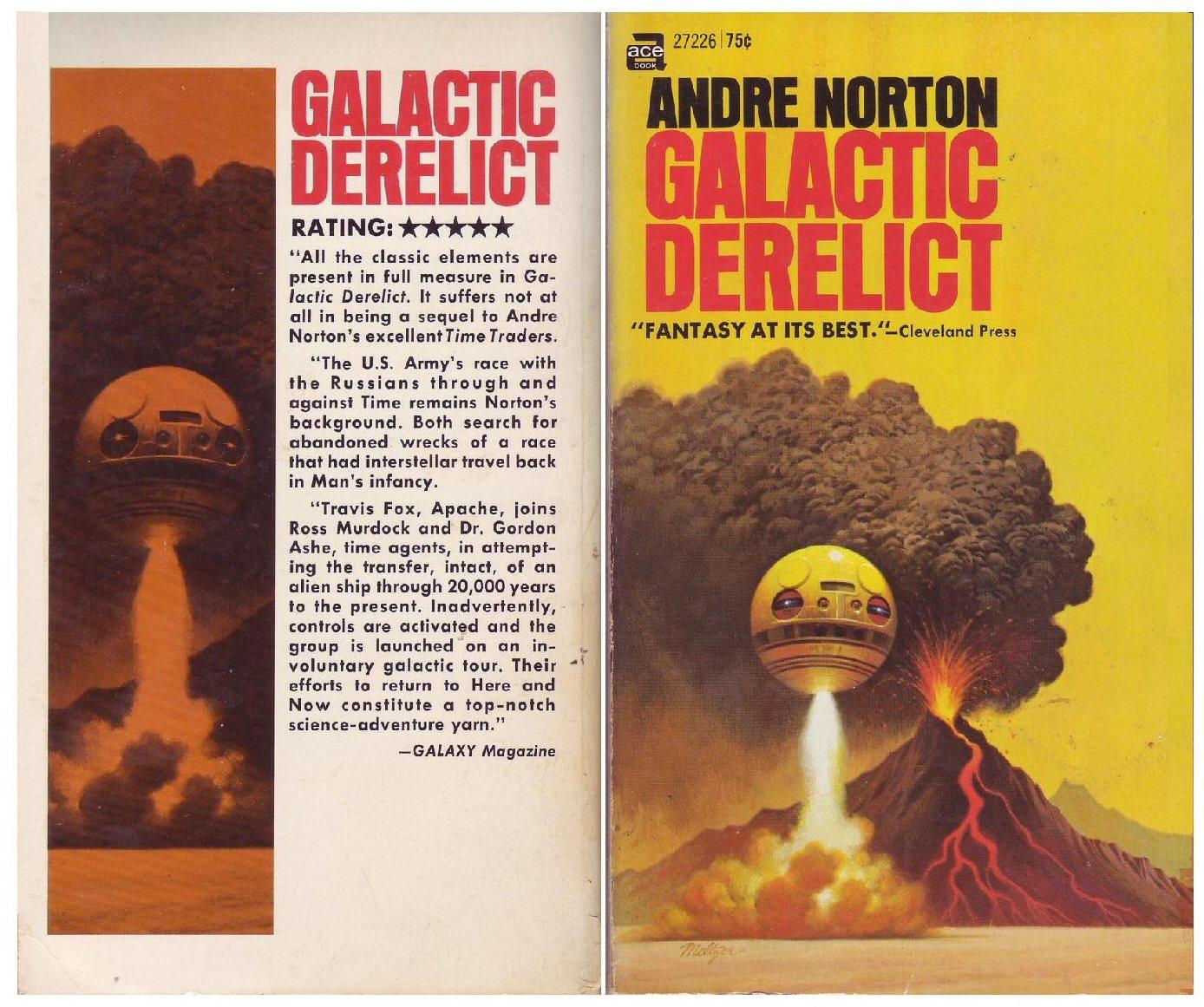
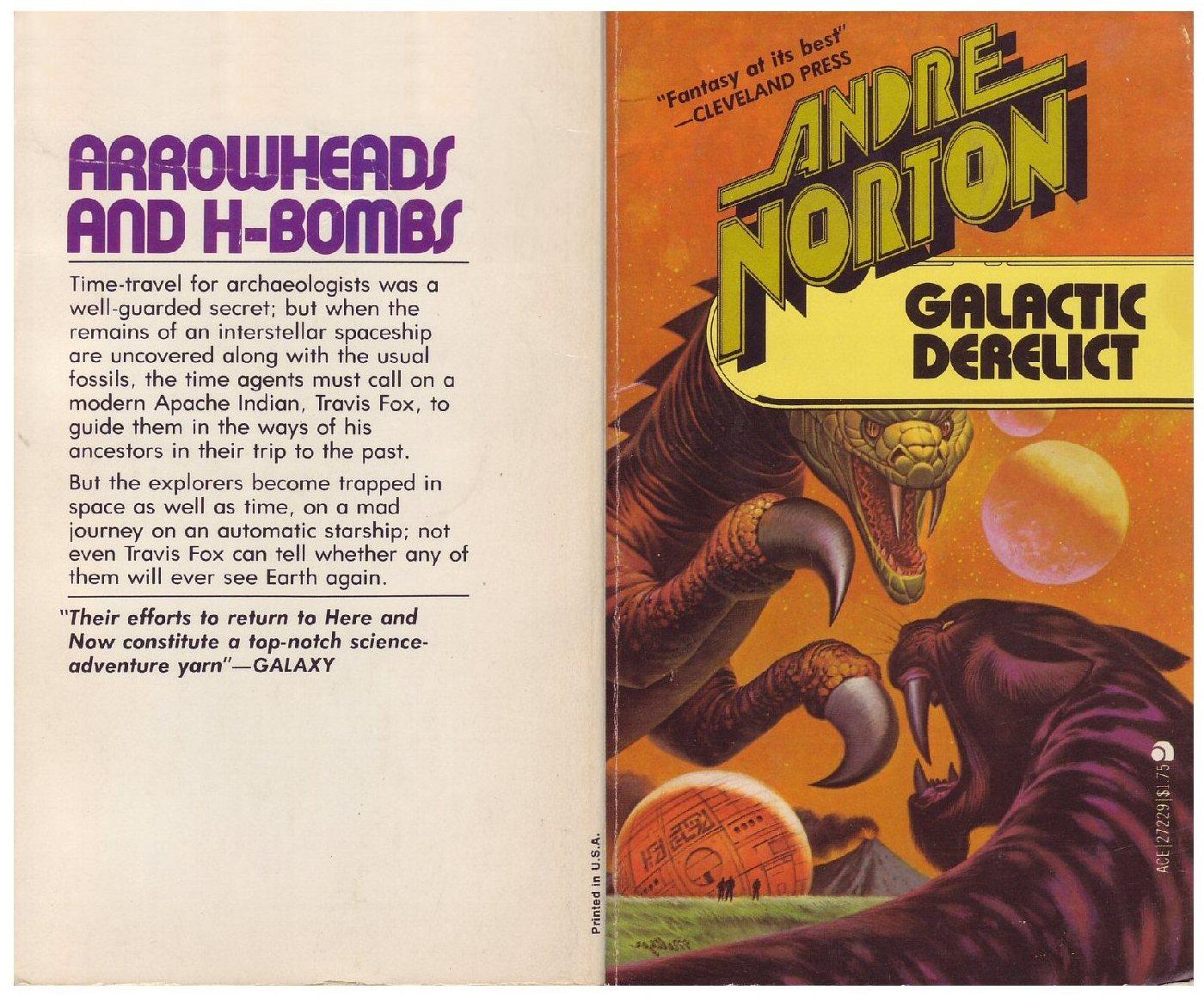
Galactic Derelict 1961-big Galactic Derelict 1971-small Galactic Derelict 1978-small

Click any of the images to see the complete wrap-around covers.

Last week I wrote a brief Vintage Treasures article about Andre Norton’s classic SF adventure novel Galactic Derelict. Here’s what I said about the book’s printing history:

Galactic Derelict was published in 1959 by the World Publishing Company and has been reprinted in eight different editions over the last half-century. It first appeared in paperback from Ace Books in 1961. It is 192 pages in paperback, priced at 35 cents. The cover is by Ed Emshwiller. If I have a few moments this weekend, I may assemble some of the other covers to display them here.

Well, on this leisurely Memorial Day weekend, I finally have a few minutes to pull together half a dozen covers from the book’s five decades in print, and here they are.

Read More Read More

Sumerian Zombies, Chicago Vampires, and Stephen King: David C. Smith’s The Man Who Would Be King and Other Stories

Sumerian Zombies, Chicago Vampires, and Stephen King: David C. Smith’s The Man Who Would Be King and Other Stories

The Man Who Would Be King and Other Stories David C Smith-smallDavid C. Smith has been a friend to Black Gate almost as long as we’ve been around. I remember attending a World Fantasy Convention with Howard Andrew Jones many, many moons ago when we were both four years old (or thereabouts), when Howard dragged me excitedly to an autograph session to meet him. Dave was astoundingly gracious to two young sword & sorcery fans, entertaining us with tales of writing Red Sonja novels with Richard L. Tierney and the wild S&S publishing scene in the 1970s.

In person and on the page, Dave is a natural storyteller. We both live in Chicago and I’m honored that we’ve become friends over the past few years. We’ve published his fiction and non-fiction here at Black Gate — including an excerpt from his new noir thriller Dark Muse, and one of the most popular works of fiction we’ve ever posted: an excerpt from his supernatural pirate dark fantasy novel Waters of Darkness, written in collaboration with Joe Bonadonna

Dave and Joe co-wrote one of our most popular blog posts in 2012, “The Big Barbarian Theory,” and Dave followed it up with a classic article that still brings traffic to our site today, “New Pulp Fiction for Our New Hard Times.” Howard interviewed Dave for us in 2007, and Jill Elaine Hughes conducted a interview/career retrospective a few months later.

Dave’s latest book is a new collection of four new short stories, a novella, and more — including “The Man Who Would Be King,” the tale of a writer who resents Stephen King’s success, until an odd encounter with the most popular horror writer in America changes his life. The Man Who Would Be King and Other Stories also includes a story set in the universe of his popular novel Oron, a zombie tale, a sample chapter from The West Is Dying, author notes, and much more.

Read More Read More

Vintage Treasures: The Year’s Best Horror Stories: Series XIII edited by Karl Edward Wagner

Vintage Treasures: The Year’s Best Horror Stories: Series XIII edited by Karl Edward Wagner

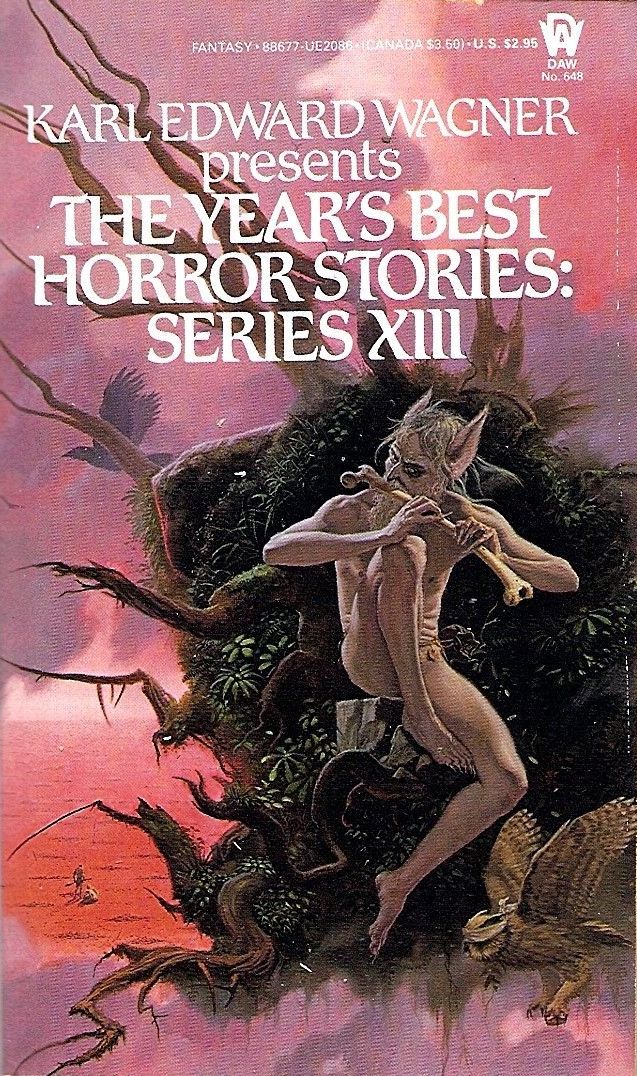
Year's Best Horror Stories 13-smallI’m still working my way through the fabulous collection of pulps, digest magazines, and paperbacks I brought back from the Windy City Pulp & Paperback show in April.

I found the artifact at left mixed in with a delightful assortment of 80s horror paperbacks near the back of the Dealer’s Room. It’s the 13th volume of The Year’s Best Horror Stories, which Karl Edward Wagner took over from editor Gerald W. Page in 1980 with the eighth volume.

The Year’s Best Horror was a long-running paperback horror anthology published by DAW. Like Donald Wollheim’s World’s Best SF and Lin Carter and Arthur Saha’s Year’s Best Fantasy, both also from DAW, it was a staple on bookstore shelves through the late 70s and early 80s, and served as a terrific introduction to a wide range of new and established writers every year.

For young readers new to science fiction, fantasy, and horror, DAW’s annual Best collections were a terrific way to explore the field. They were ubiquitous, extremely well edited, and — best of all — marvelously inexpensive.

Wagner edited fifteen installments in the series, until he drank himself to death in 1994. The last one was volume XXII, and the series died with him.

If you want to collect DAW’s World’s Best SF and Year’s Best Fantasy, you’re on your own, relegated to tracking down tattered paperbacks in the collector’s market — and paying a pretty penny when you found them. Karl Edward Wagner Year’s Best Horror volumes, however, established an early and enviable reputation as a treasure trove of high-quality horror… so much so that Underwood Miller made the unprecedented decision in the early 90s to collect them  in hardcover omnibus editions, three per volume, under the title Horrorstory — and what gorgeously packed volumes they were.

Read More Read More

Future Treasures: Thrones & Bones: Frostborn by Lou Anders

Future Treasures: Thrones & Bones: Frostborn by Lou Anders

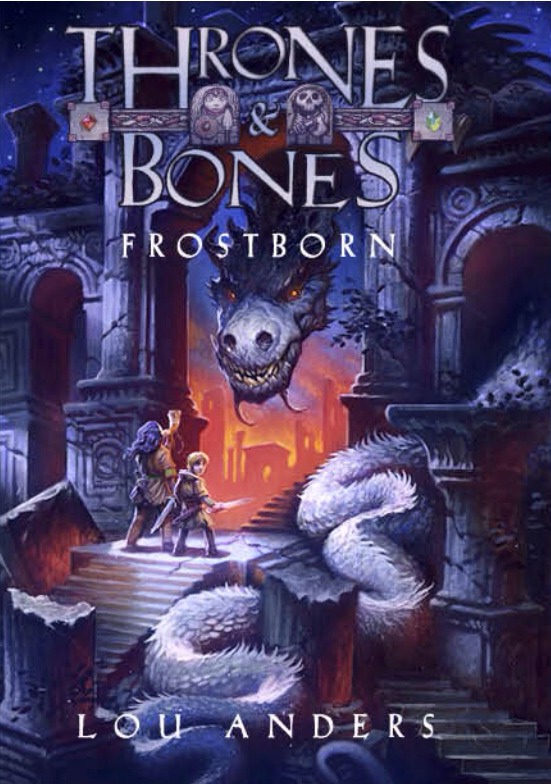
Thrones and Bones Frostborn-smallLou Anders is the editorial director of Pyr Books, one of the most exciting publishers on the market for adventure fantasy fans. Last month, while talking about the latest upcoming title from Pyr, I described Lou as “the closest we have to Lin Carter in the field today: an editor with impeccable taste and boundless energy, who has also been a tireless champion for sword & sorcery.”

Here’s a secret: one of the reasons I described Lou as “tireless” is that — just like Lin Carter — he’s also a talented fantasy writer in his own right. His debut novel Frostborn, an adventure-filled Viking-inspired middle grade series featuring two charming and humorous heroes, arrives in two months from Crown Books. Keep an eye out for it — you won’t want to miss it.

Meet Karn. He is destined to take over the family farm in Norrøngard. His only problem? He’d rather be playing the board game Thrones and Bones. Enter Thianna. Half human, half frost giantess. She’s too tall to blend in with other humans but too short to be taken seriously as a giant.

When family intrigues force Karn and Thianna to flee into the wilderness, they have to keep their sense of humor and their wits about them. But survival can be challenging when you’re being chased by a 1,500-year-old dragon, Helltoppr the undead warrior and his undead minions, an evil uncle, wyverns, and an assortment of trolls and giants.

Readers will embark on a sweeping epic fantasy as they join Karn and Thianna on a voyage of discovery. Antics and hair-raising escapades abound in this fantasy adventure as the two forge a friendship and journey to unknown territory. Their plan: to save their families from harm.

Frostborn, the first book of Thrones & Bones, will be published by Crown Books on August 5, 2014. It is 310 pages, priced at $16.99 in hardcover and $10.99 for the digital version.

New Treasures: Space Opera edited by Rich Horton

New Treasures: Space Opera edited by Rich Horton

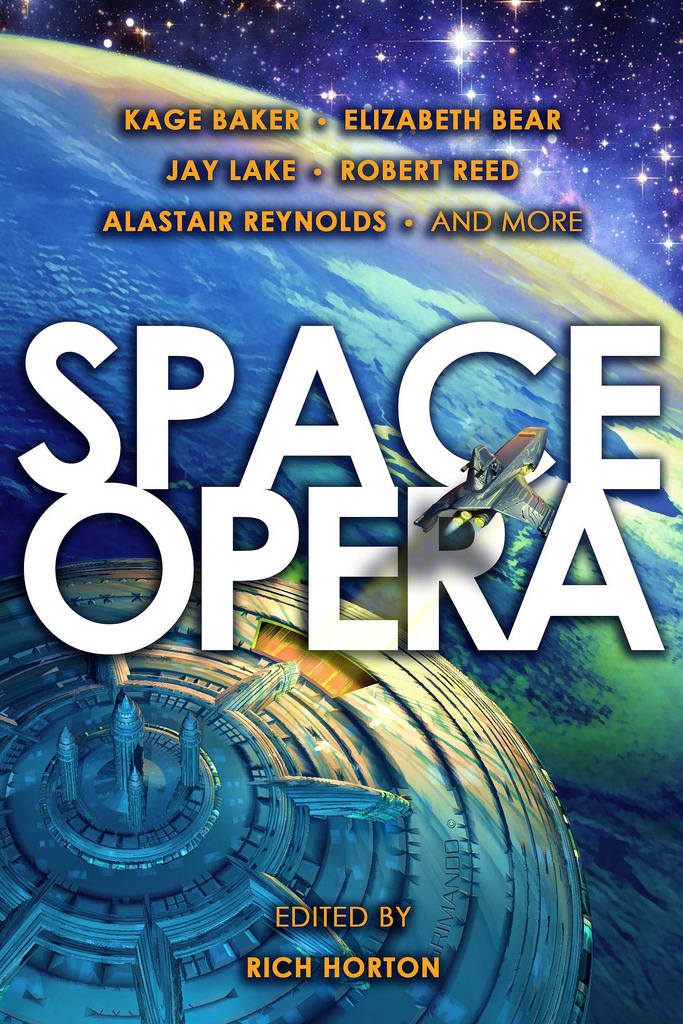
Space Opera Prime Books-smallHallelujah! Rich Horton’s Space Opera anthology is finally here. And it’s massive.

I’ve been waiting for this book since it was announced over six years ago, back in April of 2008. Rich shared his proposed table of contents at the time (and it was groundbreaking enough to be picked up as a news story at places like SF Signal, and listed at ISFDB), but the volume was eventually canceled. I thought that was the end of it, until I saw it back on the Prime Books schedule last year.

I am delighted to finally have it in my hot little hands. The project has become much more ambitious over the years. Did I mention it was massive? Rich’s original TOC listed 11 stories — the finished product has twice that many, from authors like Greg Egan, James Patrick Kelly, Chris Willrich, Kage Baker, Jay Lake, Alastair Reynolds, Ian McDonald, Aliette de Bodard, Robert Reed, Ian R. MacLeod, and many others.

Rich also provides a fascinating introduction, exploring the genesis of the term “space opera” in early SF and the way perceptions of it have changed over the years — as well as a survey of overlooked classics. Here’s a taste:

The term space opera was coined by the late great writer/fan Wilson (Bob) Tucker in 1941, and at first was strictly pejorative… Even so, much work that would now be called space opera was written and widely admired in that period…. most obviously, perhaps, the work of writers like Edmond Hamilton and, of course, E.E. “Doc” Smith…

It may have been Brian Aldiss who began the rehabilitation of the term with a series of anthologies in the mid-70s: Space Opera (1974), Space Odysseys (1974), and Galactic Empires (two volumes, 1976). Aldiss, whose literary credentials were beyond reproach, celebrated pure quill space opera as “the good old stuff,” even resurrecting all but forgotten stories like Alfred Coppel’s “The Rebel of Valkyr,” complete with barbarians transporting horses in spaceship holds. Before long writers and critics were defending space operas as a valid and vibrant form of SF…

Read More Read More

New Treasures: Voodoo Tales: The Ghost Stories of Henry S. Whitehead

New Treasures: Voodoo Tales: The Ghost Stories of Henry S. Whitehead

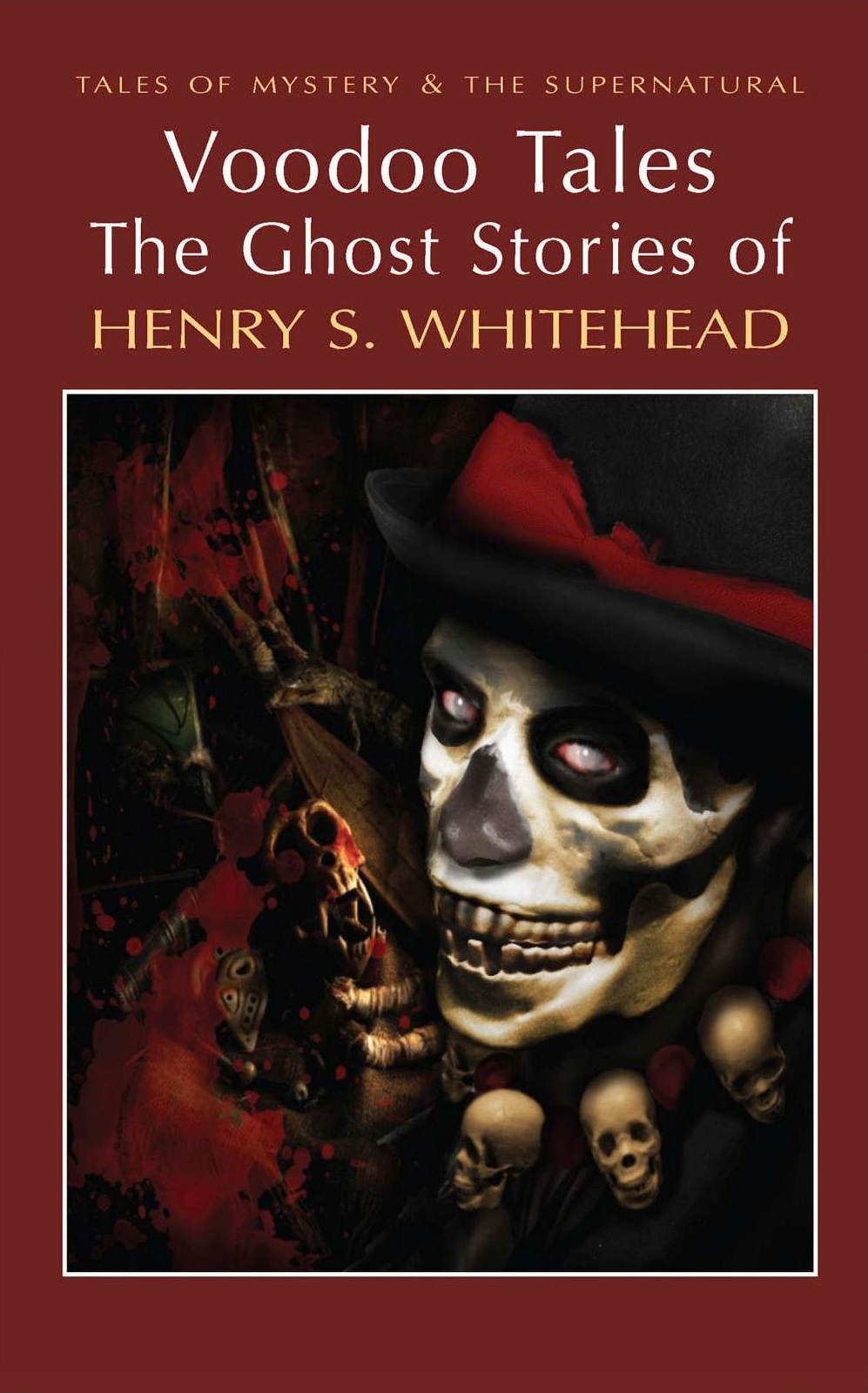
Voodoo Tales The Ghost Stories of Henry S. Whitehead-smallI continue to collect the Wordsworth Editions Tales of Mystery & The Supernatural, which I’ve found to be an inexpensive way to gather a diverse range of early horror writers on a single bookshelf.

My latest acquisition was Voodoo Tales: The Ghost Stories of Henry S. Whitehead, which I bought because it was huge (691 pages!), inexpensive ($3.90!), and ’cause it had voodoo in it (voodoo!). What can I tell you, it was a compelling combo.

I’ve never heard of Henry S. Whitehead, but apparently he was an early Weird Tales writer who had two Arhkam House collections. You’d think I’d be more on top of an author who had a pair of Arhkam House collections, but no. This genre keeps finding more ways to surprise me.

I’m guessing that Whitehead wrote mostly voodoo tales, but I won’t know for sure until I dig into the volume. Until then, I’m relying on the cover and the text on the back, and I’m definitely picking up a voodoo vibe.

“And behind him, like a misshapen black frog, bounded the Thing, its red tongue lolling out of its gash of a mouth, its diminutive blubbery lips drawn back in a murderous snarl…”

Let Henry S. Whitehead take you into the mysterious and macabre world of voodoo where beasts invade the mind of man and where lives of the living are racked by the spirits of the dead. In this collection of rare and out of print stories you will encounter the curses of the great Guinea-Snake, the Sheen, the weredog whose very touch means certain death, the curious tale of the ‘magicked’ mirror, and fiendish manikins who make life a living hell. Included in this festival of shivering fear is the remarkable narrative ‘Williamson’ which every editor who read the story shied away from publishing.

With deceptive simplicity and chilling realism, Whitehead’s Voodoo Tales are amongst the most frightening ever written.

Read More Read More

New Treasures: Motherless Child by Glen Hirshberg

New Treasures: Motherless Child by Glen Hirshberg

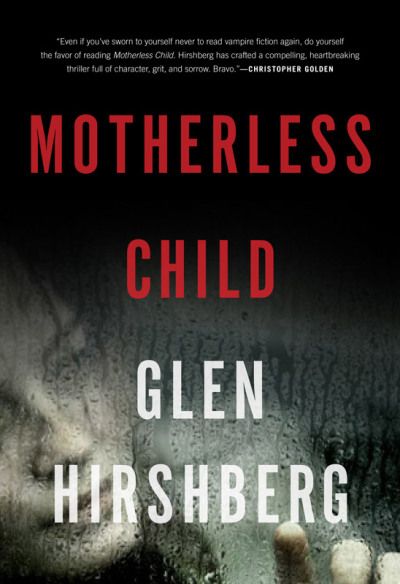
Motherless Child Glen Hirshberg-smallIf you used to enjoy vampire novels, but have become increasingly disgruntled by the crushing weight of vampire-lover, vampire-teammate, and vampire-sidekick novels in the Urban Fantasy section of your local bookstore, then I think I have just the book for you. Glen Hirshberg, author of American Morons and The Two Sams, knows how to spin a creepy tale, and Motherless Child looks like his creepiest yet.

In the American South, the heart of Rock ‘n’ Roll beats hard and strong in honky-tonks and roadside bars, and “trailer trash” doesn’t begin to reflect the strength of the women who live in those thin-walled “mobile” homes. Sophie and Natalie are young mothers, barely out of their teens, each raising a toddler. Their daily lives are full of dull routine, so they are thrilled to discover a mysterious musician, “the Whistler,” performing at a dive bar near Charlotte.

What happens next is beyond their wildest dreams… at least they think it is, because when they wake up in the morning, their memories are hazy, their clothes are shredded, and they’re covered in dried blood.

They’re also no longer human.

Sophie and Natalie flee: from their children; from Natalie’s mom, who vows to protect the babies but can’t stop worrying about her daughter; from the Whistler and his eerie Mother. But the women’s wild ride through the heart of the South can’t stop them from changing, can’t hide them from their Destinies. The Whistler is on their trail, as bound to them as they are to him, driven by a passion so intense it threatens to unhinge him.

The final confrontation is unavoidable and unpredictable. Motherless Child is a moving and eloquent tale of the depth and breadth of motherly love, and how that love can heal and hurt, save and destroy, sometimes all at the same time. It’s a stellar work by a great American writer. It’s also scary as s–t.

Motherless Child was published on May 13 by Tor Books. It is 269 pages, priced at $24.99 in hardcover and $11.99 for the digital edition. See all of our recent New Treasures here.

An Age of Alternate Worlds Where Vampires and Zombies Prowl: Salman Rushdie on Fantasy

An Age of Alternate Worlds Where Vampires and Zombies Prowl: Salman Rushdie on Fantasy

One Hundred Year of Solitude-smallI was reading Salman Rushdie’s cover article in the Sunday issue of The New York Times Book Review yesterday when I stumbled on a fascinating quote.

Rushdie’s article, “Magic in Service of Truth,” isn’t really about fantasy — not directly, anyway. It’s a tribute to the magical realism of Gabriel García Márquez, and especially the setting of his most famous novel, One Hundred Years of Solitude. Márquez, who won the Nobel Prize for literature in 1982, died on April 17th, and Rushdie’s article is a thoughtful look back at the career of the man whom the President of Colombia recently called “the greatest Colombian who ever lived.”

But Rushdie’s article is fascinating for other reasons as well. He is one of the most respected writers of the 21st Century — indeed, for several months after the publication of The Satanic Verses in 1988, and the fatwā issued by Ayatollah Khomeini in 1989, he was perhaps the most famous author on the planet — and in the midst of his tribute to Márquez, he casually admits we are living in a literary Age of Fantasy.

We live in an age of invented, alternate worlds. Tolkien’s Middle-earth, Rowling’s Hogwarts, the dystopic universe of The Hunger Games, the places where vampires and zombies prowl: These places are having their day. Yet in spite of the vogue for fantasy fiction, in the finest of literature’s fictional microcosms there is more truth than fantasy. In William Faulkner’s Yoknapatawpha, R.K. Narayan’s Malgudi and, yes, the Macondo of Gabriel García Márquez, imagination is used to enrich reality, not to escape from it.

Rushdie has written a fantasy or two of his own, including his first novel Grimus (1975) and Haroun and the Sea of Stories (1990). He was knighted in 2007.

I read the article in in the newsprint edition, but you can read it online here.

King Conan Gets a Movie Poster

King Conan Gets a Movie Poster

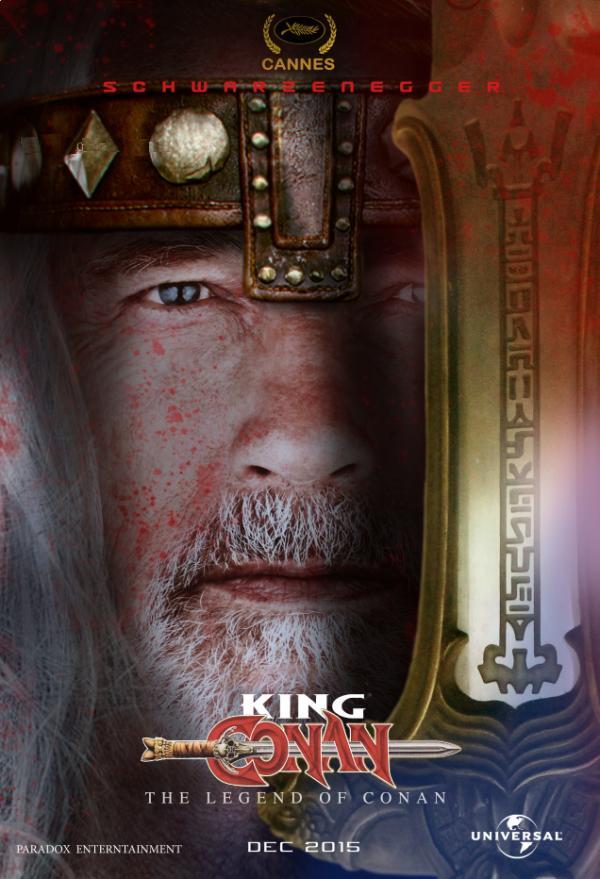
King Conan poster-smallSo here’s a fun thing. The King Conan movie poster at right, featuring Arnold Schwarzenegger as everyone’s favorite barbarian monarch, was spotted at the Cannes Film Festival this weekend, and is now making the rounds on the Internet.

Before you get too excited, the existence of the poster does not actually imply the existence of a movie… or even a soon-to-be-movie. Apparently, this is a thing at Cannes: using promotional posters to generate excitement among possible investors.

Still, it warms my heart. And it sent me on a hunt for the latest news of the next Conan film, which everyone seems certain will be announced Real Soon Now. Last summer, producer Fredrick Malmberg provided some details on the plot, clarifying that “this takes place AFTER Conan has been king… if we do this right, we can do two more Conan movies right after.” Andrea Berloff  took over script duties from Chris Morgan last October.

Schwarzenegger has expressed clear interest and has been tied to the film since word first leaked. In an interview last year, he shared his thoughts on the project:

The important thing with Conan is to make it into an A-movie, to treat it like a 300, or any of those great movies, rather than a B-action movie… The audience today, and the fans, are very sophisticated… They’ve seen it all. They demand something — when they see a Conan movie — that isn’t just a spectacle.

Opinion is divided on whether the final version will be called King Conan or The Legend of Conan. Whatever the case, we’ll keep you posted as things develop.