Browsed by
Author: Bob Byrne

The Public Life of Sherlock Holmes: On Screen Before Norwood
The Public Life of Sherlock Holmes: On Screen Before Norwood

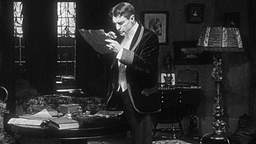
PreTwentiesGillette1Screen depictions of the great detective have been a staple topic here at The Public Life of Sherlock Holmes. And because you assuredly read this post (actually, you might have: this has turned out to be my most popular PloSH post. I think it’s an error in the counting macro, but I’ll take it!), you know that in 1921 Eille Norwood and Stoll Films began their very popular series of Holmes silent films.

So today, we’ll look at the pre-Twenties career of Holmes in films.

There had been plays featuring Sherlock Holmes in 1893 and 1894. Then, William Gillette made his lasting debut as Holmes in his own play in 1898. Which you know since you read this post (I’m awfully self-assured people read this column, aren’t I?).

The restored Gillette film was screened in San Francisco the first week of June and will be available on DVD this Fall (I don’t plan on paying $34.95 for a copy, myself. I’ll wait until the price comes down.).

Then, in 1900, we saw the first appearance of Holmes in the fledgling media of film.
…

Read More Read More

The Public Life of Sherlock Holmes: Looking at The Bruce Partington Plans

The Public Life of Sherlock Holmes: Looking at The Bruce Partington Plans

BruceP_FDSSolar Pons is, of course, the next best thing to Sherlock Holmes (which you know because you read THIS post, right?). I’m a Pons fan and I run www.SolarPons.com, the only website dedicated to The Sherlock Holmes of Praed Street.

Along with my two free, electronic newsletters (The Solar Pons Gazette and Baker Street Essays), the heart of the site is a collection of (non-spoiler) case commentaries for August Derleth’s stories. Some day, it will also host commentaries for the Basil Copper pastiches.

One of the many projects on my ‘To Do’ list (which might as well be Wish list) is to write case commentaries for the sixty Holmes stories written by Sir Arthur Conan Doyle. I’ve done one (woohoo!!!). First, if you haven’t done so, you really, really, really (I mean, really) need to read “The Bruce Partington Plans.” It’s a short story; won’t take long. And the rest of this post will actually mean something to you.

Each case commentary includes a non-spoiler preview of the story, some notable quotes, and a plethora of miscellaneous observations and comments. I’m probably in the minority, but I think there is some good stuff below and you’ll know a bit more about the story after you read it. So, come, the game is afoot!

…

Read More Read More

The Public Life of Sherlock Holmes: Magnifying Glass, Pipe and Deerstalker

The Public Life of Sherlock Holmes: Magnifying Glass, Pipe and Deerstalker

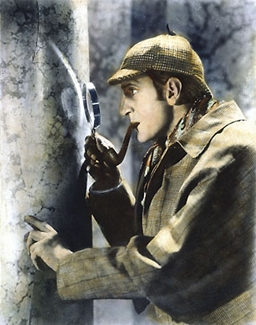
Pipe_RathboneThe curved pipe. The magnifying glass. The deerstalker cap. These three objects are intimately associated with the enduring image of Sherlock Holmes. Sir Arthur Conan Doyle was quite astute to use these rather uncommon devices for his singularly uncommon detective.

Well, not quite. In addition to Doyle, we should also credit three other men for creating the picture we see of Sherlock Holmes, over a century later.

Along with Doyle, we must tip our deerstalker (and puff on our pipe in honor of) illustrators Sidney Paget and Frederic Dorr Steele, a well as the great stage performer, William Gillette.

It is the contributions of the latter three upon which Eille Norwood, Arthur Wontner, Basil Rathbone, Jeremy Brett and others based their portrayals. Of course, since Rathbone’s Universal films were set in the 1940’s, his wardrobe was contemporary to the times. But his two films for Twentieth-Century Fox fit the classic image.

Let’s take a look at three “props” that have been commonly associated with Holmes for over a century.

…

Read More Read More

The Public Life of Sherlock Holmes: TCM’s Summer of Darkness

The Public Life of Sherlock Holmes: TCM’s Summer of Darkness

TCM_LogoHard boiled and noir are often discussed together. And while a film or story could fit in both categories, they are two distinct genres. Hard boiled is typified by the stories of Dashiell Hammett and Raymond Chandler, and others from Black Mask and Dime Detective magazines.

Noir is usually (but not always) thought of in terms of film: black and white, shadowy movies with dark characters. Much hard boiled is noir, and vice versa. Far more expert folks have discussed the definitions of the two terms for decades.

One example, to me, are the works of Cornell Woolrich, whose “It Had to Be Murder” became the masterful suspense flick, Rear Window. Woolrich’s stories are noir, but not hard boiled.

Many of Humphrey Bogart’s films were hard boiled, including The Maltese Falcon (also noir), The Roaring Twenties and Bullets or Ballots. One of his later films, In a Lonely Place (based on the novel by Dorothy Hughes) is a noir classic but isn’t hard boiled.

So, just know that many films (usually crime related) from the thirties through the fifties and into the sixties, were hard boiled, noir, or both.

…

Read More Read More

The Public Life of Sherlock Holmes: Wrapping up Jeremy Brett’s Adventures

The Public Life of Sherlock Holmes: Wrapping up Jeremy Brett’s Adventures

Brett3_RucastleClick here for parts one and two of this look at Jeremy Brett’s The Adventures of Sherlock Holmes.

The second installment of Granada’s The Adventures of Sherlock Holmes kicked off on August 25, 1985 with The Copper Beeches. Tapped for the role of one of the Canon’s most dastardly villains, Jephro Rucastle, was veteran actor Joss Ackland. Back in 1965 he had starred opposite Douglas Wilmer’s Holmes in The Disappearance of Lady Frances Carfax, playing her former suitor, Philip Green.

Other tangential Holmes-related efforts had included John Cleese’s disastrous parody, The Strange Case of the End of Civilization as We Know It and an episode of the BBC series, The Rivals of Sherlock Holmes, based on the anthologies edited by Hugh Greene.

And in 1989 he would play the King of Sweden in Christopher Lee’s Sherlock Holmes & The Incident at Victoria Falls. Ackland’s Rucastle is one of the most memorable evildoers in the entire Granada series; menacing in a creepy but understated way.

…

Read More Read More

The Public Life of Sherlock Holmes: Jeremy Brett’s Adventures Begin

The Public Life of Sherlock Holmes: Jeremy Brett’s Adventures Begin

Brettstrand1Last week I posted part one of our look at Granada’s The Adventures of Sherlock Holmes, starring Jeremy Brett.

The Adventures were divided into two parts; seven episodes in the first; six in the latter. A Scandal in Bohemia aired on April 24, 1984. Can it be thirty-one years since Jeremy Brett first graced television sets as the great detective? Scandal was actually the third story to be filmed.

Producer Michael Cox wanted Brett and his Watson, David Burke, to become comfortable with their roles before filming one of the most famous tales in the Canon, so he didn’t start taping with this one.

Watson enters their Baker Street lodgings, having been gone on a trip. He sees the empty syringe case and fears his flat mate has turned to cocaine. Shortly after our first vision of Holmes, Brett gives the “My mind rebels at stagnation” speech. It is completely understated but still paints a portrait of Holmes’ need for work (compare it to the over-the-top reading of Matthew Frewer).

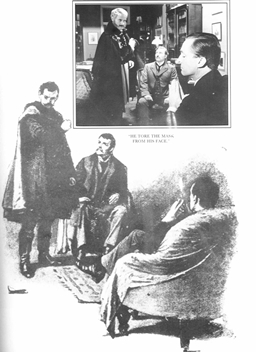
The script is remarkably faithful to the story and is filled with original dialogue from Doyle. The influence of Sidney Paget is blatantly obvious. The King of Bohemia’s unmasking is a replica of the original drawing, and Brett’s ‘drunken groom’ disguise is nearly identical to Paget’s drawing. We even get the famous “Good Night Mr. Holmes” scene.

David Burke is as far from Nigel Bruce as one can imagine. He is thoughtful, intelligent, amusing without being a buffoon and utterly dependable. There is a valid film reason for Bruce’s un-Canonical portrayal as comic relief, but Burke reinvents Watson as his original self: the way Doyle wrote him.

…

Read More Read More

The Public Life of Sherlock Holmes: Adventures With Jeremy Brett

The Public Life of Sherlock Holmes: Adventures With Jeremy Brett

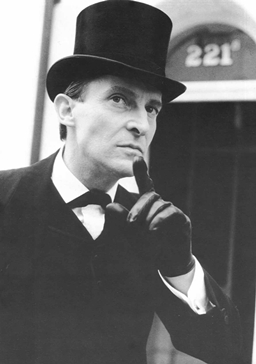
Brett46For several decades, Basil Rathbone, star of fourteen Holmes films in the thirties and forties, was generally the most recognizable and popular screen Holmes. And of course today, Benedict Cumberbatch and Robert Downey Jr are internationally recognized for their turns as the master detective.

But in between Rathbone and Cumberbatch, one actor (with apologies to Peter Cushing) stood above all other portrayers of Sherlock Holmes. And that was Jeremy Brett.

This is number one of a three part series looking at the first part (The Adventures) of the Granada television series, which ran in full from 1984 to 1994. To many fans, Brett is simply THE Holmes. So…

In 1980, Michael Cox was a producer at Granada, one of the Independent Television (ITV) contractors in England. At the same time in America, Charlton Heston was starring as Sherlock Holmes in the stage play, The Crucifer of Blood. His Watson was a handsome Englishman named Jeremy Brett.

The following year, Cox proposed an authentic Sherlock Holmes series; one that was as true to the original tales as could commercially be done in the television format. His idea was received positively, but Cox was told that an essential element of the deal would be a pre-sale agreement with American television. This would secure “up-front” money, which would be invested into the series. WGBH in Boston, host of the popular PBS series, Mystery!, was an ideal candidate for the partnership.

…

Read More Read More

The Public Life of Sherlock Holmes: Richard Diamond, Private Eye

The Public Life of Sherlock Holmes: Richard Diamond, Private Eye

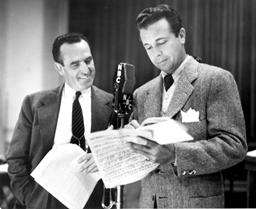
Diamond_PowellA topic that I’ve long intended to visit is that of old time radio shows. Of course, it’s no surprise that Sherlock Holmes has been a popular subject for radio dramas. Arthur Wontner (who I’m sure you read about here) and William Gillette (again, here…) reprised their film roles for radio.

Richard Gordon, John Stanley and Richard Hobbs had long runs as Holmes. And of course, the most popular film Holmes, Basil Rathbone, had a long-running serial with his Watson, Nigel Bruce.

More recently, Clive Merrison starred in the entire Canon (and more) for BBC Radio. Also, Jim French’s Imagination Theater features new Holmes radio dramas (along with several other characters). I’ll certainly be writing about those two.

In the forties and fifties, detectives, newspaper reporters and even insurance investigators were popular heroes for radio dramas. Sam Spade, Philip Marlowe, The Fat Man (ostensibly created by Dashiell Hammett) and Johnny Dollar were some of the radio stars of the day. One of the most fun was Richard Diamond, Private Detective.

…

Read More Read More

The Public Life of Sherlock Holmes: Conan of Venarium

The Public Life of Sherlock Holmes: Conan of Venarium

Turtledove_Venarium2I’ve got a couple Holmes-related posts in the works, but am not done researching any of them (no, I don’t just make up my posts as I go: I actually put some thought into them; even if  it may not always appear so). Fortunately, I’ve got no shortage of other areas of interest that I can use to fill the gap (I still haven’t figured out how to get a baseball-related post here. Although, if I still had my copy of that Daryl Brock book.  Maybe something on W P Kinsella.).

The esteemed Ryan Harvey used to review Conan pastiches here at Black Gate. I am absolutely a Robert E. Howard and Conan fan. Perhaps you read this recent post? So, looking to indulge my non-mystery interest (I really want to write something on Tolkien’s Nauglamir, but it’s not even outlined yet), I turned to Conan.

Harry Turtledove is best known for his alternate history novels. I’ve read little Turtledove, so I can’t expound on them. However, one that I did read and enjoyed very much was The Guns of the South, which involves time-travelers bringing Robert E. Lee AK-47s, changing the outcome of the American Civil War (it’s better than it sounds). I definitely enjoyed it more than his other alt-Civil War book, How Few Remain.

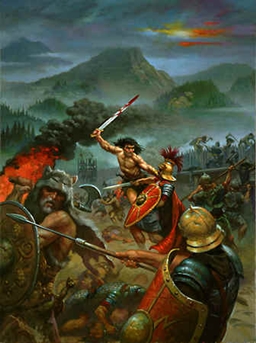
Back in 2003, Turtledove joined the list of authors putting out Conan pastiches for Tor Books. Fans of Conan know that this line was quite hit and miss. Conan of Venarium was the 49th and last of the Tor originals, coming six years after the previous entry.

You can read Ryan’s review of that one, here. I’ll include a quote that I think sums up his thoughts on Venarium’s predecessor:  “I am glad to report that Conan and the Death Lord of Thanza is superior to Conan and the Mists of Doom. Unfortunately, that still ranks it as the second worst Conan novel I’ve read.”

…

Read More Read More

The Public Life of Sherlock Holmes: Peter O’Toole as Holmes

The Public Life of Sherlock Holmes: Peter O’Toole as Holmes

O'Toole_ValleyCoverAs famous a (costumed) character as Sherlock Holmes is, it is no surprise that he has lent himself to animation. Of course, you’ve seen images of Daffy Duck, Snoopy and Mickey Mouse, among many others, imitating Holmes: usually with an oversized magnifying glass.

Actual Holmes characters can be found in such animated efforts as Sherlock Holmes in the 22nd Century (Watson is a robot) and Tom and Jerry Meet Sherlock Holmes. Of course, Disney’s The Great Mouse Detective features Basil of Baker Street, an excellent, if tiny, Holmes.

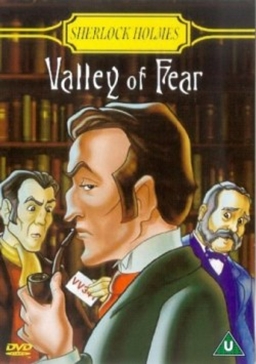
In 1983, Burbank Films produced forty-five minute animated versions of Doyle’s four Holmes novellas: A Study in Scarlet, The Sign of Four, The Hound of the Baskervilles and The Valley of Fear. To voice the great detective for the television movies, they tapped eight-time Academy Award nominee Peter O’Toole (he did receive an Honorary Award in 2003).

O’Toole, who passed away in 2013, had a long, successful career in films, was best known for his sweeping performance in Lawrence of Arabia.

He was a solid, if not inspired, choice for these four productions. O’Toole’s manner and delivery, while rather flat, fits the animated Holmes well. An antic, Jeremy Brett portrayal wouldn’t have worked as well. I can see how some folks don’t like O’Toole’s almost constant monotone. But for me, it works here.

It’s Elementary – Billy Wilder envisioned a Holmes/Watson pairing of O’Toole and Peter Sellers for his The Private Life of Sherlock Holmes, but could not pull it off.

…

Read More Read More