Who Watches the Watchmen? Space Cadet by Robert A. Heinlein
 |
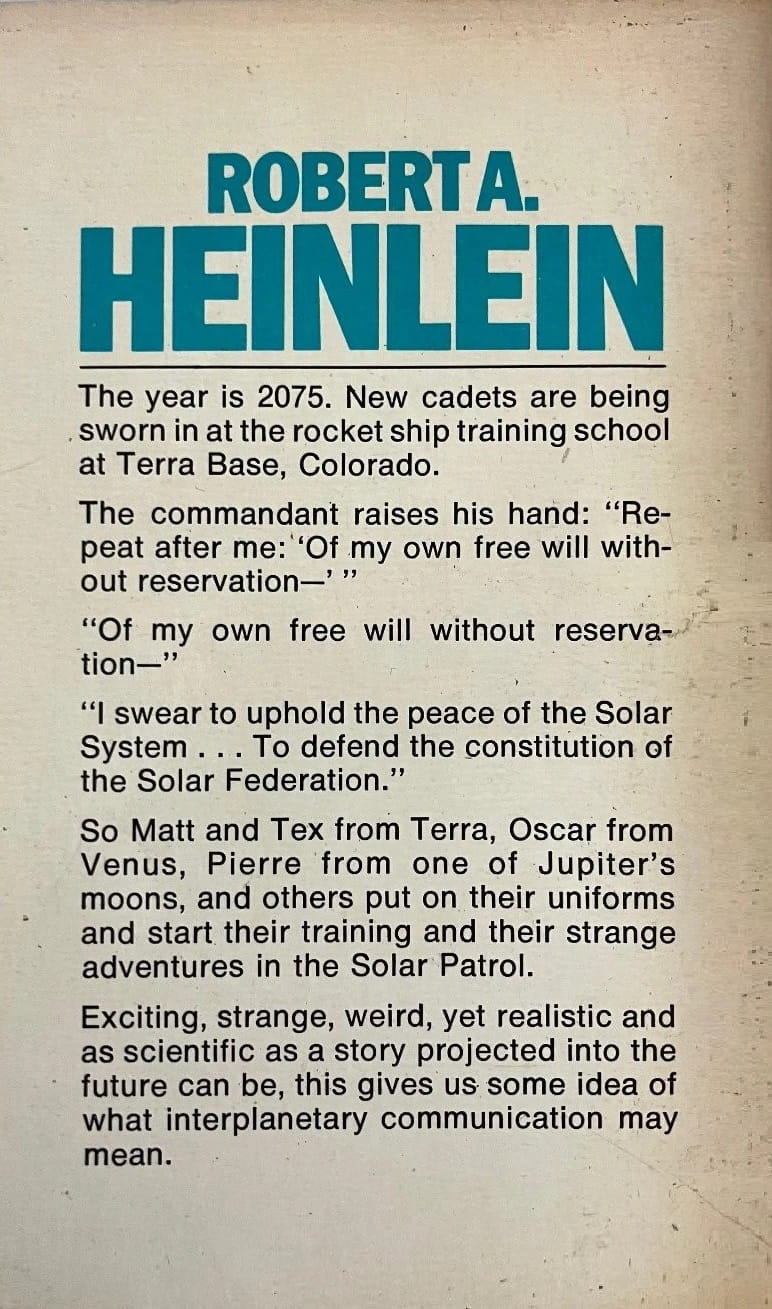 |
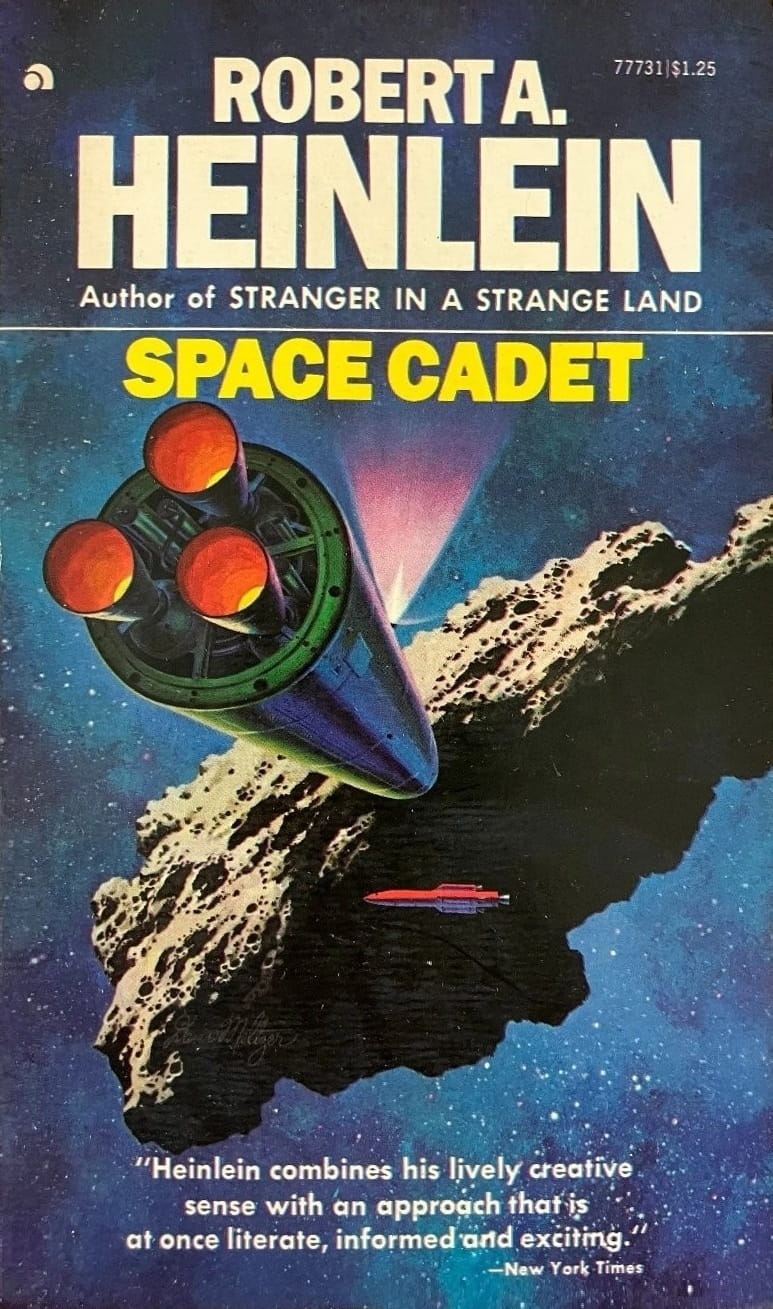
Space Cadet (Ace Books, May 1971). Cover by Davis Meltzer
A book with the title Space Cadet is a little hard to take seriously; not many people can help thinking of the slang meaning. But it wasn’t used that way when Heinlein wrote it in 1948. If some people didn’t take it seriously, it was because science fiction as such wasn’t taken seriously — but Heinlein himself was quite serious about it.
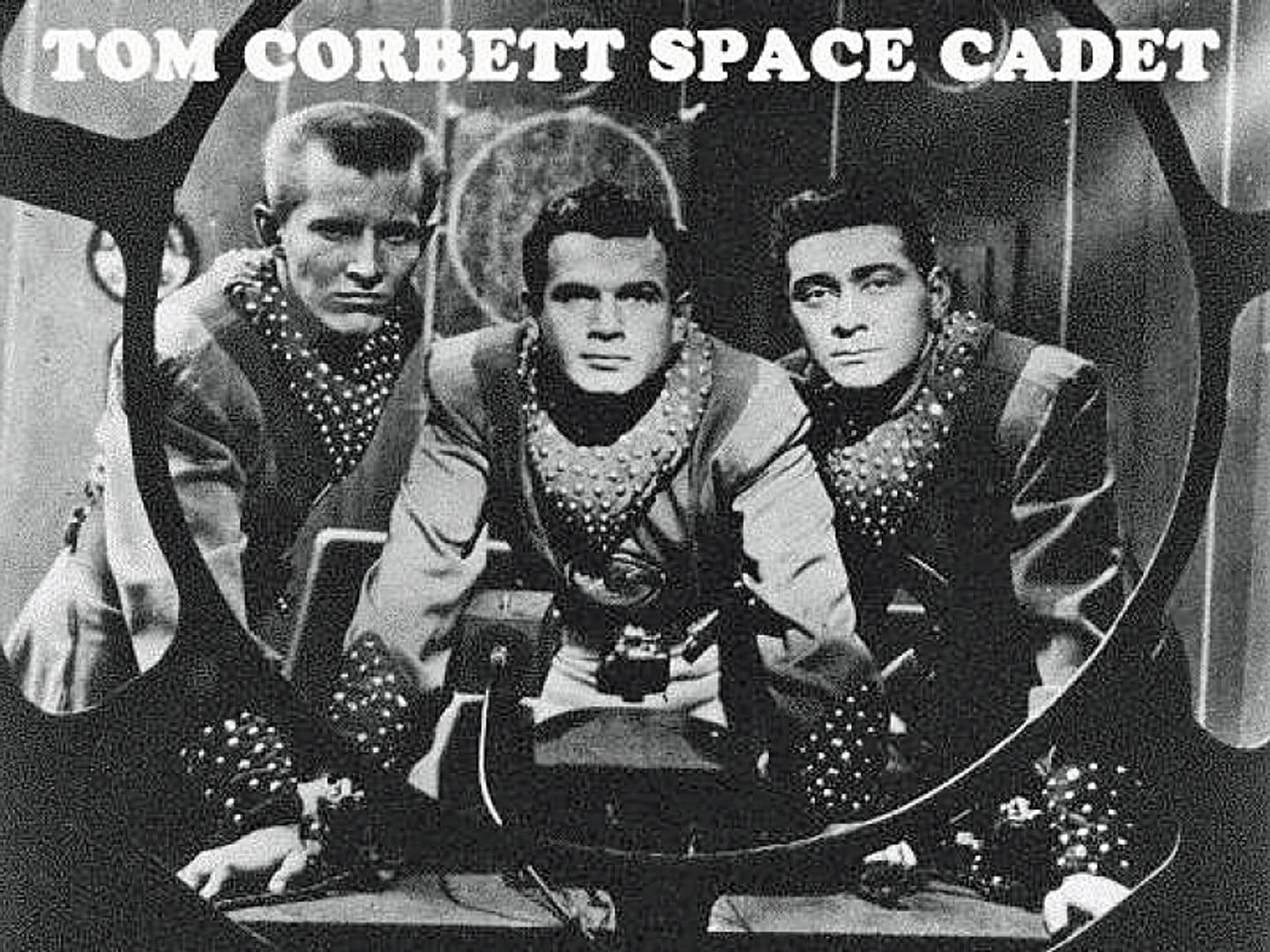
In fact his novel was the first public use of the phrase, though it became better known after the television show Tom Corbett, Space Cadet bought the right to use it from him in 1950 — enough so that in 1953, Porky Pig appeared in Duck Dodgers in the 24th 1/2 Century as an “eager young space cadet.” The expression might have suggested youth and naiveté, but not being out of touch with reality.
[Click for larger images, cadets!]
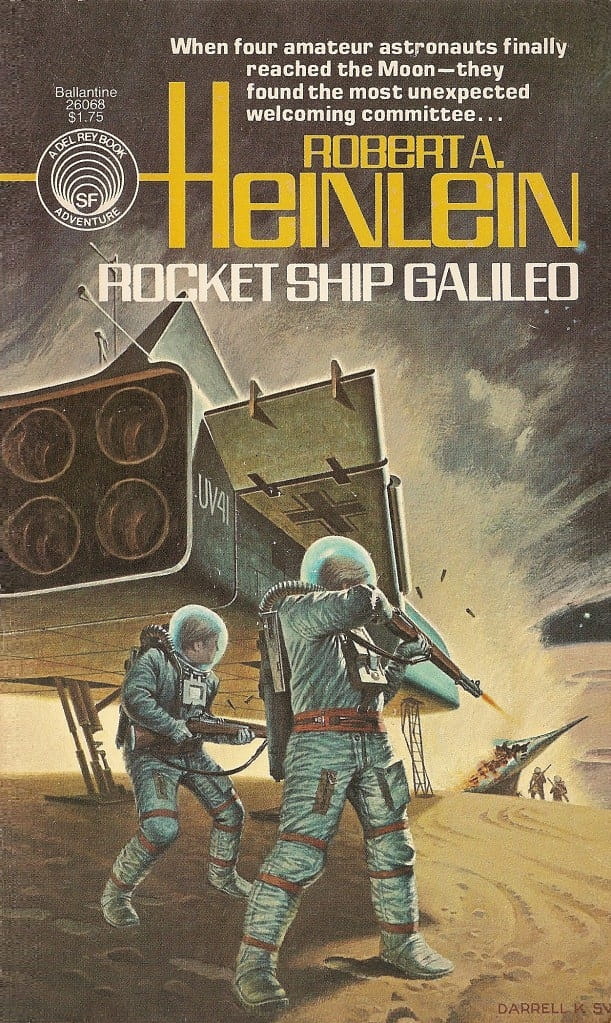
Space Cadet was Heinlein’s second juvenile novel for Scribner’s. The first one, Rocket Ship Galileo, had been intended as the start of a classic series of books for boys, “The Young Atomic Engineers,” for which Heinlein had worked out four proposals; it had something of the flavor of the Tom Swift series, and Heinlein admitted that he showed three young men doing the work of three dozen or so skilled technicians.
Space Cadet was quite a different kind of boys’ book, though it retained such traits as having virtually no female characters (every Heinlein juvenile after that had at least one female character of some significance). It was a novel about military training and the experiences that went with it — an analog of stories set in the world of the present about young men or women training for adult roles.

It was in fact, as Jack Williamson wrote about it, a Bildungsroman (a coming-of-age novel).
“So you see,” he concluded, “it was a lot of little things. I was home—but I was a stranger. We didn’t talk the same language.”
However, the service Matt Dodson and his friends are joining, the Patrol, is not actually military, a point Heinlein spells out in a conversation between Matt and his tutor, Lieutenant Wong. The Patrol is an international organization that was given custody of nuclear weapons — and, since delivery of an attack from orbit is virtually irresistible, control of space travel. Its officers are trusted with the authority to use those weapons, and the restraint not to use them.
Heinlein is envisioning a world wide peace maintained by the readiness to bomb cities into oblivion. This is comparable to the ending of Heinlein’s earlier story “Solution Unsatisfactory,” in which the irresistible weapon is artificial radioactive dust — but, perhaps because this is a boys’ book, Heinlein doesn’t make a point of how unsatisfactory this particular solution is. On the other hand, he does show us, early on, the Patrol’s four martyrs, men who died to see that weapons of mass destruction were used rightly, whose names end every role call, an element of ritual that transcends scientific rationality.
In this discussion, Wong explains to Matt that there are three basic human psychological types: the economically motivated; those motivated by pride and adventure; and those who live by a code of ethics. These types seem parallel to Plato’s three sorts of human beings in the Republic: those dominated by appetite, whose greatest virtue is temperance; those dominated by spirit, whose greatest virtue is courage; and those dominated by intellect, whose greatest virtue is wisdom. (In medieval ethics, these were three of the four cardinal virtues — though courage was renamed “fortitude” and wisdom “prudence,” which somewhat departs from Plato’s conception.) Military men, Heinlein suggests, ought to live by courage — and the Patrol needs that virtue, provided by its auxiliary service, the Marines. But the Patrol is in charge of “weapons too dangerous to entrust to military men.”
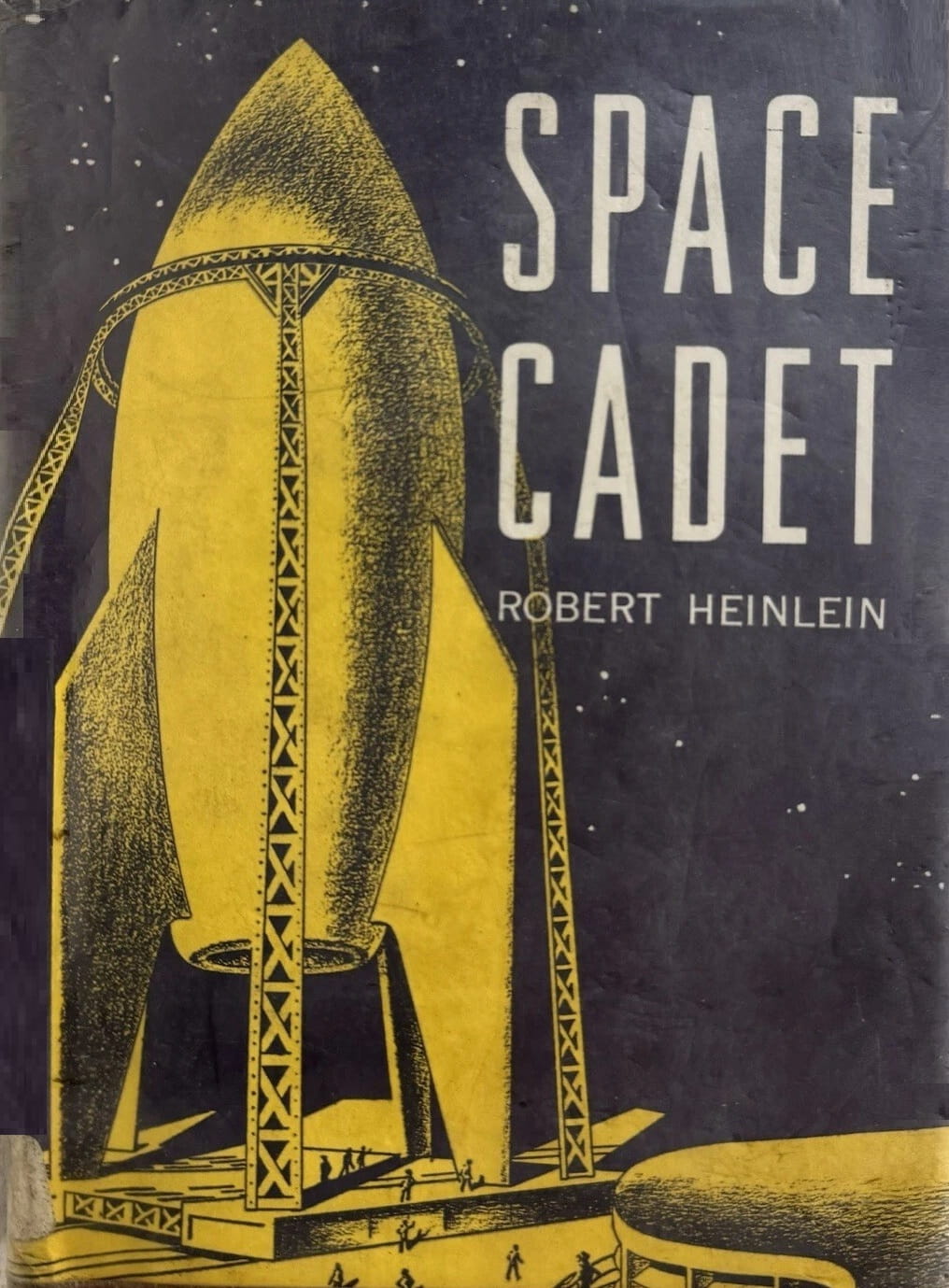
Heinlein presents his readers with other Platonic ideas in the course of the novel. The Patrol’s official motto is Quis custodiet ipsos custodes? or “Who will watch the watchmen themselves” (much later used by Alan Moore in his graphic novel Watchmen) — and the rulers of Plato’s ideal state, the embodiments of wisdom, are called “guardians,” though the Latin phrase doesn’t come from Plato.
Mathematics is vital to Matt’s studies, and that parallels the motto of Plato’s Academy, “Let no one enter here who is ignorant of geometry”: When Matt begins his studies, he’s told that his high school was deficient in not teaching tensor calculus, a branch of mathematics that’s usually studied in graduate school in the real world, and that science fiction writers often use as a symbol of advanced mathematics in general.
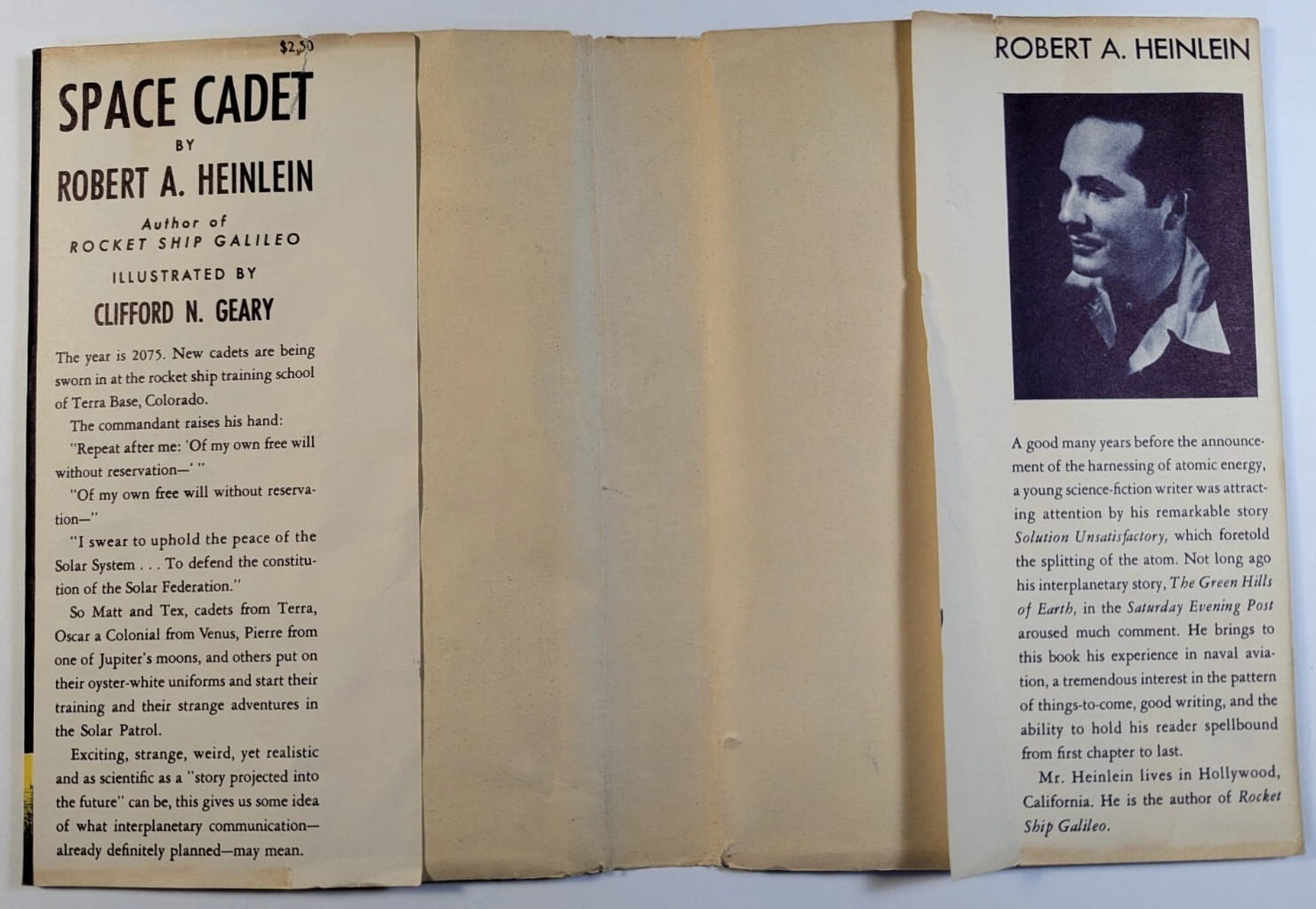
But Matt is also given a list of other subjects as really essential: “epistemology, scientific methodology, semantics, structures of languages, patterns of ethics and morals, varieties of logics, motivational psychology, and so on.” Most of these are branches of philosophy, and must have puzzled a lot of his readers, or sent them to dictionaries! But Lieutenant Wong goes on to tell Matt that the Patrol’s academy is “based on the idea that a man who can think correctly will automatically behave morally,” which is perhaps Plato’s most characteristic idea, and the reason that “wisdom” is the crucial virtue of his guardians: the idea that knowing what is right will naturally make us want to do what is right.
Roughly half of the novel is about how Patrolmen are selected and trained. Very quickly after his swearing in, Matt meets Lieutenant Wong, and is handed a long list of spools on varied subjects, and told he has a week to get through all of them; the Patrol doesn’t have time for him to sit in a classroom while his teacher questions someone else. The expectation of self-study and the tutorial relationship suggest that Heinlein might have been modeling the Patrol’s approach on Oxford and Cambridge, though we don’t actually see Matt studying any of these intellectual subjects; Heinlein didn’t try to make them dramatic, but kept them offstage.
 |
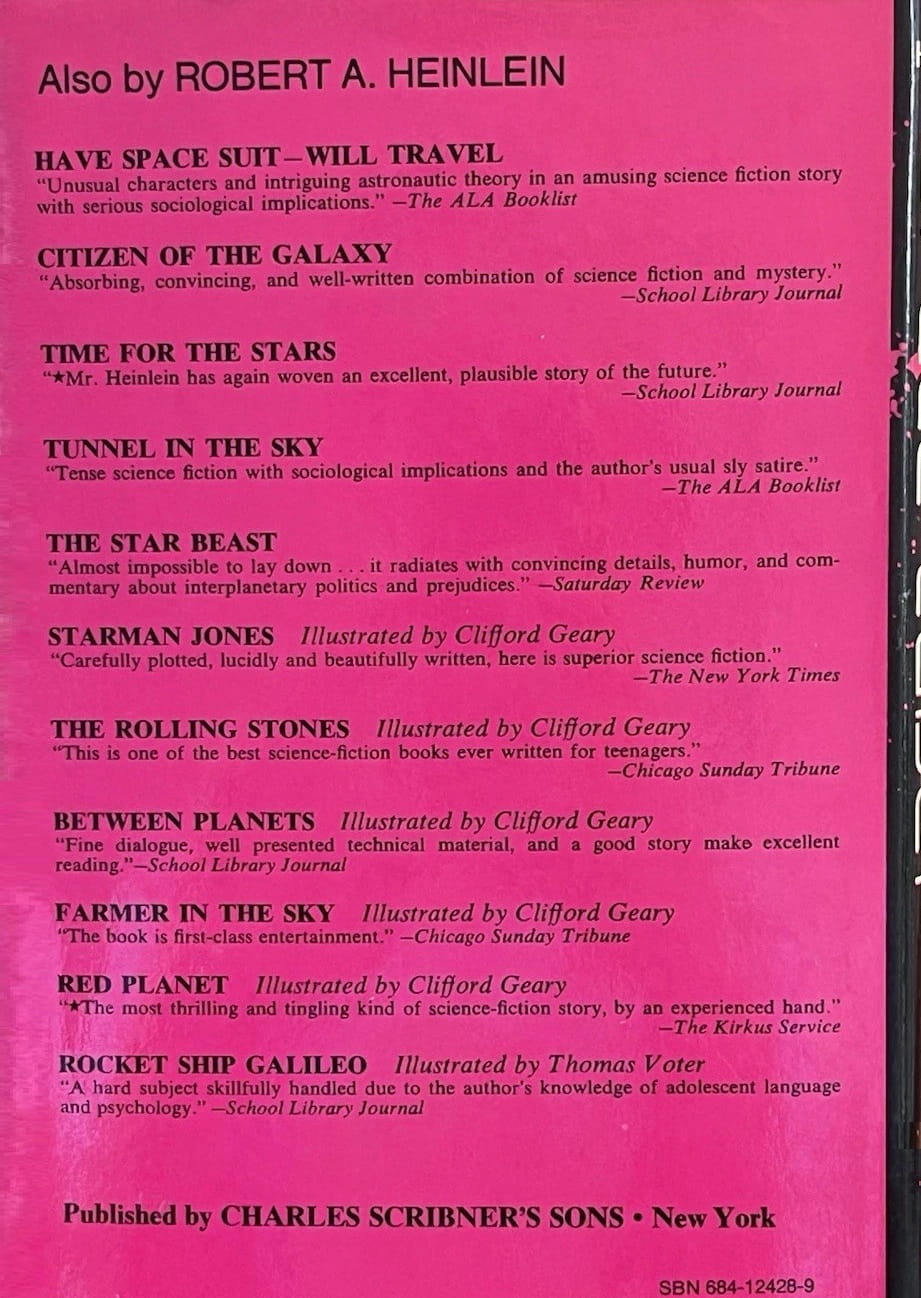 |
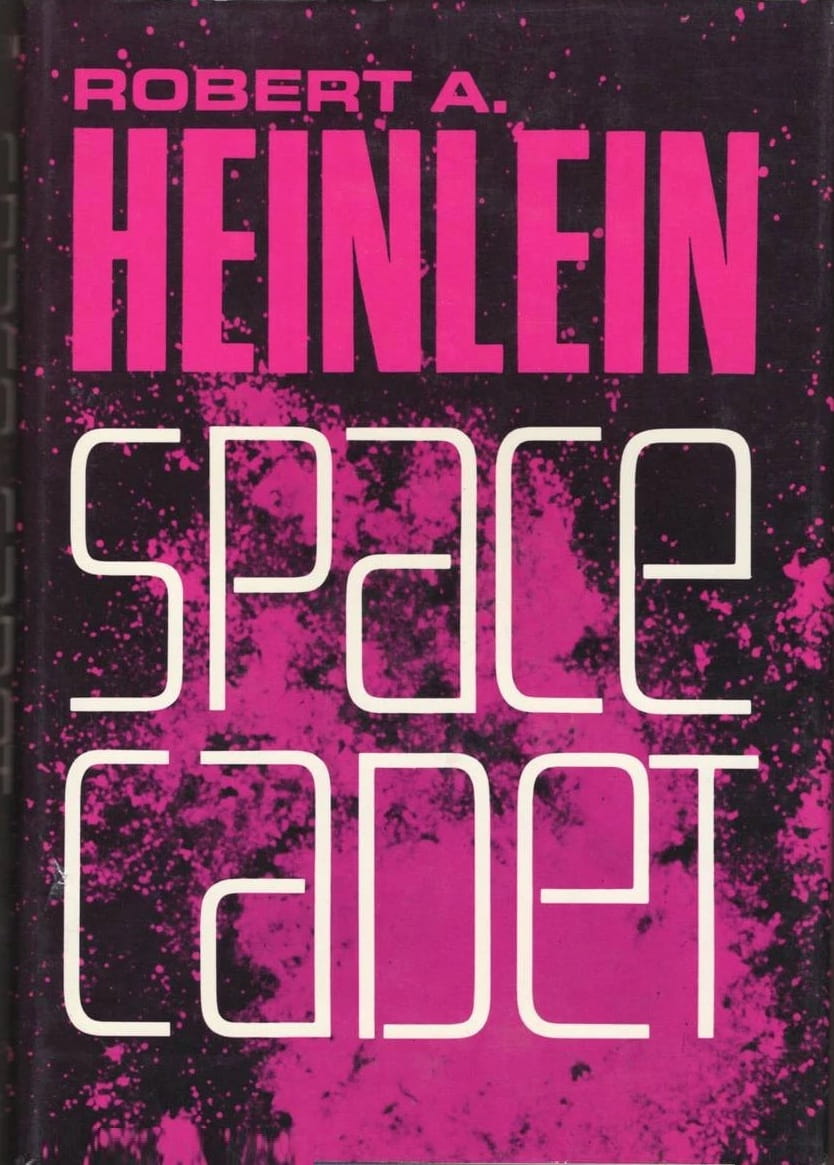
Space Cadet (Charles Scribner’s Sons, 14th printing)
Space Cadet also reads like a school story in introducing Matt’s fellow students. He ends up rooming with Pierre Armand, from a colony on Ganymede; Bill Jarman, from Texas, and always called “Tex” after his first introduction; and Oscar Jensen, from the south polar region of Venus. The four meet in the first chapter and become firm friends. Heinlein doesn’t show a lot of Armand, and has him assigned to duty back on Ganymede midway through the novel, but the other three are together till the end of the story.
Jensen is apparently a little older and is an embodiment of prudence (and thus of wisdom). Jarman is shown as driven by appetite: He’s criticized early on for his weight, and on the three cadets’ first leave he first tries to pick up a woman, who turns out to be ten years older than he is and married, and then finds a way to order mint juleps and gets drunk, never having tried liquor before. Matt seems to occupy the middle position, as a man of spirit: He’s ready for a fist fight and he’s tempted to change services to the Marines.
 |
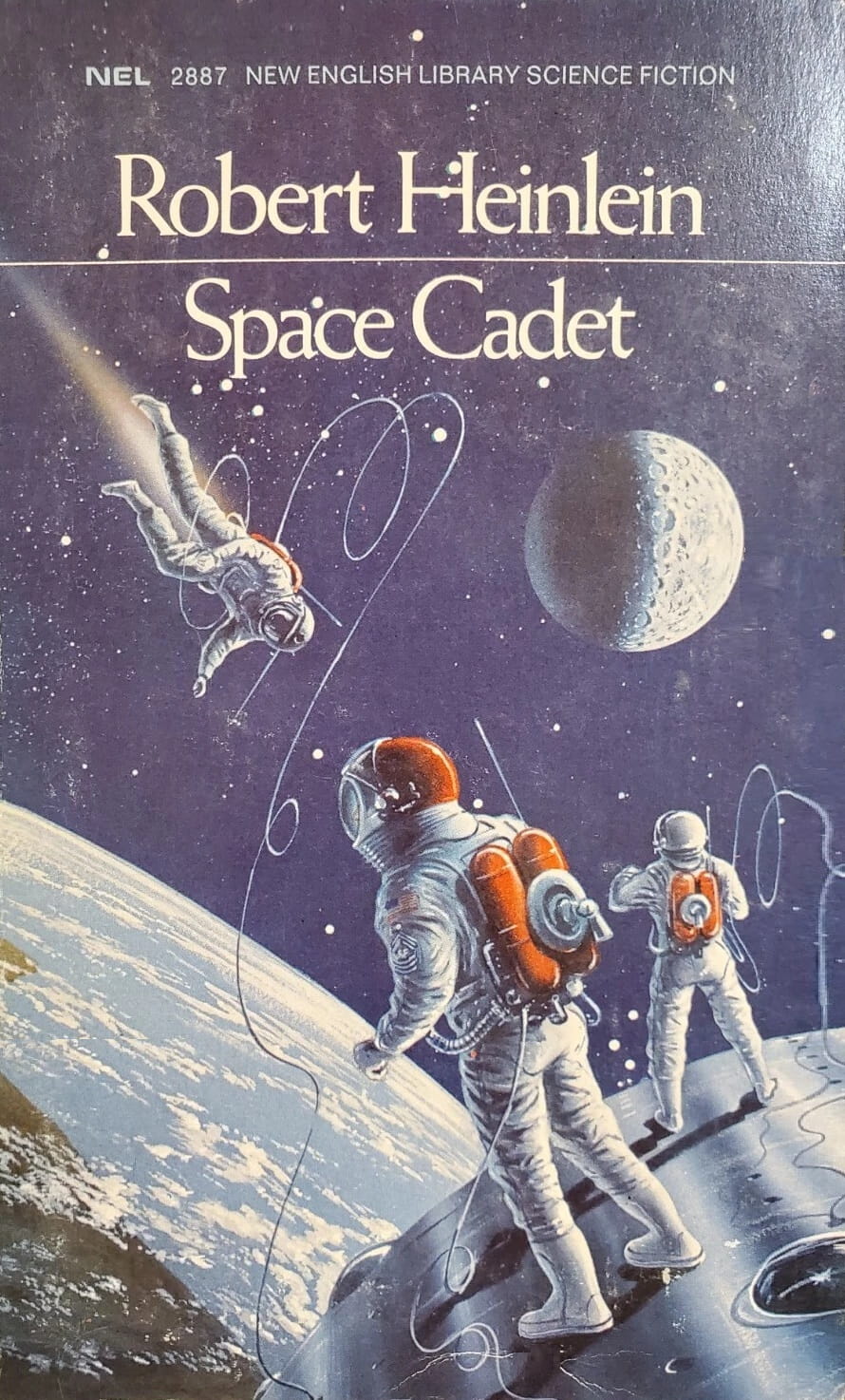 |
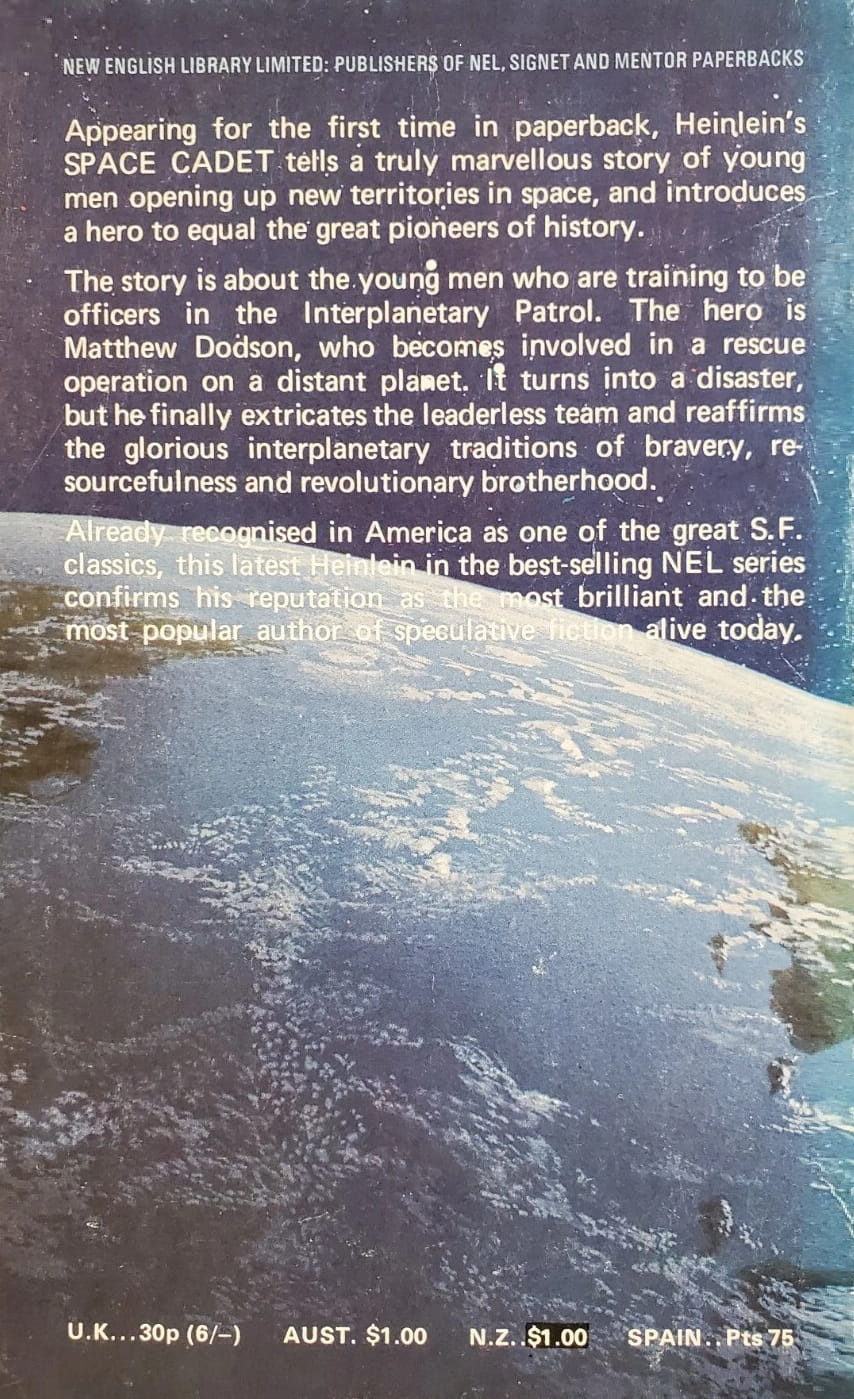
Space Cadet (New English Library, March 1971). Cover by Gordon C. Davies
Plato’s fourth cardinal virtue, justice, also shows up, but indirectly. Plato taught that justice meant having each type of human being occupy the right place in the hierarchy and do their own tasks: The wise should rule, the courageous should obey them and defend the city, and the appetitive should work hard and be productive and temperate.
The other cadet whom Matt meets early on, Girard Burke, nicknamed “Stinky,” seems to come from the appetitive class, as he boasts about his father’s wealth. He’s able to pass the Patrol’s qualifying exams, but has a consistently cynical view of its ethical ideas — one that offends Matt enough for him to offer to fight with Burke. It’s no surprise when he resigns from the academy, and having one cadet be disqualified seems a natural incident for a school story. But it also sets right what Plato would have called an injustice: an appetitive person should not be put in the place of a guardian.
At the same time, Oscar, Matt, and Tex get their first shipboard assignment, as “passed cadets.” All three of them end up on the same ship, the Aes Triplex. They are with it as it travels out to the asteroids, searching for another ship that has not reported in, the Pathfinder, and then making an unexpectedly long return trip that passes close to Venus.
 |
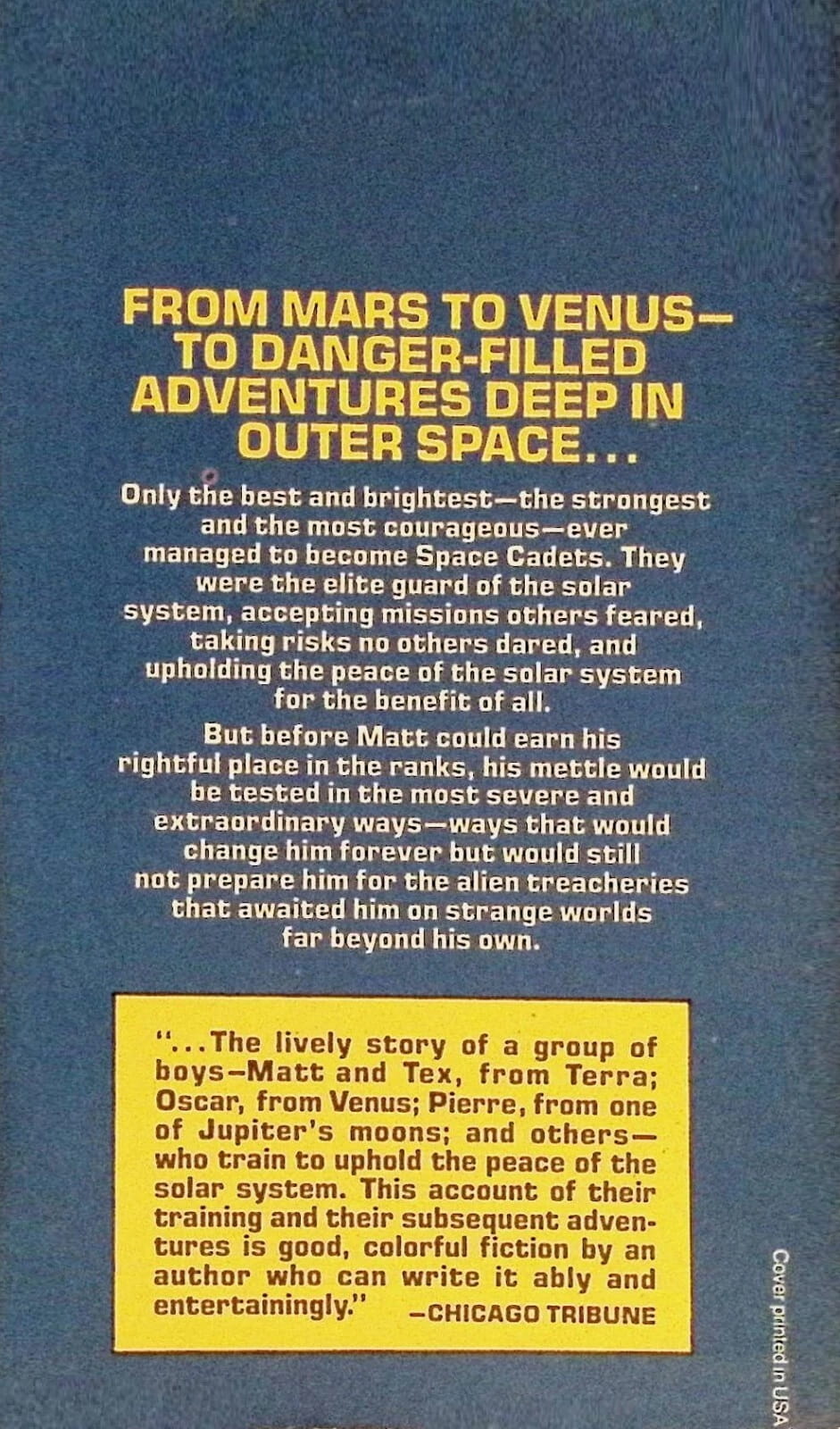 |
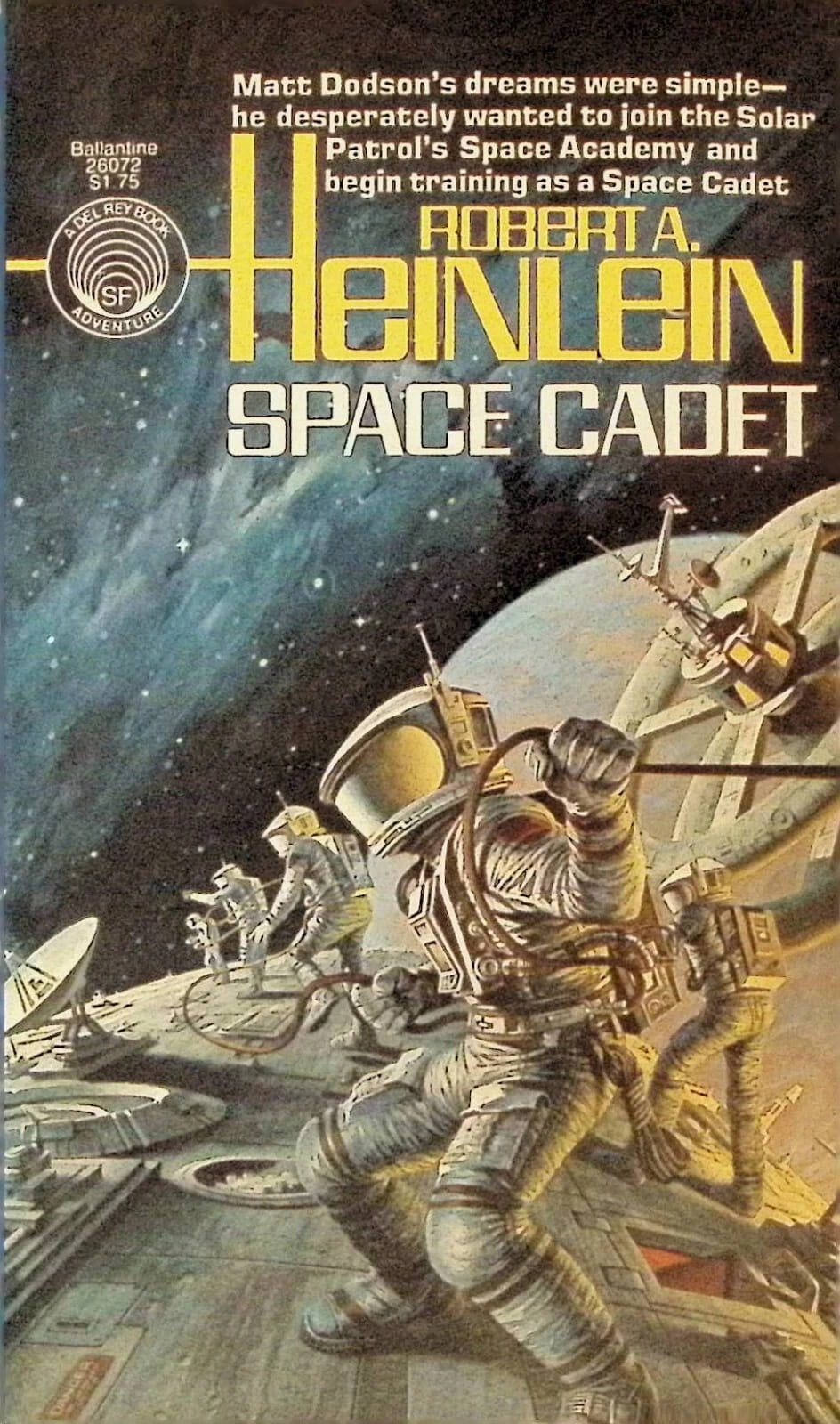
Space Cadet (Ballantine/Del Rey, September 1978). Cover by Darrell K. Sweet
The highlight of the first part is the discovery of evidence about the origin of the asteroids: first, that they formerly made up a fifth terrestrial planet, which was destroyed — an old idea about solar system history that Heinlein brought into many of his stories; second, that it had been inhabited by intelligent beings; and third, that those beings had destroyed their own planet. One of the characters makes a point of how important the Patrol’s peacekeeping mission appears in light of this.
In the second part, the Aes Triplex is asked to provide aid to a civilian ship that had landed in the equatorial regions of Venus. Not having enough reaction mass to make the landing, the captain sends his executive officer, Lieutenant Thurlow, in one of his ship’s “jeeps” — accompanied by all three cadets. A problem with the landing site incapacitates Thurlow, leaving Jensen in charge, as the senior cadet — but fortunately he’s also from Venus and knows something about the environment and the inhabitants.
 |
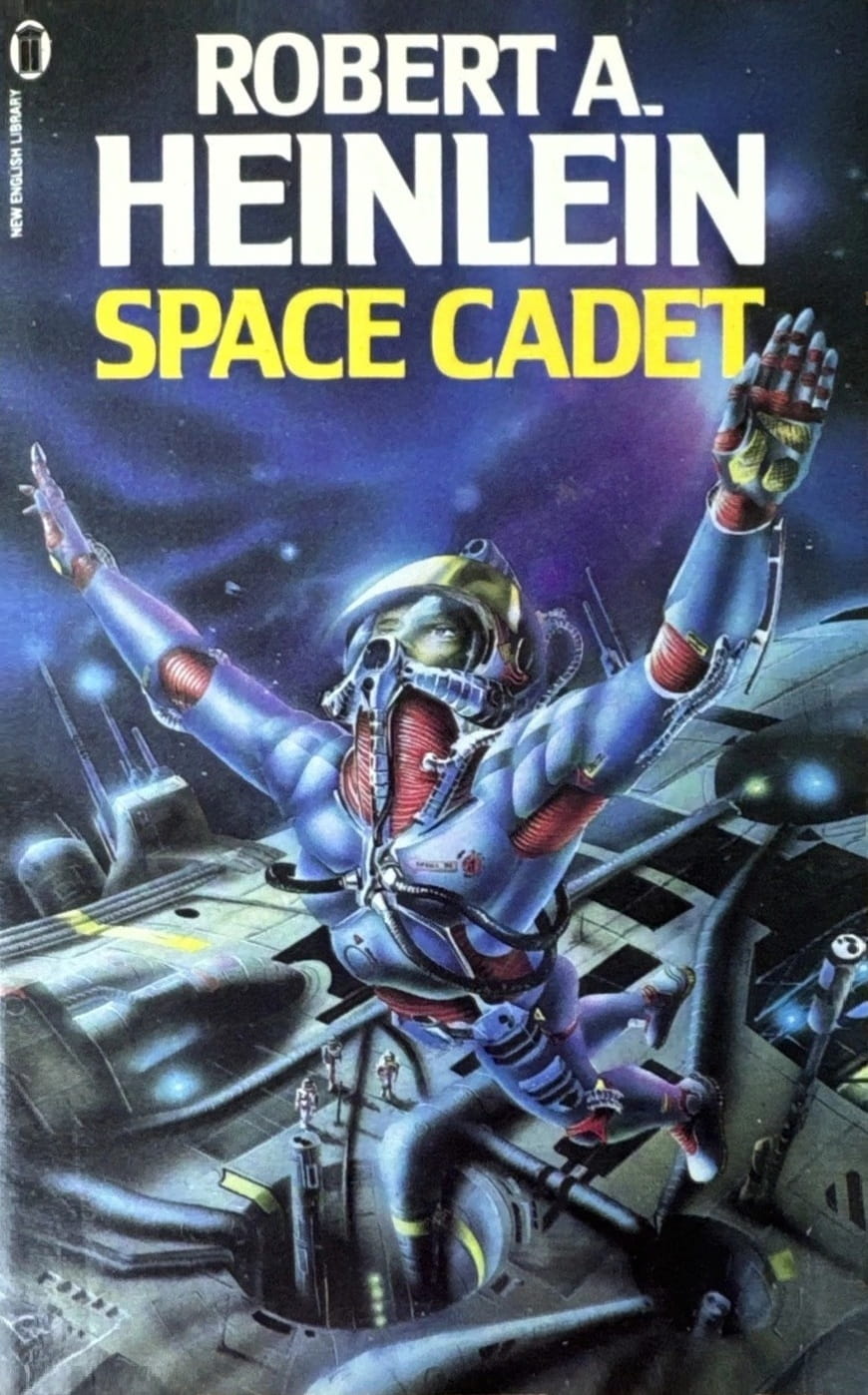 |
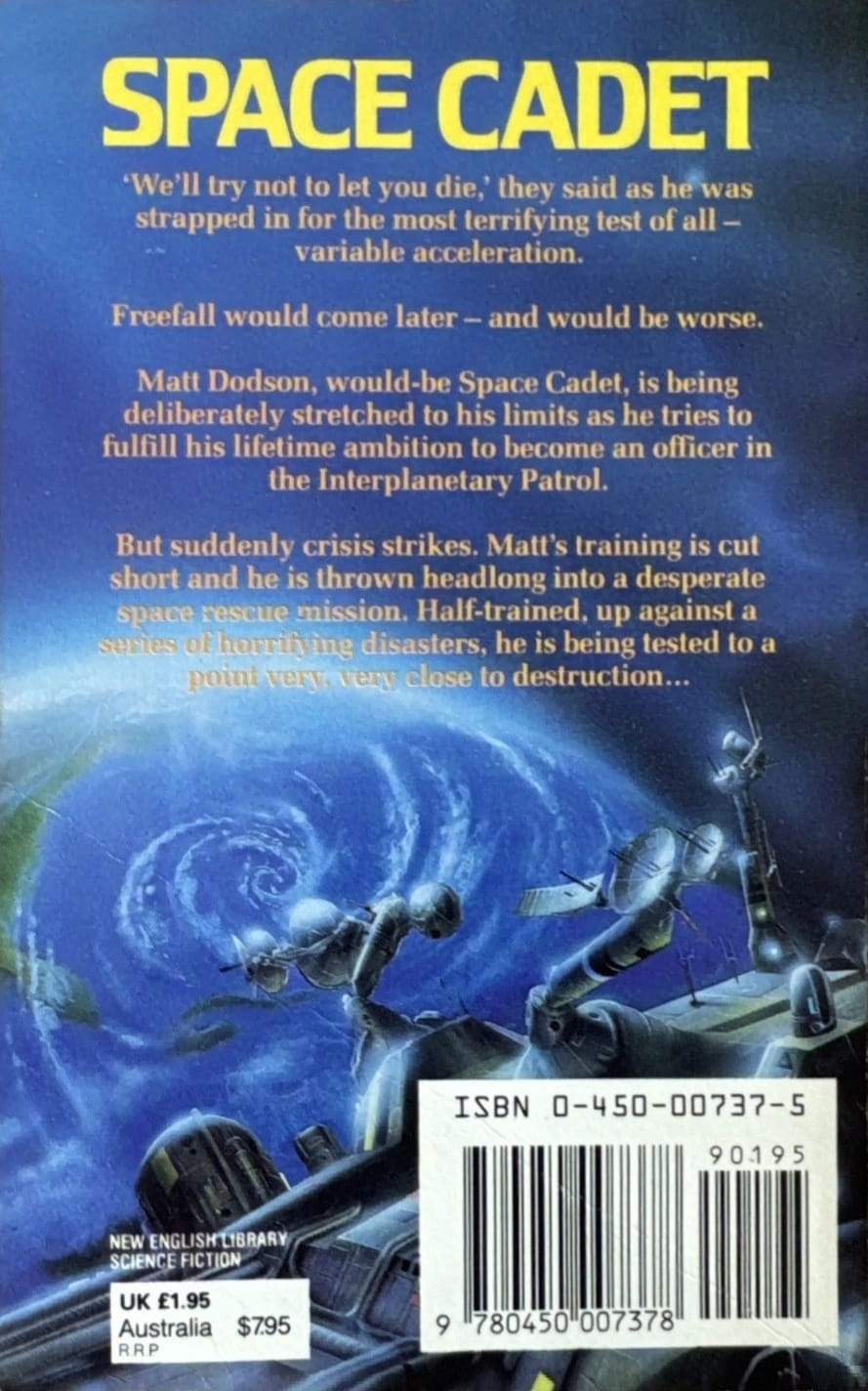
Space Cadet (New English Library, August 1986). Cover uncredited
Heinlein has made a quiet point throughout Space Cadet of the Patrol not being racist: Early on Matt sees two Patrol candidates in turbans, and of course there’s Lieutenant Wong, Matt’s tutor. During these final chapters it’s mentioned that one of the Aes Triplex’s junior officers was Black, which nobody thought worth remarking on in the previous chapters. Now the cadets encounter Venerean natives, who are definitely not human and have exotic customs. Despite this, Jensen makes a point of their being “people,” and legally they have the same rights as human beings. It turns out that the civilian ship got into trouble by not respecting those rights, and discovered that the Venereans were capable of defending themselves.
Here Heinlein closes a circle: The captain of the civilian ship, and its only survivor, is Girard Burke! There seems to be an implicit point here that Burke acted as an appetitive man, seeking profit and unconcerned with ethics. In Plato’s terms this is a fundamental injustice, an inversion of the natural hierarchy, and it has led to injustices in a more worldly sense. This leaves Jensen, as the leader of the cadets, with a delicate diplomatic problem to resolve. The martial skills that Matt admired in the Marines are irrelevant here; what’s needed is precisely the long list of skills with esoteric names that Lieutenant Wong listed to Matt at the start of his training.
 |
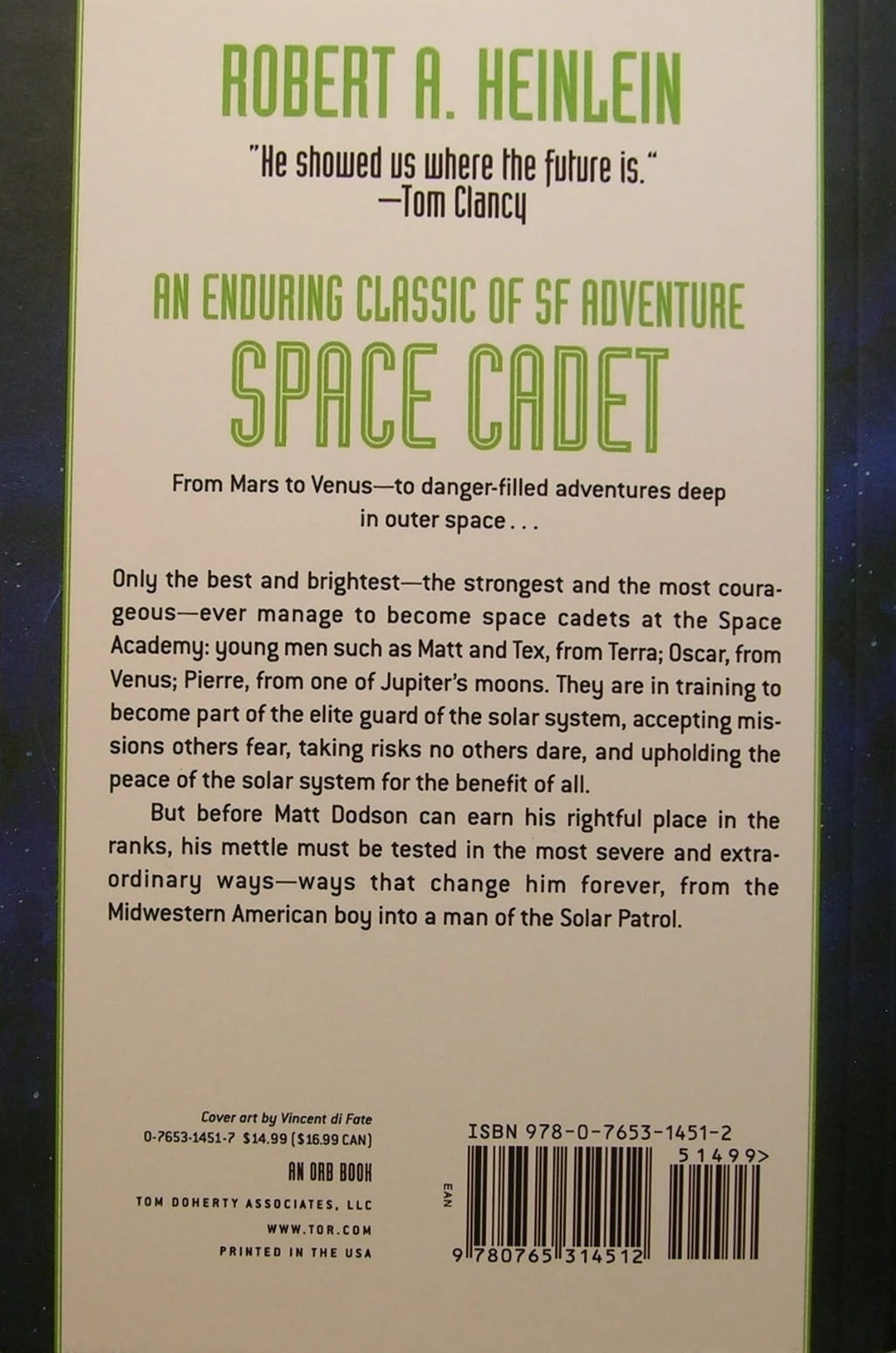 |
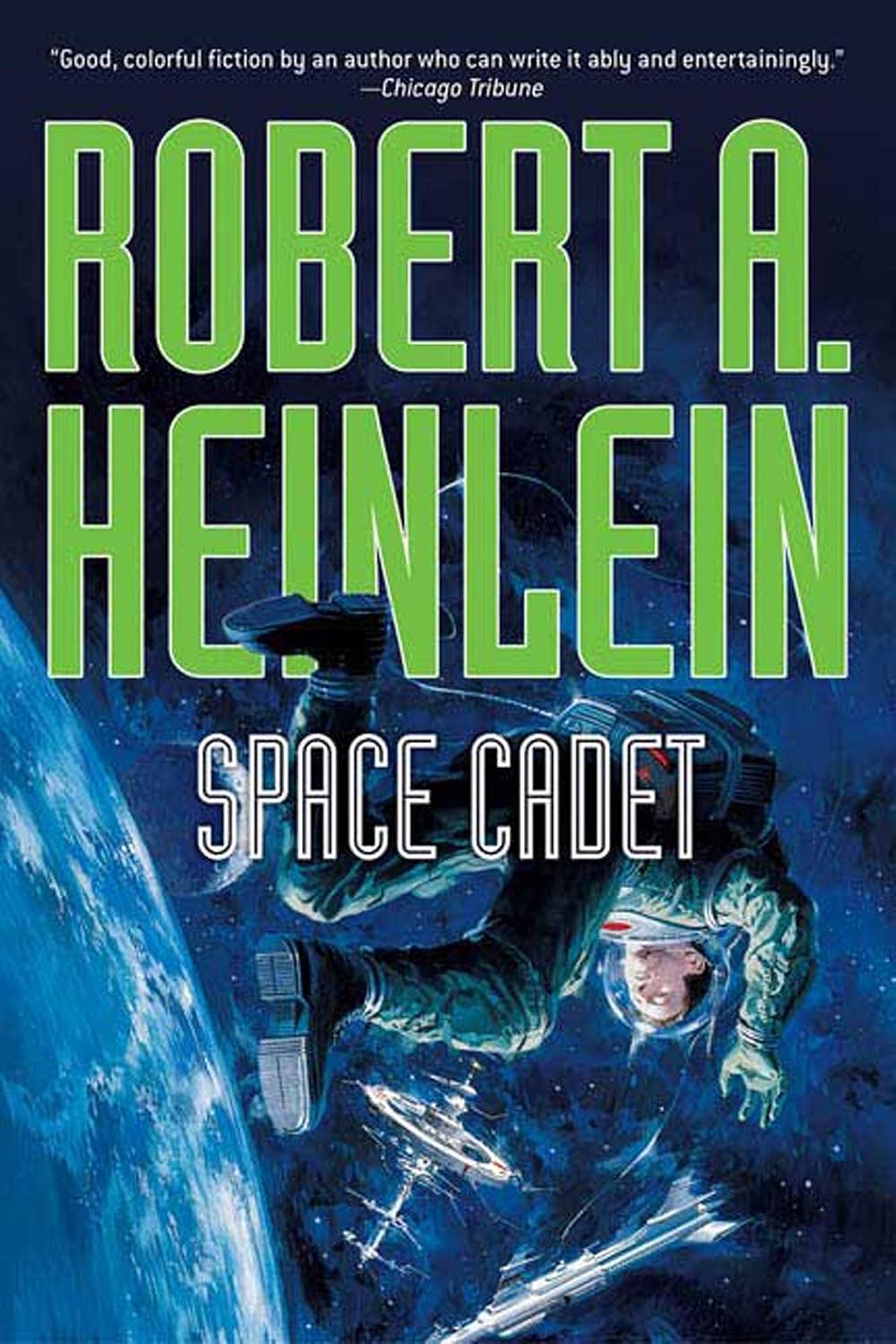
Space Cadet (Tor/Orb, October 31, 2006). Cover by Vincent Di Fate
It’s perhaps surprising that Heinlein’s second book for boys has so little action in it. But he manages to make it suspenseful and entertaining despite that. And he also lives up to the Renaissance slogan for good writing, “instruct by pleasing.” He manages to convey a variety of lessons to his readers, from the importance of mathematics to racial tolerance, while telling a story with dramatic incidents and vivid characters.
Space Cadet isn’t one of Heinlein’s best-known books, nor one of the most widely praised, but it’s a sound piece of work and one I’ve never ceased enjoying.
I also want to note one of its most striking characters, though one who actually never comes on stage: Tex’s Uncle Bodie, hero of any number of improbable stories. The Four canonized Patrolmen are tragic figures; Uncle Bodie is their comedic counterpoint.
William H. Stoddard is a professional copy editor specializing in scholarly and scientific publications. As a secondary career, he has written more than two dozen books for Steve Jackson Games, starting in 2000 with GURPS Steampunk. He lives in Lawrence, Kansas with his wife, their cat (a ginger tabby), and a hundred shelf feet of books, including large amounts of science fiction, fantasy, and graphic novels.