Helpless in the Face of Your Enemy: Writers and Attack Novels
 Some writers plan their careers.
They scan the top of the best seller lists, think Hmm… here’s a police procedural, this one’s steampunk, these two are zombie novels, and this one’s about angels. Great! I’ve been wanting to try steampunk. I’ll write a steampunk murder mystery about a pair of mismatched cops. One will be a zombie and the other will be an angel. No, a fallen angel who has lost his celestial whatsit.
Which is a silly example, obviously, but authors manage the non-silly version to great success. As I recall, John Scalzi has said that he wrote Old Man’s War because MilSF seemed to be selling well. There are others, too, but I hesitate to name them because writing to the market has a bit of a stigma attached to it, although it shouldn’t. More power to them, I say.*
Me, I can’t do it. Not that I haven’t tried, but I can’t make it work. I don’t read fast enough to sample the sales lists widely, I can’t make myself write a book without screwing around with the tropes of the genre, and I suffer from attack novels.
Attack novel: ( əˈtak ˈnävəl) n: a story idea that a writer can’t stop thinking about, even (especially) when they’re supposed to be working on something else.
The first book I ever sold was an attack novel. So was the first book I ever started and abandoned. They haven’t all been, but when they come on me, all I can do is put them off until I finish whatever’s on deadline.
At the beginning of March, I released an attack novel that I started five years ago, and in every way that matters, it was a book I shouldn’t have written.
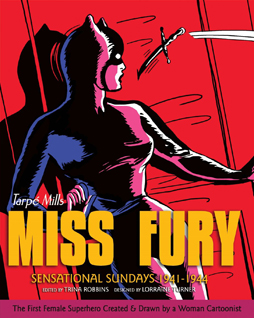 In 1941 comics artist June Tarpé Mills started a new Sunday adventure strip: Miss Fury. It would run until 1952, telling the wild and beautifully-drawn saga of a socialite who donned a magical black cat-suit to fight Nazis and criminals. In 2011 IDW’s Library of American Comics imprint published a selection of Miss Fury strips from 1944 through 1949, edited and with an introduction by comics historian Trina Robbins. Last year Robbins and IDW published a second volume, collecting the series from the start up to the beginning of the earlier collection, again featuring an introduction about Mills and her strip, and as well a brief selection of some of Mills’ earlier work. I had a chance to read the recently-published second collection, and was tremendously impressed.