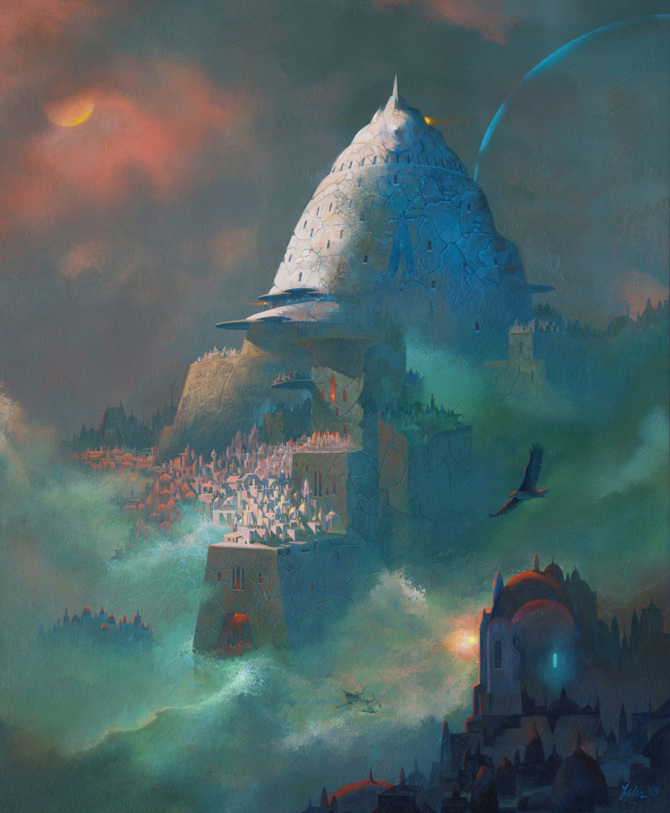
The Golden Age of Science Fiction: Ray Bradbury
|
|
|
|
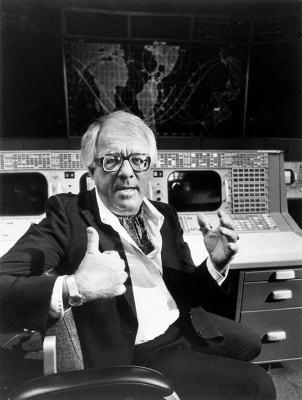
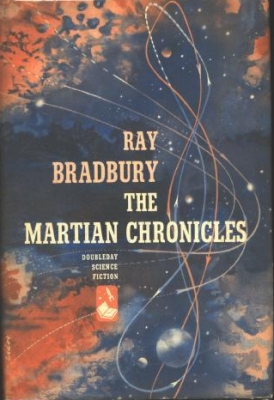
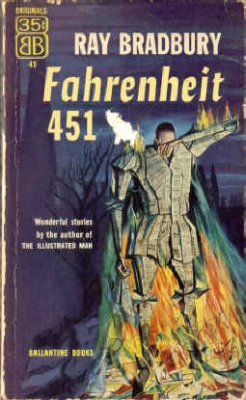
Lin Carter created the Gandalf Award to recognize lifetime achievement in fantasy. As with the John W. Campbell Award for Best New Author, which was founded in the previous year, the Gandalf Awards were administered along with the Hugo Award and presented at Worldcon. The Gandalf Award was given out from 1974, when it was won by J.R.R. Tolkien, through 1981, when it went to C. L. Moore. For two years, in addition to a Grand Master Award, a Best Novel Gandalf was also presented. In 1980, the awards were presented at Noreascon II in Boston.
Several years ago, I received a phone call from Ray Bradbury. When I hung up the phone, I turned to my daughter, who was in elementary school, and said, “Remember this call. You’ll be studying the author I just spoke to in school.” Several years later, I was at a parent conference for my daughter and the teacher caught me looking at a poster for Fahrenheit 451. The class had read Bradbury’s story “The Veldt” earlier in the school year and the teacher said, “I don’t want to accuse your daughter of making things up, but she says Ray Bradbury has called your house.” I confirmed the call to the teacher, but inside I was jubilant, my daughter had listened to me.
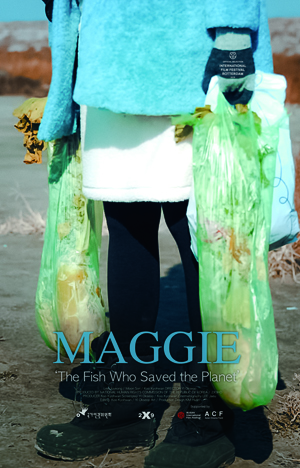 July 17 for me was a day of rest and running errands; then for my first film at Fantasia on July 18 I went to the De Sève Theatre to watch Maggie (메기). Directed by Yi Ok-seop from a film she wrote with star Koo Kyo-hwan, it’s the story of Yeo Yoon-young (Lee Ju-young), and her boyfriend Sung-won (Koo). Yoon-young’s a nurse at Love of Maria Hospital in Seoul. One day, an X-ray surfaces showing a man and a woman having sex in the X-ray room. The next day almost nobody comes in to work; the X-ray room’s a popular site for assignations, and everyone thinks they’re one of the figures in the X-ray. Yoon-young’s the only one who dares show her face, along with Doctor Lee (Moon So-ri). They end up forming an unlikely partnership as Maggie helps Lee learn to trust other people. Meanwhile, Sung-won finds work filling in sinkholes opening up in Korea, following an earthquake predicted by a catfish named Maggie — who also turns out to play an important role within the film.

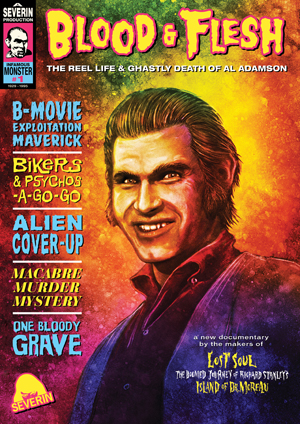 I expected my last film of July 16 would be a documentary called Blood & Flesh – The Reel Life and Ghastly Death of Al Adamson. You may not have heard of Adamson. I hadn’t. He was an exploitation filmmaker in the 1960s and 70s, responsible for titles like Satan’s Sadists, The Naughty Stewardesses, and Dracula Vs. Frankenstein, as well as not one but two separate films titled Psycho a Go-Go (Technically, one was Psycho à Go-Go; note accent). Introducing the documentary, Fantasia co-Director Mitch Davis described Adamson as more of a hustler than a filmmaker, then called up director David Gregory to briefly explain the film’s genesis. Gregory said it began as a special feature for a Blu-ray release, but the more he investigated Adamson, the more he realised the material was worth digging into more deeply. Thus, it’s now a feature, covering Adamson’s life, the films he made, and his awful death.
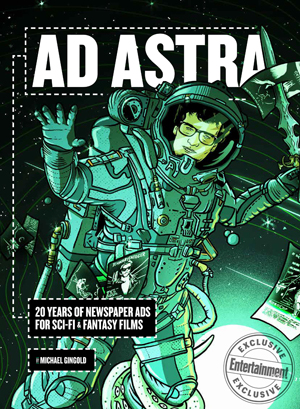 On July 16 I started my day at Fantasia with a book launch. Michael Gingold’s book Ad Astra is coming out this fall, but attendees of his multimedia presentation had the chance to buy it earlier. It’s a follow-up to 2018’s Ad Nauseam: Newsprint Nightmares From the 1980s and its sequel to come in September, Ad Nauseam II: Newsprint Nightmares From the 1990s and 2000s. Those books were collections of classic newspaper ads for horror movies, while Ad Astra is subtitled 20 Years of Newspaper Ads for Sci-Fi & Fantasy Films.