The Golden Age of Science Fiction: “Sandkings,” by George R.R. Martin

The Hugo Award was first presented at the 11th World Science Fiction Convention (sometimes called Philcon II), held in Philadelphia from September 5-7, 1953. No short fiction awards were presented the first year. In 1955, the first award for Best Novellette, not yet known as a Hugo Award, was given to Walter M. Miller, Jr.’s “The Darfsteller.” The award for Best Novelette was not presented in 1957 or 1958, returned in 1959 and then disappeared until 1967. It was on hiatus again from 1970 through 1972 and became a permanent ficture in 1973. The Hugo Awards are nominated and voted on by the members of the World Science Fiction Convention. Martin won two Hugo Awards in 1980, for “The Way of Cross and Dragon” in the Short Story Category and “Sandkings” in the Novelette category. He had previously won a Hugo for his novella “A Song for Lya” in 1975 and would win a second novella award for “Blood of the Dragon” as well as a Best Dramatic Presentation: Long Form Hugo for season 1 of Game of Thrones. The only fiction category in which he has not yet won a Hugo is the Best Novel category. In 1980, the Hugo Award was presented at Noreascon Two in Boston, Massachusetts on August 31.
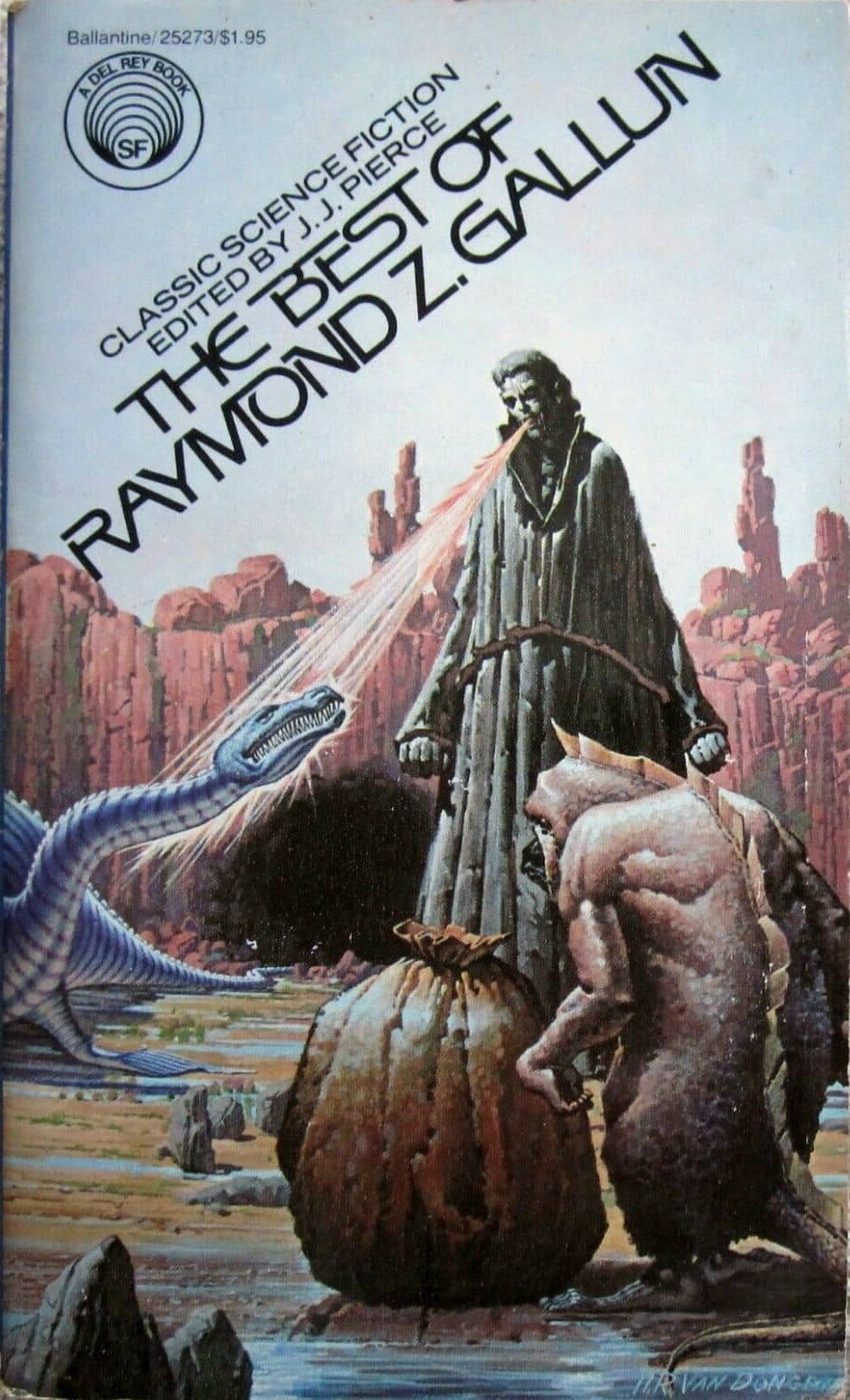
The Locus Awards were established in 1972 and presented by Locus Magazine based on a poll of its readers. In more recent years, the poll has been opened up to on-line readers, although subscribers’ votes have been given extra weight. At various times the award has been presented at Westercon and, more recently, at a weekend sponsored by Locus at the Science Fiction Museum (now MoPop) in Seattle. The Best Book Publisher Award dates back to 1972, although in 1975 and 1976 the Publisher Award was split into paperback and hardcover categories. Ballantine Books won the award each year from its inception through 1977 (winning the paperback for the two experimental years with the Science Fiction Book Club winning the hardcover award). In 1978, when Del Rey was established as an imprint of Ballantine, Ballantine/Del Rey began winning the award. The award was not presented in 1979 for works published in 1978, but when it was reinstituted in 1980, Ballantine/Del Rey picked up its winning streak. In 1980. The Locus Poll received 854 responses.
In many ways, “Sandkings” is a predictable story. Simon Kress is depicted from the start as arrogant and cruel. Although the world of Baldur is not particularly well depicted, based on Kress’s personality and actions, the world seems to provide a breeding ground for a decadent society, at least the part of it that Kress is part of, although Martin does indicate that he has some sort of business that he must occasionally attend to which provides him with the means to pursue his decadent lifestyle, which centers on the collection, exhibition, and eventual discarding of various exotic animals/aliens.



 My second and last movie on July 19 was a documentary named for its subject: J.R. “Bob” Dobbs and the Church of the Subgenius (a film known in some quarters as Slacking Towards Bethlehem). Directed by Sandy K. Boone, it’s a history of a mock religion which got started more than 40 years ago, and still goes strong today.
 On the evening of July 19 I sat down in the Hall Theatre for a screening of It Comes (Kuru, 来る), a Japanese horror film. Directed by Tetsuya Nakashima, it’s based on the novel Bogiwan ga kuru, by Ichi Sawamura, with a screenplay by Nakashima, Hideto Iwai, and Nobuhiro Monma. It’s clever and colourful, and at two and a half hours it’s also a sprawling film that justifies its length by twisting in ways you don’t expect. It’s also a success, an entertaining and occasionally chilling movie that builds a universe without being too detailed about the supernatural horror lurking beyond consensus reality.
 My last film of July 18 was in the big Hall Theatre. Knives and Skin was written and directed by Jennifer Reeder, and begins as a girl dies a violent death in a small midwestern town. In the wake of her disappearance secrets begin to come to light, and tensions rise among both her classmates and the adults. The movie proceeds to explore the town and its inhabitants in a series of sometimes-linked vignettes.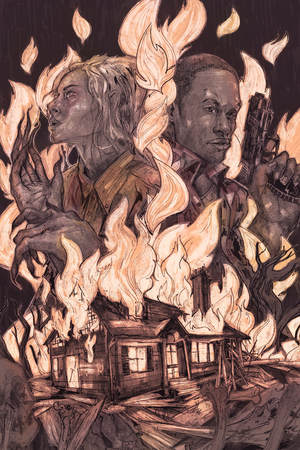
 Before my second film of July 18, a surreal science-fiction movie from the director of