Goth Chick News: Ray Bradbury’s “The Wish” Brings New Magic to the Holidays
Goth Chick News: Ray Bradbury’s “The Wish” Brings New Magic to the Holidays

Just about a year ago I finally got around to writing about my first encounter with Ray Bradbury and his story “The Wish.” It isn’t one of his most famous or well known, but when it appeared in the December issue of Woman’s Day magazine in 1973, it touched my 9-year-old self in a deeply personal way. Following its appearance in Woman’s Day, “The Wish” only appeared twice more; once in a compilation called Long After Midnight, which I discovered in my subsequent youthful pursuit of all things Bradbury, and once in a format I only just discovered.

Here is where the magic comes in…

Back in October I received an unusual voicemail on my “day job” phone. The gentleman introduced himself and asked if I was the Sue Granquist who writes for Black Gate. If so, he had something for me. If not, he apologized for bothering me and then left his number for me to call. What was exceptionally strange about this is that I don’t even know my office phone number, not to mention my very strict policy of separation of church and state – no one at the day job knows about my gig at Black Gate.

So how, exactly, did this gentleman track me down there?

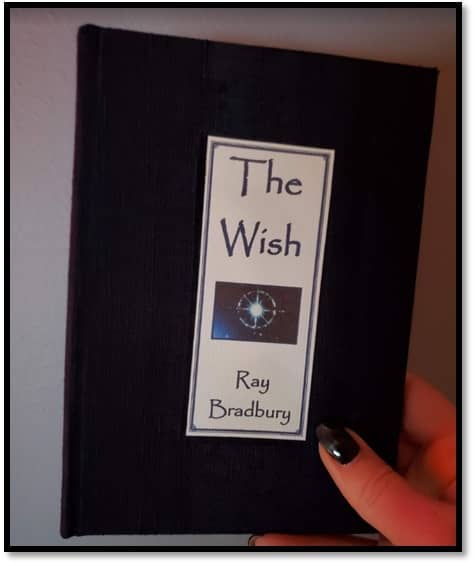
With curiosity killing me I rang the number back and met Peter Schneider, former Vice President at Viking Penguin, William Morrow, Prentice Hall and Grove Press; translate that to mean a titan in the publishing world. Now retired, Mr. Schneider’s last gig was as owner of a boutique publishing firm called Hill House Press. He explained that he was the publisher for and personal friend of Ray Bradbury in the ten years before Bradbury’s death in 2012. During that time, he convinced Bradbury to let him publish a limited-edition hard cover book of The Wish; limited as in fifty-two copies were made, each containing an actual photo of Bradbury’s father and a short note about the origins of the tale from Bradbury himself. Mr. Schneider explained that he had copy number 8 in his possession which he found when cleaning out the attic. That made him wonder when the story had first appeared in public so he Googled “The Wish” and what was the first listing that came up?

The article I had written about it, which appeared in Black Gate last December.
Read More Read More

Ellsworth’s Cinema of Swords: Louis Hayward, Everyman with a Sword (Part 2 of 2)

Ellsworth’s Cinema of Swords: Louis Hayward, Everyman with a Sword (Part 2 of 2)

This week we continue our review of the work of British-trained actor Louis Hayward, this time looking at the lesser-known swashbucklers from later in his career (see Part 1 here). The main general point of interest here is how these movies reflect the influence of film noir, then at the height of its postwar popularity. These are low to medium budget films, like the films noir they compare to, but they were made with professionalism and a genuine feel for the genre.

The Black Arrow

Rating: ****
Origin: USA, 1948
Director: Gordon Douglas
Source: Columbia Pictures DVD

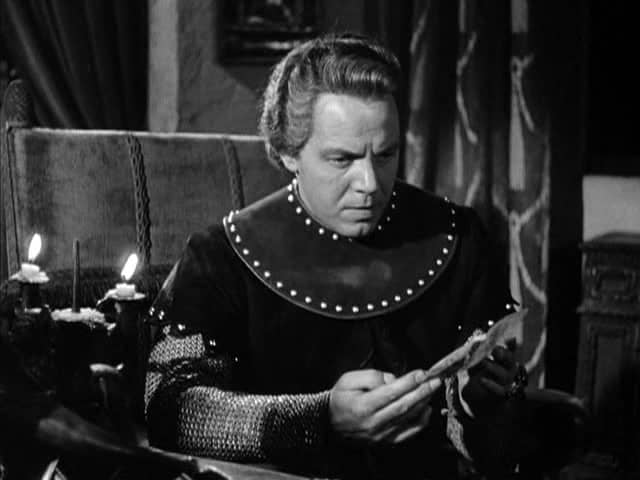
Say, this is good. Based, somewhat loosely, on Robert Louis Stevenson’s 1888 novel, it compresses and abridges but gets the essence right. This is another of independent producer Edward Small’s swashbucklers starring Louis Hayward, a story of the War of the Roses in which Hayward plays one of the victorious Yorkists, Sir Richard Shelton, returning home after the defeat of the Lancastrians. He pauses to drink at a stream and a black arrow thuds into a tree next to him — an arrow wrapped with a note in rhyme from a mysterious “John Amend-All,” warning him of treachery ahead. And in fact, Shelton arrives at his home estate to find that his father has been murdered, a crime blamed on a neighboring Lancastrian noble, already executed — but survived by a spirited daughter, Joanna Sedley (Janet Blair).

More black arrows arrive with rhymed warnings, and gradually Richard realizes that there was something fishy about his father’s murder. Interestingly, we know whodunit from the start: Richard’s grasping Uncle Daniel (George Macready), whom we see meeting with his three accomplices to pull the wool over Richard’s eyes. Following the clues of the black arrows leads Richard to a gang of outlaws in nearby Tunstall Forest, a band deliberately evocative in Stevenson’s novel of Robin Hood’s men, and the similarities are emphasized even more here. The rest of the story is about how Richard, with the help of Joanna and “John Amend-All,” learns the truth — and what he does about it.

Read More Read More

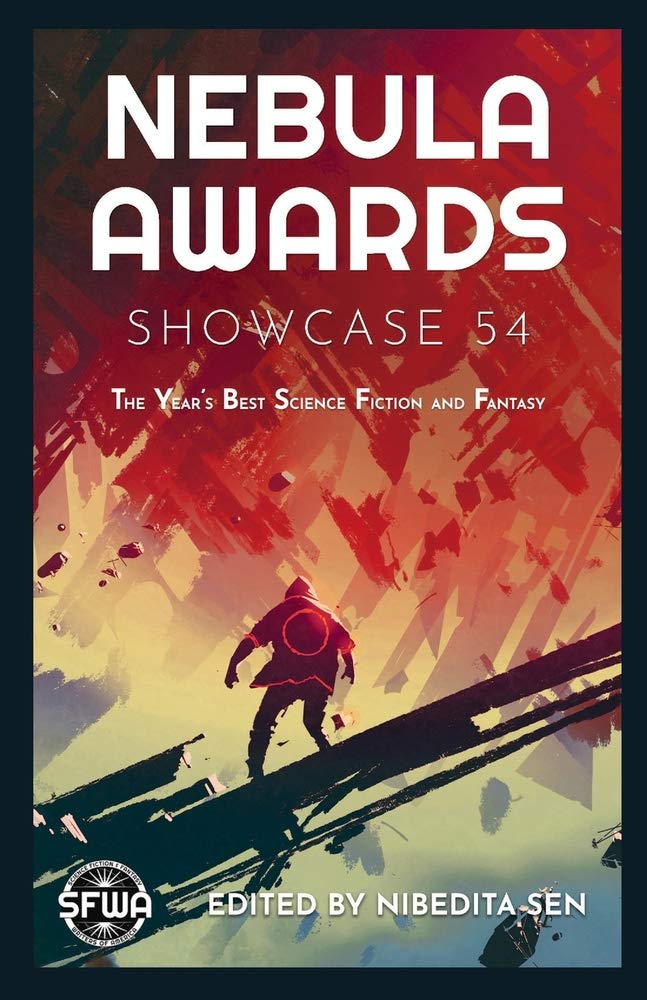
New Treasures: Nebula Awards Showcase 54 edited by Nibedita Sen

New Treasures: Nebula Awards Showcase 54 edited by Nibedita Sen

The Nebula Awards Showcase is one of the most auspicious and long running anthology series in science fiction. Founded way back in 1966 by Damon Knight (the man who founded the Science Fiction Writers of America), the series was originally created to help fund the annual Nebula Awards, and in that regard it’s had a successful run for over five decades — and produced a great many top-notch anthologies in the process.

Want examples? Just have a look at the first three volumes, which contained such stories as “Repent, Harlequin!” Said the Ticktockman” by Harlan Ellison, “The Doors of His Face, the Lamps of His Mouth” by Roger Zelazny, “The Saliva Tree” by Brian W. Aldiss, “Light of Other Days” by Bob Shaw, “The Last Castle” by Jack Vance, “We Can Remember It for You Wholesale” by Philip K. Dick, “Aye, and Gomorrah…” by Samuel R. Delany, “Behold the Man” by Michael Moorcock, and “Gonna Roll the Bones” by Fritz Leiber.

This year’s volume is unusual in that it’s the first to be published directly by SFWA (technically SFWA, Inc, which as far as I know was created solely to publish this book). Otherwise, it hews pretty close to tradition. It’s edited by a rising star in the industry — in this case Bengali writer Nibedita Sen — and contains as many of last year’s Nebula Award winners and nominees as they could cram between two covers.

The book was released last month in trade paperback; digital editions are coming soon. Here’s a look at the complete Table of Contents.

Intro & Essays

Introduction by Nibedita Sen
“It’s Dangerous to Go Alone” by Kate Dollarhyde
“Into the Spider-verse: A Classic Origin Story in Bold New Color” by Brandon O’Brien

Best Short Story

“The Secret Lives of the Nine Negro Teeth of George Washington” by P. Djèlí Clark — Nebula winner
“Interview for the End of the World” by Rhett C. Bruno
“And Yet” by A. T. Greenblatt
“A Witch’s Guide to Escape: A Practical Compendium of Portal Fantasies” by Alix E. Harrow
“The Court Magician” by Sarah Pinsker

Read More Read More

An Ignored 1894 Science Fiction Novel

An Ignored 1894 Science Fiction Novel

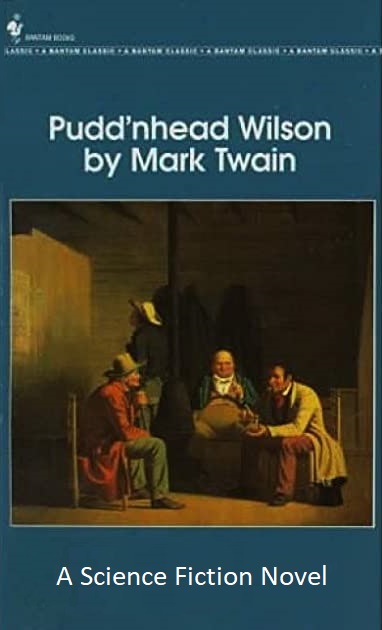
Thirty years ago (COVID-19 time) on May 1, I posted an article in which I explained why a film many view as a Hollywood musical is really a science fiction film. Today, on November 30, I’ll explain why one of Mark Twain’s novels is also a science fiction novel, and for the same reason.

Mark Twain, the pen name for Samuel Longhorne Clemens, was born in Florida, Missouri on November 30, 1835. Best known for the novels The Adventures of Tom Sawyer and The Adventures of Huckleberry Finn, some of his work, at both novel a short story length, dabbled in the tropes common to speculative fiction. Perhaps most famous of these is A Connecticut Yankee in King Arthur’s Court, a novel that sends the title character back in time and which formed a template for L. Sprague de Camp’s later Lest Darkness Fall. Other Twain works which are clearly part of the genre include the short stories “Mental Telegraphy,” “Shackleford’s Ghost,” and “Extract from Captain Stormfields Visit to Heaven,” all of which, along with several other stories, were collected in The Science Fiction of Mark Twain, edited by David Ketterer and published by Archon Books in 1984.

The work that I would like to take a look at through a science fictional lens, however, is Twain’s 1894 novel Pudd’nhead Wilson. Originally serialized in The Century Magazine in 1893, the novel is generally known as a courtroom drama in which the title lawyer realizes that not only is the accused innocent of the crime, but that there is a deeper secret hidden among the residents of Dawson’s Landing, Missouri. The novel is also known for the pithy chapter headings which are purportedly taken from Pudd’nhead Wilson’s calendar, such as “Training is everything. The peach was once a bitter almond, cauliflower is nothing by cabbage with a college education.” Although Wilson is the title character and heavily involved in the novel’s denouement, he disappears for a large swathe of the novel.

Set in the first half of the Nineteenth Century, Twain focuses his attention of Roxy, a woman who is only 1/32 black, but that is enough to condemn her to a life of slavery serving the Driscoll family. It also means her son, Valet de Chambre, who is the result of rape by her master, Percy Driscoll, is also a slave. Very fair skinned, many comment on the similarity of appearance between Chambers, as he is called, and his half-brother, Percy’s legitimate son, Tom Discoll. When Roxy sees some slaves sold down-river, she decides she needs to protect Chambers from that fate and, after briefly contemplating murder/suicide, she decides, instead, to swap Chambers for Tom, raising the white boy as her own and letting the world think her own son is her master.

Read More Read More

The Mandalorian: Fidelity & Innovation

The Mandalorian: Fidelity & Innovation

I’m not a Star Wars fanboy. I’ve seen the movies, and most of the cartoon shows. Though I’m pretty spotty on The Clone Wars, which my son Sean can cite chapter and verse. I read books by Alan Dean Foster and Timothy Zahn way back when, but that’s about it.

But I like Star Wars. And I’m fairly open-minded. I thought that a few of the movies, like The Phantom Menace, weren’t that great. And The Last Jedi just about put me to sleep. But on the other hand, Solo was a fun caper/heist flick, with a Star Wars overlay: I’m in!

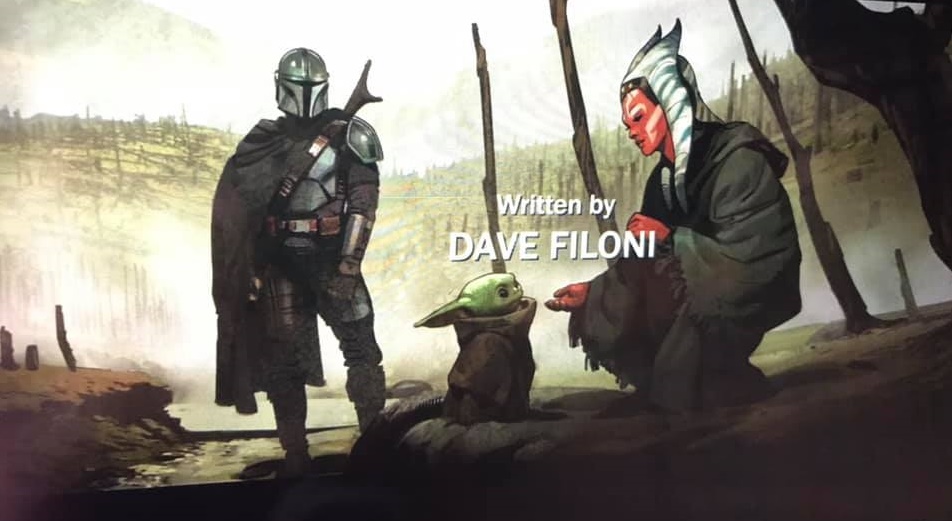
Star Wars Rebels was a much better animated series than The Resistance, for me. I liked all the lore they filled in. Which brings us to Jon Favreau’s terrific project, The Mandalorian. Favreau played a major role in launching the Marvel cinematic universe, and I can’t think of any better hands to be holding Star Wars at the moment.

A year ago, I raved about the first three episodes of season one, which I binge-watched with my son. I loved the rest of the season, and as I type this, we’re through episode five of season two.

SPOILER ALERT – If you’re reading this before watching the show: that’s surprising. Seems like everybody I know is watching every episode on the Friday it drops. Go catch up on Disney+, then read the rest of this. END SPOILER ALERT

Read More Read More

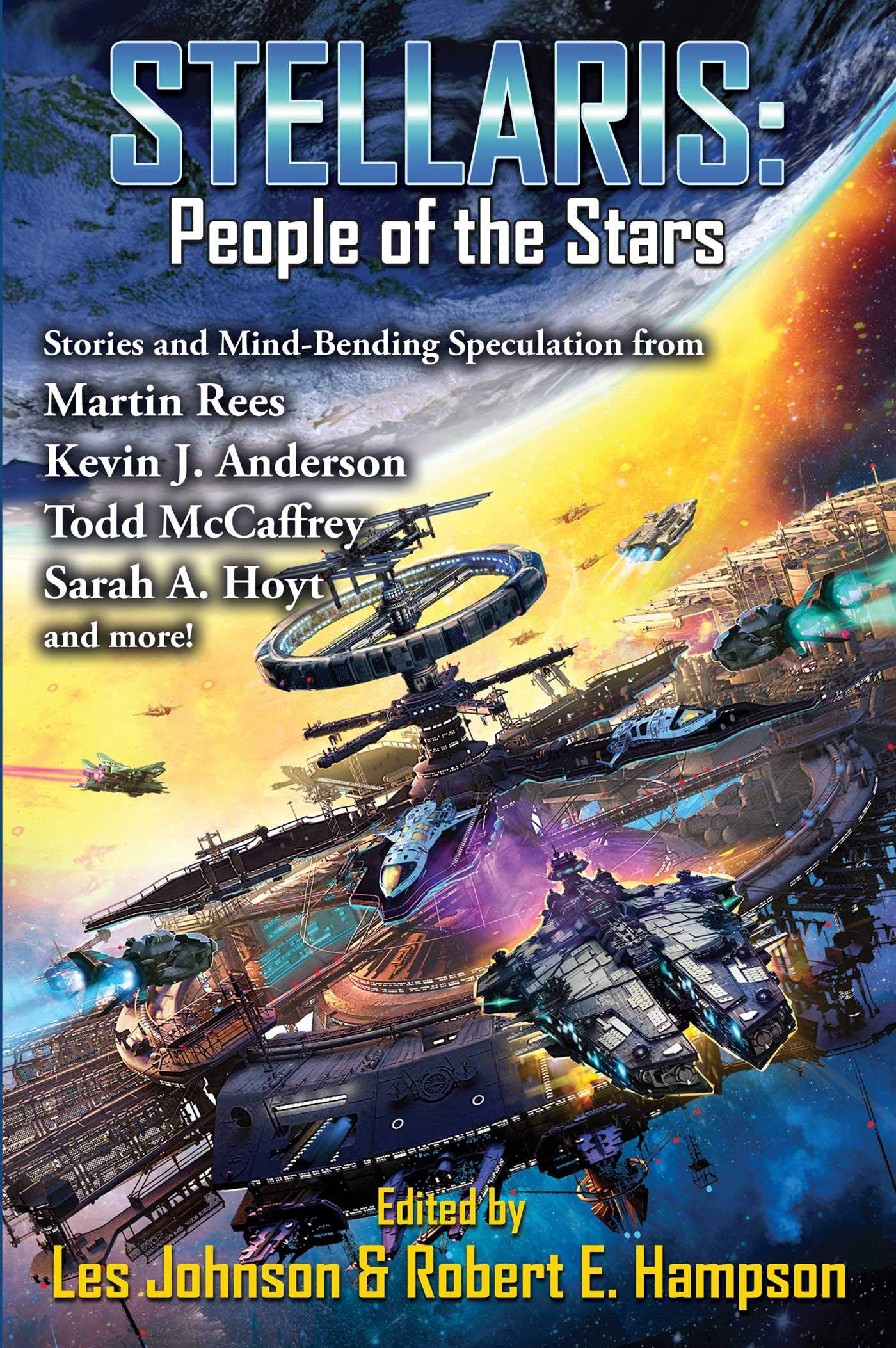
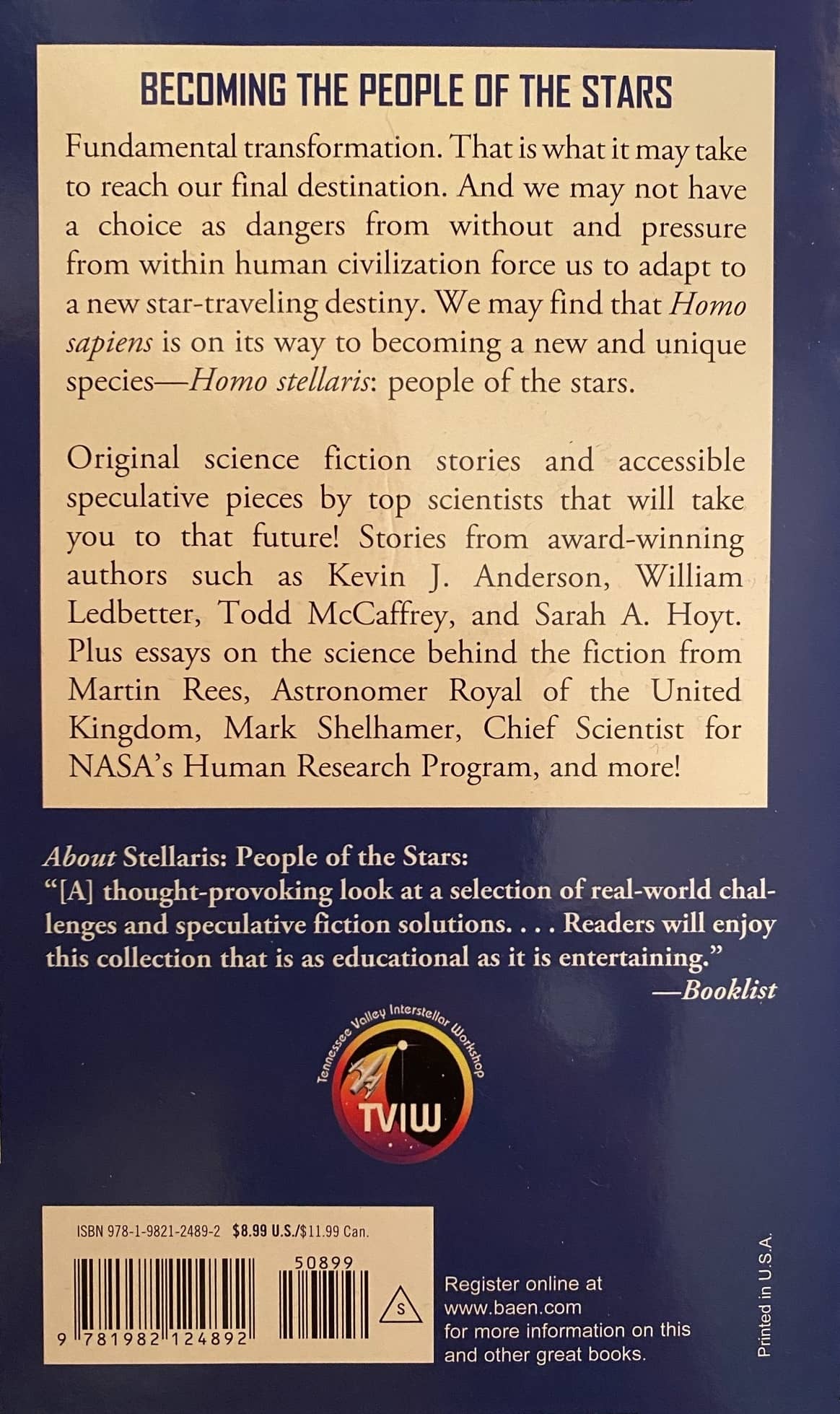
Discover How We’ll Get into Space in Stellaris: People of the Stars, edited by Les Johnson and Robert E. Hampson

Discover How We’ll Get into Space in Stellaris: People of the Stars, edited by Les Johnson and Robert E. Hampson

Stellaris: People of the Stars (Baen, August 2020). Cover by Sam Kennedy

I complain (a lot) about the death of the mass market science fiction anthology. So when I see a new one on the shelves, it’s worth celebrating — especially when it looks as strong as Baen’s Stellaris: People of the Stars, which is obviously a tie-in to the hugely popular Stellaris computer game from Paradox.

Except it isn’t, which I discovered after I bought a copy and brought it home. It was inspired instead by a gathering of scientists and writers at the Tennessee Valley Interstellar Workshop, and is a mix of fiction and non-fiction essays on space travel. Here’s a slice from by Kevin P Hallett’s review at Tangent Online.

This anthology contains ten science fiction stories themed around humanity’s quest to expand out to the stars and the many challenges they will face. With very few exceptions the stories are strong page turners. Scattered among the stories are six essays on various challenges that humanity will face, ensuring the anthology is a broad exploration of space colonization in the future….

“At the Bottom of the White” by Todd McCaffrey

Cin is a crewmember of the Valrise, a trading spaceship that is renewing contact with the abandoned colony of Arwon. The trader’s technology far exceeds Arwon’s sectarian government that starves its disaffected minorities.

Unaware of the nuances in such a charged political environment, Cin and the other members of the ship’s crew try to trade. Only to find themselves suddenly embroiled in the brutal politics of subjugation and faced with tough choices. Cin must risk going ‘down to the white’, if she’s to help the people. This was an interesting character-centric story with its fair share of intrigue and action.

Les Johnson is the author of Mission to Methone; his previous anthology was Going Interstellar (2012), edited with Jack McDevitt. Robert E. Hampson is the editor of the forthcoming The Founder Effect.

Read More Read More

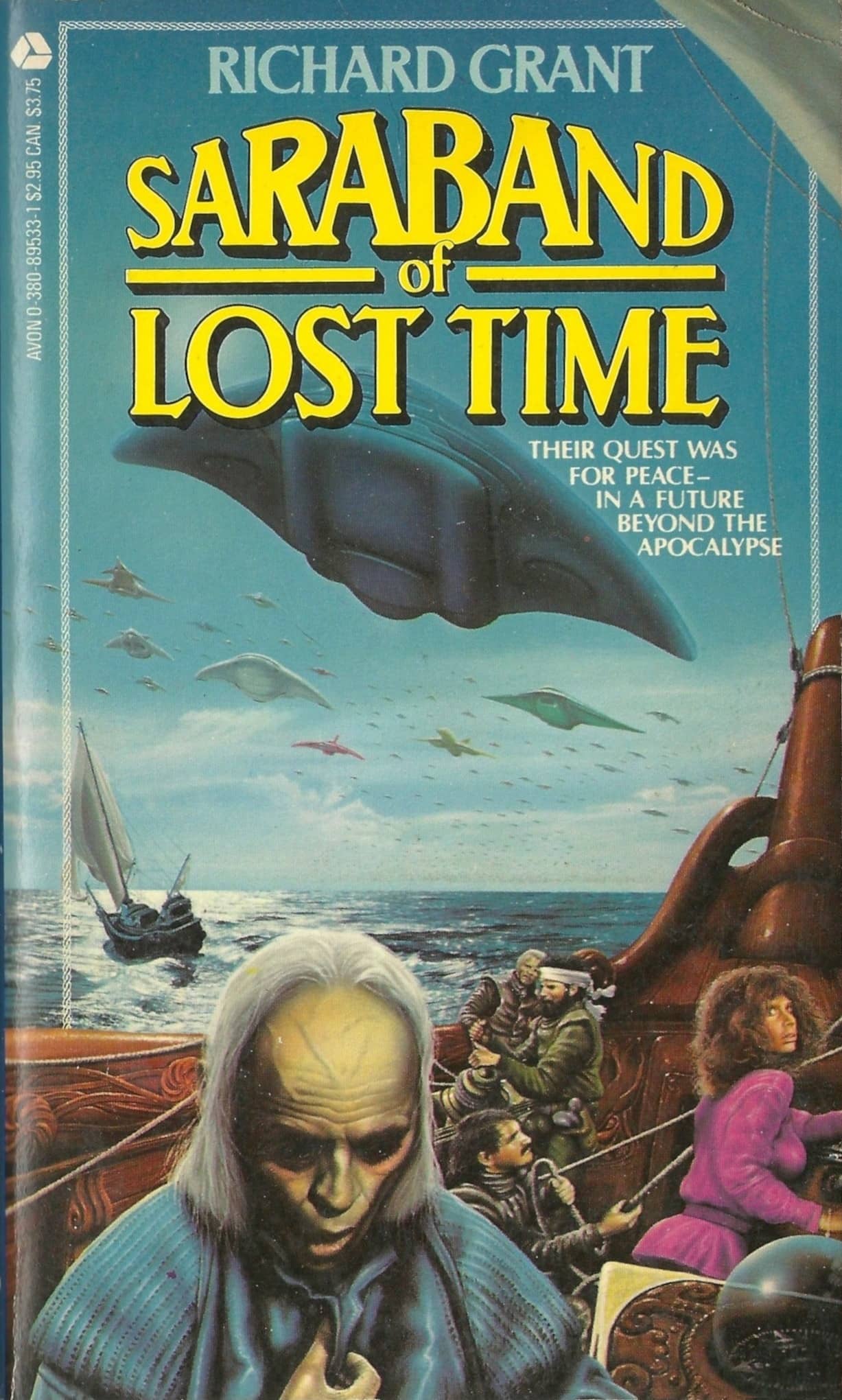
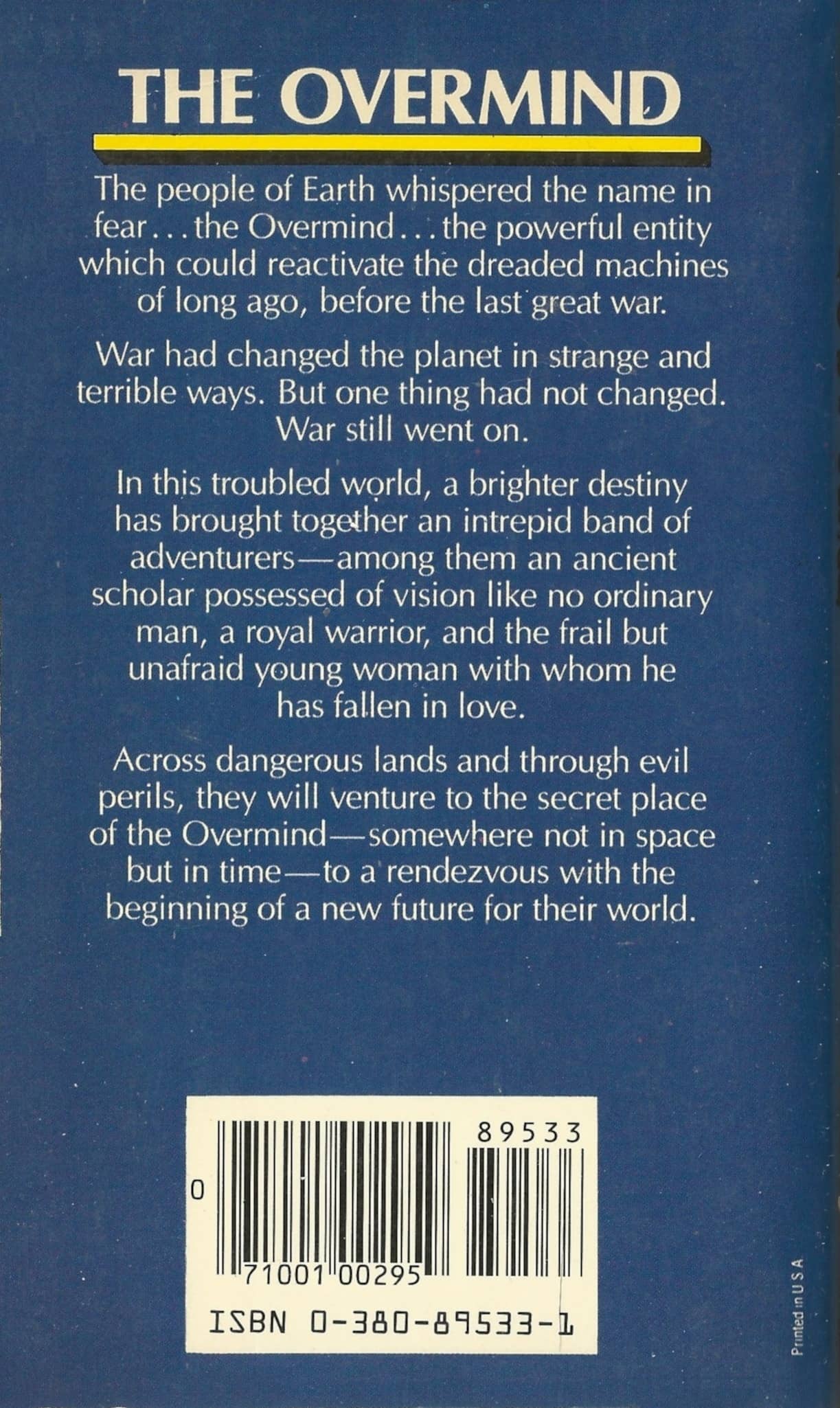
Vintage Treasures: Saraband of Lost Time by Richard Grant

Vintage Treasures: Saraband of Lost Time by Richard Grant

Saraband of Lost Time (Avon, March 1985). Cover by Jim Burns

Richard Grant has had a fine career as an American fantasy writer, with works such as Rumors of Spring (1986), Views from the Oldest House (1989) and the Philip K. Dick Award winner Through the Heart (1991). But his career began with his 1985 debut Saraband of Lost Time, a science fiction novel that was a Locus Award nominee for Best First Novel and received an Honorable Mention from the Philip K. Dick Award jury.

Saraband received a lot of attention at the time. In his Books column in F&SF Algis Budrys called “one of the most engaging first novels in years… a piece of cultured prose which by its nature confers importance on its cast of characters and on their activities.”

But what do modern readers make of it? It has generally positive reviews at Goodreads; Tom Britz calls it “a far reaching future tale of environmental changes [that] jumped around to different characters as it tried to make sense of this future world.” And in a 4-star review, Avis Black sums up by saying,

Grant is one bizarre writer, and Saraband is his best and most (relatively speaking) accessible novel.

But Geoff Clarke found it took a second reading to really appreciate it.

Read More Read More

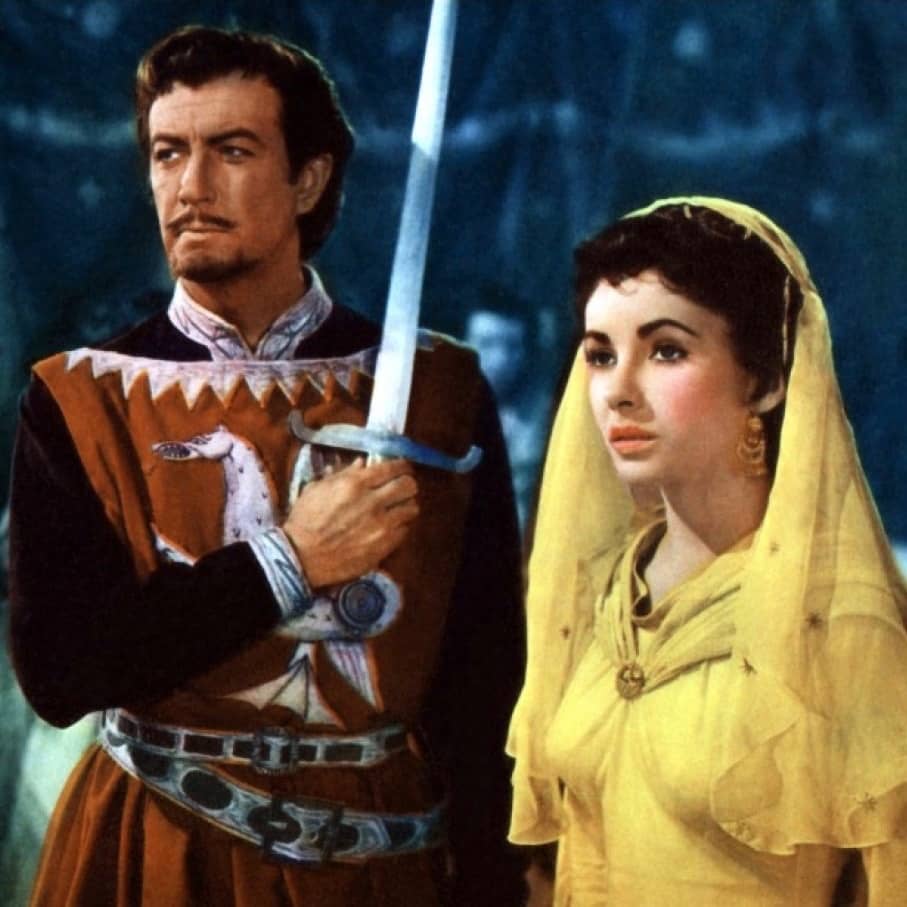
Ellsworth’s Cinema of Swords: Days of Technicolor Knights

Ellsworth’s Cinema of Swords: Days of Technicolor Knights

Hang on to your hauberks! This week we’re taking a gander at veteran director Richard Thorpe’s quasi-trilogy about knights in shining armor, three films all starring Robert Taylor that set the look and feel of screen stories about medieval knights for more than a decade.

Ivanhoe

Rating: ****
Origin: USA, 1952
Director: Richard Thorpe
Source: Amazon streaming video

In 1814 the poet Walter Scott began publishing his popular Waverly novels of recent Scottish history, and then switched, with Ivanhoe in 1820, to the medieval era and the history of England, in the process co-inventing (along with Jane Porter) the modern genre of the historical adventure novel. Ivanhoe was a landmark in other ways as well, for its sympathetic treatment of Jews in Western societies, for establishing the character and tone of our modern version of Robin Hood, and for promoting the medieval background as a setting for adventure tales, still as popular today in the 21st century as Scott made them in the 19th. (That’s right: no Ivanhoe, no Game of Thrones.)

Read More Read More

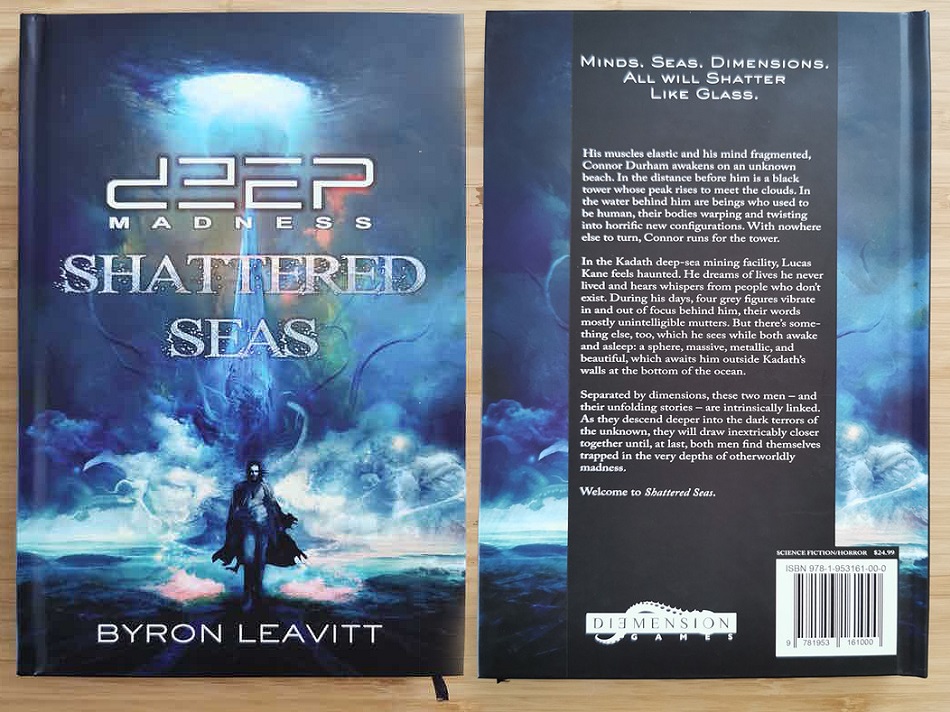
A Maelstrom of Fun for Horror Adventure Fans: Deep Madness: Shattered Seas by Byron Leavitt

A Maelstrom of Fun for Horror Adventure Fans: Deep Madness: Shattered Seas by Byron Leavitt

BG_SS_cover
Cover art by Christopher Shy / Cover design by Byron Leavitt.

Shattered Seas is a toxic dose of Lovecraftian mythos, psychedelic team-exploration (reminiscent of Star Trek voyages), and survival-horror melee (mutant creatures replacing zombies). It’s a maelstrom of fun if you enjoy horror adventure, losing your mind, and drowning.

Ever want to crack open the gateway into an Otherworld with a few friends? Perhaps you are ambitious and naively want to gain dominion of cosmic powers. Will you be comfortable with mutating forces transforming you into a tentacled mass? Start the madness by searching for the mystical Sphere buried in the ocean near the submerged Kadath Mining facility. Lucas Kane, a marine biologist, is one of your tour guides. Here he observes Kadath, a mining facility with organic qualities (excerpt):

Kadath lit up below them drew his attention and caught his breath. The facility sprawled across the seabed like a sunken metropolis from another world, its illuminated structures pushing defiantly upward into the inky abyss. The station’s domes and towers seemed like the last bastions of light and reason still standing in an endless Stygian wasteland. It was hypnotic, dreamlike, and yet somehow inexplicably solid. Lucas could make out the shuttle tubes running between the three main domes, as well as to the smaller, squarer outposts and middle structures. He could even see the primary enclosed drilling site not far off from the main facility, connected to Dome Three by long, spacious tubes.

This novel was inspired by Diemension Games’ Deep Madness, a cooperative sci-fi/horror board game. The novel serves as a stand-alone book as much as it does a gateway into the game narrative. Non-gamers will enjoy it all the same since the key protagonists (Lucas Kane and Connor Durham) are freshly introduced, plus the story is a prequel to the story presented in the game. At the end of this article, there is an embedded movie overviewing the board game.

Read More Read More

Rogue Blades Author: An Unexpected Gift

Rogue Blades Author: An Unexpected Gift

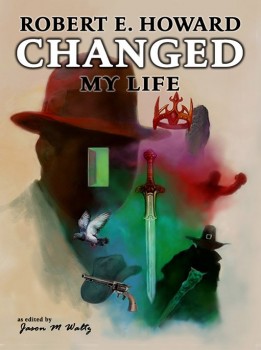
Howard changed my lifeThe following is an excerpt from Barbara Ingram Baum’s essay for Robert E. Howard Changed My Life, an upcoming book from the Rogue Blades Foundation.

May 25, 1995, marked a profound change in my life. Alla Ray Morris, or ‘Pat’ as we called her, passed away unexpectedly. When my husband, Jack, met with her attorneys after her funeral, he was shocked to learn she had bequeathed her rights in Robert E. Howard’s works to him, to his sister Terry, and to their mother, Zora Mae Baum Bryant, whom she had named as executrix of her estate. I could never have imagined the impact this gift would have on my life.

Jack’s father had passed away in 1971, and several years later his mother married Elliott Bryant, a kind, loving widower who embraced his new family as Zora Mae had two adult children, a daughter-in-law, and three young grandchildren. Elliott’s parents and younger brother were deceased, but he maintained a close relationship with his aunt, Alla Ray Kuykendall (‘Auntie K’) and her daughter, Alla Ray Morris (‘Pat’), who lived in the nearby town of Ranger, Texas. Whenever we gathered at the house in Cross Plains for holidays, Auntie K and Pat were always included, and over the years they became family to all of us as well. So even after Elliott died suddenly in 1982, the relationship continued, and every week Jack’s mother drove to Ranger to play bridge with the Kuykendalls and their friends. I believe she and Pat became even closer after Auntie K passed away. Nevertheless, we were stunned when Pat suddenly died and we learned she had included us in her will — it was totally unexpected.

We knew nothing about Robert E. Howard or his works. However, we recalled Zora Mae, Elliott, Auntie K, and Pat had attended the showing of the film Conan the Barbarian, starring Arnold Schwarzenegger, at the Paramount Theatre in Abilene, but Jack and I had never seen the film or read any of Howard’s works or talked about Howard or discussed the Kuykendalls’ ownership at family gatherings. I faintly remembered comments about Howard Days, but we had never discussed those events, nor had we attended. Interestingly, though, Jack’s mother kept a Conan calendar on her kitchen wall — which I know now was a Ken Kelly scene from “People of the Black Circle.” (You would have to know Jack’s mother to appreciate how completely out of character it was for her to have a heroic fantasy calendar on her wall. Zora Mae was very much a traditionalist and was very particular about her home and its accessories.)

Read More Read More