Circle of Enemies
By Harry Connolly
Del Rey (320 pages, mass market first edition August 2011, $7.99)
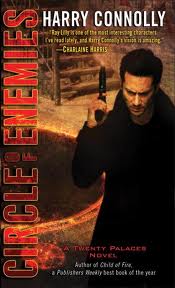
And so we come full circle. Circle of Enemies is the final novel in the Twenty Palaces series as it stands, and in some ways the most crowded with monsters, sorcery, and mysteries. If it has one major flaw, it’s that it whet my appetite for a sequel that will likely never be written.
The action moves south from the Pacific northwest hamlets of Child of Fire (my review here) and Game of Cages (review) to the sun-scorched sidewalks and shadowy mansions of Los Angeles, as Ray revisits the life he lived before his stay in prison. One of his old friends from his carjacker days — a woman named Caramella — arrives in Ray’s Seattle room with a cryptic message: “You killed me, Ray.” After delivering it, she vanishes into thin air.
Magic — and all the horrors that accompany it — have found Ray’s old crew. He drives south to his old stomping grounds in Los Angeles to find his old allies and save them before the Twenty Palaces society arrives to wipe them out. The world is once again in danger from a predator with the potential to annihilate all human life, one hapless victim at a time.
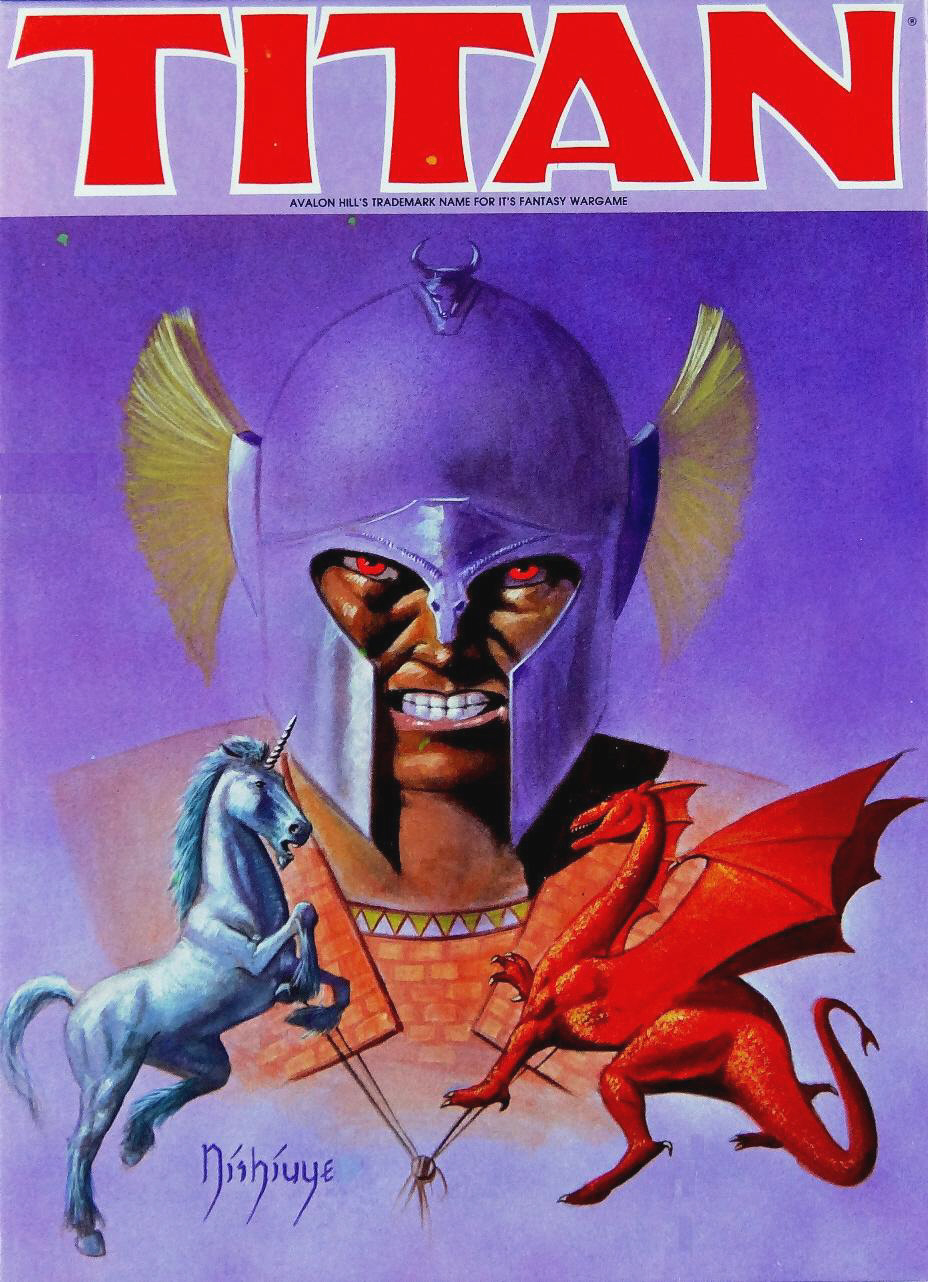
There are classic fantasy games and there are classic fantasy games. Jai Kamani and David A. Trampier’s Titan, a massive game of conflict between mythological armies of ogres, unicorns, griffons, and other creatures, was perhaps the most ubiquitous fantasy game of my youth. There were copies everywhere, tucked under arms at gaming conventions and on the shelves of department stores.
Titan was first published in an ultra-rare first edition in 1980 by tiny Gorgonstar, Inc. It was later made a hit by Avalon Hill, and remained in print for nearly two decades until Avalon Hill was sold and ceased operations in 1998. After that, copies of the most popular fantasy board game of the 80s and 90s gradually became harder and harder to find.
I remember getting my boys excited about Titan by nostalgically telling tales of epic battles between behemoths, dragons, and trolls. They clamored to play it.
I’d never owned Titan, but that’s not a problem in the age of the Internet. I found a pristine copy on eBay and hung on during a spirited bidding war. 90 bucks later, it was on my kitchen table.
Still in the shrink wrap.
It was perfectly preserved. My boys stood at my side, ready to go, anxious to throw down some dice, and experience some of that legendary Titan action. To shred the shrink and punch out counter sheets that had staunchly stood fast for over twenty years. My hands gripped the game, hesitating.
My name’s Fletcher Vredenburgh and I blog and yammer on the Internet (and comment here on Black Gate) as the Wasp. When Dale Rippke’s super-informational swords & sorcery site Heroes of Dark Fantasy went dark, I wanted to create a site to fill that void, but I wasn’t sure what shape it would take.
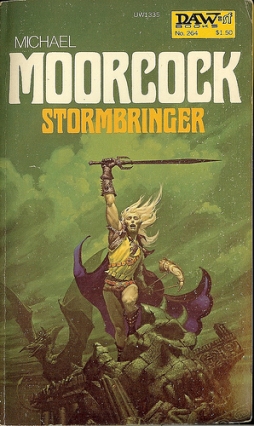
Initially, Swords & Sorcery: A Blog was going to be dedicated solely to classic heroic fiction. I figured I would just re-read and write about the books I already knew and loved, like Death Angel’s Shadow or Stormbringer, and that would be enough.
Then I discovered I was living in the midst of a S&S revival. Spurred by magazines like Black Gate and fueled by authors like James Enge and Howard Andrew Jones, new stories at least as good as anything from the genre’s heyday in the seventies were being created.
That led me on a hunt for anything new in S&S. I quickly learned that for every Enge or Jones, there were a dozen writers regularly gracing the electronic pages of numerous online magazines.
For what I now wanted, which was to get a sense of what was going on down on the ground and then convey that to any readers I might have, the standout publications were Heroic Fantasy Quarterly, edited by Adrian Simmons, David Farney, and William Ledbetter and Beneath Ceaseless Skies, edited and published by Scott H. Andrews.
For over a year now I have continually struck genre gold in both magazines.
Over the past year of reviewing, I’ve read thirty stories from HFQ and BCS. Re-reading my reviews, I was struck both by how many of the stories I liked, and how many I recalled in detail. In fact, there was only one story I actively disliked. There was straight up no-holds-barred swords & sorcery, techno-fantasy, some chinoiserie, and an Arthurian tale thrown in for good measure.
I went out looking for heroic fantasy, and was rewarded instead with an antidote for all the monstrously long and never-ending series weighing down Barnes & Noble’s shelves.
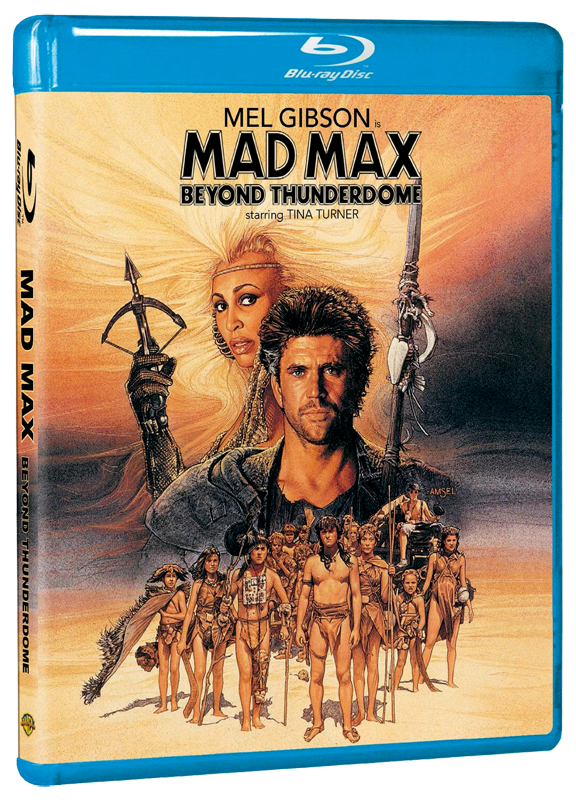
Mad Max Beyond Thunderdome (1985) Directed by George Miller and George Ogilvie. Starring Mel Gibson, Tina Turner, Helen Buday, Frank Thring, Bruce Spence, Robert Grubb, Angelo Rossitto, Angry Anderson, George Spartels, Edwin Hodgeman.
“This you knows. The posts on Black Gate travel fast, and time after time I’ve done the tell. But this ain’t one body’s tell. This is the tell of us all who love the Mad Max franchise. And you gotta listen to it and remember. ‘Cause what you hear today, you gotta tell the newborn tomorrow. I’s looking behind us now, into history-back. I sees those of us who got the luck and started the haul for hi-def. And I remember how it led us here and we were heartful ‘cause we saw the pan-and-scan VHS of what was. And we knewed we got it straight.”
If it weren’t for my aversion to camping and having to use porta-potties, I would attend Wasteland Weekend every year, a “360° post-apocalypse environment” held each September in the Southern California desert for other Mad Maxians. I’m that much of a fan. I prefer an air-conditioned theater and a marathon of the three films (to which a fourth will be added next year) over risking a Gila monster bite, however.
Now I can hold the movie marathon in my less-well air-conditioned apartment — with indoor plumbing and absolutely no Gila monsters! — because Mad Max Beyond Thunderdome made its debut on Blu-ray last week, completing the trilogy in hi-def.
For both fans and the general public, Mad Max Beyond Thunderdome generally ranks below the other two movies, Mad Max (1979) and The Road Warrior/Mad Max 2 (1981). The third film plays a lot nicer with other children than its predecessors: the low-budget exploitation biker/revenge flick of Mad Max and the violent action spectacle of The Road Warrior took a Spielbergian mid-‘80s shift that’s positively heartwarming. This was when the series went from an earned “R” rating to a family-friendly PG-13, and its rough wasteland-traversing hero came to the rescue of a clan of K-through-12s.
I’m a big fan of rule systems. Throughout my experience in role playing, both as a player and a gamemaster, I’ve loved building interesting characters, worlds, and storylines on my own, rarely relying on established modules and setting manuals. But to me the rules are a guide for the game and I try to follow them fairly closely, using them to inspire new ideas on where to go. In a way, it’s the limitations of rule systems that provide the boundaries for the story to evolve off of.
For years running MUSHes, I grew frustrated with characters who would assume knowledge that had no basis in the statistics their characters had. Most of this time was spent on games based on White Wolf’s Storyteller system, in which I mainly focused on Mage: The Ascension, so had to deal with a disturbing number of Mages who assumed that, just by virtue of being a Mage, they knew all about the other supernatural races, like details about the various Vampire: The Masquerade clans. Not without the right Lore rating, buddy!
These days, I’ve returned to fantasy adventure gaming, running a Pathfinder campaign. Still, though, I like using the rules and statistics as my guide. If a character doesn’t have any ranks in Swim, then I roleplay him as if he’s never learned how to swim … and maybe he’s just a little scared of the water because of it. No ranks in Knowledge(nature), then he doesn’t know what poison ivy looks like and mistakes large dogs for wolves.
In fact, I go out of my way to buy ranks that I don’t feel will be particularly useful just because I feel the character needs to have them. A ranger who doesn’t have any ranks in Craft(bows), and is thus unable to craft new arrows while away from town, makes absolutely no sense to me. Even if I have every intention of buying my arrows with adventure loot, I spend the skill points to have a couple of ranks of Craft(bows), because it’s something the character would know!
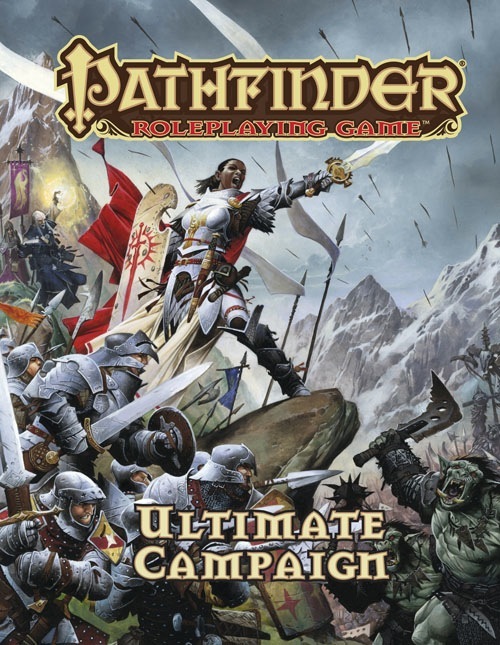
This is my thinking on the character level, but rarely have I adopted many campaign-level rule systems, letting the overall campaign evolve a bit more freely. In part, this is just because I’ve never seen campaign-level systems that seemed flexible enough to do what I wanted, yet still provided useful guidance for characters. That is until I got my copy of Pathfinder‘s new Ultimate Campaign (Paizo, Amazon) supplement, which instantly got implemented into my current campaign and has enriched the options in just a single game session. Now if my players say, “I want to own a tavern” or “I want to build a kingdom,” I can tell them exactly what it will take, instead of just making something up.
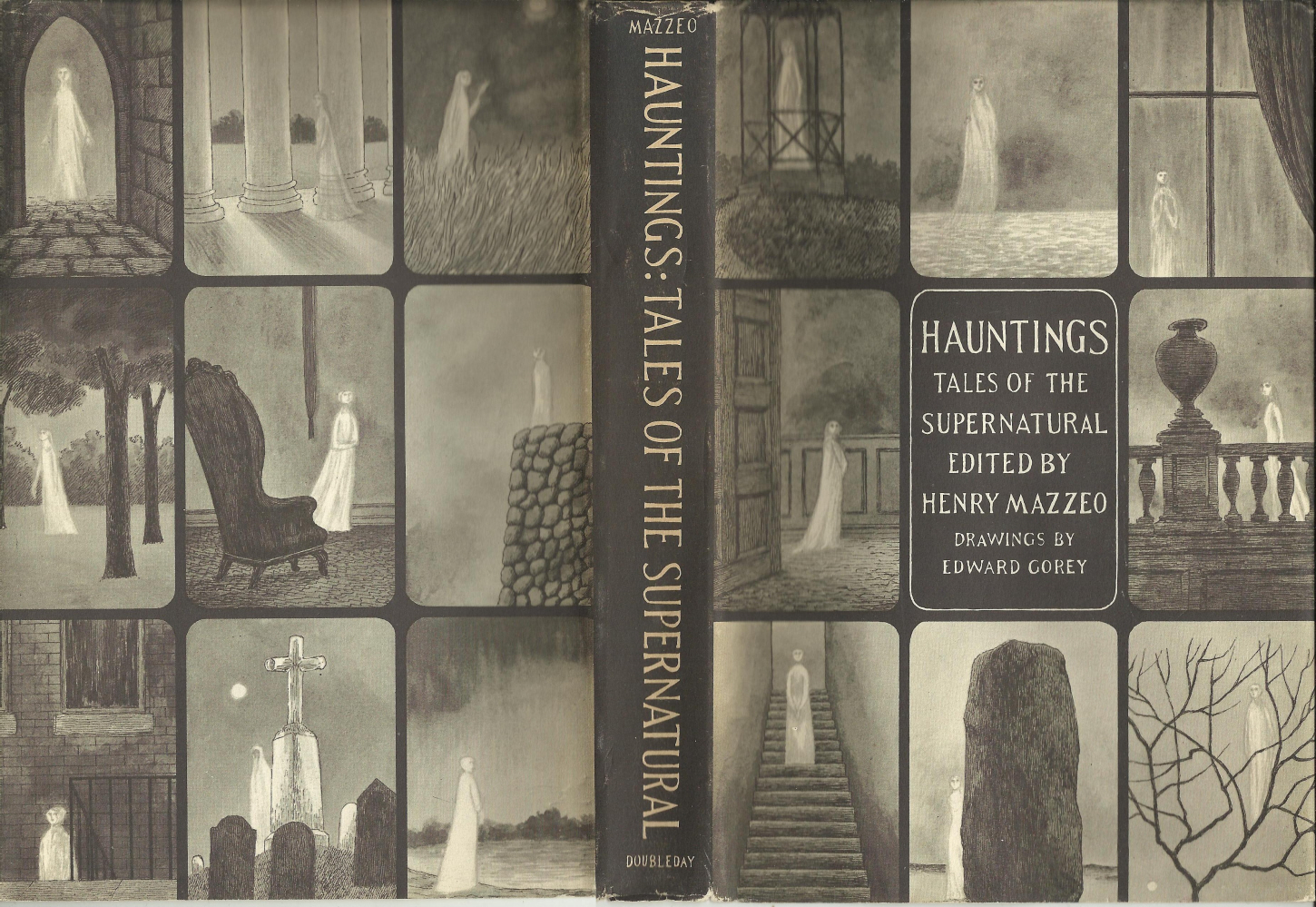
When I was a kid in the late 60s/early 70s, I was fascinated by the fantastic. It didn’t matter what it was: films, comics, television, or books. Although, until I learned to read, my exposure to the genre — and especially horror — was through purely visual media such as comics and whatever was on TV.
Luckily my earliest talent, which later turned out to be pretty much my only one, was that I took to reading like a cultist takes to, well, cults! This opened up a whole new world for me, as our elementary school had a well stocked library.
And it didn’t take long to catch on that the best books didn’t have any pictures in them. Sure, they had great covers, but inside there was nothing but words! Lots and lots of wonderful words that helped me fill my mind with images that no film or comic could match.
Another important thing that I learned was that adults didn’t care what you read as long as it was a genuine book. Comics brought only disdain and suspicion.
Especially those wonderfully gory black and white comics published by Warren, Skywald, and Eerie Publications, those you had to hide from the adults. My dad always called those comics “Doug’s damned weirdo books.”
It’s been far too long since I’ve game mastered a Lovecraftian horror RPG. I miss the high-stakes drama, the desperate battles, the sheer cosmic scale and invention of Lovecraft’s horrors. Most of all, I miss the shell-shocked expressions on my players faces, the cries of “Dear God! Why would you do that to us? Why — why??” Good times, good times.
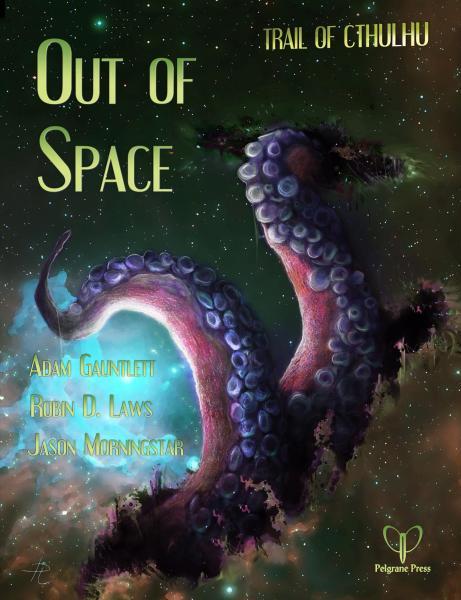
My favorite recent Lovecraftian horror RPG is Kenneth Hite’s Trail of Cthulhu, from the marvelous Pelgrane Press. They’ve been supporting it with a series of terrific PDF releases, including The Repairer of Reputations a massive 44-page adventure based on the classic story of the same name by Robert W. Chambers, in which the alien beings described in the play are as real as the players believe them to be. And the 40-page Hell Fire, set in the seedy underclass of 18th century London, where a horrifying plague is ravaging the city, its victims in the grip of a sinister entity bent on engulfing the world in disease and death.
Now Pelgrane Press has assembled both of those adventures, and three more — Flying Coffins, set in Winter 1918 above the skies of France, as players take the role of members of the Royal Flying Corps stationed near the Front, confronting rumors that the next big push is about to begin… and that recent Germany victories in the air are due to supernatural assistance; Many Fires, in which the Investigators take on Pancho Villa’s bandit army in the mountains of northern Mexico, as well as something ancient and obscene that lies smoldering among ruins older than the Aztecs; and finally The Millionaire’s Special, which invites the players to travel first class on the maiden voyage of the Titanic, where they are invited to a private viewing of one of the world’s great curiosities, a cursed Egyptian mummy.
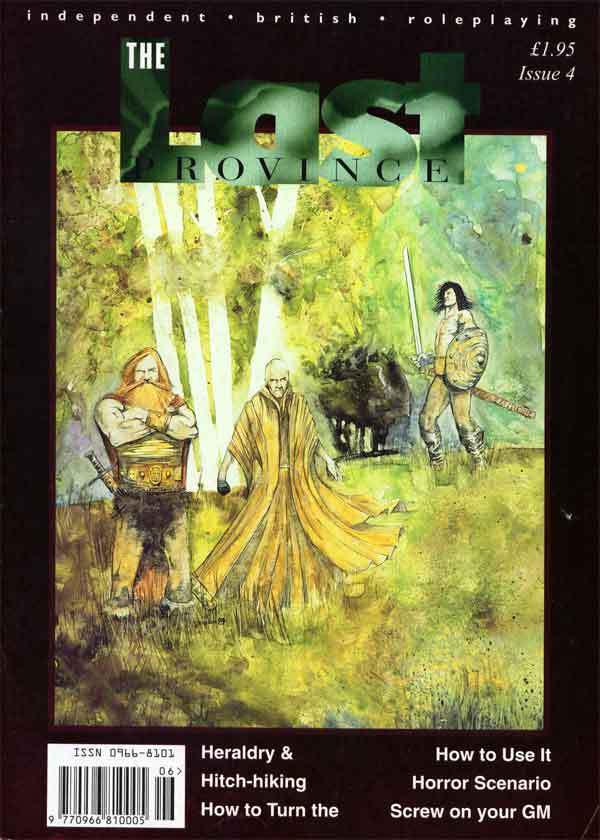
I recently stumbled across a copy of a gaming magazine I’d never encountered before: The Last Province, a bi-monthly British publication that apparently lasted five issues, from October 1992 to September 1993.
This doesn’t happen very often, so it was definitely worth investigating. And I’m glad I did, as it turned out to be a delight.
I think the cover — a Martin Lennon character study of three very different adventuring fellows striding confidently across a green and pleasant land — effectively communicates both the content and editorial attitude. If the art doesn’t do it, the tag words “Independent British Roleplaying” at the top should give you the idea.
Paz Newis’s page 4 editorial is a perfect mix of defensiveness towards gaming stereotypes, and contempt for what others consider ‘normal.’ Pretty much exactly how I remember gamers talking in the 90s.
To my mind ours is one pastime with a wealth to offer its participants. It is to those of you who wish to take roleplaying out of the ‘spotty adolescents’ stereotype that this magazine is aimed.
Recently… I thought it would be a good idea to sit in front of the television. I was appalled! It really was brain numbing. All of my higher brain functions seized up. If this is what the majority of ‘normal people’ spend their time doing I have no desire to be normal.
The news section is jammed with headlines on the big events of the day — including Steve Jackson’s quarter-million dollar judgment against the US Secret Service for seizing their computer equipment during an investigation of GURPS Cyberpunk, the report that a young employee at a Glasgow branch of a well known game store chain was apparently fired for being female, and the release of a major new RPG from FASA with the strange title Earthdawn.
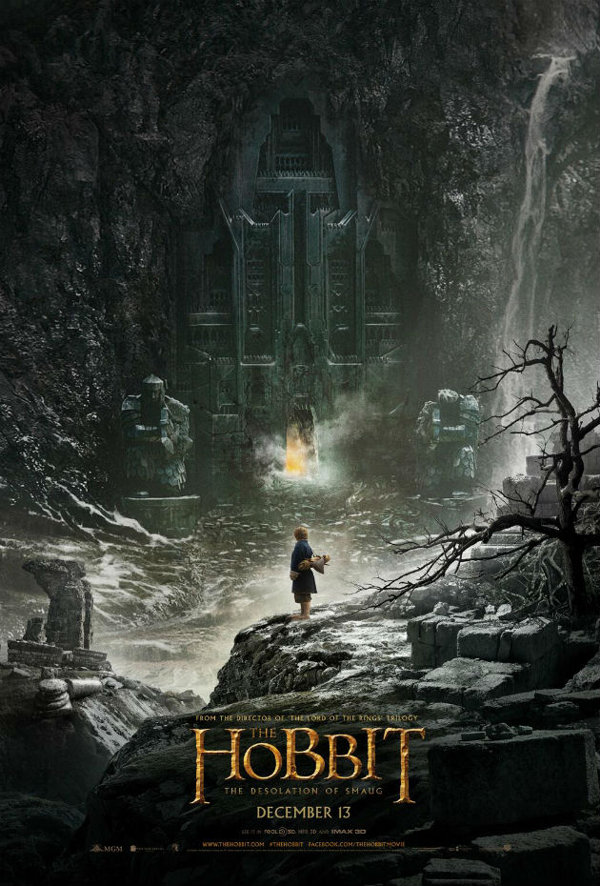
Curse teaser trailers and their teasing ways! I was teased as a kid, teased all through high school, and now I have to put up with teaser trailers. The universe, it is a cruel place.
Fortunately, teaser trailers are followed by full-length trailers. Eventually. As has now happened with The Hobbit: The Desolation of Smaug, the second installment in the three-part Hobbit epic from New Line Cinema and WingNut films. The story picks up where last year’s billion-dollar blockbuster The Hobbit: An Unexpected Journey left off, following Bilbo, Gandalf, Thorin and their dwarven companions into the Kingdom of Erebor, the dark heart of Mirkwood and the Necromancer’s lair, Esgaroth, and finally the human town of Dale to confront the dragon Smaug.
The trailer has some nice surprises, including plenty of scenes of Orlando Bloom as Legolas and Lost alum Evangeline Lilly as the elf Tauriel. If you watch closely, you can see the spiders of Mirkwood, the barrel escape down the river, and our first look at the terrifying Smaug himself.
The trilogy will conclude next year with The Hobbit: There and Back Again. All three films are based on J.R.R. Tolkien’s novel The Hobbit, originally published in 1937.
The Hobbit: The Desolation of Smaug was directed by Peter Jackson and written by Fran Walsh, Philippa Boyens, and Peter Jackson. It stars Martin Freeman, Richard Armitage, Ian McKellen, Cate Blanchett, Hugo Weaving, Elijah Wood, Christopher Lee, and A-lister villain Benedict Cumberbatch as both Smaug and The Necromancer Sauron. Check out the complete trailer below.
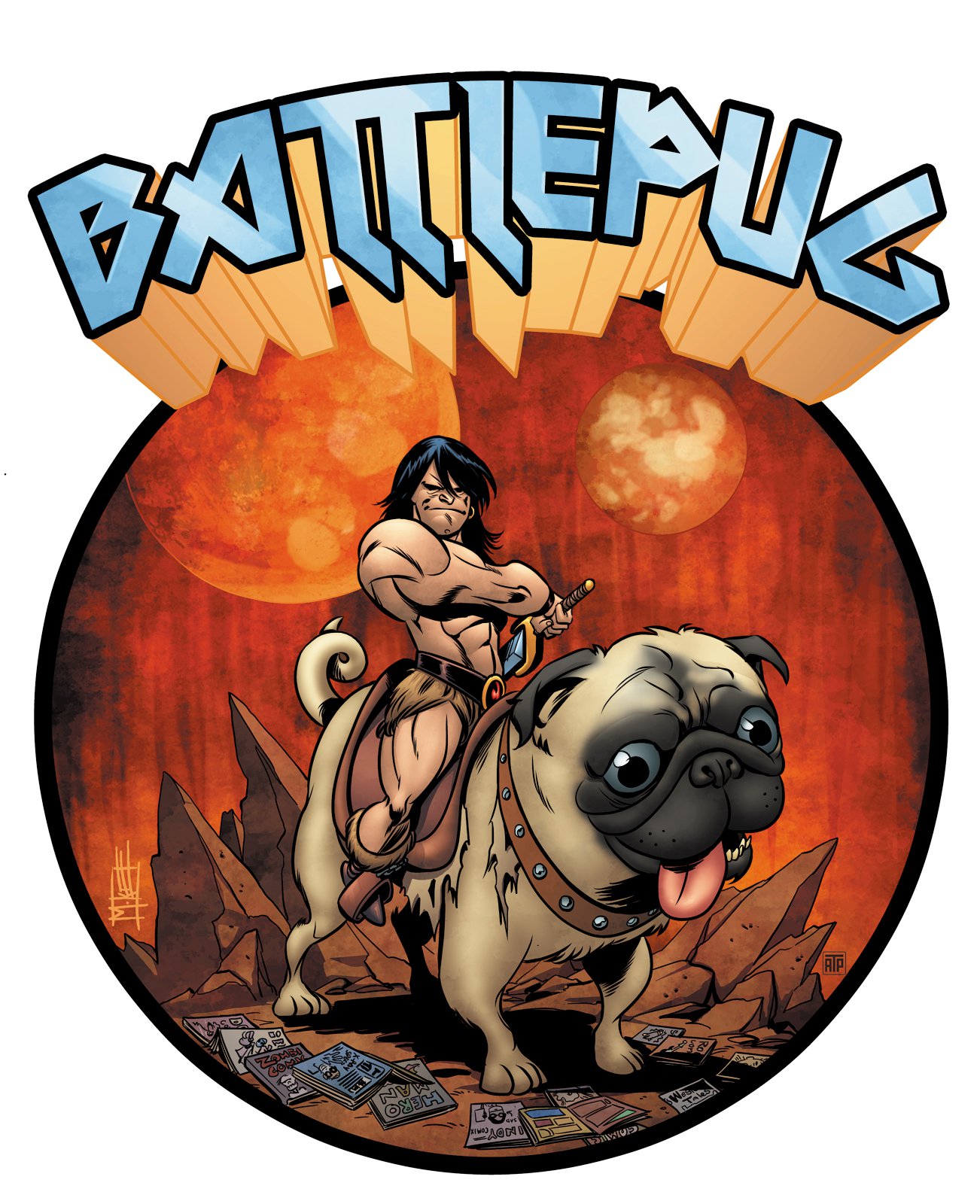
Battlepug is a weekly web-comic that follows the adventures a big, dumb beast. And his dog. Writer/artist Mike Norton starts off the story as a fairly standard Conan-style barbarian origin piece. You know the spiel … innocent boy orphaned after his village is destroyed, forced into a life of slavery that builds both his muscles and his hunger for revenge. But there are signs along the way that remind us this won’t be the usual dreary rip-off. First of all, the terror that murders our hero’s village is pretty much the cutest thing you’ll see (until the arrival of the titular pug, anyway). Second, the Northern Elves who enslave the boy look all-too-familiar (as does their grim and merciless king). By the time the giant pug on the cover appeared in the story (which is twenty pages, or five months, along), I was already sold on the premise.
Writing a cliffhanger serial is difficult enough. Writing a cliffhanger serial where every single page is a cliffhanger, without ever seeming forced, is the work of a master storyteller. This story never gets tedious, even when it breaks for the narrator offering her own commentary (of course, it helps that the narrator is naked and covered in tattoos, and the audience is a pair of talking puppies). The strip’s been running for over two years and still continues to pull left turns with no end in sight. All the common tropes, the princess in need of rescue, the obligatory big bad, the ruthless warrior woman, are given goofy interpretations, with a few surprise cameos (like an unexpected couple who run a ferry service). As a fan of fantasy (especially sword and sorcery), it was nice to see a story that was paradoxically lampooning, while at the same time honoring, all those standard plot elements. Basically, this story works even as it’s making fun of everything else in the genre.
You can catch a new page of Battlepug every Monday at the website. It’s totally free, which means you’ve got no excuse not to check it out. But if you feel like supporting the artist (bandwidth isn’t free, people), the first bundle of pages have been collected into a traditional print collection (with volume two on its way in August). There’s also a pair of Battlepug t-shirts available (classic style or “Thunderpug”).
And if none of this has convinced you, I’ll just close my post with two words: ghost manatee.
Michael Penkas writes in a variety of genres, is the current website editor for Black Gate, maintains a blog, and has recently published a collection of his early published stories, Dead Boys (available through Amazon and Smashwords).