Luke Reviews looks at Black Gate 14
Luke Reviews looks at Black Gate 14

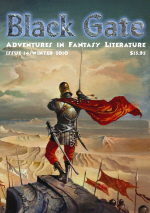
blackgate-issue-14-cover-150Luke Forney. who reviewed Black Gate 13 last year, digs into our latest issue with part one of a three-part review:

You would be hard-pressed to find a fantasy magazine out there better than Black Gate. It is a solid magazine with good content, and very much worth the entry fee. Issue 14… is a behemoth. Gigantic doesn’t begin to describe it.

Just as he was last issue, Luke is taken with the latest adventures of Brand the Viking in “The Bonestealer’s Mirror” by John C. Hocking:

Brand the Viking, along with his companions, stop to investigate a signal fire, only to find a town beset by a terrible creature that steals the bones from its victims’ bodies. Hocking proves, yet again, to be a top-notch storyteller worthy of the mantle of the next Robert E. Howard, yet he fills his tales with a sterling originality that would be done a gross disservice by labeling it anything other than purely Hocking. The plot, the characters, the setting: all are wonderful, and a joy to explore. The day a collection of Hocking’s Brand stories comes out is the day I wait in line to buy a copy.

As well as “The Word of Azrael” by Matthew David Surridge:

This tale of a man on a lifelong quest in search of the angel of death grasps the moody, mystical quality of both dream and myth, and weaves it throughout. The story carries you along without effort, and is certainly wonderful to read.

And Rich Horton’s lengthy non-fiction piece “Back to the Future: Modern Reprints of Classic Fantasy”:

A wonderful essay from a man entrenched in the genre, Horton explores host of publishers who are bringing back some unjustly forgotten classics. While most will be familiar with some of these, few will be familiar with all, and the essay brings up both authors and books that I will be keeping an eye out for. A wonderful essay.

You can find Part One of the complete review here.

Suddenly, I like Shelfari

Suddenly, I like Shelfari

sample_shelfI’m not usually one for social networking.  I had to be dragged on to Facebook by Bill Ward, who got tired of Black Gate not having a Facebook page and finally just created one, and then made me an administrator. 
Now we have nearly 400 fans, plenty of new subscribers, and I spend countless hours every week mesmerized by posts about sick dogs, guacamole recipes, and other critical updates from hundreds of “friends,” most of whom I’ve never even met. All when I should be working to return the last of the fiction submissions to Black Gate from last summer, of course.  Thanks, Bill.

One thing about social networks is that they come in all shapes and sizes. One of the more interesting I stumbled upon last year was Shelfari, a social network for book lovers.  They had a pretty neat widget to add a virtual book shelf showing off the titles you’ve read (or want to read) on your blog. It even works with Bebo, Blogger, Facebook, LiveJournal, TypePad, and Vox, and I don’t even know what most of those are.

Not interesting enough to join, of course. I’m distracted enough by Facebook (you suck, Bill) and Season One of Friday Night Lights on DVD. But I liked the book widget.

Then I discovered that Shelfari members can post reviews. They can even, for example, say kind things about Black Gate 14, things like:

Another great issue of fantasy fiction. Outstanding stories in this issue are: “The Bonestealer’s Mirror” by John C Hocking, “The Word Of Azrael” by David Surridge, “Destroyer” by James Enge, and “The Price Of Two Blades” by Pete Butler. Highly recommended.

Several issues of Black Gate have been reviewed in fact, including BG 3, BG 4, BG 7, BG 10, and BG 12.

OK, at the moment all the reviews are written by a single guy, Little Timmy B, who’s just become my favorite subscriber (replacing Bill Ward, who’s still in the dog house.) But suddenly I can see a future where hundreds of readers are using social networking to rave about how great Black Gate is, instead of reporting what Jon Stewart is up to. (And in this future, we’ll all have jet packs.)

Suddenly, I like Shelfari.  And you should too.

Short Fiction Review #29: Realms of Fantasy June 2010

Short Fiction Review #29: Realms of Fantasy June 2010

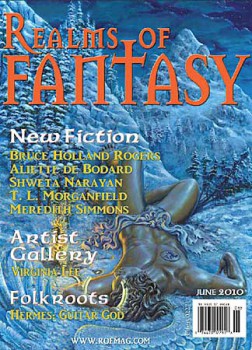
094-june20101While rumors of its demise appear to be greatly exaggerated, I thought I should perhaps not wait too long to review Realms of Fantasy for this month. Just in case.

The proverbial “worth the price of the issue” story is “The Hearts of  Men” by T.L. Morganfield, who seems to specialize in a subgenre of her own devising, Aztec mythology.  I reviewed a previous story of hers, “The Place that Makes You Happiest,” that appeared in the final issue of Paradox, which postulates that colonizing Spain had not destroyed the Aztec culture and comes to predominate modern society in the Americas.  This time around, Morganfield transposes Aztec notions of the role of the gods and blood sacrifice (which Joseph Campbell devotees will note shares common themes with the central conceit of Christianity)  into the wild, wild West to ask the equally archetypical question of “Who are you, and why are you here?”

“You’re really him, aren’t you?” the boy asked, shuffling a bit closer.

“Who?” I asked

“Huitzilopochtli”

I considered a moment before answering. “Maybe.” I really didn’t know who I was; I wore six-shooters at my hips and my battered felt hat smelled of sweat and rot, but when I checked it for a name, I didn’t find one.”

p.43

Morganfield suggests that, unlike the Greek conception of inevitable and immutable  destiny, things can sometimes change for the better, even for the gods, who sometimes are as clueless as the rest of us. You just have to have heart (a joke you won’t get unless you read the story, which I recommend).

Read More Read More

Climbing Aboard the Dragon: Homework Every Day

Climbing Aboard the Dragon: Homework Every Day

doorways

Being a writer is like having homework every day for the rest of your life.
— Lawrence Kasdan

When John from Black Gate suggested I do a guest blog about writing for short fiction markets, I had to check to make sure he hadn’t intended his email for someone else. Surely he meant to send that email to my co-writer for the story “Devil on the Wind,” from Black Gate 14. That would be Jay Lake, who has over 200 story publications and counting.

But nope, the email was correct.

And a quick look at my list of stories over on my website seems to confirm the fact that I may indeed have figured how to sell a short story — fifty story publications thus far. And I have thirty more stories out to various publishers (fingers crosssed!).

Here’s the thing, though. You never figure out the trick to this writing gig. Soon as you think you’ve got it understood, you’re sunk.

Because you can’t rest on your laurels. Trust me on this — even though I’ve sold stories to great places like Asimov’s, Strange Horizons, Interzone, and to this fine magazine as well, I still get rejections aplenty. And while my focus has moved from short stories to novels, with the occasional comic script, I always have fun writing stories.

But I still have more to learn. Much more. And I’d like to share some of what I’ve learned along the way.

Read More Read More

Everett F Bleiler, April 30, 1920 – June 13, 2010

Everett F Bleiler, April 30, 1920 – June 13, 2010

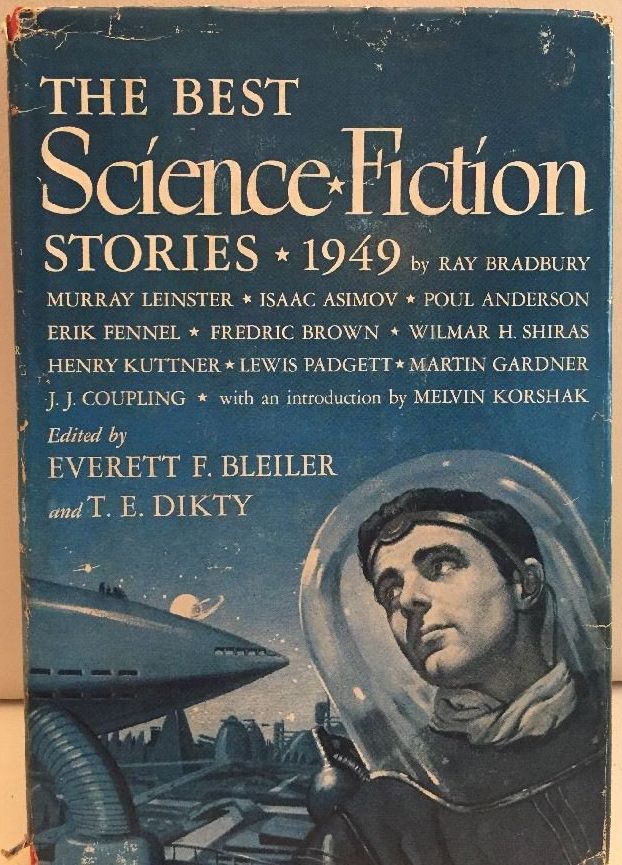
years-best-sf-1949aEverett F. Bleiler, one of the most accomplished early anthologists of science fiction and fantasy, passed away this week in Ithaca, NY.

Bleiler created the tradition of “Year’s Best Science Fiction” anthologies with his co-editor, T.E. Dikty, starting with The Best Science Fiction Stories: 1949. He continued the series until 1954, producing a series of volumes that are highly collectible — and still very readable — today. Since the mid-1950s, few years have passed without at least one anthologist following in Bleiler’s footsteps with a “Year’s Best Science Fiction” anthology.

He produced dozens of highly-regarded anthologies, collections, and nonfiction books on all aspects of science fiction and fantasy between 1948 and 1998, including the Checklist of Fantastic Literature (1948), Imagination Unlimited (with T. E. Dikty, 1952), A Treasury of Victorian Detective Stories (1979), and A Treasury of Victorian Ghost Stories (1981).

Two of his detailed retrospectives of early science fiction, Science-Fiction: The Early Years (1990) and Science-Fiction: The Gernsback Years (1998), were nominated for the Hugo Award.

Bleiler received the World Fantasy Award for Life Achievement in 1988, the First Fandom Hall of Fame award in 1994, and the International Horror Guild Living Legend award in 2004.

On a personal note, I’ve spent many hours curled up with Bleiler’s volumes, especially his Best Science Fiction Stories and the massive The Gernsback Years, which details every science fiction story published in Gernsback’s Amazing Stories and Science Wonder.  The field has lost one of its finest editors and one of its leading scholars.

Goth Chick News: Close Encounters – The Week We Made Contact

Goth Chick News: Close Encounters – The Week We Made Contact

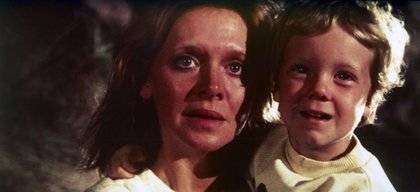
ce3k1Back in May I told you all about cyber-stalking little Barry Guiler, that adorable little tot from the movie Close Encounters of the Third Kind (now apparently referred to as CE3K by you unbelievably cool kids).

I also let you know that though at the time I had turned up a fat lot of nothing in my attempt to contact Barry, who is Cary Guffey in real life, something told me I was eventually going to meet with success. I mean, what little I had read about Cary seemed to point to him being a nice normal guy, which by default meant he was likely the opposite of that other child actor I tried to interview who by all on-line accounts is a bit of a tool.

So for three weeks I busied myself rearranging my voodoo dolls and abusing my new crop of interns, all the while hoping for pay dirt in the form of an email from Cary. So I would be spared from looking like a hopeless poser who spends a lot of time writing about great interviews, without ever closing escrow.

Well, today I am here to tell you that though I may indeed be a grade-A cyber stalker, I am definitely NOT a poser.

Cary Guffey did get in touch and he is indeed a nice guy; actually a really nice guy with a great sense of humor. And since none of you believed I’d end up interviewing him and therefore didn’t send in any insightful and provocative questions, I was forced to make up my own.

Read More Read More

Original Fiction: “THE WEIRD OF IRONSPELL” by John R. Fultz

Original Fiction: “THE WEIRD OF IRONSPELL” by John R. Fultz

mountain4
http://sheikman.blogspot.com

“The Weird of Ironspell” by John R. Fultz

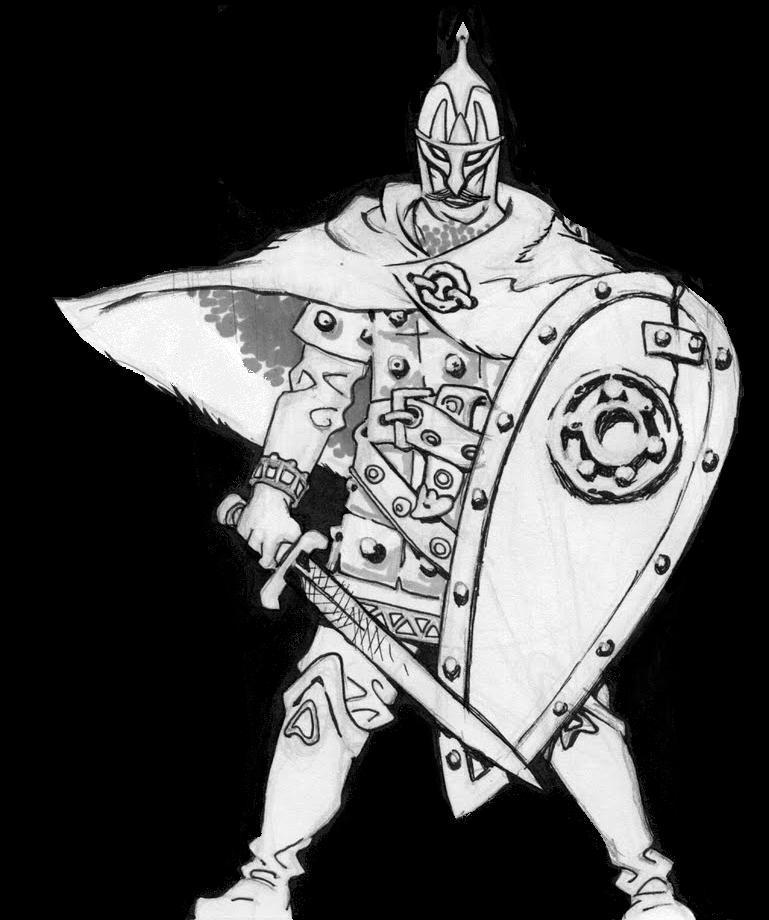
Illustrations by Alex Sheikman


7. On the Mountain of Sorrows


Lightning raged about the peak. Ironspell pulled himself toward the sky, finding handholds in precarious places. Storm clouds cast ominous shadows upon him. Peals of thunder rolled across his back like boulders. It had taken the better part of a year to reach the Mountain of Sorrows, and neither gods, demons, or nature itself would keep him from reaching the summit.

A voice in the back of his mind whispered unheeded warnings:

How do you know your son will truly be here? This is another trap Azazar has set for you. Your son is dead. You’ll find his animated corpse walking rotten and full of hate… 

He screamed his rage into the storm, drowning the voice of caution. He must scale this mountain; he could do no less for his own flesh and blood. If Tyneus were dead, at least he would finally know. And if he lived…

Ironspell had crossed the length of Dylestus, the dead kingdom where ghosts, wights, and ghouls prowled the remnants of shattered cities. The depraved descendants of the ruined realm had quickly captured him and Tumnal. They dragged the duo into a subterranean realm to feed a swarm of ravenous young. But the seekers escaped into an underworld of blind, crawling monsters and passed through a fungoid city of grotesques.

Read More Read More

Frederick Faust, Bound for SF and The Smoking Land

Frederick Faust, Bound for SF and The Smoking Land

smoking-landThe Smoking Land
Frederick Faust writing as George Challis (Argosy, 1937)

I’m returning to the subject of Frederick Faust for the third time this year. But I have a specific, Black Gate-centered justification for it: I wish to unearth his single novel of science fiction, a piece of Lost World and Weird Science strangeness called The Smoking Land.

Faust, under Max Brand and his eighteen other pseudonyms, made his reputation with Westerns, but he did write in almost every genre that appeared in the story magazines of the time. He penned historical adventures, detective tales, mainstream short stories for the “slicks,” and espionage yarns. In 1937, he authored his one true science-fiction work, the novel The Smoking Land, which appeared serially under the pseudonym George Challis in the old warhorse of the pulp world, Argosy, starting in the May 29 issue.

(In fact, this Saturday evening I stood face-to-face with one of the actual issues of Argosy in which the novel was serialized, housed in the pulp collection at Author Services in Hollywood. Actual surviving issues of the self-destructive pulps are rare finds, and they need special protection to survive. And hey look! One of the Argosy installments of The Smoking Land shares space with the Cornell Woolrich story “Clever, These Americans”! . . . Okay, so maybe only I care.)

Read More Read More

Al Williamson, March 21, 1931 – June 13, 2010

Al Williamson, March 21, 1931 – June 13, 2010

al-williamson2Al Williamson, one of the finest science fiction artists of all time, died yesterday in New York City.
Williamson began his career assisting Tarzan cartoonist Burne Hogarth in 1948. His first professional credit was a three-page crime story, “The Last Three Dimes,” in Wonder Comics #20 (Oct, 1948), co-penciled with Frank Frazetta. In 1952 Williamson began working for E.C.Comics, joining the legendary Wally Wood, Frazetta, and Roy Krenkel on Weird Science, Weird Fantasy, and Incredible Science Fiction, illustrating stories by Harlan Ellison and Ray Bradbury, among others.

By 1966 he was drawing Flash Gordon for King Features, which garnered him an award from the National Cartoonist Society. In 1967 he took the reins on another Alex Raymond creation, Secret Agent Corrigan, which he drew for over a decade. Art historians note that Williamson used his own face as the model for secret agent Phil Corrigan, which made him easy to recognize at conventions.

In the 1980s Williamson began his famed Star Wars comic adaptations, starting with The Empire Strikes Back for Marvel. Williamson was reportedly George Lucas’ first choice for the Star Wars newspaper strip, as Lucas was a fan of his EC Comics and Flash Gordon, and Williamson drew the daily and Sunday feature until 1983. He did additional work throughout the decade for Pacific Comics (Alien Worlds), Marvel (including Blade Runner and Epic Illustrated), and DC (Superman #400).

Since 1998 half a dozen retrospectives of his work have been published, including Al Williamson Adventures, The Al Williamson Sketchbook, The Al Williamson Reader, Vol. 1, and Al Williamson: Hidden Lands. Most of these had tiny print runs, and I had trouble tracking several of them down a few years ago.  If you want copies, I suggest acting quickly.

Science Fiction site io9 has a gallery of some of the best work of this incredible artist, and comics writer and artist Jimmy Palmiotti has written a eulogy here.

Ye’d Best Start Believin’ in Ghost Stories

Ye’d Best Start Believin’ in Ghost Stories

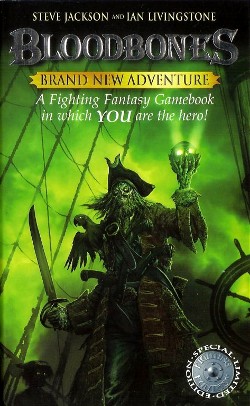
We're naught but humble pirates.Bloodbones
Jonathan Green
Wizard Books (240 pp, ₤5.99, CAN$12.00, April 2010)

In 1982, Puffin Books unleashed The Warlock of Firetop Mountain, the first in the Fighting Fantasy line of gamebooks. The book was conceived and written by Steve Jackson (the British one) and Ian Livingstone, co-founders of Games Workshop. Although predated by solitaire RPG scenarios, Fighting Fantasy combined a choose-your-own-adventure decision-tree structure with a simple dice mechanic to mimic an RPG experience. The quick-start rules, brisk pacing, and art by New Wavey fantasists like Iain McCraig, Chris Achilleos, and Richard Corben, all bundled in a mass-market paperback retailing for $1.95, made Fighting Fantasy wildly successful. The series ran until 1995, along the way spawning ancillary media like novels, computer games, even a full-blown Fighting Fantasy RPG. Fan enthusiasm still burns bright today, with a downloadable fanzine and its own wiki.

Screw Narnia; had I ever discovered some magic wardrobe, I would have jumped with both feet into Titan. As it was, chores were done and allowances scraped together in anticipation of infrequent family expeditions to the mall bookstore. There I could pay to wade through the mire of the Scorpion Swamp, survive Baron Sukumvit’s Deathtrap Dungeon, rally freed slaves to overcome the sinister Gonchong on the Island of the Lizard King. Now I’ve been playing the books all over again, this time with my young sons, imparting to them the same vital life lessons I learned as a young boy: don’t trust strangers; never put your hand in someplace you can’t see; and if you kill someone, you might as well go ahead and take his wallet.

Read More Read More