Art of the Genre: Art of Anthologies
I’m not really sure if this can be classified at ‘art’, but certainly there is an art to the creation of anthologies. I mean, for all intents and purpose, Black Gate is an anthology, the scope and size of these new issues making it more a book than a magazine.
John O’Neill, our venerable editor, has done a fantastic job of giving his readers both the feel of an anthology while also being committed enough to each story as to provide wonderful art with it. That artistic contribution, in my opinion, is something that helps define what Black Gate is trying to do, and although the art direction in each issue’s very essence isn’t held to a single vision, the coherence of the product is still maintained in the highest quality.
Black Gate also weaves a thick quilt of characters within its pages, the repeated inclusion of certain authors allowing stories and characters to build, grow, and foster a relationship with a reader that many contemporary anthologies can’t produce. I’ve seen reviewers try to knock this, but in the end several have come around to indicate that John’s repeated choices are one of their favorite pieces of the magazine.
The art of the short story in its very nature is a simple entertainment, a microcosm of imagination that I fear is too often read like a teaser trailer found before your main attraction at the local Cineplex. In them we are often required to be told rather than shown a story, and I’m reminded of the musky depth of Don Lafontaine’s voice when I’m provided back story inside stories of already limited words… his signature opening ever echoing in my brain… ‘In a world where…’



 I give it two out of three brains. And seriously, the cover is AWESOME. Now that’s a le freakin’ sexy zombie.
 I’ve always been fascinated by the attempts of gaming companies to turn athletic sports into board games. Fascinated, but not quite intrigued enough to play one, until now.
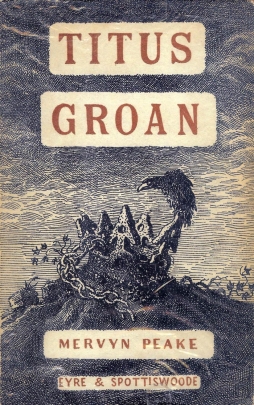 July 9, 2011 will be the hundredth anniversary of the birth of Mervyn Peake, the author of three remarkable fantasy novels: Titus Groan, Gormenghast, and Titus Alone. The books — published in 1946, 1950, and 1959 — form a series (along with the novella “Boy in Darkness,” which I have not read) following the early life of Titus Groan, Seventy-Seventh Earl of the immense castle called Gormenghast. Peake had intended to write a longer sequence of novels about Titus; he planned two more books, but the advent of Parkinson`s Disease made that impossible. A number of activities are being planned to commemorate Peake’s centenary, including the publication of a fourth Titus volume, Titus Awakes, written by Peake’s wife after his death in 1968.
 The June-July 2011