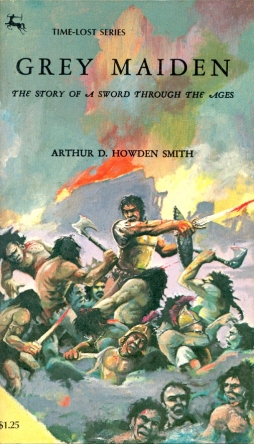
 If I’m counting right, this marks my fifty-second post on Black Gate, which means this is effectively an anniversary. At any rate, it’s a good point to pause and reflect, I think. Writing here’s been a blast, from my first piece about Howden Smith’s collection of historical adventures Grey Maiden, up through last week’s essay on the origin story of Steve Ditko’s Doctor Strange. I’m eager to keep going, too; I feel like I’ve gotten better as a writer and critic from posting on this site, and I feel like I’ve begun to understand certain things about the nature of fantasy. I have to thank John O’Neill for inviting me to join his team, and Claire Cooney for her editing work; both John and Claire are accessible and generous with their time, and make posting here easy and fun. I also want to thank all the other bloggers who make this site, I feel, one of the best places on the web for fantasy fans. And especially I want to thank everyone who’s read and commented on my posts over the past year; I’ve been impressed with the level of responses I’ve seen, on my posts and others’, and fascinated by the conversations that’ve developed.
Lately, I find myself coming back to a question I started out with in one of my early columns. Mostly because I think I may actually have begun to figure out a few answers. In a post I wrote by way of an introduction to myself, I mentioned that I wanted to figure out what it was about fantasy that attracted me as a reader, and as a writer. What did it give me, in all its different forms, that no other kind of writing did? I felt that ‘escapism’ was an insufficient answer to explain the power of fantasy; I’d add that ‘wish fulfillment’ didn’t, and doesn’t, seem to cover it, either.
It’s a question that’s begun to seem especially pressing. On June 1 I started an online fantasy serial, The Fell Gard Codices. It’s been a powerful experience, and aesthetically rewarding. There’s no doubt that it takes up a good chunk of time; and yet it feels, paradoxically, liberating. I’m getting back something I couldn’t have gained in any other way.
Is what I’m gaining as a writer the same as what I get from fantasy as a reader? I think so, yes. But just what is it, in either case?
…
Read More Read More
 NPR has posted its top 100 science fiction and fantasy picks, based on the votes of 60,000 respondents who could choose from 5,000 initial nominations. The point of these things is, well, what is the point of these things? To get people up in arms that their choices weren’t selected? To have something to publish during slow news cycle in August? To give people who have nothing better to do a chance to express their opinion in a largely meaningless exercise? To have a little fun? To get bloggers looking for something to write about something to link to?
 Rise of the Planet of the Apes (2011)
 Morning and evening
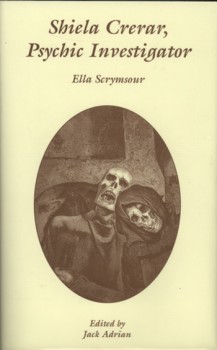 Shiela Crerar, psychic investigator and adventuress, first burst into public view in the pages of The Blue Magazine in 1920 with “The Eyes of Doom”. The obscure creation of the